Montague Gardens Roads, Yards and Everyday Vehicle Faults
Montague Gardens asks for quick, practical vehicle support. Delivery vans, sales vehicles, panel vans and bakkies move through industrial parks, warehouse gates and tight loading bays, so a dead battery or a fault light can interrupt more than a single errand. Our workshop base in the area keeps travel short for call-outs and makes it easier to get to vehicles that cannot be moved far.
We are often called for warning lights, no-start faults, flat batteries, charging issues and wiring trouble that shows up after a service or a hard week on the road. On some vehicles the fault is clear from the start, on others the problem only shows itself once we read live data, test the battery and trace the circuit under load. That is where method matters.
- OBD fault code reading and live data checks
- Battery, alternator and charging system testing
- Starter circuit testing and starter repairs
- Parasitic drain checks on parked vehicles
- Wiring fault tracing and earth fault repairs
What We Handle On Site In Montague Gardens
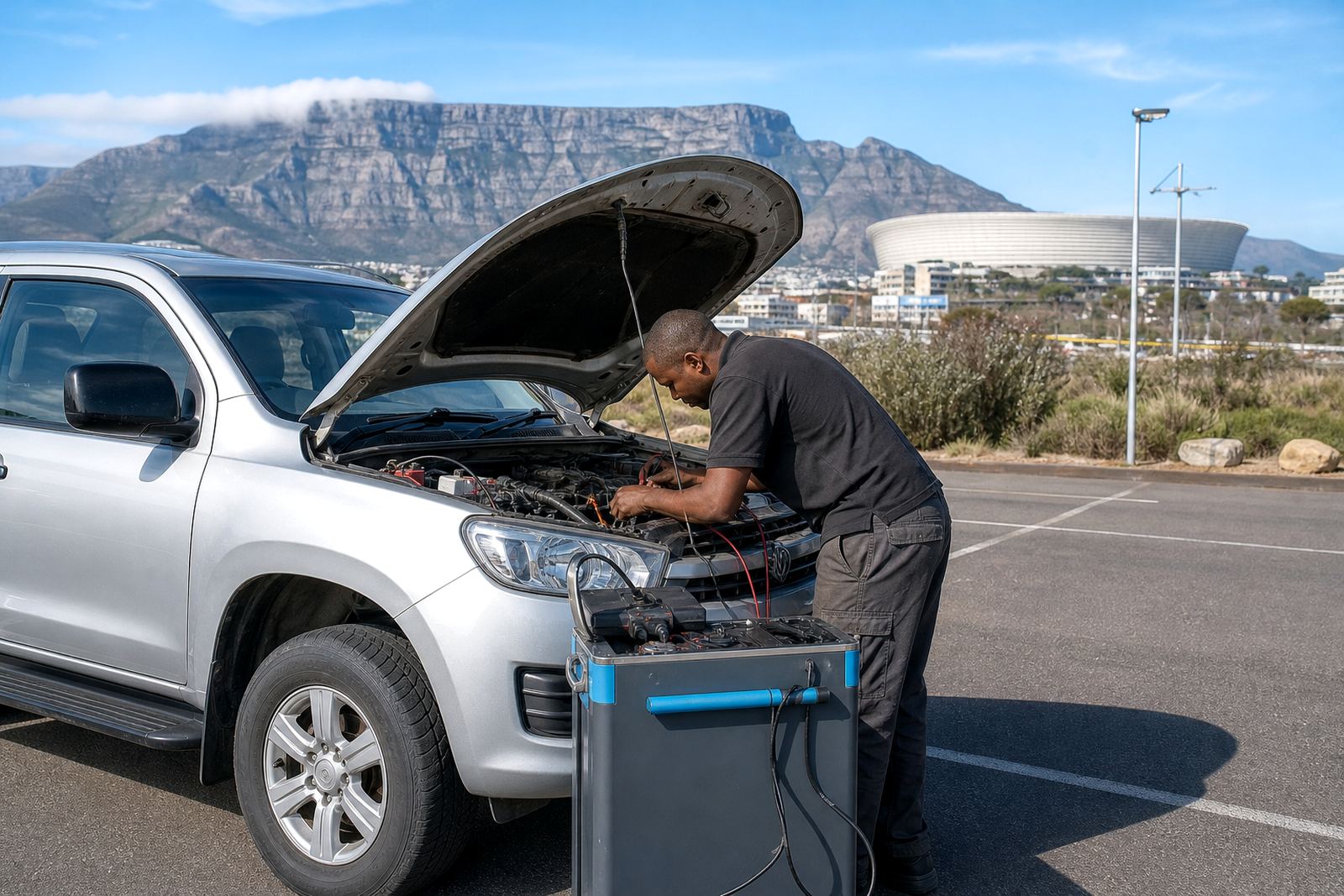
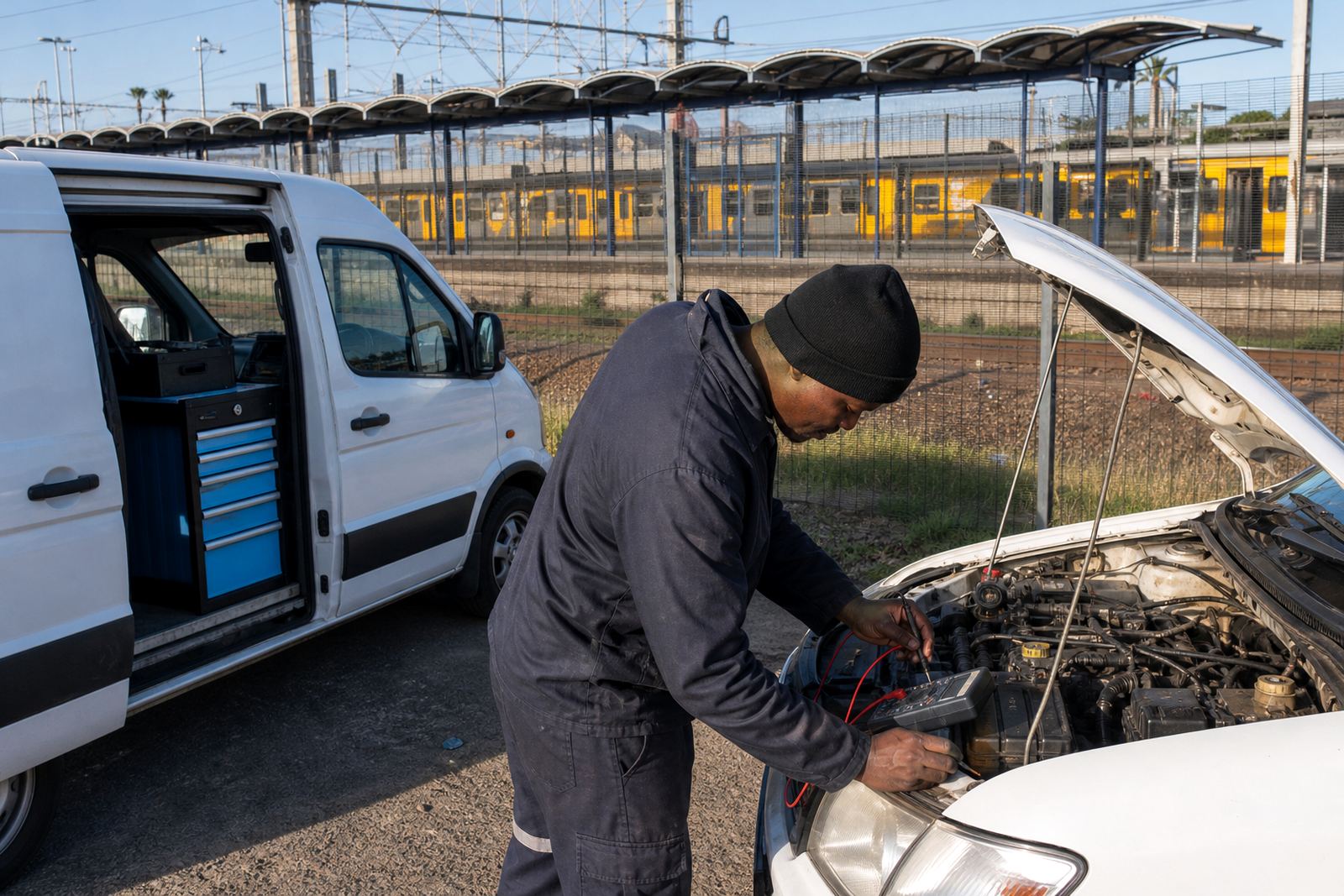
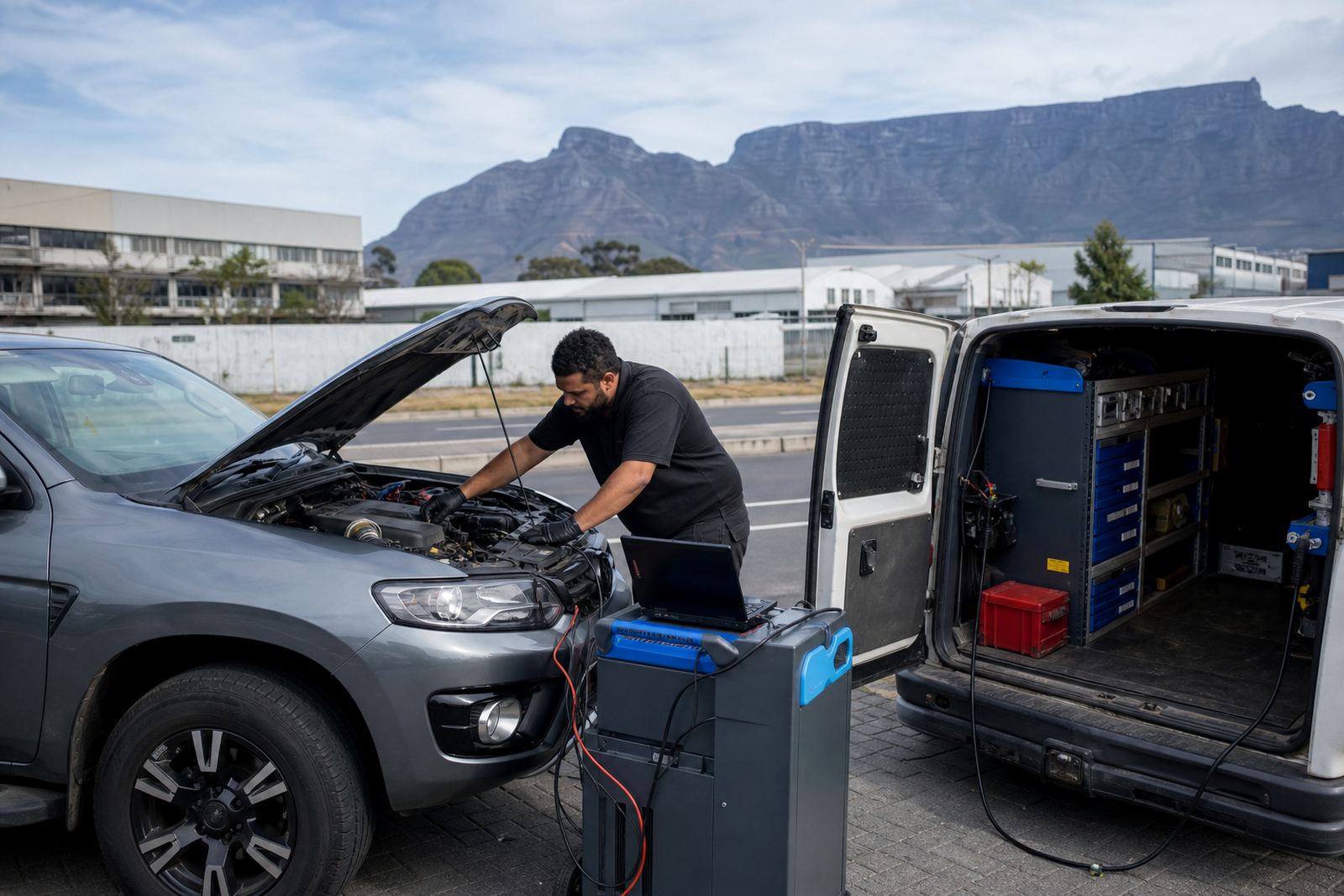
Call-outs in Montague Gardens usually start with a symptom rather than a neat diagnosis. A vehicle may crank slowly, refuse to start after standing, show unstable voltage, or drop electrical functions in odd ways. Our technicians use the same fault-finding approach on site that we use in the workshop, with checks that move from the battery to the charging system, then into the starter circuit, fuse box and wiring paths.
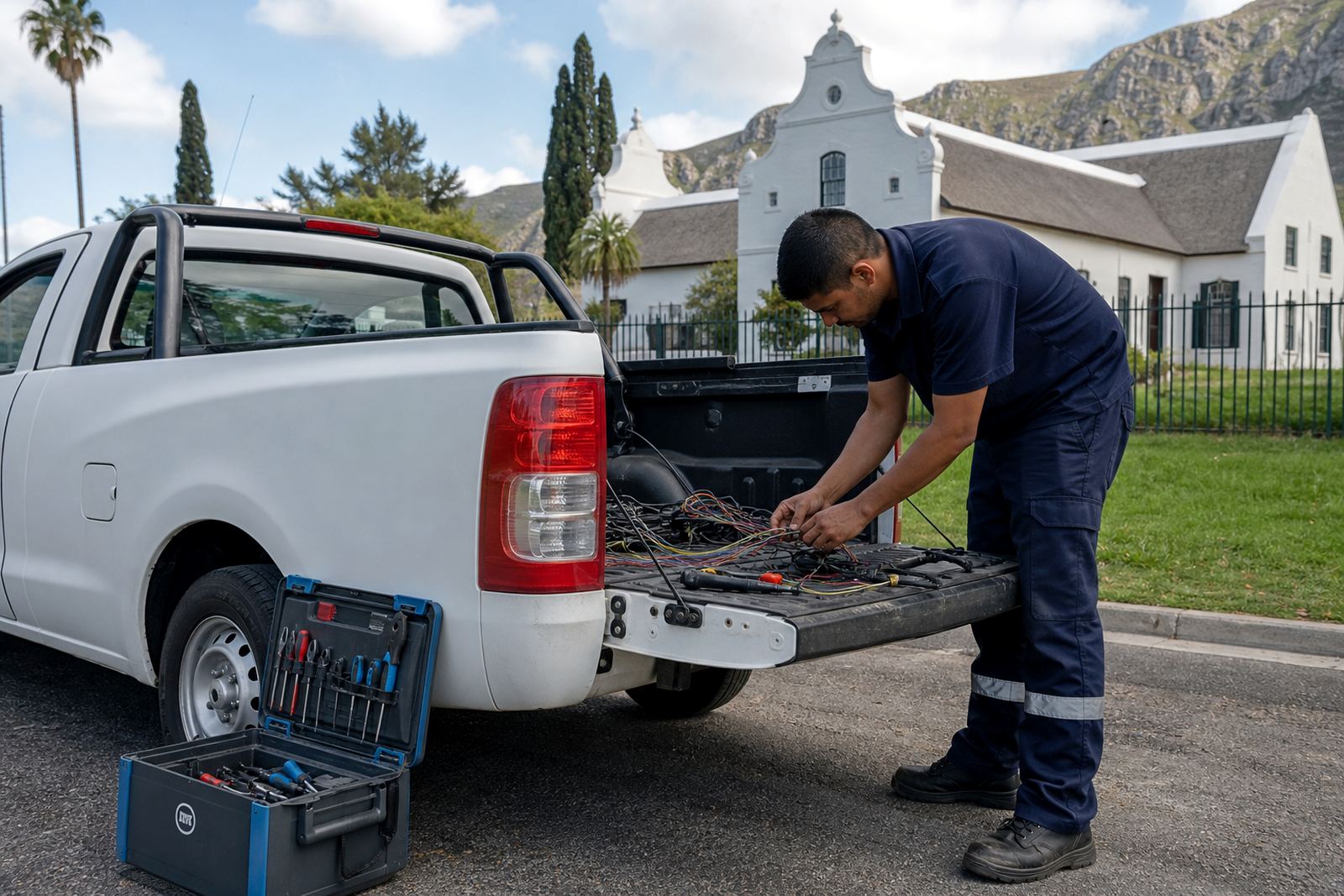
Where a fault is linked to a wiring break, poor earth, damaged connector or a failed charging component, we can often isolate the issue there and then. If the repair needs workshop access, the first step is still useful because it narrows the problem and avoids replacing parts that were never the cause. In busy commercial areas, that saves a lot of time and lessens repeat stoppages.
- Starter repairs and starter circuit checks
- Alternator repairs and charging fault diagnosis
- Fuse box checks and earth fault tracing
- Lighting repairs and trailer wiring repairs
- Accessory rewiring and tracker fitting support
Fleet Vehicles, Private Cars and Mixed Use in the Area
Montague Gardens brings together a mix of fleet operators, owner-drivers and private vehicles used for work. We see company bakkies, panel vans, commuter cars and service vehicles that need reliable electrical systems because they cover real distance each day. Some come in after roadside trouble, others after a dashboard light stays on for too long or a battery keeps going flat over a weekend.
Fleet vehicles often need a slightly different approach. The concern is not only the fault itself but how quickly the vehicle can return to route planning, deliveries or site visits. We assess the electrical fault in context, which means checking whether the problem is isolated or part of a wider pattern across several vehicles. That can include tracker and accessory fitment where a business wants more control over vehicle use, movement or added equipment.
- Private owner vehicles with no-start or drain faults
- Fleet support for work vans and service bakkies
- Tracker installation and accessory wiring
- Trailer plugs, rear lighting and load-area electrical work
- CAN bus fault checks on systems that communicate through shared modules
Coastal Air, Heavy Use and Electrical Wear
Montague Gardens sits close enough to the coast for moisture and salt air to matter, especially on connectors, terminals and exposed wiring. Vehicles that move between the harbour side, warehouses and outer suburbs can pick up corrosion on battery terminals, poor earth points and tired plugs. Heat, vibration and stop-start use only add to the wear.
We pay attention to the parts that fail quietly first. A battery can test well and still leave a vehicle stranded if the charging system is weak. A starter can sound tired before it fails completely. A small wiring break can cause a problem that looks unrelated on the dash. Careful testing helps separate those faults, and that is important in a place where vehicles work hard and do not stay idle for long.
For many jobs we cover the likely fault sources that keep turning up in this area: battery drain repairs, earth fault repairs, alternator issues, starter circuit faults and lighting damage from worn looms or loose fittings. The point is to leave the vehicle with the electrical side properly mapped, not patched over.
What We Carry For Local Call-Out Work
When we head out from Montague Gardens, we carry the test equipment and repair items that suit common electrical faults on working vehicles. That includes diagnostic tools for fault codes and live data, battery testing gear, circuit test equipment, replacement consumables and the parts needed for typical wiring and lighting repairs. Some call-outs need a quick repair on site, while others need a more detailed workshop visit after the problem has been identified.
The benefit of local cover is practical. Vehicles based around the industrial side of Cape Town do not always have time for a long tow or a day spent waiting while fault finding starts from zero. We keep the process focused on the electrical system first, because that is often where the real problem sits. If the issue is in a starter, alternator, fuse box, earth path or accessory circuit, that is where the work begins.
- Diagnostic scanning and live electrical data checks
- Battery testing and charging system assessment
- Starter and alternator fault coverage
- Wiring repair materials and fuse box checks
- Tracker and accessory fitting items for selected jobs
Getting A Call-Out Organised Without The Runaround
If the vehicle is in Montague Gardens, the area line on our side is usually straightforward to work with because the base is close by. We can plan around workshop slots, mobile jobs and the type of fault reported, whether it is a no-start, repeated battery drain, lighting issue or a more involved CAN bus fault check. The more detail you share about the symptom, the better we can prepare for the right test path.
Enquiries for Montague Gardens call-outs go through our contact page form. Include the vehicle type, the fault symptoms and the location where the vehicle is standing, especially if access is tight or the vehicle cannot be driven. That helps us decide whether the work suits a mobile check first or whether it needs workshop time for deeper tracing.
For fleet operators, private owners and businesses in the area, the aim is the same: get the electrical fault identified properly and fixed in a way that fits the vehicle’s real use. That matters especially where a van or bakkie is used on a daily route and needs to stay reliable.