

Fault finding that starts with the right test
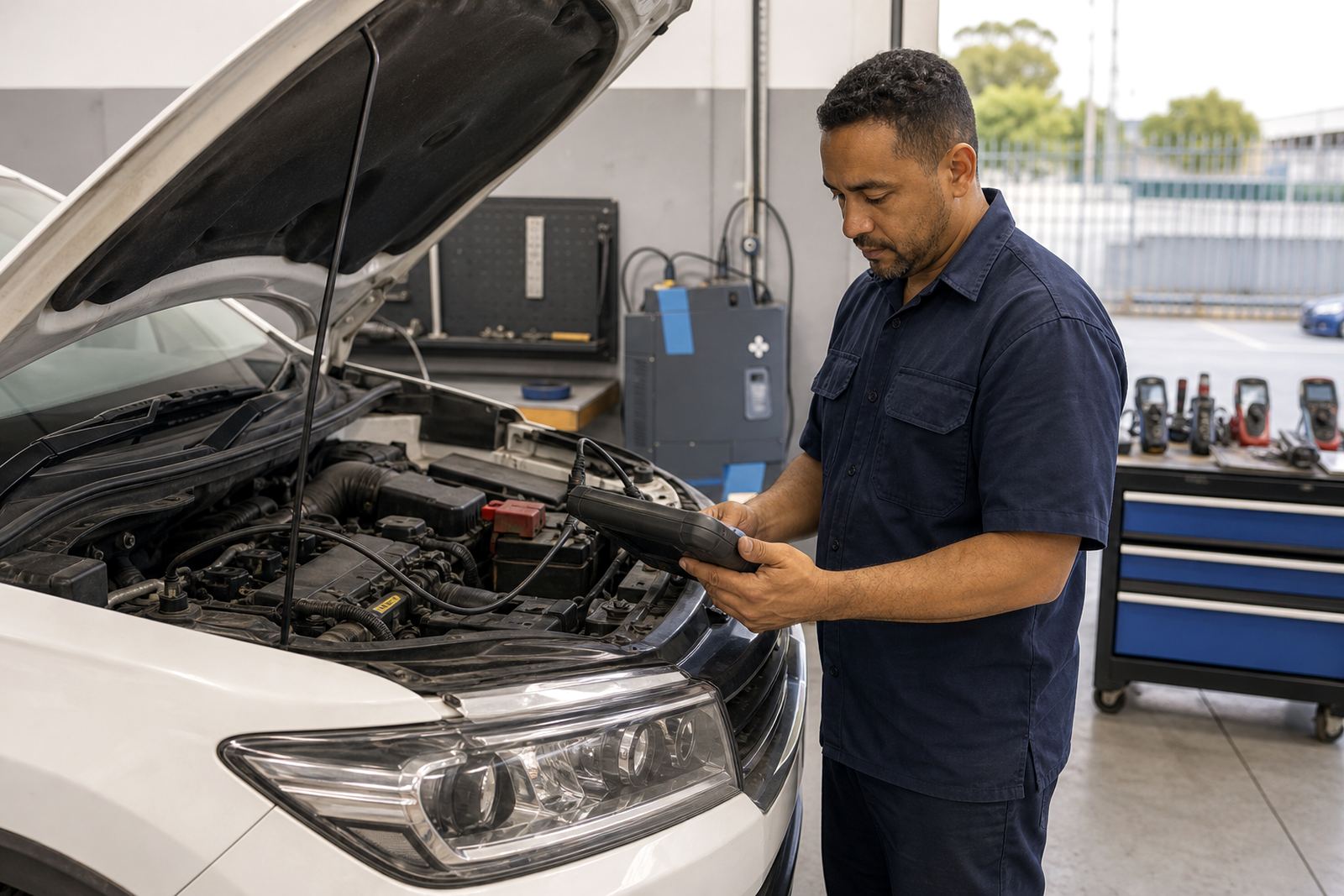
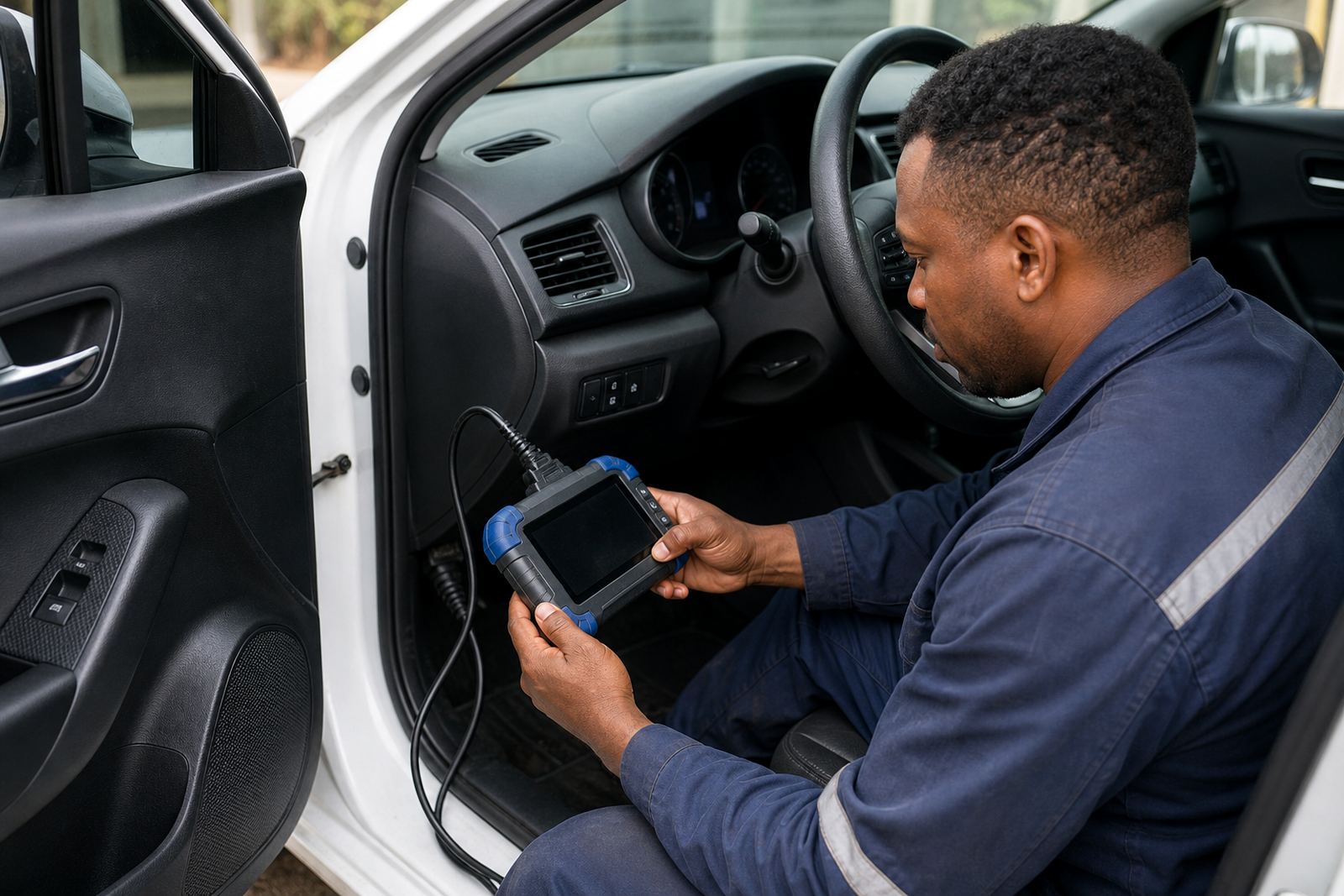
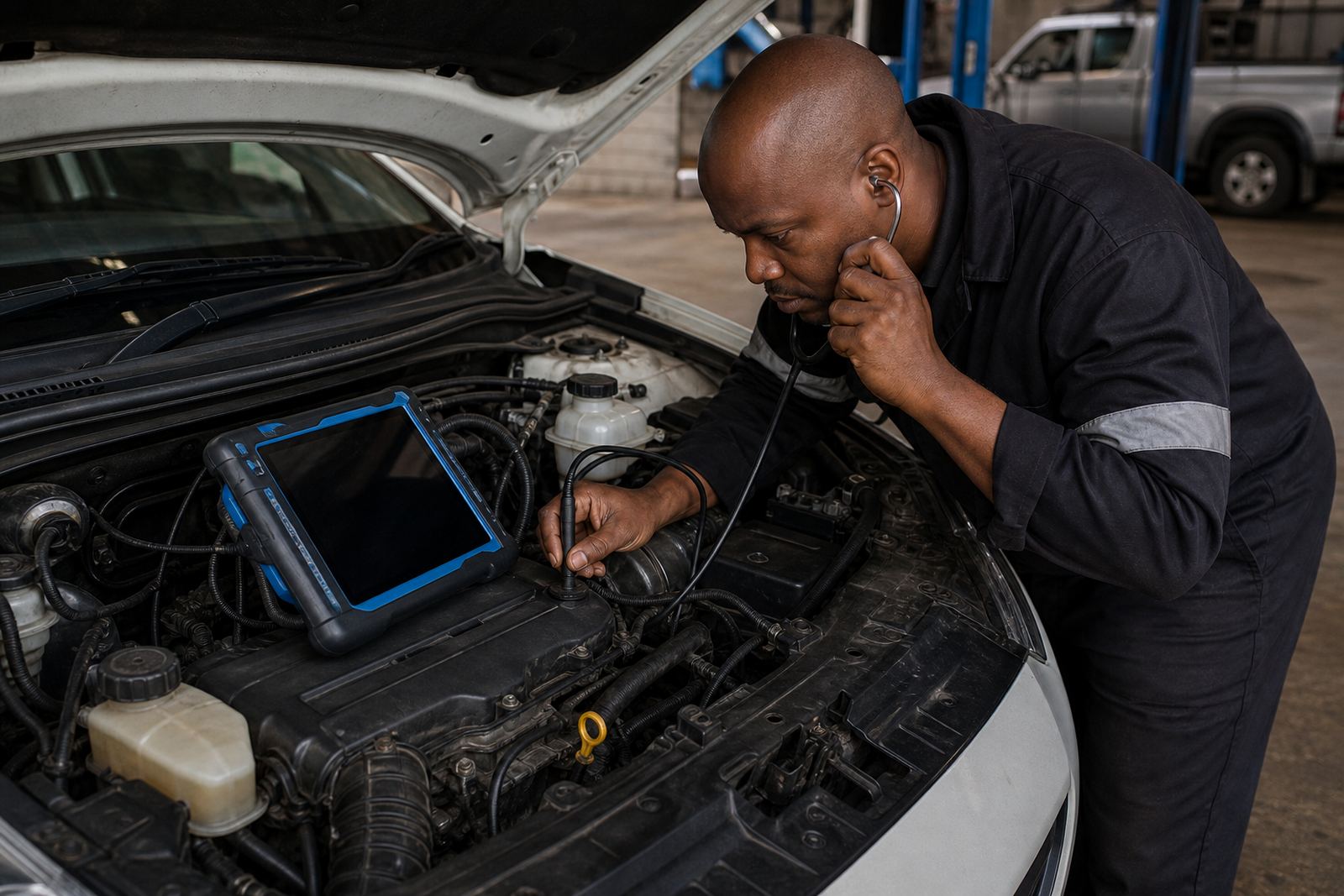
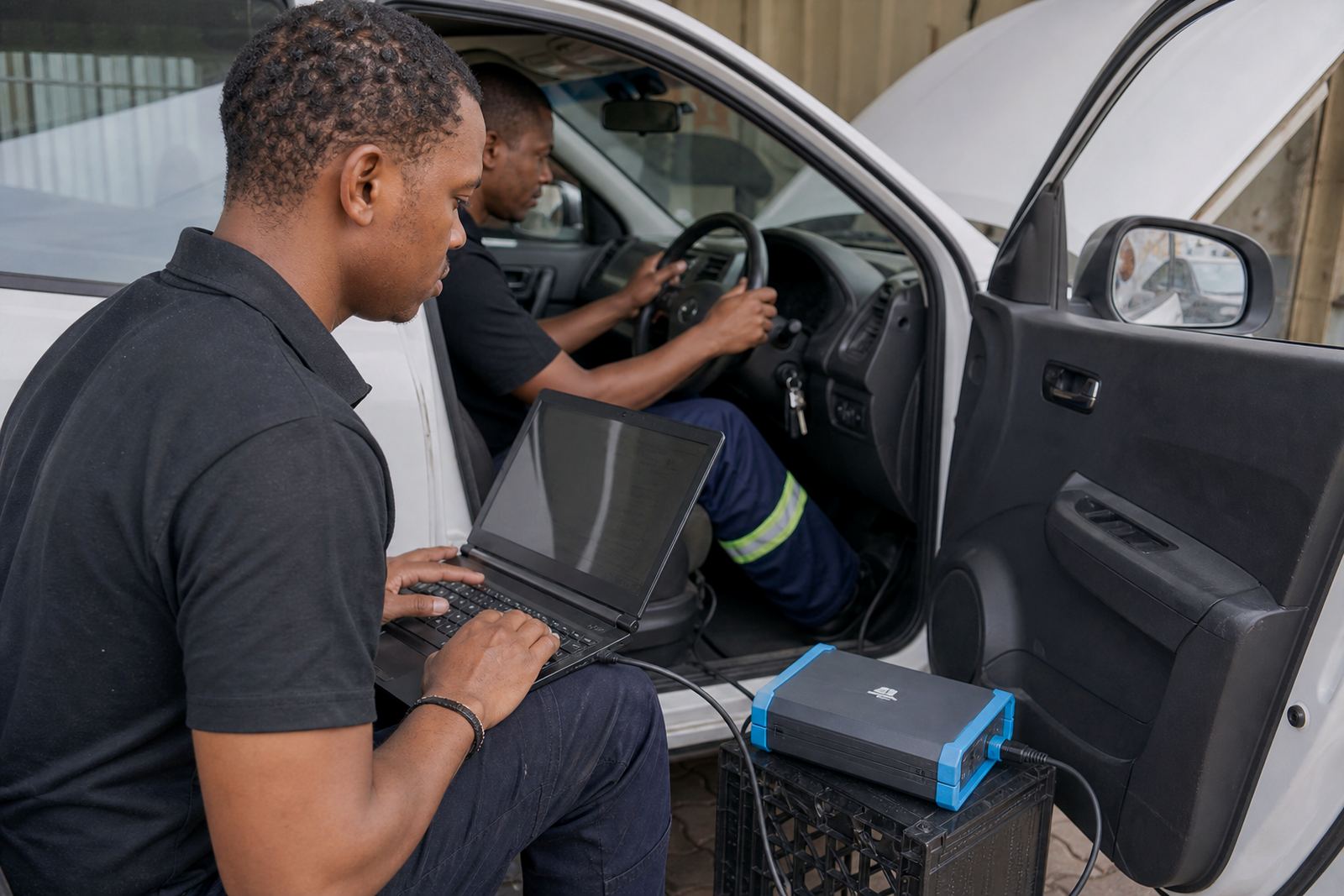
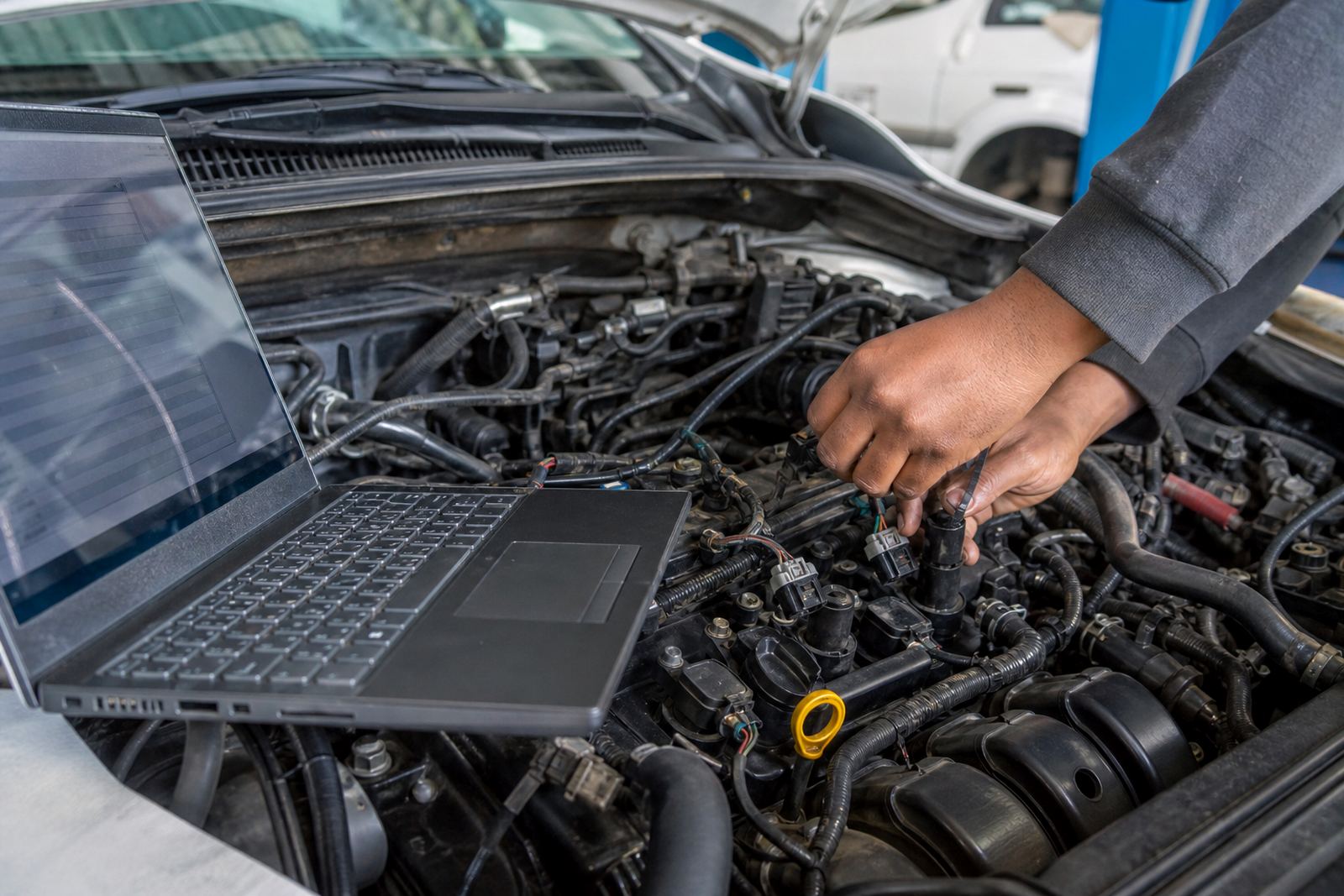
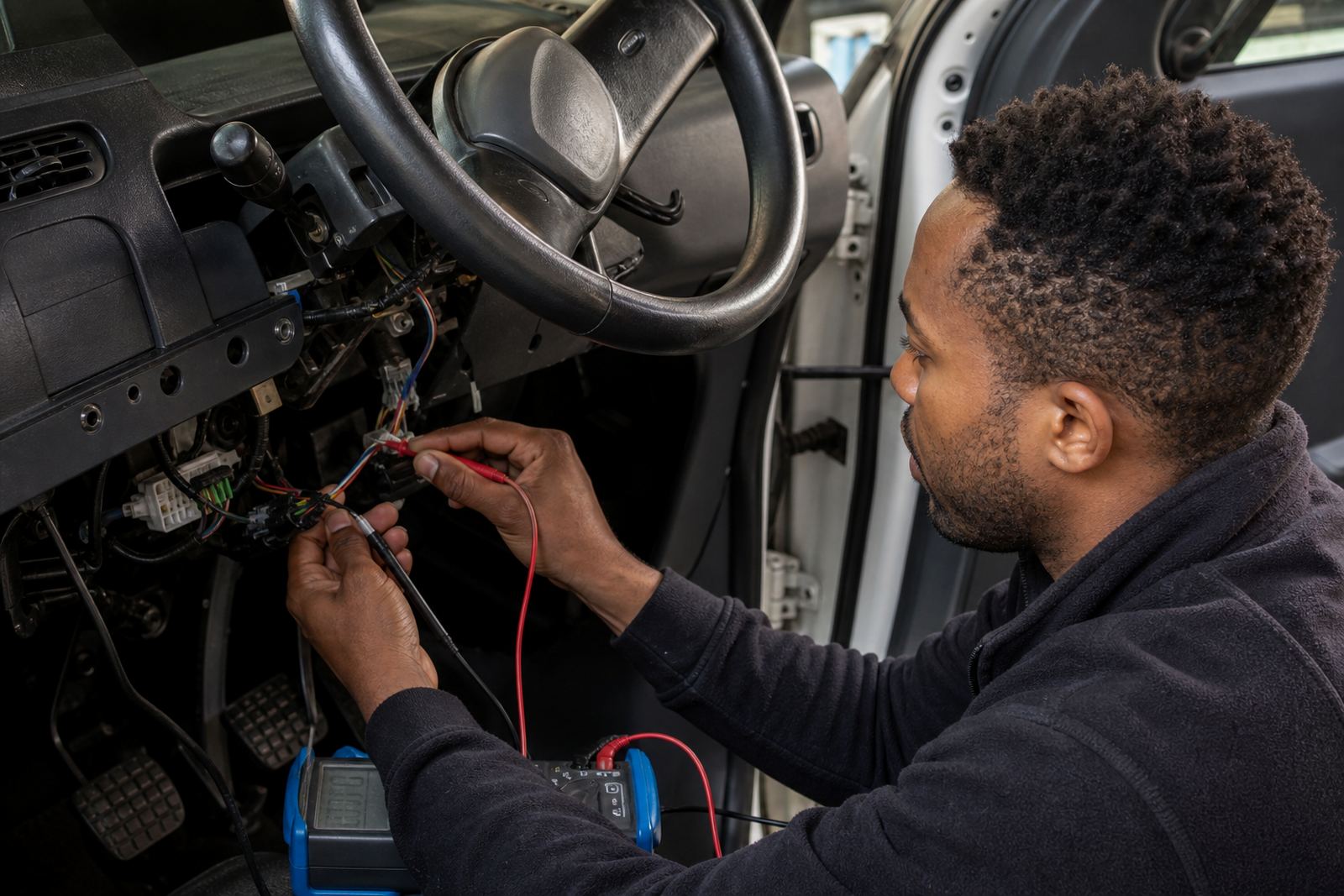
Some faults are obvious at the roadside, others hide in the wiring, a control module, or a tired charging system. Our diagnostic work starts with the system that is failing, then moves through fault code reading, live data checks, battery condition, charging output and continuity tests until the cause is clear.
That approach suits vehicles with warning lights, hard starting, flat batteries, or electrical items that work one day and fail the next. On many jobs the problem is not one part on its own, it is a circuit that is losing voltage, an earth point with corrosion, or a connection that has heated up under load.
What the workshop checks on a diagnosis job
When a vehicle comes into the workshop, we work through the electrical side in a measured order. That keeps the testing practical and avoids replacing parts before the fault is understood. Modern systems can store more than one fault, so the scan result is only the starting point.
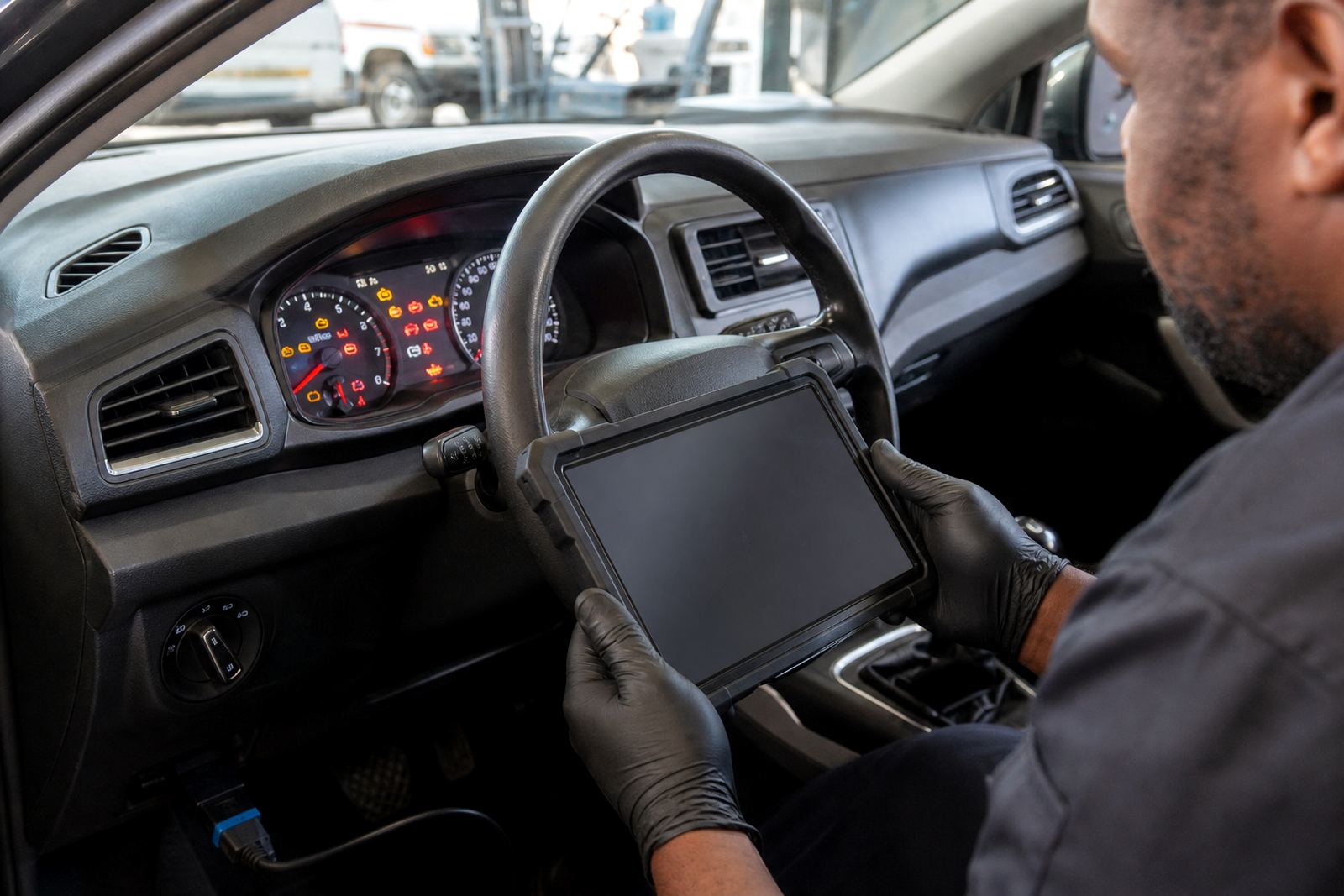
- OBD fault code reading and clearing after repair
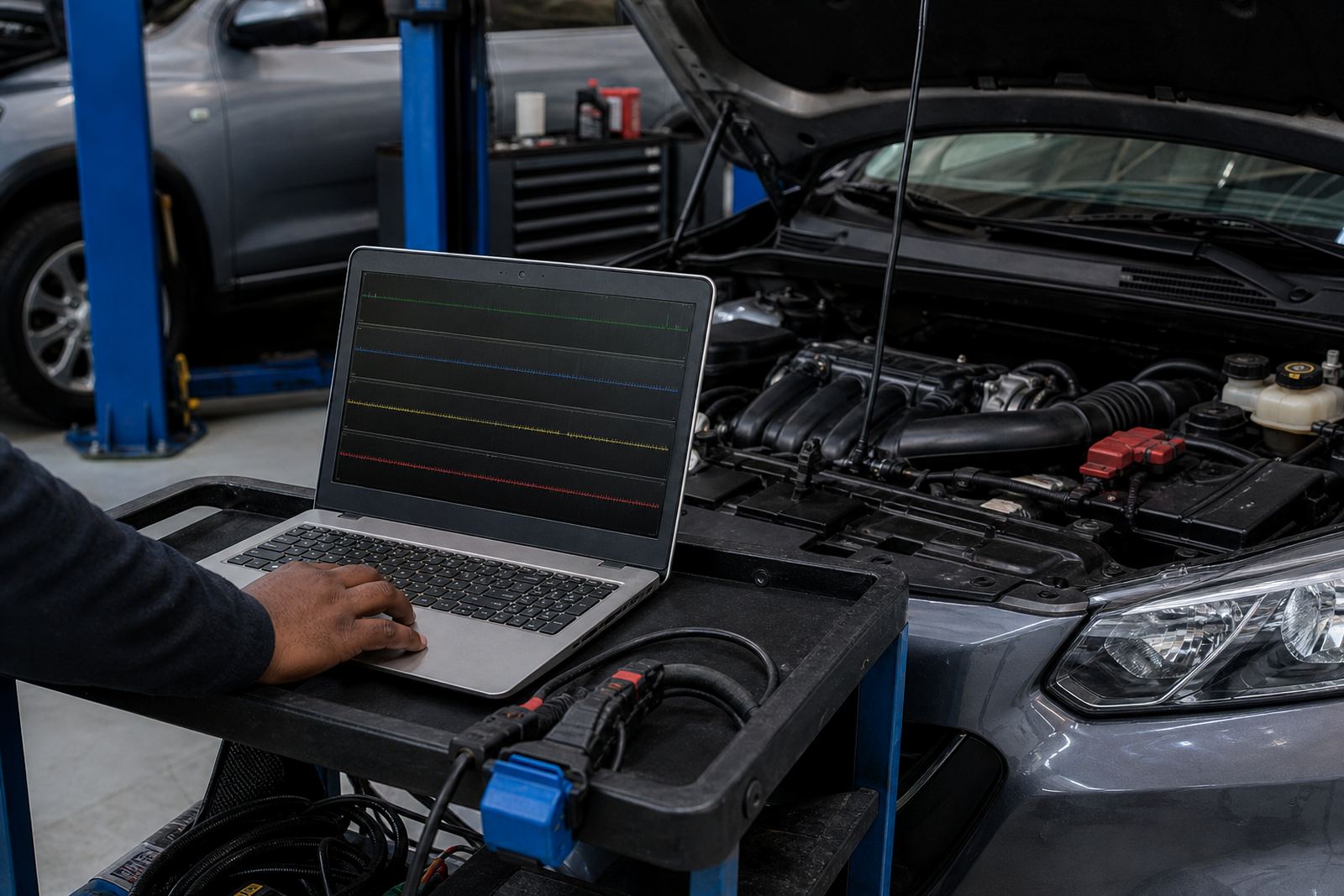
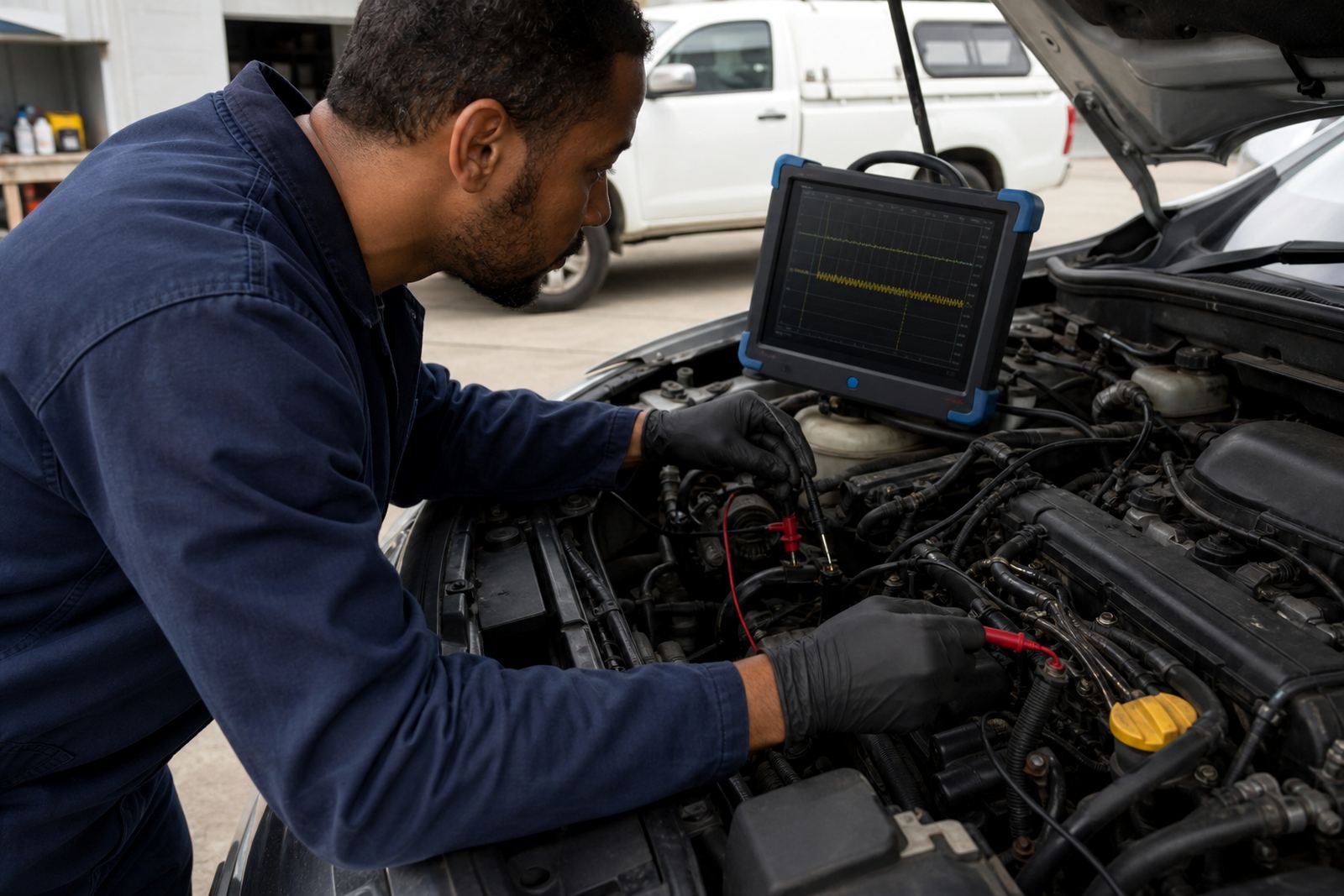
- Live data checks on sensors and operating values
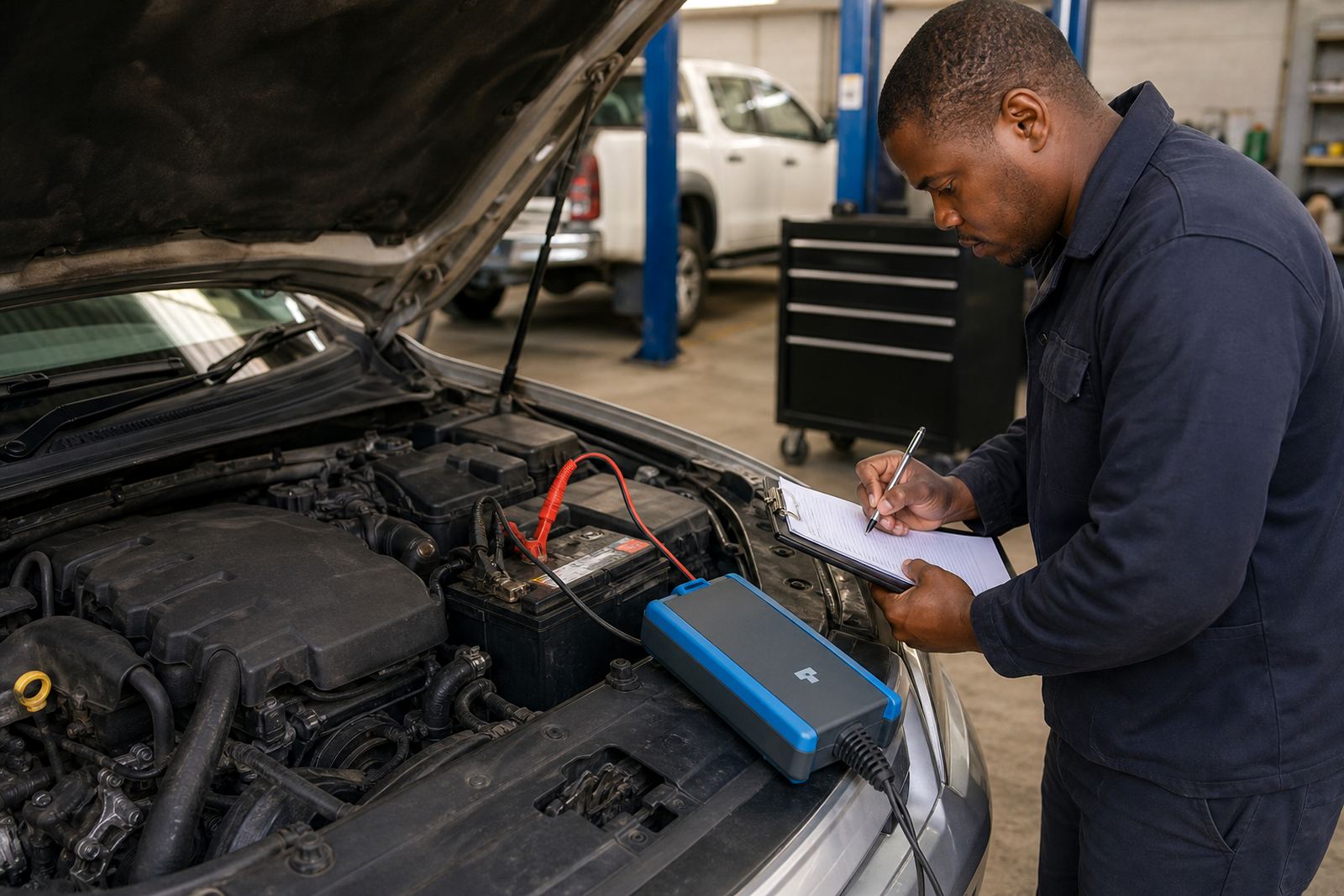
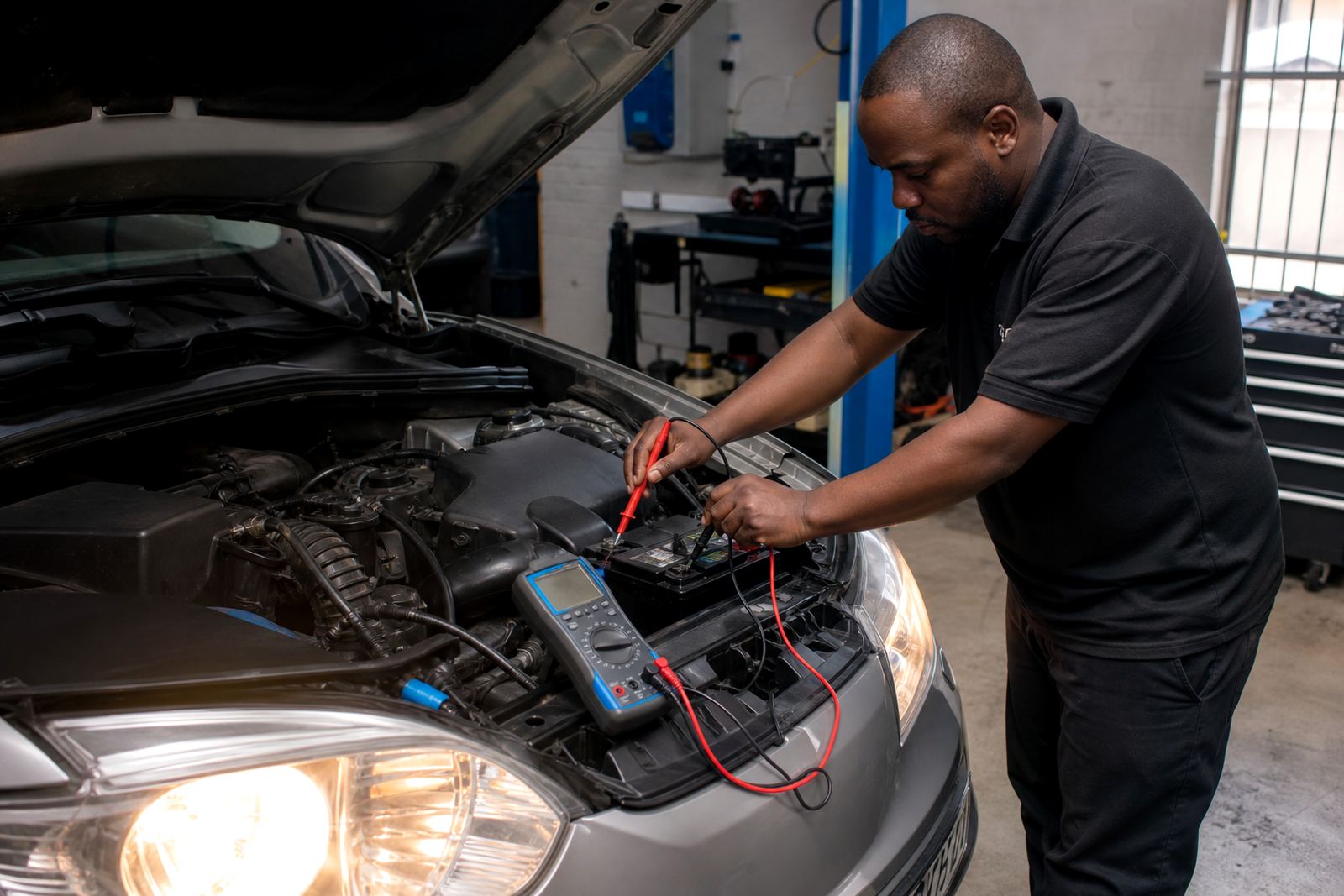
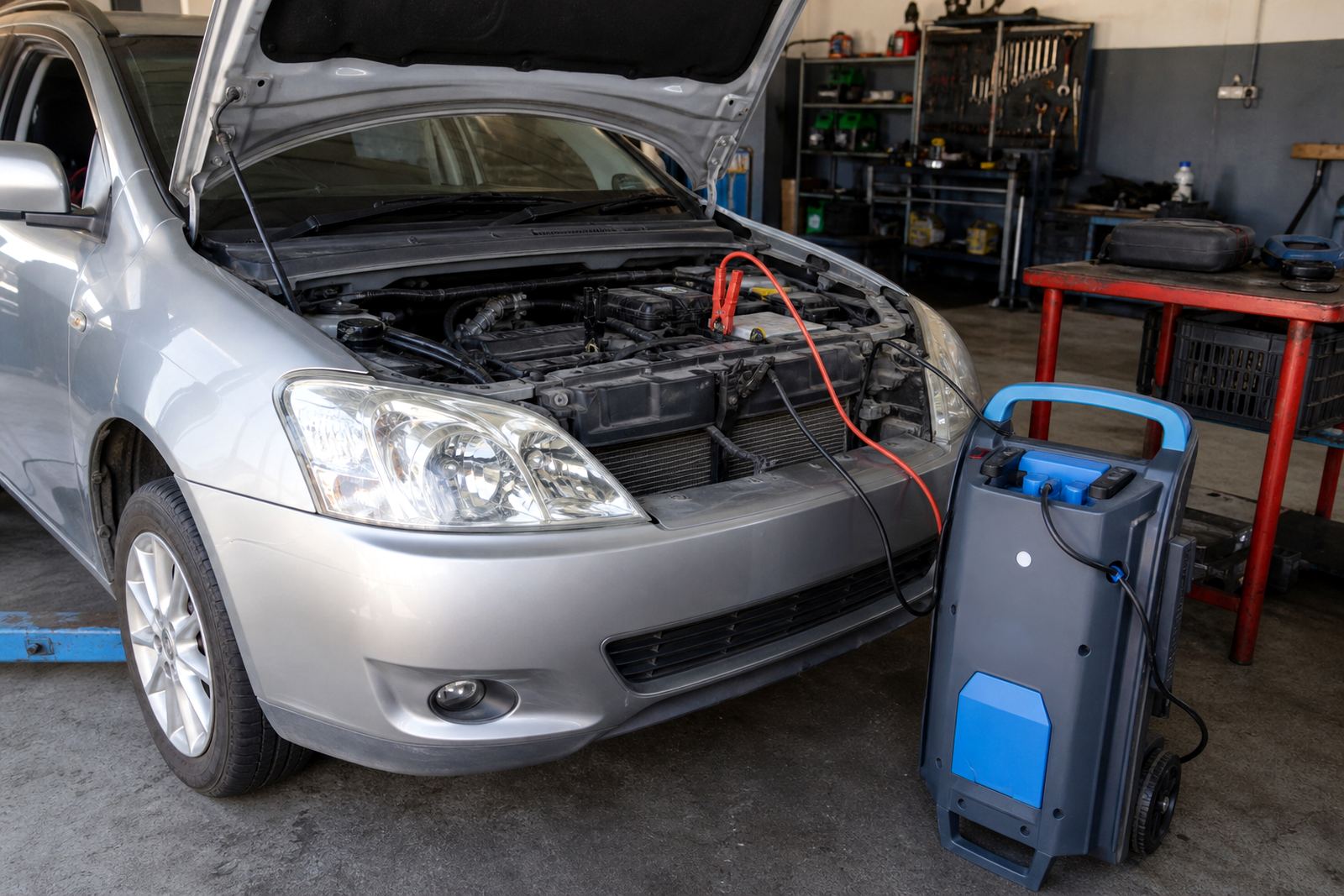
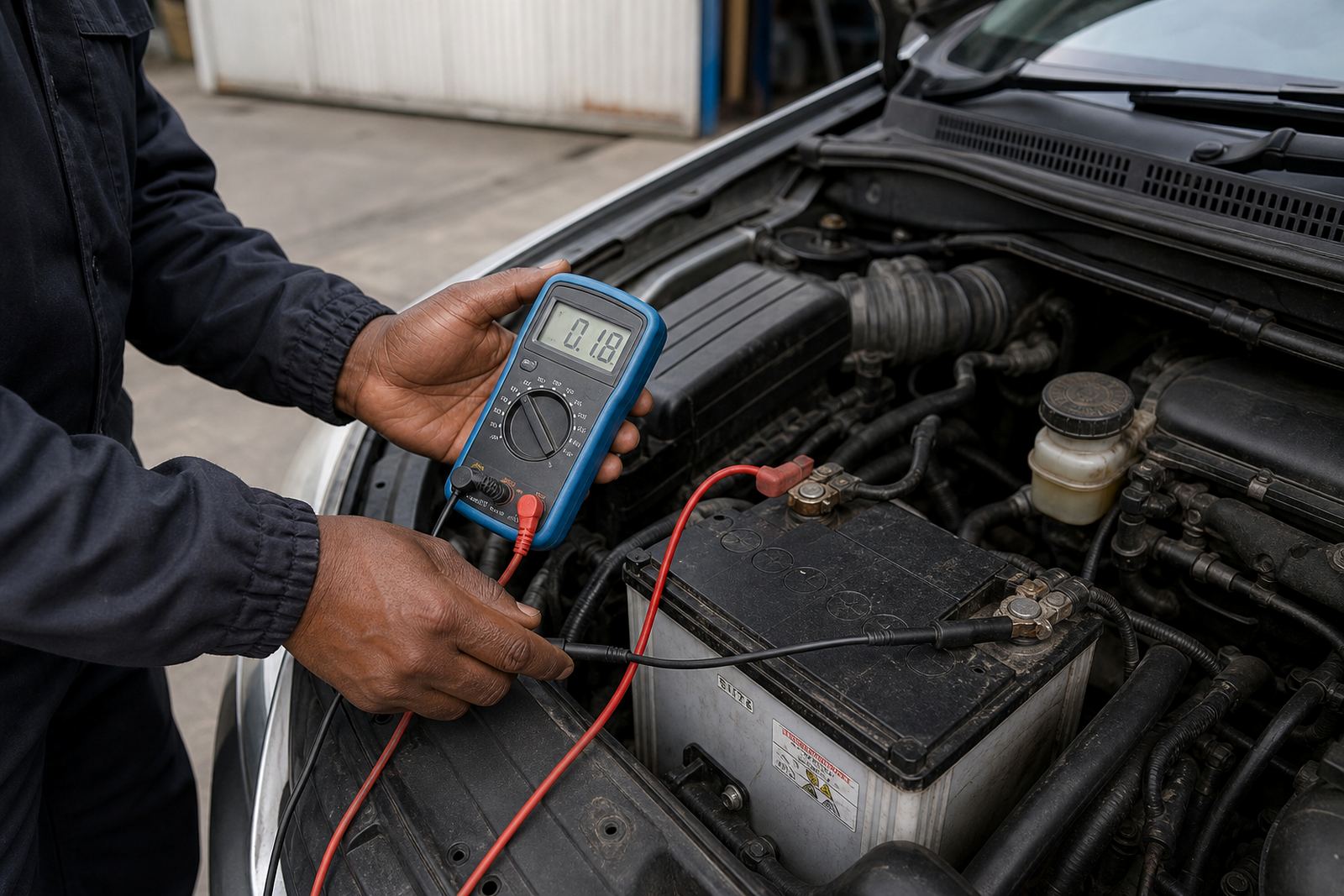
- Battery testing under load and resting condition checks
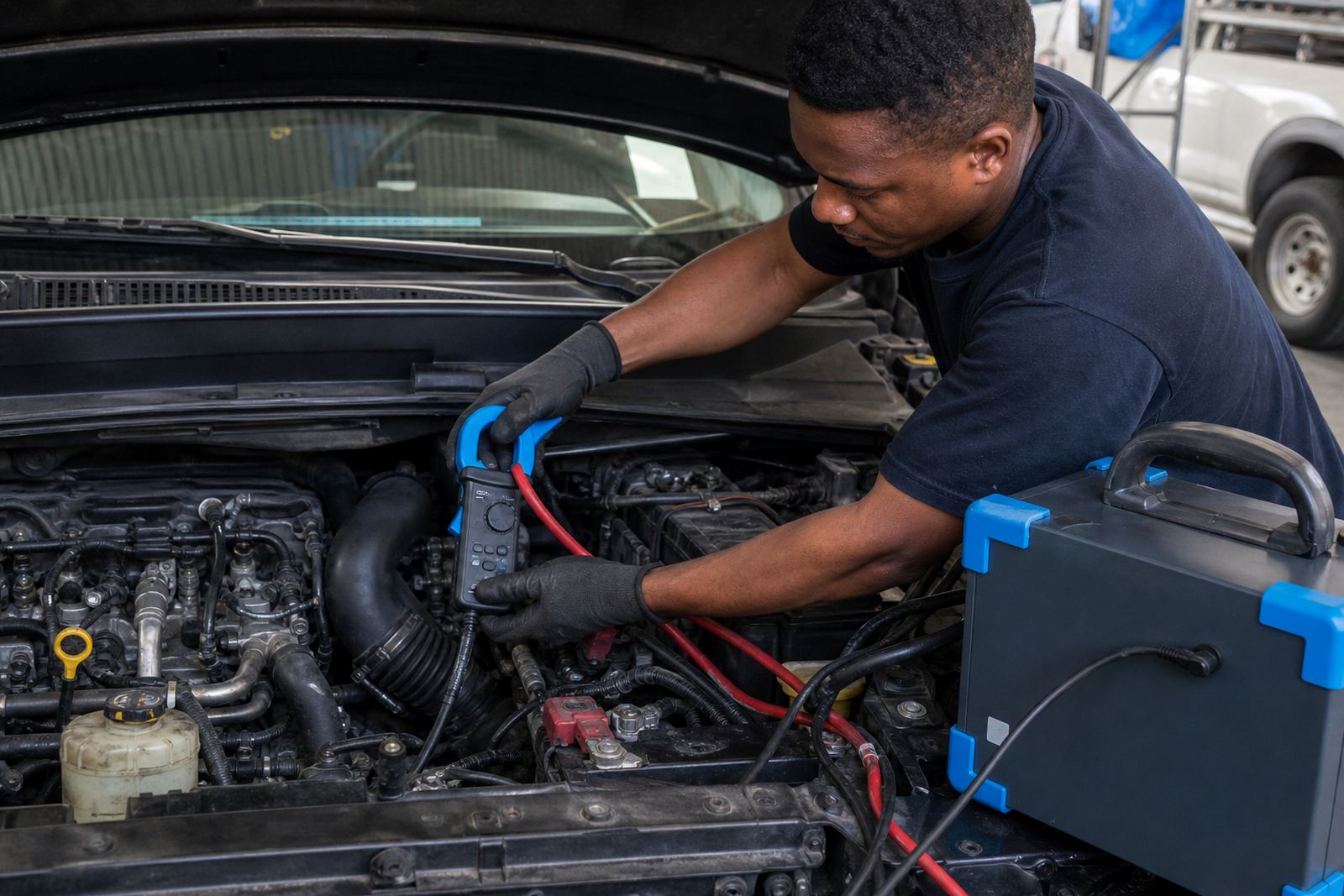
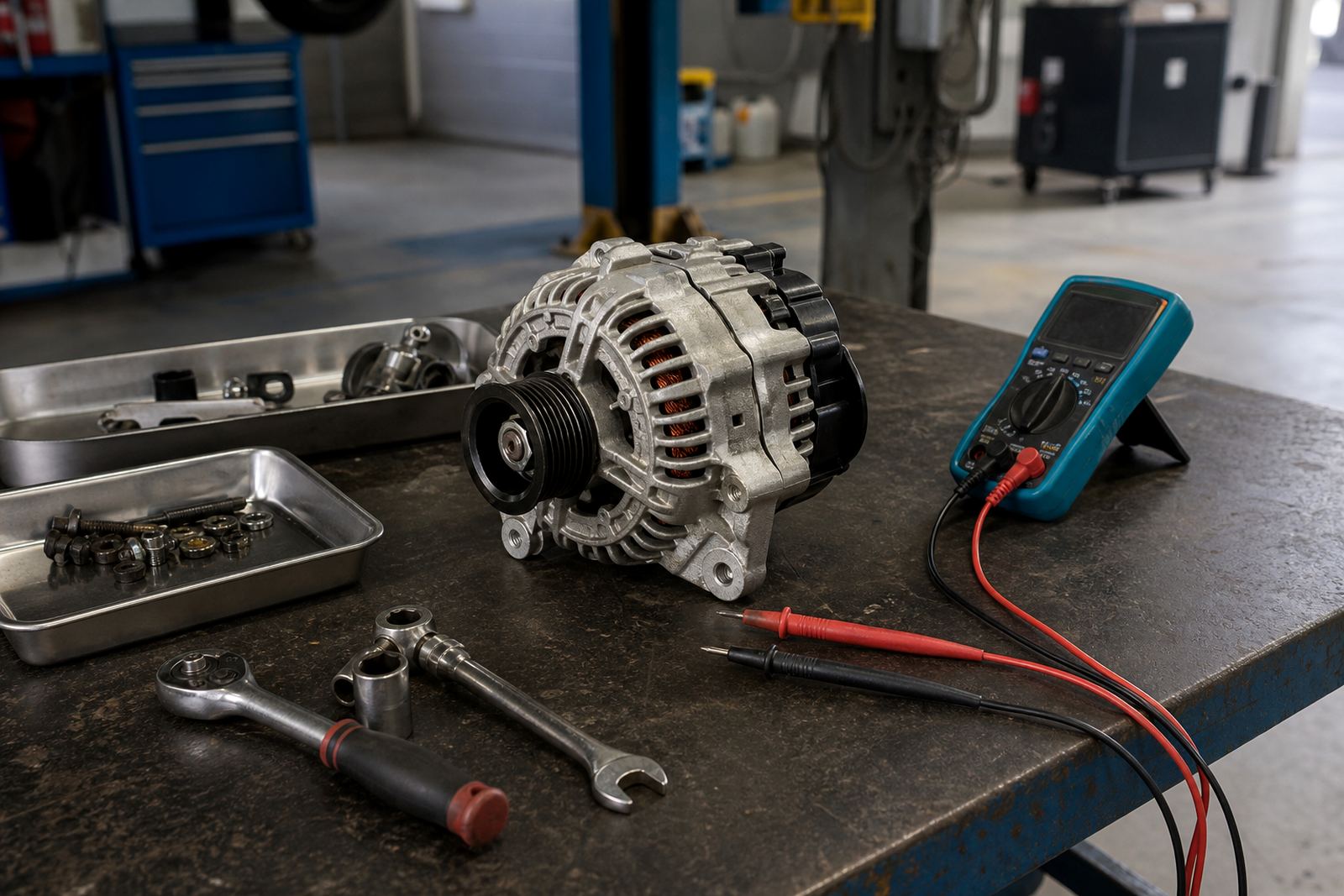
- Charging system testing on alternators and regulators
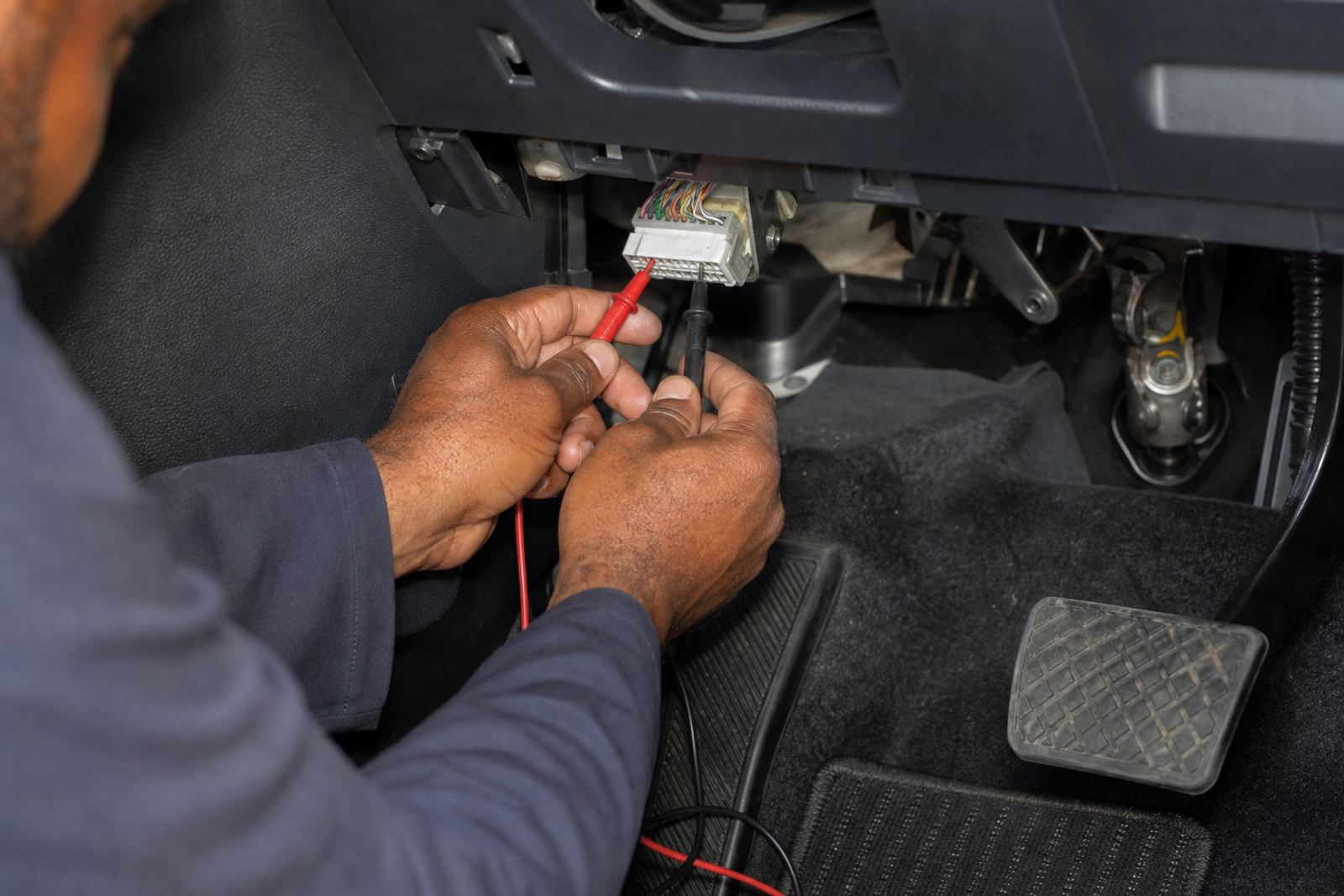
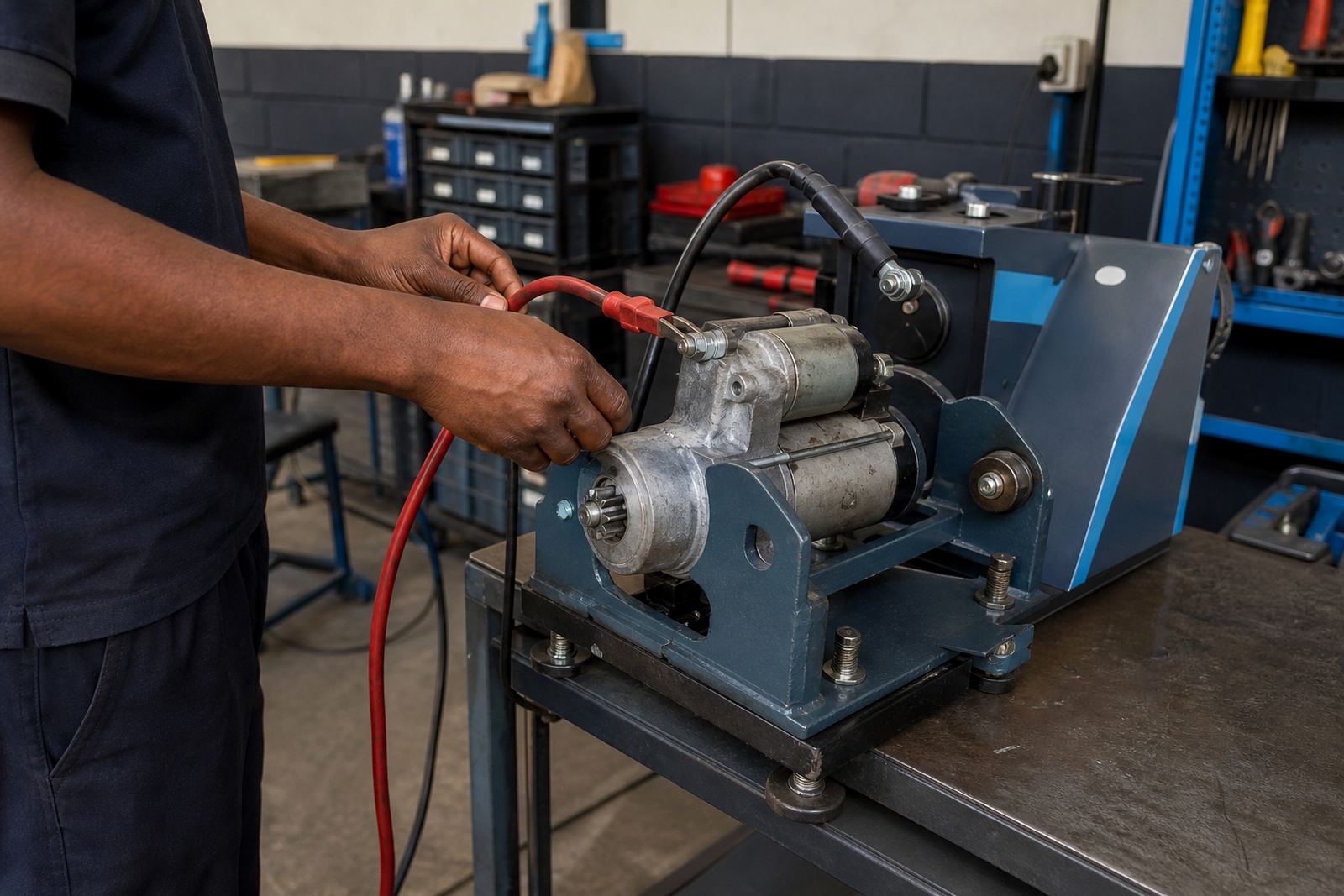
- Starter circuit checks, including feed, trigger and earth paths
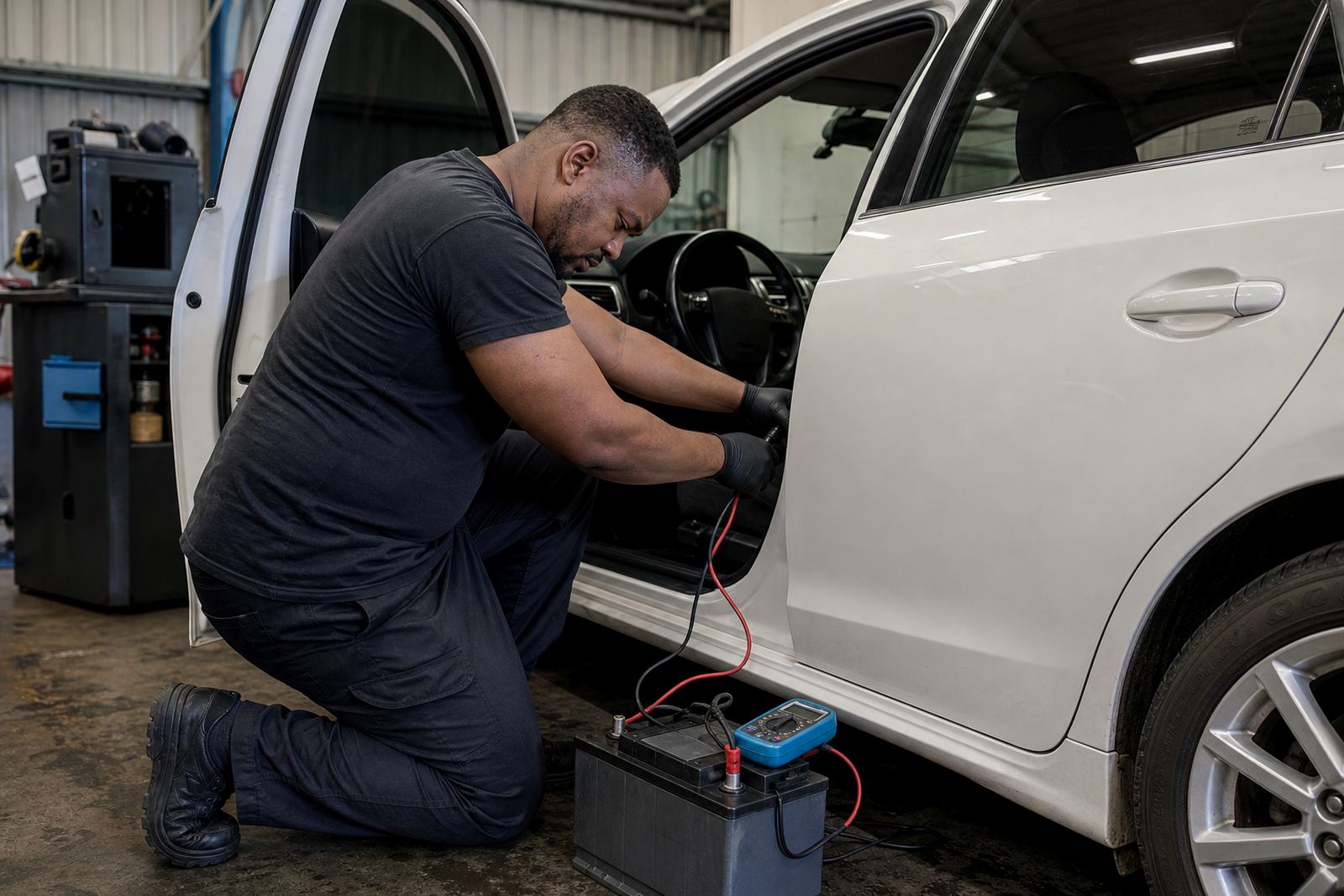
- Parasitic drain testing for batteries that go flat while parked
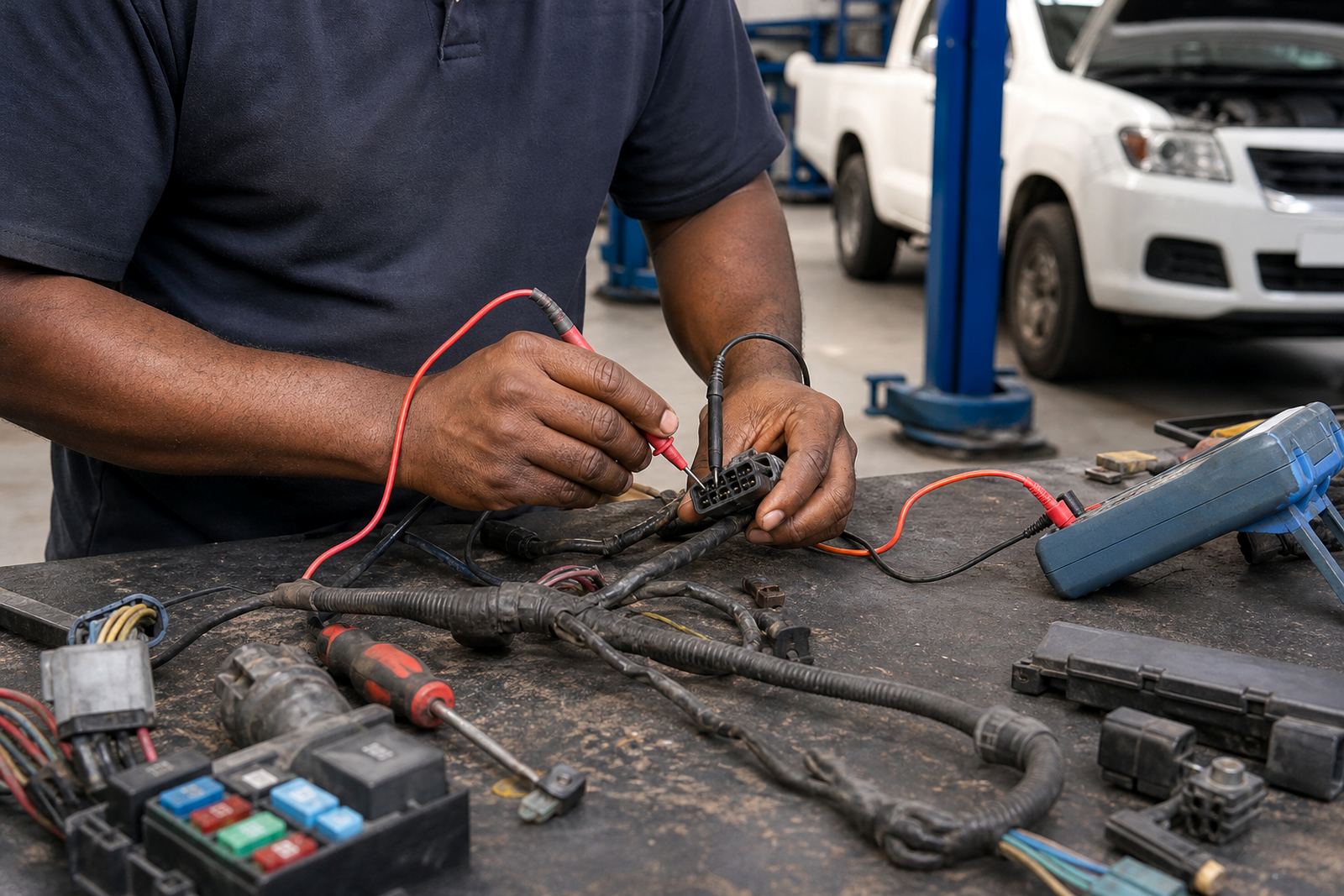
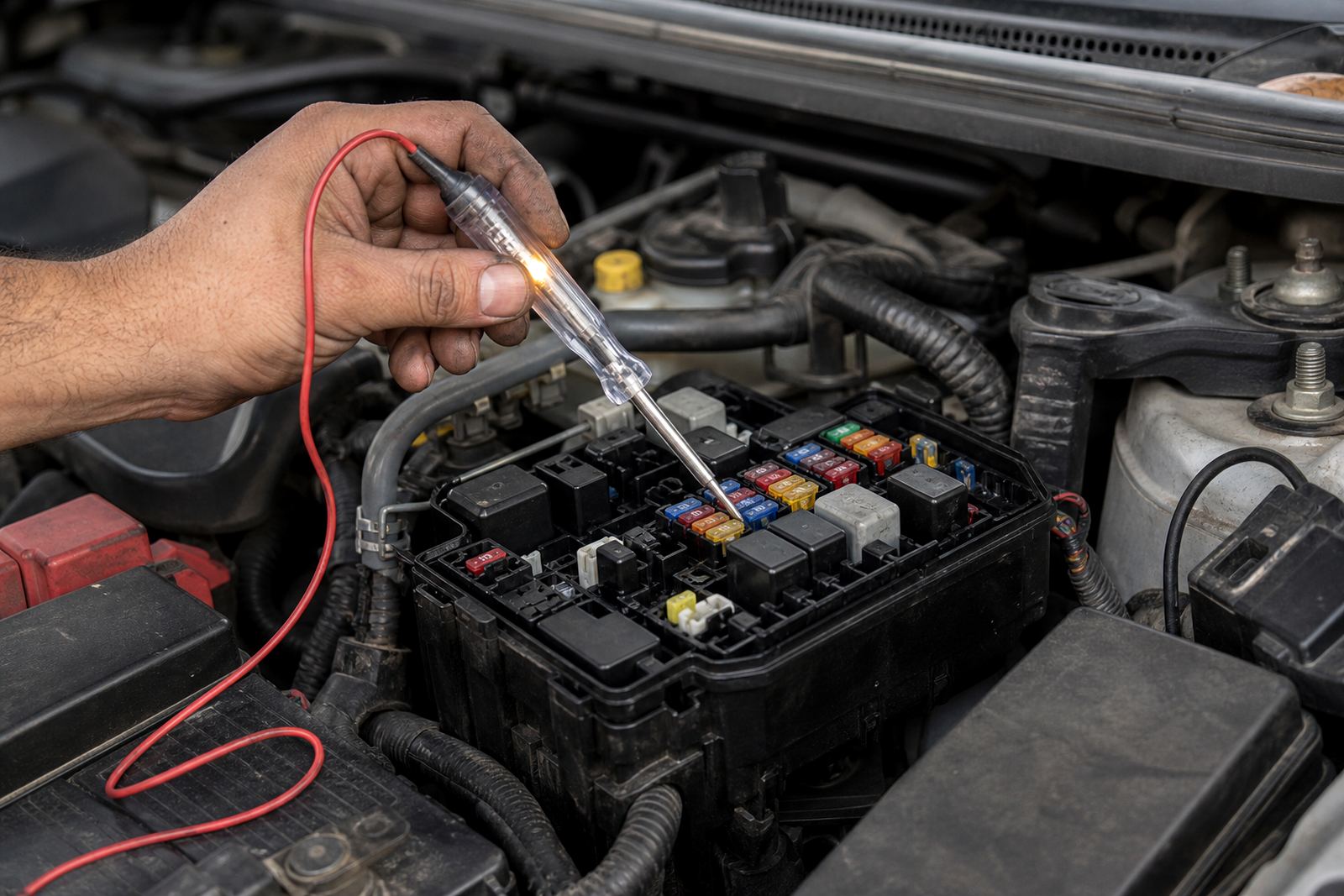
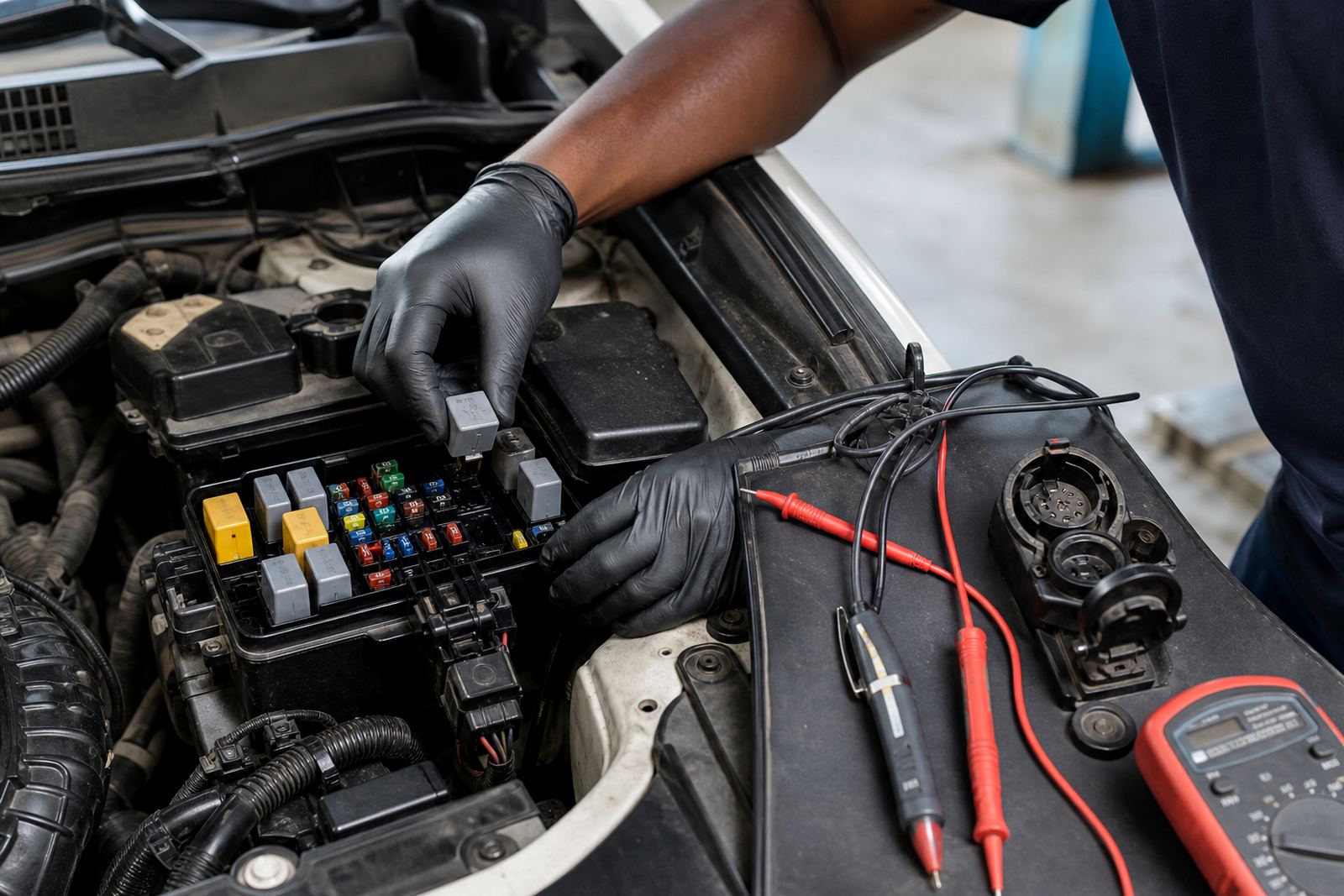
We also look at fuse boxes, earth faults, relays, lighting circuits and wiring condition where the vehicle has been worked on before. A tidy scan report means little if the cable insulation is damaged or a splice has gone green with corrosion.
Starter, alternator and charging system faults
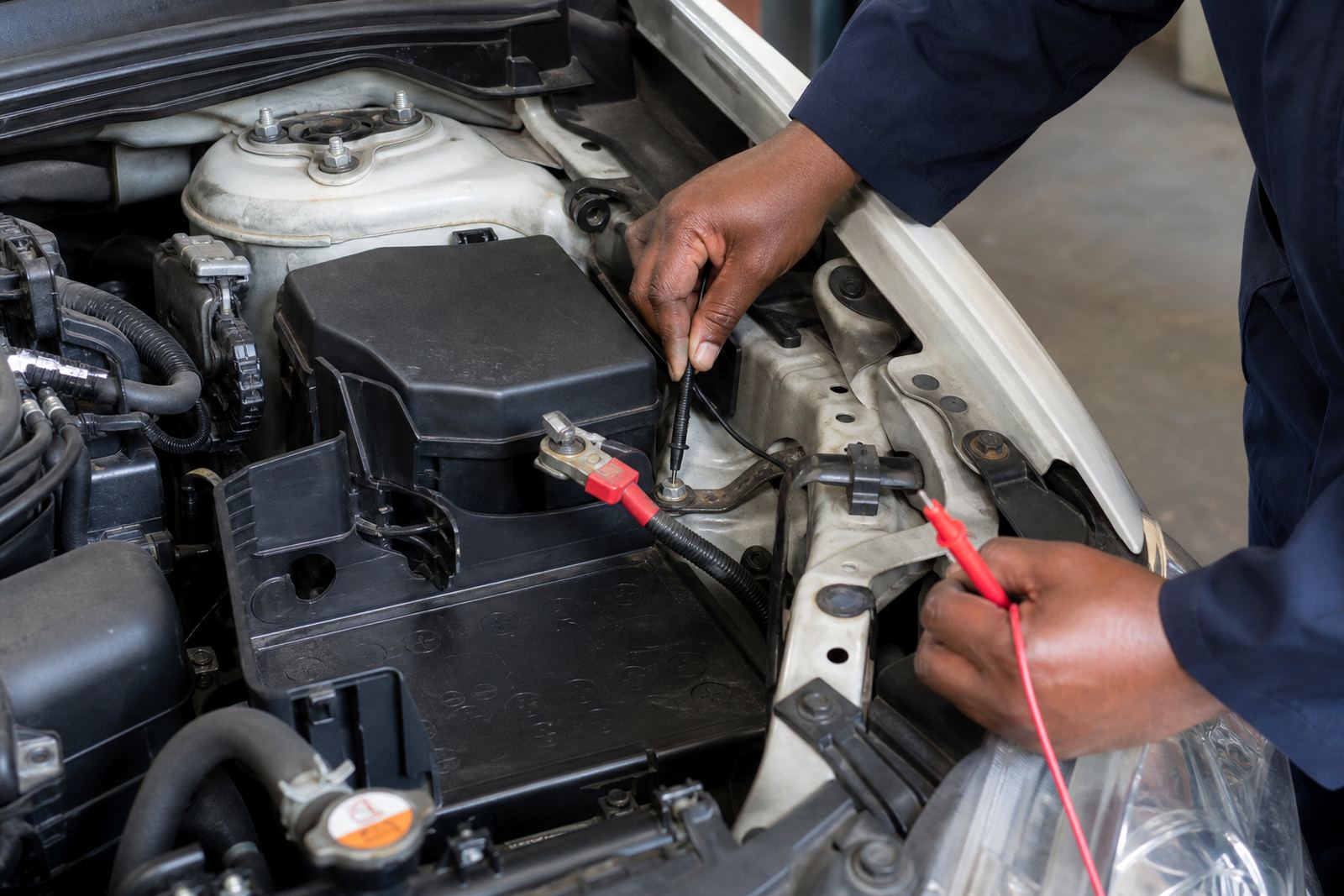
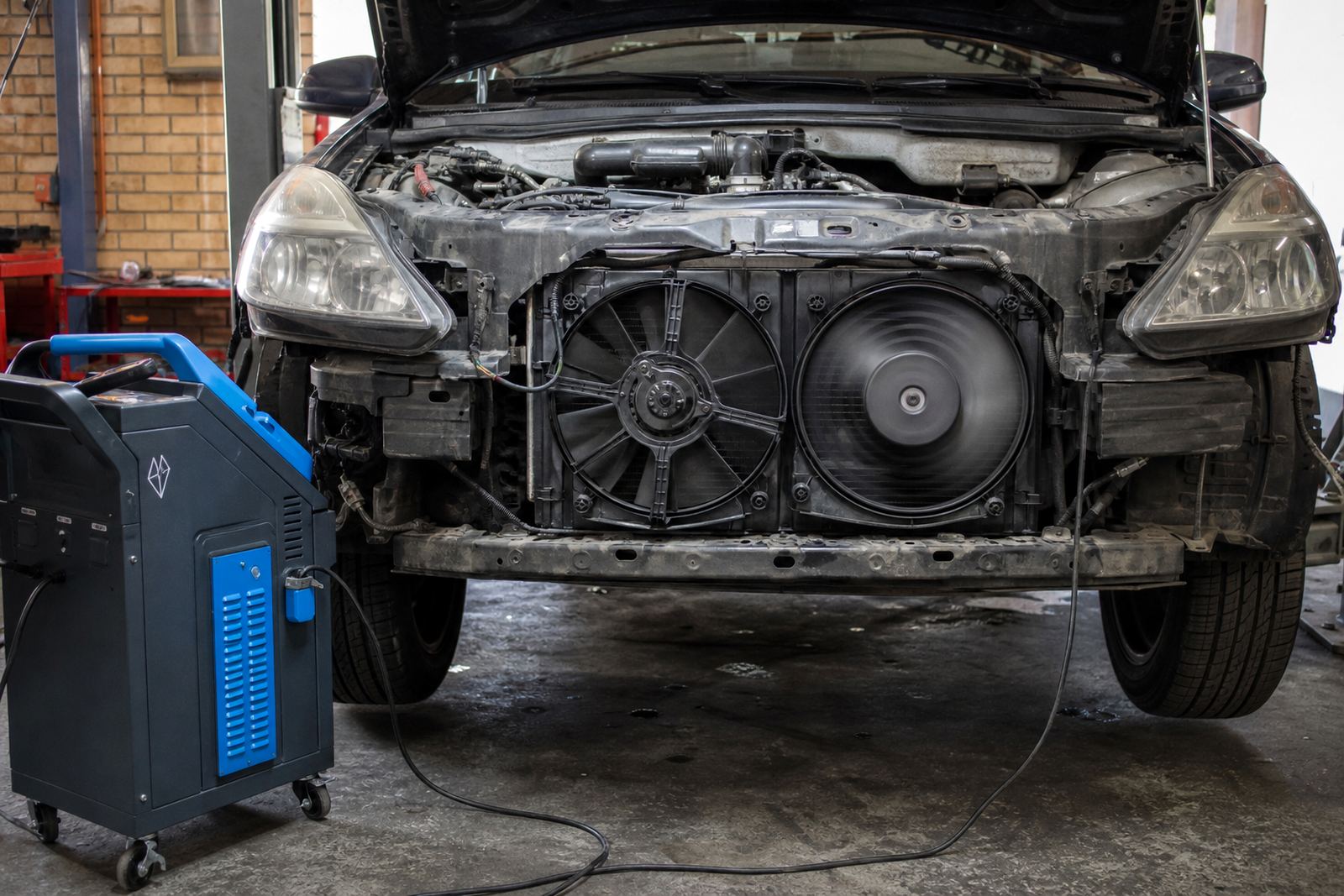
Starter and alternator work often sits behind the same complaint: slow cranking, dim lights, battery warning lamps or repeated jump starts. We test the battery first, then check whether the starter is pulling too much current or the alternator is failing to charge properly once the engine is running.
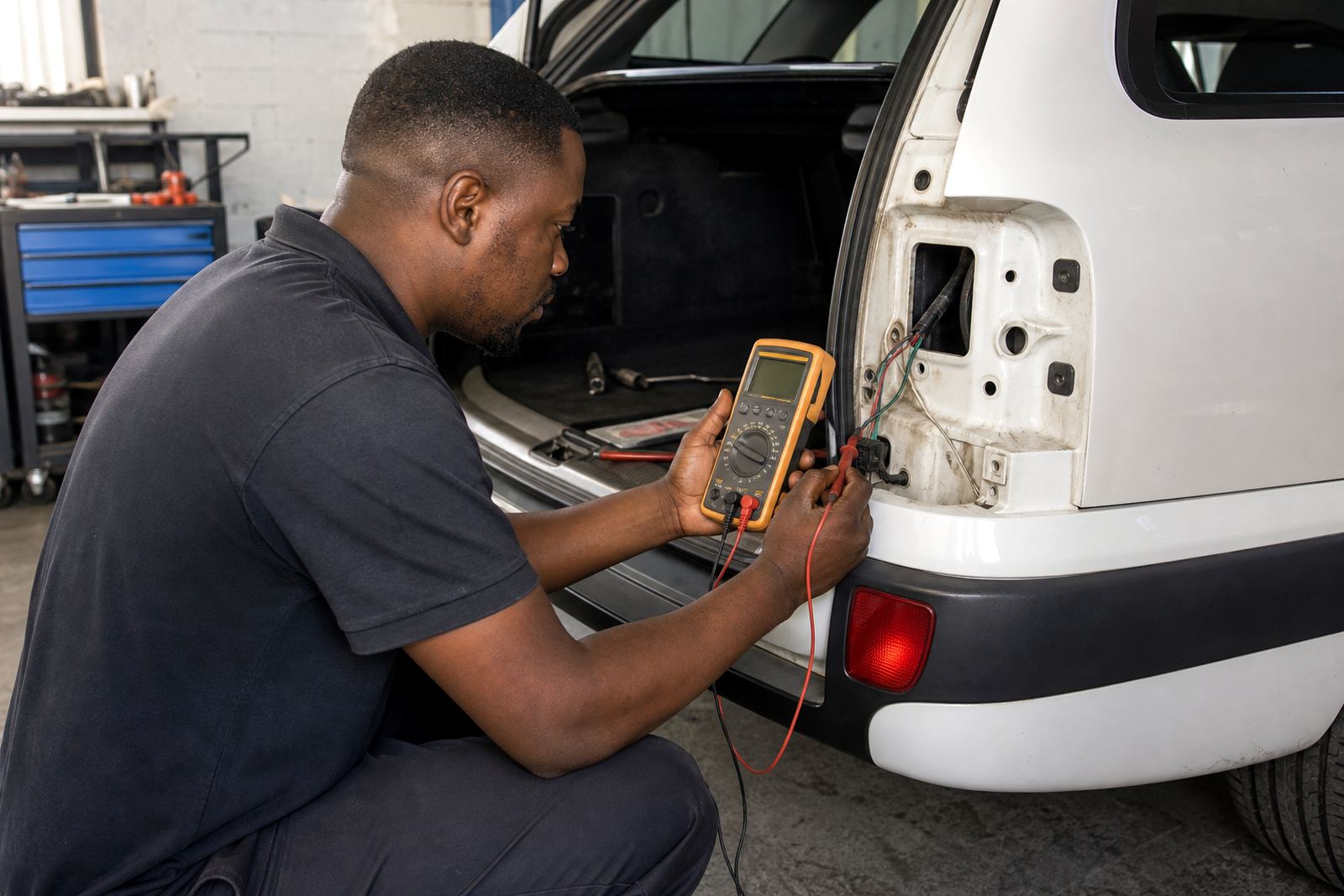
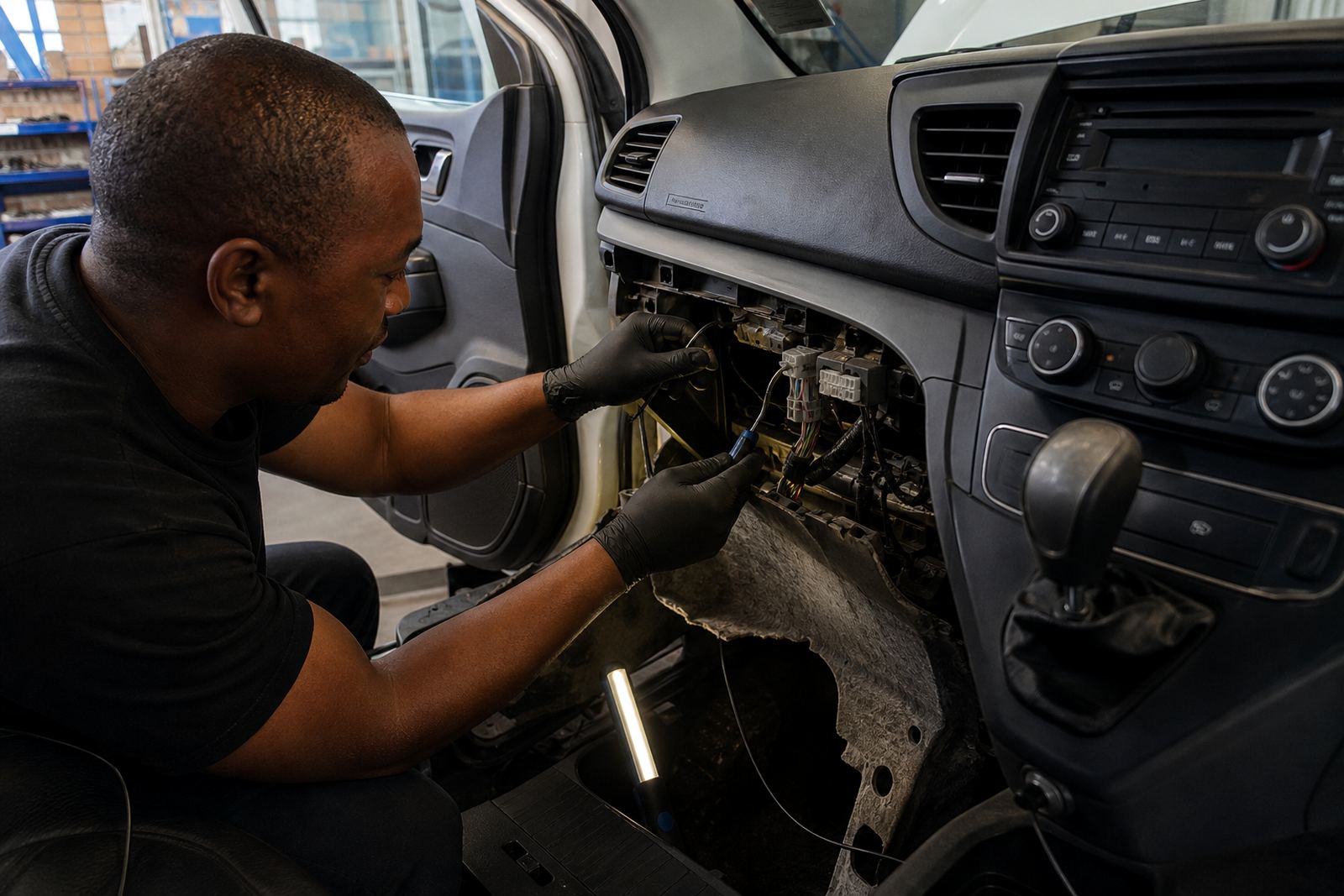
If the problem is in the circuit, we trace it back through the wiring, starter relay, fuse box and main earth straps. A charging issue can come from worn brushes, a slipping drive, a damaged cable, or a poor connection that only shows up when the engine bay heats up. These faults need proper metre readings and accurate testing.
Wiring repairs for fleet vans and daily drivers
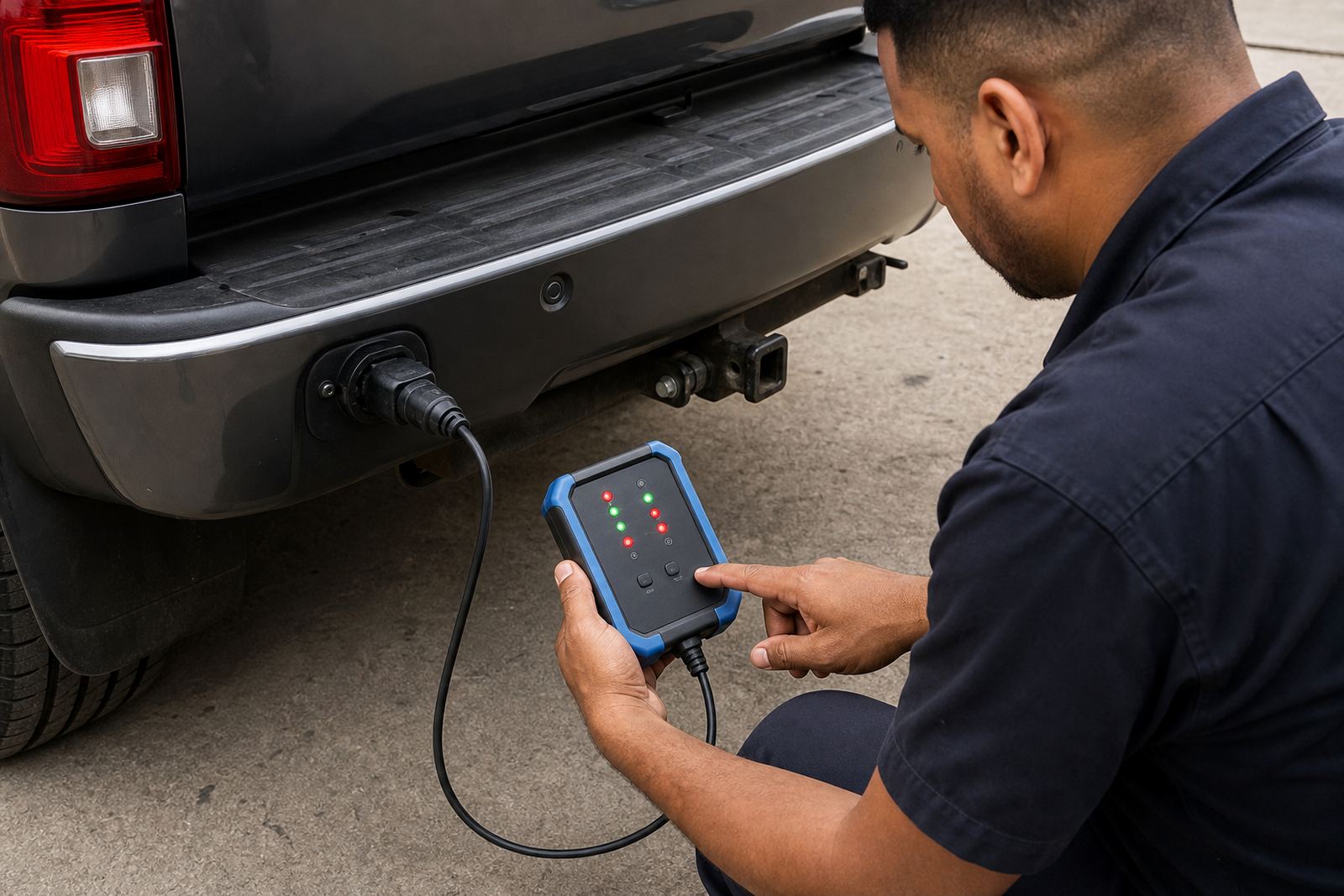
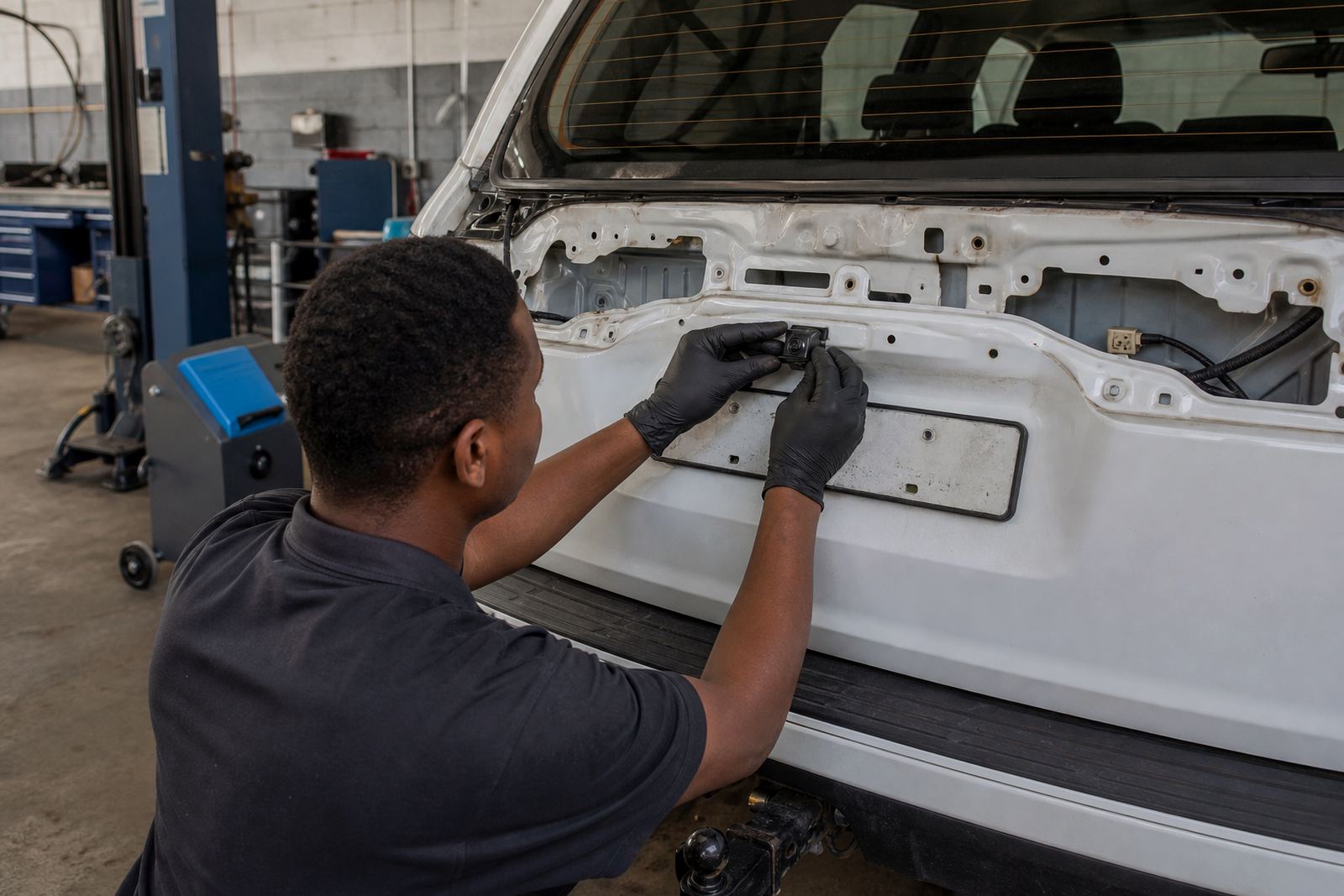
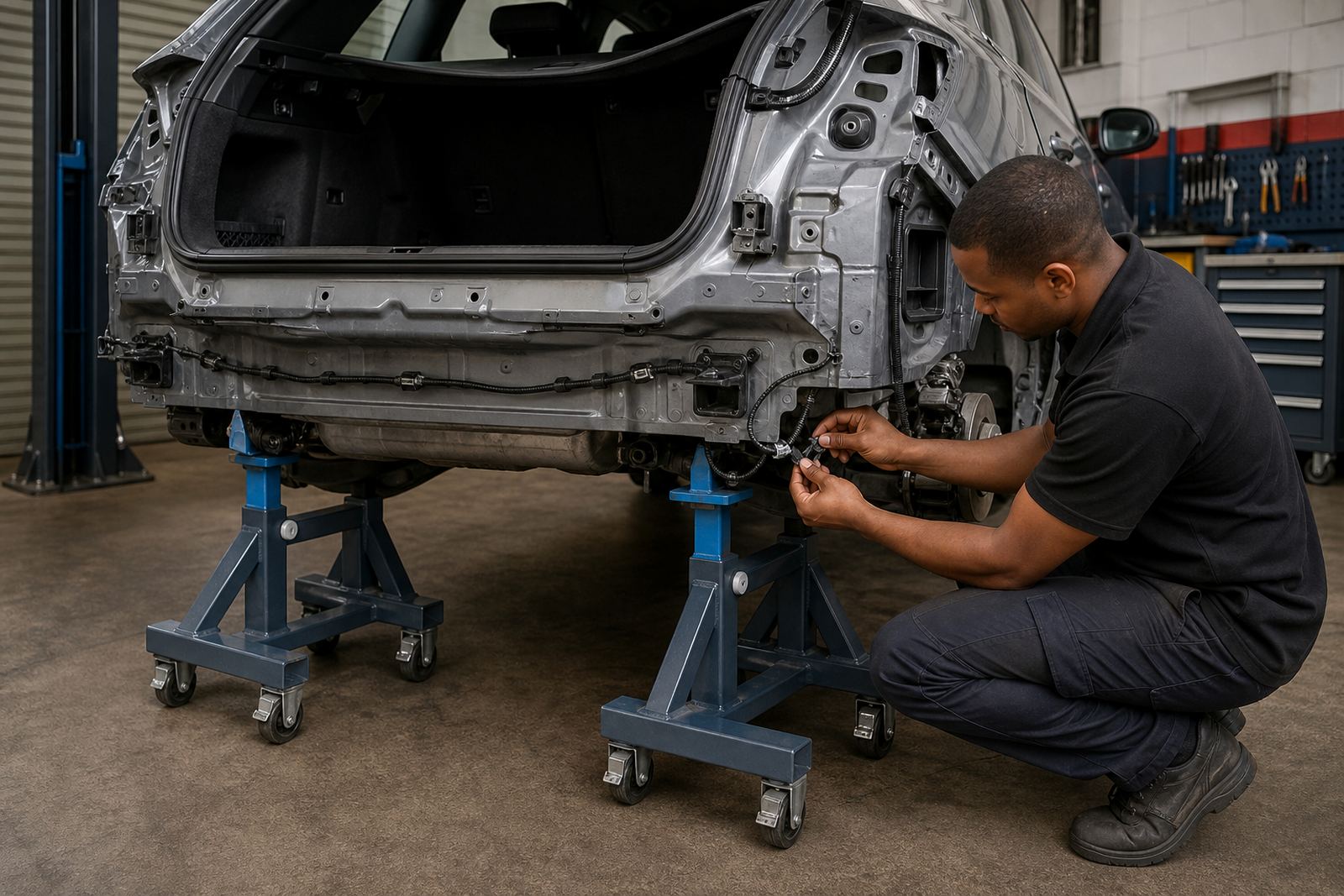
Loose connectors, rubbed-through wiring and poor trailer connections can cause all sorts of faults that seem unrelated. A single damaged wire can affect lights, starting, charging or a control signal on a CAN bus circuit. We repair wiring with the correct gauge cable, secure joints and proper protection against vibration and moisture.
Common repair work includes:
- Starter circuit repairs and earth fault correction
- Lighting repairs for headlamps, tail lamps and brake circuits
- Fuse box repairs where heat or corrosion has caused damage
- Trailer wiring repairs on towing vehicles and work fleets
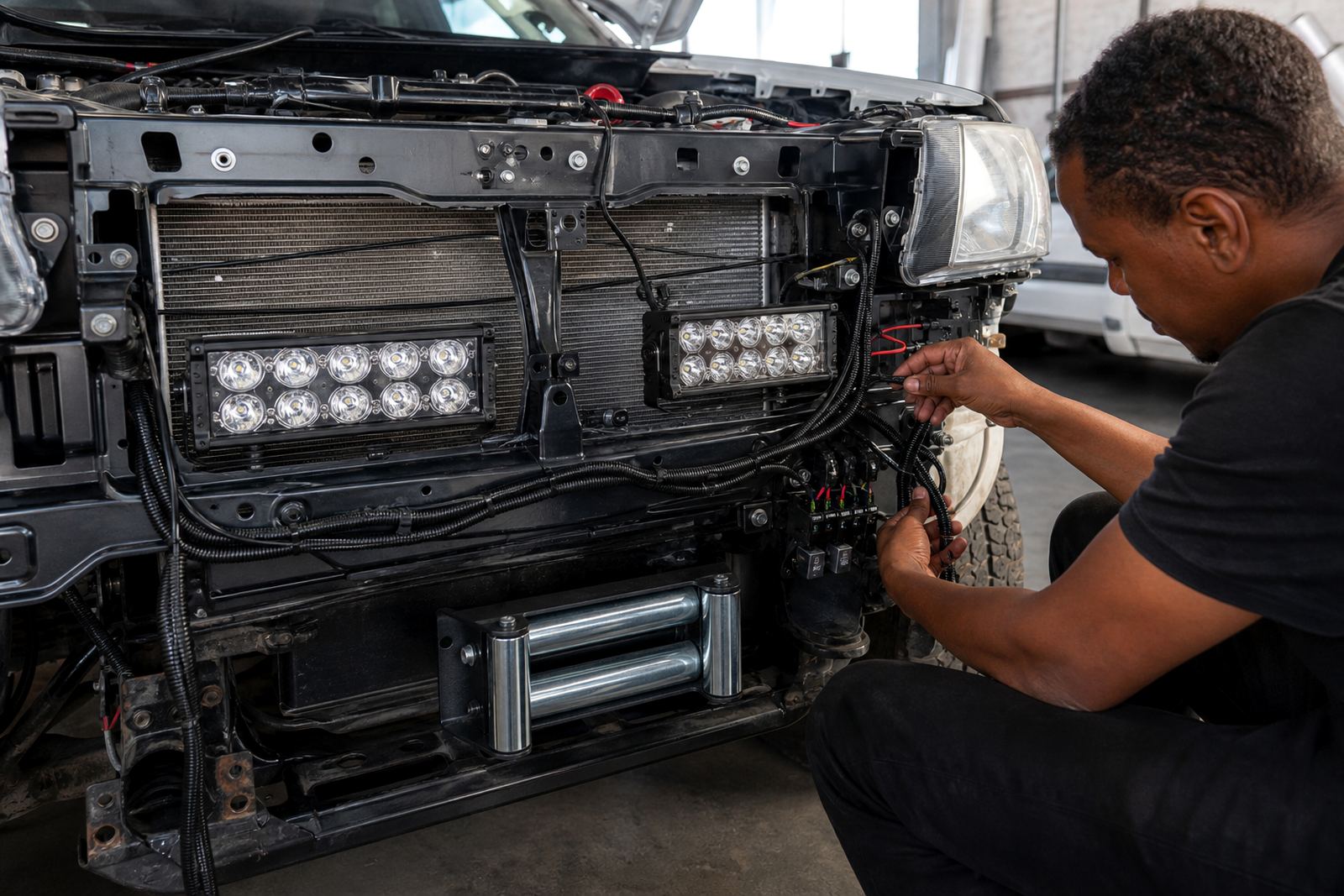
- Accessory rewiring for added electrical equipment
For Cape Town vehicles that work near the coast, moisture and road grime can make the problem worse. In those cases we check the connectors, relay contacts and earthing points as carefully as the wiring itself.
CAN bus fault checks and modern electrical systems
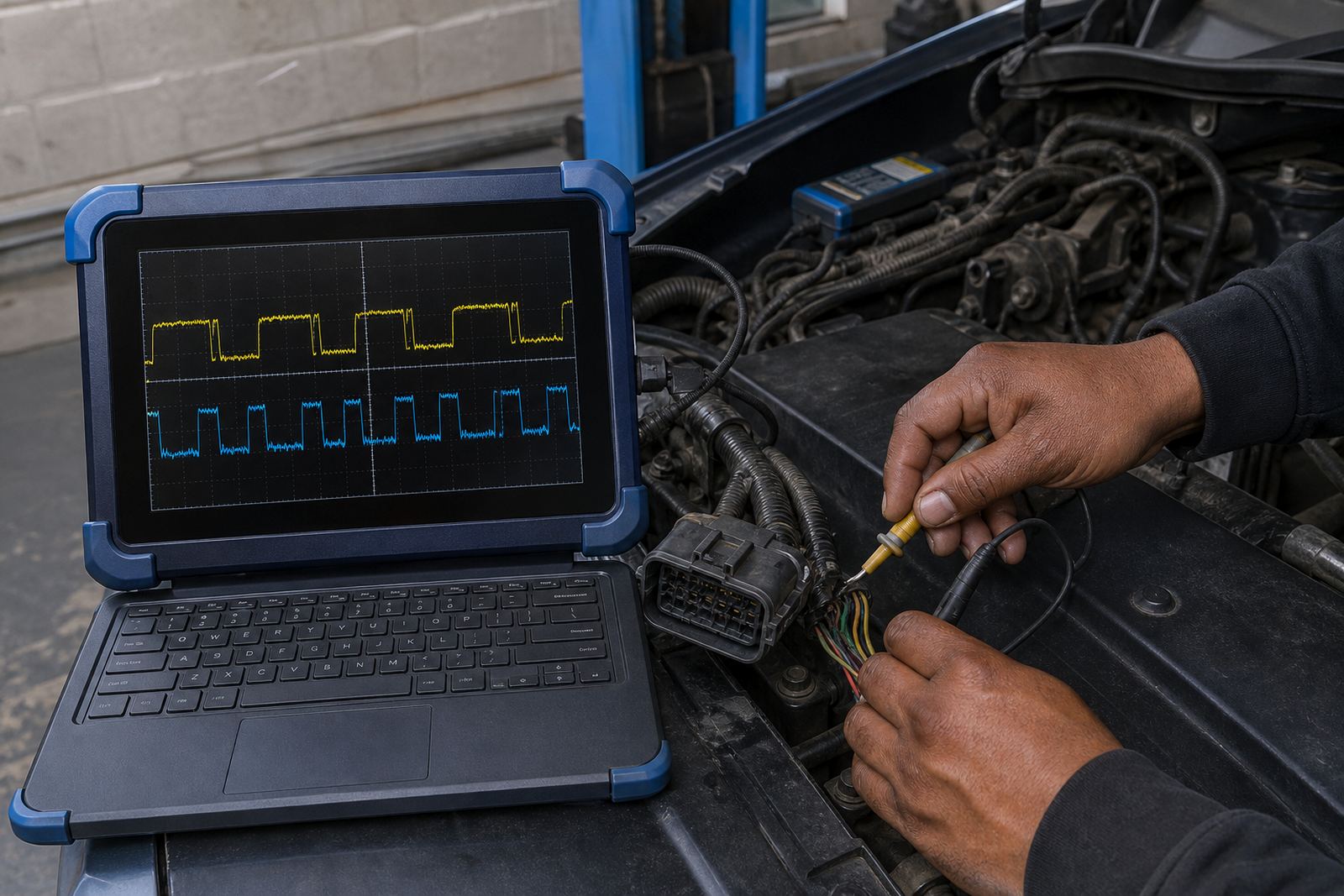
Modern vehicles share information between modules, so one bad connection can show up as several different warnings. CAN bus faults can present as intermittent starting issues, dash warnings, communication errors or accessories that stop responding. These faults need a technician who understands the basics of network signalling, voltage drop and module communication.
We handle each warning light on its own, since dashboard alerts can point to very different faults in a vehicle. Some faults sit in a sensor circuit, some in a power feed, and some in the communication line between modules. The aim is to narrow the fault down cleanly, then repair the right part of the system.
Tracker and accessory fitting for working vehicles
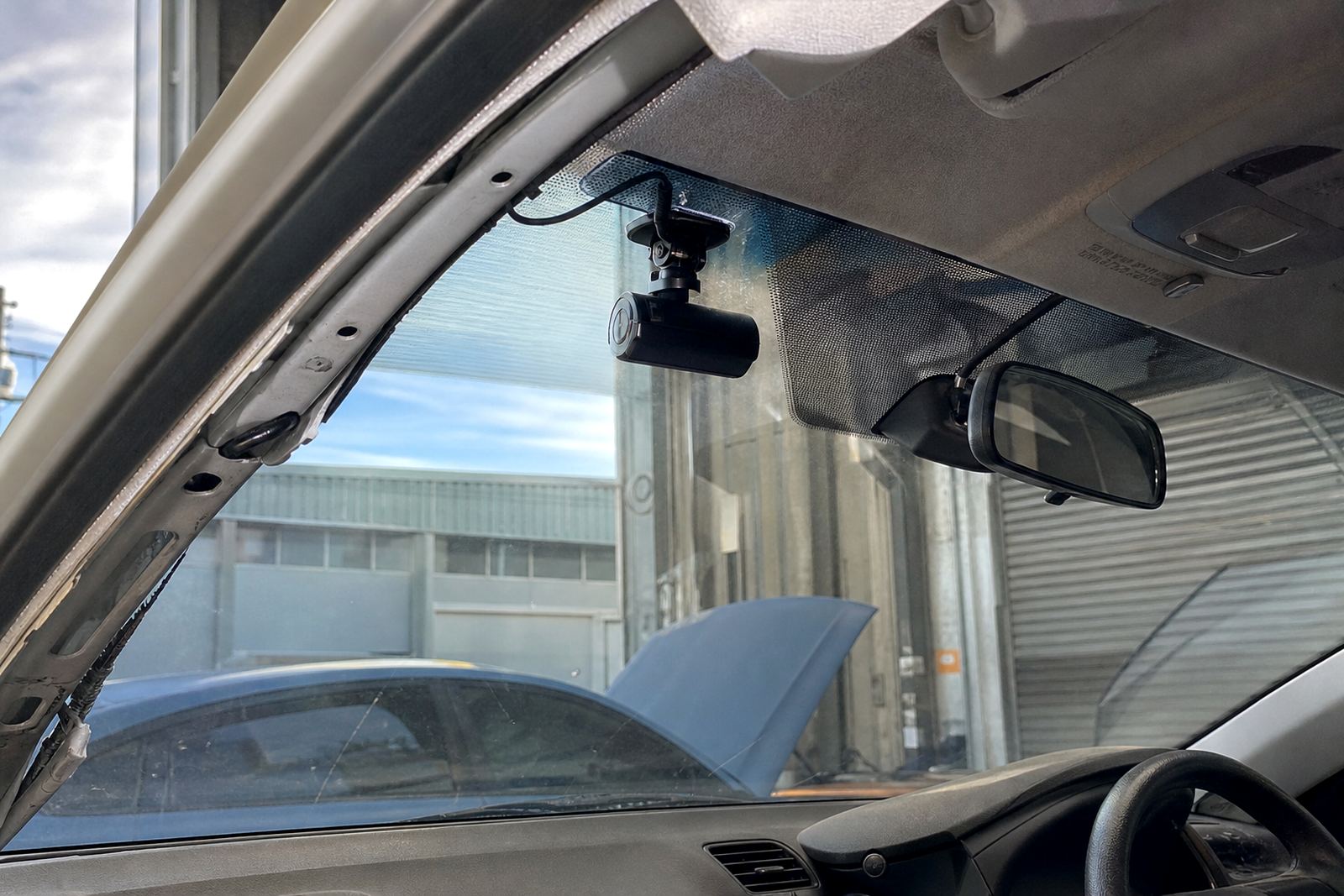
We also fit trackers and accessories for private vehicles and fleet units that need added electrical equipment. That includes fitting, re-routing, fuse protection and clean integration into the existing wiring so the added item does not create another fault later on.
This work suits vehicles that need extra safety gear, convenience items, trailer electrics or fleet tracking hardware. Each installation is checked for power feed, earthing and cable security before the vehicle leaves the bay or heads out on a call-out.
Choosing the right service area and call-out option
Clients in Montague Gardens, Cape Town, Bellville, Milnerton, Somerset West, Paarl, Brackenfell and Durbanville can book workshop or mobile work depending on the fault. A mobile call-out is useful when a vehicle will not start, has a dead battery, or needs an on-site check before it is moved.
Workshop testing works better when the fault needs deeper tracing, a controlled charging test, or access to more of the electrical system. If the issue is a warning light, repeated battery drain, a starter that clicks, or a wiring fault that keeps returning, our contact form is the best place to send the details.