
What a charging fault really covers
A weak charging system is not always the alternator. The fault can sit in the battery, the main feed cable, an earth point, a fusible link, a regulator circuit or the warning lamp path. On some vehicles the charging complaint shows up as slow cranking, dim lamps, warning lights or repeated flat batteries after parking overnight.
Our workshop in Montague Gardens handles charging repairs for Cape Town, Milnerton, Bellville, Somerset West, Paarl and nearby routes through mobile call-outs where that makes sense. We work on passenger vehicles, vans and fleet units, with checks that suit vehicles that spend long hours in traffic, carry accessories or run in damp coastal air.
Checks we carry out before any repair
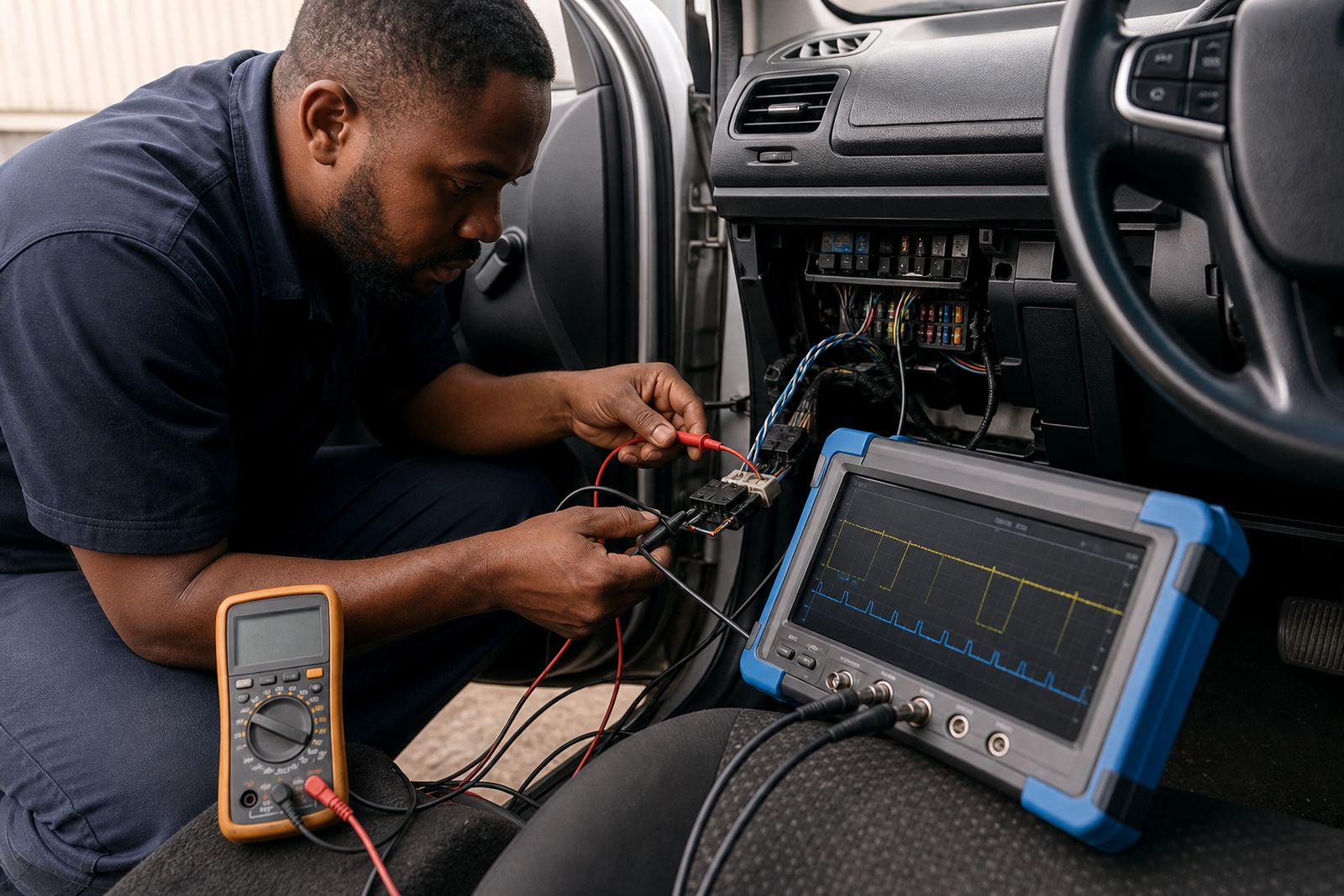
We start with basic electrical facts. Battery condition, resting voltage, cranking voltage drop, alternator output, ripple, belt condition and cable losses all matter. If the vehicle uses a smart charging strategy, we also look at live data and control signals so a healthy alternator does not get blamed for a control issue.
- Battery test under load and at rest
- Alternator output and regulator check
- Charging voltage across the battery terminals
- Voltage drop on positive and earth paths
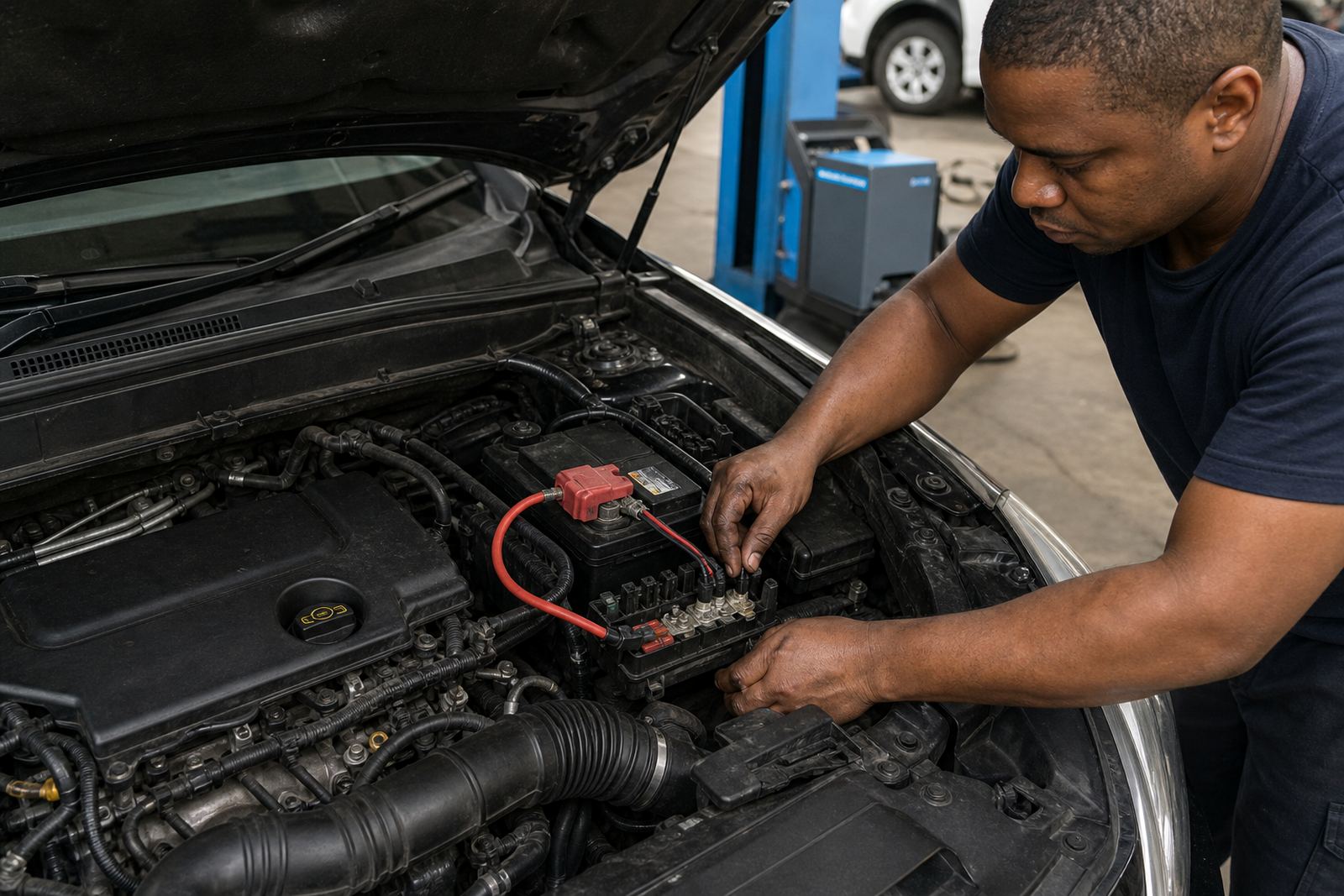
- Fusible link, main fuse and cable inspection
- Live data review on vehicles with electronic control
Repairs that are usually part of the job
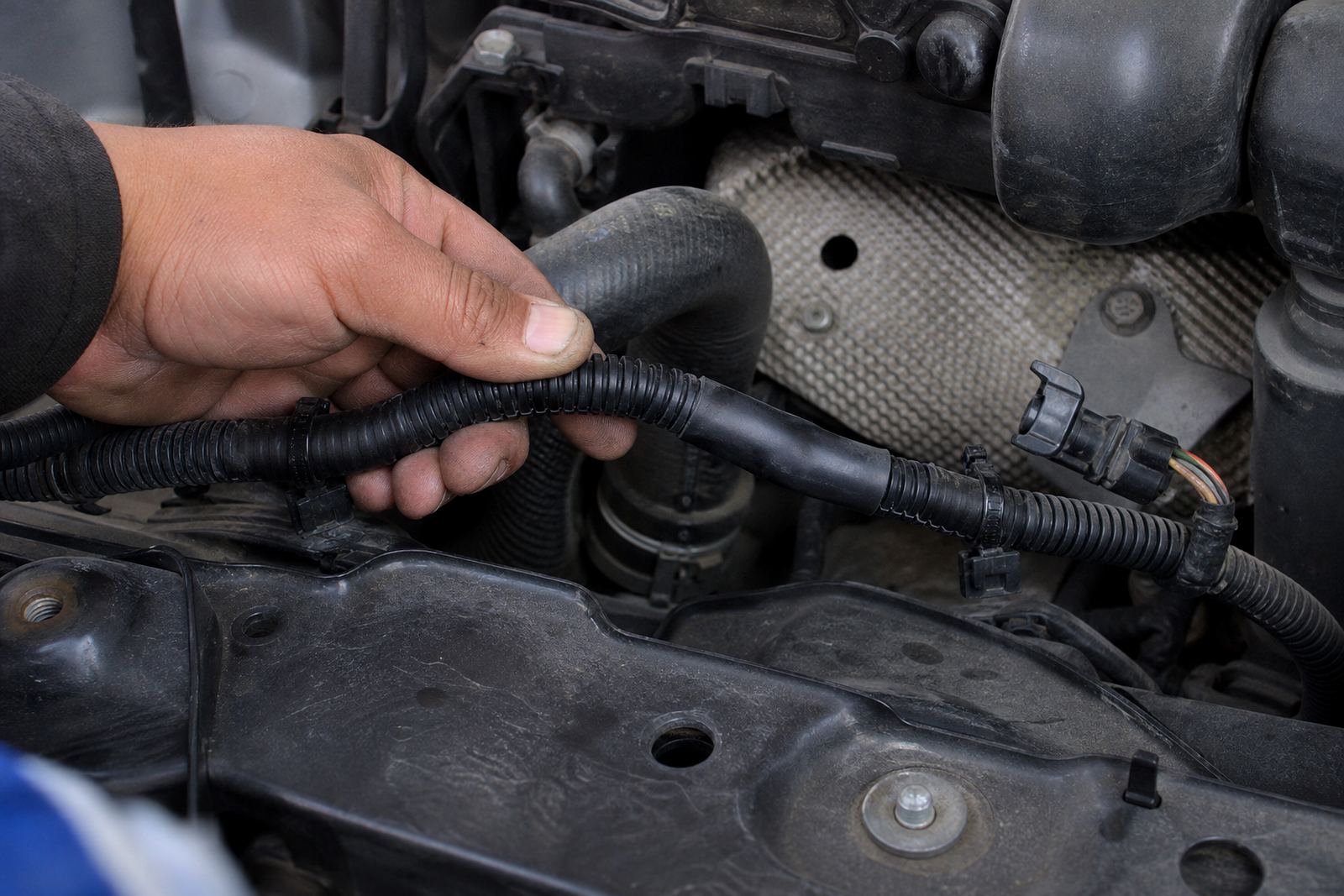
Once the fault is found, the repair may be small or more involved. A corroded terminal, damaged cable lug, loose earth strap or heat-stressed connector can create the same symptoms as a failed alternator. We repair wiring properly, replace damaged sections, clean contact points and secure the circuit so the load has a clear path.
Where the alternator is at fault we deal with brushes, bearings, regulator issues, pulley wear and internal electrical faults when repair is practical. Starter side complaints can also show up as charging concerns, because a weak starter circuit or poor earth can pull the whole system down. On older vans and working vehicles, exposed wiring and trailer connections often need careful tracing too.
- Alternator repair or replacement of damaged parts
- Starter circuit repair where it affects charging behaviour
- Earth fault repair and cable renewal
- Fuse box and fusible link repair
- Accessory wiring correction after added equipment
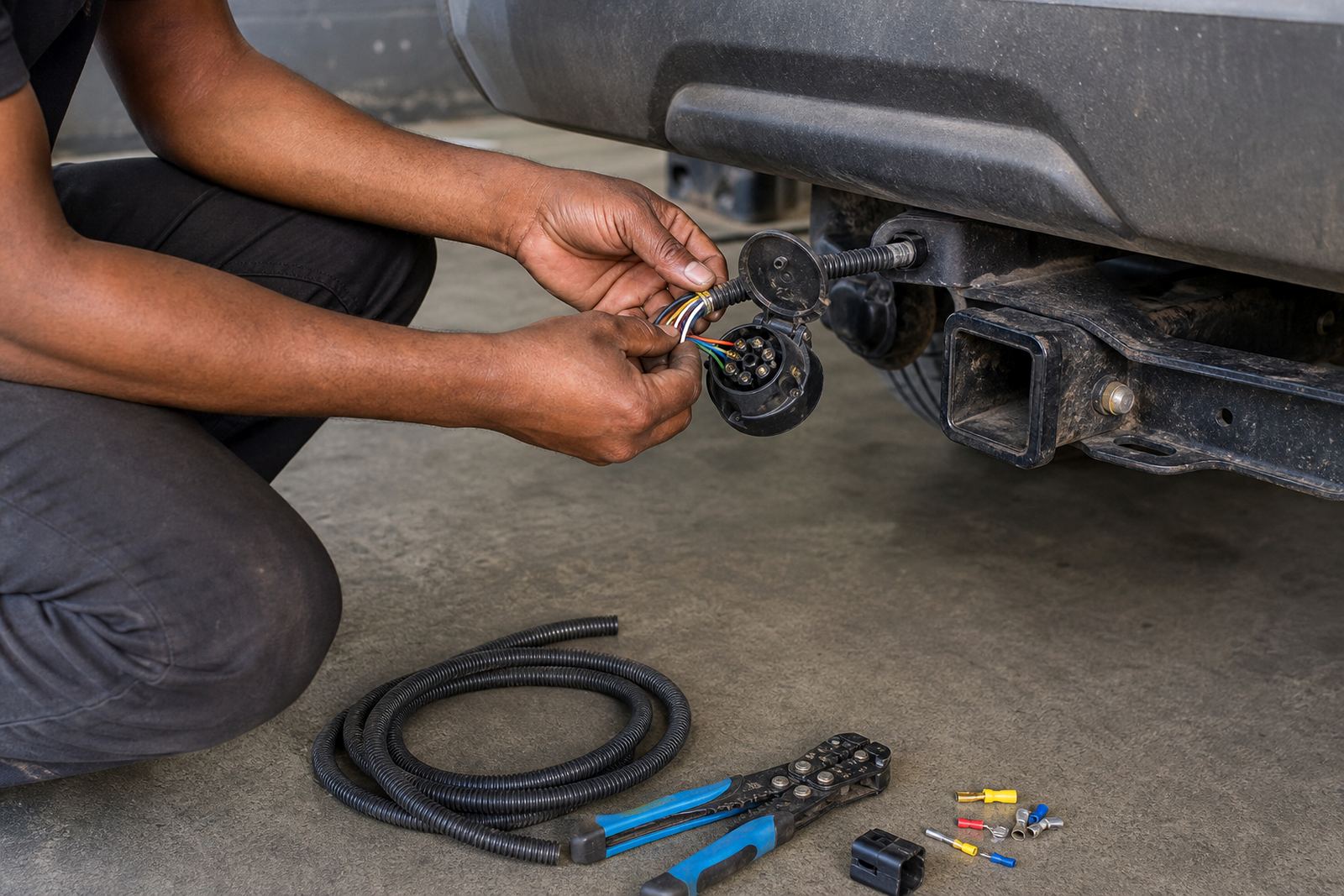
- Trailer wiring repairs where charge loss is linked to the rear loom
How the workshop flow works
Every job starts with symptom notes and a hands-on inspection. If the vehicle is drivable, we bring it into the workshop and map the fault step by step. If it is parked at a business yard, depot or home, our mobile technician can attend in the Western Cape and carry out the first round of tests on site.
After the diagnosis we explain the failing section, the repair method and the parts required. Some jobs are finished in one visit, while others need a bench repair, loom repair or alternator work that takes longer because the problem sits deeper in the circuit. We keep the process practical, with no drama and no unnecessary parts swapping.
Turnaround, parts and pricing approach
Charging repairs vary because the fault can be simple or buried inside the harness. A clean terminal service is not the same as tracing a parasitic drain through a corroded cable run or rebuilding a charging circuit after water damage. We price by the work actually needed, the access involved and the parts that must be replaced.
Before work begins, we set out the likely repair path and any options if a part can be repaired instead of replaced. That helps fleets and private owners plan around workshop time, with clear numbers for labour, electrical components and any mobile visit. If the vehicle needs extra testing after the first repair, that is handled as part of the same technical job.
Aftercare for fleets and private owners
After the repair, we retest the system under load and check that the battery is charging correctly while the engine runs at idle and higher revs. We also look for any sign of repeat drain, loose connectors or heat build-up at the repaired point. That gives the owner a proper baseline for the vehicle after the fault has been fixed.
For fleet vehicles, we can note recurring patterns such as repeated battery losses after accessory fitment, poor earth contact at the body, or alternator strain after trailer use. For private owners, the useful step is often a short follow-up inspection after the vehicle has been driven and parked again, especially if the original fault involved intermittent warning lights or a hard-to-find cable break.
- Retest charging voltage and current draw after repair
- Check that warning lights clear and stay clear
- Confirm battery condition after the vehicle stands
- Inspect repaired joints for heat, movement and corrosion
Key facts
| Service area | Montague Gardens, Cape Town and mobile call-outs across the Western Cape |
|---|---|
| Fault types | Alternator faults, regulator issues, cable loss, earth faults, fusible links, battery drain links |
| Testing methods | OBD fault codes, live data, battery load tests, charging voltage and voltage drop checks |
| Vehicle types | Passenger cars, fleet vehicles, bakkies, vans and light commercial units |
| Repair scope | Wiring repair, alternator repair, starter circuit checks and related charging work |
| Workshop base | Montague Gardens, Cape Town |