When a fuse box starts causing trouble
A fuse and relay box is the control point for many vehicle circuits, so one poor contact can affect more than one system. We see melted terminals, water marks, brittle plastic, corroded pins and relay sockets that run warm under load. On some vehicles the fault shows as lights failing, wipers cutting out, central locking acting up, or a starter circuit that works only after a tap on the box. On fleets, the story is often repeated stop after stop until the real cause is found.
Our workshop handles fuse box repairs for passenger vehicles, bakkies, panel vans and light fleet vehicles. We work from Montague Gardens and also carry out call-outs across Cape Town, Bellville, Milnerton, Somerset West, Paarl, Brackenfell and Durbanville when the job suits a mobile visit. If the box itself is heat damaged, the repair may involve the housing, terminals, relay sockets, related feed wiring and earth paths rather than a quick fuse change.
What gets checked before a repair starts
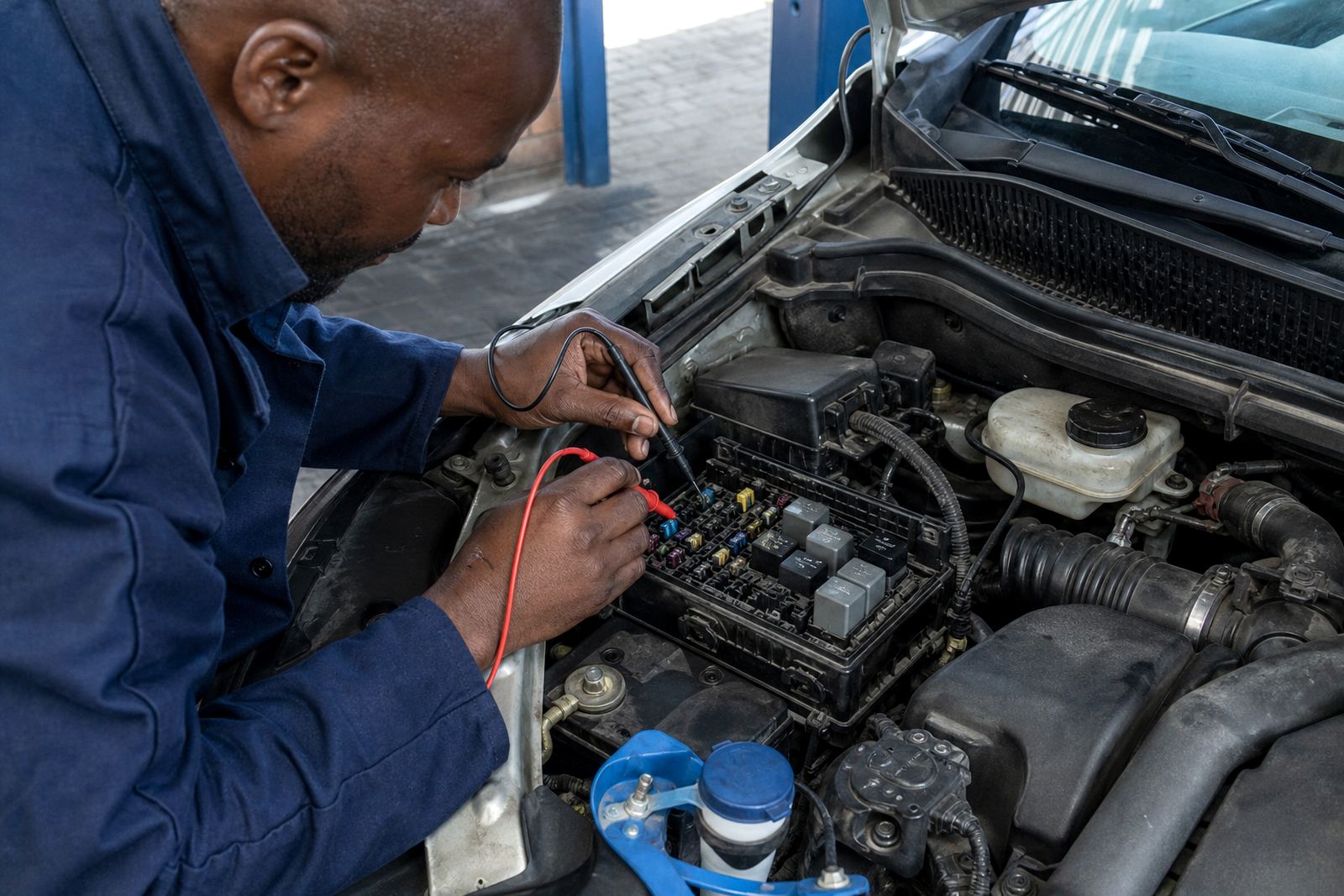
We begin by reading the fault codes where the vehicle allows it, then we compare those codes with live data and the actual circuit behaviour. A blown fuse does not mean the fault is over. The reason behind it may be a short to earth, a dragging relay, a poor terminal grip, or a wiring fault further along the harness. We also check battery condition and charging output because low voltage can make relays chatter and confuse the diagnosis.
- Fuse and relay box visual inspection for heat, moisture and pin damage
- Voltage drop checks across supply and earth points
- Relay testing under load, not only on the bench
- Circuit tracing for shorts, opens and loose contact points
- Battery, alternator and charging-system checks where the symptoms overlap
- Review of related wiring, connectors and grounds around the failed circuit
Where a CAN bus issue is involved, we look at the affected network lines and the modules that share the power feed. We replace only what is needed.
We carry out the repair in our workshop
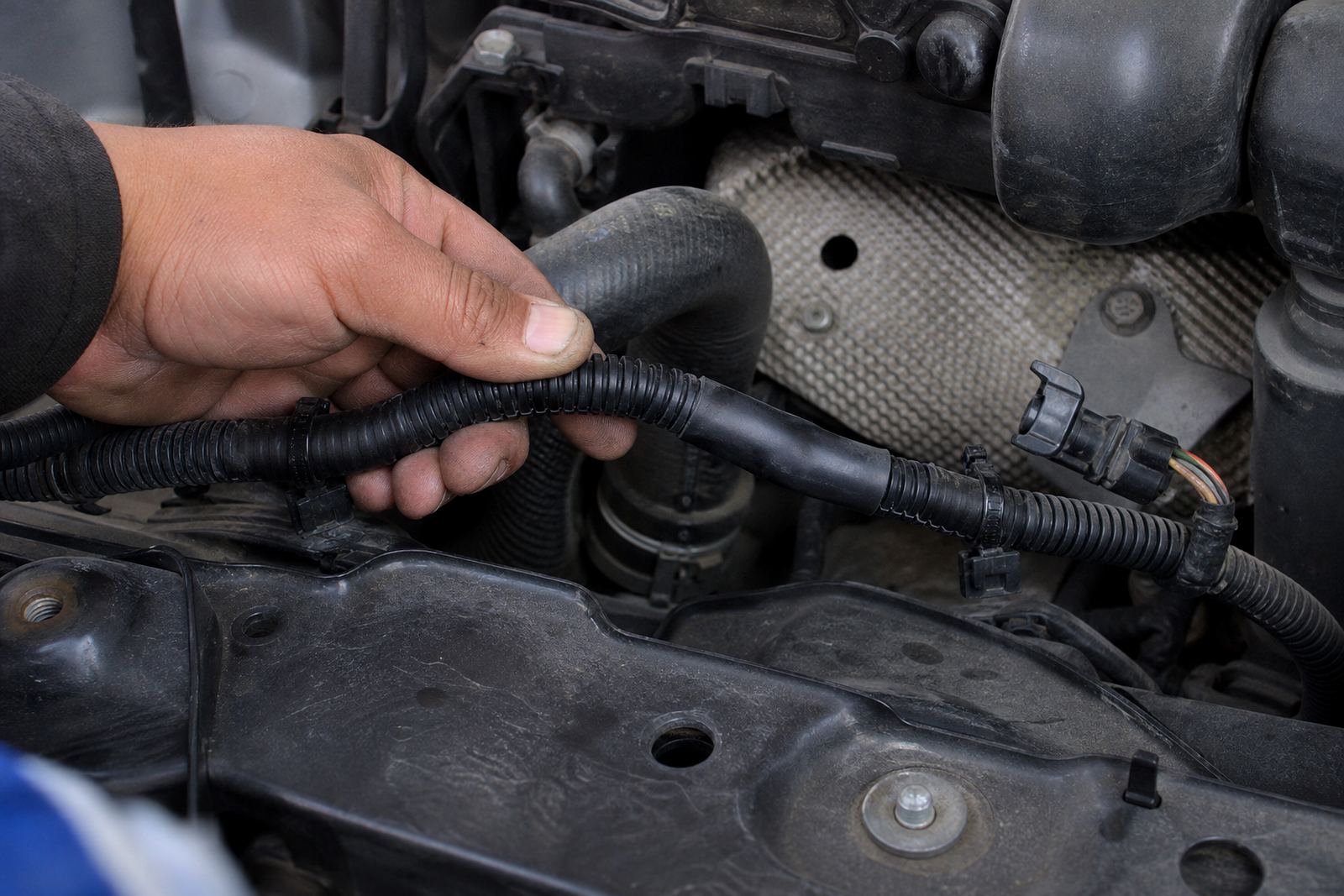
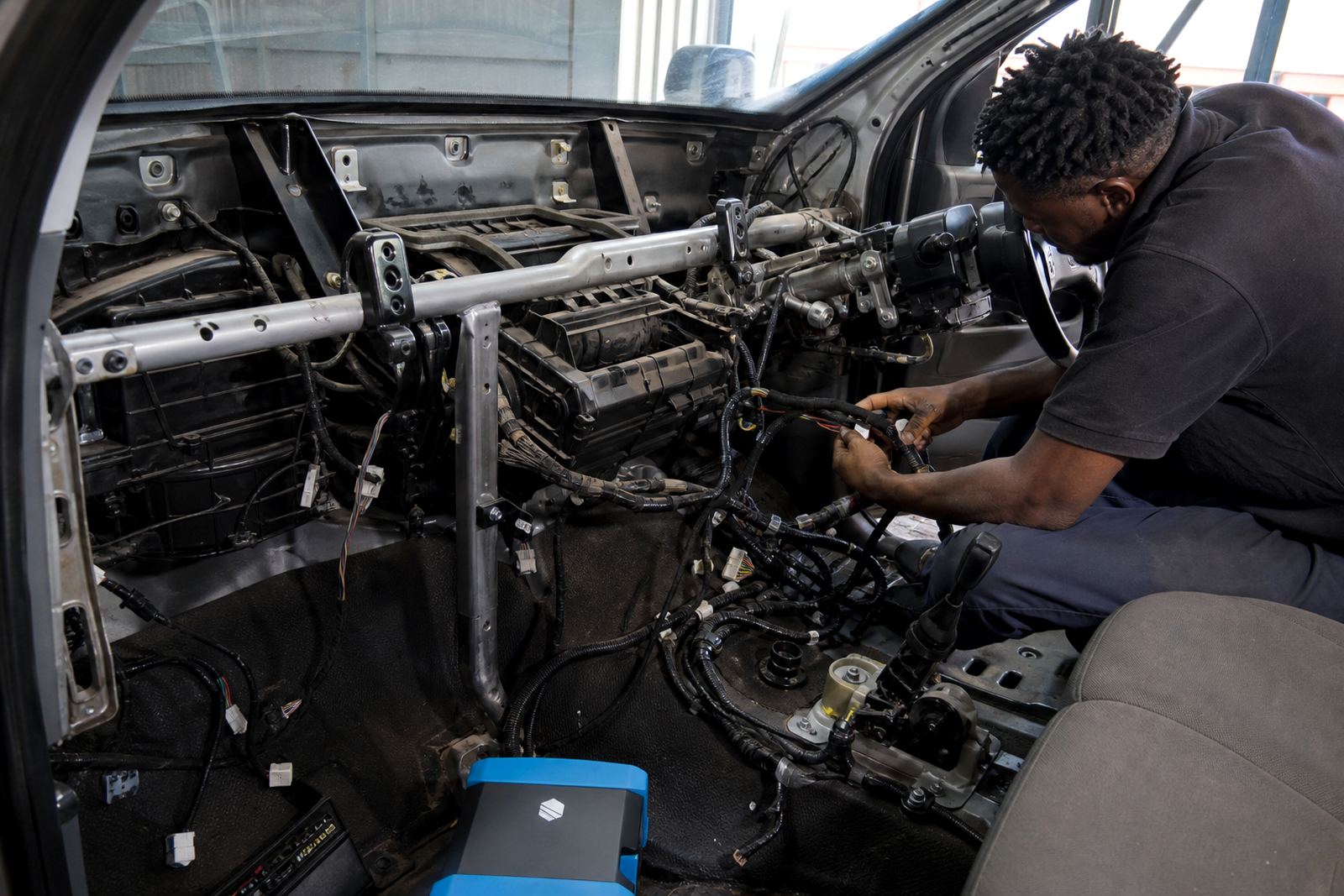
Once the fault path is clear, we repair the box or the connected circuit in a way that suits the vehicle and the damage level. Some jobs only need new terminals, a relay socket repair or a cleaned and tightened connection. Other jobs need sectioned wiring, loom rebuilding, fuse holder replacement or a complete box swap if the housing has distorted from heat. We use proper crimping, insulation and routing so the repair holds up under vibration and daily use.
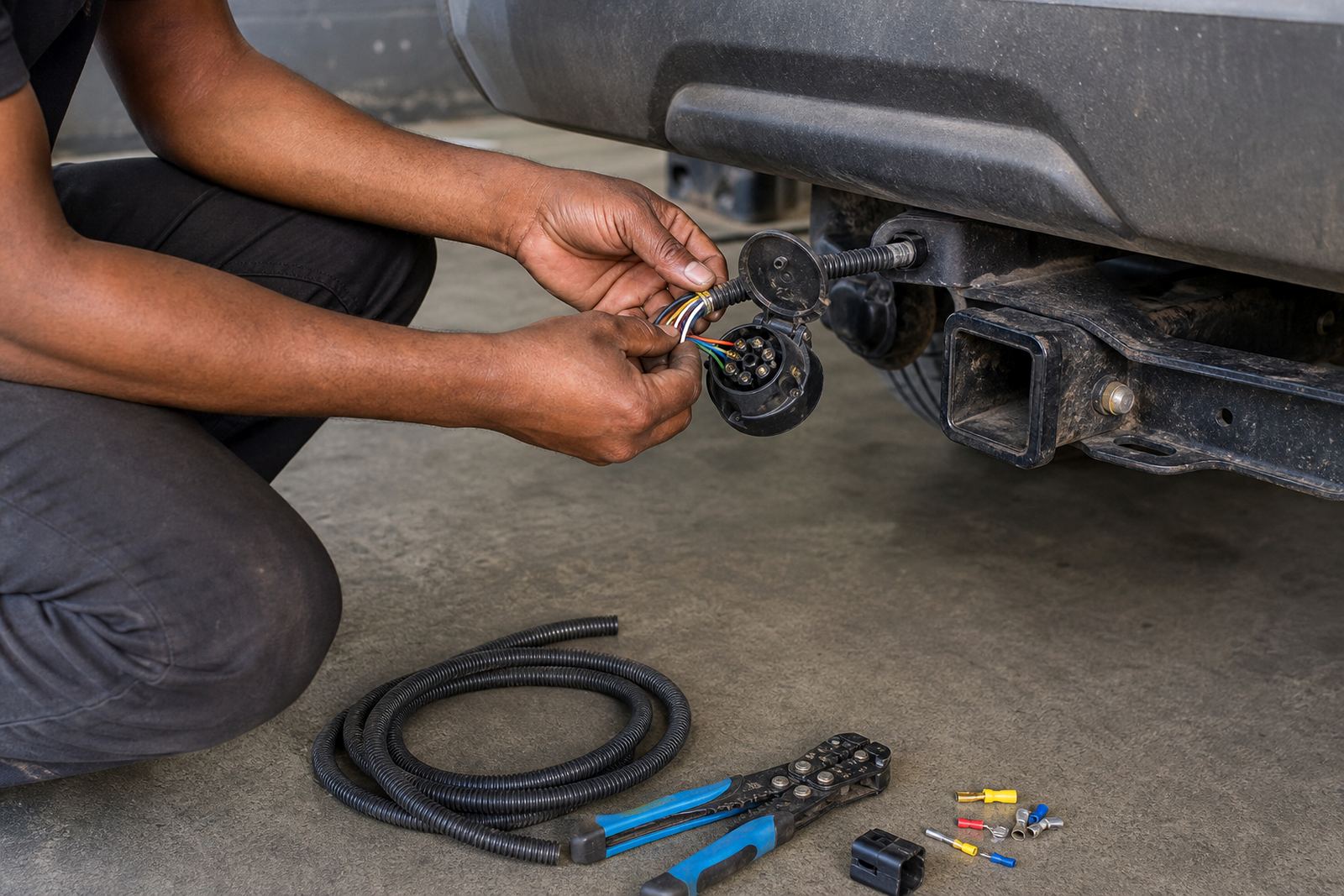
For commercial vehicles, trailers and work bakkies, we also check the accessory feeds around the box. Loose add-on wiring is a common cause of repeat failures, especially where extra lights, trackers, fridge feeds or auxiliary sockets were fitted without enough protection. If the fault reaches outside the box, we trace it there and correct the wider circuit as part of the job.
- Terminal cleaning and contact restoration where the copper is still sound
- Relay replacement when the internal contacts have failed
- Fuse holder and socket repairs where heat has loosened the grip
- Harness repair with correct wire size and colour matching where possible
- Earth fault correction and nearby connector refurbishment
Turnaround, workshop flow and mobile support
Some fuse box repairs are quick, while others take longer because the fault appears only under load or after heat builds in the box. A full diagnostic session gives the best path, especially where the same fuse fails more than once. In the workshop, we can strip back the affected area, test each leg of the circuit and rebuild it with better access.
Our mobile call-outs are useful for fleet operators, roadside faults and private owners who cannot move the vehicle easily. For call-outs we focus on diagnosis, isolation and safe repair decisions on site, then complete the finer bench work in Montague Gardens if the job needs it. That keeps the job practical without rushing the electrical side.
The pace depends on the vehicle model, the amount of heat damage and how deep the fault sits in the wiring. If the fuse box has suffered water ingress or melted tracks, the repair can involve more than one circuit. We explain that clearly before work continues.
Pricing approach for fuse box repairs
We price fuse box work according to the testing time, the parts used and the amount of rebuild needed. A simple relay or terminal repair costs less than a damaged housing or a loom section that has to be rebuilt wire by wire. The real cost sits in the fault path, not the fuse itself, so we avoid blanket pricing that hides the work involved.
When we prepare a quote, we look at the vehicle type, the circuit affected, the condition of the box and whether any related systems need testing as part of the same job. That may include starter circuit checks, charging system tests, battery drain testing or a follow-up inspection of accessory wiring. For fleet accounts, we can group related faults on the same vehicle so the repair list is clearer.
- Testing and diagnosis are separated from parts where the job needs investigation
- Replacement relays, fuses, terminals and connectors are charged according to the actual item used
- Labour reflects the amount of tracing, stripping and rebuilding required
- Complex faults with heat or water damage may involve more than one circuit
Aftercare once the box is repaired
After the repair, we recheck the circuit under load and confirm that the fuse box, relays and related wiring are working as intended. We also watch for signs that point to a deeper issue, such as a stuck actuator, poor earth or a drain that appears only after the vehicle is parked. Where a fault was caused by an accessory feed or trailer wiring, we note the area so the same mistake is not repeated later.
If the vehicle is part of a fleet, we can flag the circuits that need regular attention because they carry higher current or sit in a hotter part of the bay. That includes box areas near engine heat, dusty work sites and coastal conditions where moisture and salt air can accelerate corrosion. A tidy repair holds up better when the surrounding wiring is kept neat and the box stays dry.
For owners in Cape Town, Bellville, Milnerton, Somerset West and Paarl, the goal is straightforward: find the failed path, repair it properly and leave the electrical system in a cleaner state than we found it.
Key facts
| Workshop base | Montague Gardens, Cape Town |
|---|---|
| Service area | Cape Town, Bellville, Milnerton, Somerset West, Paarl, Brackenfell and Durbanville |
| Fault types | Heat damage, poor contact, corrosion, blown feeds, relay failures, water ingress |
| Typical systems checked | Fuse box, relay box, wiring, earths, battery, alternator, charging circuit, related modules |
| Method | Fault-code reading, live data, voltage drop testing, circuit tracing, load testing |
| Contact route | our contact form on our contact page |