
Rewiring that suits the vehicle, not the shortcut
Accessory wiring often starts as a quick add-on and ends up sharing power with the wrong circuit, piggybacking on an undersized fuse, or running loose under trim where it rubs and heats up. We rework those installs so the accessory has the right feed, the right earth path and the right protection for the current it draws.
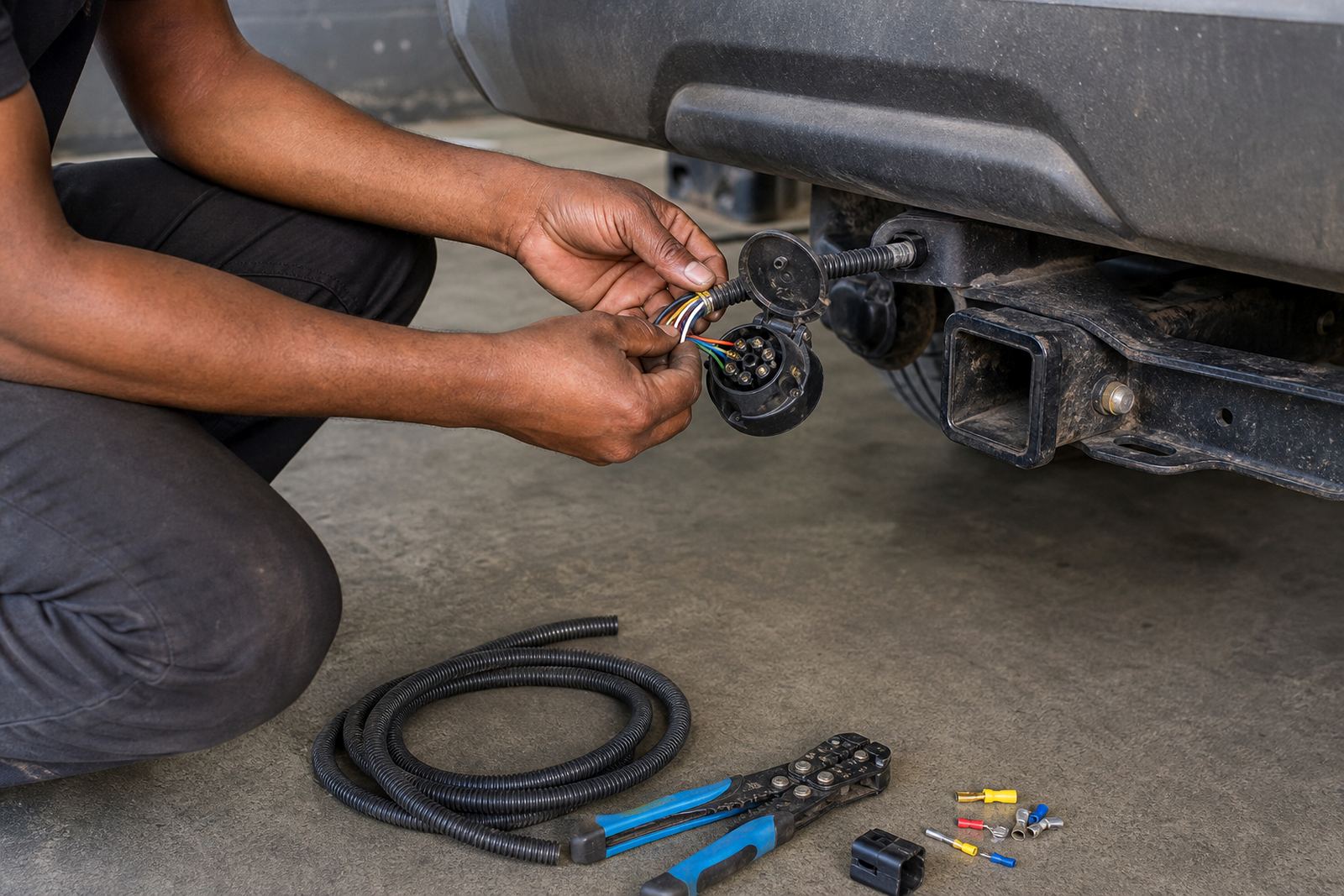
That covers items such as dash cameras, reverse cameras, fridges, radios, radios with amplifiers, work lights, beacons, auxiliary sockets, chargers, alarms and tracking units. We also sort out trailer-linked accessories where the wiring has been joined badly or tucked into a loom without proper sealing. For vehicles in coastal areas like Cape Town, Milnerton and Somerset West, we pay extra attention to corrosion at terminals and joins, because damp air can work into a poor splice very quickly.
- Clean power take-off points selected for the load
- Inline fusing matched to the accessory and cable size
- Correct earthing to bare metal where needed
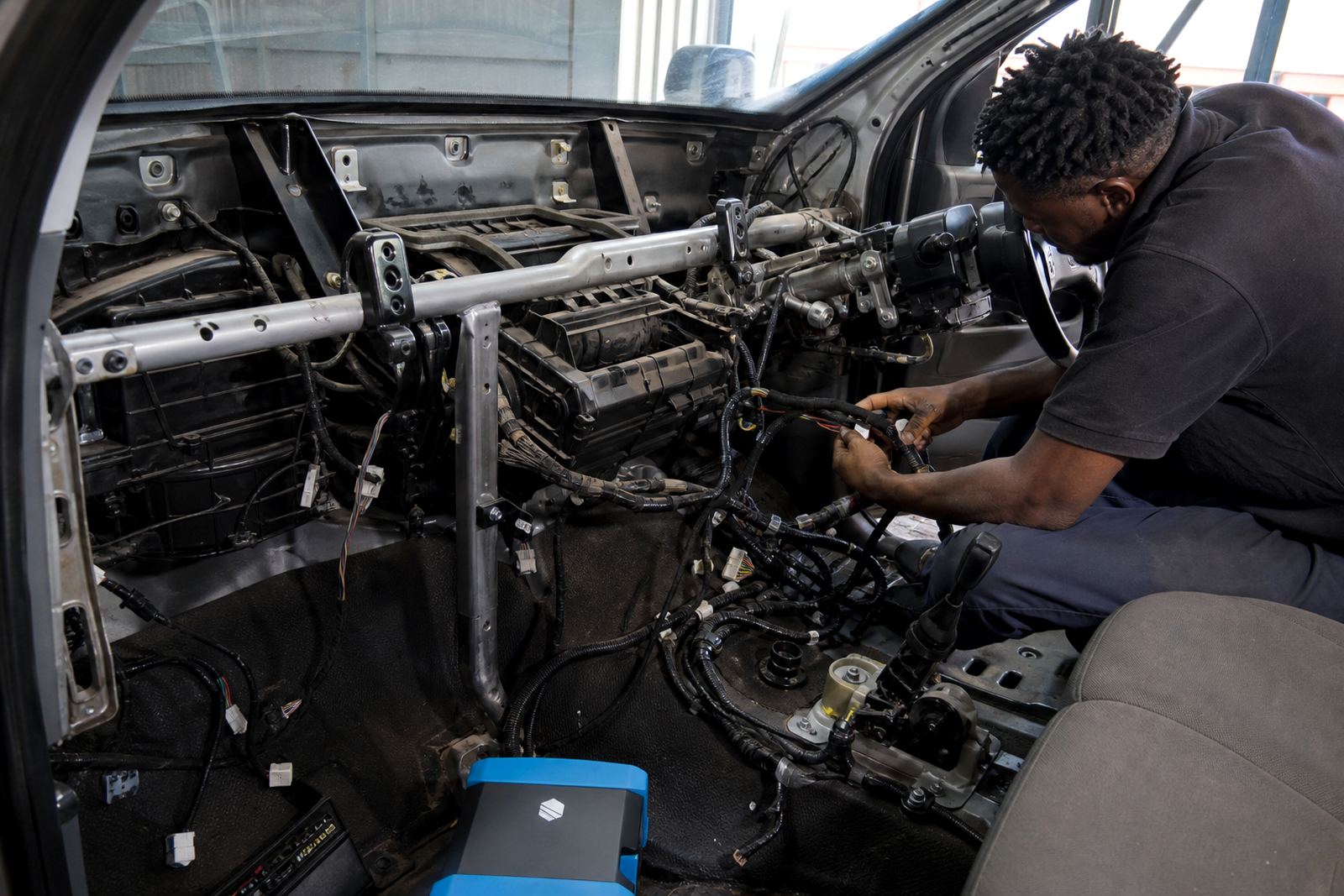
- Neat loom routing with abrasion protection
What we check before any new run is made
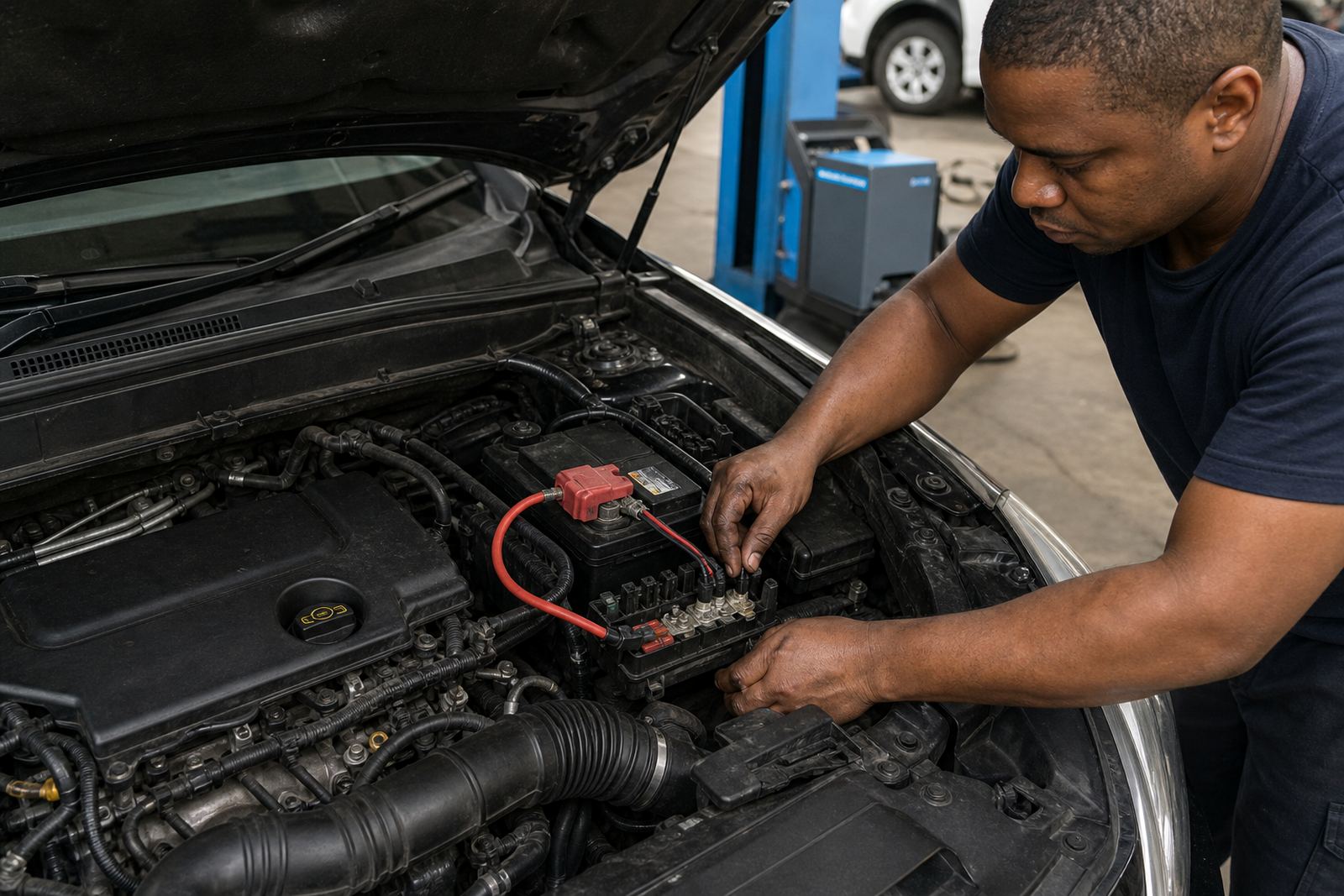
We start by looking at what is already in place, because many faults come from a mix of old wiring, twisted joins and cable that was never sized for the accessory. The workshop checks the existing circuit, the battery condition, charging voltage and whether there is any parasitic drain before we add more load. If the vehicle already has OBD fault codes or warning lights, those are read first so we do not hide a wider electrical fault under a fresh install.
Where it matters, we trace the accessory feed back to the source and test live data, fuse condition, voltage drop and ground integrity. On some vehicles the CAN bus network is part of the conversation too, especially when a device has been tied into the wrong signal wire. A careless tap can disturb other systems, so we keep accessory integration separate from sensitive control wiring unless the circuit is designed for it.
- Battery and charging system test
- Voltage drop checks on feed and earth lines
- Fuse box review for spare capacity and safe take-off points
- CAN bus awareness on modern vehicles with shared control lines
The workshop method from strip-down to final test
Once the faults and load needs are clear, we remove unsafe splices, replace damaged cable and build the circuit back with proper connectors or soldered joints where the application calls for it. We use cable that suits the current draw, route it away from sharp edges and hot parts, and secure it so vibration does not wear through the sheath over time. If the install needs a relay, we fit one so the switch side and load side are separated correctly.
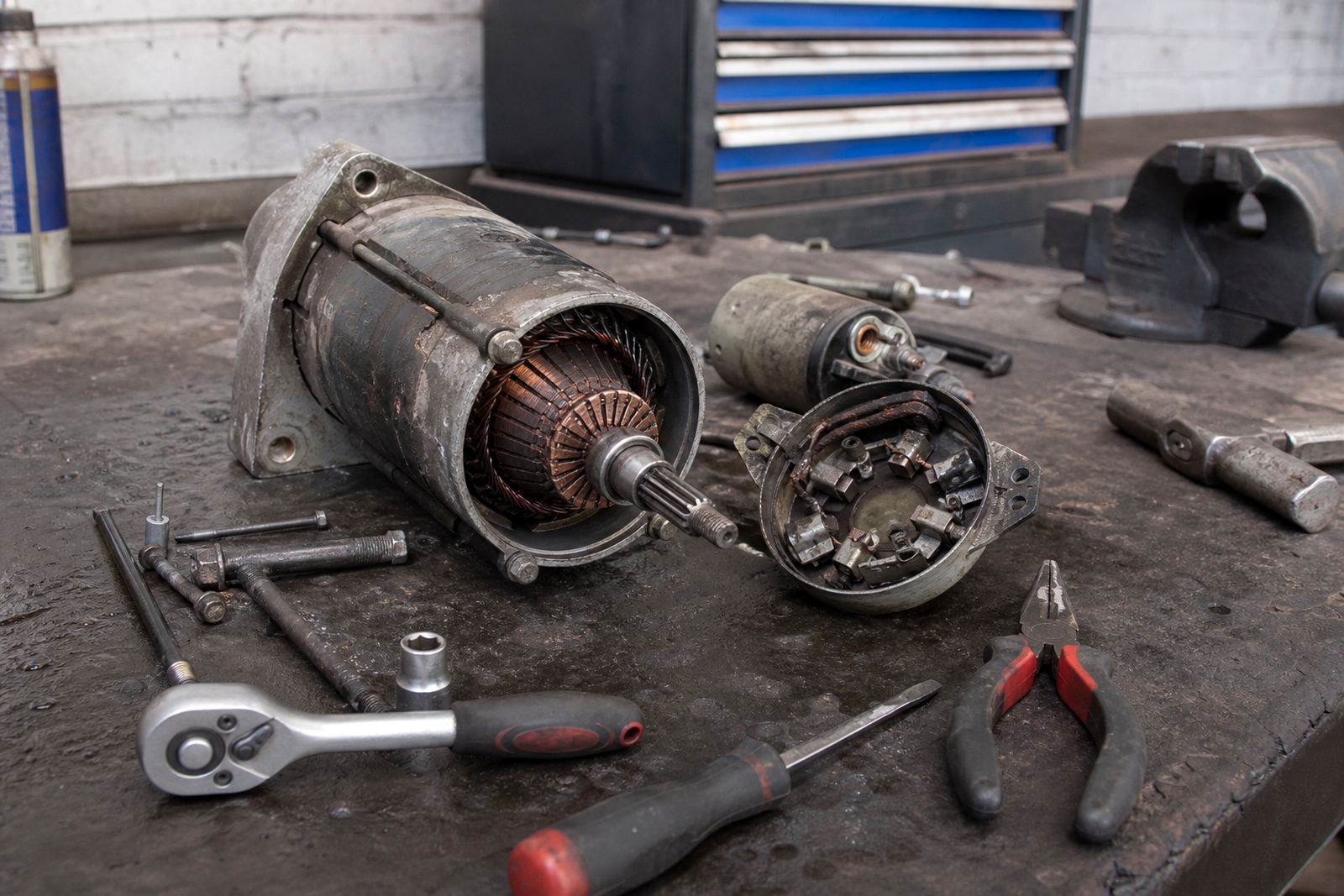
We then test the unit under working conditions, not just on a bench reading. That means checking whether the accessory powers up as expected, watching for voltage drop under load and making sure the vehicle starts and charges normally after the work. If a starter, alternator or battery issue is already present, that gets dealt with first because weak supply can make a good accessory seem faulty.
- Remove unsafe joins and damaged insulation
- Fit relays, holders and inline protection where needed
- Secure the loom with clips, conduit or wrap
- Verify operation under load before handover
Mobile call-outs for fleet units and private vehicles
Some accessory problems are easier to sort in the workshop, while others can be handled on site when the vehicle cannot easily move. Our mobile call-out service covers Montague Gardens, Bellville, Milnerton, Somerset West, Paarl and other parts of Cape Town and the Western Cape by arrangement. That is useful when a fleet bakkie, delivery vehicle or private car has a faulty accessory fit that keeps causing fuse failure or battery drain.
For fleets, we keep the setup practical so the vehicle goes back into service with the wiring tidied, labelled where useful and tested for repeat use. For private owners, we can work through the same basics without turning the job into a major rebuild if the existing install is sound and only needs correction at a few points.
Turnaround, scope and how we price the work
Accessory rewiring jobs vary a lot. A simple accessory with an obvious bad earth may take less time than a vehicle where several add-ons were tied into one thin feed. We quote according to the number of circuits involved, access under trim, cable length, protection needed and whether the job includes fault tracing before the rewiring starts.
We first assess what the accessory draws, whether the cable size is suitable, and if the fuse box, battery or alternator can support the extra load without trouble. Where parts are needed, such as cable, relay holders, connectors, heatshrink, split conduit or mounting hardware, those are listed clearly in the job scope. That keeps the work matched to the vehicle, its wiring layout and the accessory load.
- Small single-accessory corrections
- Multi-accessory rewires with shared power management
- Fault tracing before and during the rewiring
- Parts listed by circuit and fitted use
Aftercare for a neater, safer electrical result
After the job, we explain what was changed, where the feed comes from and which circuit now protects the accessory. That matters when another technician later opens the trim or has to trace a fault. We also point out any signs to watch for, such as repeated fuse failure, flickering lights, a warm cable run or accessory behaviour that changes when the engine is started.
If the vehicle is used in wet coastal conditions or on rough roads, we pay attention to sealing and support so the new wiring stands up better to vibration and moisture. A neat installation is about more than looks. It makes future diagnostics easier and reduces the chance of chasing the same fault twice because a join was left loose behind a panel.
Key facts
| Service | Accessory rewiring for vehicles and fleets |
|---|---|
| Work area | Montague Gardens workshop and mobile call-outs |
| Coverage | Cape Town, Bellville, Milnerton, Somerset West, Paarl and surrounds |
| Circuit checks | Battery, charging, parasitic drain, earth and fuse review |
| Electrical scope | Relays, fusing, cable sizing, routing and termination |
| Related diagnostics | OBD fault codes, live data and CAN bus fault checks |