Headlamps, tail lamps and indicators that work as a circuit
Lighting faults are often blamed on a bulb when the real issue sits deeper in the circuit. We trace the fault from the fuse box to the lamp, checking connectors, holders, earths, switch feeds and the wiring that links the system together.
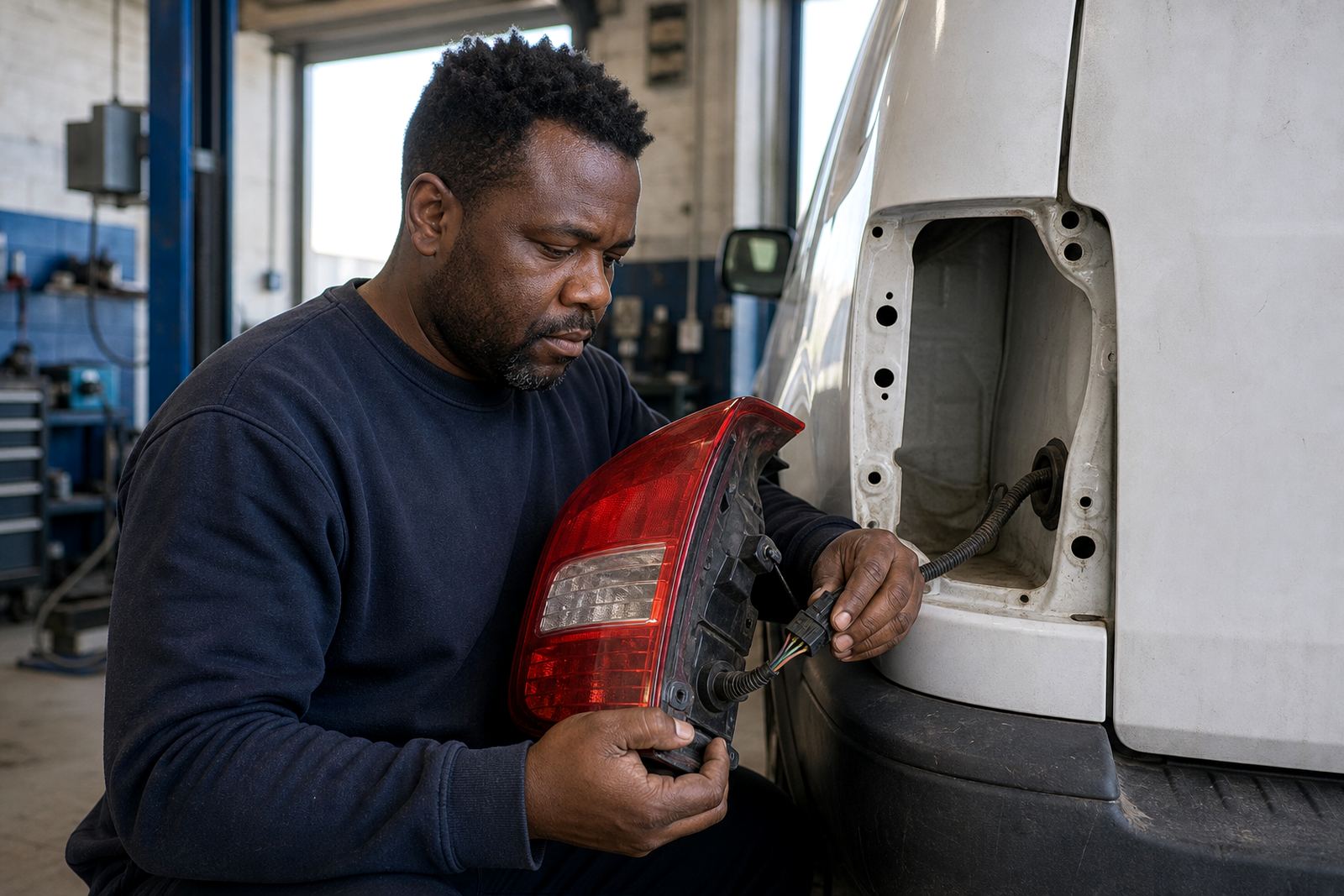
Our workshop repairs cover headlamps, tail lamps, brake lamps, indicators, number plate lamps, reverse lamps and side markers. We also sort dim lights, flickering lamps, lamps that fail when the road shakes, and systems that only work on one side of the vehicle. On many jobs the fault is a broken wire inside insulation, water entry at a connector, heat damage at a bulb holder, or a poor earth near the body panel.
- 12V and 24V lighting circuits
- Halogen, LED and mixed lamp systems
- Bulb holders, sockets and terminal repairs
- Earth fault tracing and connector repair
- Fuse, relay and switch checks
Fault tracing before parts are changed
Good lighting repair starts with testing first. We use multimeter checks, continuity testing and voltage drop readings to see where power is lost and whether the fault is on the feed side or the earth side of the circuit.
Where the vehicle has linked modules or CAN bus controlled lighting functions, we check the fault codes and live data so the repair matches the control logic on the vehicle. That helps when a warning appears on the cluster, when both sides fail at once, or when the lights work only under certain conditions.
- Voltage supply and earth path testing
- Fuse box and relay inspection
- Connector pin damage and corrosion checks
- CAN bus fault checks where relevant
- Battery and charging checks if the lighting fault is linked to low system voltage
We also look for parasitic drain if a lighting circuit is flattening the battery overnight. A lamp that stays partially live can drain a battery while leaving no obvious warning on the dash.
What gets repaired in the workshop
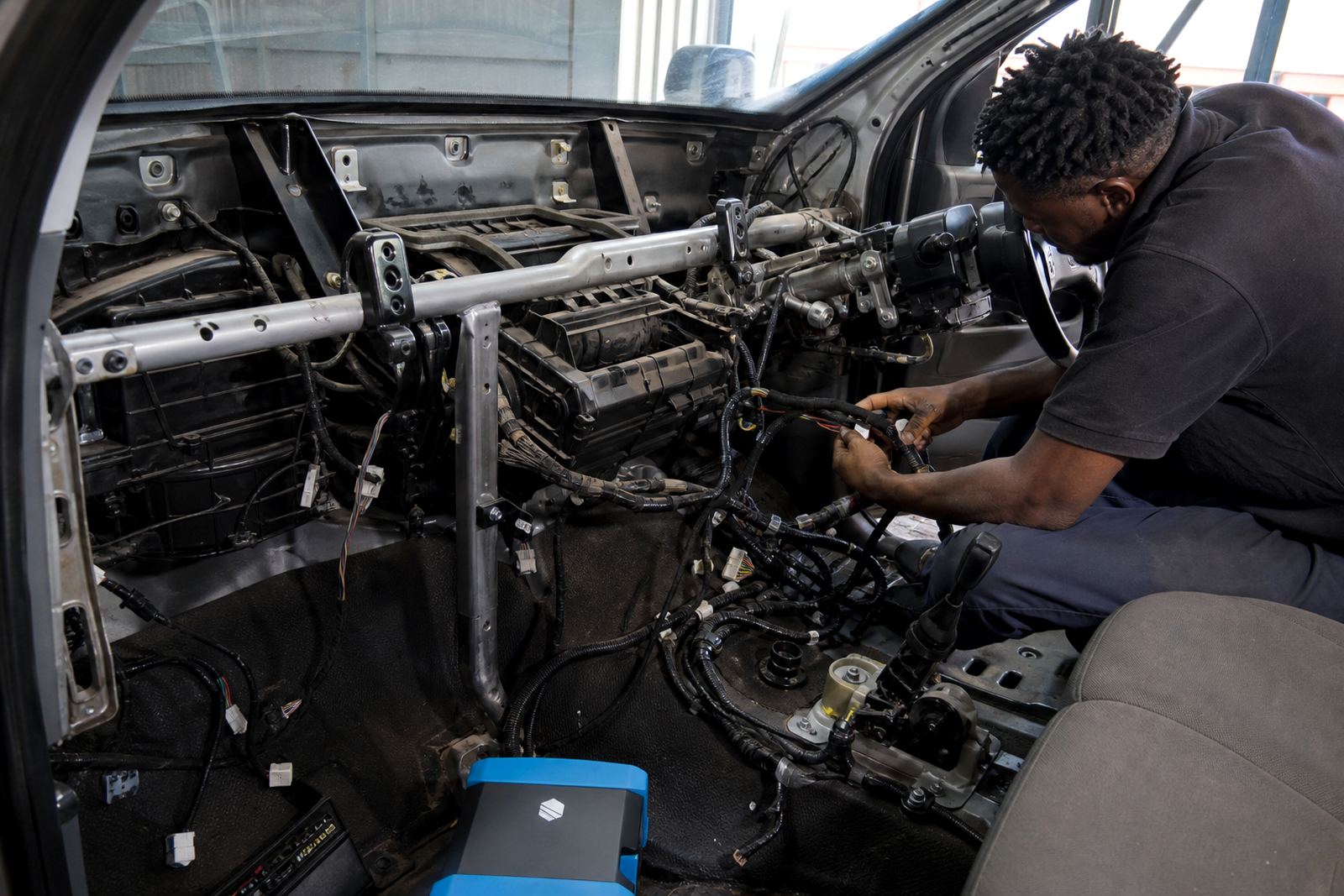
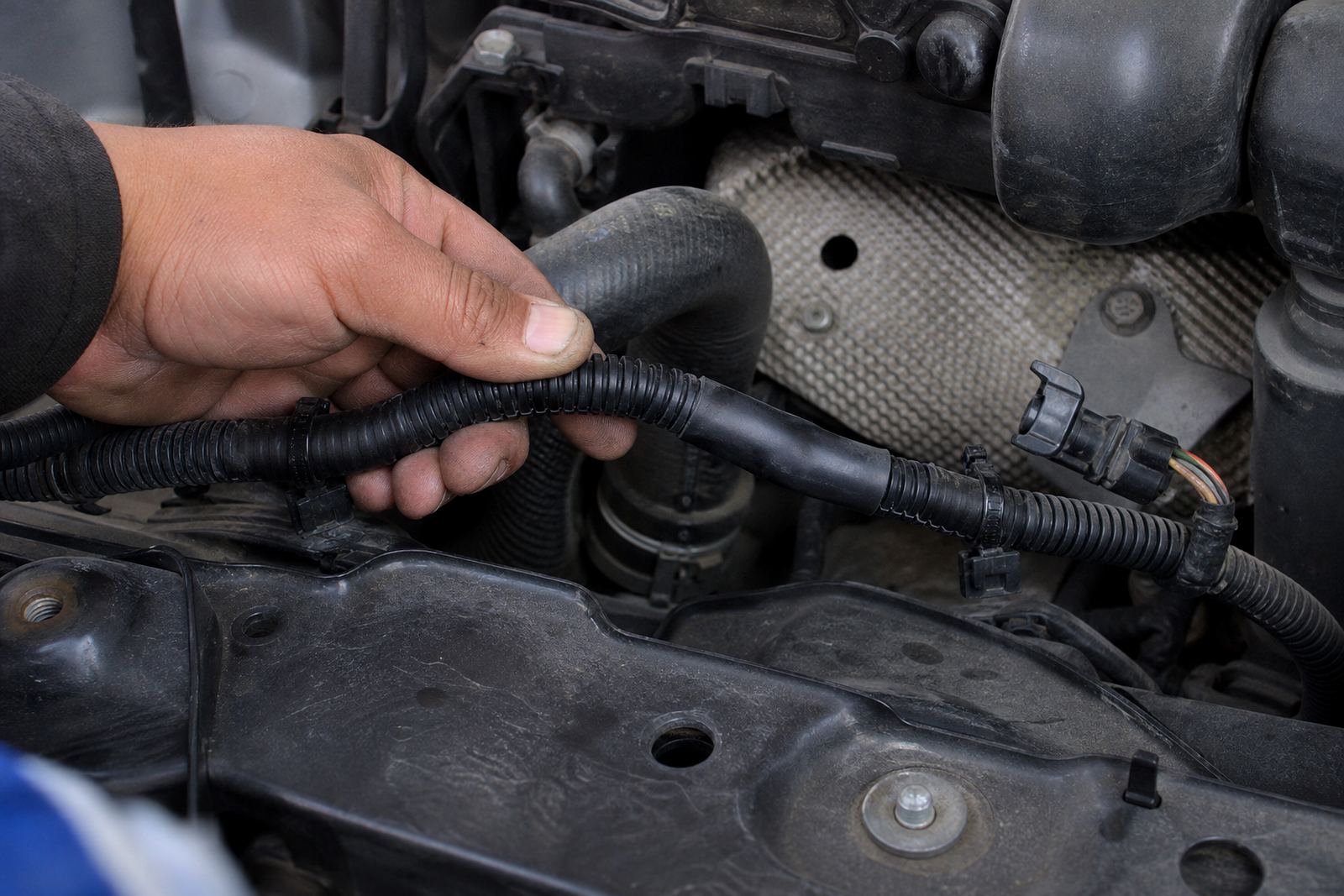
We repair the failed section where it makes sense, rather than replacing a whole harness for a small break. That can mean restoring a corroded earth strap, replacing a damaged connector, repairing a pinched wire, or rebuilding a damaged lamp plug with proper terminals and insulation.
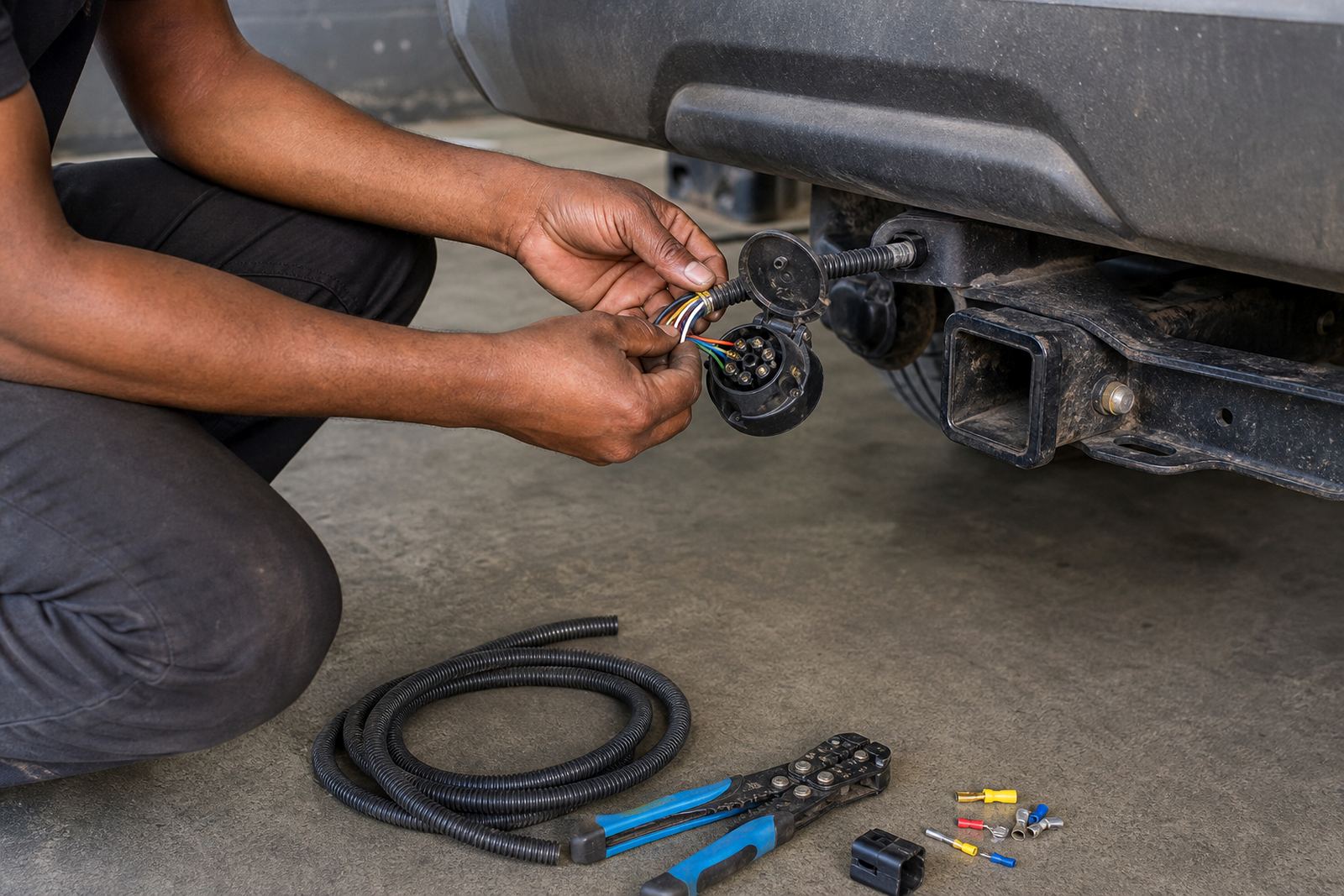
Typical work includes sealed beam and headlamp wiring, indicator flash faults, tail lamp and brake lamp issues, trailer light links, accessory lighting feeds and switch circuits. If a previous repair has used twisted wire, loose tape or the wrong gauge cable, we strip it out and put the circuit back properly.
When housings are cracked or water damaged, we inspect the internal contacts and the seals around the unit. In Cape Town coastal air, moisture and salt can creep into connectors faster than people expect, so a good repair includes cleaning, drying and protective finishing where the system needs it.
- Wiring repair and loom section repair
- Bulb holder rebuilds and terminal replacement
- Switch, stalk and relay related faults
- Trailer wiring lighting faults
- Corrosion cleaning and protection at exposed joints
How the job moves through our Montague Gardens workshop
Most lighting repairs begin with a road symptom or fault note from the driver. We inspect the vehicle, test the affected circuit, and map the repair path before any stripping starts. That matters on fleet vehicles where the same fault can hide in a different place on each unit.
Once the failed section is found, we carry out the repair, retest the circuit and check related functions so the fault does not return through a side issue. We also confirm the lamps operate correctly with the engine running, because charging voltage can change how a weak circuit behaves.
- Initial inspection and symptom check
- Electrical testing and fault location
- Repair of wiring, connector or component fault
- Final lamp function test and road-use check
- Fleet note if follow-up work is needed across other vehicles
For mobile call-outs across Cape Town, Milnerton, Bellville, Somerset West and Paarl, we focus on faults that can be safely diagnosed at the vehicle. Some repairs are completed on site, while others move to the workshop if the loom or lamp assembly needs deeper work.
Turnaround, parts and pricing approach
Repair time varies with the fault, access to components and the condition of the parts. A simple bulb holder repair or earth fault may be handled faster than a loom repair hidden behind trim or body panels. We keep the process practical and explain the repair path before work proceeds.
Pricing is based on the fault found, the labour needed, the type of vehicle and whether the job needs workshop strip-down or mobile attendance. Lighting systems on newer vehicles can involve more testing time because a small external fault may sit inside a monitored circuit. We do not price by guesswork, and we do not pad a job with parts that are still sound.
- Diagnosis based on test results, not assumptions
- Separate labour and parts where useful
- Workshop and mobile call-out work quoted by fault scope
- Fleet vehicles can be grouped for practical scheduling
- Accessory wiring priced according to circuit length and fitment detail
For vehicles with repeated lamp failure, we also check charging voltage and earth integrity so the next bulb is not carrying the same problem.
Aftercare that keeps the repair honest
After the repair, we talk through what failed and what was changed. That includes the section of loom, connector or lamp assembly that caused the issue, plus any linked fault that may need attention later on.
If the vehicle is used for work, towing or night driving, we can point out the stress points that tend to wear first. On older vehicles, this often means the bulb holders, terminal ends and earth points near exposed panels. On newer vehicles, the common trouble spots are connector pins, module inputs and light feeds routed through tight body sections.
We also fit trackers and accessories where the lighting job links into wider electrical work, such as trailer plugs, auxiliary lamps or dash-mounted equipment. When extra loads are added, the circuit must be sized and fused correctly so the original lighting system stays stable.
- Clear explanation of the repaired section
- Advice on repeat fault points in the same circuit
- Protection added where moisture or vibration is present
- Accessory wiring checked for safe load handling
- Workshop support for fleet and private vehicles
Key facts
| Service area | Montague Gardens, Cape Town with mobile call-outs across the Western Cape |
|---|---|
| Vehicle systems | 12V and 24V lighting circuits, lamp feeds, earth paths and control wiring |
| Lighting faults | Headlamps, indicators, tail lamps, brake lamps, reverse lamps and side markers |
| Diagnostic methods | Fault codes, live data, voltage drop testing, continuity checks and visual tracing |
| Related checks | Battery condition, charging voltage, fuse box, relay, connector and CAN bus basics |
| Fitment work | Trailer wiring, accessory rewiring and tracker-related electrical tie-ins |