A no-start fault that did not stay in one place
The vehicle came in from Somerset West after a few frustrating starts and stops, with the fault refusing to stay put. Some mornings it cranked normally, other times it acted dead at the key and the dashboard lights would sit there without the starter engaging.
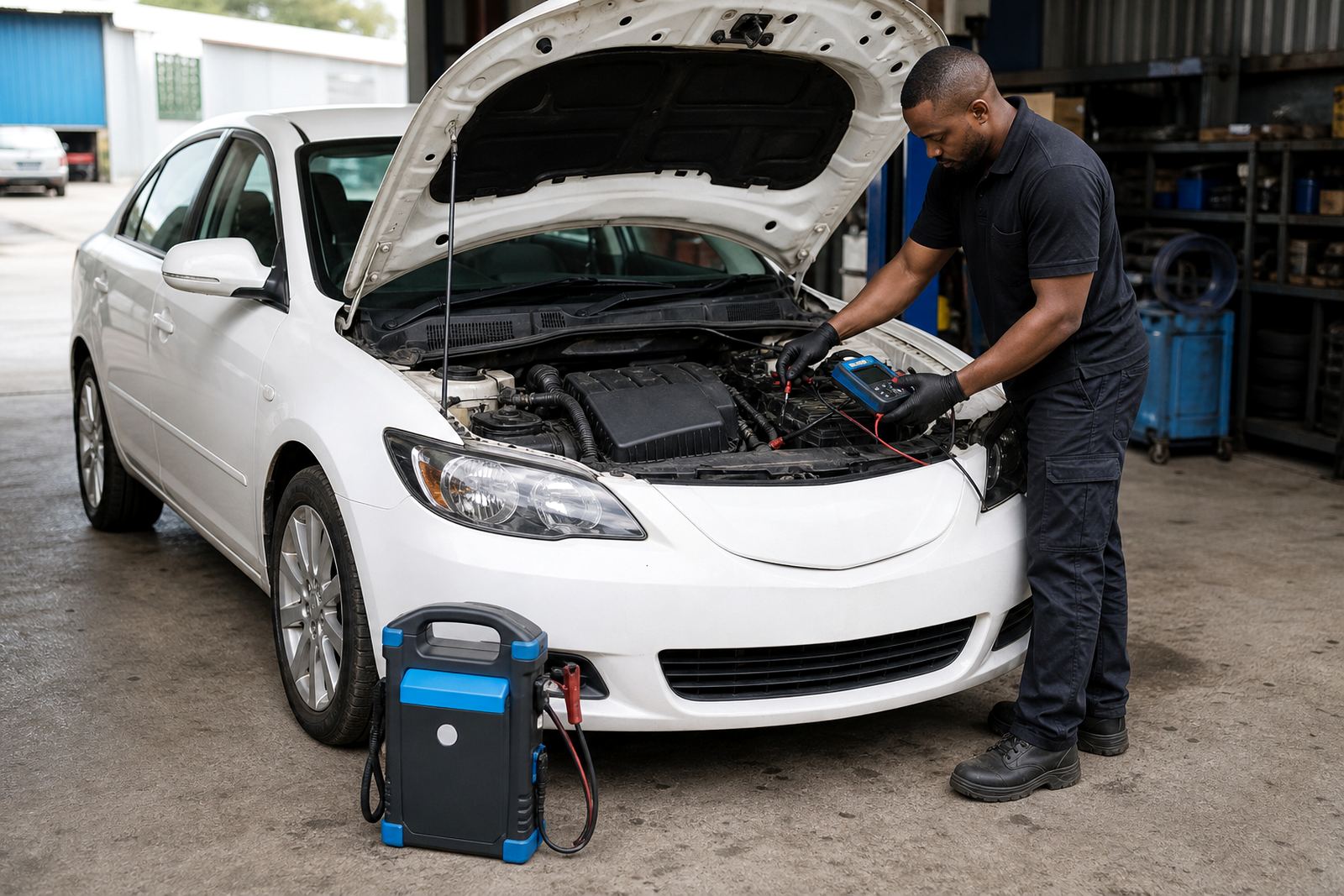
That kind of fault needs proper diagnosis, not parts swapping. We checked battery condition, starter draw, charging output and the main earth paths before opening up the wiring path that fed the starter circuit. The aim was to find where voltage was being lost under load, not just where a metre showed continuity at rest.
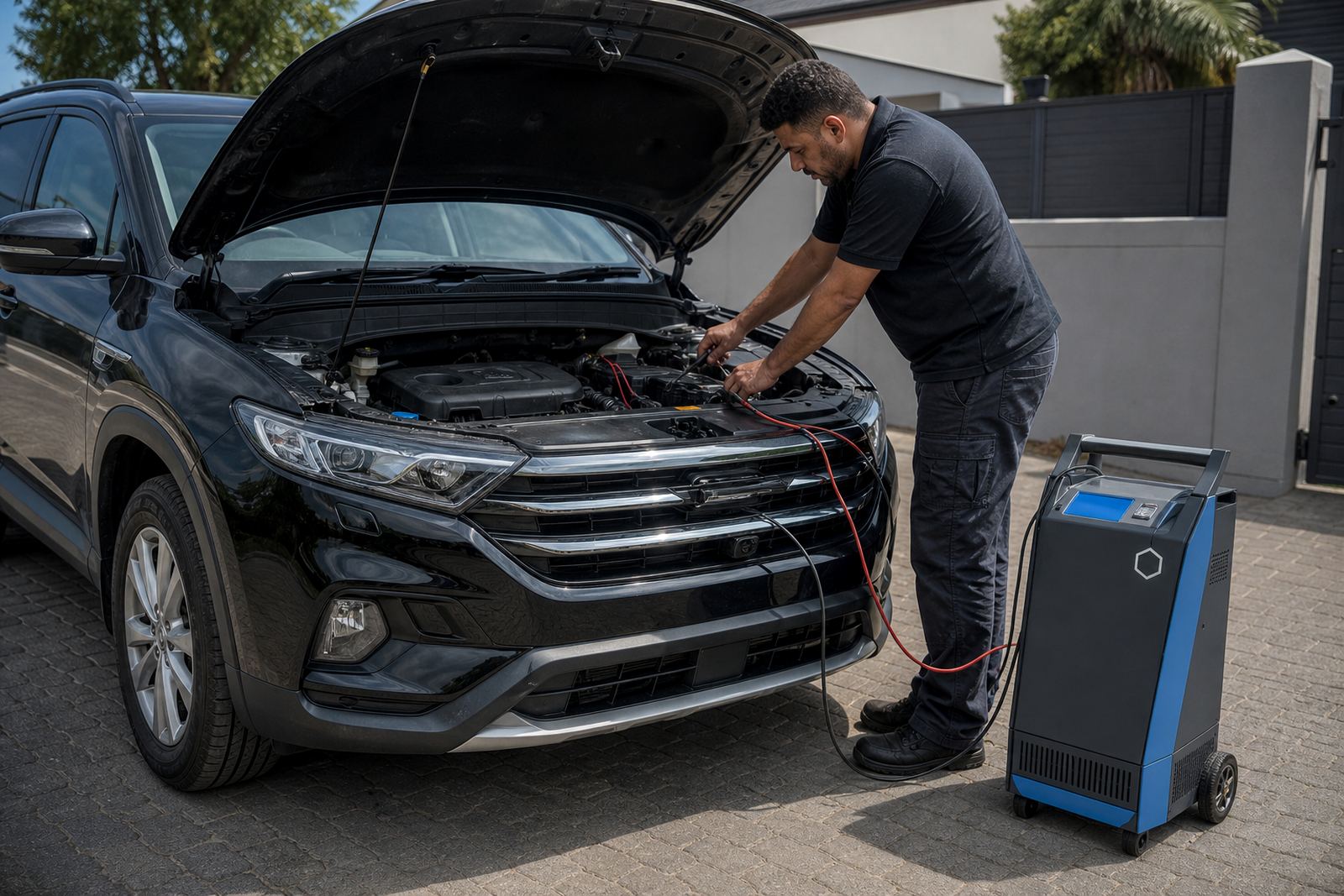
- Vehicle type: SUV used for family travel and daily errands
- Fault pattern: intermittent no-start, more noticeable after standing
- Town: Somerset West
- Work type: diagnostics, earth repair, starter circuit testing
What the workshop found under load
Live testing showed that the battery was serviceable, but the voltage arriving at the starter circuit was dropping too far when the key was turned. That pointed us toward resistance in the earth side of the circuit, along with a connection that had started to behave badly under load.
We followed the path from the battery negative through the body earth points and into the starter circuit. A weak earth can hide for a long time, then turn into a no-start fault when heat, moisture or vibration changes the resistance. Coastal air around Cape Town and the Western Cape can make that sort of fault easier to trigger, especially where terminals and lugs have already started to oxidise.
- Battery check under load
- Voltage drop test on the crank circuit
- Earth path inspection and cleaning
- Starter feed and trigger signal verification
Repair work on the earth side
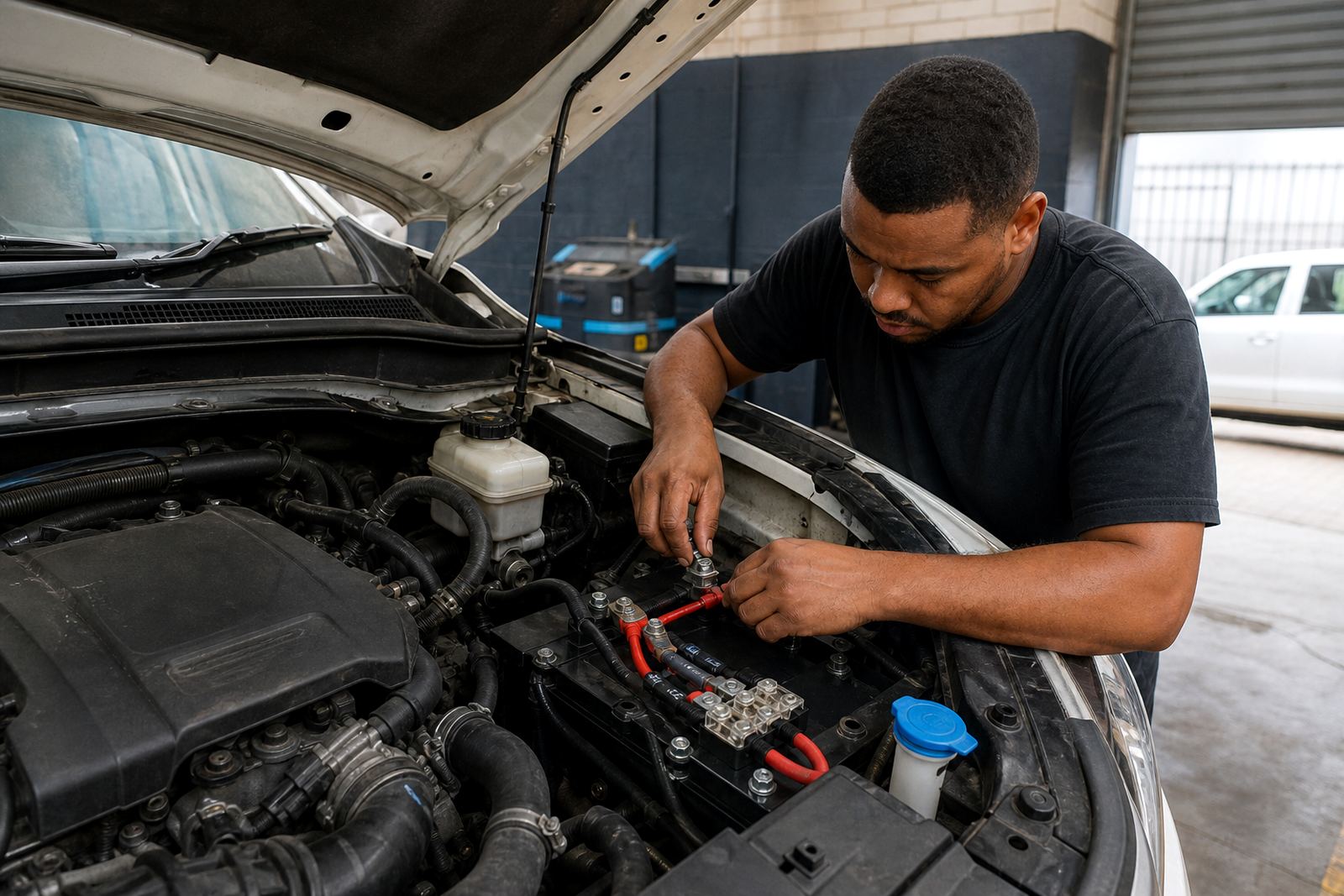
Once the fault line was clear, we repaired the damaged earth connection and cleaned the related contact points. We also inspected the nearby wiring for heat marks, loose terminals and chafing, because one bad earth often means the rest of the circuit has been working harder than it should.
The starter itself was tested again after the repair, together with the charging system and idle voltage. The numbers settled properly this time, and the crank speed returned to normal. No replacement was fitted just for the sake of it, which matters on a fault like this because the real issue is often buried in a connection, not in the major component people first suspect.
- Earth repair and contact cleaning
- Starter circuit re-test
- Charging system verification
- Final crank and start confirmation
Why voltage drop testing made the difference
Many no-start jobs get noisy because there are too many possible causes in play. Voltage drop testing cuts through that noise by showing how much power is being lost across each section while the circuit is actually under demand. That is useful on SUVs, bakkies and fleet vehicles that spend long hours in traffic, in parking areas, or parked up between trips.
On this job the live readings told the story faster than a visual check could. The battery looked fine on the surface, but the earth side of the circuit could not carry the load cleanly. Once that was corrected, the starter engaged as it should and the fault stopped appearing during repeated starts.
- Testing method: live voltage drop readings
- Fault area: earth side of starter circuit
- Outcome: stable starts after repair
- Follow-up: repeat start checks in the workshop
Mobile support for a mixed Western Cape run
This SUV project was handled at our Montague Gardens workshop, with mobile call-outs available for fleet operators and private owners across Cape Town, Bellville, Milnerton, Somerset West, Paarl, Brackenfell and Durbanville. For jobs that can be traced on site, mobile testing helps isolate the fault before the vehicle is booked in for deeper work.
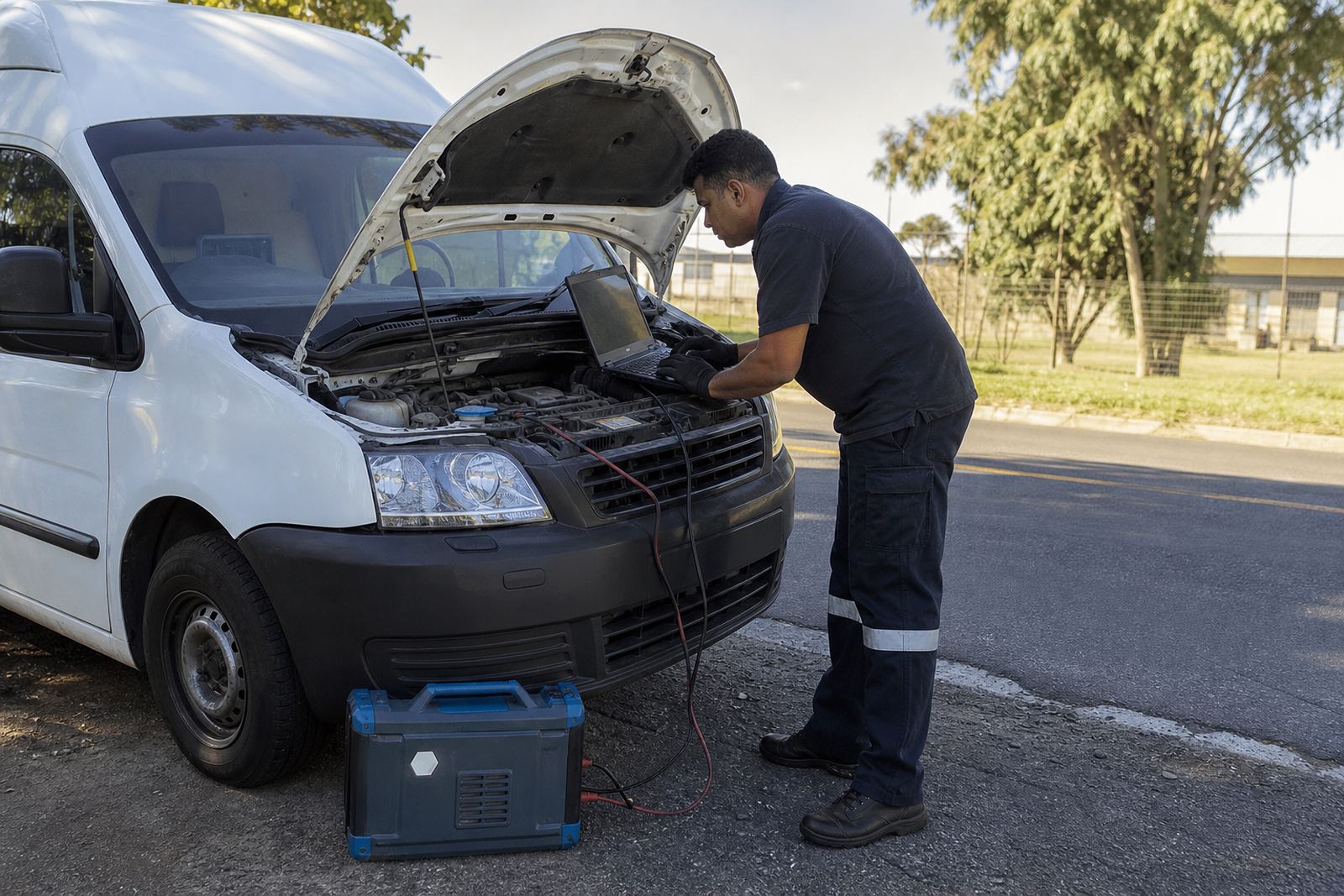
That is useful when a vehicle will not stay running long enough for a normal road test. We can check charging output, parasitic drain, starter circuit readings and some wiring faults in the field, then bring the vehicle into the workshop when the fault calls for a more detailed strip-down.
- Base: Montague Gardens, Cape Town
- Mobile coverage: Western Cape metro and nearby towns
- Suitable for: fleet units and private vehicles
- Typical call-out work: diagnostics, wiring checks, battery and charging tests
What we would apply again on a comparable vehicle diagnostics and auto electrics job
On a repeat of this sort of fault, we would start with battery health, earth integrity and starter circuit voltage drop before touching larger components. That sequence saves time and stops good parts being changed for no reason. It also gives the owner a clearer picture of whether the problem sits in the supply side, the ground side, or the trigger circuit.
If the vehicle shows related symptoms such as slow cranking, dashboard resets, dim lights or a weak accessory circuit, we would widen the check to include fuse box joints, charging output and any wiring that has been disturbed by previous work. For vehicles fitted with trackers or accessories, we also inspect added wiring because a poor add-on connection can create its own drain or earth fault.
- Start with live diagnostics
- Check earth paths before major replacements
- Review added accessories if fitted
- Confirm the repair with repeated start tests
Key facts
| Project | Somerset West SUV intermittent no-start fault |
|---|---|
| Primary fault | Voltage drop on starter circuit earth side |
| Work carried out | Earth repair, battery and charging tests, starter circuit checks |
| Service type | Vehicle diagnostics and auto electrical repair |
| Location | Montague Gardens workshop, with Somerset West call-out support |
| Vehicle category | SUV |