Strand bakkie brief and the limits around the cab
The owner wanted a tracker fitted without turning the cab into a tangle of loose cable tails, taped joints or visible add-ons. The bakkie was used for school runs, errands and weekend loading, so the wiring needed to sit neatly under trim and stay clear of foot traffic, seat rails and sharp edges. We also had to work around the existing accessory feed and keep the finish suitable for a private vehicle that still carries tools, bags and groceries during the week.
Before any install work, the vehicle got a battery and charging check, a quick scan for stored fault codes and a look at the earth points that can cause odd behaviour on older accessory circuits. That step matters on bakkies with mixed aftermarket wiring because a poor earth or weak charging system can make a fresh fitment look faulty when the real issue sits elsewhere.
- Private bakkie use in Strand
- Tracker fitment with concealed routing
- Power feed checked before install
- Cab trim kept neat and serviceable
Battery, charging and drain checks before the new feed
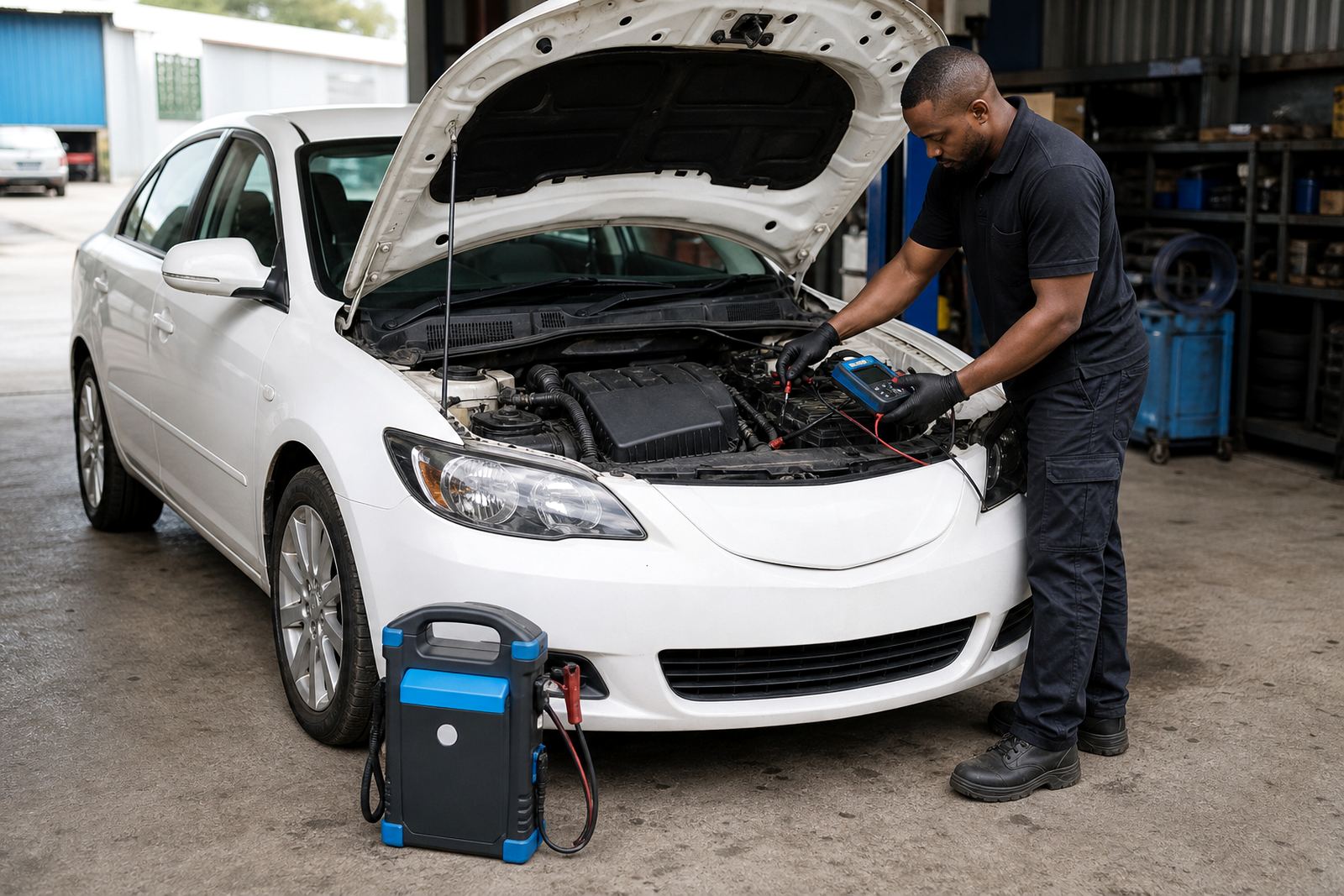
We started with battery voltage, alternator output and a parasitic drain test to see if the bakkie drew power while parked. A tracker should sip current and leave the bakkie ready after a few days of standing. We also checked for signs of live-data drift and odd voltage behaviour on the diagnostic side, because small electrical faults often show up as weak starts, dim lights or unstable accessory operation.
The tests showed a workable battery and a charging system that could support the added load, but one of the older joins near an accessory feed had poor insulation and needed attention. We cleaned that section out and rebuilt the connection so the new tracker feed would not sit on a doubtful base.
- Battery condition test
- Alternator output check
- Parasitic drain measurement
- Worn join repaired before fitment
Routing the tracker feed without crowding the cabin
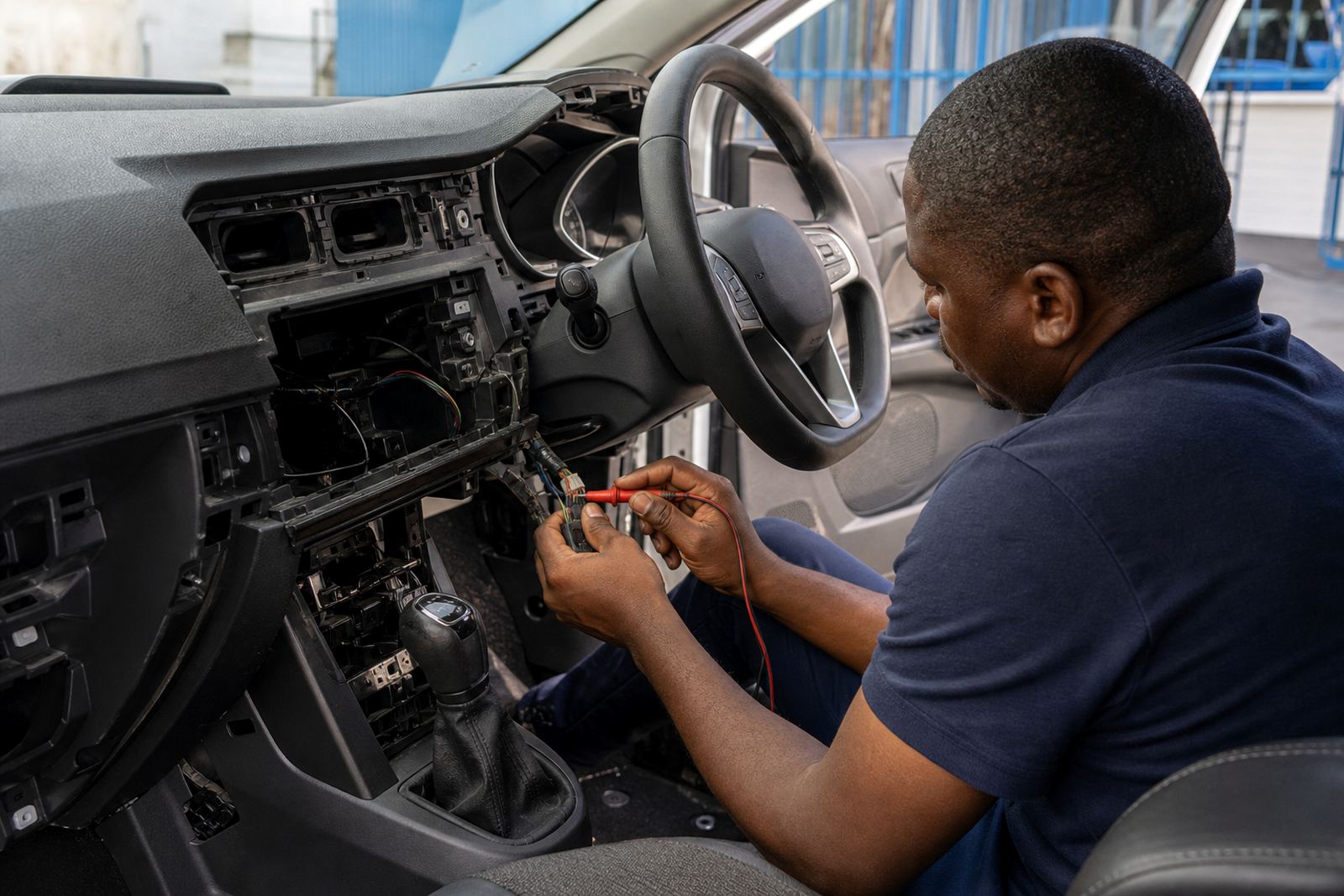
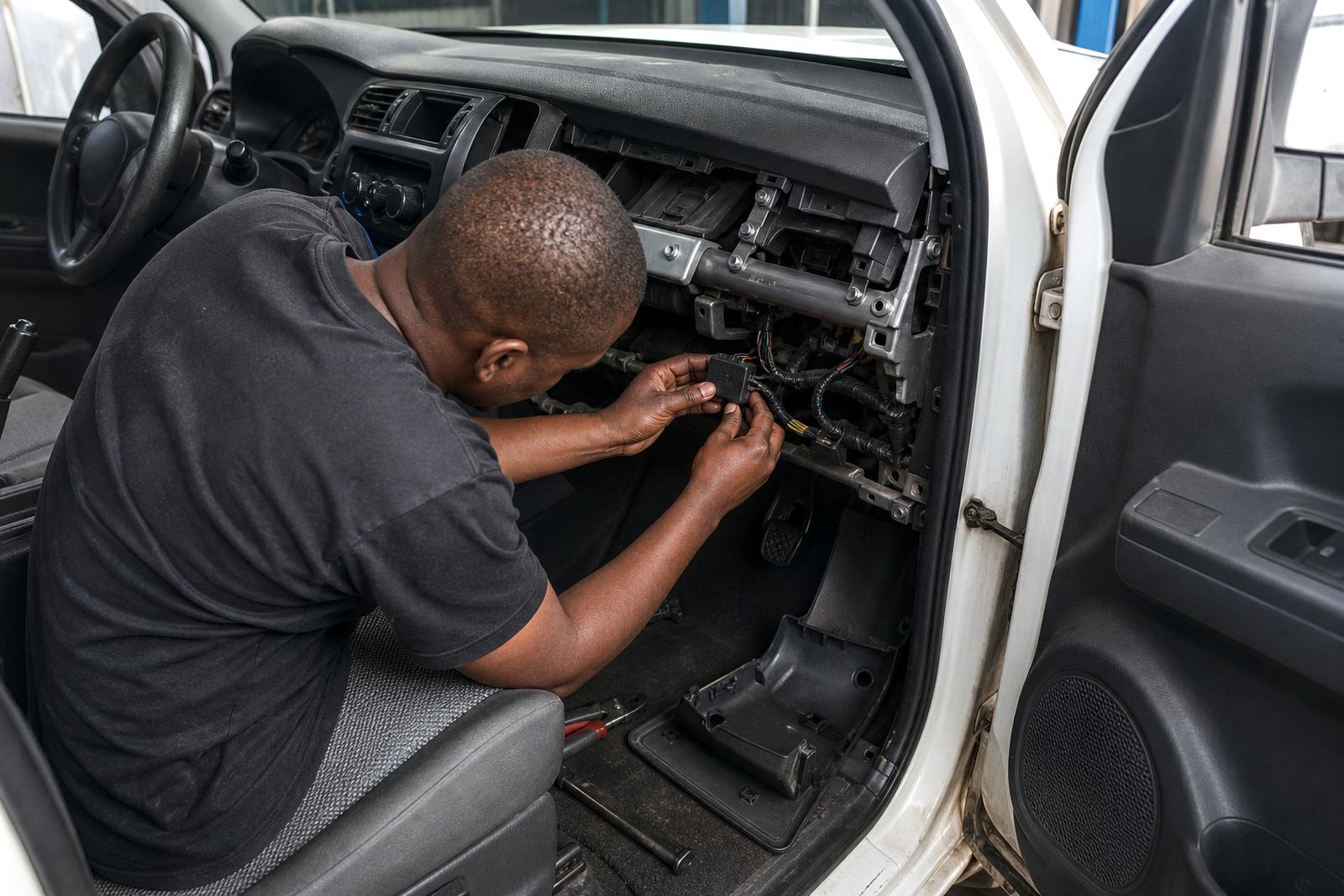
The tracker unit was fitted with short, tidy cable runs and secured away from moving parts. We kept the route out of sight where possible and used proper sleeving, fastening and insulation so the wiring would not rattle against plastic trim over rough roads. On a daily-use bakkie, that sort of finish matters more than shiny extras because loose wiring tends to get pulled, pinched or damaged when people climb in and out with bags, work boots or damp weather gear.
Power was taken from an appropriate circuit and the earth point was cleaned and tightened properly. We also checked the fuse side and made sure the add-on wiring was protected in a way that made sense for a vehicle that sits in traffic, parks outside and spends time on the road between Strand and Cape Town.
- Concealed power routing
- Protected fuse take-off
- Earth point cleaned and secured
- Wiring kept clear of seat movement
What the diagnostics showed on the vehicle side
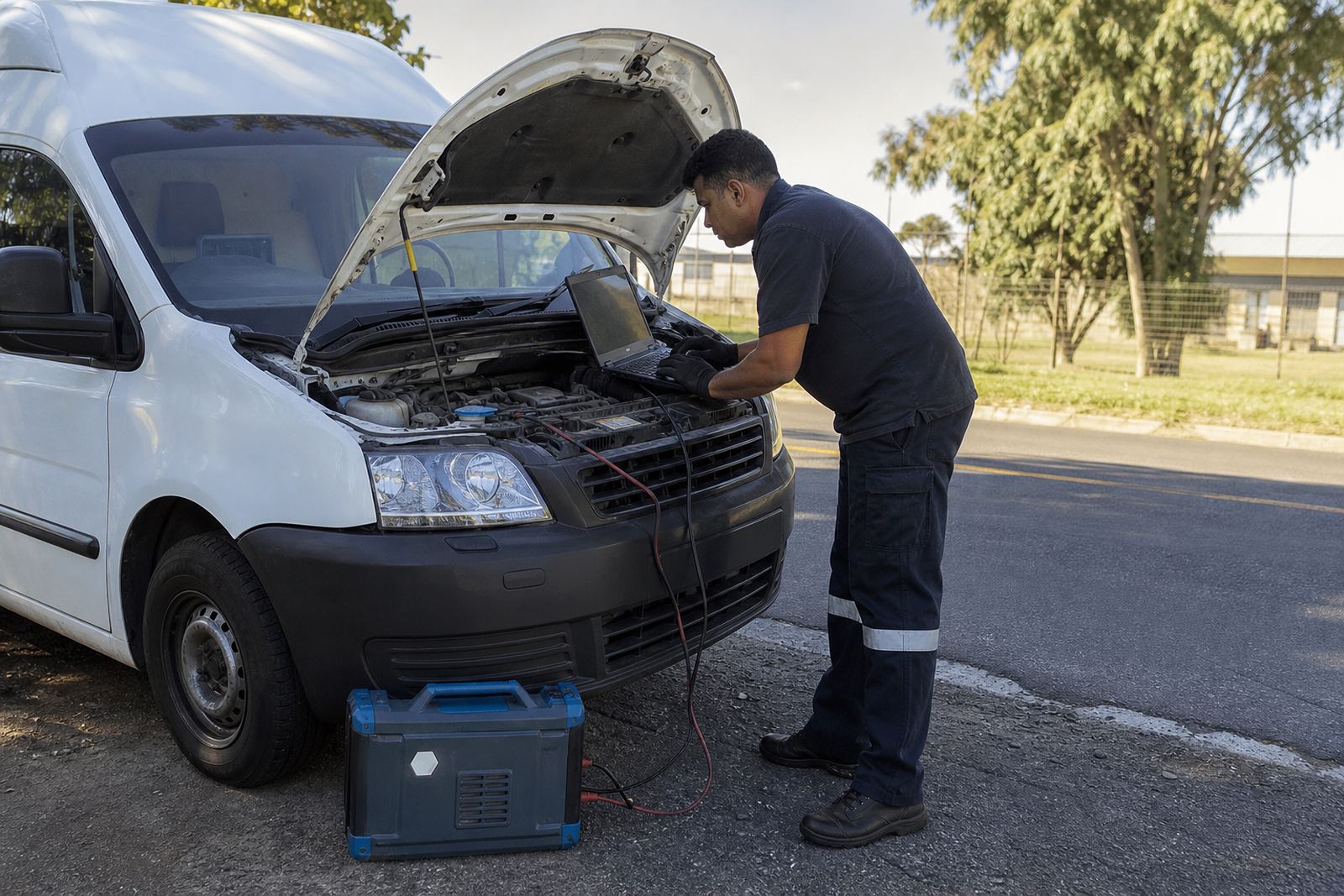
During the workshop inspection we looked at the basic vehicle electrical picture as well, not only the new fitment. That included fault code reading, live data review where relevant and a quick check on the starter circuit path. On many bakkies, a starter that cranks slowly or a charging issue that comes and goes can be linked to a tired cable, a heat-stressed terminal or a lazy earth strap rather than the component alone.
Nothing on the scan suggested a major control issue, but the checks helped us rule out hidden electrical noise that could upset the tracker or cause nuisance drain. For a private owner, that means less guessing later and a cleaner result from the first visit.
- OBD fault code readout
- Live data checked where needed
- Starter circuit inspected
- Earth integrity confirmed
Finish, road use and the small details that keep it neat
The bakkie left with a tidy install that did not crowd the dash, footwell or load area. No hanging wires, no rough tape bundles and no unnecessary cut-ins to the cab trim. We paid attention to the points that matter on Cape roads: heat, vibration, dust and repeated door use. In a vehicle that spends time in Strand, Bellville and the City bowl, those small details make the difference between a clean job and one that starts chafing after a few weeks.
The owner also wanted the work to stay practical for day-to-day use. So we kept access to service points open, left the fuse arrangement sensible and made sure the tracker fitment did not interfere with normal driving or loading. The bakkie could go straight back into ordinary use without a pile of loose ends left for later.
- Neat cab finish
- No loose wiring visible
- Service access kept open
- Daily use preserved
What we would note on a similar private bakkie
For a similar job, we would stick to the same order of work: test first, fit second, then check the charging and drain side again before the vehicle is handed back. That sequence avoids most of the headaches that come from fitting an accessory into a tired electrical system. It also makes the tracker job cleaner because the installer knows the battery and alternator are doing their part before the new unit is added.
We would also keep the cable runs short, the earth point clean and the fuse position easy to inspect. On a private bakkie, that approach leaves enough room for future accessory work without turning the wiring into a crowded bundle under the dash.
- Test before fitment
- Keep earth points clean
- Leave space for future accessories
- Use short, protected cable runs
Key facts
| Project | Private bakkie tracker fitment and power wiring |
|---|---|
| Town | Strand, Western Cape |
| Workshop base | Montague Gardens, Cape Town |
| Vehicle type | Daily-use private bakkie |
| Work period | 1 to 2 weeks |
| Key checks | Battery, charging, drain and wiring fault checks |