Charging faults that point to the alternator
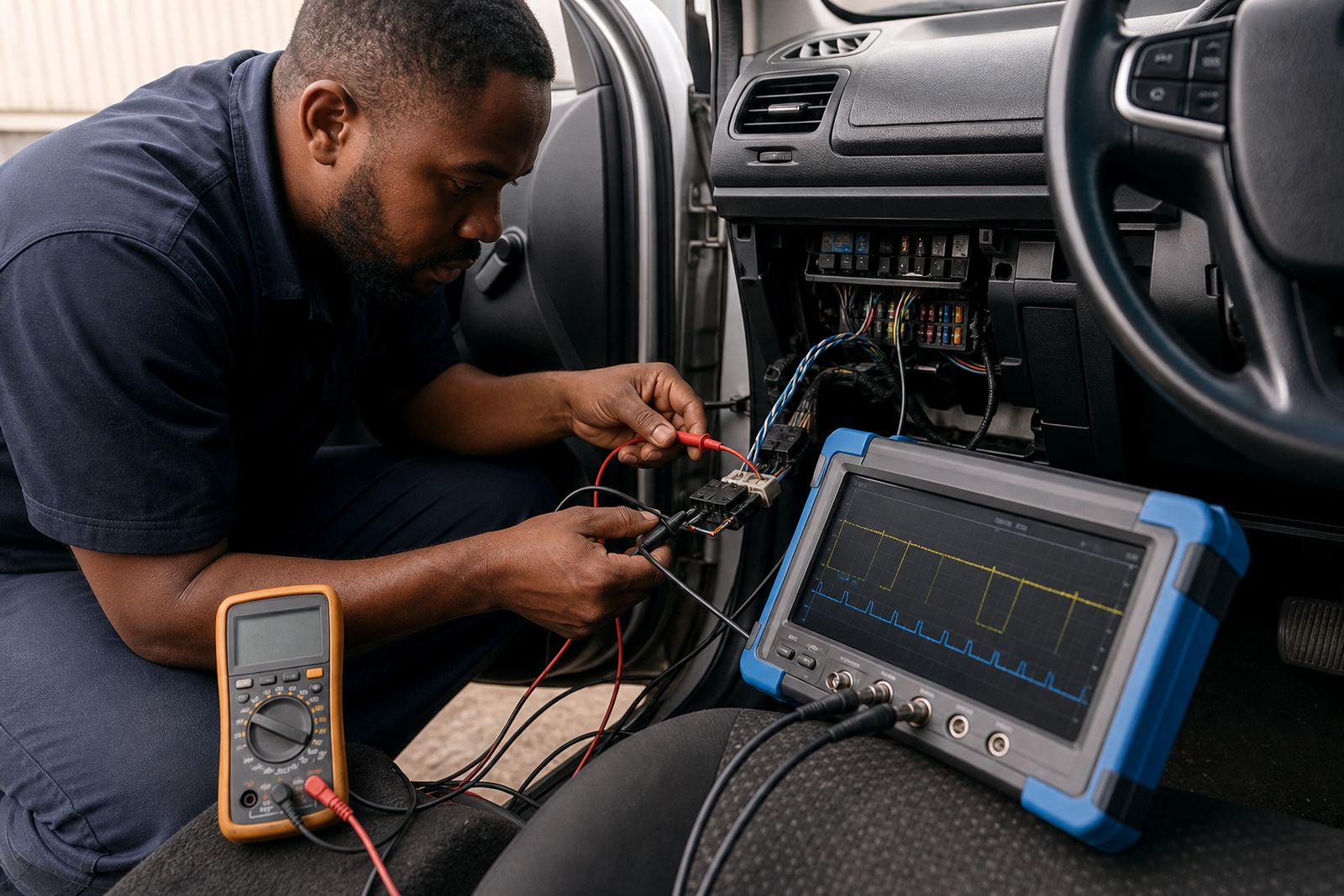
An alternator fault often starts as a hard crank in the morning, a battery warning light, dim lamps or electronics that act strangely at idle. We test the charging system under load, not just at rest, because a unit can look fine on a quick metre check and still fail once the engine is running and the accessories are on.
Our workshop in Montague Gardens handles alternator repairs for private vehicles, panel vans, bakkies and fleet units. We also support mobile call-outs across Cape Town, Bellville, Milnerton, Somerset West and Paarl when a vehicle cannot be moved easily.
- Low charging voltage at idle or under load
- Intermittent charging after warm-up
- Battery light on the dash
- Whining, bearing noise or belt slip around the alternator
- Burnt wiring, loose terminals or damaged plugs at the unit
What we test before a repair begins
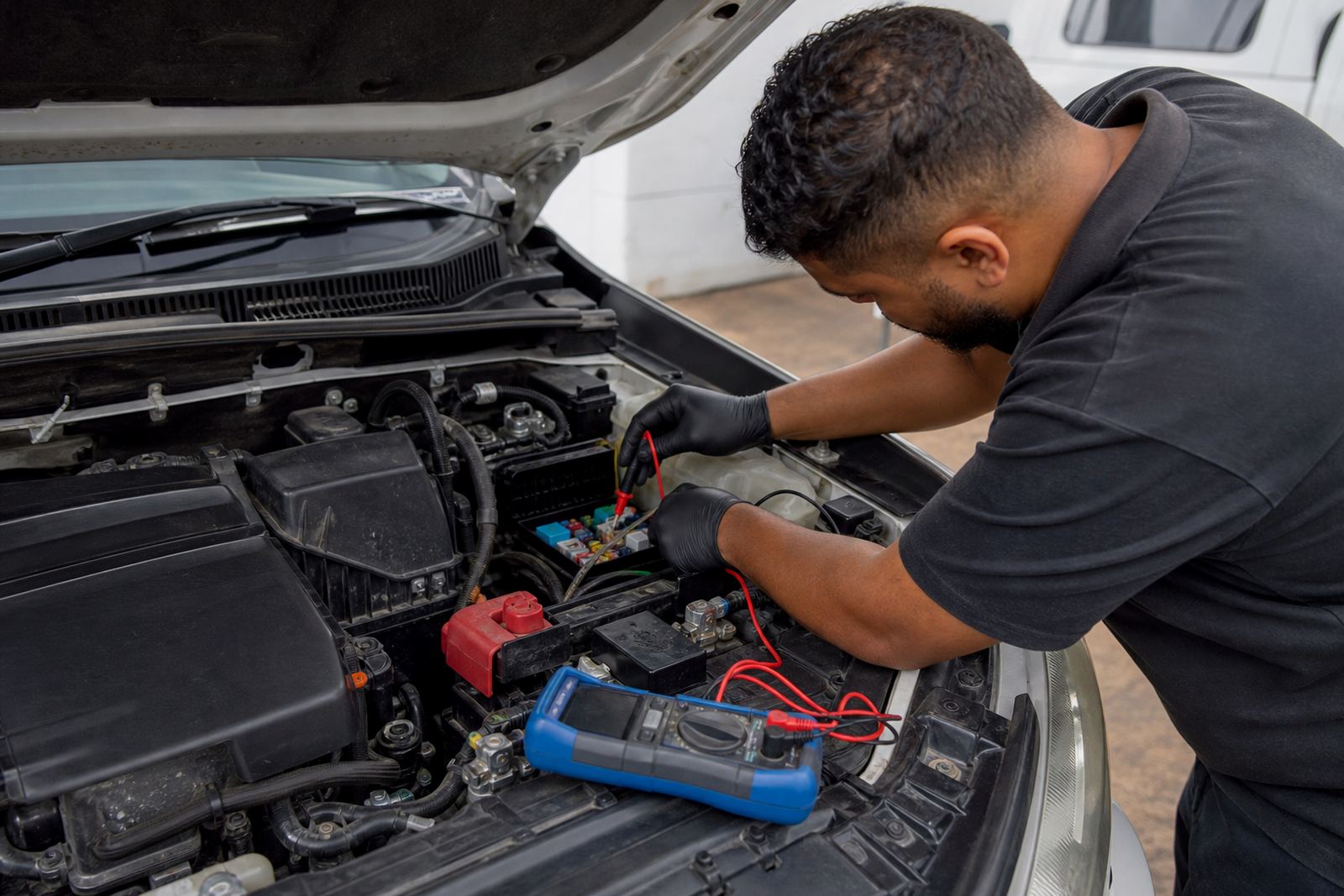
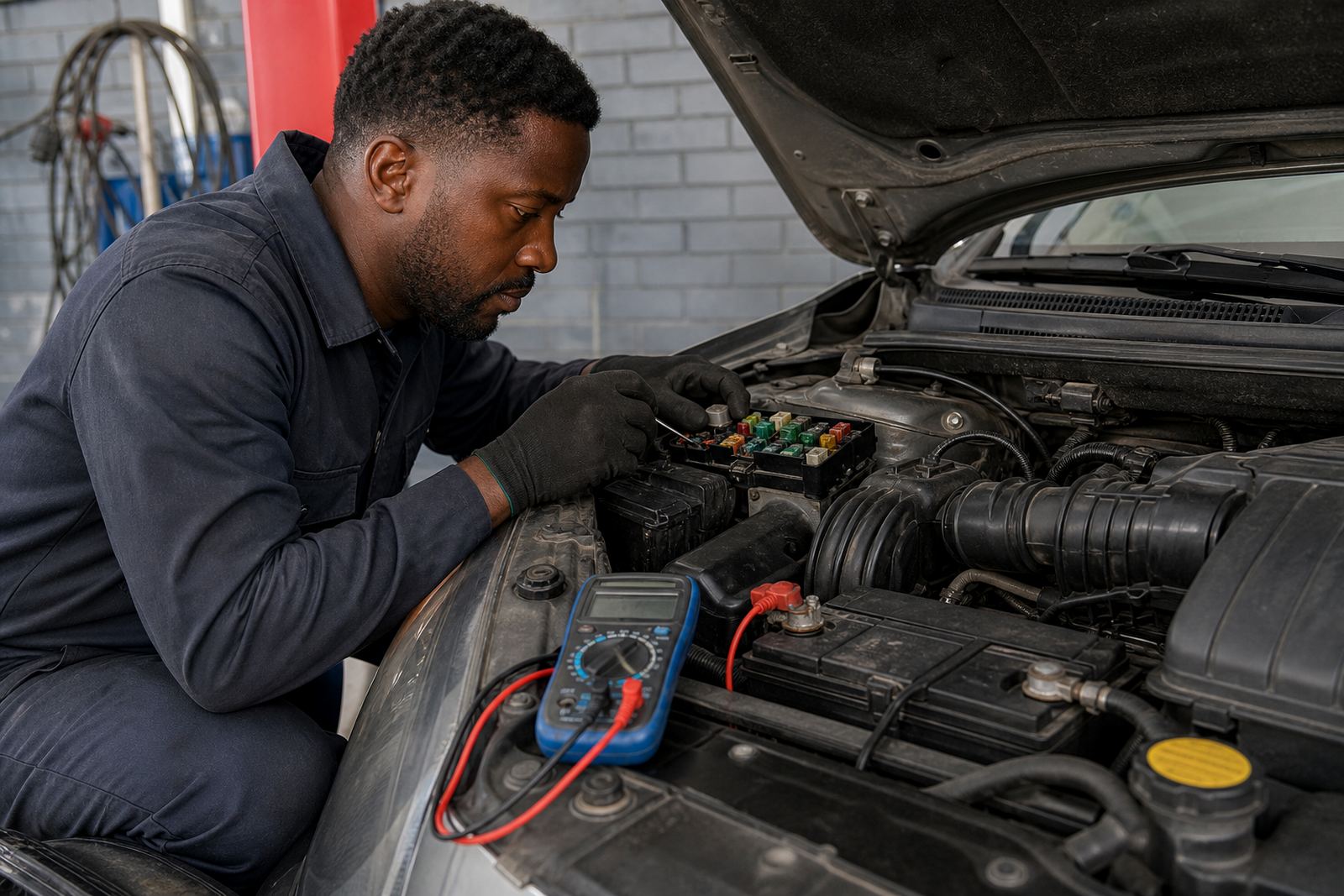
Alternator work starts with the battery condition, belt drive, fuses, earth paths and charging output. If the battery is already weak, it can mask the real fault and lead to the wrong repair. We check live voltage with the engine off and running, then confirm output under electrical load from headlights, fans, demister and other circuits.
We also inspect ripple and field control where the vehicle uses electronic regulation. On modern vehicles, the alternator may be tied into the CAN bus and engine management system, so a fault code is only one part of the picture. A low charge can be caused by the alternator itself, poor earths, a broken sense wire or a failed regulator circuit.
- Battery state and terminal condition
- Charging voltage at idle and raised revs
- Current flow and belt condition
- Fuse box feeds, main charge cable and earth fault checks
- OBD fault codes and live data where needed
Repair work inside the charging system
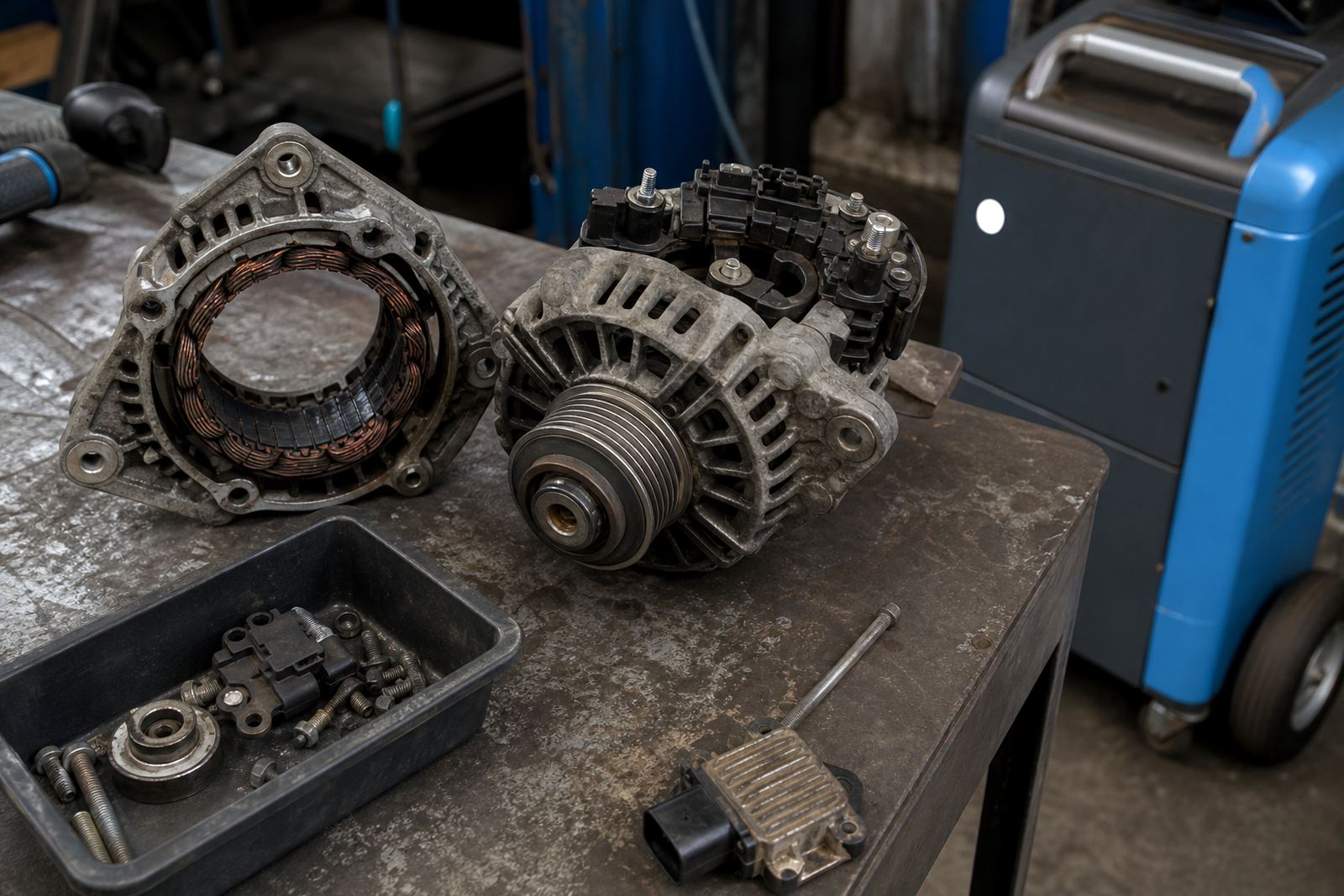
Once the fault is traced, we repair the part that is actually failing. That may mean replacing worn bearings, renewing brushes, fixing internal regulator faults, repairing damaged connectors or sorting the main charge cable. If the unit has suffered heat damage or contamination, we assess whether a proper repair is still practical before fitting it back into service.
We do not see every charging fault as needing a full replacement. Many alternators fail because a smaller part in the circuit has been neglected, such as a corroded terminal, damaged plug or bad earth strap. Those faults can create the same symptoms as a failed unit, and they also shorten the life of a replacement if left in place.
- Alternator strip-down and bench checks
- Brush, bearing and regulator assessment
- Connector repair and terminal renewal
- Charge cable and earth path repairs
- Verification after refit
Work done for fleets and private vehicles
Fleet operators need a repair that keeps the vehicle moving, but private owners want the fault explained in plain terms. We handle both. A delivery van with repeated battery failures is treated differently from a single family car with a one-off charging issue, and the diagnostic path reflects that. For fleets, we look at repeat faults, repeated jump-starts and any accessory load that may be pulling too much current when the engine is off.
We also fit related accessories when they affect the charging circuit, including trackers and rewired add-ons that may have been installed badly. Poor accessory wiring can cause parasitic drain, false warning lights or a flattened battery after standing overnight.
- Fleet vehicles with repeated downtime from charging faults
- Private cars with warning lights and weak starting
- Tracker and accessory wiring that may be linked to drain
- Trailer wiring and add-on loads where relevant
Turnaround, testing and the next start-up
Turnaround depends on access to parts, the fault found and whether the alternator can be repaired in-house or needs further work. A straightforward wiring or connection repair is handled differently from a unit that needs strip-down and internal rebuilding. We explain the route before work proceeds so the vehicle owner or fleet manager knows what is being dealt with.
After the repair, we test the circuit again with the engine running, lamps on and a proper load applied. The aim is steady output, clean operation and no warning light reappearing on the dash. Where the vehicle has sensitive electronics, we recheck fault codes and live data after the repair to confirm the system is working as it should.
Pricing approach and aftercare notes
Pricing depends on the alternator type, the repair path, access to the unit and whether extra wiring faults are found during testing. A clean repair on a reachable unit is priced differently from a job that needs tracing through damaged loom sections or correcting previous poor work. We quote for the actual fault.
Aftercare focuses on the rest of the charging circuit. If the battery was run flat for too long, it may need attention too. If corrosion, loose terminals or earth faults caused the original problem, those points should stay clean and secure or the same symptoms can return under load. A repaired alternator is only as good as the circuit around it.
- Pricing follows the fault traced, not a flat guess
- Further wiring damage can change the repair path
- Battery condition is checked after charging faults
- Terminal and earth cleanliness matters after refit
Key facts
| Service area | Montague Gardens, Cape Town and mobile call-outs across the Western Cape |
|---|---|
| Core checks | OBD fault codes, live data, battery tests, charging voltage and load testing |
| Alternator faults handled | Low output, no charge, unstable voltage, bearing noise and connector damage |
| Related repairs | Starter circuits, earth faults, fuse box faults, wiring repairs and charge cables |
| Vehicles covered | Private cars, bakkies, panel vans and company fleets |
| Workshop base | Montague Gardens, Cape Town |