What a starter circuit repair covers
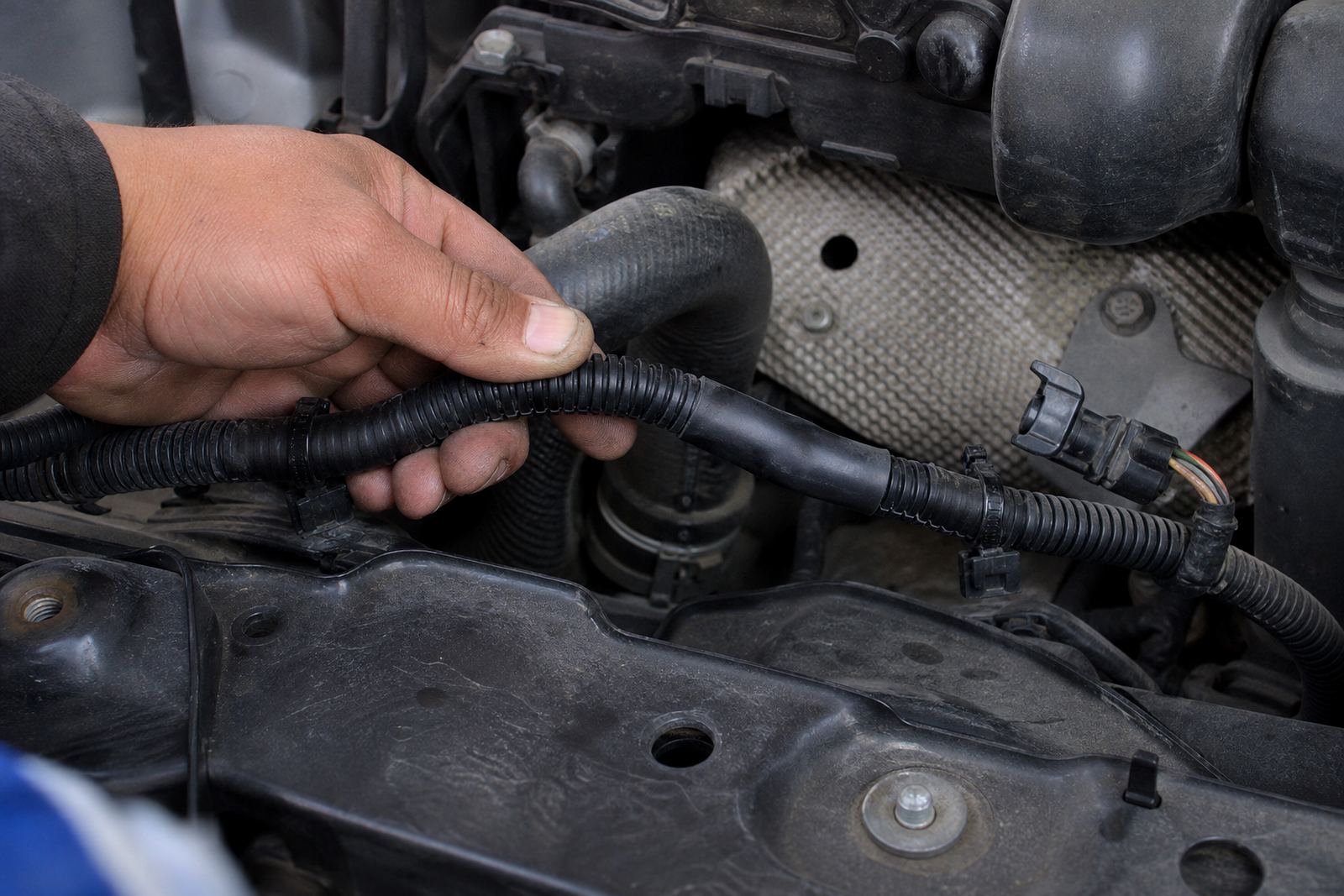
A starter circuit repair looks at the path that tells the starter to engage and carry current. That path can include the ignition switch feed, relay control, fuse protection, clutch or park safety inputs where fitted, the battery supply, earth points, wiring joins and the trigger wire at the starter solenoid. When one point in that chain is weak, the vehicle can click, crank slowly, or do nothing at all.
We test the control and supply sides separately, because the fault is not always inside the starter motor. Some vehicles lose voltage through worn terminals or heat-damaged wiring, while others fail through a relay, a poor earth or a broken signal wire. On fleet units and private cars alike, the job is to find where the current stops and repair only what is needed.
- Ignition feed and relay testing
- Trigger wire checks at the starter
- Fuse, link and connector inspection
- Earth path testing under load
- Starter engagement signal checks
The checks we run before any parts are changed
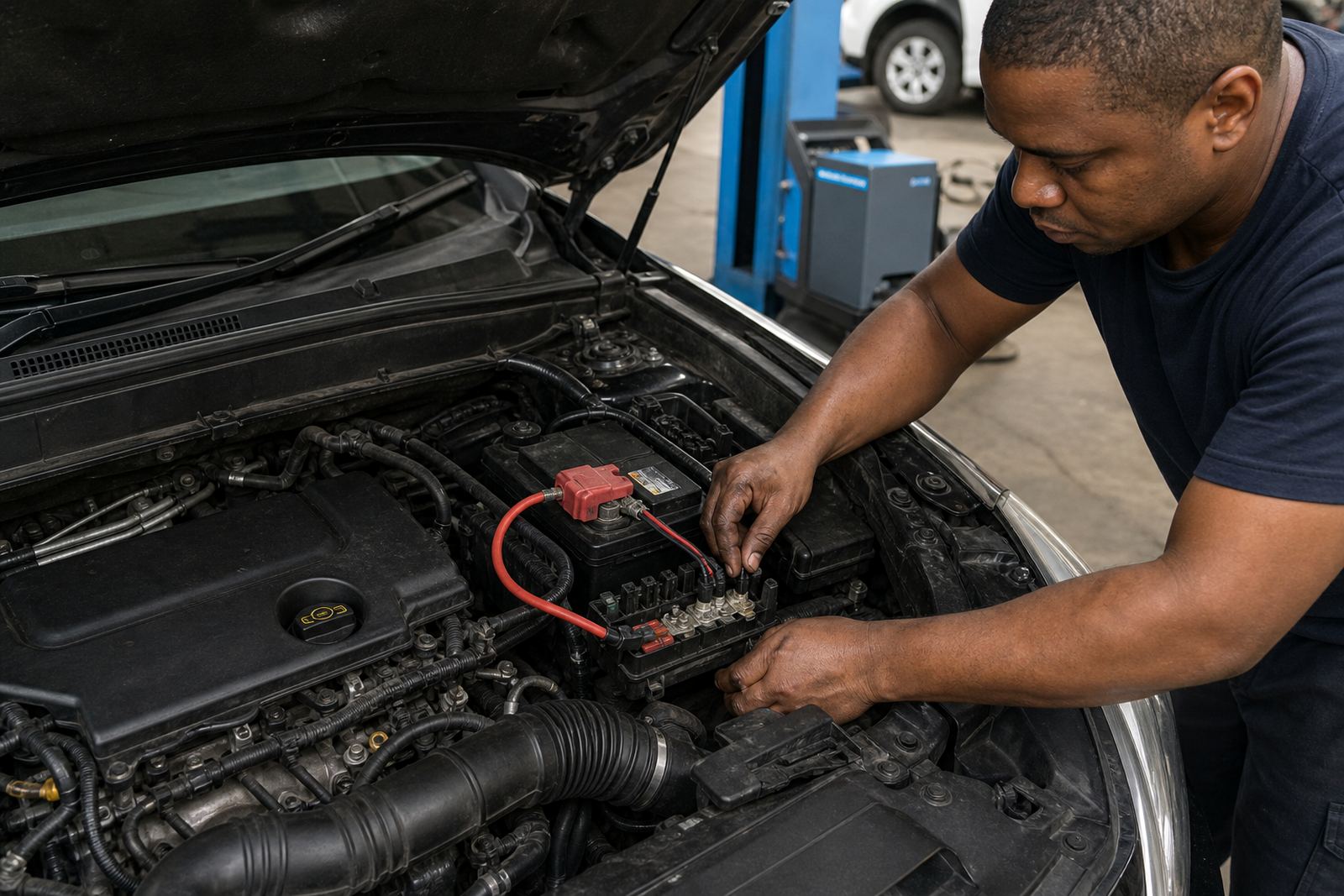
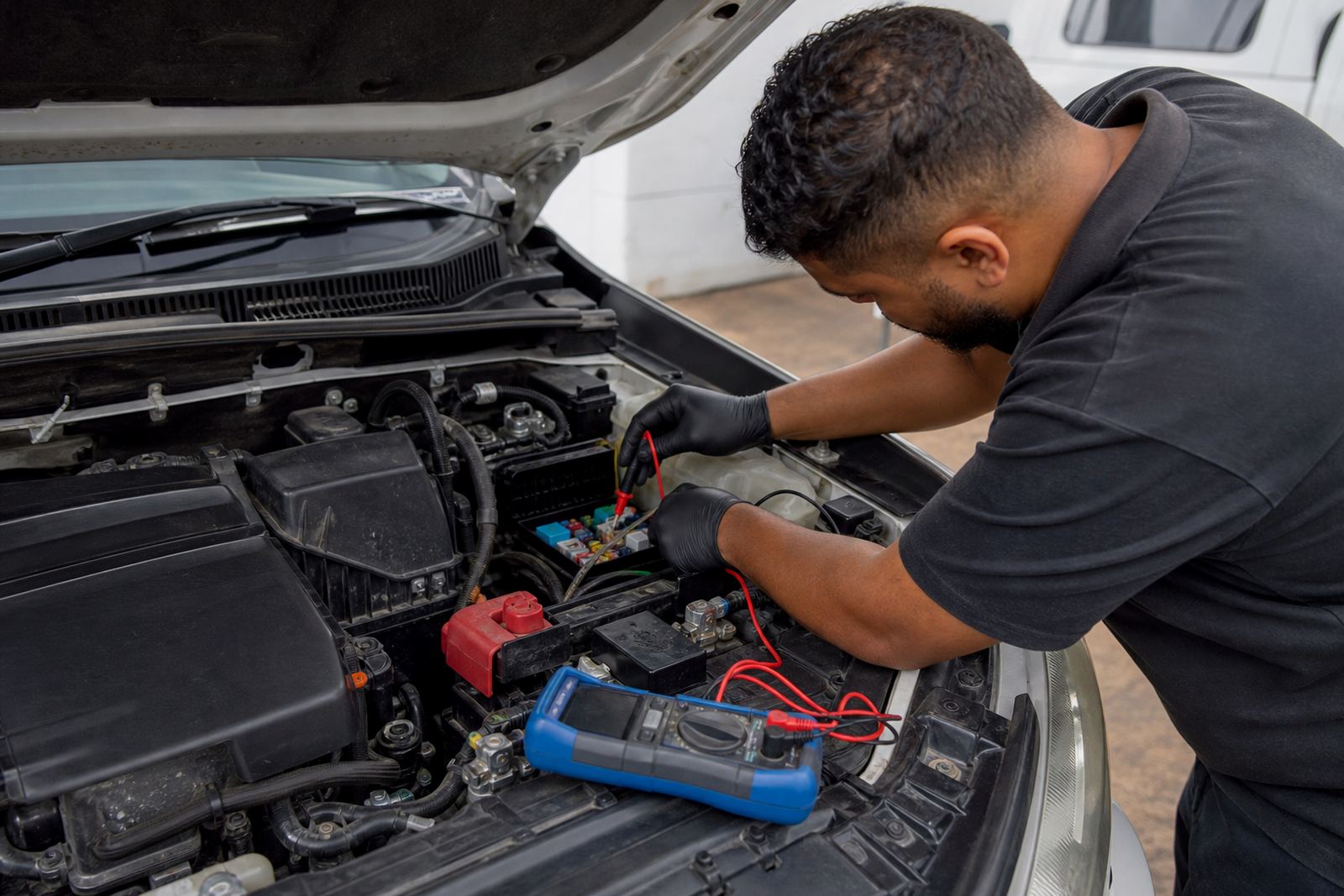
Starter circuit faults need proper electrical testing. We check battery voltage, cranking voltage drop, charge condition, cable resistance and the condition of terminals before the starter is touched. If the battery is weak or the charging system is underperforming, the starter circuit can look guilty when it is only carrying the stress of a deeper fault.
Our diagnostic process also includes live data where the vehicle supports it, plus fault code reading when the control system stores a related entry. On newer vehicles, CAN bus messages and safety interlocks can affect starter operation, so we look at the control side as well as the copper and connectors. In practice that means a measured trace from key signal to starter reaction, with each test used to narrow the fault.
- OBD fault code reading where relevant
- Battery and alternator output test
- Voltage drop test on positive and earth cables
- Relay function and trigger signal checks
- Starter solenoid response test
We repair starter circuits in our workshop or at your premises.
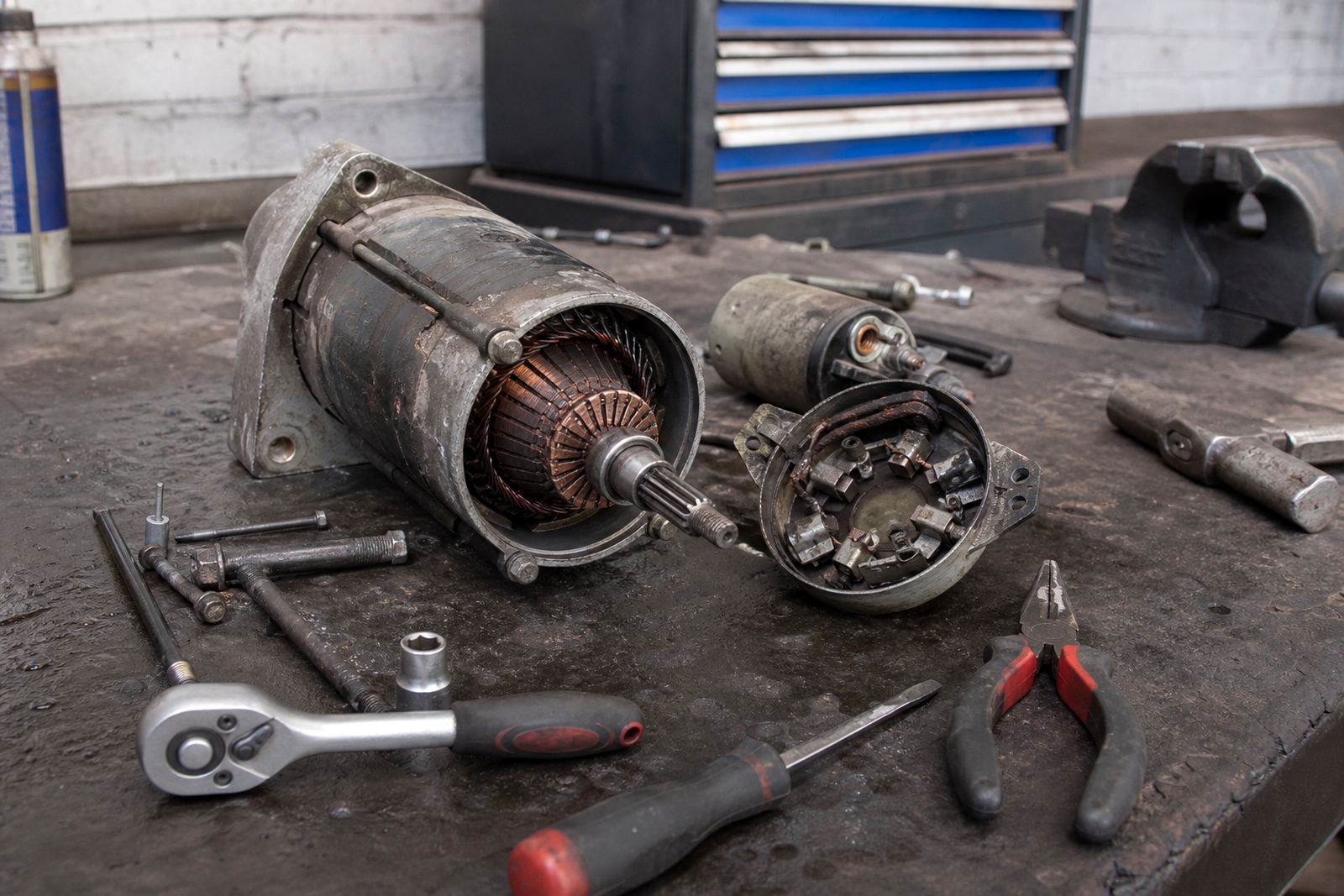
Once the fault is found, the repair may involve replacing damaged cable sections, cleaning and tightening terminals, renewing a relay, restoring an earth point or rebuilding a heat-damaged connector. If the starter itself is drawing too much current or failing under load, we can move from circuit repair into starter repair with the issue clearly separated. That keeps the job focused and avoids changing parts that are still sound.
Mobile call-outs suit fleet units parked in yards, depots or site bays, while workshop work is better for deeper tracing or when parts need bench testing. We work on passenger vehicles, bakkies, delivery vehicles and light commercial units across Montague Gardens, Milnerton, Bellville, Somerset West, Paarl and wider Cape Town. The aim is proper fault isolation, then a repair that holds under real use and not just on a static test.
- Wiring repair and loom rework
- Relay and fuse box circuit correction
- Starter solenoid feed repair
- Earth fault correction and terminal cleaning
- Bench testing where the unit must be removed
Time on the job and pricing approach
Starter circuit work is priced around the diagnosis first, then the repair path after the fault is confirmed. A quick terminal clean and test sits in a different category from tracing a hidden open circuit through a loom or finding heat damage near the starter. The labour involved depends on access, vehicle layout and whether the fault lives in the engine bay, underbody harness or cabin control side.
We keep the costing practical and clear. Any parts needed are chosen for the specific circuit fault, rather than replaced as a full set. Some jobs are straightforward, while others need layered testing to rule out battery condition, starter draw and charging faults. That approach protects the customer from paying for parts that do not solve the problem.
- Test first, then quote the repair path
- Labour depends on access and fault depth
- Parts only when the circuit calls for them
- Fleet work can be grouped by vehicle and location
After the repair, what we check again
After the repair we re-test the starter circuit under load, not only with a key turn in the bay. We check cranking speed, voltage at the starter, earth integrity and charging output where needed, because a weak alternator can drag the system down and make starter faults return. If the vehicle uses a coded control path, we verify that the starting signal is being carried cleanly through the circuit.
For fleet operators, we can note the fault pattern so the next inspection starts in the right place. For private owners, we explain which section of the circuit failed, which part was repaired and what signs to watch for if the problem begins to build again. That practical handover matters when a car is used daily in town traffic, coastal moisture or stop-start delivery work.
- Cranking load test after repair
- Voltage drop recheck on both sides
- Charging output confirmation where linked
- Fault path explanation for future reference
Montague Gardens workshop, mobile support across the Western Cape
V-Auto works from Montague Gardens, Cape Town, with mobile call-outs for starter circuit faults in nearby suburbs and further afield. The same electrical fault can present very differently on a vehicle that sits in warehouse traffic in Milnerton, does long routes through Bellville, or works coastal runs through Somerset West and Paarl. That is why the inspection starts with actual symptoms and live testing, not assumptions.
We handle starter circuit repairs for fleet operators and private owners who need wiring faults traced properly. If the issue is at the relay, trigger wire, earth point or control side, we track it down and repair the circuit that is stopping the starter from doing its job. The result is a starter system that works as a system.
Key facts
| Service area | Montague Gardens, Cape Town and mobile call-outs across the Western Cape |
|---|---|
| Work type | Starter control circuits, supply circuits, relay paths, earth faults and trigger wiring |
| Vehicle systems | 12V starting circuits, light commercial vehicles, passenger vehicles and fleet units |
| Diagnostics | OBD fault codes, live data, voltage drop, battery and charging tests |
| Common faults | No-crank, click-no-crank, slow crank, intermittent start, relay failure |
| Access | Workshop repairs and mobile call-outs by arrangement |