When a working vehicle starts acting tired
Light commercials usually arrive with a pattern that is easy to miss at first. The battery seems fine in the morning, then the starter sounds lazy after a few stops, or the dash lights flicker when the fan, beacon and tools all run at once. In a business vehicle, that sort of fault costs time and it spreads through the day.
We see vehicles that carry tools, stock, compressors, fridges, cash boxes or service kits. The extra load changes how the electrical system behaves, especially where short trips, idling and stop-start use are common. A fault may sit in the alternator, a tired battery, a loose earth, a damaged loom, or a tracker accessory fitted without enough thought to the circuit it joined.
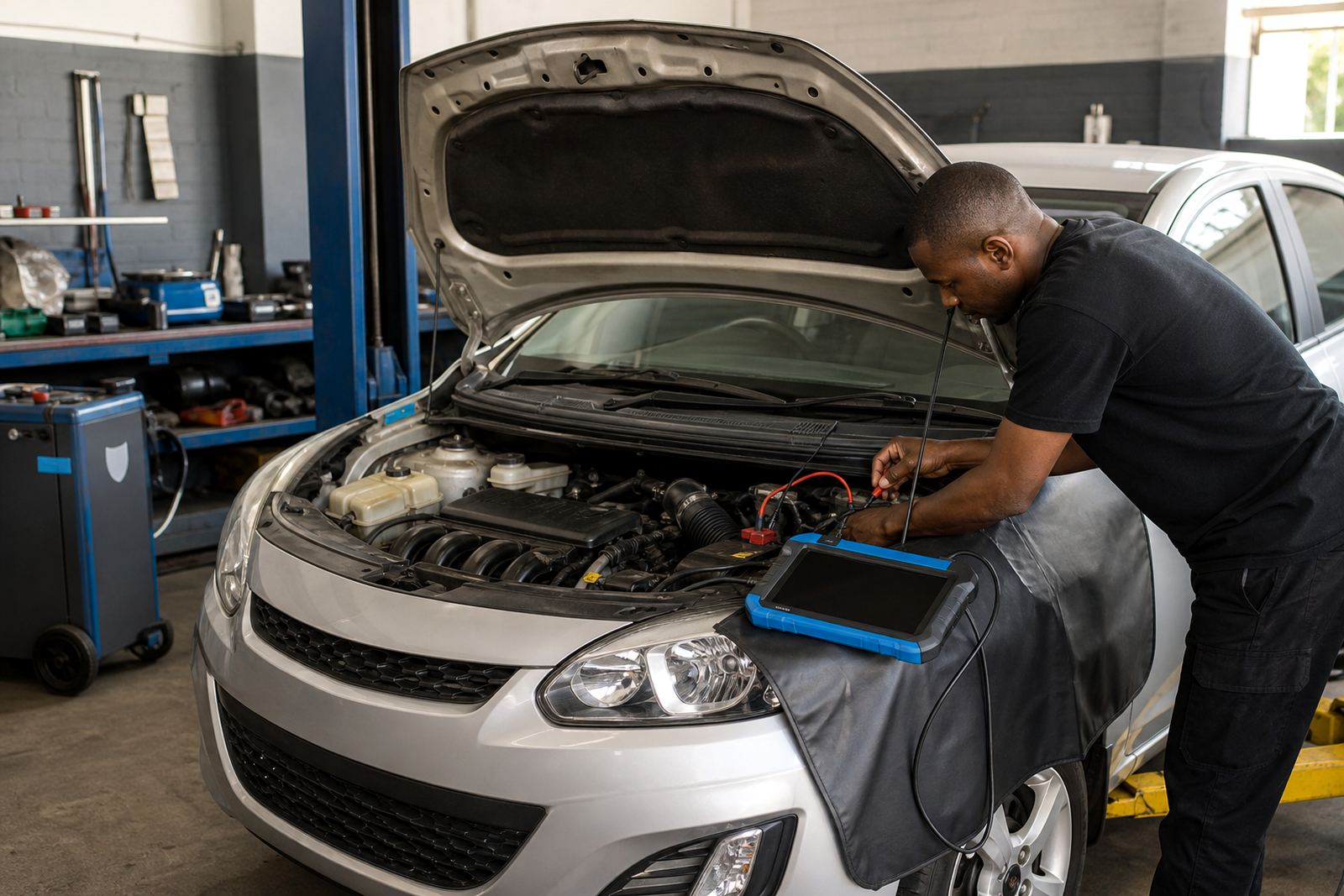
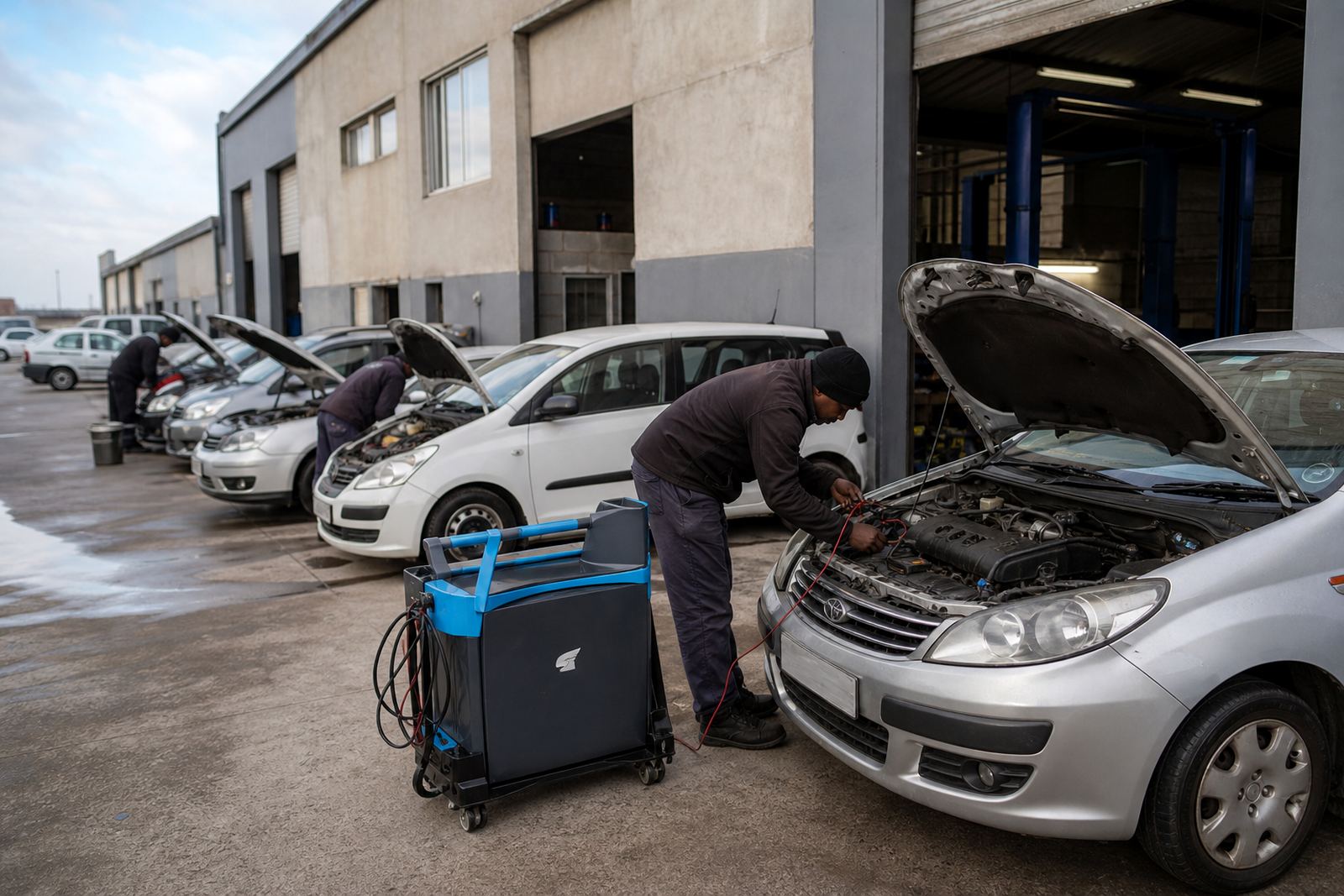
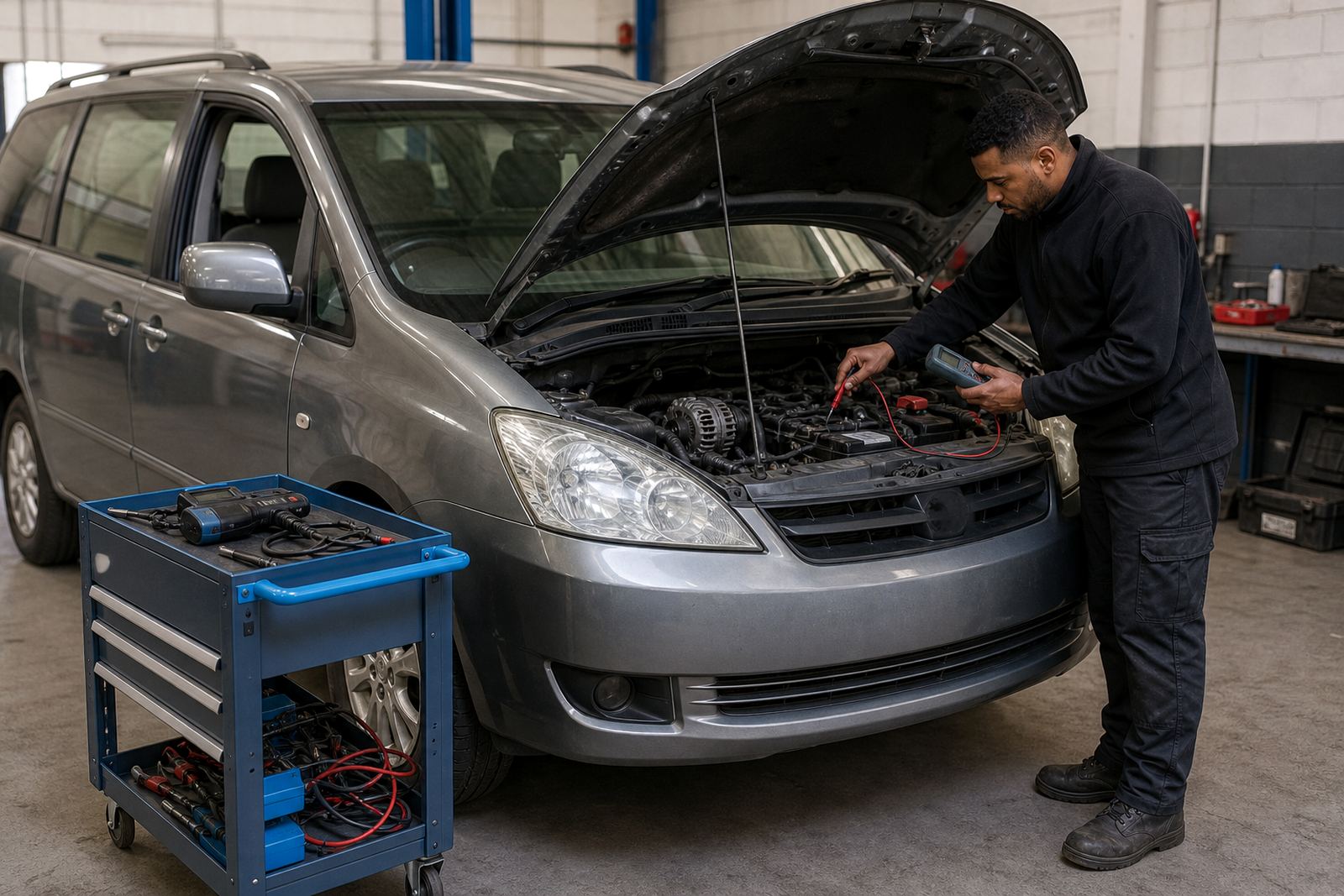
Our workshop reads fault codes, checks live data, and tests the battery and charging system under load. That gives us a fuller view than changing parts and hoping the fault disappears. On many work vehicles the fault is not one item, it is the chain around it.
The parts of the vehicle we look at first
A light commercial electrical inspection usually starts with the basic circuits that keep the vehicle moving and legal. If those are weak, the rest of the systems become harder to read. We look at the starter circuit, alternator output, battery condition, fuse box condition, earth paths and any wiring that has been repaired before.
- Battery test under load, not just a quick voltage reading
- Charging system check with engine idle and under electrical demand
- Starter current draw and cranking speed
- Parasitic drain testing when the battery goes flat overnight or over a weekend
- Wiring continuity checks where a circuit loses power at random
- CAN bus fault checks where modules stop communicating properly
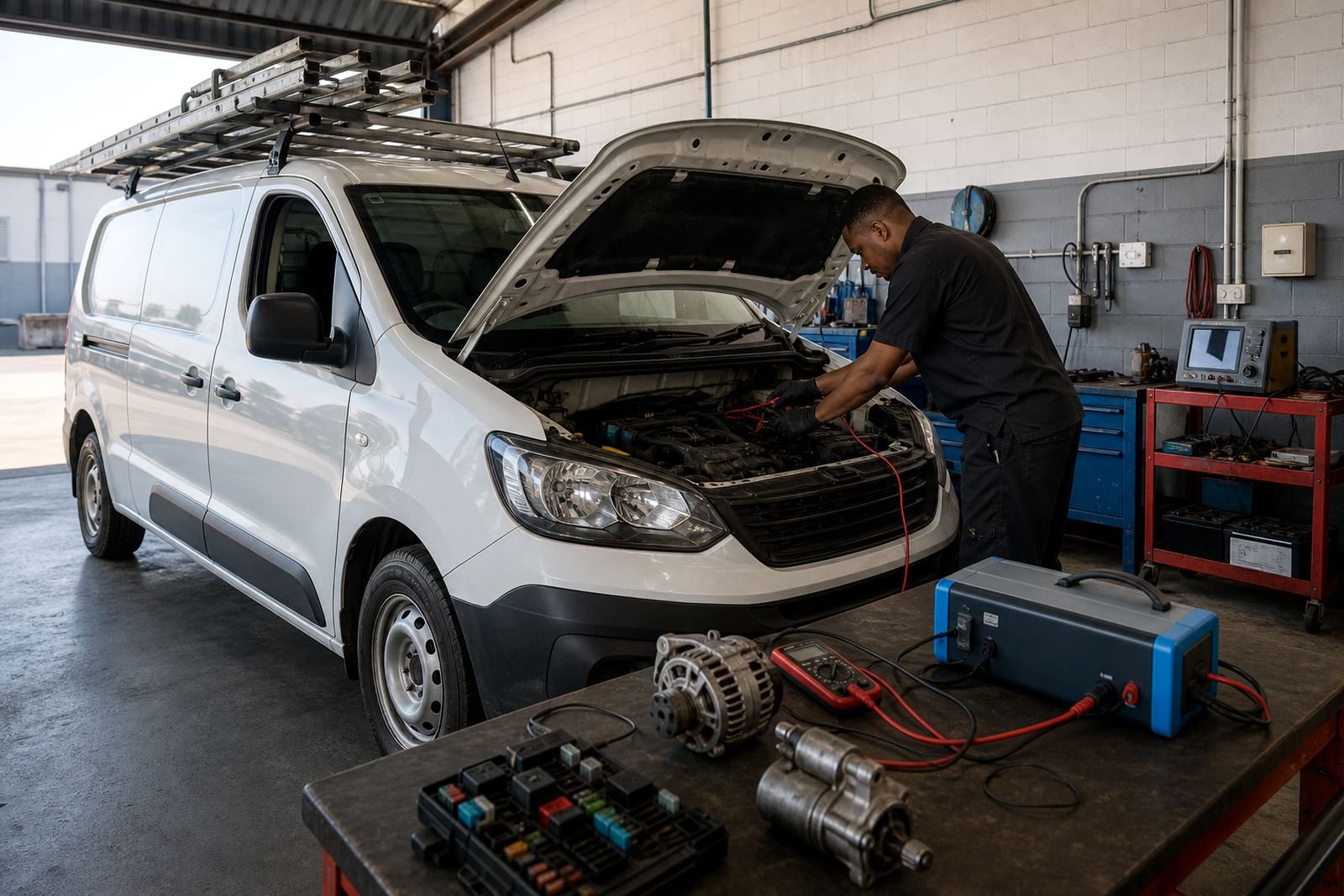
Commercial vehicles often have extra equipment added over time. The fault may show up only after a tracker, beacon, radio, inverter, fridge or trailer connection has been installed. We trace the wiring properly and separate the original loom from the add-on work, which helps avoid repeat faults.
How fleet equipment changes the job
Fleet vehicles and private work vehicles are rarely left in standard trim. They may carry tool storage, inverter feeds, reverse cameras, additional lighting, trailer plugs, trackers, alarms, hands-free kits or refrigeration controls. Each extra item asks more from the charging system and each splice into the loom creates another point where a future fault can appear.
For a panel van or bakkie used daily, good layout matters. Heavy accessories should not be stacked on one weak earth point or tied into a circuit that already carries too much current. Fuses must suit the circuit, cable size must match the load, and routing needs to stay clear of heat, sharp edges and moving parts. Coastal air in Cape Town and Milnerton can also speed up corrosion where terminals are left open or poorly sealed.
We often advise owners to keep the electrical add-ons grouped in a way that makes future testing easier. That means one place for the main accessories, proper labelling where practical, and enough access to inspect the wiring without dismantling half the fit-out. It saves hours when a fault appears on a busy week.
Planning the fit-out so the vehicle still works for business
A useful light commercial setup starts with the vehicle’s daily routine. A courier bakkie, a service van and a mobile workshop unit do not need the same cable runs or charging support. The layout should match the work carried, the distance driven, and whether the vehicle spends long periods idling in town traffic or parking at sites.
Good planning usually covers these points:
- Where the battery sits and how easy it is to test
- Which accessories need ignition control and which need permanent power
- How the loom will be protected near hinges, load bays and tailgates
- Whether a trailer feed needs separate fault protection
- How much spare capacity the alternator and battery can handle
When the setup is rushed, the result is often nuisance faults. Warning lights appear, radios reset, batteries go flat, or the starter struggles after a day of short trips. A neat electrical plan keeps the vehicle earning and reduces the kind of workshop visits that interrupt delivery runs and site work.
Common mistakes that let the fault resurface
Some faults are caused by wear. Others are caused by hurried repairs. On light commercials, we often find battery terminals tightened badly, earth straps left loose, connectors exposed to moisture, or accessory wiring joined into the wrong circuit. A fuse may be too large for the cable, or the original loom may have been cut where a proper branch connection would have worked better.
Starter and alternator complaints are often treated as separate problems when the real issue is in the charging path or ground path. A weak battery can hide a charging fault, and a charging fault can mimic a starter problem. That is why reading codes and checking live data matters, especially on vehicles with several electrical add-ons.
Another common mistake is ignoring intermittent faults because the vehicle still moves. A van that starts today but not tomorrow is already telling you something. Parasitic drain, bad earth points and loose connectors tend to worsen under vibration, heat and wet weather. Sort them early and the repair is usually simpler.
Budget ranges for working vehicles in Rand
The cost depends on the fault, the amount of tracing needed, and whether the vehicle needs parts or just repair work. A quick battery and charging check is not the same as a loom repair buried behind trim and load bay fittings. Mobile call-outs across Cape Town, Bellville, Milnerton, Somerset West, Paarl and surrounding areas can also change the scope of the job if the fault has to be diagnosed on site.
For budget planning, our ranges usually fall into these bands:
- Basic diagnostic testing and fault-code reading: about R450 to R950
- Battery drain tracing, starter or charging fault diagnosis: about R850 to R2,200
- Wiring repair, earth fault repair or fuse box fault work: about R900 to R3,500
- Starter or alternator repair work: about R1,500 to R4,500 depending on parts and access
- Tracker, accessory or trailer wiring installation and repair: about R750 to R3,800
These are broad working numbers, not fixed prices. A vehicle with tight engine bay access, repeated failed repairs or water damage will take more tracing than a straightforward circuit fault. We look at the actual vehicle condition before any repair path is set.