
When the car starts acting out on the school run
Passenger cars often show the first sign of trouble as a slow crank, a warning light that stays on, or a radio, window or central locking fault that comes and goes. A private owner may notice one issue at home and another in traffic, because low voltage and damaged wiring can affect several systems at once.
We work on everyday hatchbacks, sedans, SUVs and bakkies used for family travel around Cape Town, Milnerton, Bellville, Somerset West and Paarl. The job usually starts with a roadworthy-minded check of how the vehicle behaves cold, at idle and under load, then the electronic faults are matched against live readings and wiring condition.
- Engine light on after a battery change or jump start
- Intermittent starting, even with a new battery fitted
- Lights dimming at idle or stereo units resetting
- Windows, mirrors or central locking working only some of the time
What sits on the test bench for a passenger car
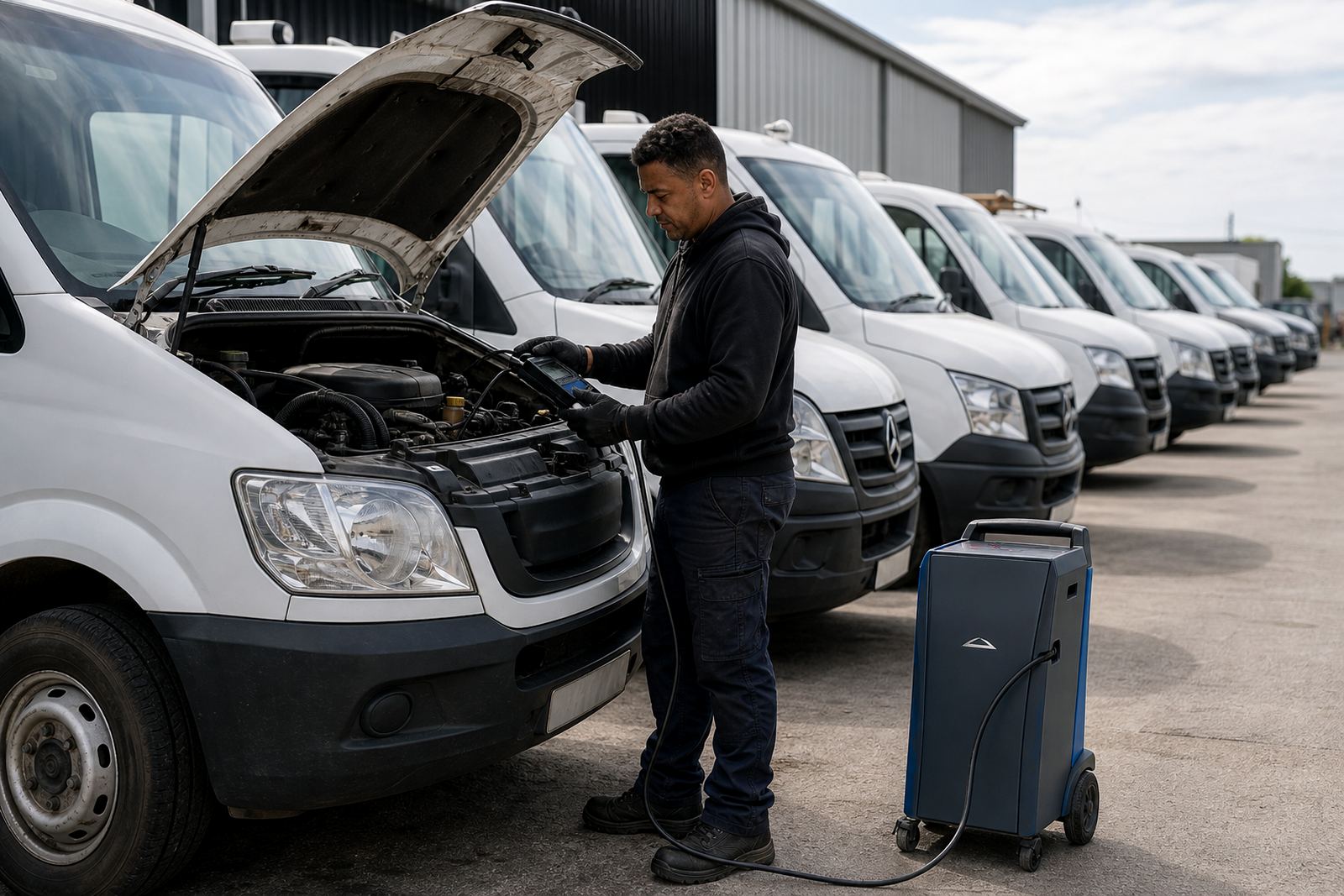
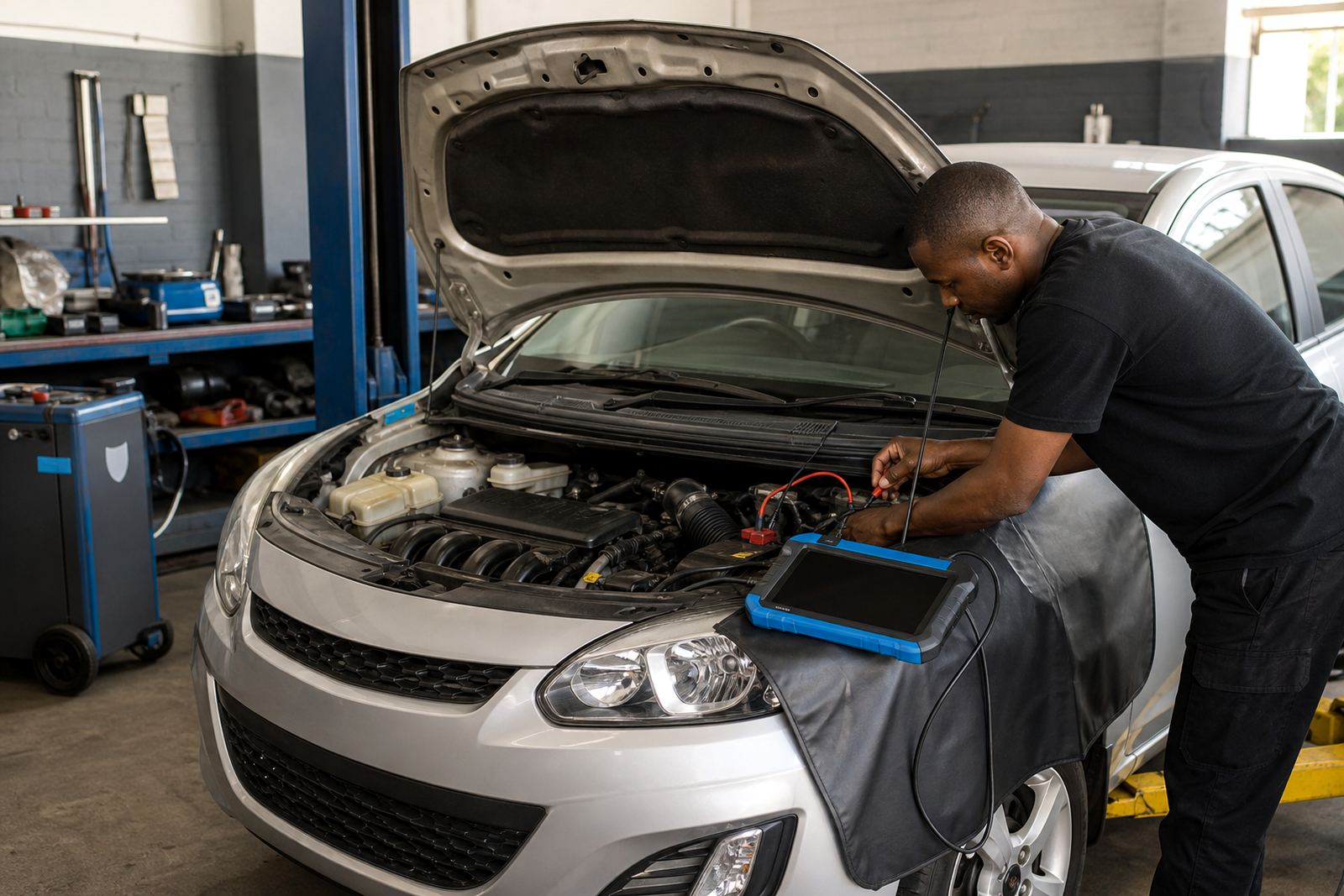
A proper passenger car diagnostic set is not only a code reader. We use OBD fault code access, live data checks, battery and charging tests, current draw testing for parasitic drain, and continuity checks on suspect wiring. When needed, we follow the starter circuit, alternator output, earth paths and fuse box feeds by hand.
Some faults sit inside the communication system between control units. CAN bus basics matter here, because a poor earth, water ingress or damaged harness can make several modules lose contact at once. That can show up as warning lights, no-start faults, odd instrument readings or accessories that stop working after rain or after a jump start.
- OBD scan tool for fault code reading and clearing after repair
- Digital multimeter for voltage drop and charging checks
- Clamp metre for parasitic drain and current flow testing
- Battery tester for cranking condition and reserve strength
- Wiring probes, circuit diagrams and fuse box testing tools
On a small job we may only need a single fault path. On a more awkward car, the test plan moves between battery, starter, alternator, fuses, relays, ignition feed and earth points until the fault stops hiding.
Layout advice for private cars and small households
Private vehicle work is easier when the car arrives in a clear state. Remove loose child seats, shopping bags, add-on chargers and anything that blocks access to the footwell, boot or battery area. If a trailer plug, dash cam, tracker or stereo was fitted recently, tell us where the wiring was routed so the inspection can start in the right place.
For families with more than one car, it helps to keep notes on when each fault appears. Does the issue show only after a cold start, after washing, or when the headlights and aircon run together? That detail makes a difference on charging faults and earth problems, and it helps us decide whether the vehicle needs a quick circuit test or a deeper strip-down.
In Montague Gardens and the surrounding suburbs, many passenger cars also carry accessory wiring that was added after purchase. Aftermarket fittings can be neat, but if they are tied into the wrong fuse, the wrong earth point or a weak battery feed, they can create a drain that only shows overnight or after a weekend park-up.
The mistakes that waste time and money
People often fit a battery first because the car will not start, then discover the starter motor is drawing too much current or the alternator is undercharging. Another common mistake is replacing a part because a fault code mentions that circuit, when the real issue is a damaged connector, corroded earth strap or broken wire inside the loom.
It also helps not to ignore small signs. A slightly slow crank today can become a no-start tomorrow, and a flickering headlight may point to a charging system or earth fault rather than a bulb problem. We see this often on passenger cars that spend time in the coastal air around Cape Town, where moisture and corrosion can build up on terminals and connectors.
- Replacing the alternator without checking battery condition first
- Skipping earth point testing on starter and charging faults
- Fitting accessories without checking current draw
- Clearing codes before the cause is found
- Ignoring water entry around fuse boxes or under-bonnet plugs
Repair paths we use on everyday cars
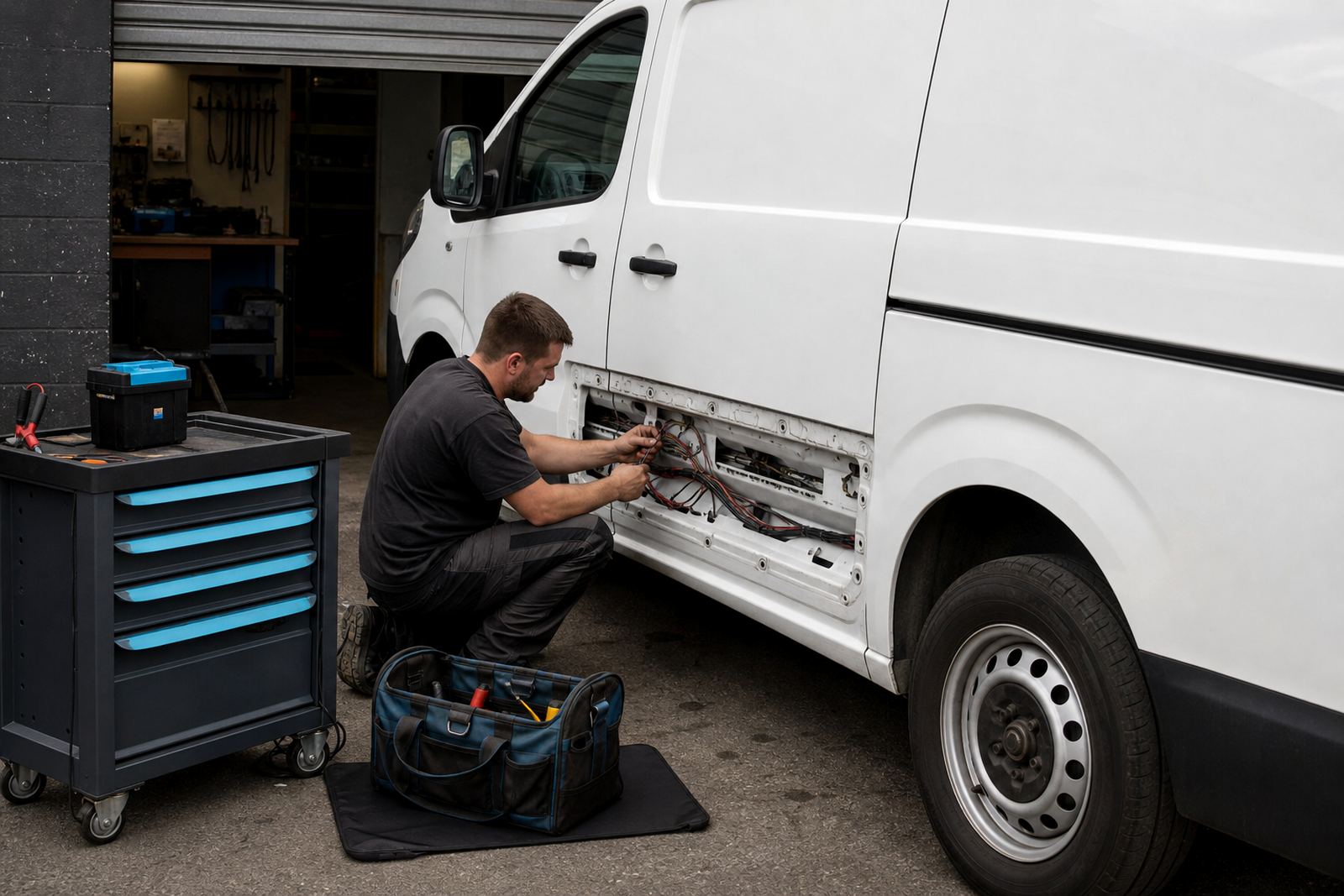
Once the fault is confirmed, repairs may involve starter repairs, alternator repairs, battery drain repairs, charging system repairs, wiring repairs or fuse box repairs. For lighting faults we trace the feed, earth and relay path. For starter circuit faults we check the trigger wire, main supply and solenoid operation. For trailer wiring or accessory rewiring, the aim is to keep the added circuit separate enough to protect the original vehicle systems.
CAN bus fault checks are part of the process when a car shows multiple unrelated warnings or communication faults. We do not chase one module in isolation if the vehicle network is not speaking properly. The repair has to fit the car as a whole, not just the symptom that showed up on the dash.
Mobile call-outs can suit private owners when the car will not leave home or work, while workshop testing in Montague Gardens is better when stripping, load testing or deeper fault tracing is needed. That balance depends on the complaint, the vehicle age and how much of the wiring harness needs to be opened.
Budget bands for passenger car fault work in Rand
The cost of passenger car electrical work depends on how much testing is needed before the repair begins. A quick scan and basic battery or charging check sits at the lower end, while wiring repairs, parasitic drain diagnosis or starter circuit tracing take more time because the fault has to be isolated first. Major harness damage or repeated water entry will naturally move the budget higher.
For everyday private cars, these are the usual planning bands we use when speaking about work on paper:
- Fault scan and initial electrical testing: R650 to R1,250
- Battery, charging and starter fault diagnosis: R950 to R1,850
- Starter or alternator repair work: R1,500 to R4,500 depending on parts and labour
- Wiring repair, earth fault or fuse box investigation: R1,200 to R3,800
- Tracker, dash cam or accessory fitting and rewiring: R850 to R3,500
If the fault is intermittent, the test process can take longer because the car must be checked in the same condition that causes the problem. That is normal on electrical work, and it is better than fitting parts that do not solve the issue.