When a shuttle will not start cleanly
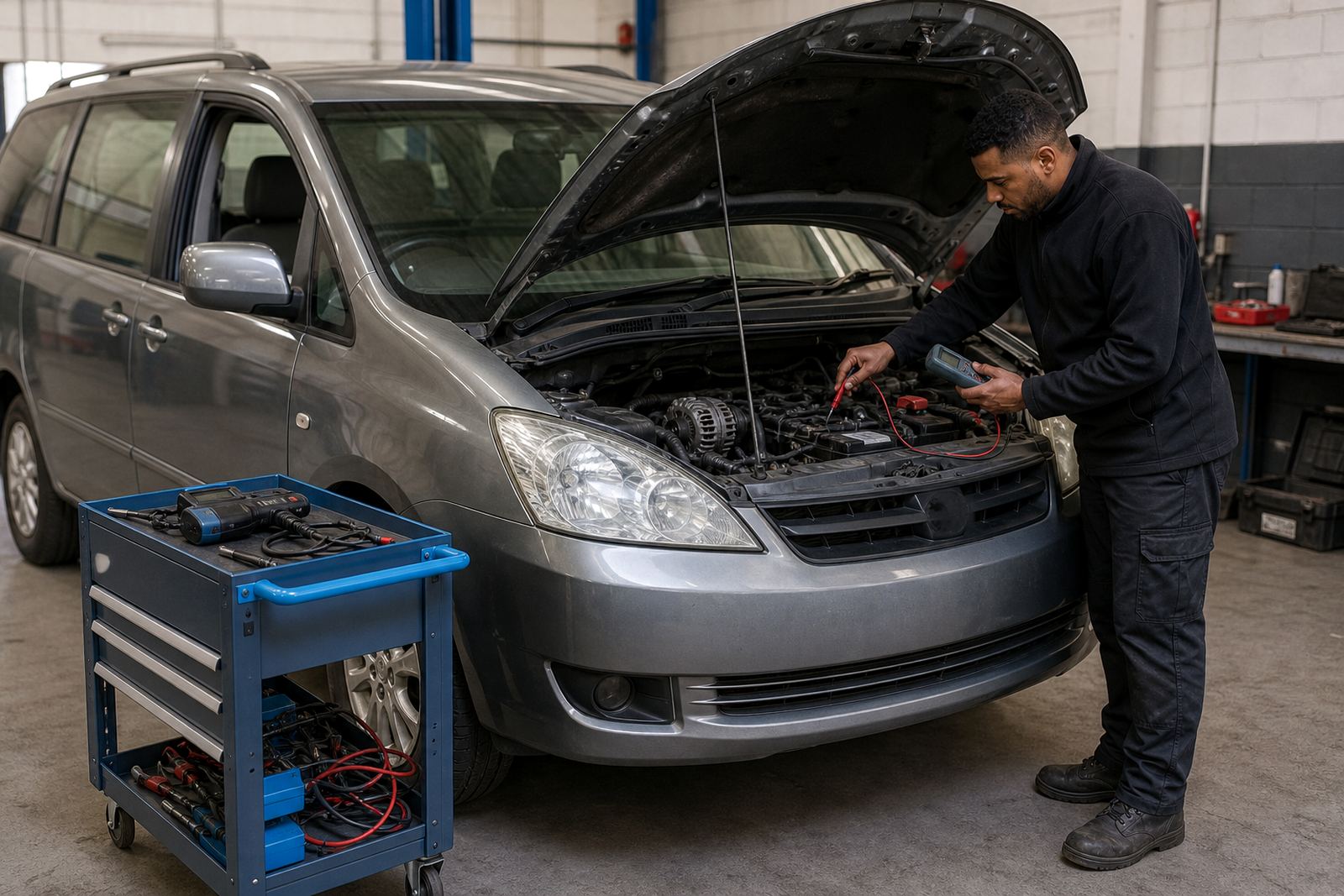
High-use passenger shuttles often arrive with the same pattern of complaints: slow cranking, a warning light that stays on, or a battery that looks fine until the next early start. We begin with fault code reading, live data checks and battery tests, then move into charging output, starter circuit checks and earth fault testing on the vehicle.
On shuttle work the problem is often a mix of age, short trips and extra electrical load from doors, interior lighting, trackers and climate control. A battery can still hold charge and fail under load, while an alternator may charge at idle but dip when the headlights and blower are running. We look at the whole chain, from the battery terminals through to the starter and alternator connections.
- OBD fault code reading for engine and charging related faults
- Battery condition and charging system testing under load
- Starter circuit checks for slow crank and no crank faults
- Parasitic drain testing for overnight battery loss
What a shuttle electrical setup usually carries
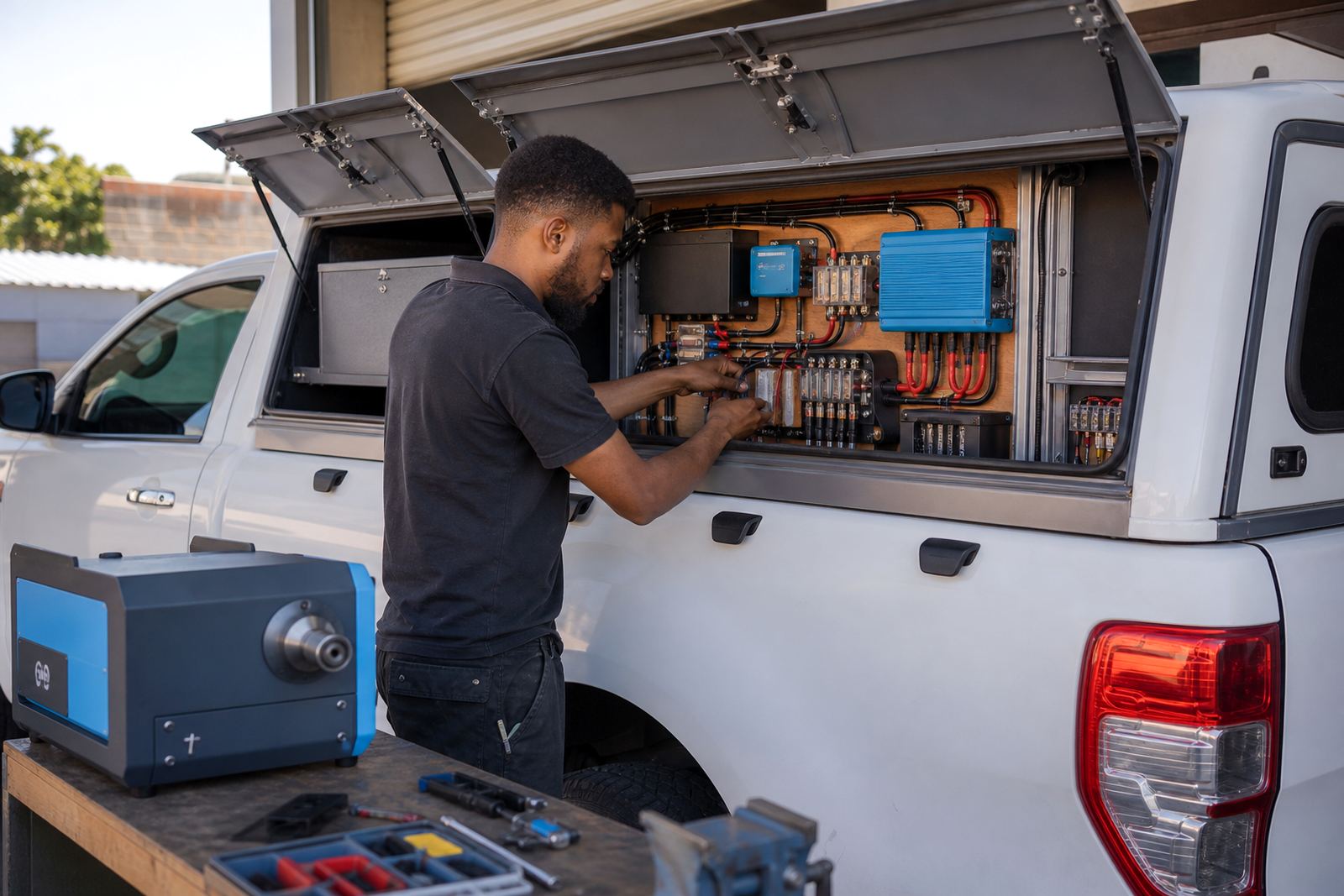
Passenger shuttles are not just vehicles with seats, they carry a working electrical load all day. In many fleets there are accessories fitted after purchase, extra USB points, interior lights, roof signs, trailer plugs, trackers and alarm gear. When those additions are wired badly, they can pull power from the wrong circuit or introduce a poor earth that shows up as odd faults across the vehicle.
We assess the setup as a working system and not as isolated parts. That means checking the battery, alternator, starter, fuse boxes, relay paths and any added accessories that may be sharing a circuit. CAN bus related issues are handled carefully too, because modern shuttles can throw fault codes when a sensor, module or wiring run is disturbed.
- Accessory rewiring for clean power feeds and safer fuse protection
- Tracker and accessory fitting for fleet and private shuttle owners
- Fuse box fault checks where repeated fuse failure keeps happening
- CAN bus fault checks for communication related warnings
Layout planning for workshop and mobile call-outs
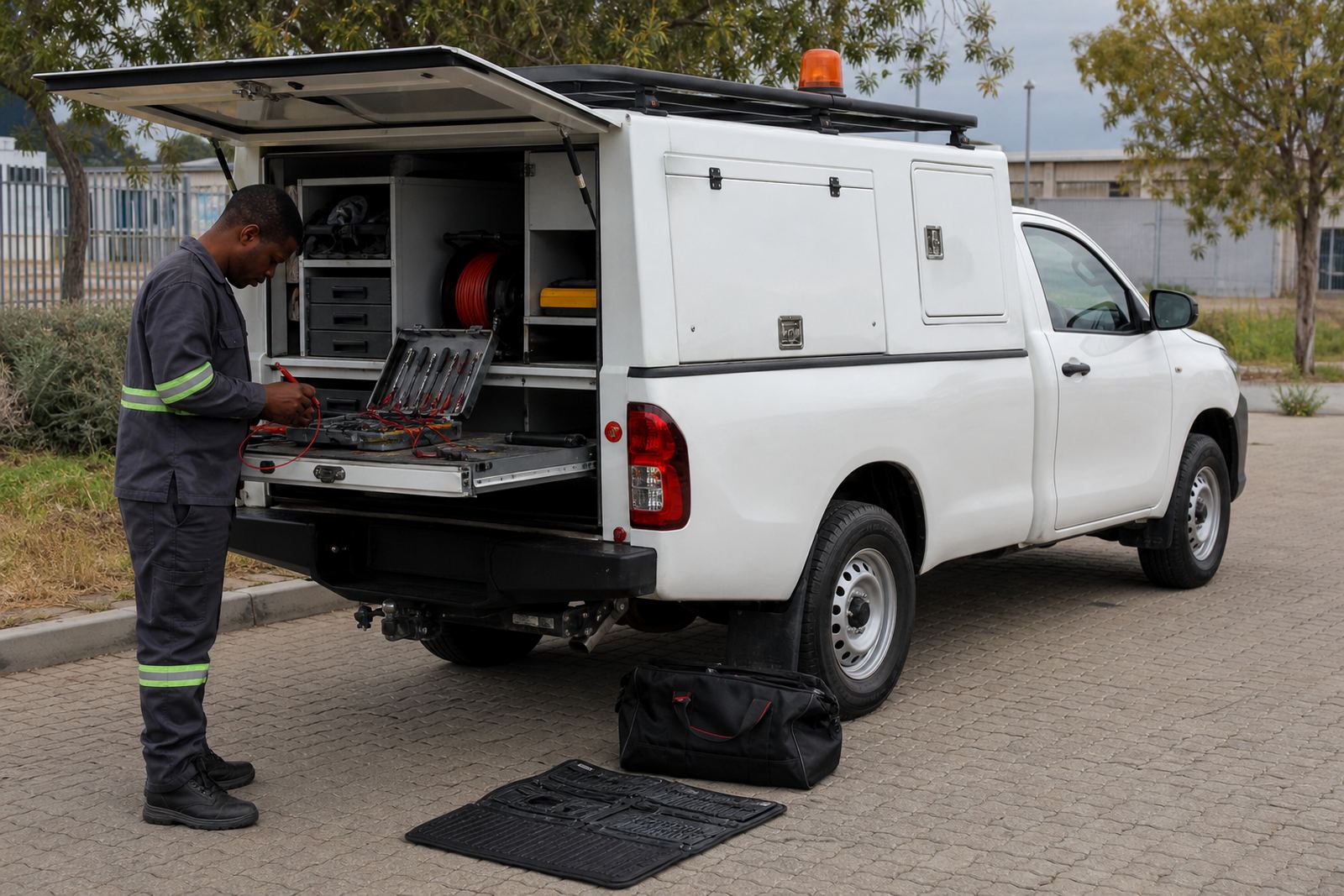
For shuttle operators, the best plan is to match the job to the vehicle pattern. A shuttle that only fails after a long route may need a charging test hot from the road, while one that drains overnight needs a proper parasitic draw test with systems allowed to settle. Our Montague Gardens workshop handles deeper diagnostics and repair work, while mobile call-outs help with fleet units that cannot spare a day off the road.
When a fault is intermittent, location matters. Door cycles, stop-start use, moisture around connectors and vibration from rough roads can change the fault from week to week. We work through wiring runs, connector condition, earth points and starter circuit load, then decide whether the vehicle needs a repair in the bay or a targeted call-out inspection at the depot.
- Workshop diagnostics for faults that need bench testing and strip-down work
- Mobile call-outs in Cape Town, Milnerton, Bellville, Somerset West and Paarl
- Fleet inspections where several shuttles show similar warning lights
- Roadside style fault tracing for non-start or charging failures
Common mistakes on busy passenger fleets
Many shuttle faults get papered over with a battery swap, and the underlying issue stays in the vehicle. If the alternator output is weak, the new battery gets flattened just as quickly. If there is a parasitic drain, the same overnight loss returns. If a wiring repair is twisted together and taped up, vibration and moisture will open the fault again.
Another mistake is fitting accessories onto any available wire. That can overload a circuit, confuse a module or give false readings during diagnosis. We see this with roof lights, trackers, added charging points and trailer wiring. A proper test sequence saves time later, because the problem is tied back to the actual circuit and not to guesswork.
- Replacing batteries before testing the alternator and starter draw
- Ignoring earth faults that mimic sensor or starter problems
- Sharing too many accessories off one feed
- Leaving corroded terminals and loose grounds in place
Budget ranges that make sense in rand
Shuttle work can range from a small diagnostic check to a larger electrical repair package, so the budget depends on what the fault trace uncovers. A basic fault scan and testing visit is usually far less than a starter rebuild or alternator replacement, while wiring damage in a loom can move the job into a longer repair. If a vehicle has multiple faults from the same underlying issue, it is often better to sort the root cause once rather than chase the symptoms.
For planning purposes, many shuttle owners set aside a working budget in the low hundreds for simple testing, the mid hundreds to low thousands for starter, battery drain or charging repairs, and more where wiring repair or accessory rework is needed. The final figure depends on parts, access time and how much of the loom or circuit must be opened up. We keep the scope practical and explain what is found before repair work moves ahead.
How fleet bookings are handled in practice
Fleet work usually needs a clear note of the vehicle symptoms, the registration or unit number, the route pattern and whether the fault happens cold, hot or after standing overnight. That helps the technician move straight into the right checks. Megan Maluleke handles workshop coordination, while Liezl Botha manages fleet bookings, so the job is lined up with the right tools and timing.
For shuttle operators in Montague Gardens, Cape Town, Bellville, Milnerton, Somerset West, Paarl, Brackenfell and Durbanville, the aim is to get the electrical fault identified cleanly and repaired without chasing random parts. Send the shuttle's fault and daily route through our contact form, and we will set up a workshop inspection or a mobile visit to suit.