When a panel van starts acting tired before the engine does
A van with a healthy motor can still fail a workday because the electrical side is not keeping up. The usual signs are a battery that goes flat after an overnight park, warning lamps that stay on, central locking that behaves oddly, or a van that cranks slowly after short runs between jobs. In the Cape, salt air and damp mornings often make old earth points, corroded fuse holders and loose connections show up sooner than expected.
We look at the fault as a working vehicle problem, not just a single warning light. That means checking the battery state, alternator output, starter draw, live data, fuses, earth paths and any add-on equipment tied into the system. On delivery vans, the real issue is often a mix of age, vibration and extra loads from refrigeration, radios, trackers, reverse cameras or charging points.
- Hard starting after short trips around town
- Battery drain when the van sits overnight
- Dim lamps or flickering lights at idle
- Intermittent central locking or instrument warnings
- Charging faults after accessory fitments
The checks that save a van from repeated workshop visits
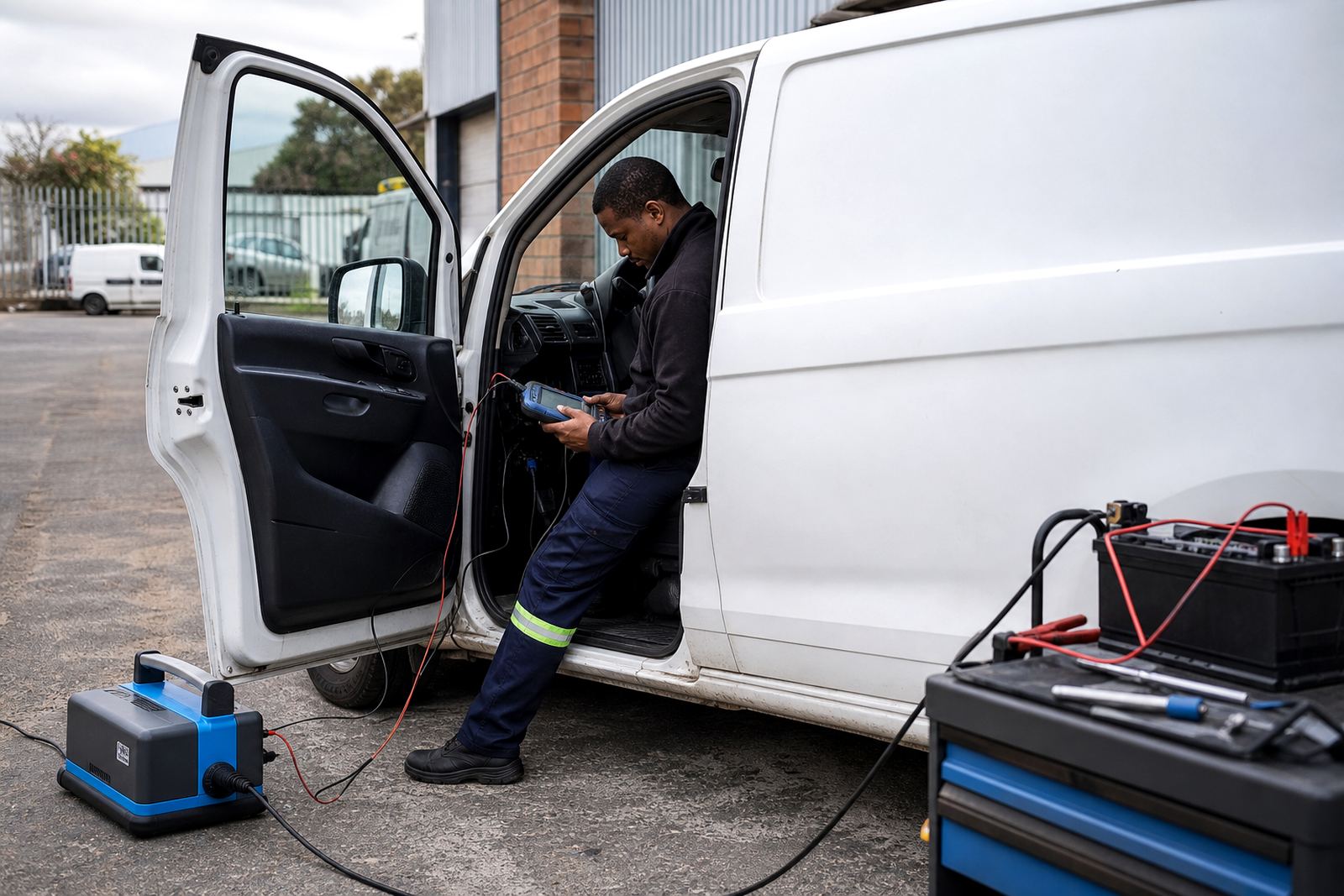
A proper diagnostic pass starts with fault codes, but it does not stop there. Codes can point to a circuit, a sensor or a communication issue, yet the van still needs live data and hands-on testing. We read OBD faults, check charging voltage under load, test battery condition, look for parasitic drain and inspect wiring where heat, rubbing or poor joins have damaged the loom.
CAN bus problems matter on many newer vans. If a tracker, trailer loom, radio or charging accessory has been spliced in badly, the vehicle can throw communication faults that seem unrelated at first. That is why the wiring layout, earth points and fuse protection need proper attention before parts are replaced unnecessarily.
- OBD fault code reading and interpretation
- Live data checks for charging and sensor behaviour
- Battery and alternator load testing
- Parasitic drain testing after the ignition is off
- CAN bus fault checks where communication faults appear
Starter, alternator and charging work on fleet vans
Panel vans spend many hours idling, crawling, loading and unloading, so starters and alternators take a beating. A weak starter circuit can feel like a flat battery, while a failing alternator may charge at idle but drop away under load. We inspect the main cable run, the alternator output, belt condition where relevant, and the starter trigger circuit before deciding what needs repair or replacement.
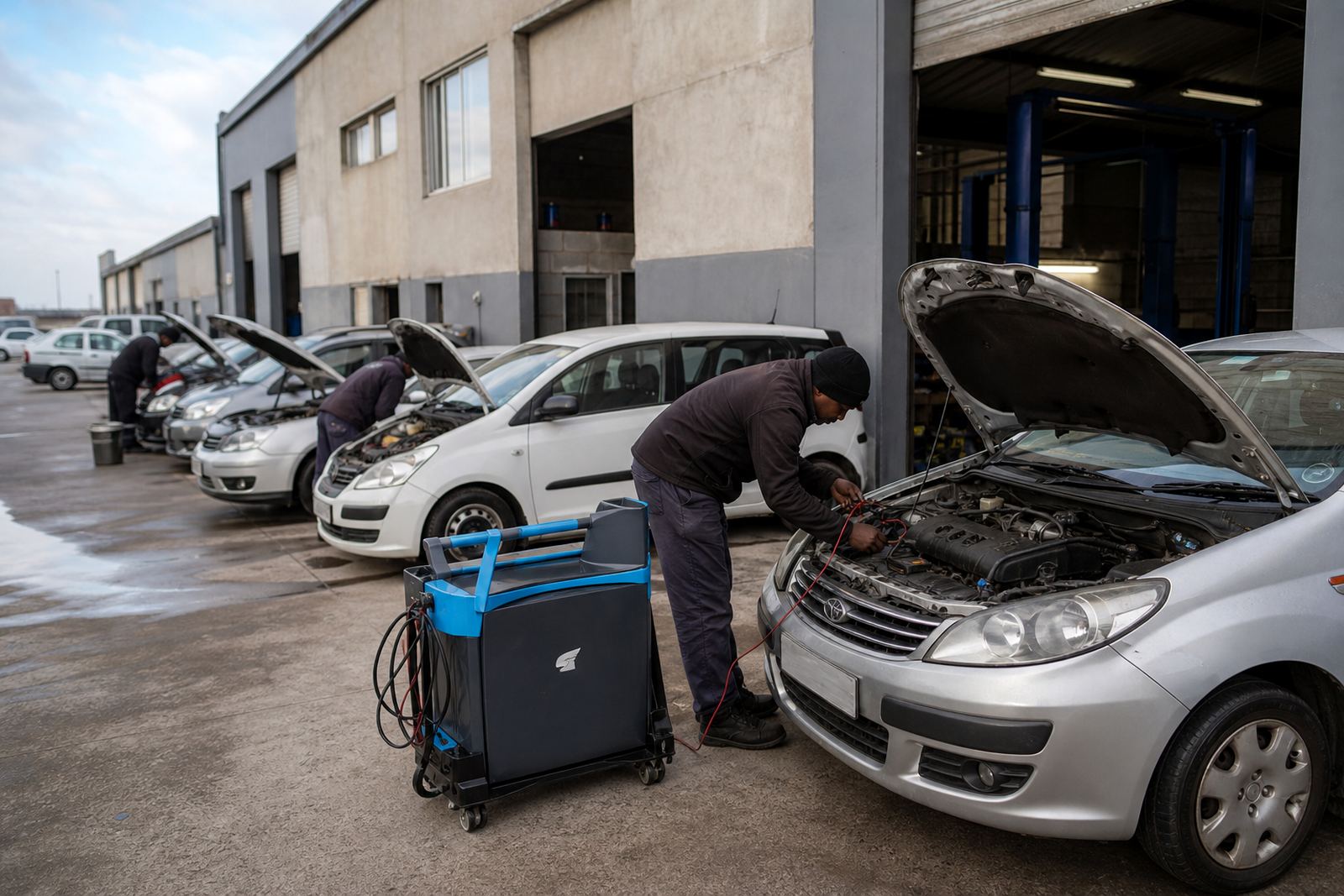
Fleet operators often want one fault sorted without creating another. That calls for neat repairs on terminals, proper crimping, clean earth returns and attention to heat damage near the engine bay. On vans that do early starts in Milnerton, Bellville or Paarl, a small charging defect can turn into a no-start by the end of the week.
- Starter motor checks and starter circuit repairs
- Alternator testing and charging repairs
- Battery drain fault finding
- Earth fault repairs and cable condition checks
- Fuse box repairs where supply faults sit upstream
Accessory fitments that must work with the van, not against it
Many panel vans carry trackers, extra interior lights, USB charging points, rear cameras, trailer plugs or power feeds for mobile equipment. Those extras are useful only when they are integrated cleanly. A rushed add-on can overload a circuit, create voltage drop, or leave a poor earth that causes random faults later.
We plan accessory wiring around the van’s actual use. A courier van needs dependable charging and secure tracker power. A service van may need trailer wiring, extra lighting and a tidy fuse position that can be found later. The fitting should look factory-neat, with soldered joins and no taped bundles hidden under trim.
- Tracker fitment with proper power and earth routing
- Accessory rewiring for van equipment and charging points
- Trailer wiring repairs and checks
- Lighting repairs for cargo areas and external lamps
- Fuse protection matched to the added load
How a workshop layout helps the fault finder
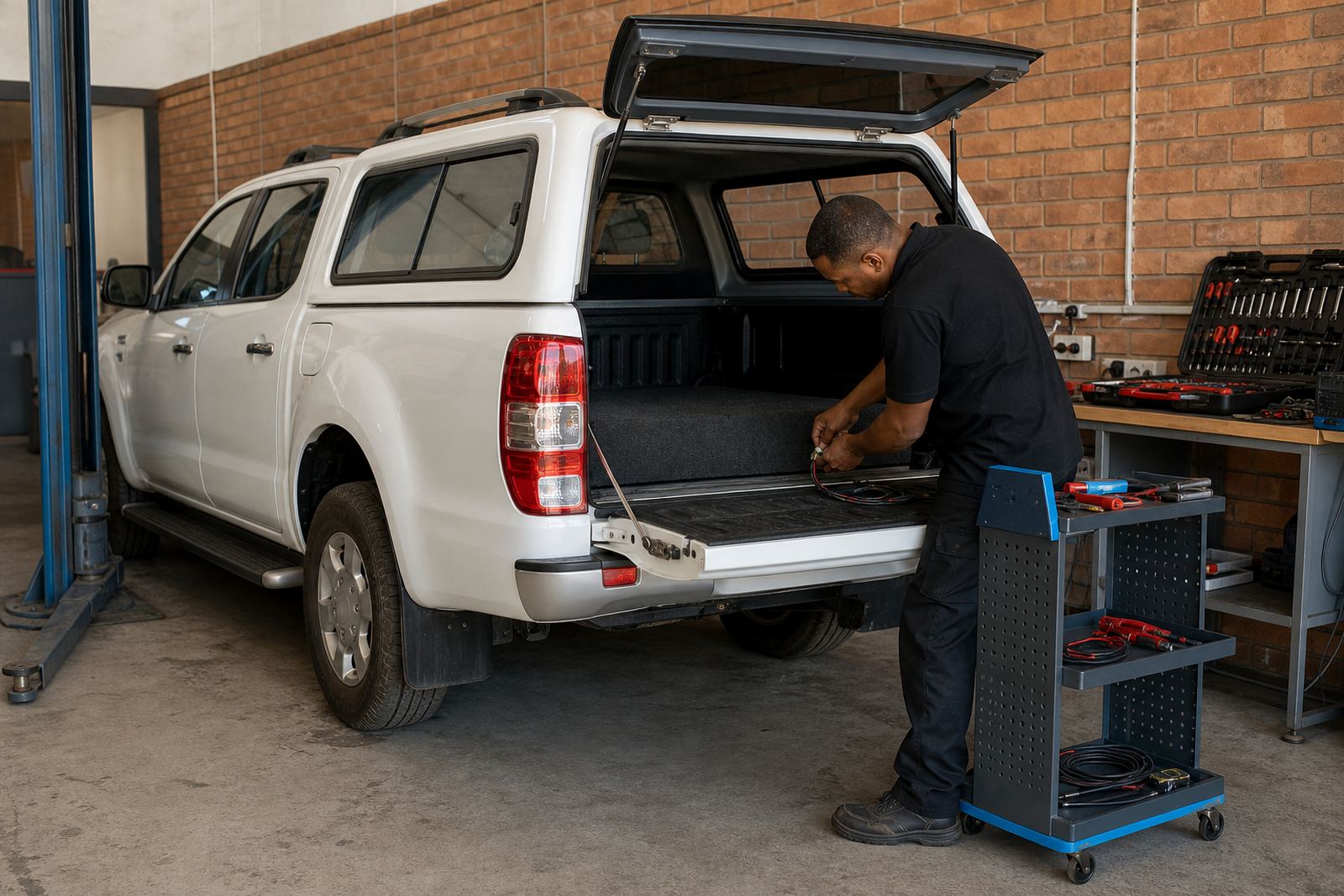
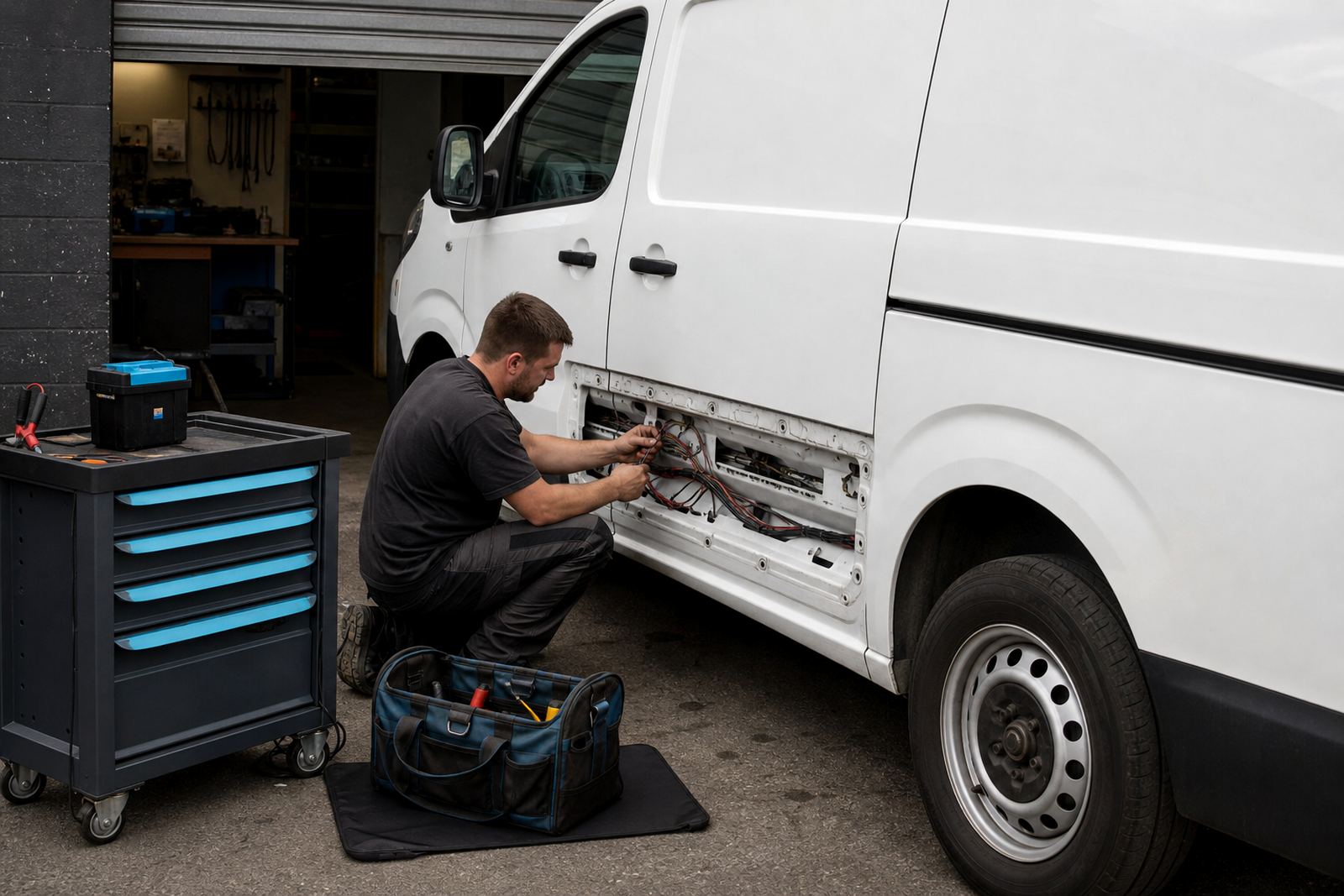
Vans arrive with different body lengths, shelving, drawers and cargo setups, so access matters. A good inspection starts with the battery location, fuse positions, earth points and the way the loom moves through the body. Panel vans often hide wiring under seats, behind trim panels and along the load floor where moisture and vibration do the damage.
For fleet work, a clean layout helps us trace faults without disturbing the whole conversion. If the van has racking, refrigeration, a tow setup or a cab-mounted accessory panel, we map the power feeds before opening up. That reduces guesswork and makes later servicing easier for the people running the vehicle.
- Battery and fuse access in the engine bay or cab
- Earth points near body panels and load areas
- Wiring routes around shelves, liners and trim
- Trailer and rear-door circuits that may be hidden
- Accessory feeds that should be labelled for later work
Mistakes that keep a van off the road longer
The most common mistake is swapping parts before the circuit has been tested. A flat battery may hide a charging fault, and a charging warning may come from a bad earth or damaged cable rather than the alternator itself. Another problem is piecemeal accessory work, where one extra light or tracker is added without checking the full load or fuse arrangement.
Water entry and vibration are also easy to miss. Delivery vans spend time at loading bays, in wet weather and on rough roads, so loose connectors and rubbed-through wires can fail only when the vehicle moves a certain way. If the fault appears and disappears, that usually means the loom or connector needs closer tracing rather than a quick parts swap.
- Replacing an alternator before testing the charging circuit
- Ignoring parasitic drain after the van is parked
- Running accessories off an unsuitable circuit
- Leaving earth faults under painted or rusty metal
- Skipping checks after trailer or tracker fitments
Budget ranges for panel van electrical work in Rand
Costs depend on the fault, the access and whether the van needs a simple repair or a longer diagnostic trace. A basic battery, charging or starter check is at the lower end, while wiring repairs, drain tracing and CAN bus fault work take more time because the circuit has to be followed properly. Fleet jobs also vary when more than one van shows the same issue.
As a working guide, a straightforward diagnosis may sit from about R650 to R1,500. Starter and alternator repairs can fall between R1,500 and R4,500, depending on parts and labour. Wiring repairs, earth faults, parasitic drain tracing and accessory fault finding may run from R1,200 to R3,500, while more involved rewiring or tracker integration can go higher if the loom has to be opened up and rebuilt.
- Basic diagnostic fault reading and battery checks: from about R650
- Starter or alternator repair work: often R1,500 to R4,500
- Wiring, earth and drain tracing: often R1,200 to R3,500
- Accessory fitment and rewiring: varies with van layout and load
- Fleet call-out work: depends on location, access and fault type
For vans based in Montague Gardens, Cape Town, or on routes through Bellville, Milnerton, Somerset West and Paarl, the cleaner the information on the fault, the easier the inspection plan. Clients can send the vehicle details and fault notes through our contact form, and we work from there with the right diagnostic path.