Bakkies that carry tools, family and long days
A double cab often does two jobs at once. During the week it may haul tools, ladders, trailer loads and site gear, then shift back to school runs, weekend travel and coastal trips with the family. That mix puts extra strain on the battery, starter, charging system and wiring, especially when accessories have been added over time.
We see a lot of bakkies that crank slowly after short trips, show odd dashboard warnings, or lose power to lights and sockets after an accessory fitment. A quick parts swap may hide the issue for a while, but it does not explain the real cause. Our workshop checks the electrical system as a whole so the vehicle can cope with daily work and long-distance use.
- Slow cranking after parking overnight
- Warning lamps linked to charging or voltage drop
- Central locking, lights or trailer plug faults
- Aftermarket fitments that were wired in too loosely
The test sequence behind a clean diagnosis
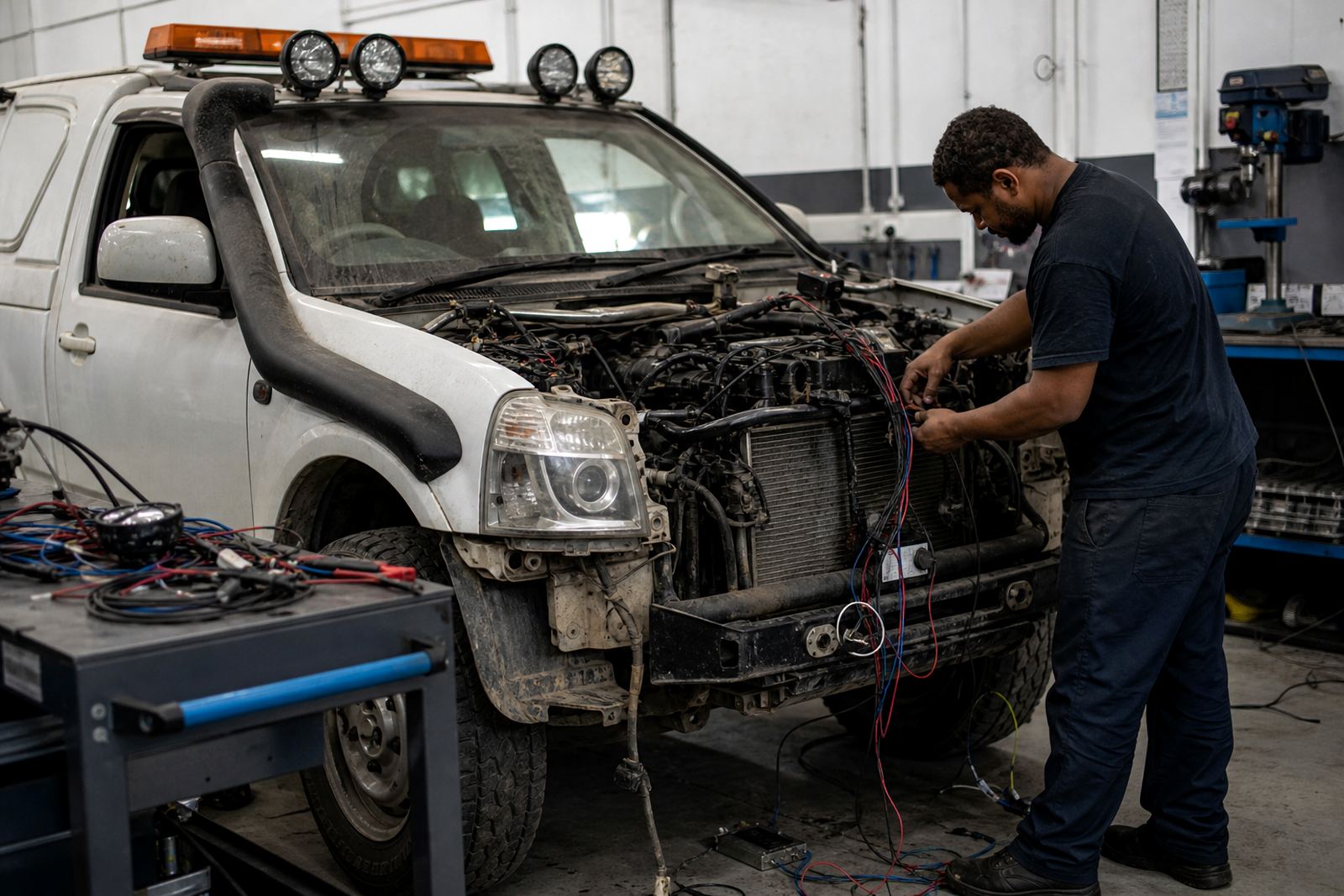
Modern double cabs depend on more than a battery and a starter. Control units, sensors, relays, earth paths and CAN bus communication all have to work together. We start with fault code reading, then look at live data, battery health, alternator output and current draw so we can see whether the complaint comes from the battery, the charging system, a wiring break or a module signal issue.
Parasitic drain tests are useful on bakkies that flatten batteries after standing. That can point to a light left on, a faulty relay, a tracker circuit, a door module, or an accessory drawing power when it should not. We also check starter circuits, fuse boxes, earth faults and trailer wiring because those are common trouble spots on work bakkies.
- OBD fault code checks and live data review
- Battery and charging system testing under load
- Parasitic drain checks after key-off
- Starter circuit and alternator output testing
Fitments that earn their keep on site and road
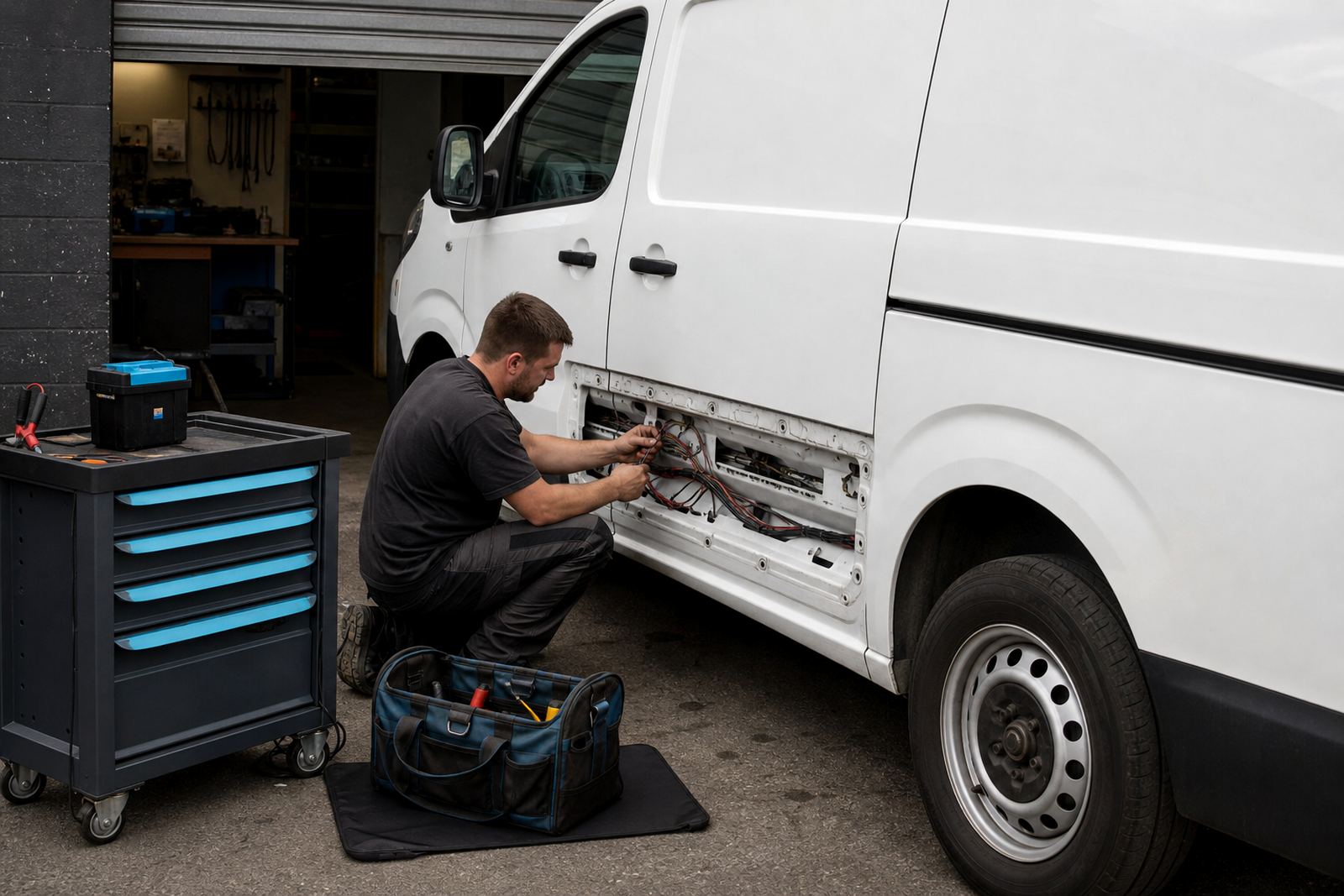
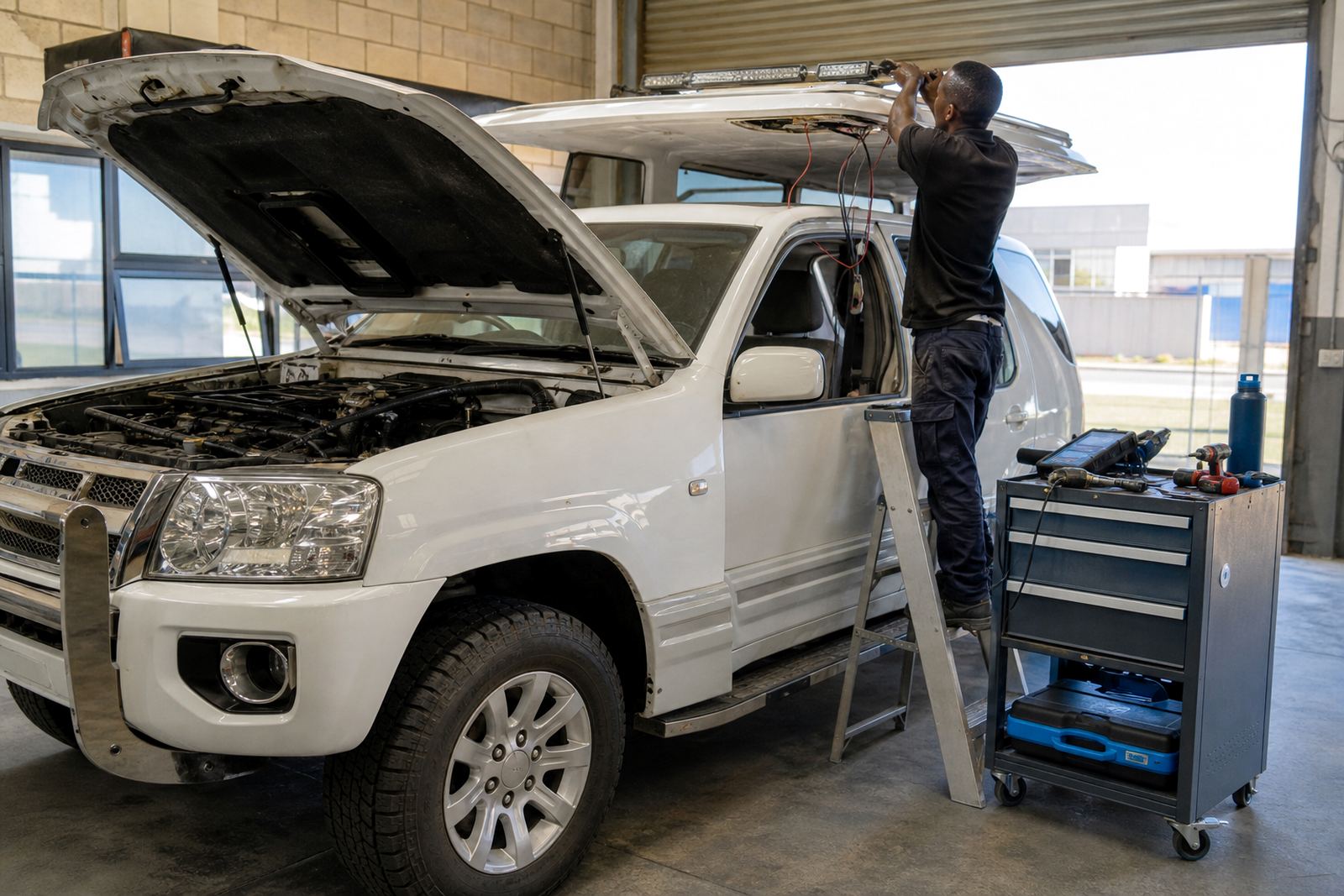
Double cabs are often fitted with extra equipment after purchase. The useful items are the ones that are wired neatly and protected properly, because dust, vibration and moisture can punish poor joints. We fit and rewire trackers, lighting upgrades, trailer socket systems, charging points, work lights and other accessories that need proper power routing.
For fleet operators, the main concern is consistency across several vehicles. One bakkie with neat wiring and another with twisted joins, taped repairs and loose fuses becomes a maintenance headache. We plan fitments so the wiring stays accessible for future fault finding, and so the load on the charging system stays within sensible limits.
- Tracker and accessory fitments for fleets and private owners
- Trailer wiring repairs for towing and site trailers
- Lighting and auxiliary circuit rewiring
- Fuse box repairs and earth path improvements
Layout notes for a bakkie that works on both sides of town
Every double cab needs its own layout. A contractor carrying tools every day needs a different electrical setup from a family vehicle that only tows on weekends. We look at where the battery sits, how the load bed is used, what accessories are already fitted and how much extra current the vehicle must support.
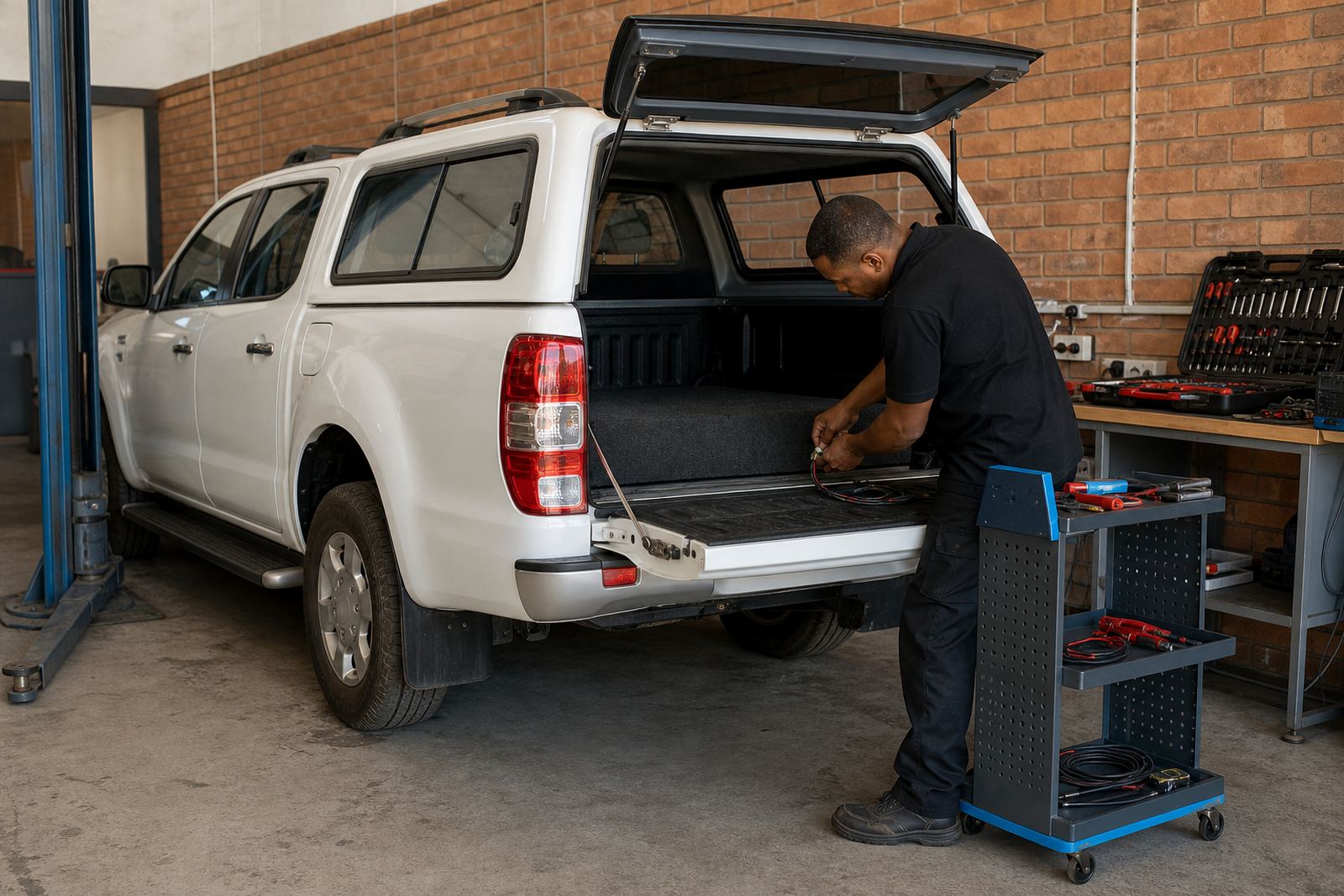
Good planning keeps heavy cables short, protects wiring from rubbing points and leaves enough access for future testing. It also helps to separate work circuits from basic vehicle circuits, especially where a canopy, canopy lights, inverter, fridge or additional sockets have been added. On coastal vehicles around Milnerton, Somerset West or Cape Town, exposed terminals and damp connectors need extra attention because corrosion can build up quietly.
Common mistakes that turn into repeat faults
We often find the same problems on double cabs that have had quick fixes. A starter may be blamed when the battery is weak. An alternator may be replaced when the real fault is a broken earth. Tracker faults are sometimes traced to poor power tapping, not the tracker unit itself. Trailer problems can also be blamed on the plug when the real issue sits in the wiring run back to the vehicle.
Another common mistake is treating every warning light as a separate problem. On a bakkie with low system voltage, several systems may complain at once. Reading the codes, checking voltage drop and testing current flow gives a far better picture than swapping parts one by one.
- Loose earth straps and poor chassis bonding
- Undersized cable on added accessories
- Water ingress at trailer plugs and connector blocks
- Battery drain caused by hidden current draw
Budget ranges for double cab electrical work
The final cost depends on the fault, the amount of testing needed and whether parts must be repaired or replaced. A fault code scan and basic electrical check usually sits in the lower range, while parasitic drain tracing or CAN bus fault checking needs more time and a closer look at the whole vehicle. Starter and alternator repairs vary depending on whether the unit can be rebuilt or needs replacement components.
For planning purposes, many owners budget a few hundred Rand for a basic test, around the low thousands for wiring or circuit repairs, and more for combined work such as starter, alternator, battery drain and accessory fitments on the same bakkie. Fleet jobs and mobile call-outs across Bellville, Brackenfell, Durbanville, Paarl and the other surrounding areas are usually quoted against the vehicle's actual fault list rather than a standard package, because no two builds are the same.