Stop-start vans that keep flattening batteries
Courier vans spend a lot of time idling, switching on hazard lights, opening doors, running scanners and stopping for short drop-offs. That pattern puts pressure on batteries, alternators and the starter circuit. A van can still crank in the morning and then struggle later in the day, or sit overnight and lose charge for no clear reason.
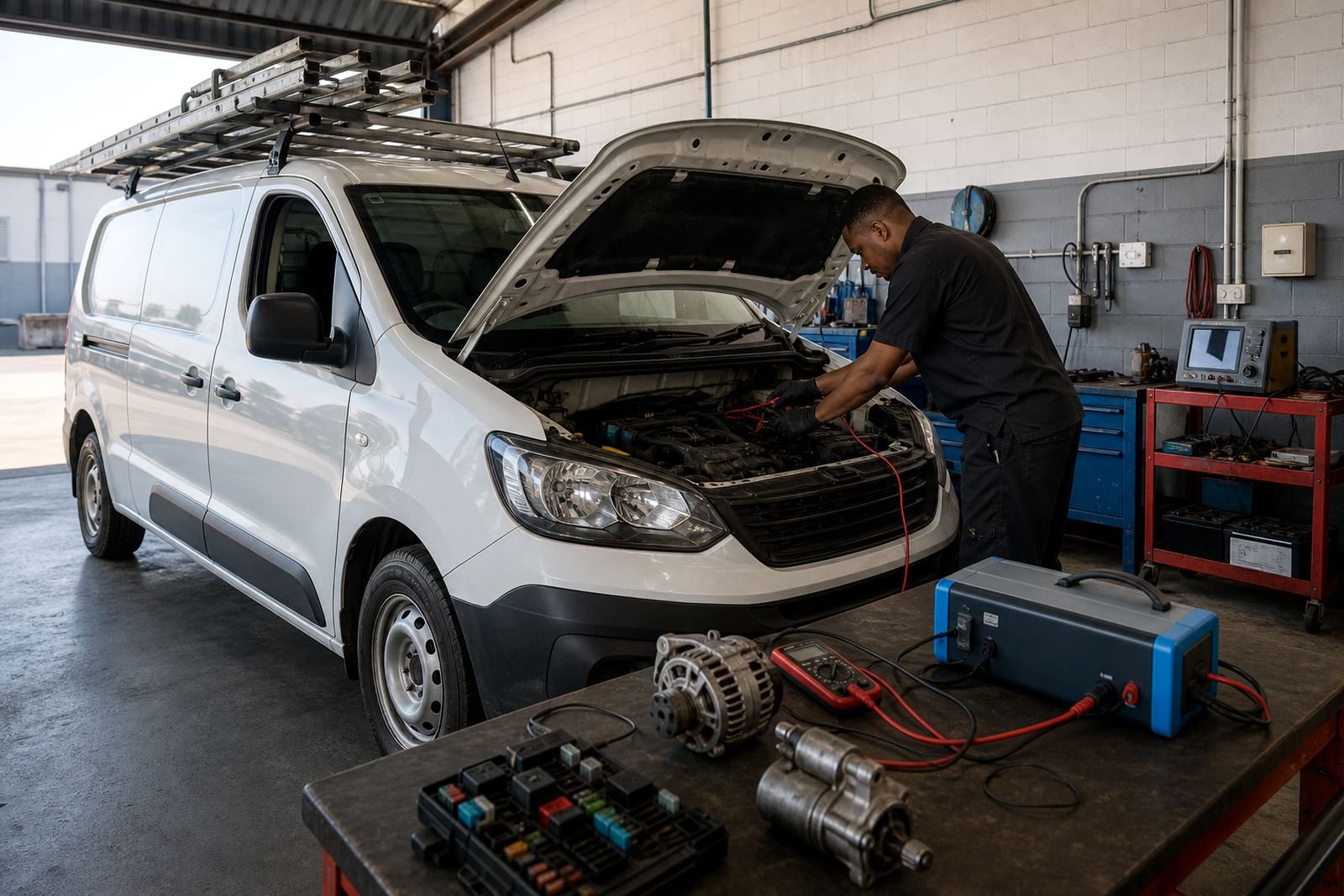
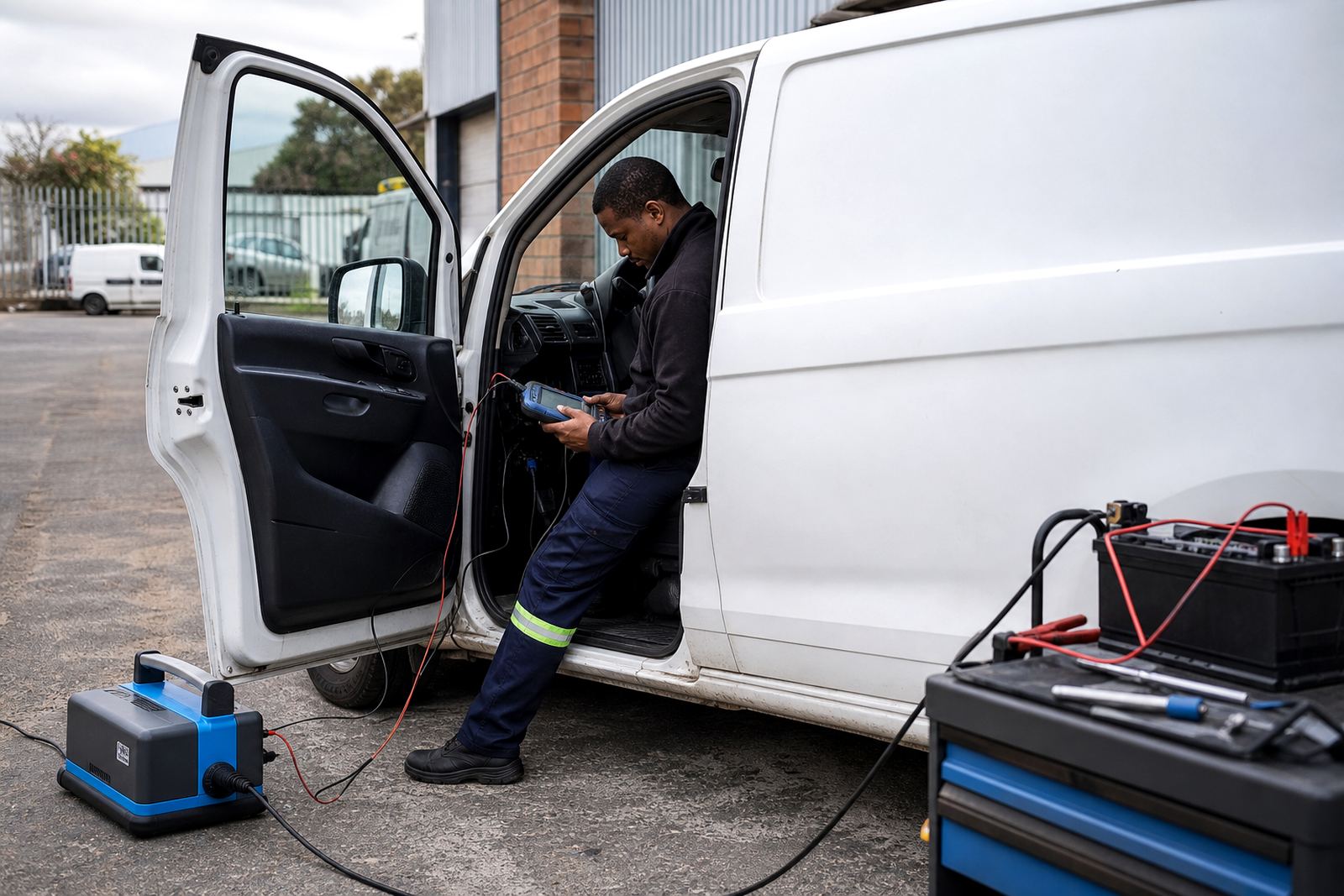
In the workshop we start with fault codes and live data, then test battery condition, cranking voltage and charging output under load. If the battery drain is not obvious, we trace the parasitic draw and isolate circuits one by one. That is often where a hidden relay, a faulty light circuit or an accessory fitment shows itself.
Courier operators around Montague Gardens, Milnerton and Bellville often want the van back in rotation with the fault traced. The point is to find the fault path, not to replace pieces until the problem fades for a day.
What we usually find on delivery vans
The fault patterns are familiar on working vans. Some are simple wear items, others sit deeper in the wiring loom or control system.
- Weak batteries that test poorly after repeated short trips
- Alternators that charge at the wrong voltage or fail under load
- Starter motors with worn contacts or dragging bearings
- Loose earth points that cause slow cranking and random faults
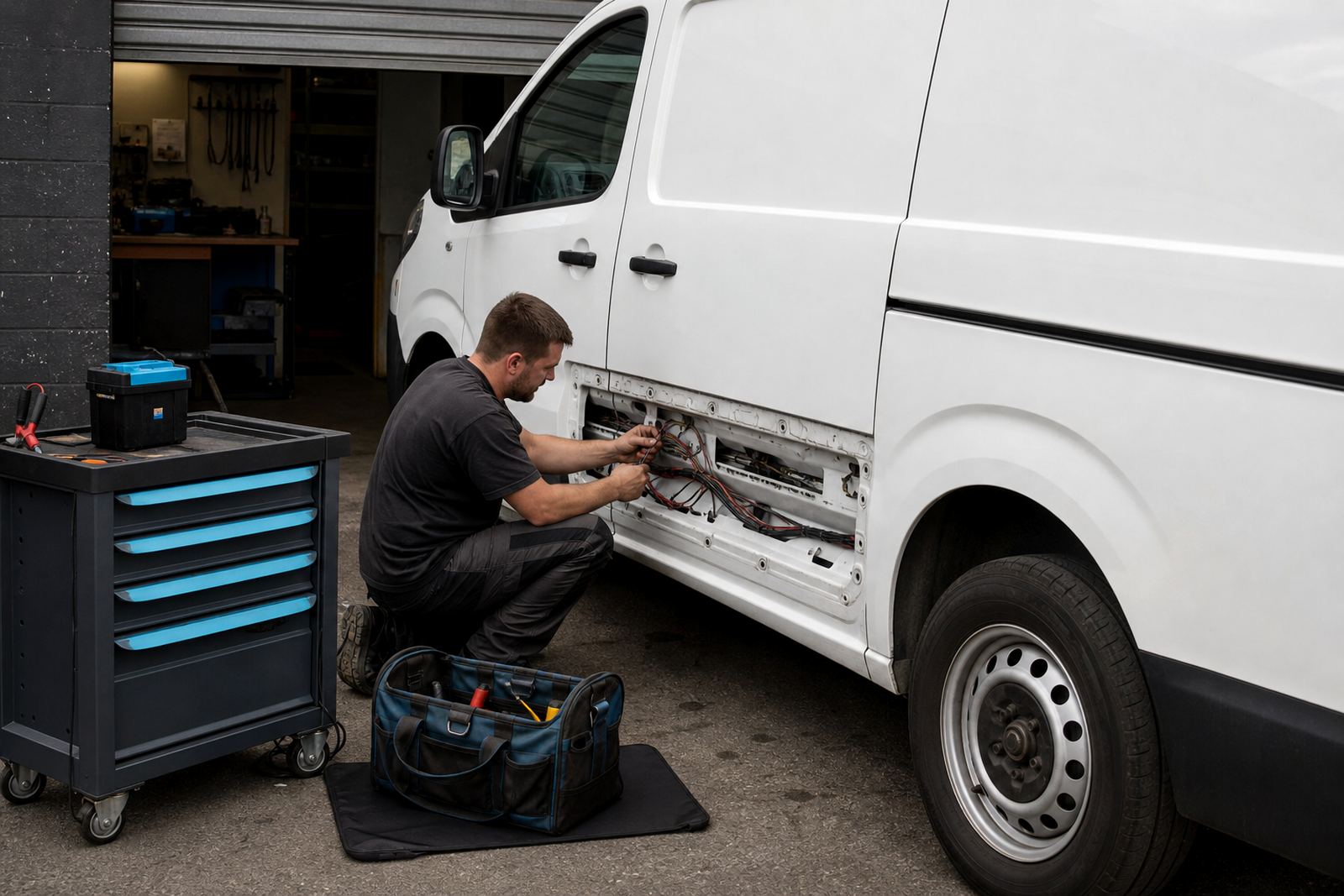
- Fuse box damage after an accessory overload or poor splice
- Trailer wiring faults that upset lamps and indicators
- Tracker or accessory wiring that keeps drawing current after shutdown
- CAN bus faults where a bad connection confuses other systems
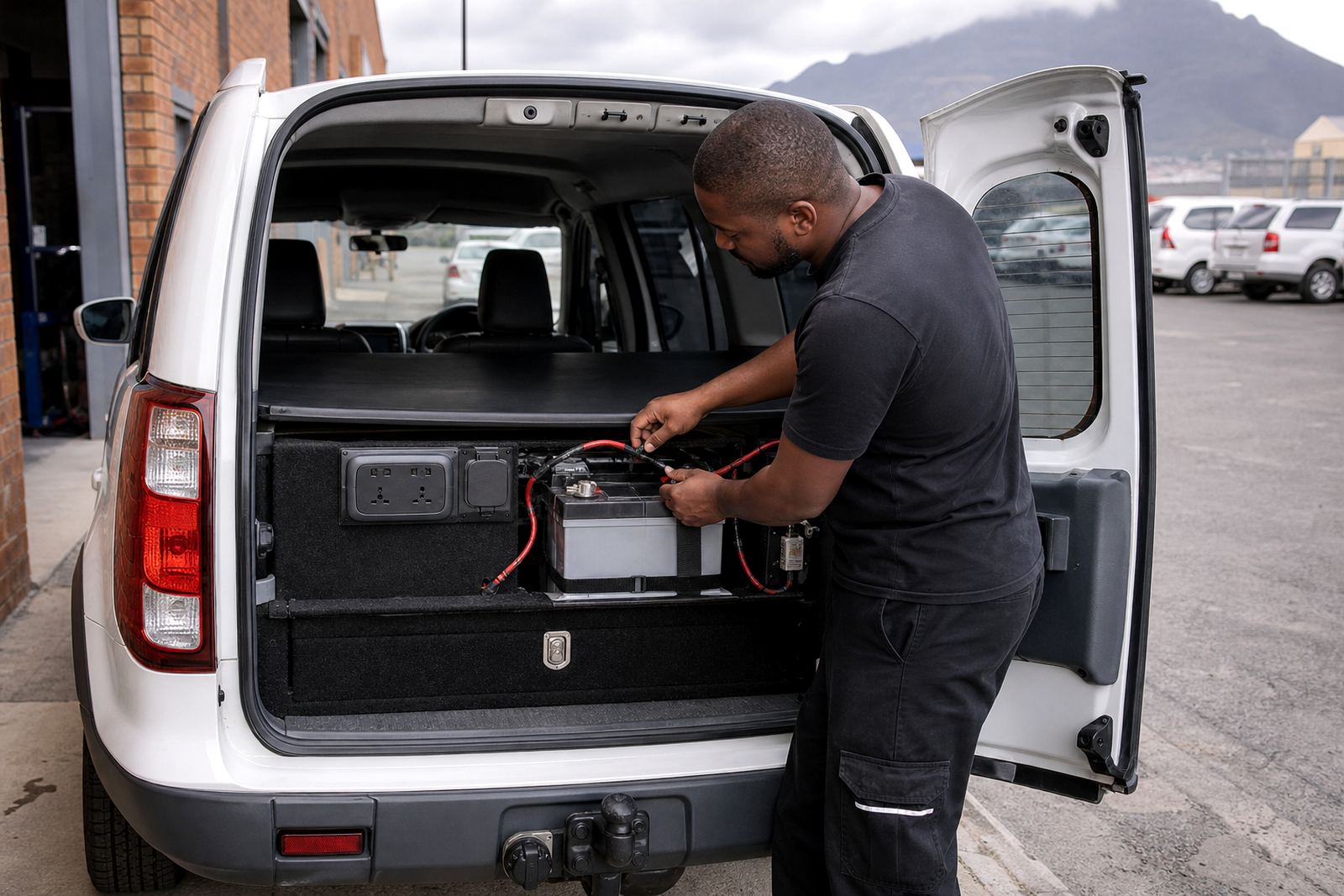
Many courier vans also carry extra equipment for routing, proof-of-delivery devices, refrigeration monitoring or security fitments. Each add-on needs a clean feed and a proper earth. If that is done badly, the van can show nuisance faults that look mechanical at first glance.
Workshop checks that suit a working fleet
A courier van needs a proper electrical layout, not a rushed patch. We look at how the vehicle is used, where the extra loads sit and which parts of the system need protection. If the same van does city runs in Cape Town one day and longer routes to Somerset West or Paarl the next, the duty cycle matters.
Good planning usually starts with the load map. High-current accessories should not share a thin feed with sensitive electronics. Trackers, reverse alarms, dashboard cameras and phone charging points all need tidy routing, solid fusing and a clear earth path. Wiring should be secured away from sharp edges, hot panels and moving parts.
- Keep added wiring grouped and labelled near the fitment point
- Use the correct fuse size for each circuit, not one oversized fuse for all
- Route cables away from door hinges, pedals and scuff panels
- Check battery terminals and earth straps during every fault visit
- Test charging output with the engine at idle and under load
When a courier van has already had several patch jobs, the first task is often to clean up old joins and poor connections. Once the wiring is neat and the current path is stable, the van is easier to diagnose next time.
Mobile call-outs for depot yards and parked vans
Some faults need workshop equipment and bench testing. Others can be checked at a depot, loading bay or parking yard before the vehicle is moved. Mobile call-outs are useful when a van will not crank, keeps flattening a battery, or shows a charging fault after the morning round.
For fleet operators, the best arrangement is to keep a clear record of which unit has the issue, when it started and what accessories were fitted recently. A note about trailer use, extra lighting or a tracker install can save a lot of time on site. It also helps when more than one van in the fleet uses the same body type but different accessories.
We work from Montague Gardens and cover Cape Town, Bellville, Milnerton, Brackenfell, Durbanville, Somerset West and Paarl. That mix suits local depots, independent couriers and owner-drivers who do not want to lose a full day moving a dead van across town.
Budget bands for courier van electrical work
Budgets depend on the fault path, the amount of testing needed and whether parts must be repaired, replaced or rebuilt. A battery drain check is not priced the same as a full starter circuit repair, and a neat accessory install is different from chasing a hidden loom fault.
As a working guide, minor diagnostic work may sit in the lower hundreds of Rand, while deeper fault tracing, charging repairs or starter repairs can move into the mid-hundreds and beyond. If a wiring fault has been left for a while, there may be more than one issue hiding in the same circuit. That is common on vans with added trackers, lamps or cargo accessories.
A practical budget should allow for diagnosis, the main repair and any final testing under load. If the van carries a lot of extra equipment, a small allowance for tidy-up work is worth including too.
- Basic fault-code reading and live data checks
- Battery and charging system testing
- Starter motor and alternator repairs
- Drain tests and earth fault tracing
- Accessory rewiring and tracker fitting checks
Common mistakes that let the fault resurface
A courier van can look fixed after one quick repair and still fail again if the root cause was not found. Thin jump leads, loose battery clamps and taped joins are common shortcuts that hide the real fault for a short while. They do not suit a van that works every day.
Another mistake is fitting new parts before checking the circuit around them. A new alternator will not solve a bad earth strap. A new battery will not cure a drain caused by an accessory that stays live after shutdown. On CAN bus vehicles, a poor splice can also create faults in places that seem unrelated.
We also see vans where trailer wiring was tied into the wrong point or where a tracker was fitted without enough attention to current draw. In a courier setting that matters because the vehicle racks up short trips, frequent starts and a lot of key cycles. That is exactly where weak wiring shows itself.
How the job is handled for fleet and owner-drivers
Courier work needs a practical sequence. First comes the fault read and battery test, then circuit tracing if the result does not point to a single failed part. If the issue is in the starter or alternator, those units are tested properly and repaired where possible. If the problem sits in the wiring, we trace it back to the point where the circuit broke down.
For new fitments, we plan the route of the cable before anything is fixed in place. This keeps the installation neat and makes later fault checks simpler. Route planning matters even more when one van runs several accessories from the same battery.
Use our contact form to send a courier van brief with the vehicle type, the fault symptoms and the area where the van is based.