Bakkies that spend more time under dust than under cover
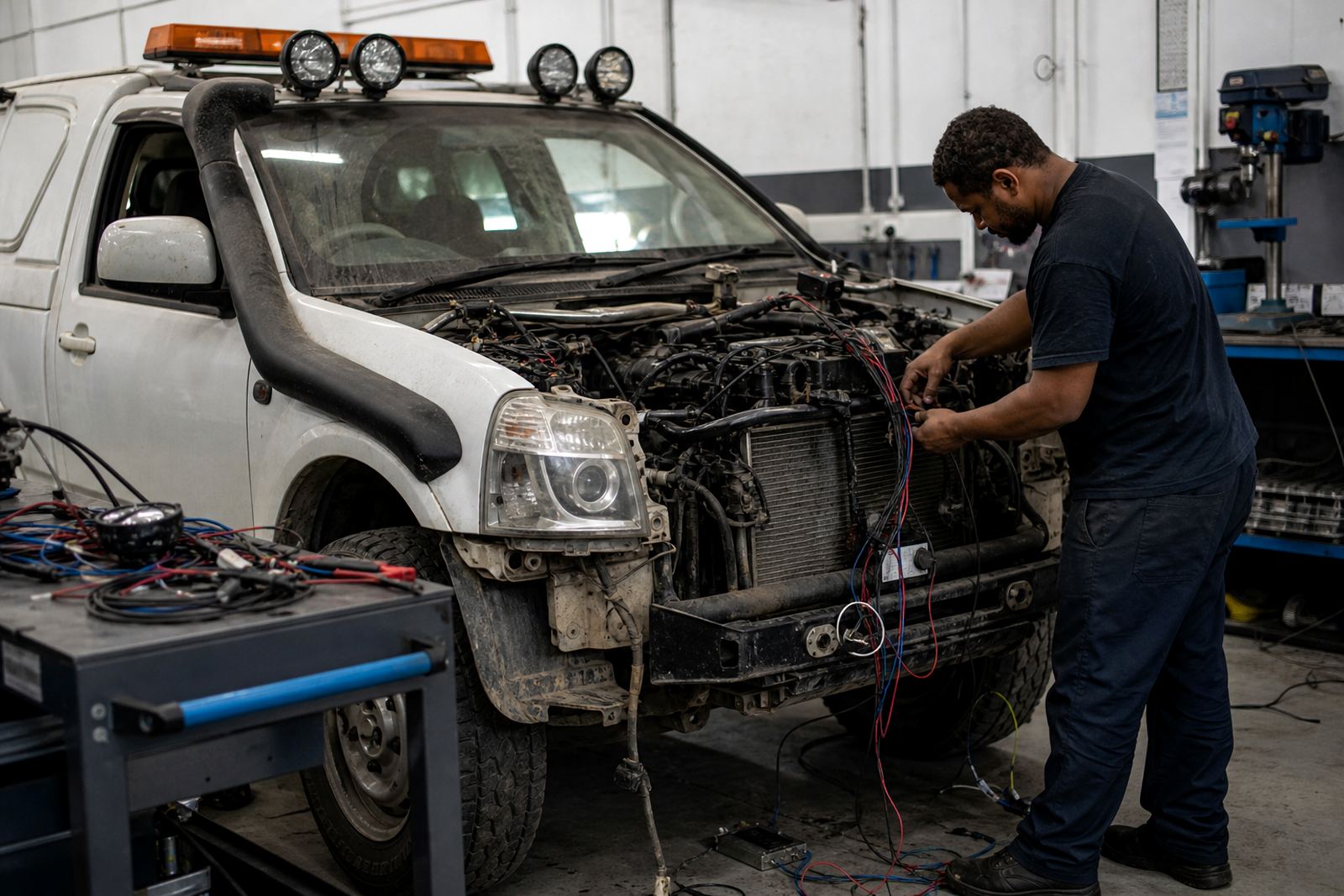
Project-site bakkies usually arrive with more than one complaint at a time. A work light may flicker, a beacon may stop working after a washdown, the battery may flatten over a weekend, or the starter may click and then stay quiet. On many site vehicles the issue sits in the wiring, not the part that has already been replaced twice.
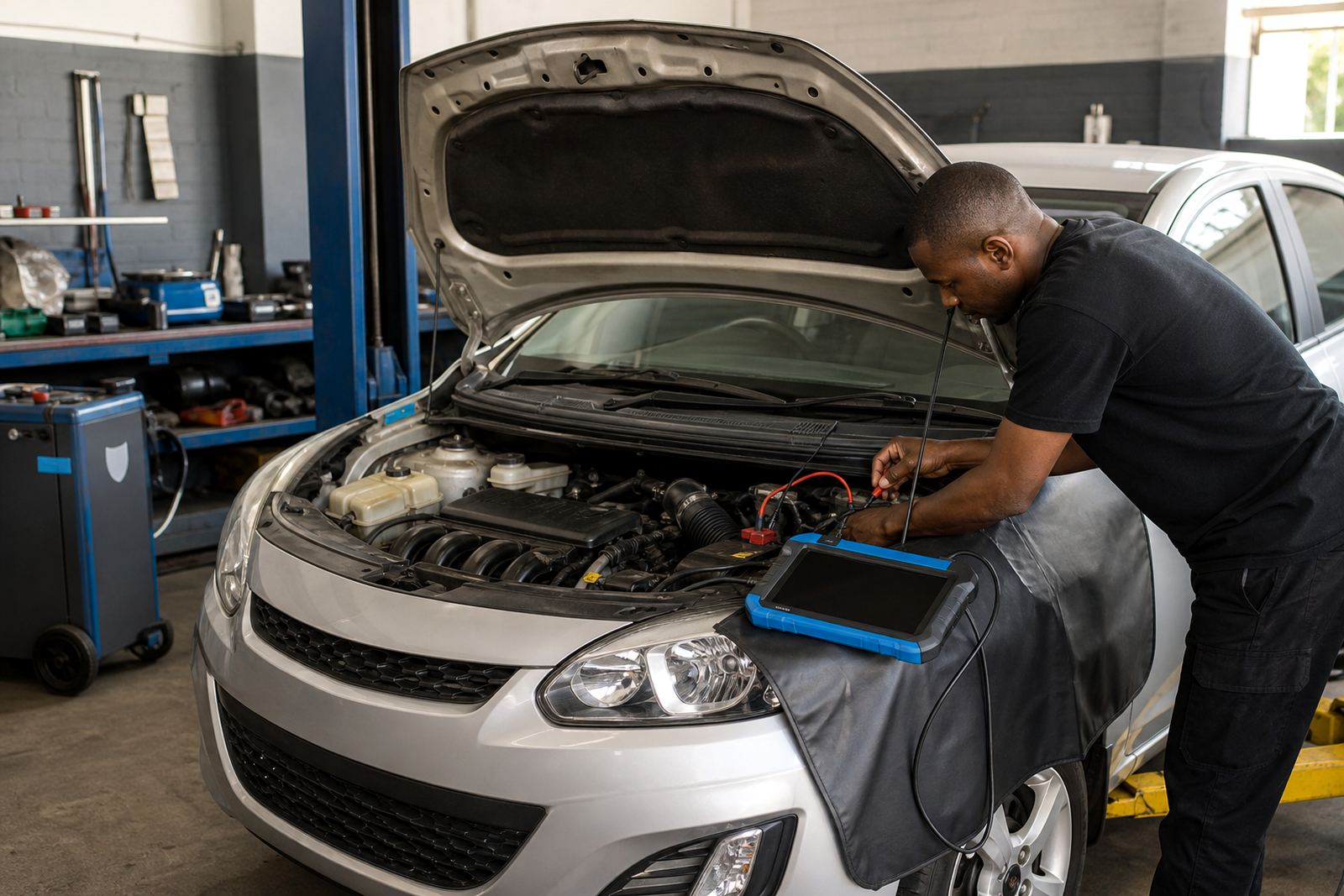
We see this on fleet bakkies, contractor vehicles and private bakkies used for after-hours work. A good diagnostic check starts with the battery, charging output, earth points, fuse boxes and live data where the vehicle system supports it. From there we trace the fault through the circuit.
The usual equipment on a site bakkie
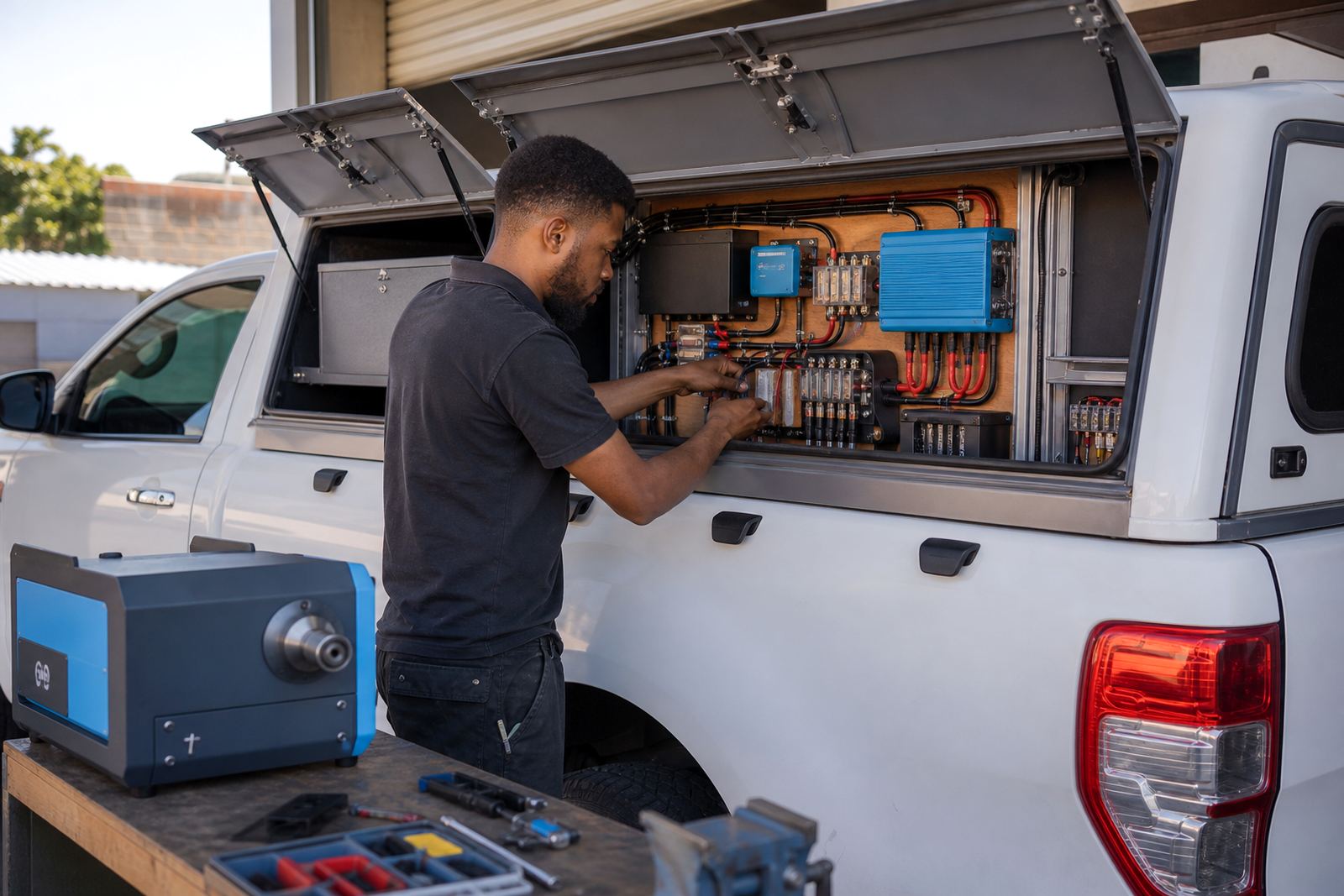
Most work bakkies carry a mixed set of accessories, and the wiring often grows over time. That can include amber beacons, roof work lights, rear work lamps, trailer sockets, auxiliary battery setups, dash-mounted switches, trackers and charging points for handheld equipment. If the add-ons were fitted at different times, the routing and protection can become untidy very quickly.
- Beacon circuits that draw power through a proper fused feed
- LED work lights on rear bars, canopies or load bins
- Trailer wiring for lights, brakes and charging where needed
- Trackers and security accessories tucked into the electrical loom
- Battery monitoring and charging protection for vehicles that idle often
We fit and repair these circuits with the load in mind, not just the convenience of reaching a cable point. That matters on bakkies that work in wet weather, coastal air and dusty yards, where loose joints and poor earths cause trouble fast.
How the wiring should be laid out
A site bakkie should not have accessories piggybacking off the nearest spare wire. Each circuit needs its own fuse protection, proper routing and sound earthing. Where the bodywork is used as earth, the contact point must be clean and tight, otherwise lights dim, relays chatter and fault codes may appear for unrelated reasons.
We usually look at the path from battery to switch, from switch to relay and from relay to the accessory itself. Wiring should be clipped away from hot exhaust parts, sharp edges and moving panels. If a canopy has been added, the rear lighting and socket work should be checked at the hinge points and through any flex section. A neat loom lasts longer and is easier to fault-find later.
For fleet operators, that layout also helps with servicing. When a vehicle comes in with the same fault twice, the problem is often hidden in a join, a crushed cable or an earth point that was never prepared properly.
Fault patterns we see after site use
Many complaints on project bakkies are predictable once you have seen a few. A battery drain can be caused by a tracker, a stuck relay or a light circuit that stays live after shutdown. Starter repairs sometimes turn out to be starter-circuit issues, with voltage loss along the trigger wire or a weak earth. Alternator faults can be genuine failures, but they can also show up as charging complaints when the battery is old or the belt drive is slipping.
Live data and OBD fault codes help where the vehicle computer can see the problem. On newer vehicles we also check CAN bus basics when symptoms affect more than one system, such as repeated warning lamps, random accessory faults or communication errors after a poor installation. Not every fault code means a broken control unit. Often it is a bad connection at a splice, fuse box or connector block.
- Intermittent beacons after rain or washing
- Flattening batteries from an accessory that does not shut off
- Starter clicks that turn out to be voltage drop
- Lighting faults from corroded trailer plugs
- Trackers that have been wired in without proper protection
Budget ranges for bakkie wiring and diagnostics
For site bakkies, the budget usually depends on whether the job is a single circuit fault or a fuller electrical refresh. A focused diagnostic on a battery drain, charging concern or starter circuit issue sits in a lower bracket than a full wiring repair with accessory rewiring and labour across several systems. Small jobs can stay modest, while multi-circuit work on older bakkies climbs quickly if damaged loom sections need opening and repair.
As a working range, minor fault finding and a simple repair may land in the low hundreds to low thousands of Rand. Starter, alternator and charging system work usually moves higher, especially if parts and labour are both involved. A cleaner install for beacons, work lights, trailer wiring or tracker integration can sit in a separate bracket again, depending on cable length, switch gear and the condition of the existing harness.
It helps to look at the full vehicle, not just the single complaint. On a site bakkie, one bad circuit often points to another weak point nearby.
Call-out work for vehicles that cannot sit idle
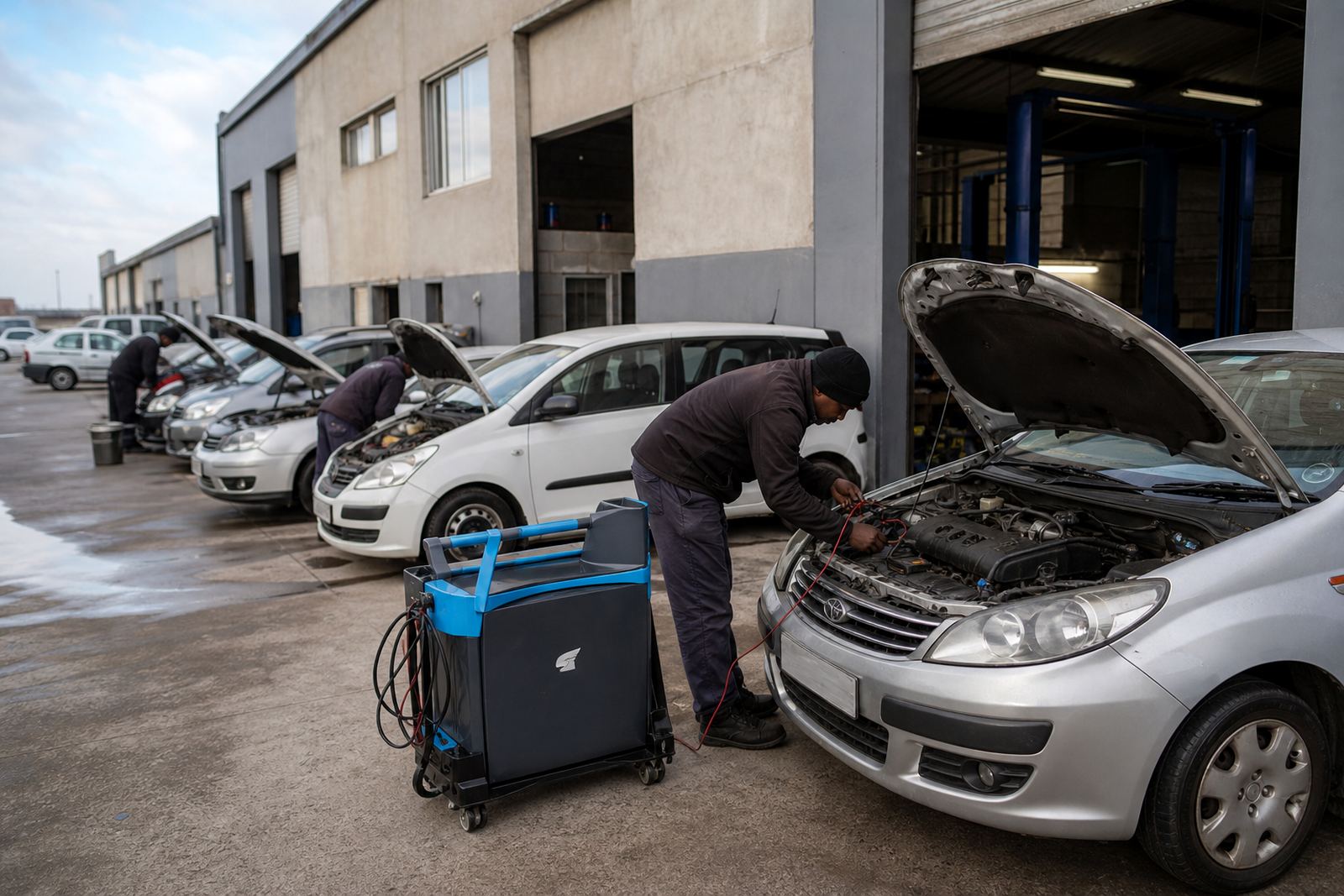
Our workshop is in Montague Gardens, with mobile call-outs for fleet operators and private owners across Cape Town, Bellville, Milnerton, Somerset West, Paarl, Brackenfell and Durbanville. That suits vehicles that are part of a daily job list and cannot wait until the week is calm.
Mobile work is useful for battery drain checks, non-start faults, beacon issues, lighting repairs and basic wiring inspections on site. When the fault needs deeper tracing, loom repair or bench testing, we bring the vehicle into the workshop where the tools and test setup are better suited to the job.
Whether the bakkie belongs to a small contractor or a larger fleet, the aim is the same: reliable electrics, clear circuit layout and fittings that can take mud, rain and regular use.
The details we need before the first inspection
A short note through our contact form helps us prepare the right test gear and wiring supplies. It is useful to mention the vehicle type, the fault you are seeing, any recent accessory fitting and whether the issue happens only when the engine is running, only when parked or only after rain.
- Vehicle make and model
- What accessory or circuit is giving trouble
- Any warning lights, clicking or intermittent behaviour
- Whether the vehicle is in the workshop or at a site
- Whether there has been recent wiring or accessory work
That detail helps us plan the diagnostic route, especially where a bakkie carries both factory wiring and added site equipment. The cleaner the circuit history, the quicker the fault trace usually becomes.