When a work van starts acting tired
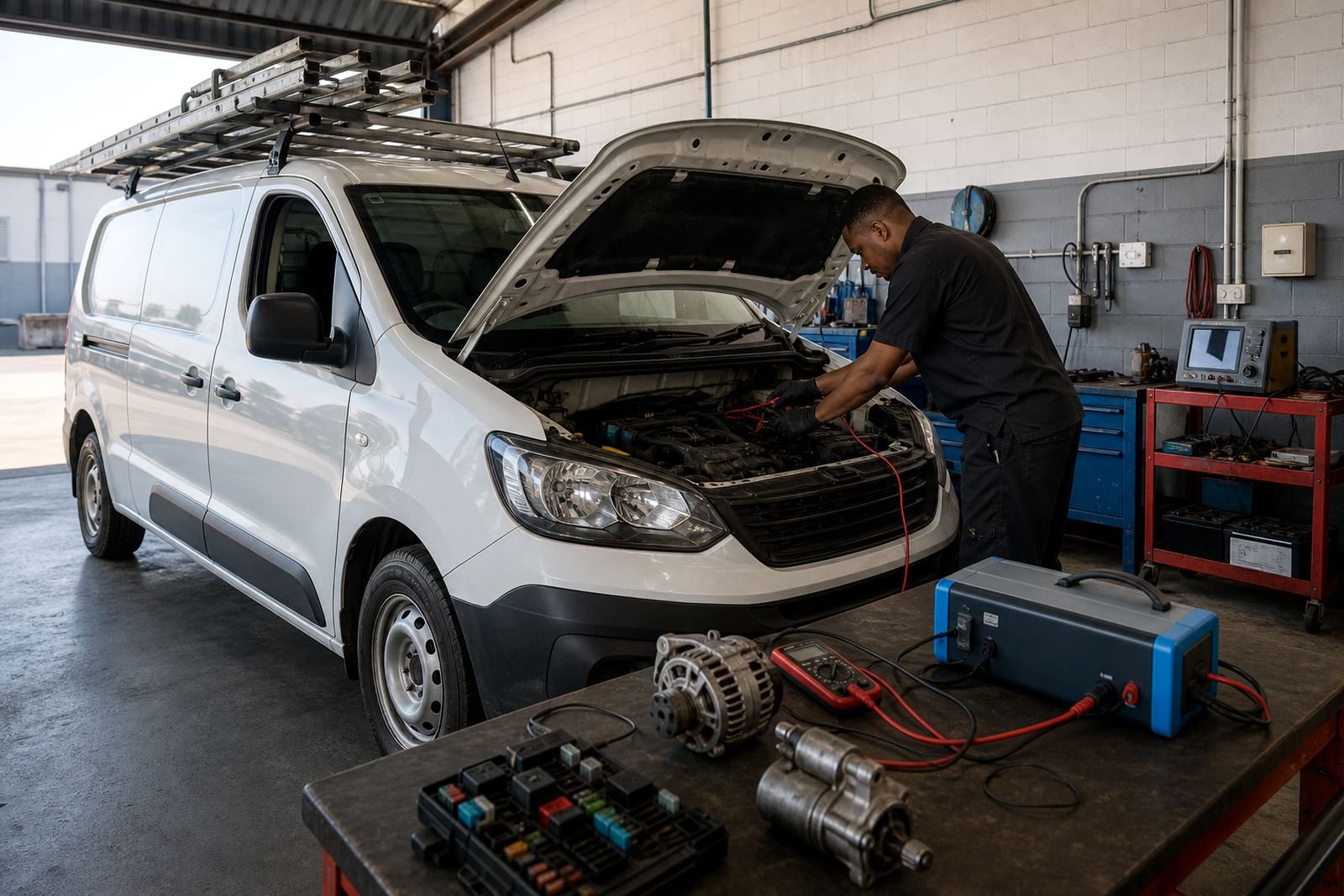
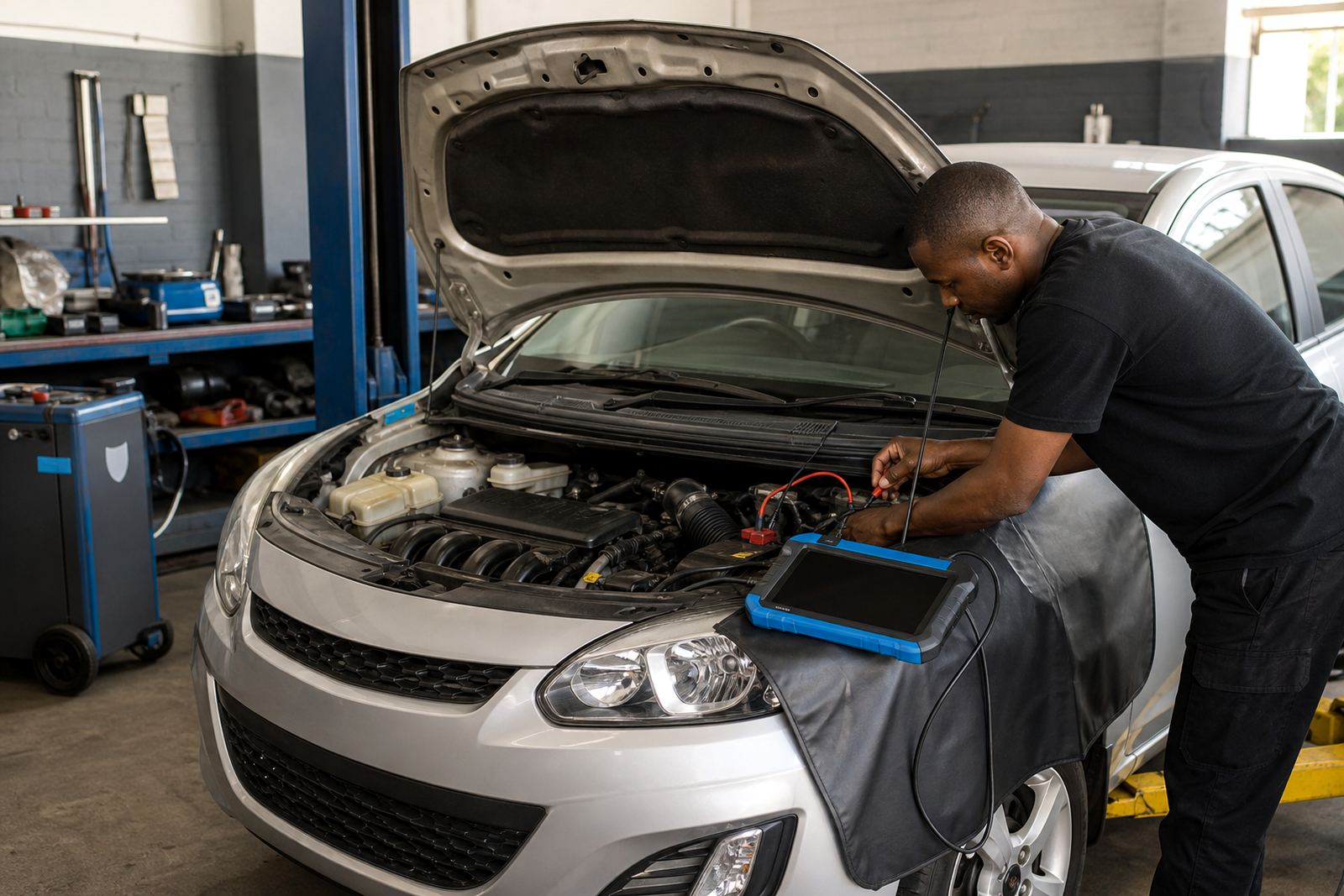
Trade vehicles usually show problems in ugly little ways. A panel van may crank slowly after short stops, a bakkie may lose lights on the trailer plug, or a courier unit may throw warning lamps after a battery change. We read OBD fault codes, check live data, test battery health and measure charging output before anyone starts swapping parts. That helps separate a weak battery from a failing alternator, a starter fault or a parasitic drain that keeps flattening the pack overnight.
In busy fleets, the symptoms often shift with the route. A vehicle that spends mornings in town and afternoons on the coast can pick up moisture in plugs, earth points and connectors, then the fault only shows up once the engine bay warms up. We look for poor connections, broken insulation, loose terminals and wiring that has been rubbed thin near hinges, trays or load boxes.
The gear most trade vehicles carry
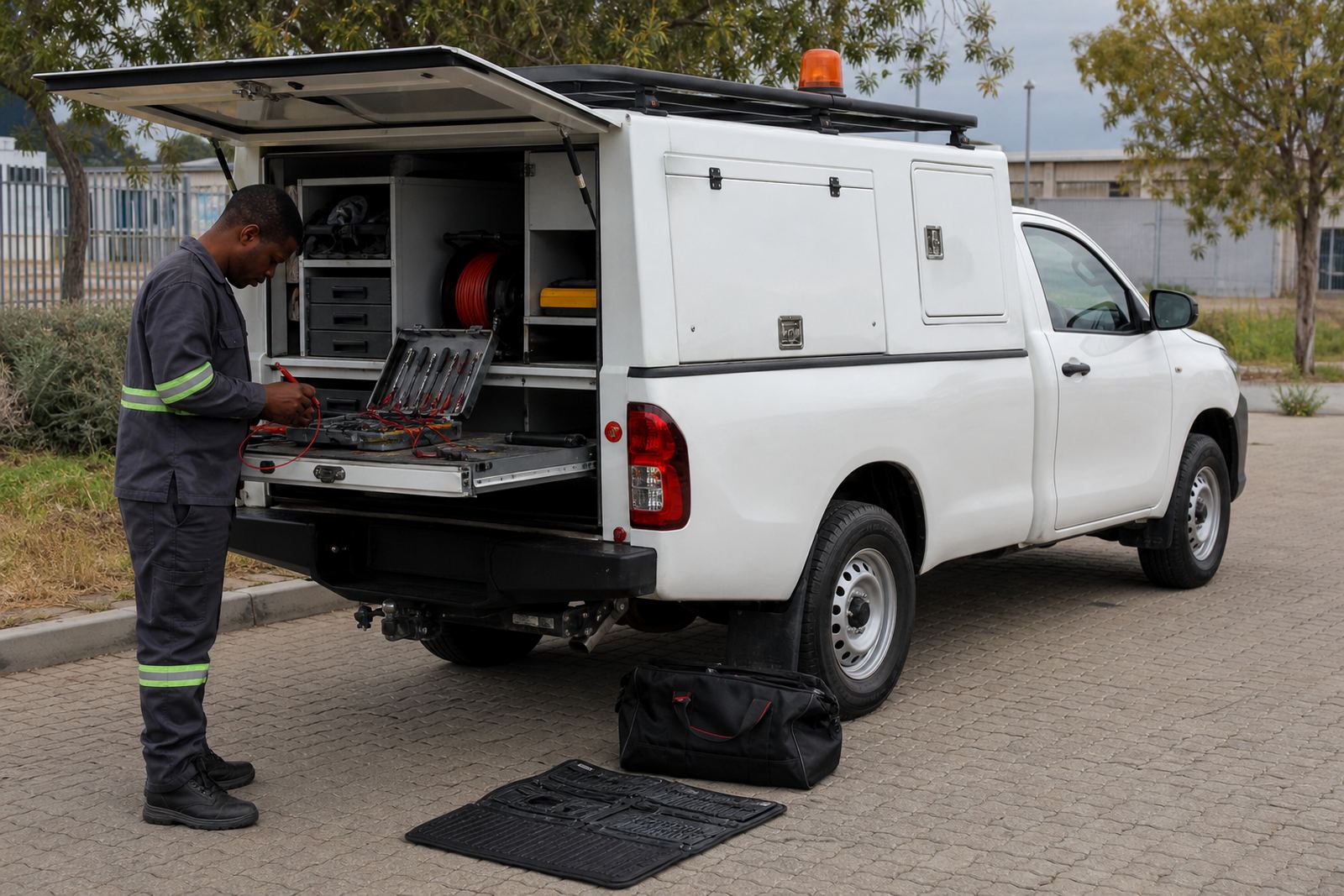
Mobile trades bring more electrical load than a basic commuter vehicle. Many carry inverter feeds, work lights, charging points, radios, tracking units, fridge circuits, beacon lights and trailer wiring. Add a few tool chargers and a second battery setup, and the charging system has real work to do. We assess the full circuit, not only the part that has failed.
- Battery and charging tests under load
- Starter circuit checks and starter repairs
- Alternator output checks and alternator repairs
- Fuse box testing and earth fault tracing
- Trailer wiring repairs and plug faults
- Accessory rewiring for chargers, lights and trackers
- CAN bus fault checks where control units are involved
On some vehicles, a fault code is only the first clue. The real problem may sit in a corroded connector, a bad earth strap or a wire that has chafed through near a bracket. We use the code, then trace the circuit back to the source.
Planning the layout before we fit more gear
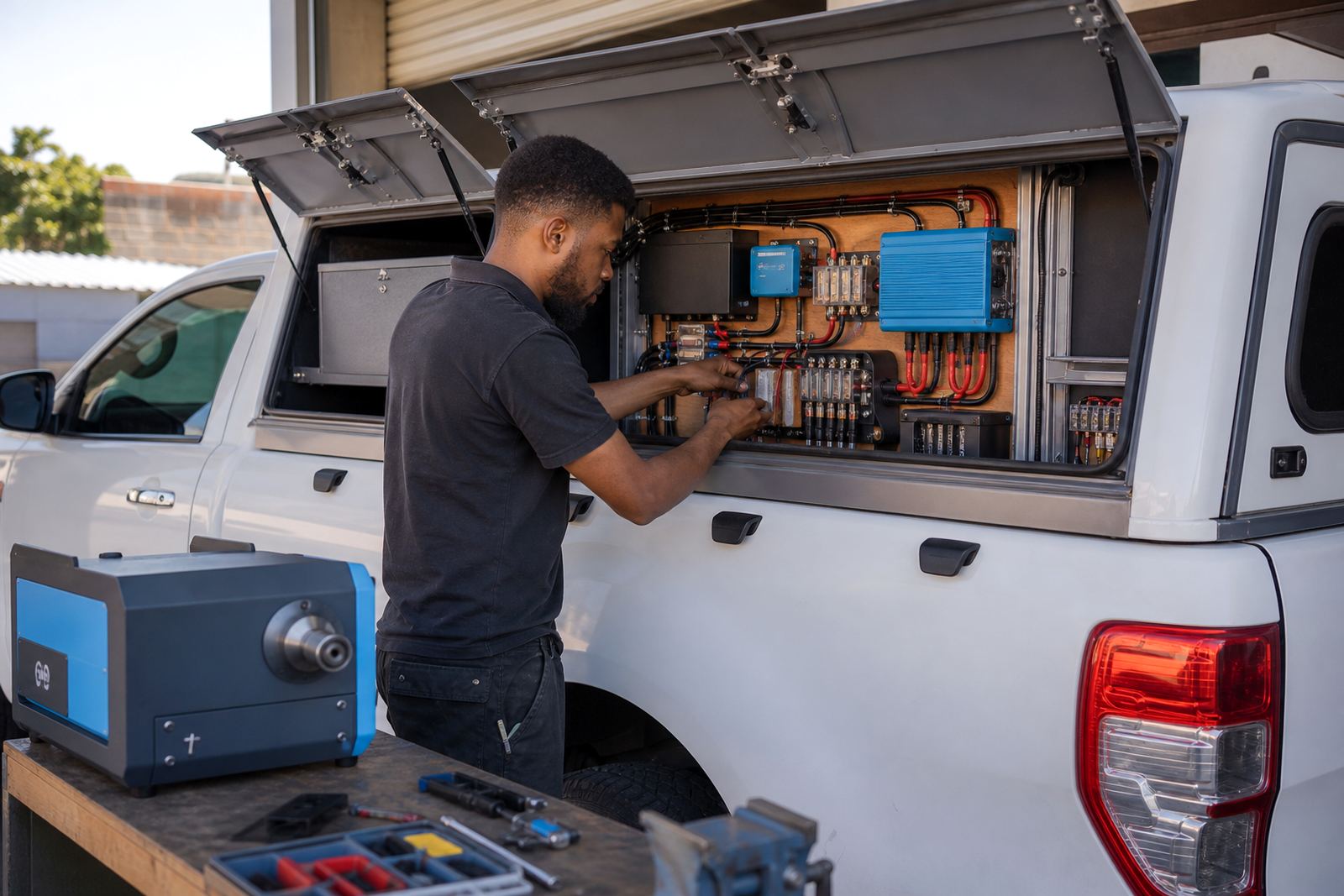
Trade vehicle electrics work better when the layout is thought through before extra equipment lands in the cab or canopy. Heavy current should travel on properly sized cable, with the right fusing close to the power source. Light circuits, charging points and control feeds should be separated where possible, so one fault does not take out half the vehicle. It sounds basic, but rushed add-ons are where problems begin.
We often see accessories piled onto the same feed, or earth points shared across too many devices. That can cause voltage drop, dim lights and random warning lights on newer vehicles with CAN bus systems. A tidy layout keeps service work easier later, and it reduces the chance of a dead battery after the vehicle has sat for a weekend. Neat wiring also matters in wet coastal conditions, where bad joints corrode fast.
Call-outs for fleet routes and workshop visits in Montague Gardens
Some faults need workshop testing, while others are better handled on-site at depots, yards or loading bays. Our mobile call-outs cover Cape Town, Bellville, Milnerton, Somerset West, Paarl, Brackenfell and Durbanville, with workshop support from Montague Gardens when a deeper strip-down is needed. That helps with vehicles that cannot easily be taken off the road.
For fleet operators, the useful part is visibility. A vehicle can arrive with one complaint and leave with the root issue sorted, whether that is a broken starter circuit, a weak alternator output, a bad trailer plug or a wiring repair after a fitting went wrong. Private owners with work bakkies use the same service when extra accessories start draining the battery or a fault keeps returning after a quick patch job.
Budget ranges that make sense in rand
Repair costs depend on the fault, access and the amount of testing needed. A simple check on battery health or charging output sits at the lower end, while trace work on hidden wiring faults, CAN bus concerns or a full starter circuit issue takes more time. Parts quality also changes the figure, because some jobs need only terminals, cable, relays or fuses, while others need larger components.
- Basic diagnostics and fault-code reading: about R450 to R950
- Battery drain tracing and earth fault checks: about R850 to R1,850
- Starter repairs or starter circuit work: about R1,200 to R3,500
- Alternator repairs and charging system work: about R1,500 to R4,500
- Accessory or tracker fitting and rewiring: about R750 to R3,000
Those figures shift with vehicle type, access and the number of linked faults. A trade van with several add-ons usually needs more time than a plain bakkie, especially when previous wiring work was untidy.
Fault patterns we see most often
Trade vehicles bring a fairly repeatable set of mistakes. Some are small on day one, then turn into roadside trouble later. A battery gets replaced without checking the alternator. A tracker is fitted into a weak circuit. A trailer plug is joined with twisted wire and tape. A load box gets drilled without protecting the loom behind it. That sort of thing is common, and it causes repeat visits if the underlying issue is not sorted.
We also see earth faults that show up as strange behaviour rather than a dead circuit. Lights flicker, gauges act oddly, or the starter turns slowly even though the battery looks fine. In those cases the problem may be resistance in the ground path, not the battery itself. That is why testing matters before parts are ordered or fitted. A careful diagnosis saves the vehicle from more down time and avoids unnecessary replacements.
What the workshop needs from the vehicle
When a trade vehicle comes in, it helps to know what is fitted already and what has changed lately. A simple note on the fault, the route conditions and any recent accessories gives the technician a better starting point. If the vehicle has dual batteries, a canopy loom, trailer wiring or a tracker, those details matter because they shape the test path. A good diagnostic job is part measurement, part experience, part patience.
Clients get in touch with V-Auto through our contact form on our contact page, and we handle workshop work from Montague Gardens with support across the Western Cape. For fleets, that can mean one vehicle at a time or a group of units that all need the same kind of electrical attention. The aim is a clean circuit, proper charging and fittings that can handle the workday without drama.