
When a tow vehicle starts acting strange on the back end
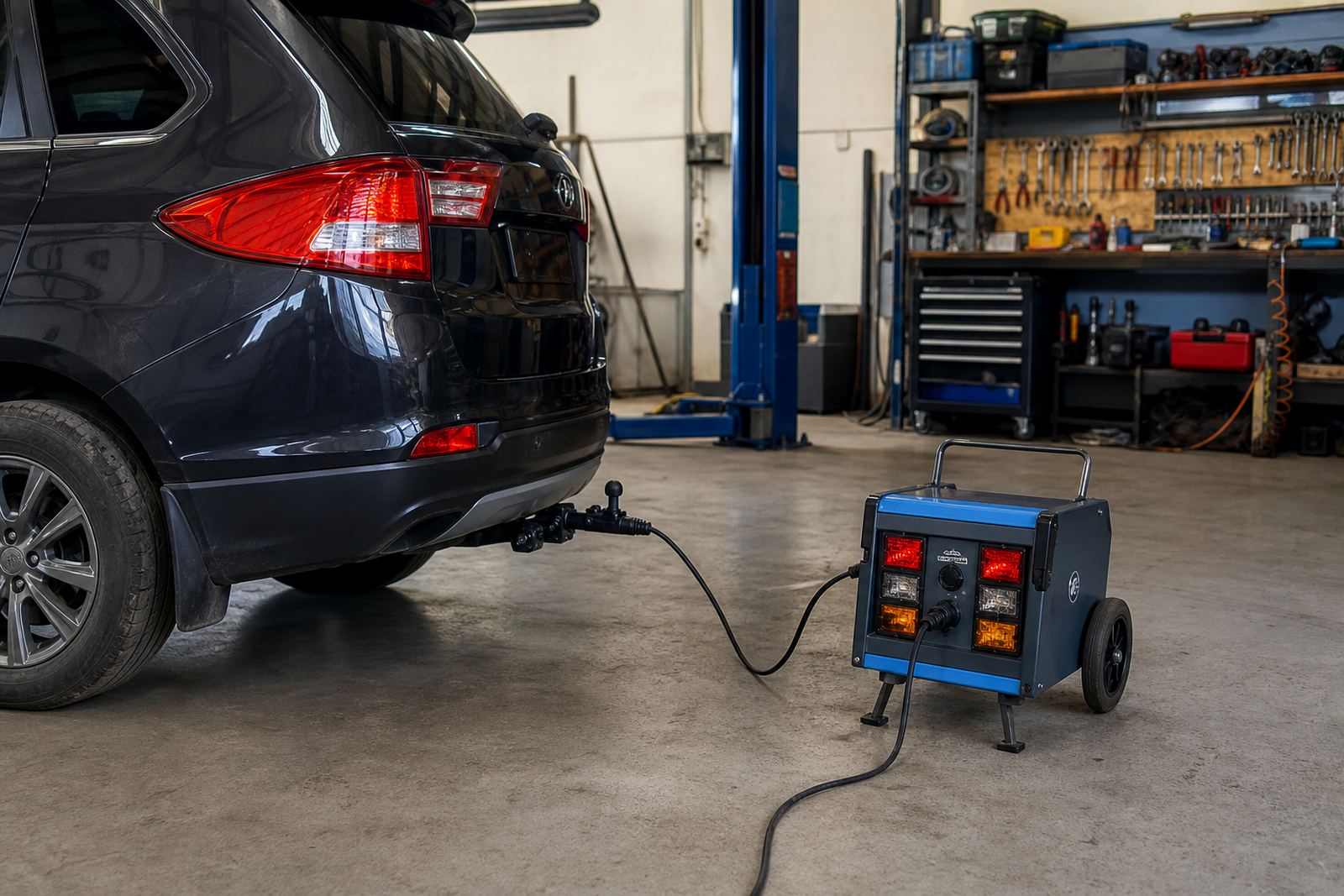
A tow vehicle often shows the first signs at the trailer socket. One side lamp fails, indicators flash too fast, or the brake lights work on the vehicle but not through the trailer harness. On some bakkies and SUVs the issue sits deeper, with a weak battery, poor earth connection, or a charging fault that only shows up once a trailer is connected and more current is drawn.
Our workshop in Montague Gardens handles those fault patterns for private owners and fleet operators across Cape Town, Bellville, Milnerton, Somerset West and Paarl. We read fault codes where the vehicle stores them, then test the live data, charging voltage and current draw before opening looms and sockets. That order matters. If a technician starts cutting wiring too early, the true fault can get buried under extra joins and tape.
For towing vehicles, the problem can sit in the towing harness, the trailer plug, the rear lamp cluster or the vehicle earth path. A damp trailer socket, loose pins, corrosion at the chassis earth point, or a broken wire inside a section that flexes near the towbar can all cause repeat failures. Coastal humidity around Cape Town makes socket corrosion a regular job.
What gets tested before parts are replaced
A proper tow vehicle check usually starts with the battery and charging system, then moves to the rear lighting circuit and socket wiring. That gives a clear picture of whether the fault is inside the vehicle, in the towing interface, or on the trailer side. We also check for parasitic drain if the battery keeps flattening after a tow outing or while parked with accessories fitted.
- OBD fault code reading for body and electrical faults
- Live data checks on charging voltage and system behaviour
- Battery condition and alternator output testing
- Earth fault tracing at the rear body, socket and chassis points
- Trailer socket wiring checks for brake, indicator, tail and reverse circuits
- Starter circuit checks when slow cranking points to poor supply
- CAN bus fault checks where the towing module or rear electronics are involved
On newer vehicles the towbar wiring may communicate with control units rather than using only simple direct feeds. That means a bad splice, wrong relay arrangement or low system voltage can trigger warning lights, message clusters or intermittent trailer faults. We start with the basics, then work through the rest in a set order.
How a clean towbar layout saves repeat visits
Good planning makes towing electrical work easier to service later. The loom should be routed away from sharp metal edges, exhaust heat and water splash. Where a trailer socket is mounted low on the rear panel, the cable needs enough slack for suspension movement and towbar use but not so much that it rubs on the road side of the bracket.
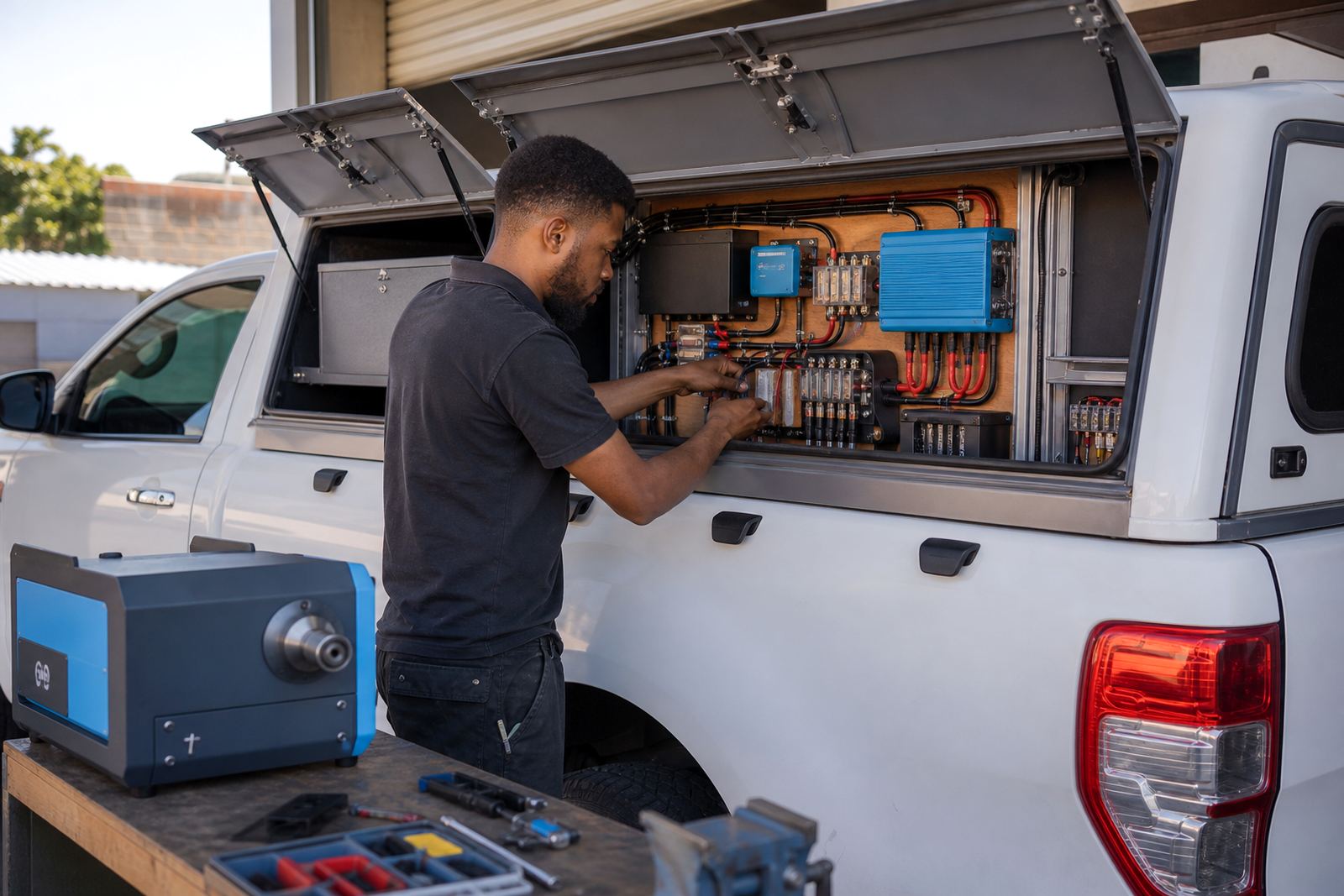
We inspect the full layout, not just the plug itself. If accessories are already fitted, such as a fridge feed, trailer brake controller, reverse camera supply, charging line or tracker, the available current and fuse layout need to be checked together. A tow vehicle that already carries accessory loads can run fine until one more circuit is added and the voltage drop becomes noticeable.
Typical workshop planning points include:
- Fuse protection close to the power source
- Correct earthing to clean metal, not painted brackets
- Separate circuits for lighting and higher draw accessories where needed
- Water resistant socket mounting and tight terminal fitment
- Clear labelling for fleet vehicles that need future service work
For fleets in Durbanville, Brackenfell and Milnerton, that planning helps when the vehicle changes hands or moves between drivers. A tidy harness and known fuse route helps later.
Common mistakes that keep showing up on towing jobs
Most towing faults we see are not dramatic. They start with a weak connection, a tired battery, or an improvised repair that worked for a month. One of the usual problems is a corroded trailer socket pin that still makes contact on the workshop floor but fails once the vehicle is shaken over roadwork. Another is an earth wire that has been joined to a painted mounting point instead of a clean metal surface.
Another common issue is mixing trailer lighting faults with charger problems. A vehicle can appear to have a bad alternator when the real trouble is a poor connection in the rear harness pulling the system voltage down under load. On some vehicles, a fault in the CAN bus communication path will also throw false warnings if the trailer module or rear lamp circuit is disturbed.
- Wrong socket pin mapping after a hurried towbar installation
- Loose spade terminals inside the rear harness
- Undersized cable used for the accessory feed
- Water inside the socket from a missing cover or poor seal
- Battery drain caused by an added circuit that never sleeps properly
- Starter strain made worse by low battery voltage after towing
We see these on both private vehicles and fleet units. The fix depends on tracing the fault from supply to earth, not just replacing bulbs or clearing codes and hoping the problem stays away.
What tow vehicle work usually costs in rand
Every vehicle lands in a different condition, so the final figure depends on what testing turns up and how far the wiring fault runs. A basic diagnostic check for a tow vehicle with no major repair can sit in the lower range, while a full trailer socket repair, loom tracing job or charging system fault moves higher. If the vehicle needs a starter repair, alternator work or a deep wiring section repair, the budget rises with parts and labour.
For planning purposes, many towing-related jobs fall into these broad ranges:
- Fault reading and electrical diagnosis: about R450 to R950
- Trailer socket repair or rewiring: about R650 to R1,800
- Lighting circuit fault tracing: about R550 to R1,500
- Charging system testing and repair work: about R850 to R3,500
- Battery drain tracing on a fitted vehicle: about R950 to R2,800
- Accessory fitting or rewire work: about R700 to R2,500
These ranges can move if the tow vehicle has rear module faults, damaged connectors, or water ingress that has spread into more than one circuit. Fleet operators often prefer a fuller inspection so the same issue does not return after the first trailer run.
Fleet tow vehicles and private vehicles in the same workshop
A fleet tow vehicle often needs more than a quick plug check. The vehicle may haul trailers all week, sit outside near the coast, and carry extra lighting or charging accessories at the same time. That puts pressure on the battery, alternator and rear harness. We handle those jobs from Montague Gardens and also do mobile call-outs where the vehicle cannot be left off the road for long.
Private owners usually come in with a different complaint. The trailer lights worked once, then stopped after rain or after a recent towbar fitment. In those cases we check the socket, the harness routing, the earth path and the battery health before touching anything else. A clean diagnostic path saves time and helps keep the repair focused.
Our team works across Cape Town, Bellville, Milnerton, Somerset West and Paarl, with branches and call-out areas covering Brackenfell and Durbanville too. For tow vehicles, that spread matters because a small wiring fault can sideline a business trailer or spoil a family trip if it is left to drift. If you need trailer socket wiring, charging checks or lighting circuit testing, our contact form connects you to the workshop team and the mobile call-out side of the business.