Bellville van, early shift, weak crank
The vehicle belonged to a local courier business working between Bellville, Montague Gardens and the northern suburbs. The driver reported a slow crank after overnight parking and a warning that kept showing up on the dash, which pointed us toward the starting and charging side of the van rather than a fuel issue.
The job was simple, but the timing was critical. The van had to stay usable for deliveries, so we worked around the operator's route plan and kept the fault finding focused on the parts that affect first start of the day, battery health and cable condition. A tired starter can hide behind a charged battery, so we checked the whole circuit not just one component.
- Client type: courier fleet operator
- Town: Bellville, Cape Town
- Vehicle use: daily delivery runs
- Fault: slow cranking and uneven start behaviour
What the tests showed at the battery and alternator
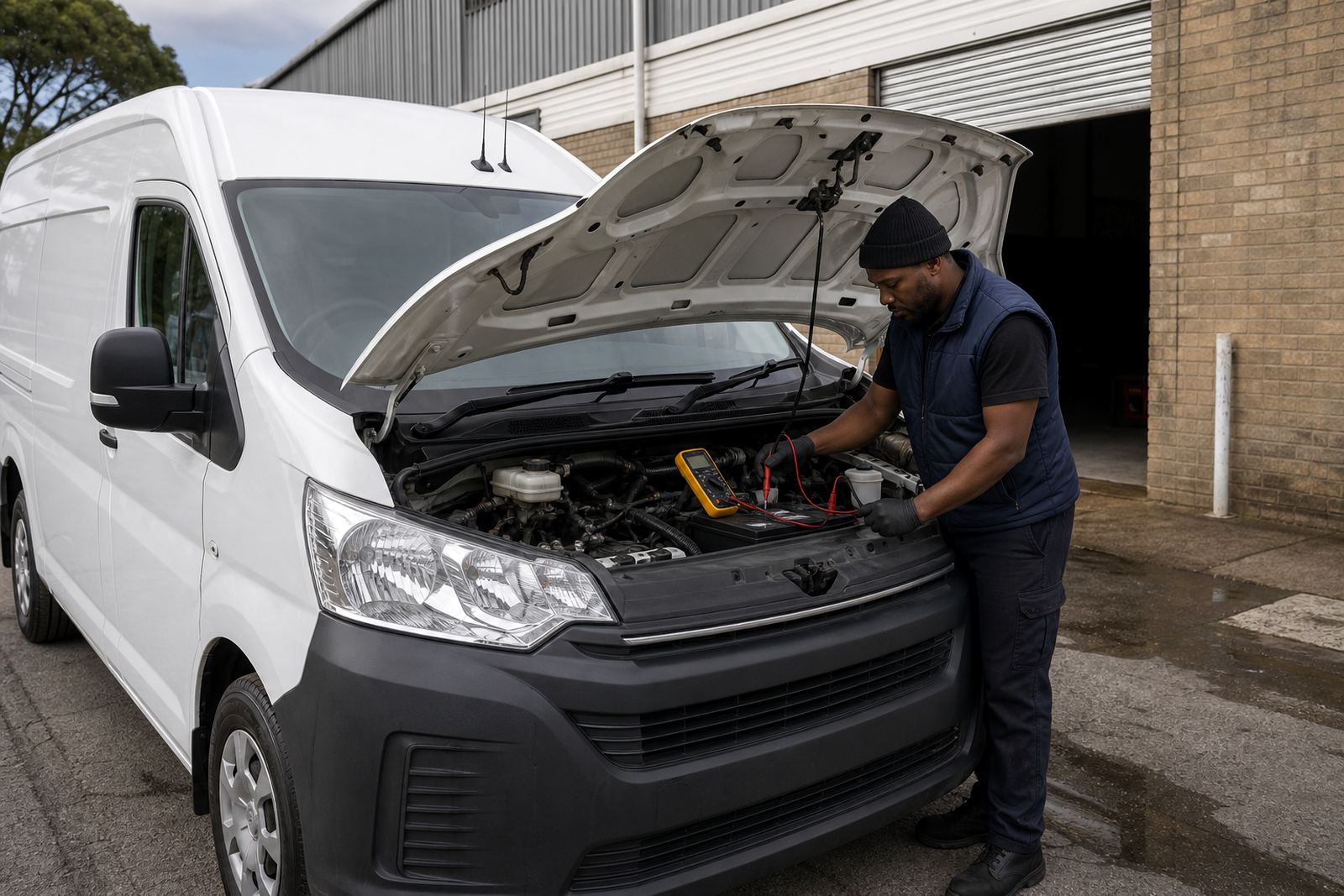
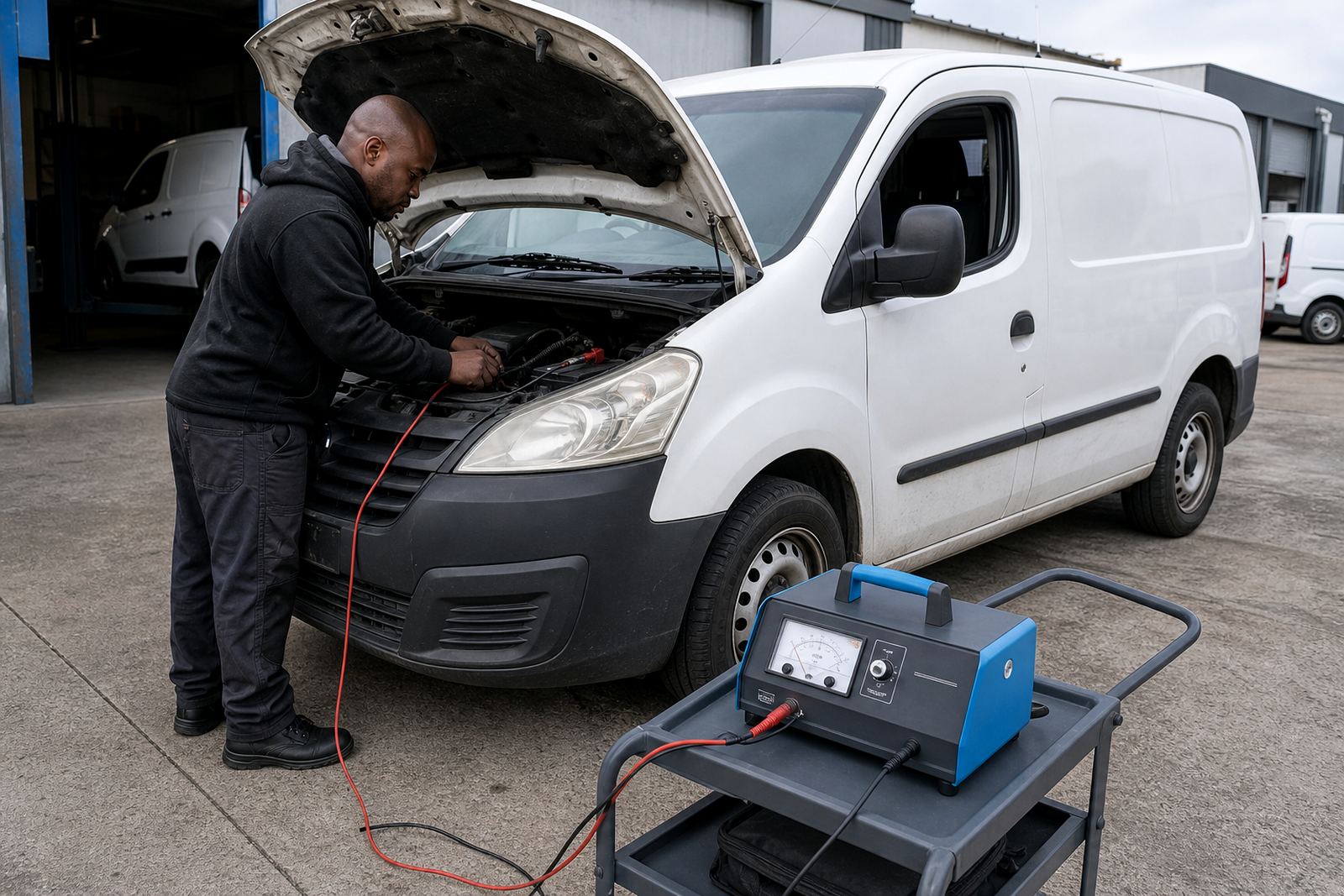
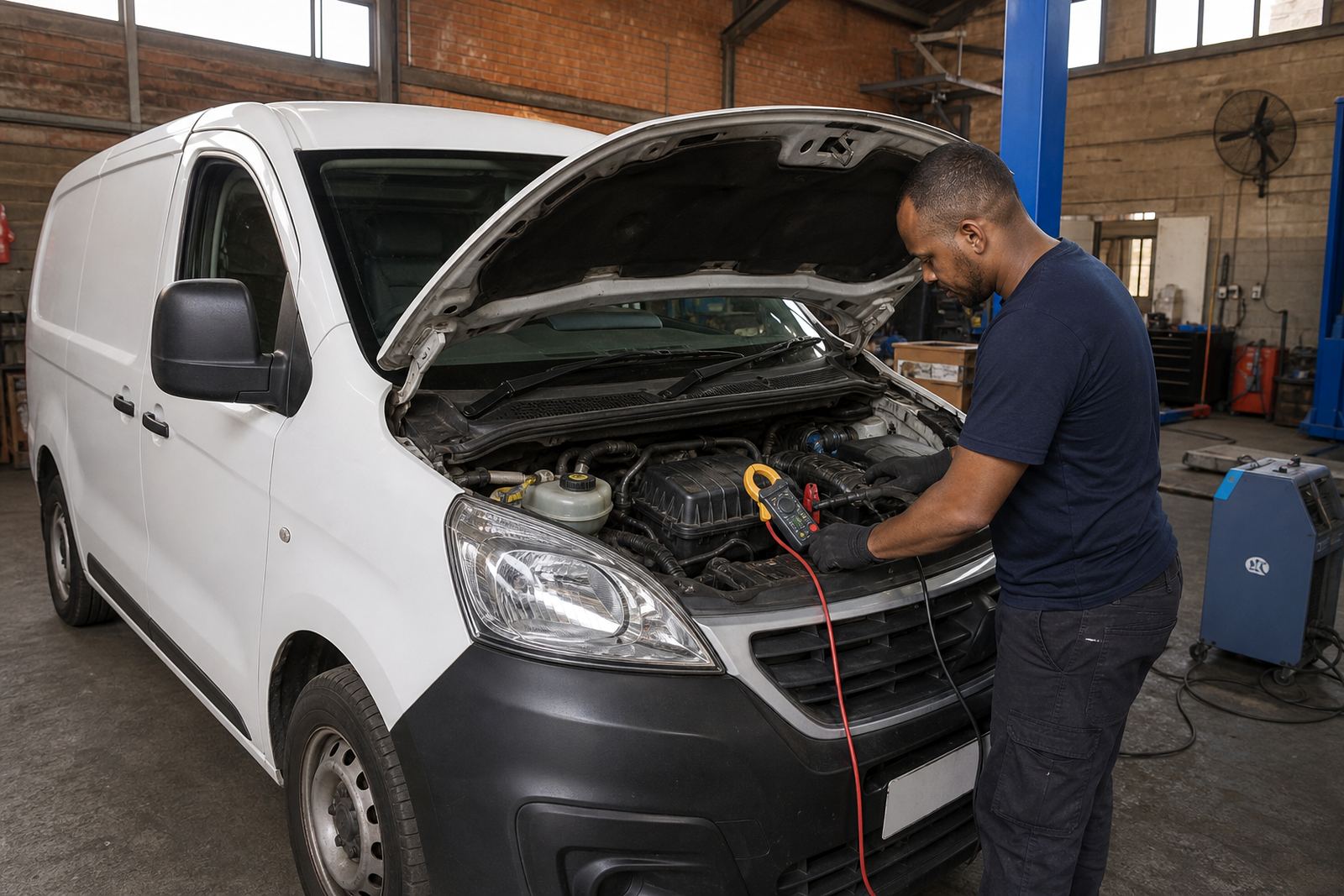
We began with battery and charging system tests to see whether the van was charging properly under load and at idle. Voltage readings were checked with the engine off, during cranking and once the engine was running, then we looked at ripple and charge recovery to see if the alternator and regulator side were doing their job.
The battery itself was serviceable, but the test results showed a voltage drop in the starter circuit that was not behaving the way a healthy van should. That kind of drop can happen when a relay, cable, terminal, earth point or the starter motor itself is dragging the system down. In a courier van that does short trips and frequent starts, those faults show up fast.
- Battery test completed under load
- Charging output checked at idle and raised rpm
- Cranking voltage loss measured across the circuit
- Earth condition inspected at the body and engine points
Tracing the starter circuit fault
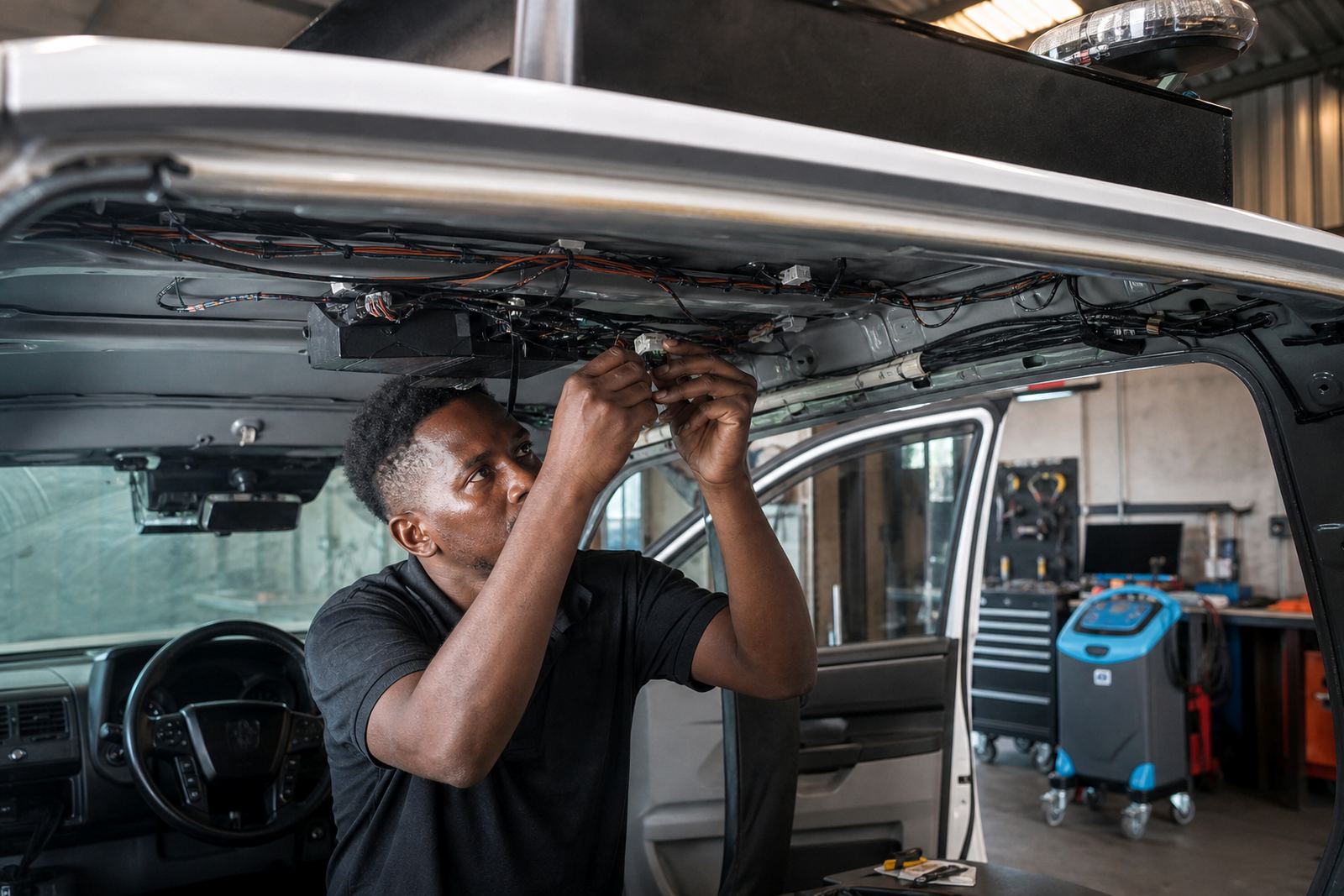
After the initial checks, we traced the starter circuit from the ignition feed through the relay path and on to the starter motor. The fault sat in the circuit rather than in a single loose terminal alone, so we opened up the problem area and cleaned up the affected connections before carrying out the repair.
The van also had signs of heat and wear around part of the wiring path, which is common when a vehicle has been working hard and the circuit has been carrying more resistance than it should. We repaired the damaged section, secured the wiring properly and checked that the starter engagement was clean and consistent on repeated starts.
- Starter circuit inspection completed
- Damaged wiring section repaired
- Connections cleaned and refitted
- Starter engagement retested several times
What we supplied and fitted during the job
This was not a parts-swap exercise. We supplied the diagnostic labour, the electrical fault tracing and the repair work needed to restore the starting circuit to order. Where connectors and cable ends showed wear, we rebuilt the circuit so the current path would not keep sagging under load.
We also carried out a final charging check after the repair, because a starter fault and a charging fault can show similar symptoms on the road. That final test matters on courier vehicles that idle, stop, start and carry a live electrical load from accessories or tracking equipment. The van left with a clearer electrical baseline and a crisper start.
- Fault code scan and live system checks
- Battery and charging tests
- Starter circuit repair
- Final verification after repairs
Timeline across the workshop weeks
The job ran over a short workshop window rather than a long strip-down. Diagnostics came first, then the wiring repair and recheck. Because the fault was electrical, we worked through it step by step, which kept the van from sitting around while our team chased unnecessary parts.
For a Bellville courier operator, that approach helps keep schedules intact. The vehicle was assessed, repaired and tested in sequence over a few weeks while the fleet manager kept the van in rotation around the less demanding routes. We also noted the wiring path for future reference so any repeat symptom can be traced faster next time.
- Week 1: tests and fault tracing
- Week 2: starter circuit repair
- Week 3: final checks and road use
Results on the road after the repair
After the repair, the van cranked more evenly and the start-up delay that the driver had been feeling was gone. The charging side was stable under the tests we carried out, and the repaired circuit no longer showed the same voltage drop under load.
That meant the courier could get back to the usual Bellville round with less uncertainty at the key moment when the ignition is turned and the engine has to catch cleanly. For a working van, that is the difference between a routine start and a morning spent dealing with a reluctant electrical system. The workshop notes now point to the starter circuit, earth paths and charging checks if the vehicle returns with a similar symptom.
What we would take forward on a similar van
On a similar courier van, we would start with the same order of checks: battery condition, charging output, starter circuit load and earth integrity. That sequence saves time because it shows where the loss is happening before anyone starts replacing parts that still test well.
For fleet work across Cape Town, Bellville, Milnerton, Somerset West and Paarl, this kind of fault usually benefits from a methodical test plan rather than a quick visual look. If a van also carries trackers, cargo lights or added accessories, those circuits are worth including in the assessment too, especially where there is a history of parasitic drain or mixed wiring work.
- Test before replacing components
- Check earth points under load
- Inspect add-on wiring and accessory feeds
- Recheck the charging system after repair
Key facts
| Project | Bellville courier van |
|---|---|
| Area | Bellville, Cape Town |
| Work type | Vehicle diagnostics and auto electrical repair |
| Fault | Slow cranking |
| Repair | Starter circuit repair with charging tests |
| Timeline | Measured over a few workshop weeks |