Patrol unit, long shifts, and a flat battery pattern
The vehicle came in from a security fleet that works around Parow and the northern suburbs, where patrol units spend long hours idling, driving short loops, then parking up for the next shift. The driver had noticed that the roof warning light was intermittent and the battery had gone weak after standing, which pointed to more than one fault working together.
We started with a visual inspection around the roof wiring, battery terminals, earth points and the main fuse area. That first pass matters on security vehicles because extra accessories are often added over time, and a neat setup can still hide a tired connector, a rubbed cable or an aftermarket splice that has gone brittle.
The brief was to get the warning light working properly, find the draw on the battery and make sure the charging system was not masking a deeper problem. The unit had to stay practical for daily patrol use, with no loose cabling in the system.
How we split the electrical fault from the battery draw
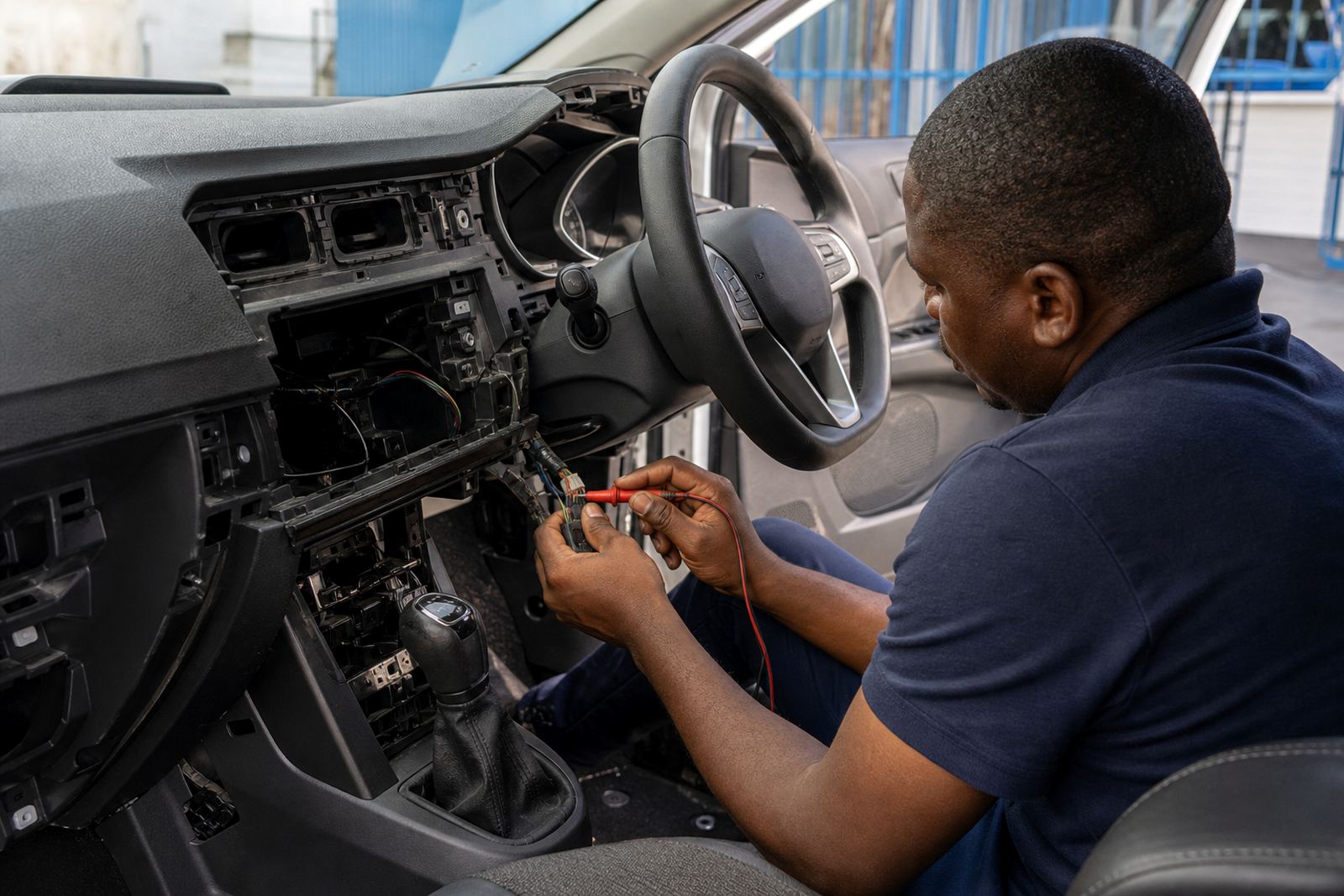
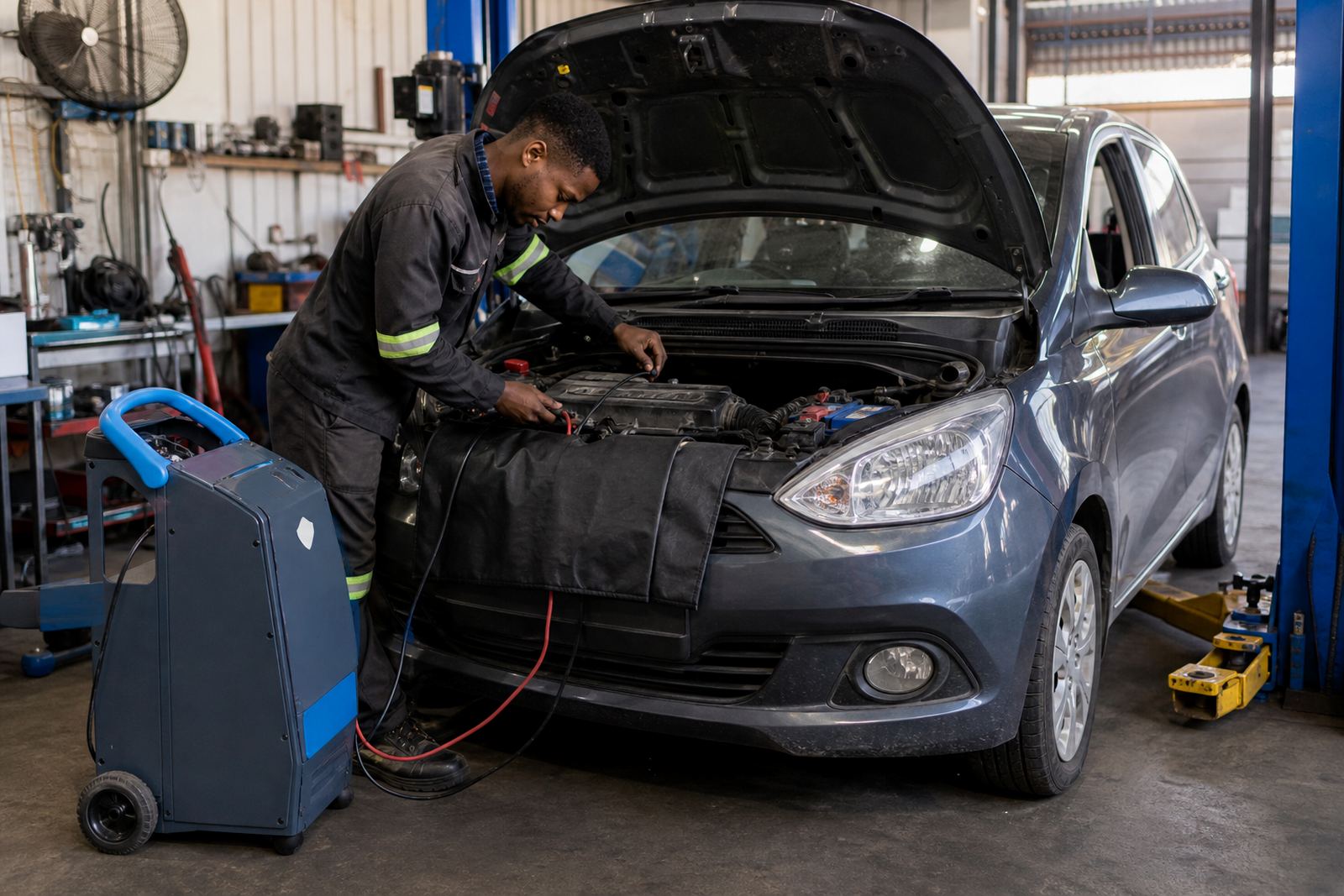
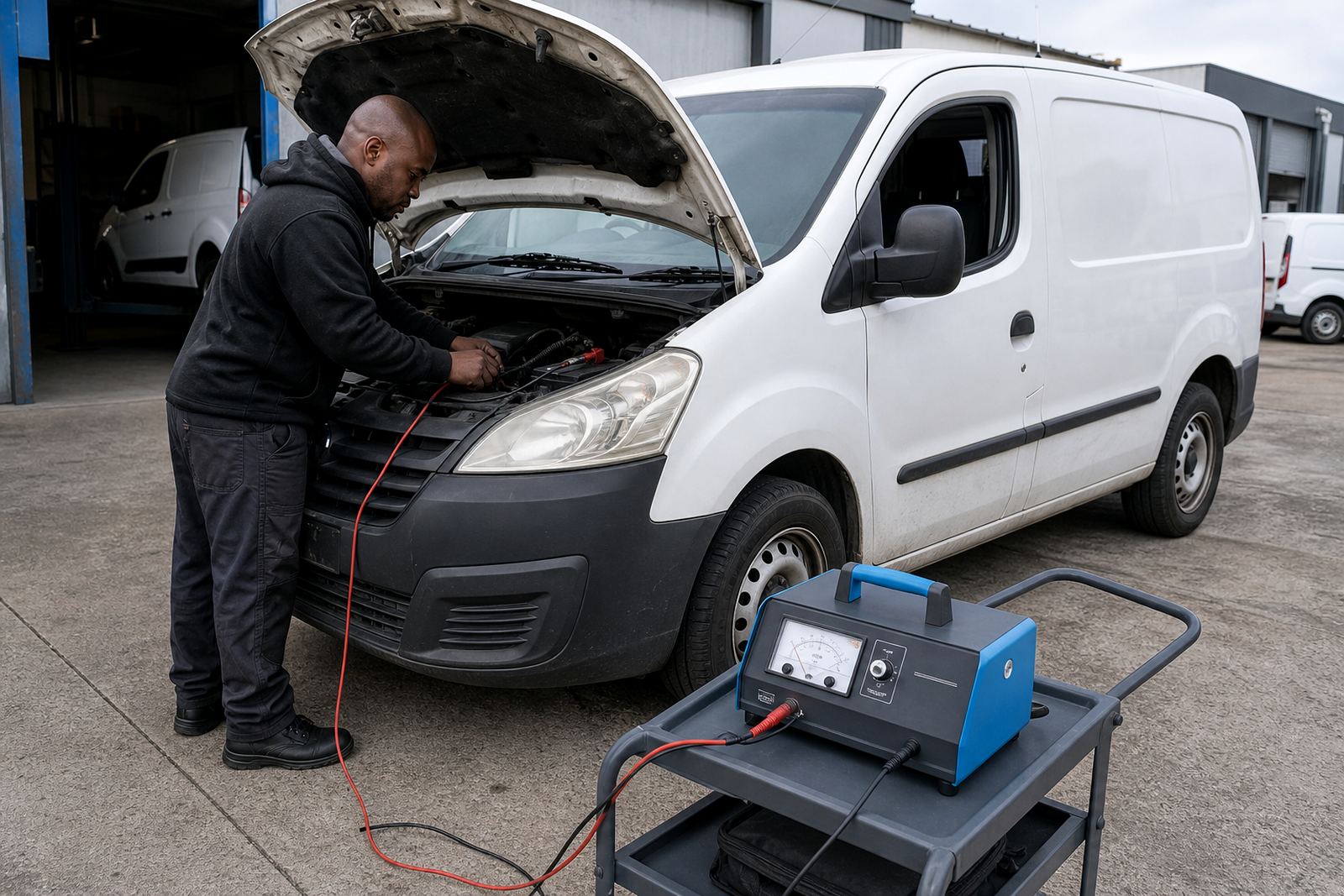
Once the vehicle was in the bay, we carried out battery and charging tests, then moved into parasitic drain checks with the vehicle shut down. That process lets you see whether the battery is being pulled down by an active circuit, a module that stays awake, or a wiring path that should not be live when the ignition is off.
We also checked for stored fault codes and live data where the vehicle made it available. On fleet units, fault memory can point to a circuit that has been under strain for a while, even if the warning on the dash is not dramatic. In this case the trail led us toward the roof light wiring and an added accessory circuit that had been tied into the vehicle in a way that was not holding up well.
- Battery condition and cranking draw checked before strip-down
- Charging output tested under normal idle and loaded conditions
- Parasitic drain measured with the vehicle fully shut down
- Fault memory and live readings used to narrow the search
Roof warning light wiring repaired for hard daily use
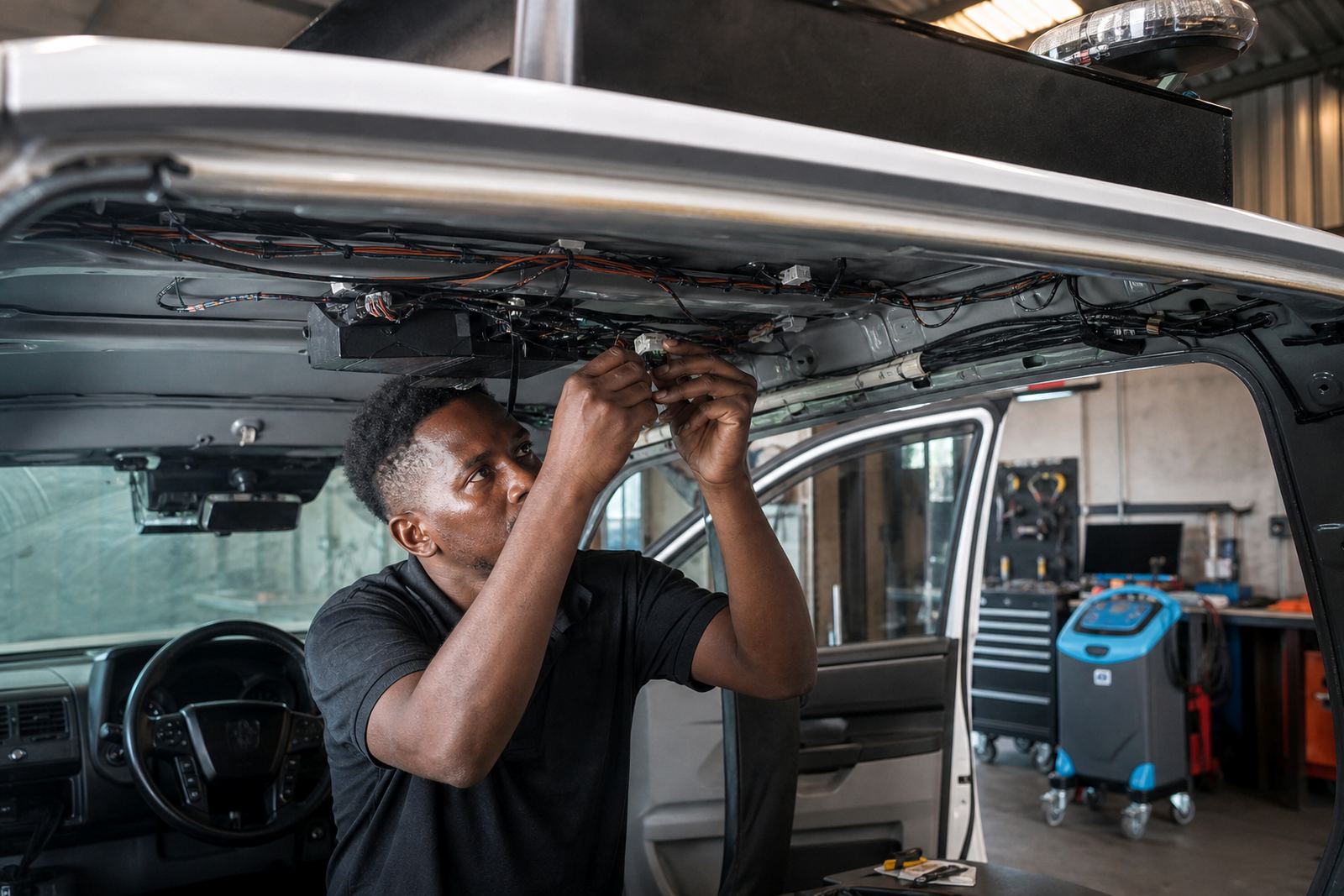
The roof warning light wiring had been repaired before, but the joins were not protected well enough for constant vibration and weather exposure. Cape Town conditions can be hard on exposed wiring, especially where vehicles spend time outside in coastal air and get washed often. We opened the affected section, removed the damaged joins and rebuilt the run so the wiring sat properly and was protected against movement.
Where required, we cleaned up earth points and checked the connector ends for heat marks or loose pin tension. A patrol vehicle does not need fancy treatment, it needs wiring that can take doors opening, radios switching on and off, and the roof equipment doing its job without flickering.
The final check on the light circuit showed a steady feed and a proper earth path, so the warning light no longer depended on the old patchwork. That part of the job reduced the risk of random faults when the vehicle was out at night and under pressure.
Battery drain traced through accessory and body wiring
The draw on the battery was not coming from a single obvious item. It was showing up as a combination of small losses across the system, which is common on working vehicles with added accessories, tracker units or previous modifications. We isolated the circuits one by one until the reading dropped into a normal parked-state range.
That meant checking the accessory feed, the roof equipment path and the relevant fuse positions, then confirming that nothing stayed live when it should have gone to sleep. We also looked at the starter circuit and the charging path to make sure the low-battery complaint was not being made worse by a weak alternator or a poor earth on the starting side.
- Accessory feed isolated and retested after each change
- Starter circuit checked for voltage drop and connector condition
- Charging system confirmed with no abnormal ripple
- Fuse box and earth connections inspected for heat or corrosion
What the workshop carried out over the job
The job moved through diagnosis, repair and verification in stages, rather than all at once. First we identified the live fault and the drain. Then we repaired the affected wiring, resecured the routing and confirmed that the charging system could support the vehicle without overworking the battery.
Because this was a patrol vehicle, the finish had to be tidy and durable. Loose loom tape or a floating wire would not help anyone during a late shift in Parow. We clipped and supported the repaired sections so they stayed clear of moving parts, sharp edges and heat sources.
When the repairs were complete, we repeated the battery draw test and checked the roof light operation again. The vehicle left with the wiring repaired, the battery drain traced and the electrical system behaving in a way that suited regular fleet use.
What the fleet gained from the repair
The biggest result was practical: the patrol unit could sit without flattening the battery and the roof warning light worked as intended. That means fewer jump starts, less downtime and less risk of a weak-start complaint turning into a call-out in the middle of a shift.
It also gave the fleet a clearer picture of the vehicle’s electrical condition. A short list of faults can hide under one complaint, and this case showed how a wiring issue and a battery draw can overlap. Once the checks were complete, the driver had a cleaner setup and the fleet team had a better basis for future maintenance decisions.
For security vehicles, small electrical faults can become operational problems quickly, especially when radios, lights and extra accessories are all pulling on the same system. Sorting the draw and the roof wiring in one visit made the vehicle easier to trust on the road.
What we would do on a similar patrol vehicle
We would follow the same sequence: test the battery first, confirm charging, trace the draw and only then open up the accessory wiring. That sequence keeps the work focused.
We would also insist on a proper retest after the fix, not just a visual check. On these vehicles, a wire can look tidy and still fail under vibration, so the proof is in the drain reading, the roof light behaviour and the charging result after the repair is finished.
For another patrol unit with the same symptoms, that method still makes sense. It gives the workshop a clean way to deal with warning light faults, hidden battery drain and the usual mix of added equipment that comes with a security fleet.
Key facts
| Project | Parow security patrol vehicle electrical repair |
|---|---|
| Work type | Roof warning light wiring repair and battery drain tracing |
| Checks performed | OBD fault scan, live data review, battery test, charging test, parasitic drain test |
| Repairs | Wiring repair, earth point inspection, fuse box checks, accessory circuit isolation |
| Vehicle use | Security patrol duty across Parow and nearby suburbs |
| Workshop base | Montague Gardens, Cape Town with mobile call-outs across the Western Cape |