Courier work does not forgive a weak charge
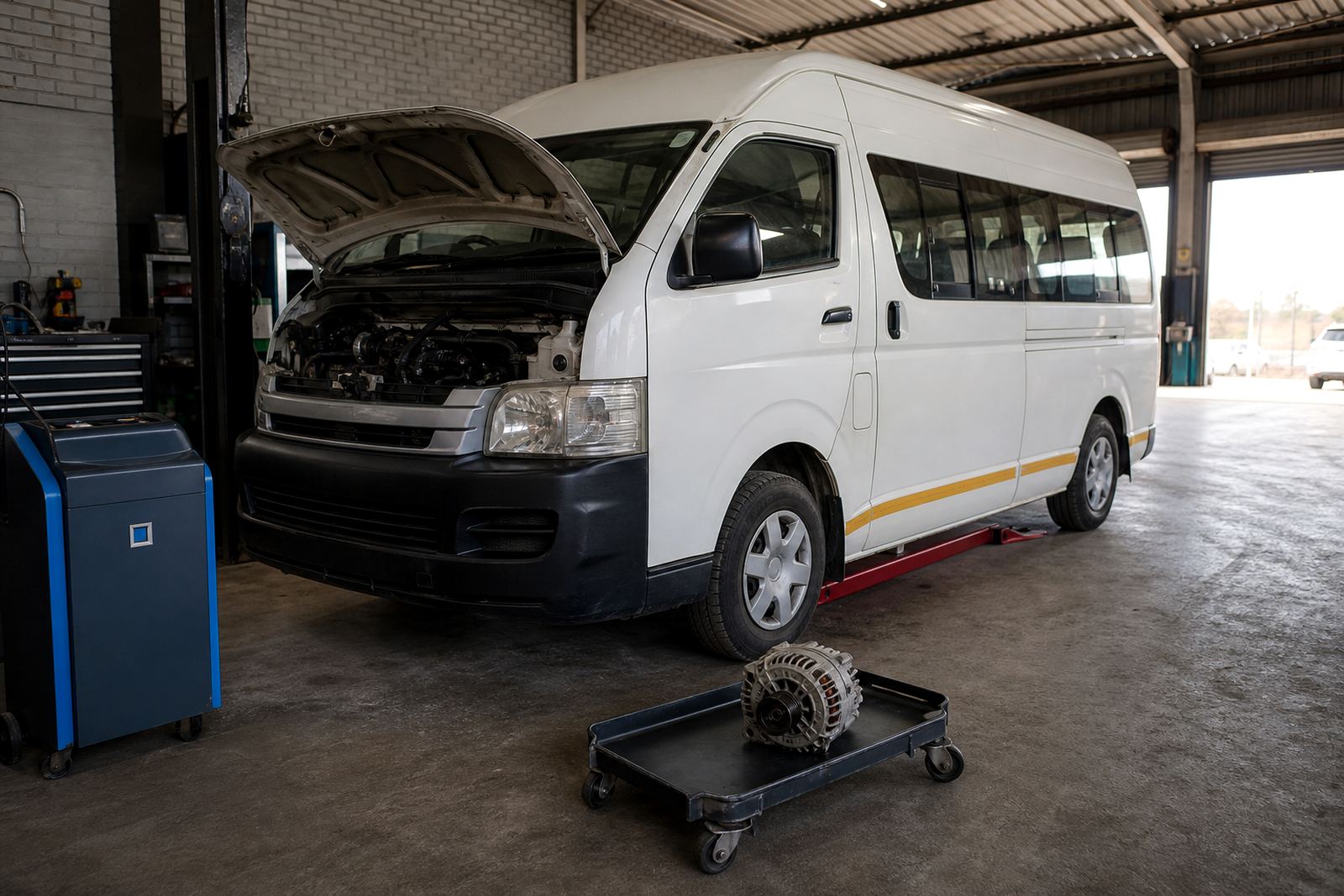
The vehicle was a high-use delivery van from Goodwood, running short trips through the city and out toward Bellville, Milnerton and the airport side of town. The driver described an intermittent battery light, slower cranking after stops and a flat battery after standing overnight, which pointed us toward a charging issue rather than a single dead battery.
That sort of fault can hide in plain sight. On a van that starts and stops many times a day, a small voltage drop, poor earth point or worn alternator connection can show up only under load, then disappear while the vehicle is idling in the yard.
What we found in the charging circuit
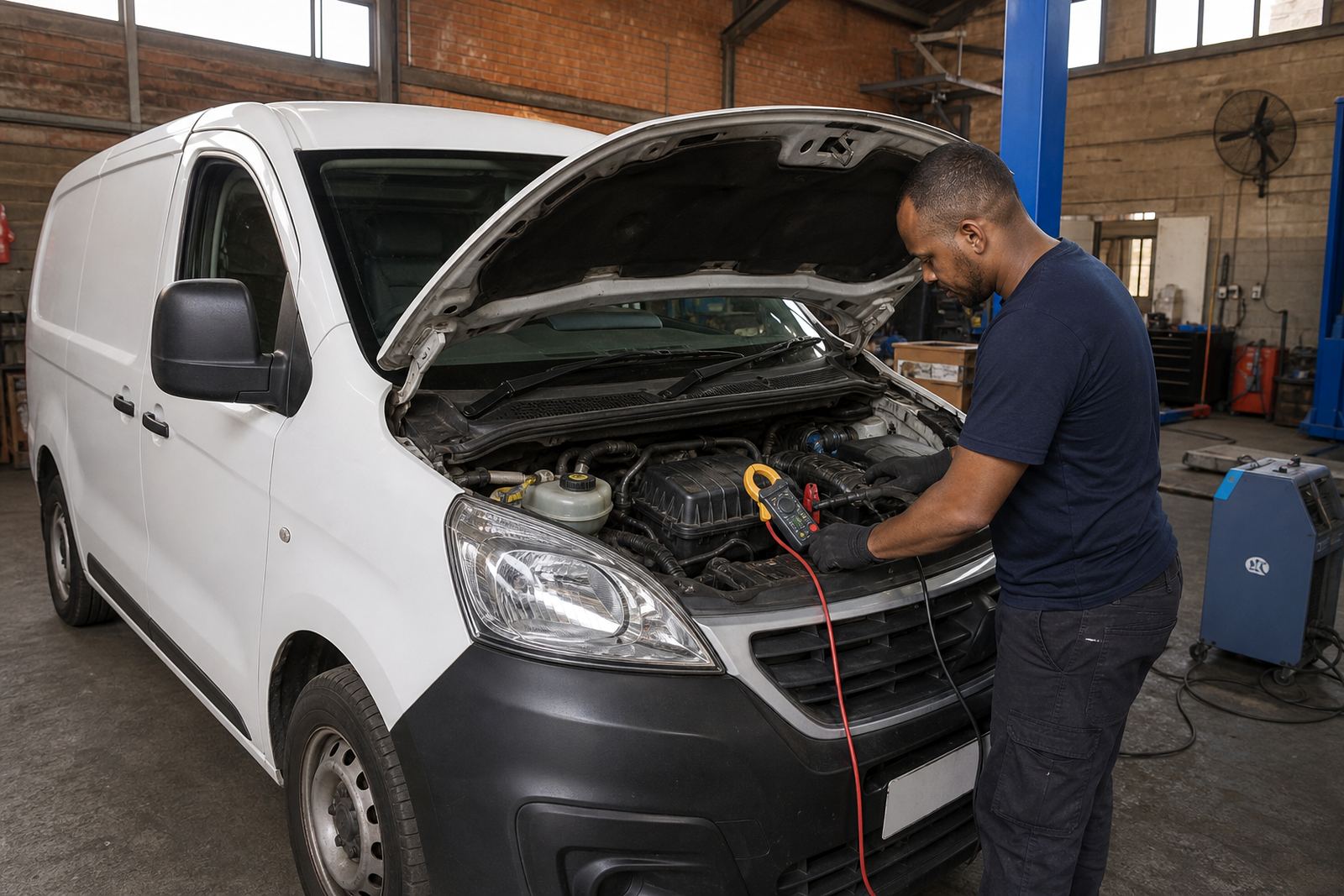
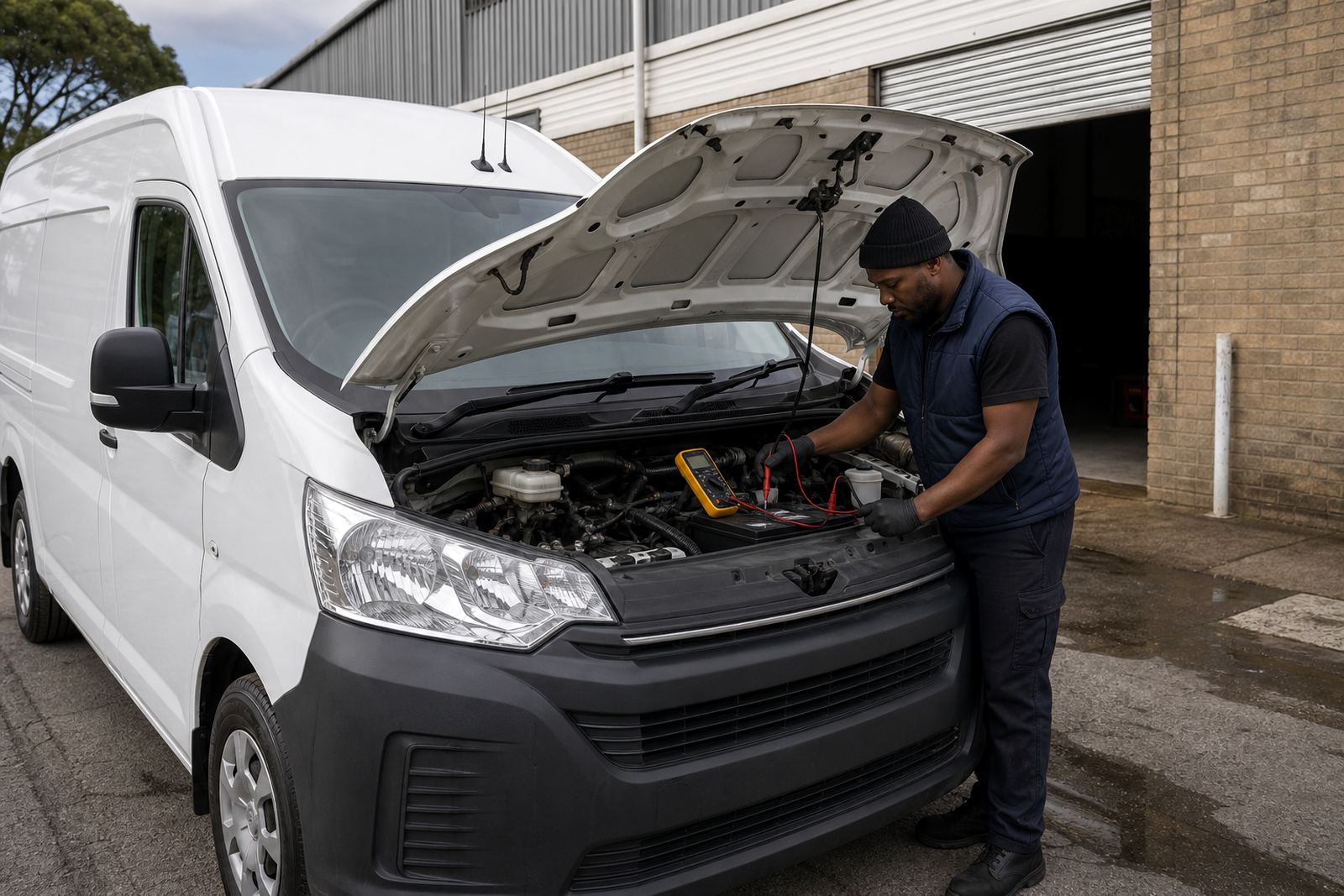
We began with battery and charging checks, then moved into live data and basic diagnostic readings from the vehicle system. The alternator output was not holding steady under demand, and the wiring feeding the charging circuit showed signs of heat stress and past repair work that had not held up well.
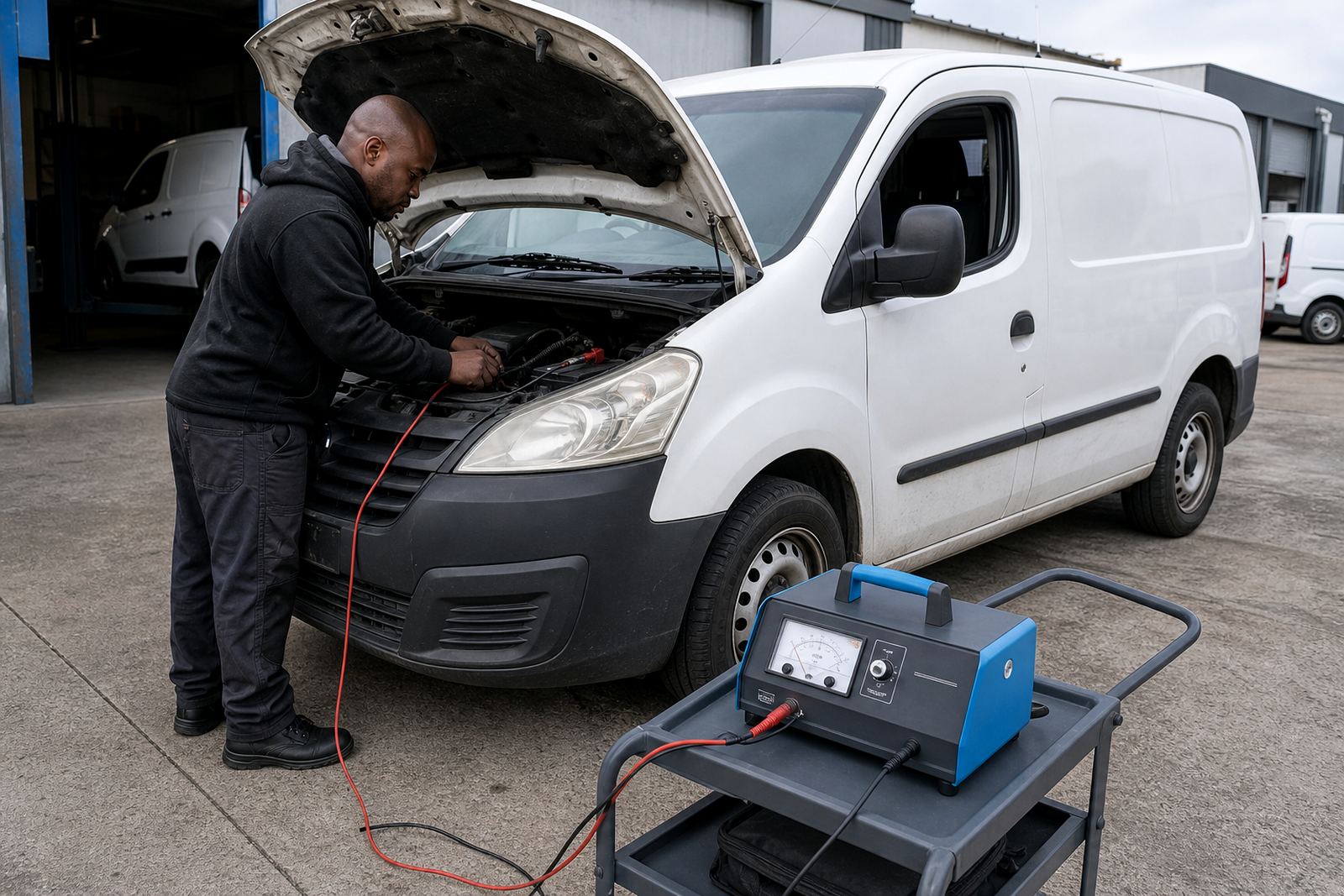
- Battery condition test and resting voltage check
- Alternator output test at idle and under electrical load
- Parasitic drain check with the vehicle shut down
- Inspection of main charging cables, terminals and earth points
- Fault-code scan to see whether the vehicle computer had stored charging related faults
We also checked the starter circuit because a weak charging system often gets blamed on the starter first. In this case the starter was not the main fault, but the cranking symptoms made sense once the cable losses were measured properly.
Cable repairs that matched the daily route
The main repair work focused on cable repairs around the alternator feed and nearby connections. A courier van spends a lot of time vibrating over speed humps and loading bays, so loose terminals and tired cable joints can open up the fault again if they are only cleaned and re-tightened.
We repaired the damaged wiring, corrected the earth path and checked related fuse box circuits for any heat marks or weak contacts. Where needed, we renewed terminals and secured the loom so the repaired section would not rub against bodywork or sit under strain from engine movement.
- Alternator cable repair and insulation renewal
- Earth fault correction at the main return point
- Fuse box inspection for related charging protection
- Starter circuit continuity checks
- Voltage-drop testing after the repair work
How the van behaved after testing
Once the repairs were complete, we repeated the charging system checks and monitored the readings with the headlights and blower running. The alternator held a steadier output, the battery recovered properly and the van no longer showed the same no-charge behaviour during test runs around the workshop area.
The driver also reported cleaner starts after the vehicle had stood for a while. That matters for a courier van because every missed start costs time, and a weak electrical system usually shows itself at the worst moment, not in the calm of a workshop bay.
We handed the van back after two weeks of fault tracing, parts confirmation and testing across more than one visit. The pace came from the intermittent nature of the problem rather than a straight-forward broken component, and that is common with vehicles that work hard in city traffic.
Mobile checks for fleets and private owners
This job also showed why mobile call-outs help when a van cannot easily sit in a workshop for long. For fleet operators in Cape Town, Bellville, Milnerton, Somerset West or Paarl, a field check can confirm whether the problem sits with the battery, alternator, starter or wiring before the vehicle is sent further into a repair cycle.
- On-site fault-code reading and live data checks
- Battery drain checks for overnight or weekend standing losses
- Trailer wiring checks where delivery vans tow small equipment
- Accessory fitting and accessory rewiring for tracking, charging points and add-ons
- CAN bus fault checks when the issue reaches the vehicle network
For this van, the mobile option would have been useful for a quick first pass, but the repair still needed workshop testing because the fault sat inside the charge path and not in a single loose plug. That mix of roadside checking and workshop work is often the cleanest way to handle an electrical complaint that keeps returning.
The same fault would get the same opening checks
If another courier van came in with a similar complaint, we would start with the charging system, earth points and live data before moving deeper into the loom. That way a bad cable, connector or hidden drain is not mistaken for a failed alternator.
We would also repeat the basic load tests with the vehicle set up as it actually works, not just idling in the bay. Courier vehicles spend their days under stop-start pressure, so the repair has to suit that kind of use, especially where moisture, vibration and repeated short trips affect the wiring over time.
For the Goodwood van, the useful result was not only a working alternator. It was a cleaner electrical circuit, a steadier battery charge and a fault path that made sense once the cables and charging readings were checked together.
Key facts
| Project type | Courier van no-charge electrical fault |
|---|---|
| Area | Goodwood, Cape Town |
| Vehicle system checked | Battery, alternator, starter and wiring |
| Main repair | Cable repairs and charging circuit correction |
| Diagnostic method | Fault-code scan, live data and voltage-drop testing |
| Timeline | Two weeks of fault tracing and repair testing |