
A shuttle that could not keep steady voltage
The vehicle was used for passenger runs around Cape Town, so the brief was practical from the start. The driver reported warning lights, slower cranking after short stops, and an uneasy drop in electrical performance when the vehicle had been switched off and back on a few times during the day. For a shuttle, that sort of fault becomes a route problem very quickly, because one weak charging cycle can affect the next trip.
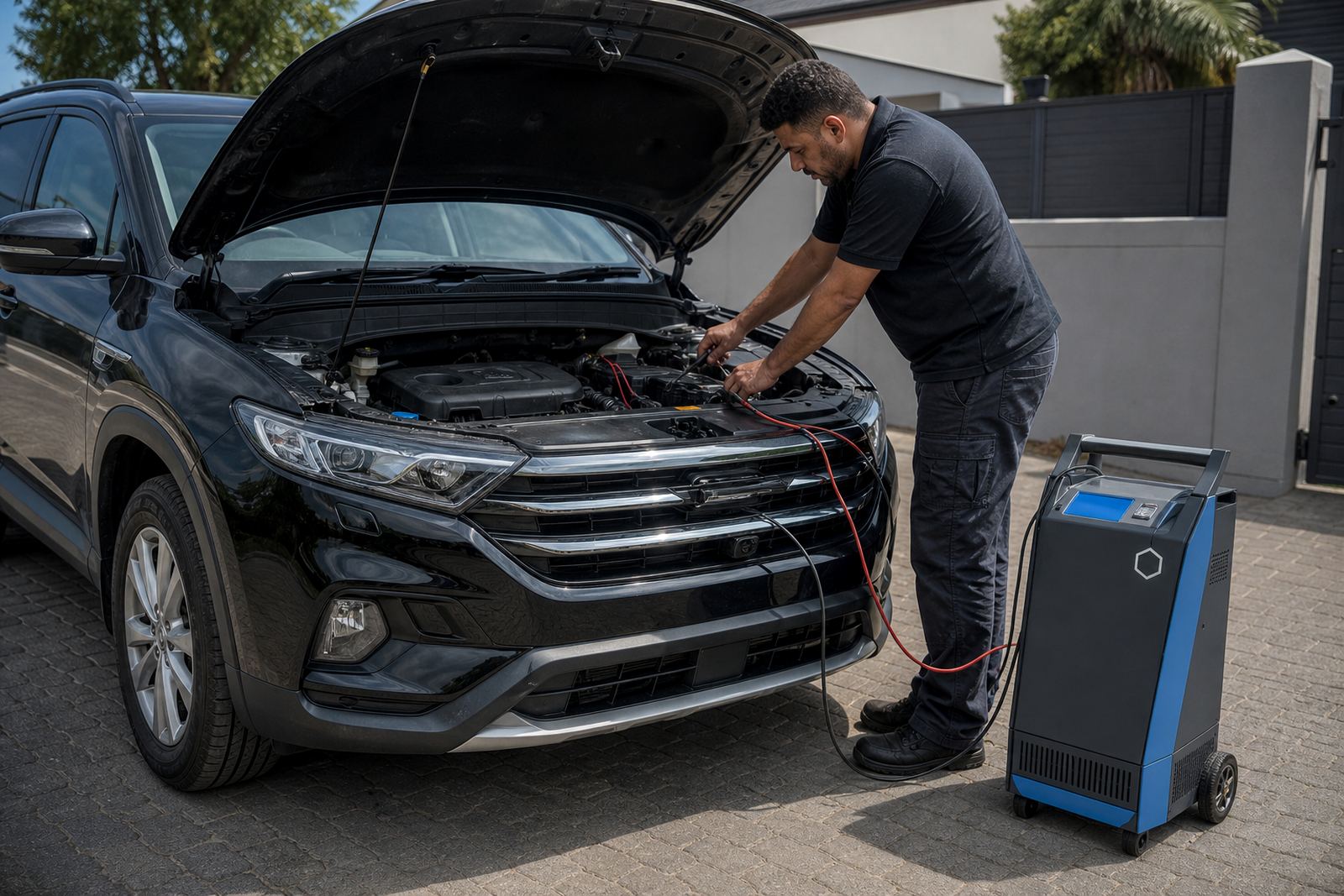
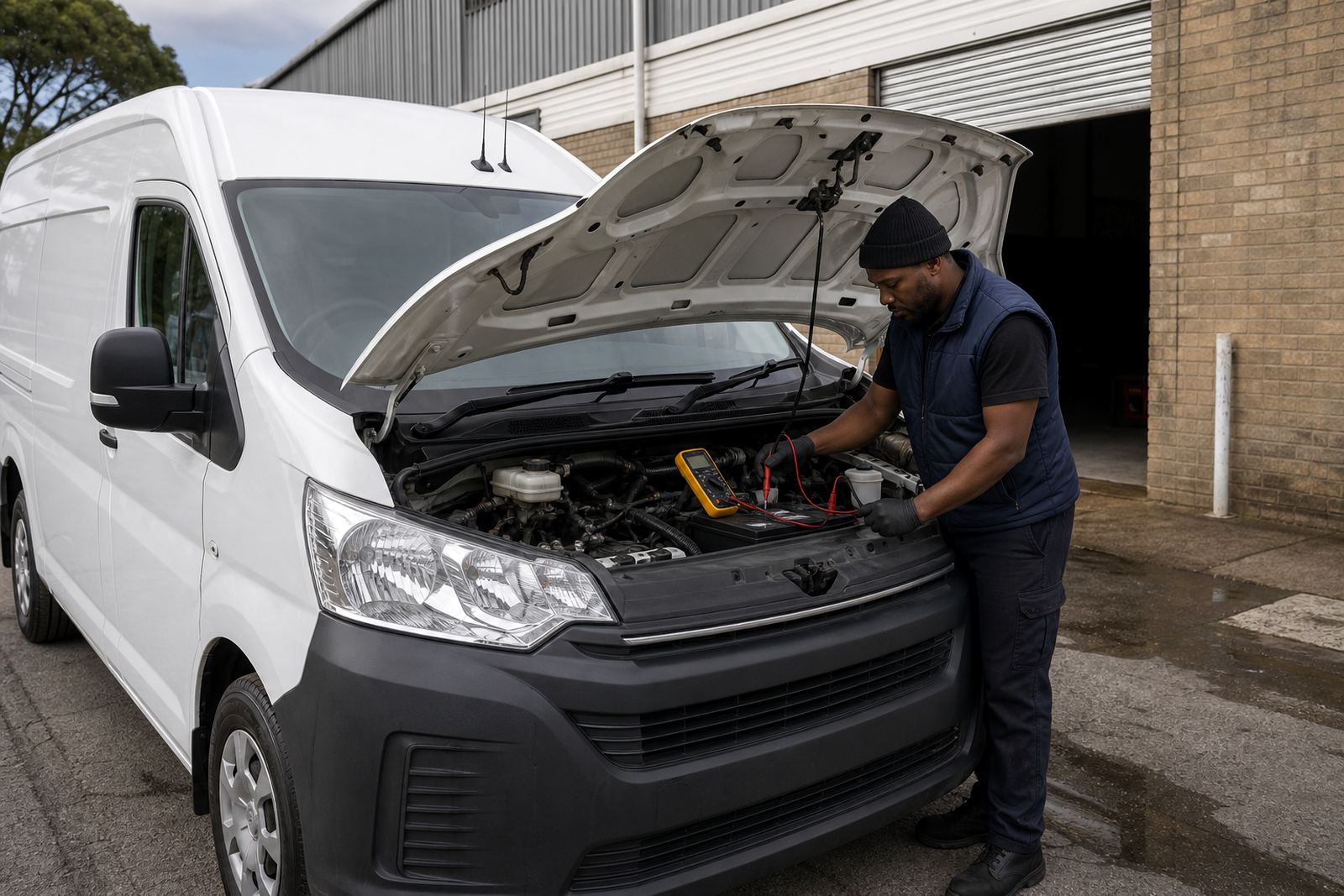
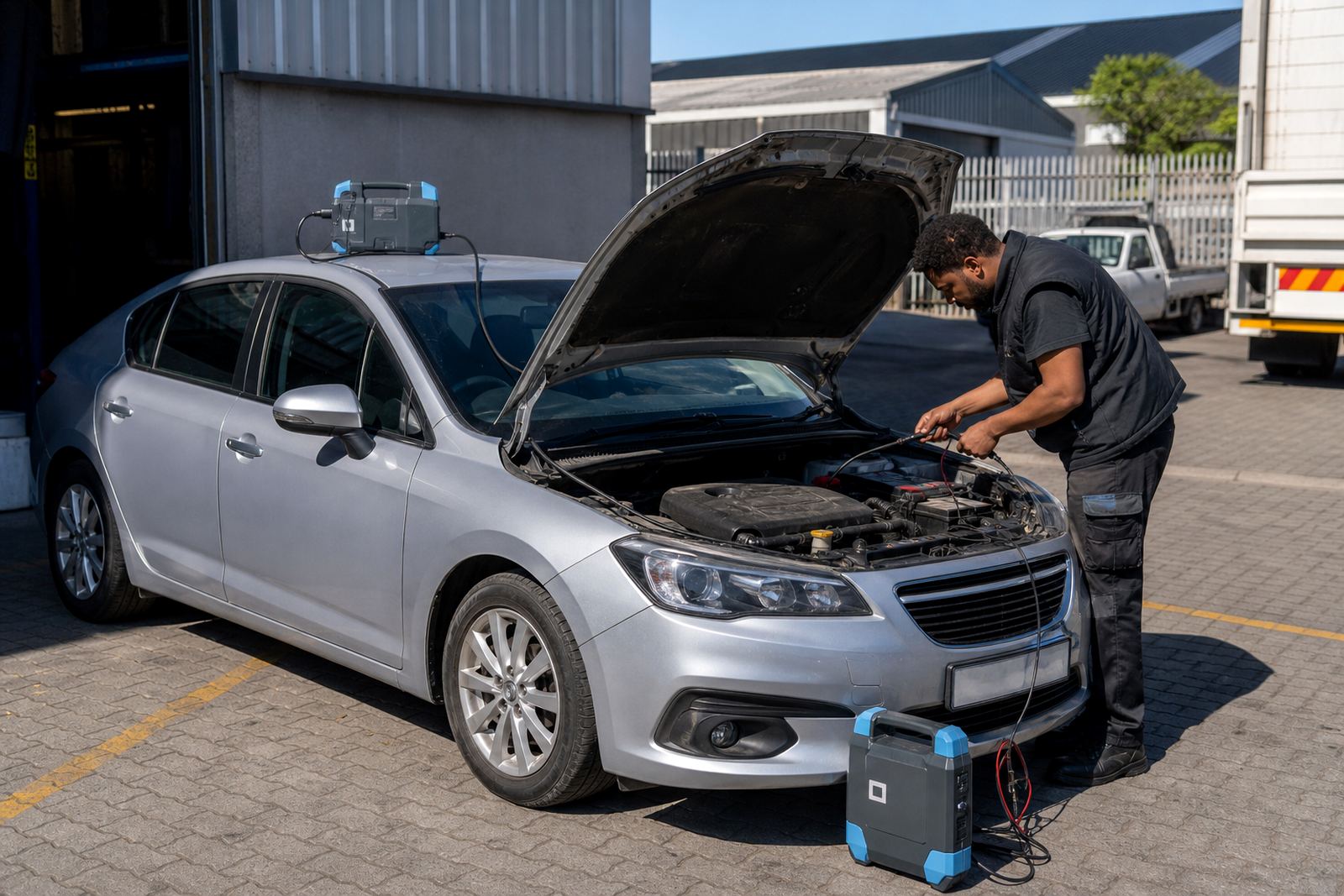
We booked the vehicle into our Montague Gardens workshop and started with a full electrical diagnosis. The first step was to read fault codes, then move into live data, battery condition, alternator output, charging voltage under load, and earth path checks. We also looked for signs of parasitic drain, because a charging complaint can hide more than one issue. It needed a full test sequence and a clear record of what was failing.
- Vehicle type: shuttle passenger vehicle
- Location: Cape Town, with the job completed at Montague Gardens
- Complaint: charging fault, warning light, weak restart behaviour
- Systems checked: battery, alternator, starter circuit, earths, charging output
What the fault tracing showed in the bay
Our diagnostic technician followed the charging trail step by step. The battery itself was not the main problem, although it had taken a knock from running low more than once. Live data pointed to unstable alternator output, and the charging readings moved around more than they should. That gave us a much clearer picture than a quick voltage check ever could. On these jobs, the small clues matter, especially when the vehicle is on the road often and the electrical system has already been stressed.
We then inspected the belt drive, wiring condition, terminals, and main charging cables. A weak alternator can show up as a simple low-charge complaint but still leave traces in the rest of the circuit, so we checked the starter side too. There was no need to replace parts blindly. The problem sat in the alternator unit itself, with the rest of the system needing service and cleaning rather than major replacement.
- Alternator output proved unstable under test
- Battery showed secondary strain, not primary failure
- Starter circuit was checked for drag and voltage drop
- Main terminals and charging connections were cleaned and tested
Repair work carried out for the shuttle run
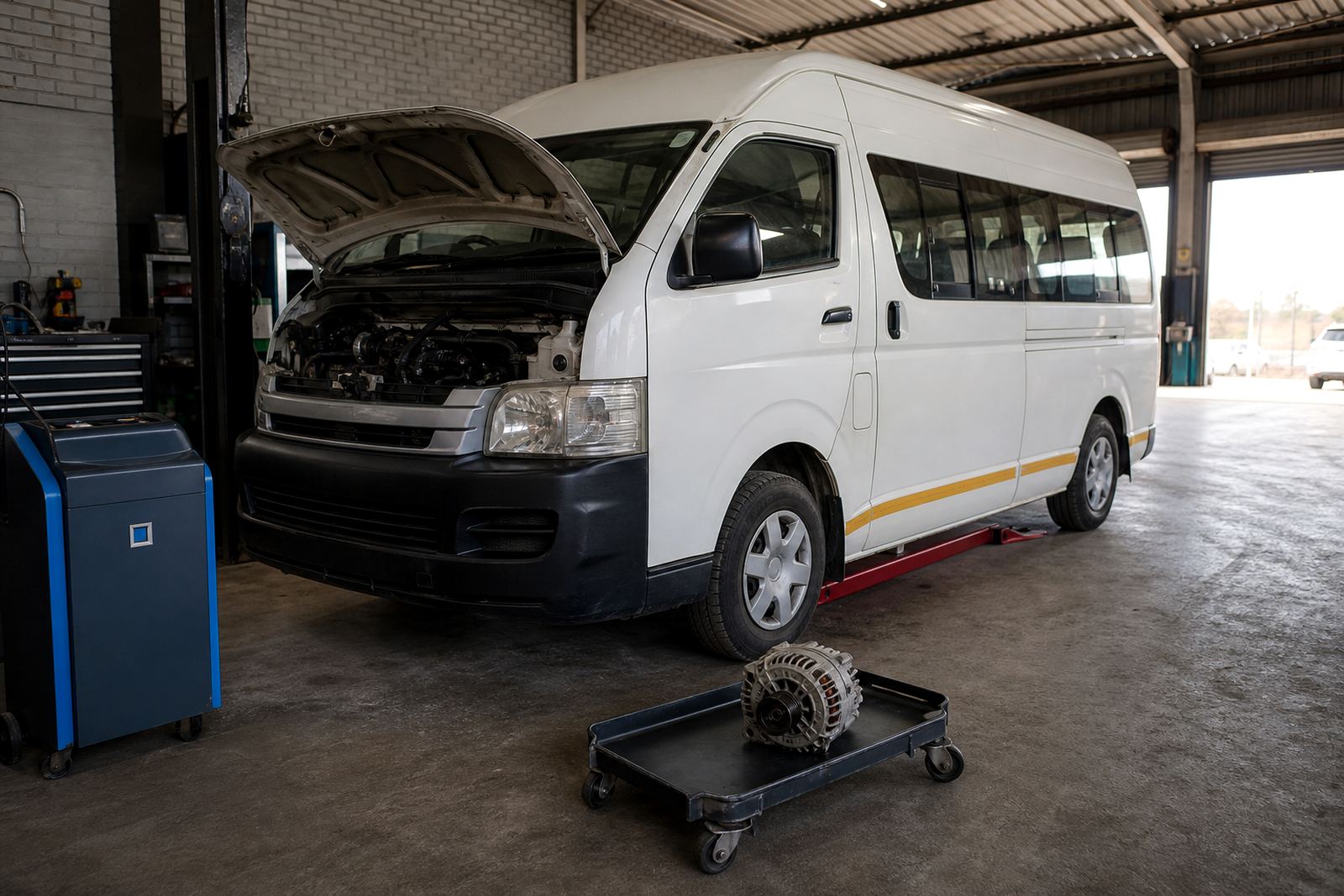
Once the fault was confirmed, we repaired the charging system and verified that the vehicle could hold steady voltage again. The alternator was removed, repaired, and retested on the bench and in the vehicle. We also carried out earth fault checks, because poor grounding can create odd symptoms and false leads in diagnostics. Wiring around the charging path was inspected for heat damage, looseness, and ageing insulation, then corrected where needed.
The repair did not stop at the alternator. We checked the fuse box links tied into the charging circuit, tested the starter circuit for healthy engagement, and confirmed the battery could accept charge properly after the repair. Because the vehicle is used in passenger service, we also made sure the wiring layout and terminal protection were tidy enough for repeated daily use, with less chance of vibration trouble later.
- Alternator repaired and verified in vehicle
- Charging circuit retested after repair
- Earth faults checked and corrected where needed
- Starter and fuse box links inspected for related stress
How the job was managed around fleet use
This was not a private weekend repair, it had to fit around shuttle operations and the owner’s schedule. The vehicle came through our workshop in Montague Gardens, and the diagnostics and repair were planned so the driver could keep the vehicle in service planning rather than lose time to uncertainty. Our workshop coordinator handled the booking notes, while the diagnostic technician and auto electrician split the fault tracing and repair stages.
For fleet operators across the Western Cape, that sort of structure matters. A shuttle, delivery van or service car usually needs one clear answer, not a string of maybes. When the fault is electrical, every extra hour spent guessing adds more wear to the battery and more interruption to the route. This case stayed focused on diagnosis, then the repair, then a proper retest before the vehicle was released.
- Workshop location: Montague Gardens, Cape Town
- Support area: Cape Town and surrounding call-out routes
- Used for: shuttle operation with daily electrical demand
- Handled by: diagnostics, auto electrical repair, workshop coordination
After the repair and retest on the circuit
After the alternator repair, we repeated the charging tests under normal running conditions. Voltage stayed steady, the warning light no longer behaved erratically, and the battery was taking charge properly again. The vehicle no longer showed the same sluggish restart pattern after short stops. That gave the owner a much cleaner operating picture for the shuttle route and removed the uncertainty that had been hanging over the electrical system.
The wider result was a vehicle that could be used with more confidence in regular passenger work. We did not just clear a code and send it out. We traced the fault, repaired the failed component, checked the surrounding wiring and grounding, then made sure the charging system worked as a unit. On a shuttle, that matters because a weak alternator can quickly turn into missed trips, repeated jump starts, and avoidable battery wear.
The same method we would use on a similar shuttle fault
For a job like that, we would use the same diagnostic and repair steps. Start with fault codes and live data, confirm battery condition, test the alternator under load, inspect the starter and earth paths, then repair the actual fault rather than the symptom. That approach suits vehicles with steady daily use, especially when the charging complaint appears only after a few short runs or when the vehicle is loaded with passengers and accessories.
If a shuttle, fleet vehicle or private car shows battery drain, charging trouble, or odd electrical behaviour, the best next step is a proper diagnostic pass. Our contact form is the simplest way to send the details from Cape Town, Bellville, Milnerton, Somerset West, Paarl or nearby areas. We can also assist with mobile call-outs where the vehicle and the work pattern make that the right option.
- Best fit for: charging faults, alternator issues, battery drain, wiring faults
- Useful across: fleet vehicles, shuttle vehicles, private owners
- Coverage: Montague Gardens and wider Western Cape call-out areas
- Services linked to this job: charging system repairs, starter repairs, earth faults, accessory wiring
Key facts
| Project | Cape Town Shuttle |
|---|---|
| Vehicle problem | Charging complaint and weak alternator |
| Work completed | Alternator repair, charging tests, wiring and earth checks |
| Workshop base | Montague Gardens, Cape Town |
| Service type | Vehicle diagnostics and auto electrical repair |
| Coverage | Cape Town, Bellville, Milnerton, Somerset West, Paarl |