The bakkie arrived with two problems, not one
The owner needed the rear lamp circuit traced and the trailer socket set right, because one fault was hiding the next. On a bakkie that tows trailers between farm gates, packhouses and gravel access roads, a poor earth or damaged pin can make the whole rear end seem unreliable.
We treated it as a mixed auto electrical fault rather than a single lamp issue. That meant checking the towbar wiring, the rear light feeds, the earth points and the condition of the plug body before any parts were fitted. The bakkie was in the workshop in Montague Gardens, with the work planned as a short repair job over one week and a follow-up test in the next week once the circuits had settled after use.
- Vehicle type: farm-use bakkie
- Area served: Stellenbosch and the Cape Winelands
- Faults noted: trailer plug wear, rear lighting interruption, earth trouble
- Work style: workshop repair with final circuit verification
Tracing the rear circuit from the socket inward
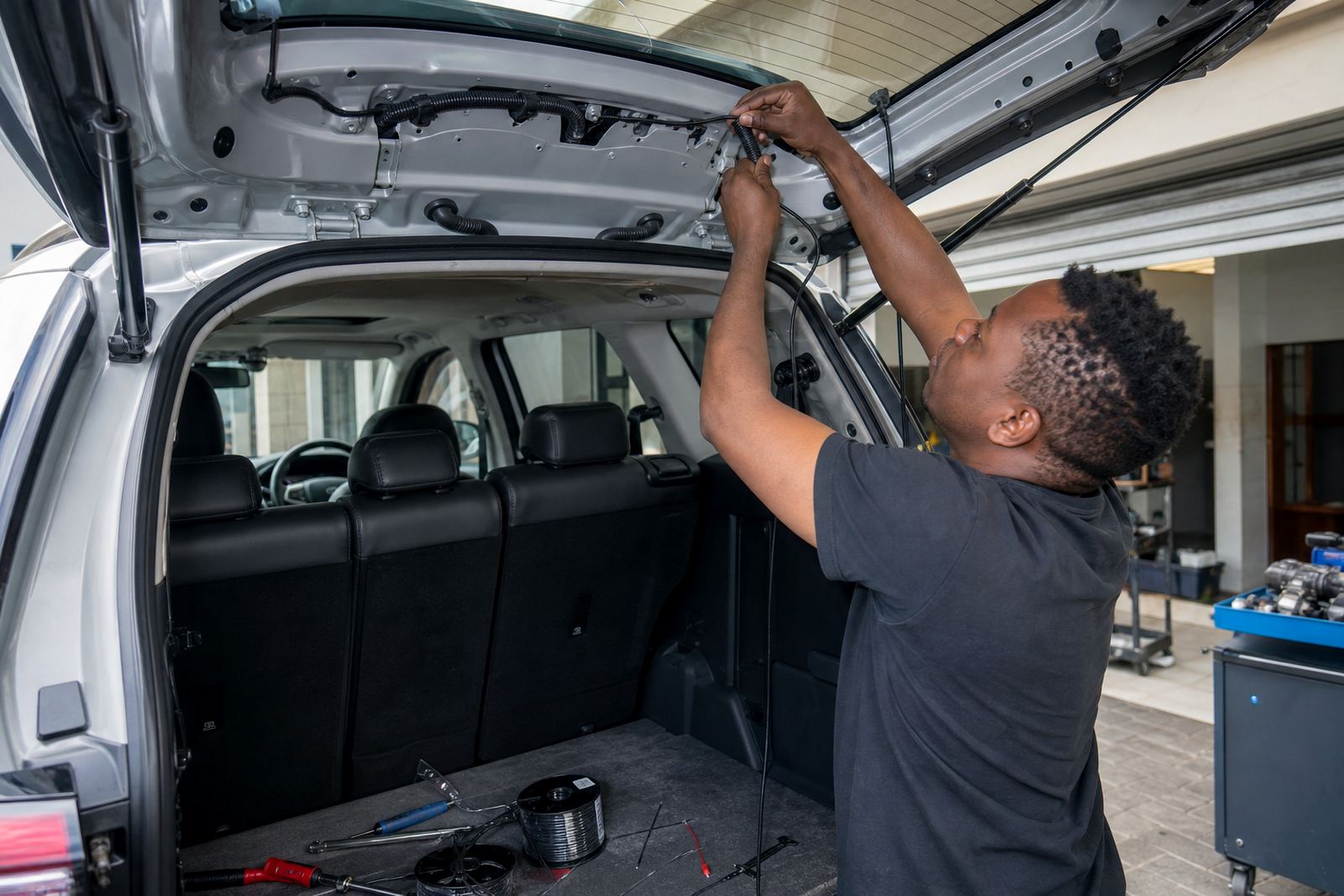
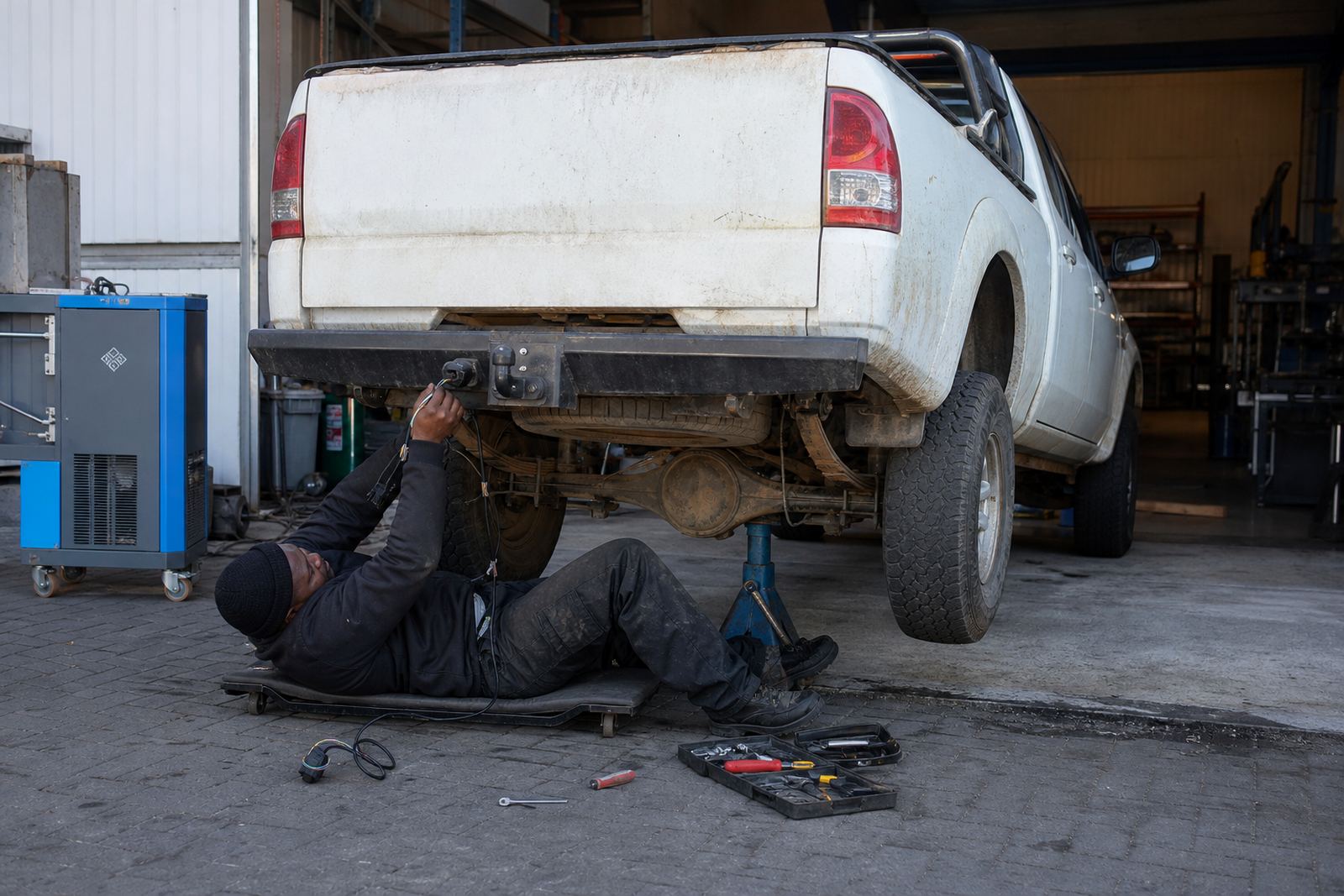
We started at the trailer socket, then worked back through the rear loom to find where the fault sat. On older working vehicles, the issue is often not the lamp itself but corrosion, chafed insulation, a weak earth or a pin that no longer grips properly. A rear circuit can look fine at rest, then fail once vibration and road dust get into the picture.
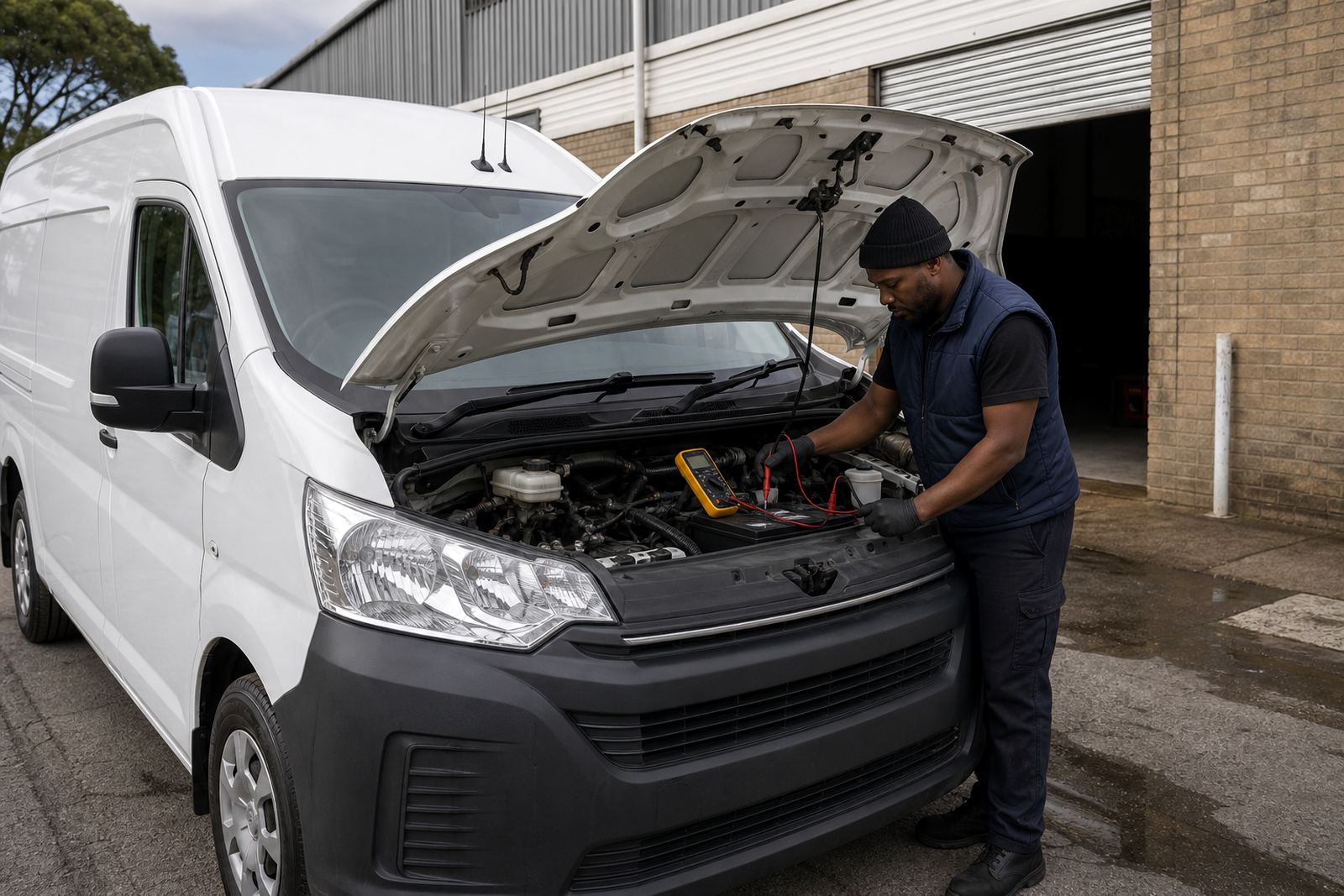
The team checked continuity through the trailer wiring, tested the lighting circuits under load and looked for signs of heat damage near joins and connectors. Where the wiring had been disturbed in the past, we opened it up and repaired it properly instead of wrapping over a weak section. That kept the rear of the vehicle neat and easier to diagnose later if the farmer needs to tow in wet weather or after wash-downs.
- Trailer socket checked pin by pin
- Rear light circuit tested under load
- Earth path confirmed at the body point
- Worn joins repaired, not covered over
What we supplied and installed during the job
The repair needed more than a quick clean-up. We fitted fresh wiring where the old section was past saving, restored the rear lighting feed and rebuilt the trailer connection so the plug could hold contact properly. The work included the sort of practical detail that matters on farm vehicles, where dust, mud and repeated towing quickly expose weak repairs.
Because the bakkie also had signs of a heavier-than-normal electrical draw at the rear, we checked the circuit for parasitic drain and made sure no lamp or connection was feeding current when it should not have been. That is important on vehicles that sit overnight and then need to start first thing, especially when battery condition already has a few seasons on it.
- Trailer plug repair and re-termination
- Rear lighting circuit restoration
- Earth fault correction at the rear body point
- Wiring protection and tidy re-routing where needed
- Drain check on the rear circuit after repair
How the tests were carried out in the workshop
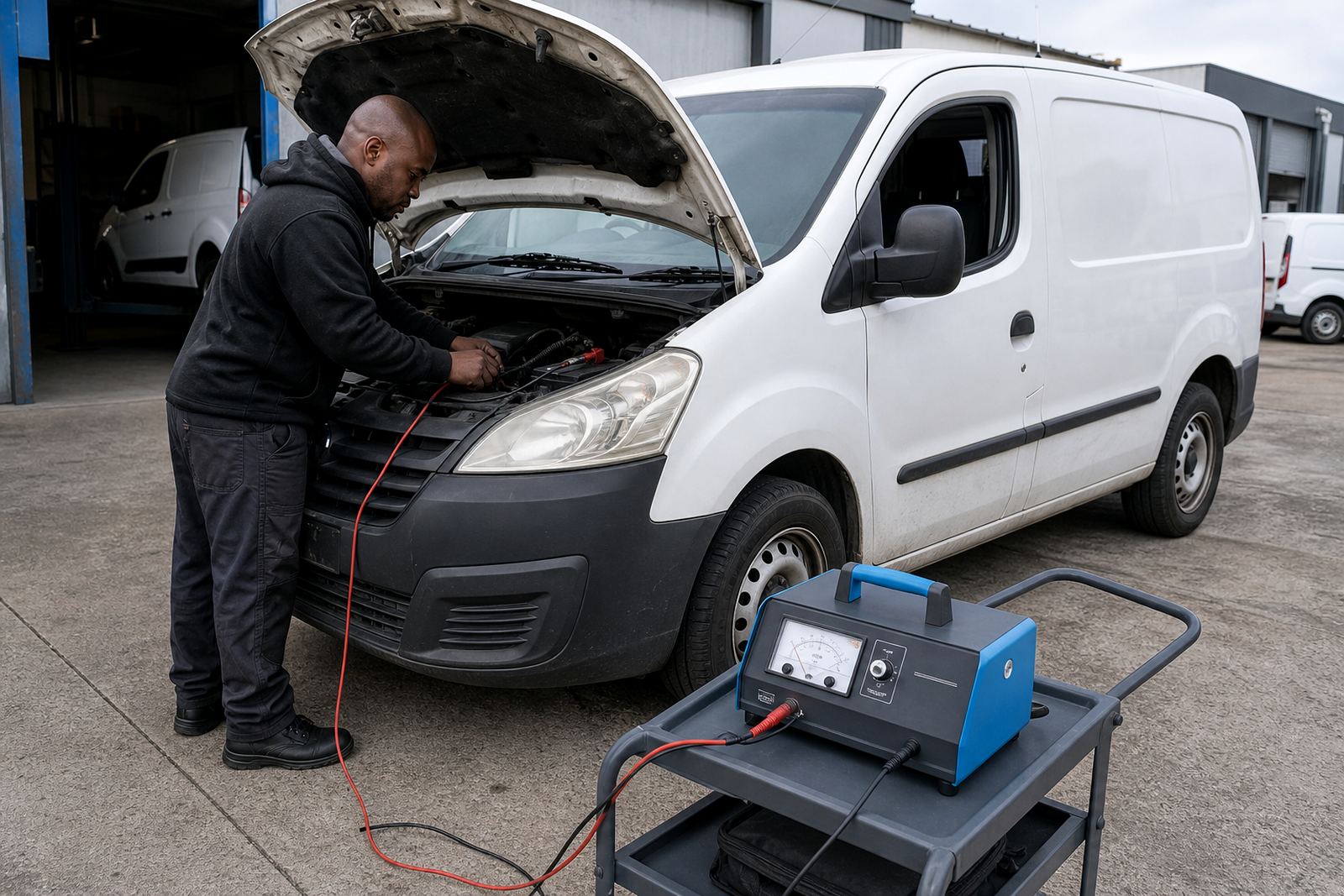
Before closing the job, we ran battery and charging tests to make sure the repaired rear circuits were not sitting on top of a broader electrical issue. A weak alternator, poor charging voltage or tired battery can make a small lighting fault feel worse than it is. Once the basic supply is stable, the rest of the system becomes much easier to trust.
We also checked the wiring path for any signs of strain around bends and rub points, then confirmed the rear lamps, indicators and trailer output behaved properly when the vehicle was powered and shaken through normal use. That kind of testing is the difference between a patch and a repair that can work on a farm road, not only in the workshop bay.
- Battery condition checked before final sign-off
- Charging output verified under operating conditions
- Rear lamps and trailer output retested
- Harness movement checked for intermittent fault risk
Why the brief needed a practical repair, not a tidy-up
The owner was not asking for a cosmetic refresh. The bakkie had to tow, carry tools and stay useful across long days, so the main goal was to stop the rear-end fault from returning after a wash, a wet launch or a rough patch of road. On this sort of vehicle, the trailer plug is not a small extra. It is part of the working system.
We kept the repair honest to the use case. That meant using proper joins, checking the rear earth path again after the new wiring was in place and leaving the loom easy to inspect later. If the bakkie ever shows up with a different rear electrical symptom, the diagnostic trail is now much clearer because the weak points were found and corrected rather than hidden.
- Built for towing and daily farm use
- Rear circuit left easier to trace later
- Repair aimed at durability in dust and moisture
- Suitable for repeated hitching and unhitching
What we would note on a similar farm bakkie job
We would handle a similar job the same way by starting with the socket, then moving inward until the fault is pinned down properly. That sequence saves time when the real issue sits in the plug, the earth or the rear harness. It also keeps the repair cost sensible for private owners who use one bakkie to do many jobs.
For work like this, the best result comes from clear fault isolation, clean wiring joints and a final test that includes the trailer connection as well as the vehicle lights. If a farm operator has the same symptoms, our contact form is the best place to send the vehicle details and fault description, especially when the problem only shows up under load or while towing.
- Start at the trailer socket
- Test the earth before changing parts
- Repair damaged cable sections properly
- Finish with a full lighting and towing check
Key facts
| Project | Stellenbosch farm bakkie trailer and rear lighting repair |
|---|---|
| Client type | Private farm owner |
| Town | Stellenbosch |
| Workshop base | Montague Gardens, Cape Town |
| Work completed | Trailer plug repair, rear lighting circuit restoration, earth fault correction |
| Timeline | Completed over 1 week, with follow-up checks in the next week |