What the battery health test covers in the workshop
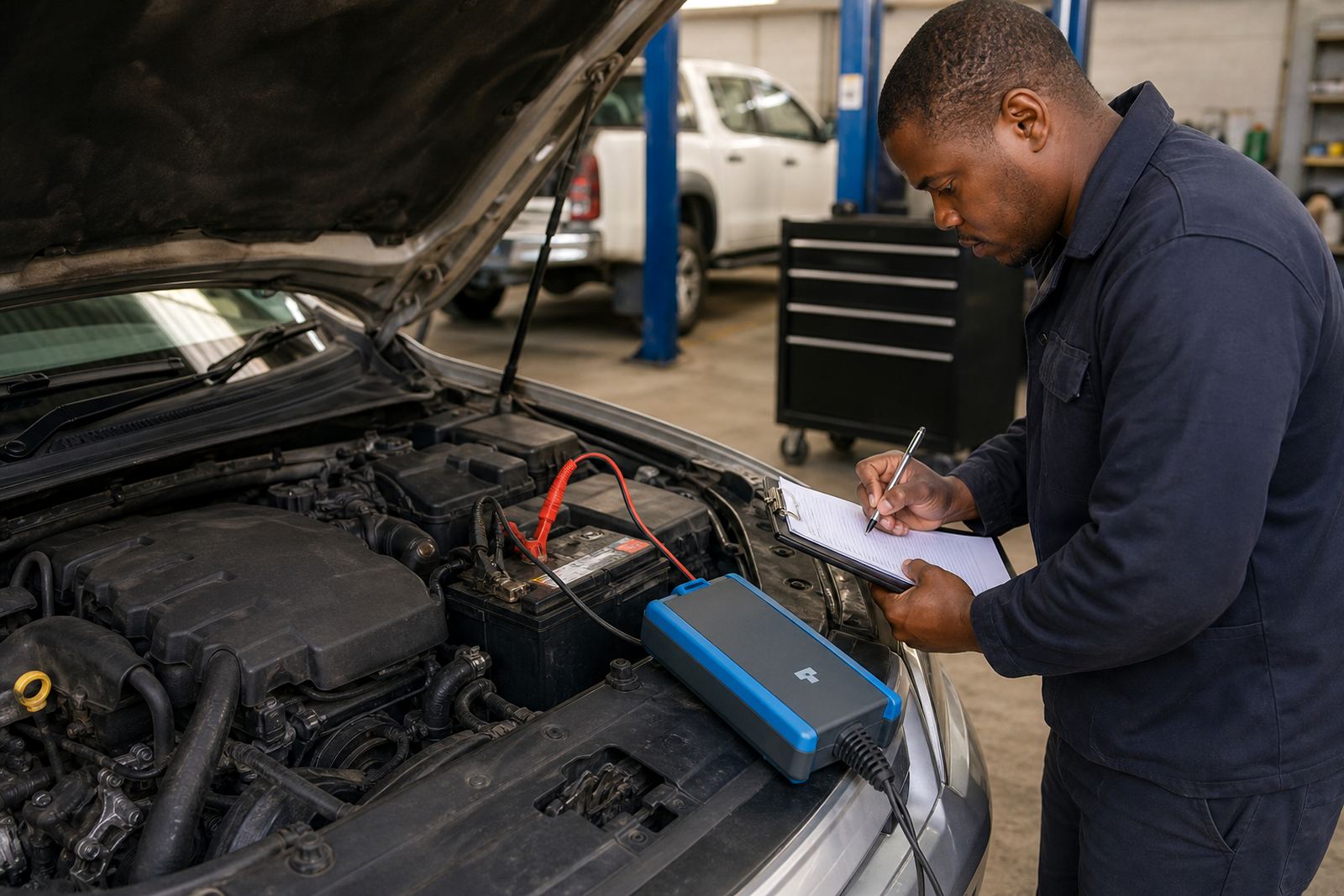
The test checks the battery within the full starting system. We check open-circuit voltage, cranking voltage drop, alternator output and visible condition at the terminals before any deeper fault tracing begins.
That matters on vehicles that start hard in the morning, sit for long periods, or run extra electrical loads such as trackers, refrigeration control units, auxiliary lights or multiple accessories. A battery can still read near full voltage and fail under load, so the working check has to go further than a quick metre reading.
- 12V passenger vehicles, bakkies and SUVs
- 24V trucks, buses and fleet units where fitted
- Lead-acid, maintenance-free, AGM and EFB style batteries
- Vehicles with alternator, starter or wiring concerns linked to low battery health
Readings that matter when the engine is under load
We test the way the electrical system behaves when the starter is drawing current and the engine is coming alive. That shows whether the battery is weak, the starter is pulling too much current, or the charging system is not lifting voltage properly after start-up.
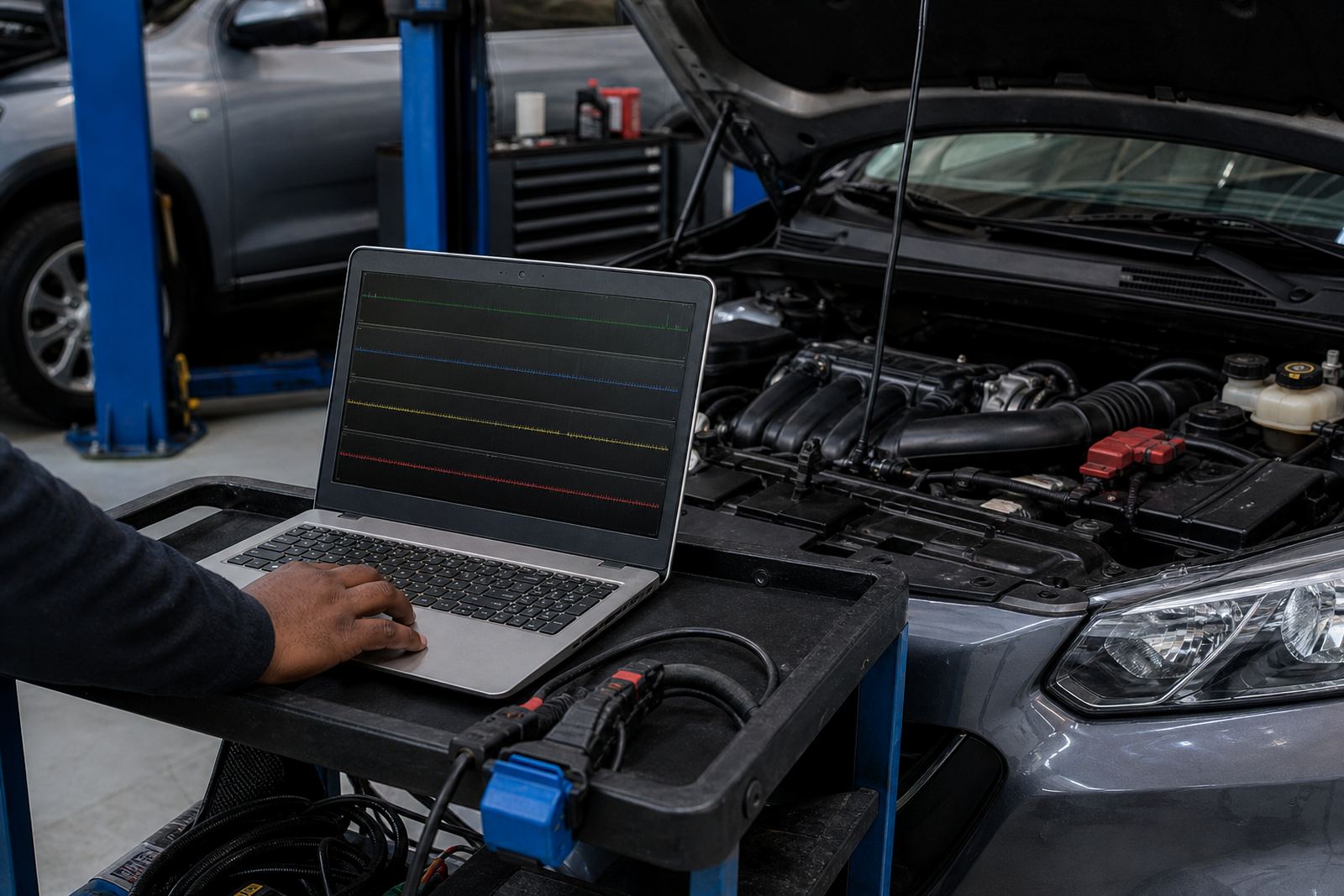
Live data and measured values are useful on newer vehicles too, especially where the management system watches battery state, alternator control and voltage stability. A battery fault can sit alongside a CAN bus issue, an earth fault or a parasitic drain, so the result is used as part of the wider diagnosis.
- Open-circuit voltage check after the vehicle has rested
- Cranking voltage and voltage recovery during start-up
- Charging voltage and alternator output assessment
- Basic reserve strength indication for repeated start use
Where this test suits real vehicle use
This is useful for private owners who find the vehicle goes flat after standing, and for fleet operators dealing with repeat no-start calls across Cape Town, Bellville, Milnerton, Somerset West and Paarl. It also helps where accessories have been added and the battery now has to carry more than the original factory load.
Our Montague Gardens workshop handles booked inspections and repair work, while mobile call-outs support vehicles that cannot easily be moved. In fleet work, the test is often the starting point before wiring repairs, starter repairs, alternator repairs or fuse box fault checks are booked in.
- Daily-use cars with short trips and stop-start habits
- Fleet vehicles standing overnight between shifts
- Vehicles with trackers, sound equipment or extra lighting
- Vehicles showing slow crank, warning lights or flat battery complaints
Fitting details that affect the result
If a battery replacement is being considered, the fit has to match the vehicle and the electrical system. Capacity, terminal layout, case size, hold-down style and cold cranking ability all matter, because a battery that physically fits may still be wrong for the load on that vehicle.
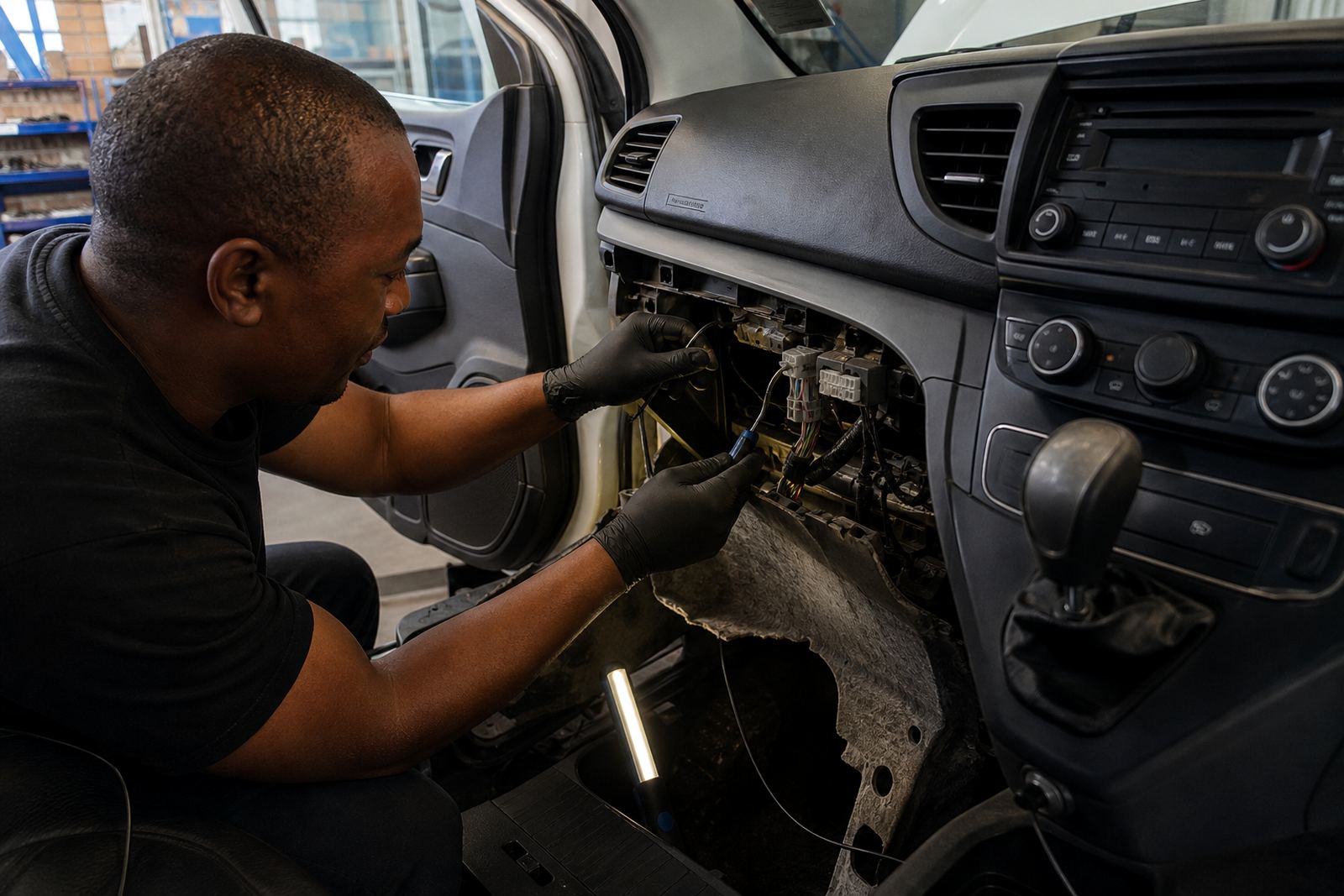
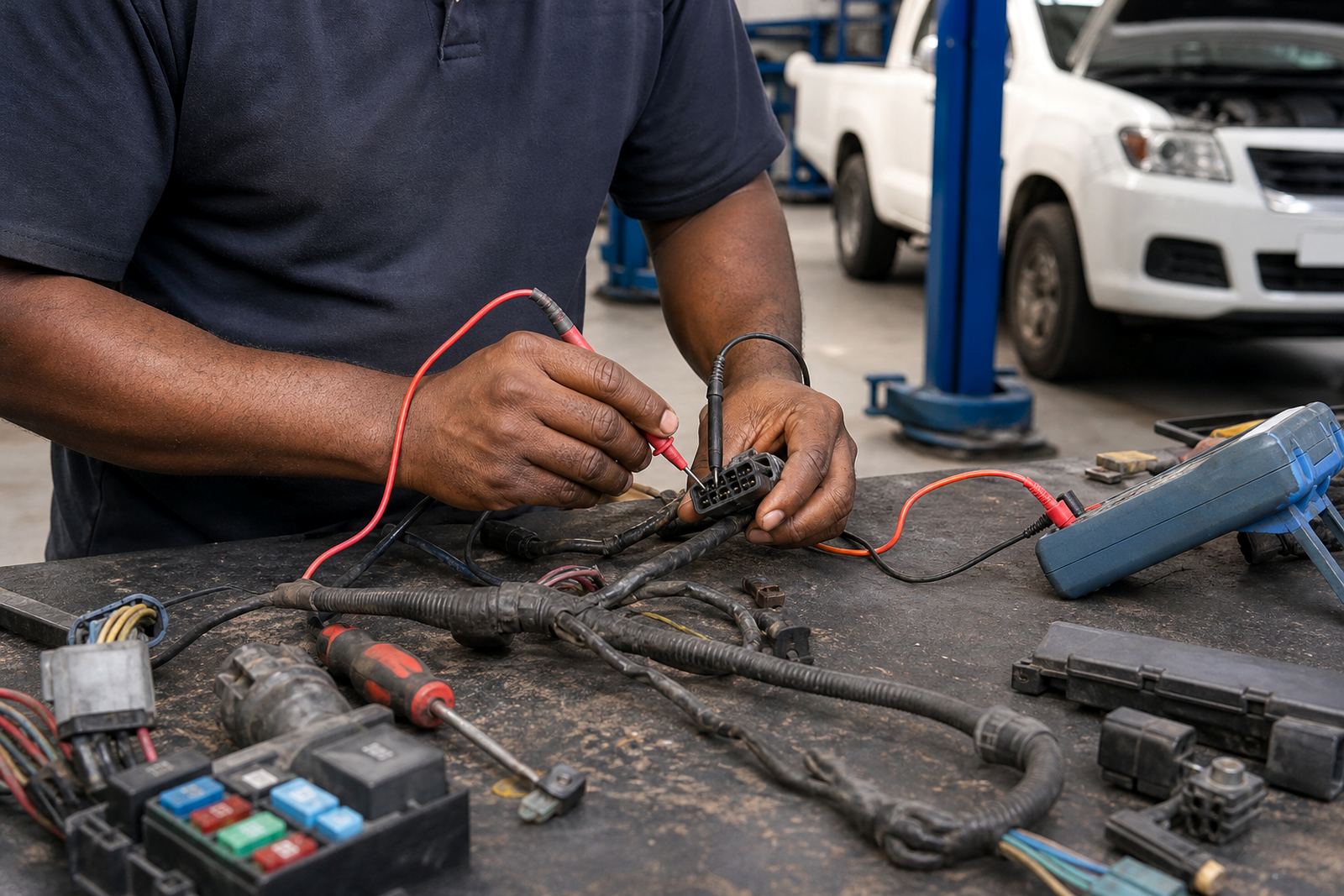
We also look at the condition of the battery cables, terminal clamps and earth points. Poor contact can make a good battery seem weak, and a tired alternator can make a new battery fail early if the charging fault is left in place.
- Vehicle make, model and year
- 12V or 24V system requirement
- Battery dimensions and terminal position
- Previous faults such as drain, overcharging or poor cranking
Aftercare for batteries and charging systems
Battery health improves when the charging system is kept tidy and the connections stay clean. Corrosion at the terminals, loose clamps, damaged earth straps and heat damage near the fuse box can all shorten service life and create hard-start complaints.
If the battery test points to a deeper issue, the next step may be starter circuit testing, alternator output checks, parasitic drain tracing or wiring repair. That keeps the diagnosis tied to the real fault instead of replacing parts one at a time and hoping for the best.
- Keep terminals tight and free of white or green corrosion
- Check for water ingress around battery trays and cable runs
- Inspect earth straps after accident damage or engine work
- Ask for a charging test after accessory fitting
What to send with an order for testing
When booking the test, send the vehicle details and a short note on the symptom. A battery complaint that happens after standing overnight points in a different direction to one that only shows up after cranking, so the background helps us test the right area first.
For fleets, it helps to add the vehicle count, the site location and whether the issue is a no-start, repeated flat battery, or a warning light that stays on. If accessories have been fitted recently, that detail is useful too, because tracker or accessory wiring can change the electrical load on the vehicle.
- Make, model, year and engine type
- 12V or 24V system if known
- Current fault symptom and when it appears
- Any recent repairs, accessory fitting or jump-start history
Key facts
| Test type | Battery voltage, cranking performance, charging output and reserve strength assessment |
|---|---|
| System coverage | 12V passenger vehicles and 24V fleet applications where fitted |
| Workshop base | Montague Gardens, Cape Town |
| Call-out areas | Cape Town, Bellville, Milnerton, Somerset West, Paarl and nearby Western Cape routes |
| Common related faults | Parasitic drain, starter circuit faults, alternator issues, earth faults and wiring damage |
| Typical follow-up work | Battery replacement advice, cable repair, alternator testing, starter repair and accessory load checks |