
When a continuity test is the right call
Not every electrical fault is a failed part. A starter can test fine on the bench and still refuse to crank because the trigger wire has high resistance, a fuse box terminal has heat damage, or an earth point is loose and corroded. A continuity test helps us move from guesswork to the exact section of the circuit that is failing under real vehicle conditions.
We carry out the test when a vehicle has repeated blown fuses, slow cranking, a dead light circuit, unusual battery readings, or faults that come and go with vibration. It is also useful on accessory circuits and trailer wiring, where a small break or poor earth can hide behind trim, tape or body panels.
- Open circuit checks on suspect wires
- Resistance checks on long runs and joins
- Earth path testing for body and chassis returns
- Voltage drop checks where the circuit only fails under load
What our technicians measure during the test
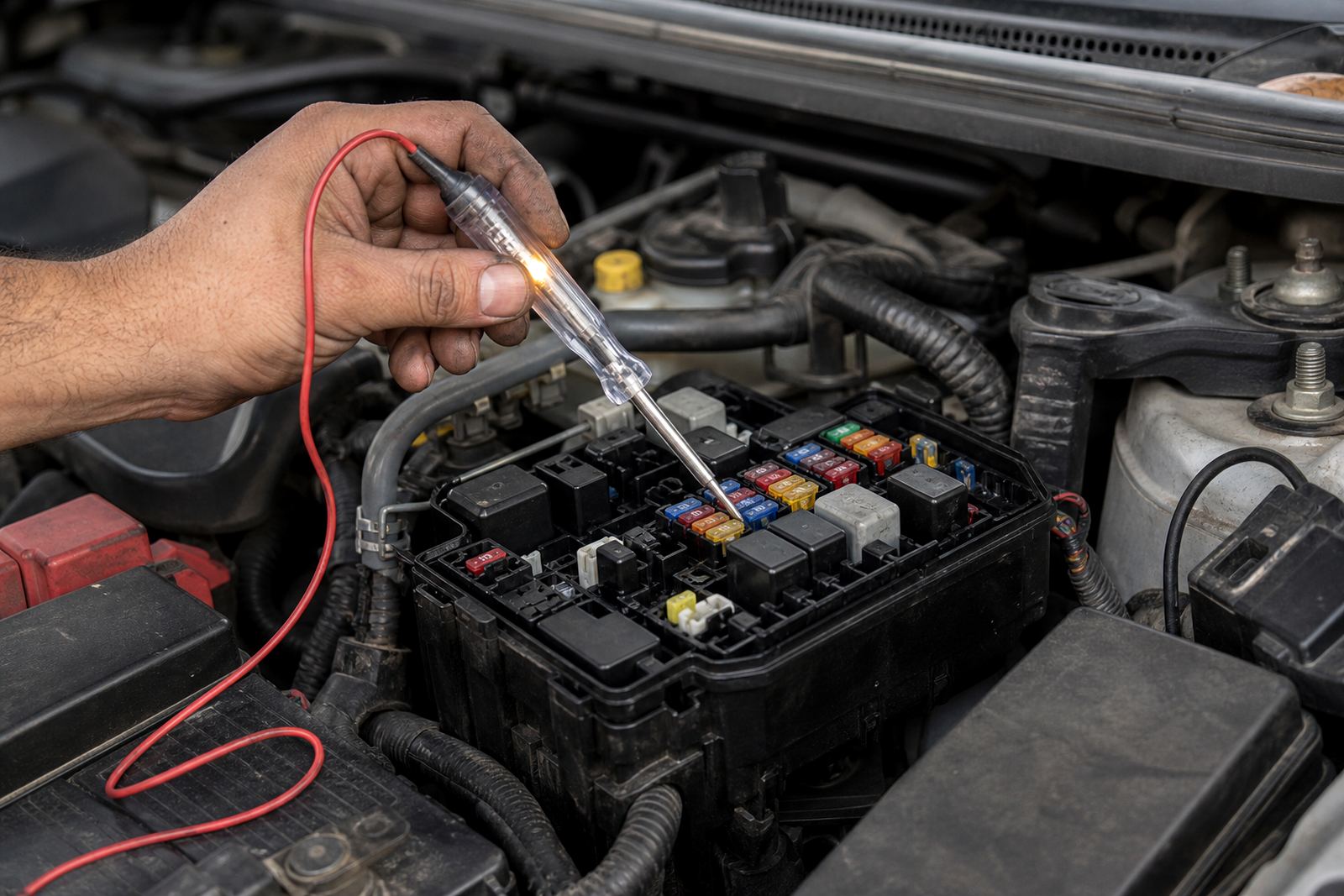
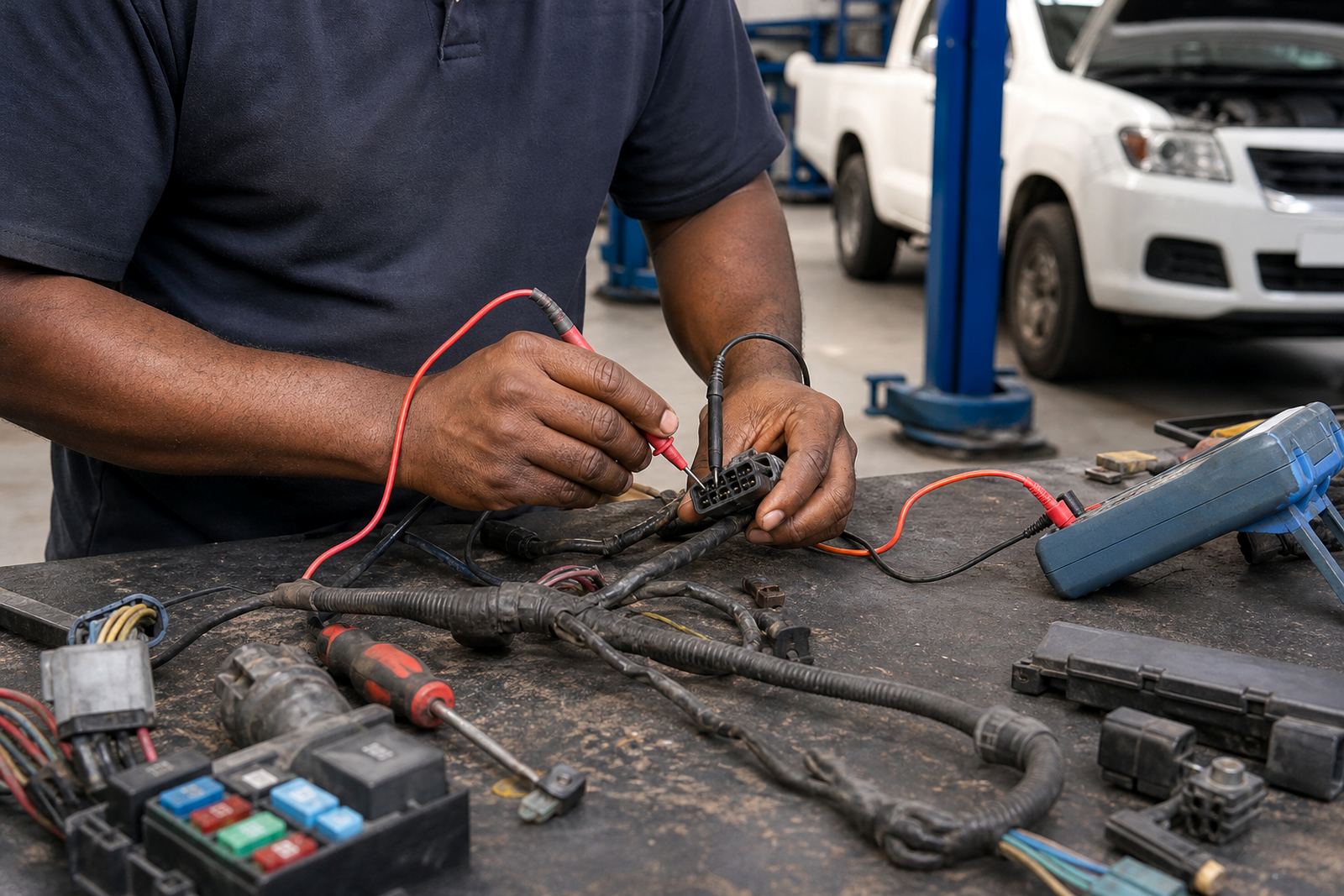
Our workshop team uses a multimeter, test light, wiring diagrams where available, and a structured fault tracing routine. We do not only look for a beep on the metre. We check continuity, resistance and voltage drop, because a wire can still show continuity and yet carry too much resistance for the circuit to work properly.
On modern vehicles, especially those with CAN bus communication, wiring faults can disturb more than one system. A damaged twisted pair, poor splice or loose connector can create false fault codes, warning lights and erratic module behaviour. We isolate the circuit carefully so the test does not create extra faults while we are working.
- Continuity readings from point to point
- Resistance checks on terminals, splices and grounds
- Voltage drop under load on starter and charging circuits
- Signal integrity checks on communication wiring
Workshop and mobile test sizes that suit the job
Wiring continuity testing is not one fixed setup. In the workshop, we can work on a single faulty circuit, a full loom section, or an accessory harness that needs tracing from end to end. On mobile call-outs, we focus on the circuits that can be safely tested on site, such as battery feeds, earths, starter triggers, trailer plugs, lighting faults and certain accessory connections.
The right option depends on access, vehicle type and the depth of the fault. A quick roadside assessment may involve one or two circuits. A deeper workshop job can include several related branches, especially where corrosion or previous repairs have altered the loom. For fleet vehicles, we often map repeated faults across more than one unit so the same break point does not keep returning to the schedule.
- Single circuit tracing for one fault only
- Sectional loom testing for repeated breaks
- Fleet fault tracing across multiple vehicles
- Workshop testing with trim removal and connector inspection
Where this test fits in real vehicle work
This service suits vehicles that have already shown signs of wiring trouble. That includes no-start complaints, dim or flickering lights, parasitic drain, charging issues, blown fuses, warning lamps and accessories that work only sometimes. It also suits trailer wiring faults where the rear lighting or charging line behaves badly after rain, washdowns or rough roads.
In Cape Town and the wider Western Cape, salt air and moisture can work into connectors, fuse holders and hidden joins. That makes continuity testing useful on vehicles moving between Montague Gardens, Milnerton, Bellville, Somerset West, Paarl, Brackenfell and Durbanville. The test helps separate a clean connection from one that has gone green inside the insulation or under a crimp.
- Starter circuit faults and cranking complaints
- Alternator and battery feed checks
- Lighting and fuse box faults
- Accessory rewiring and tracker-related issues
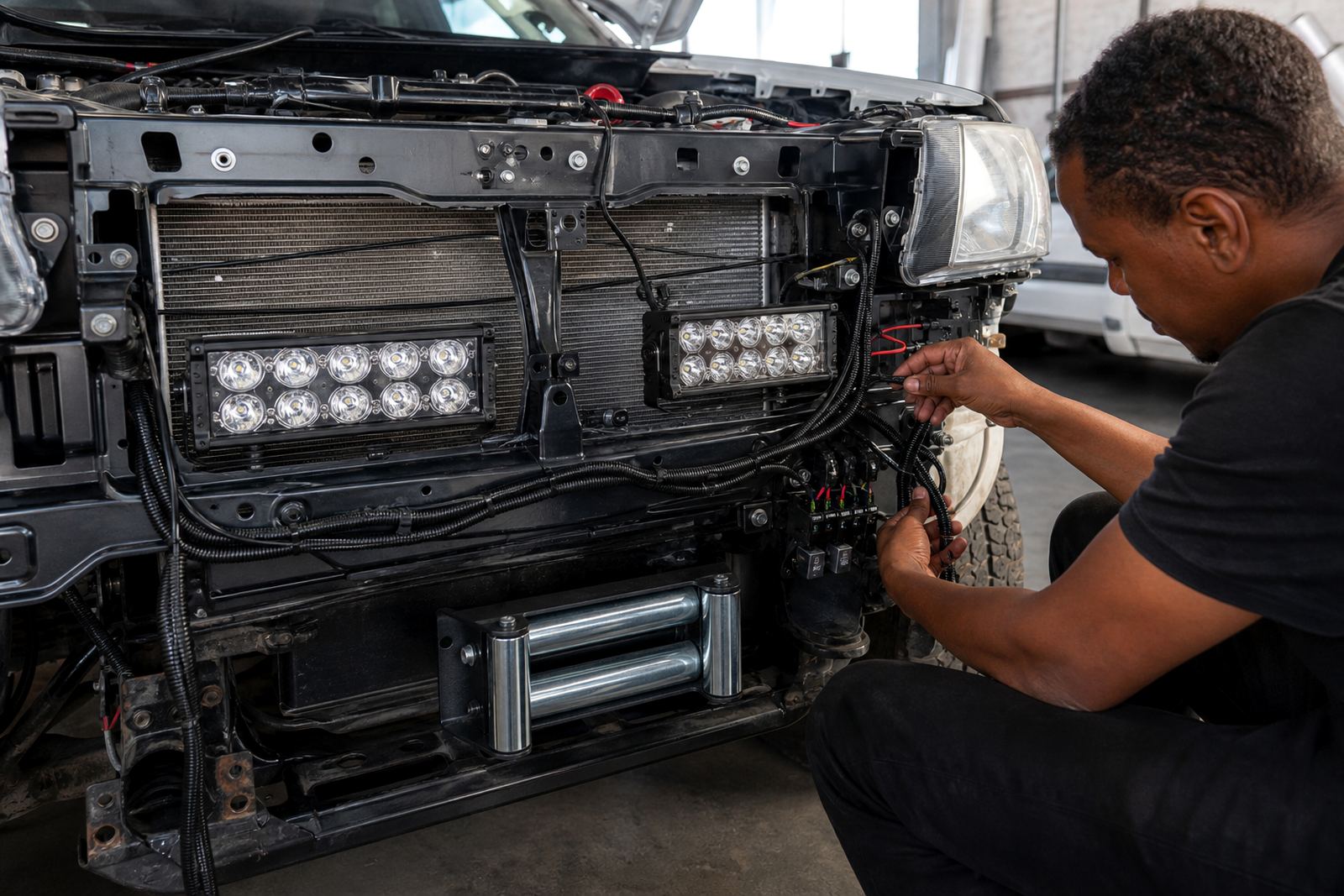
Fitting and installation notes for a clean result
Good testing starts with proper access. Some circuits can be checked at the battery, fuse box or connector block. Others need trim panels lifted, loom tape opened or a section of harness exposed so the fault path can be followed without damaging the wiring. We work from the symptom, then trace back to the break, weak crimp, rubbed cable or failed earth.
If a repair follows the test, the fix may include replacing a terminal, reworking a splice, repairing a loom section or securing the harness away from heat and movement. On accessory and tracker jobs, neat routing matters just as much as the test reading, because a wire that is too tight or poorly supported can fail again when the vehicle vibrates.
What helps us order the right test setup
When you send a request through our contact form, add the vehicle make, model, registration number and the fault you have spotted. It also helps to mention whether the issue affects starting, charging, lights, accessories or a trailer connection. If the fault happens only on a bump, only when wet, or only after standing overnight, that detail can shorten the search path.
For fleet work, tell us how many vehicles are affected and whether the fault is repeating across the same model or only on one unit. If a recent battery, starter, alternator or accessory install was done, that history matters too. The more exact the symptom, the easier it is to choose the right continuity test, the right access point and the right repair method.
- Vehicle make, model and year if known
- Exact symptom and when it appears
- Any recent repairs or accessory fitment
- Whether the fault sits with one vehicle or with several