What a live data check shows in practice
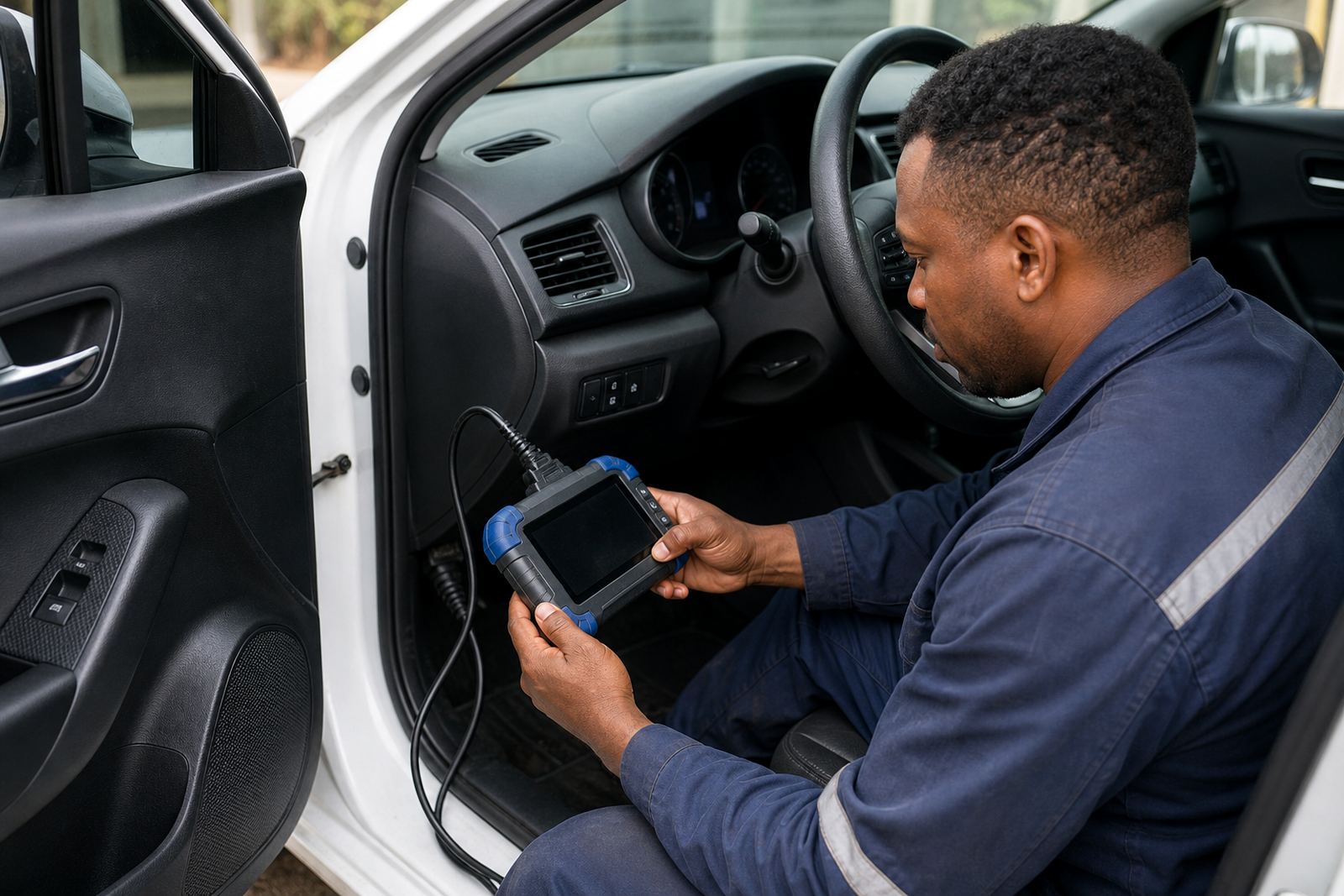
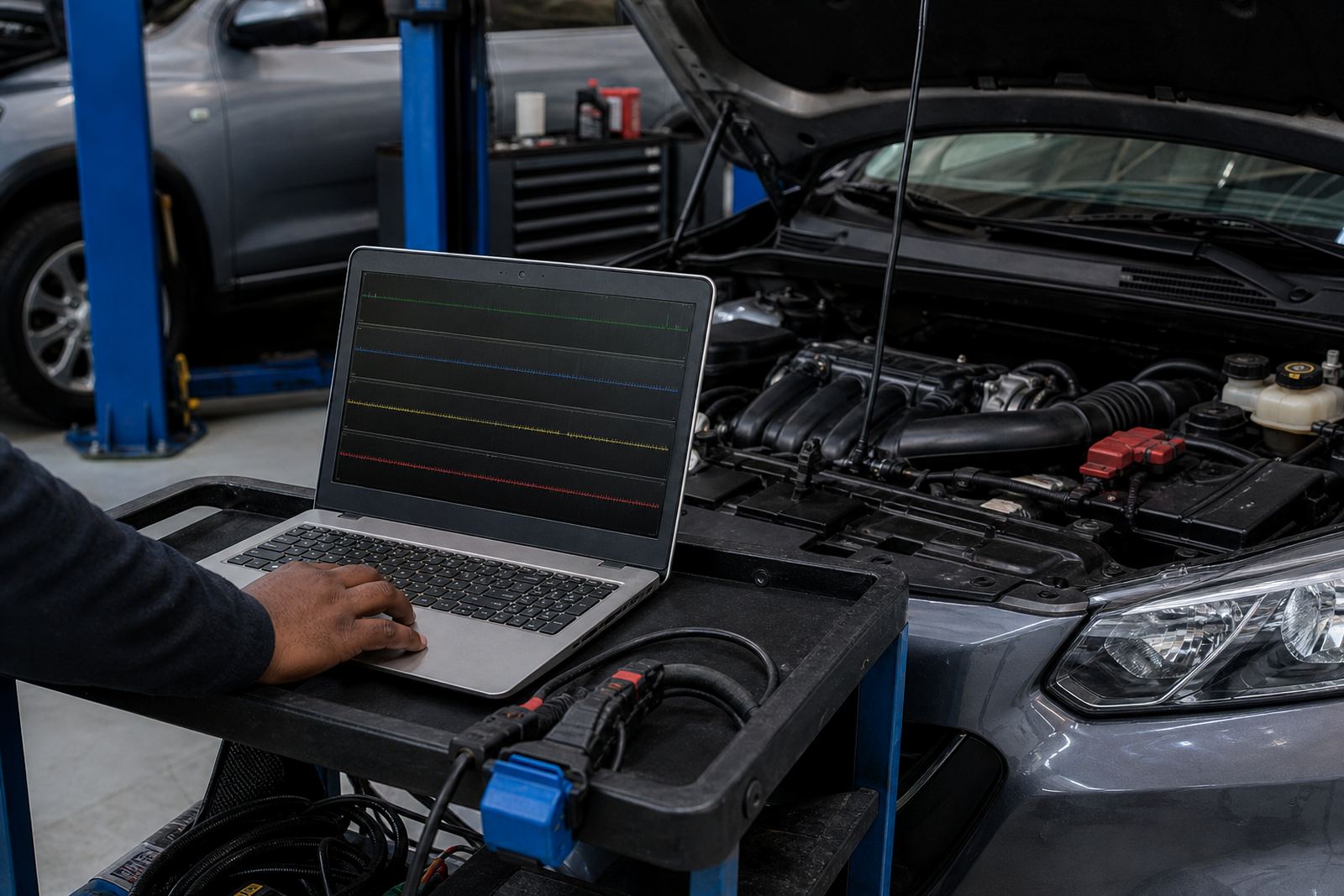
A live data check is a diagnostic session where the technician watches values as the vehicle works, not just when the engine is switched off. We read OBD fault codes, monitor live sensor data, check battery voltage under load, and compare commanded values with what the system is actually doing. That matters on modern vehicles where a single warning light can hide a weak earth, a bad alternator diode, a draggy starter or a CAN bus communication fault.
In our Montague Gardens workshop, live data checks are used for rough idle complaints, hard starting, warning lights, intermittent cutting out, flat batteries and accessory faults. The reading can show coolant temperature, throttle position, manifold pressure, airflow, wheel speed signals, fuel trim patterns and charging output, depending on the vehicle system. A code alone tells part of the story, live data fills in the rest.
We also use the session to spot parasitic drain patterns after the ignition is off. If a module stays awake or a wiring repair has a bridge fault, the battery can go flat overnight and the fault can be missed without watching current draw and system wake-up behaviour.
Readings we compare during the test
Each vehicle is different, so the check is matched to the complaint and the electrical system fitted to that unit. A small hatch, a panel van and a fleet bakkie do not show the same live values, even when the fault looks similar from the driver seat.
- OBD fault codes from engine, charging and body systems
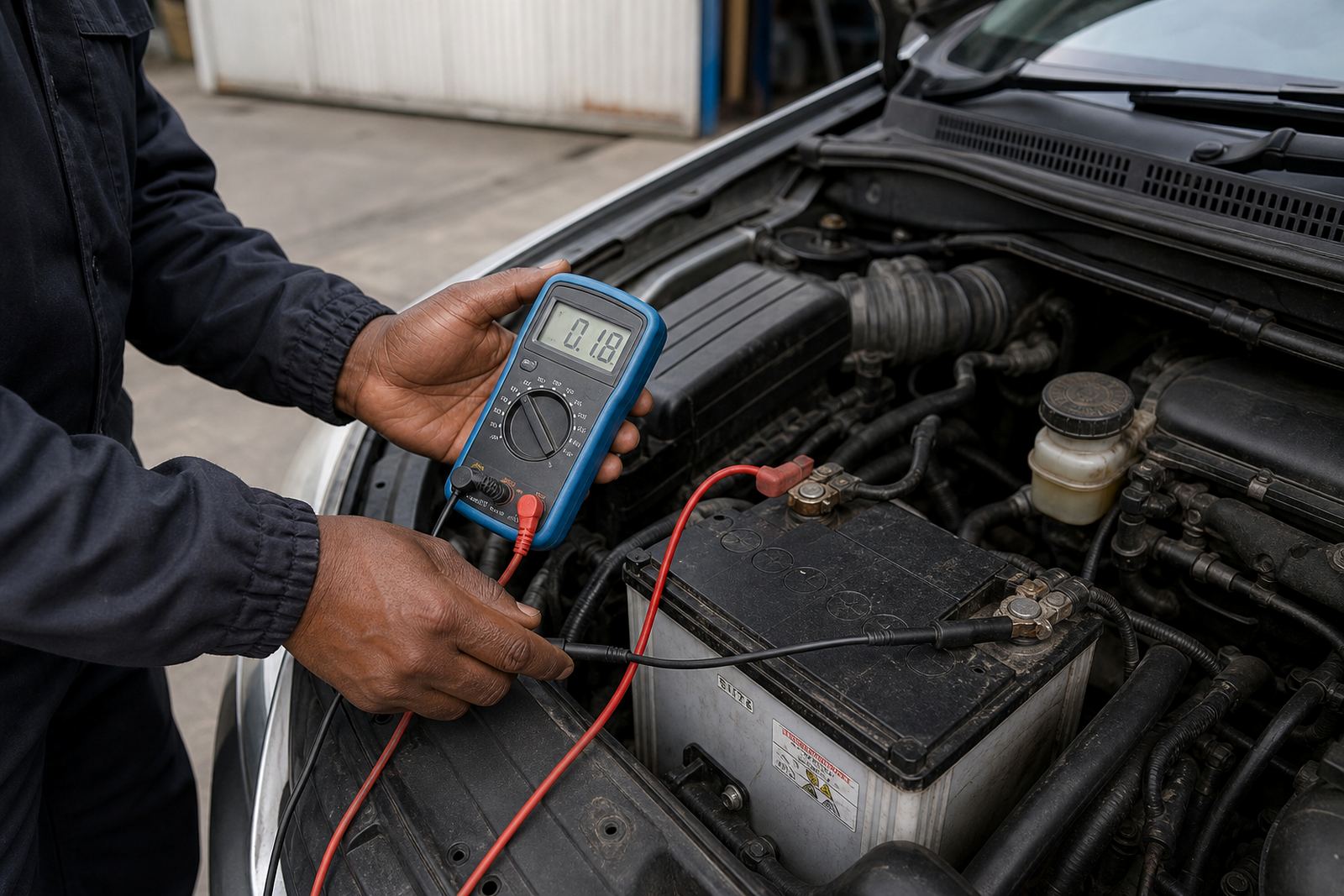
- Live voltage, current and temperature readings
- Cranking voltage and starter draw behaviour
- Alternator output and ripple pattern
- Battery state of charge and recovery after starting
- Sensor response, switching signals and CAN bus communication basics
- Parasitic drain readings with the vehicle asleep
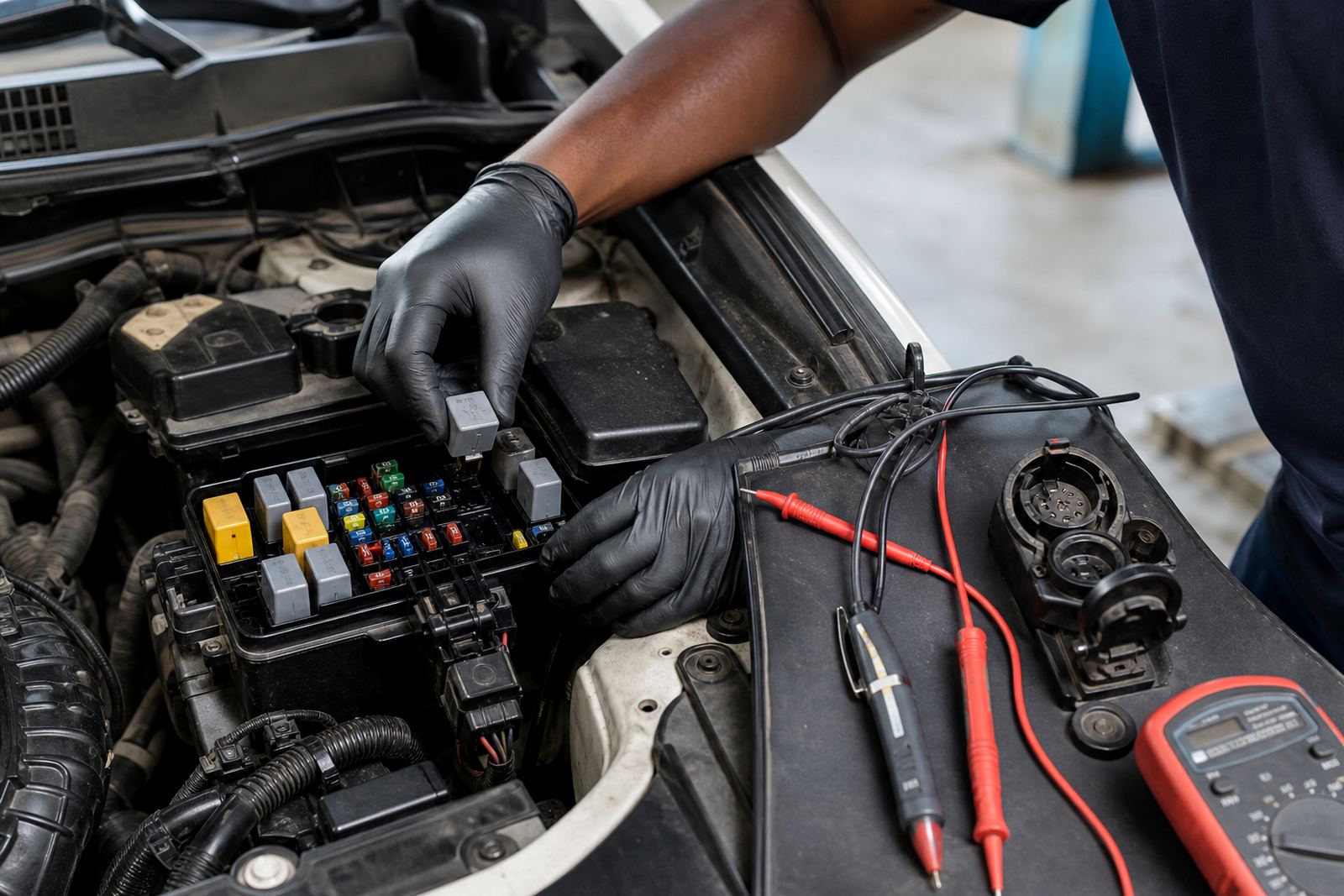
We use these figures to decide whether the issue sits in the component, the wiring, the earth point, the fuse box or the control module path. On some vehicles the fault is mechanical but it appears electrical at first, such as a worn starter pulling too much current or a slipping alternator belt affecting charging numbers.
Where this check suits Cape Town roads and fleet work
Live data checks suit private vehicles, work vans, fleet units and service vehicles used across Cape Town, Bellville, Milnerton, Somerset West and Paarl. They are useful when a vehicle is still moving but not behaving properly, especially where the fault shows up only after rain, long idling, short trips or repeated starts through the day.
Coastal humidity can expose weak connectors, tired terminals and water entry at lamps or trailer plugs. On fleet vehicles, repeated stop-start use can reveal charging problems that a quick battery test misses. If a vehicle has lighting faults, warning messages, a drained battery or a communication issue between systems, the live data screen gives a cleaner picture of where the fault lives.
The test also suits buying decisions when a vehicle has a warning lamp already showing. A live read can show whether the fault is current, stored, intermittent or linked to a previous repair that was not finished properly.
Workshop fitting and mobile call-out use
Some live data checks are done in the workshop, especially when the fault needs back probing, charging tests, fuse box access or repeated cranking checks. Other jobs work better as mobile call-outs where the vehicle cannot easily be moved, or where a fleet operator wants the unit checked on site at the yard.
Our technicians carry diagnostic equipment suited to electrical testing, live scan work and voltage checks on common 12 volt vehicle systems. Where needed, the session can lead straight into starter repair, alternator repair, wiring repair, battery drain tracing, earth fault repair or CAN bus fault checking. That saves time when the live numbers already point to the failing circuit.
- Workshop diagnosis for deeper tracing and component access
- Mobile inspection for fleet yards and private driveways
- Follow-on repair for wiring, alternator, starter or fuse faults
- Tracker and accessory fault checks where a new fitment is involved
What to tell us before the check is booked
A good live data session starts with the right vehicle details, because the expected values differ by make, model, engine type and electrical layout. It helps to note the warning light, when the problem shows, whether the battery has gone flat, and whether any recent work was done on the starter, alternator, radio, tracker or lighting.
- Vehicle make, model, year and engine type
- Manual or automatic transmission
- Exact symptom, warning light or message seen
- Whether the battery drains after standing overnight
- Any recent wiring, accessory or battery changes
- Fleet or private vehicle, plus the site suburb if a call-out is needed
If the fault appears only on cold start, during rain, or after a long highway run, that detail matters. It helps the technician decide whether to focus on voltage drop, sensor plausibility, charging output or a communication fault between modules.
Care after the reading is done
Live data itself does not wear out the vehicle, but the fault it reveals may need follow-up work. Once the issue is repaired, the related wiring and connectors should be secured properly, battery terminals kept clean, and any loose earth points tightened and protected. If the vehicle works near the coast or in dusty yard conditions, a quick visual check around plugs and terminals can prevent a repeat call.
For fleet owners, it helps to keep the vehicle battery healthy and avoid repeated jump starts, because low voltage can create false codes and confuse the readings. After a starter, alternator or wiring repair, we may repeat the test to confirm the live figures now sit where they should. That final comparison shows whether the fault has truly been cleared or only masked for the moment.
Sensor data, charging values and wake-up signals tell a different story when the car is healthy. The aim is to read that story clearly, then repair the circuit that is letting it drift.
Key facts
| Service type | Vehicle diagnostics live data check |
|---|---|
| System focus | OBD fault codes, sensor readings, charging system and parasitic drain |
| Vehicle types | Passenger cars, bakkies, vans and fleet units |
| Power system covered | 12 volt starter and charging circuits |
| Area covered | Montague Gardens, Cape Town and Western Cape call-outs |
| Related repairs | Wiring repairs, alternator repairs, starter repairs, fuse box and earth faults |