What a CAN bus check covers on a modern vehicle
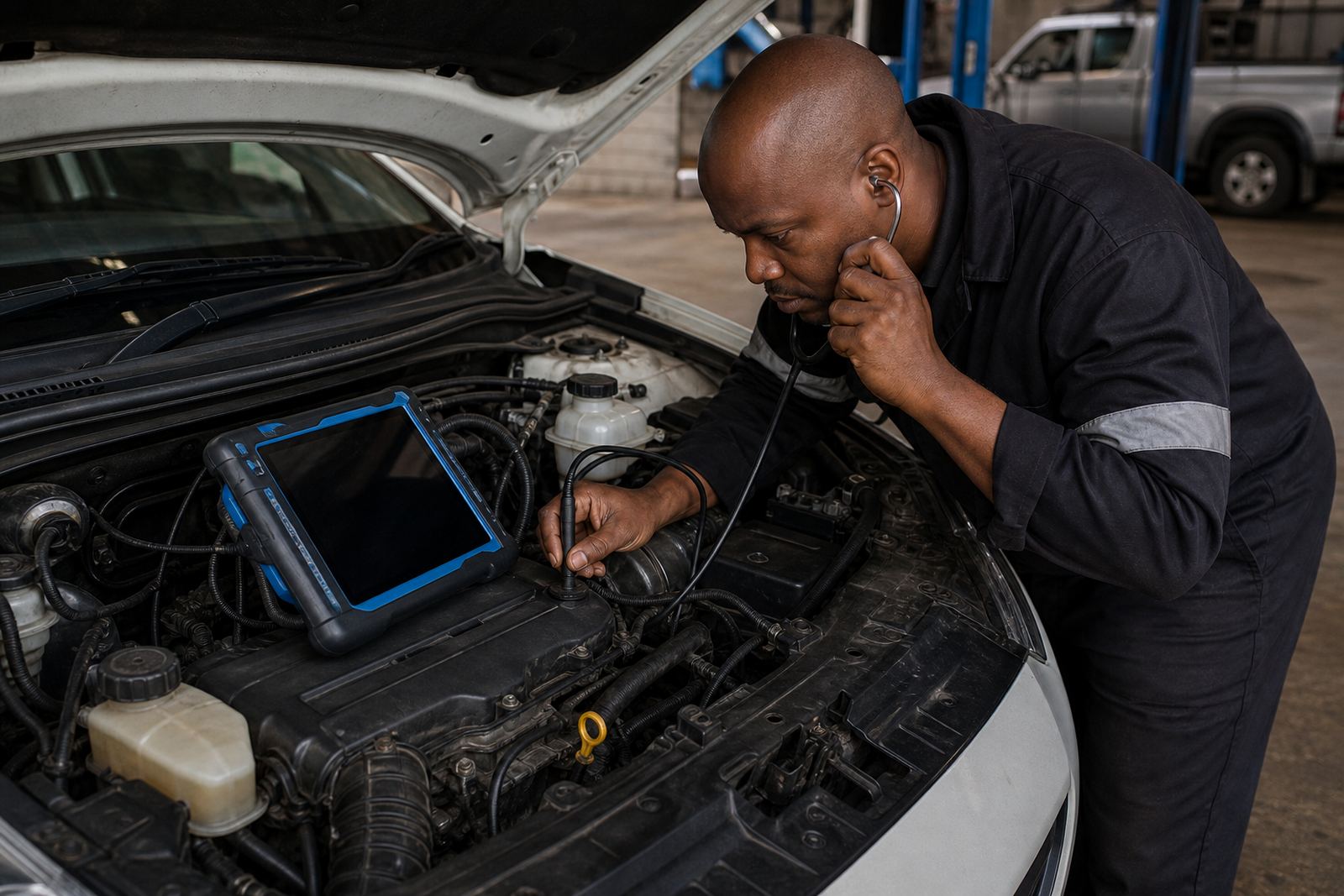
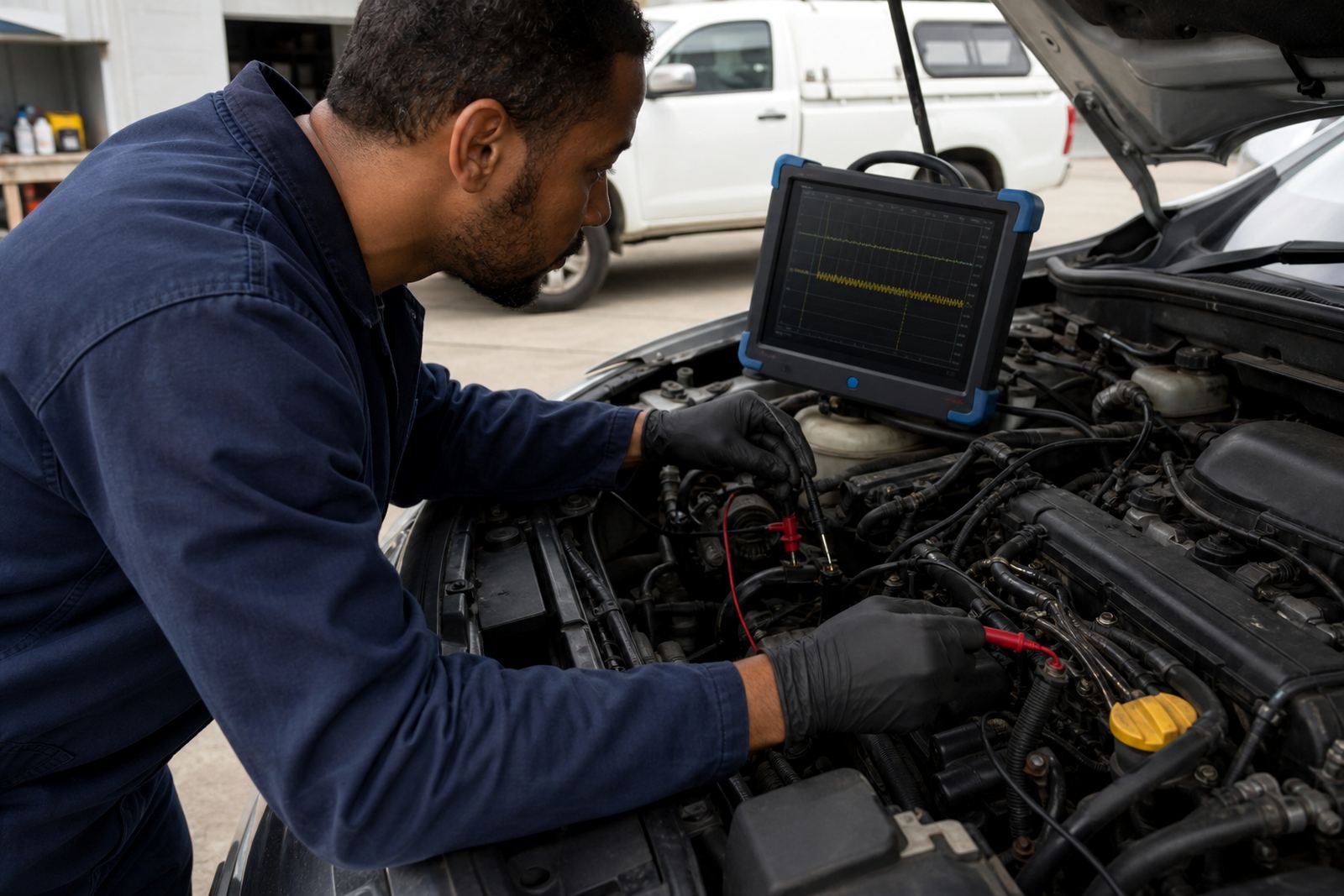
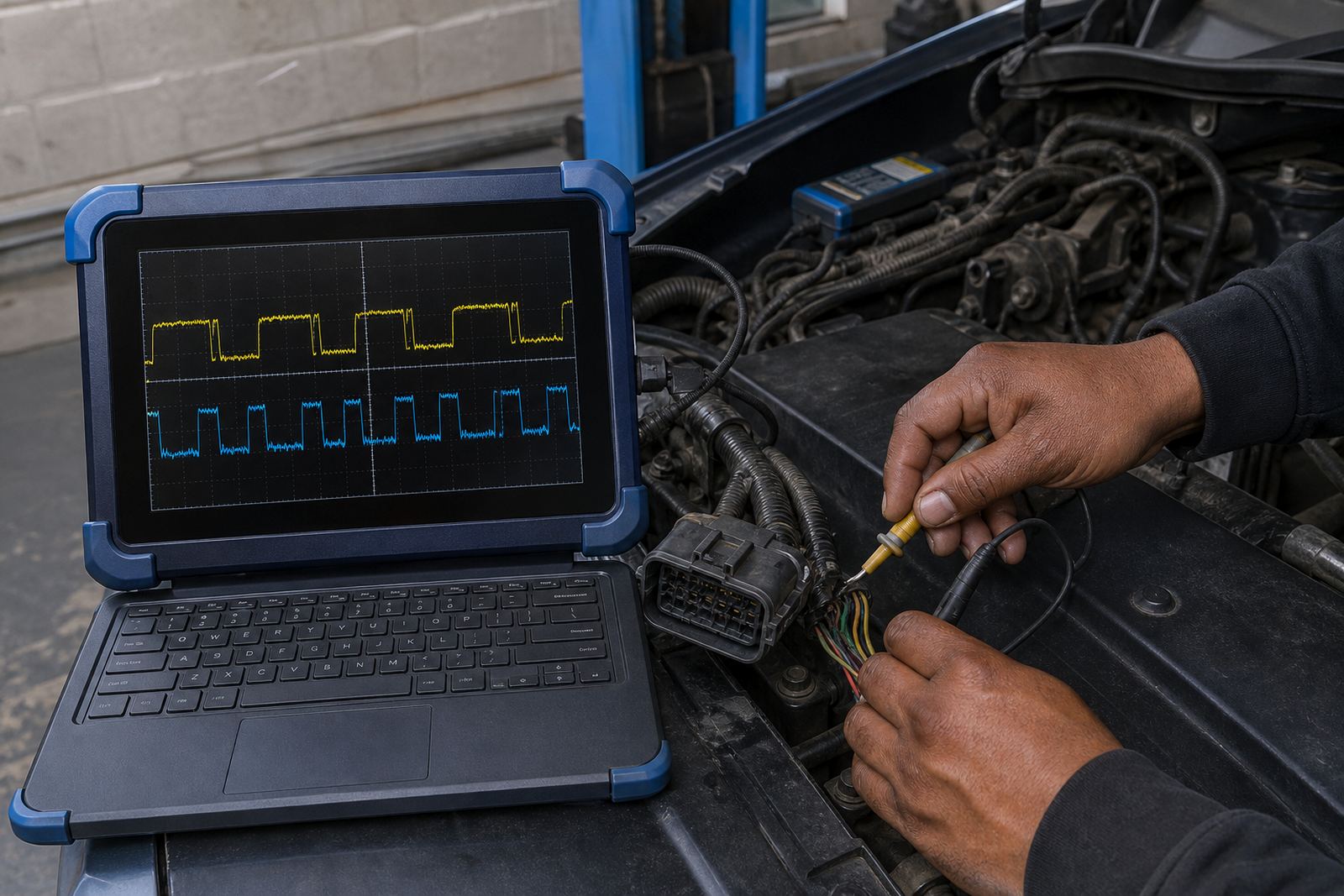
A CAN bus check is the process of testing how the control modules speak to one another on the vehicle network. On a workshop job that may include reading OBD fault codes, checking live data, measuring network voltage, and looking for open circuits, short circuits or poor earths that interrupt communication.
Our team uses the check when a vehicle has warning lights, missing module data, inoperative gauges, intermittent starting faults or strange electrical behaviour that does not sit neatly in one system. On many jobs the fault is not the module itself, but a wiring issue, low battery voltage, damaged connector, moisture in a loom or a power feed problem that upsets the whole line.
- OBD fault code reading and code interpretation
- Live data review for communication status and module response
- Network voltage checks at accessible test points
- Earth fault checks and voltage drop testing
- Basic continuity testing on suspect wiring sections
When this check makes sense on fleet and private vehicles
This work suits vehicles that have more than one electrical complaint at once, or faults that move around after a battery disconnect, jump start or accessory installation. It is also useful after water ingress, accident repairs, trailer wiring problems or repeated battery flattening on a vehicle that otherwise looks mechanically sound.
Fleet operators use the check when drivers report random dash warnings, non-starts, loss of scanner communication or features dropping out on the road. Private owners often need it after a repair elsewhere, when a sensor fault returns, or when a new battery still leaves the vehicle acting badly. In coastal areas like Milnerton and Somerset West, moisture and corrosion can show up in connectors and earth points, especially on work vehicles parked outside.
- Our work covers passenger cars, bakkies, SUVs and light commercial vehicles.
- Vehicles with intermittent no-start or no-communicate faults
- Units with previous battery drain or charging complaints
- Vehicles with accessory wiring that may have disturbed the network
The test method in plain workshop terms
We begin by checking battery state, charging voltage and earth condition before blaming the communication line. A weak battery can cause misleading codes and break module chatter, so the first pass always focuses on supply quality. From there the technician checks network integrity, connector condition, fuse supply and whether the scan tool can speak to each module in the system.
Where the fault points to a section of loom, we trace the circuit, inspect splice points and test for resistance or voltage loss. On some jobs the issue sits in a single connector pin, on others it is a damaged wire under a battery tray, behind a bumper or near a towbar harness. CAN bus faults can also be linked to failed accessories, poor aftermarket installation or a module that has dropped off the network and needs closer diagnosis.
- Battery and charging system pre-check
- Module scan and network communication review
- Voltage, resistance and continuity testing
- Wiring inspection at known high-failure points
- Repair advice based on the fault path, not only the code
Options and access points we work with
CAN bus checks are not a one-size task because the vehicle layout, number of modules and access to test points vary from model to model. Some vehicles allow direct access at the diagnostic socket and selected junction points, while others need more strip-down around the battery area, dash panels or engine bay harnesses. The job can be carried out as a standalone diagnosis or folded into a wider electrical repair.
We also support call-outs for certain fleet and private owner jobs where the vehicle can be assessed on site, especially when the issue is linked to a battery, starter circuit, charging fault or accessory wiring. If the fault needs workshop testing, the vehicle is brought into Montague Gardens for deeper tracing and repair.
- Workshop diagnosis in Montague Gardens
- Mobile call-outs for selected fleet and private owner jobs
- Follow-on wiring repairs when the fault is found
- Tracker and accessory fitting where the network must be kept stable
Fitting needs and related electrical work
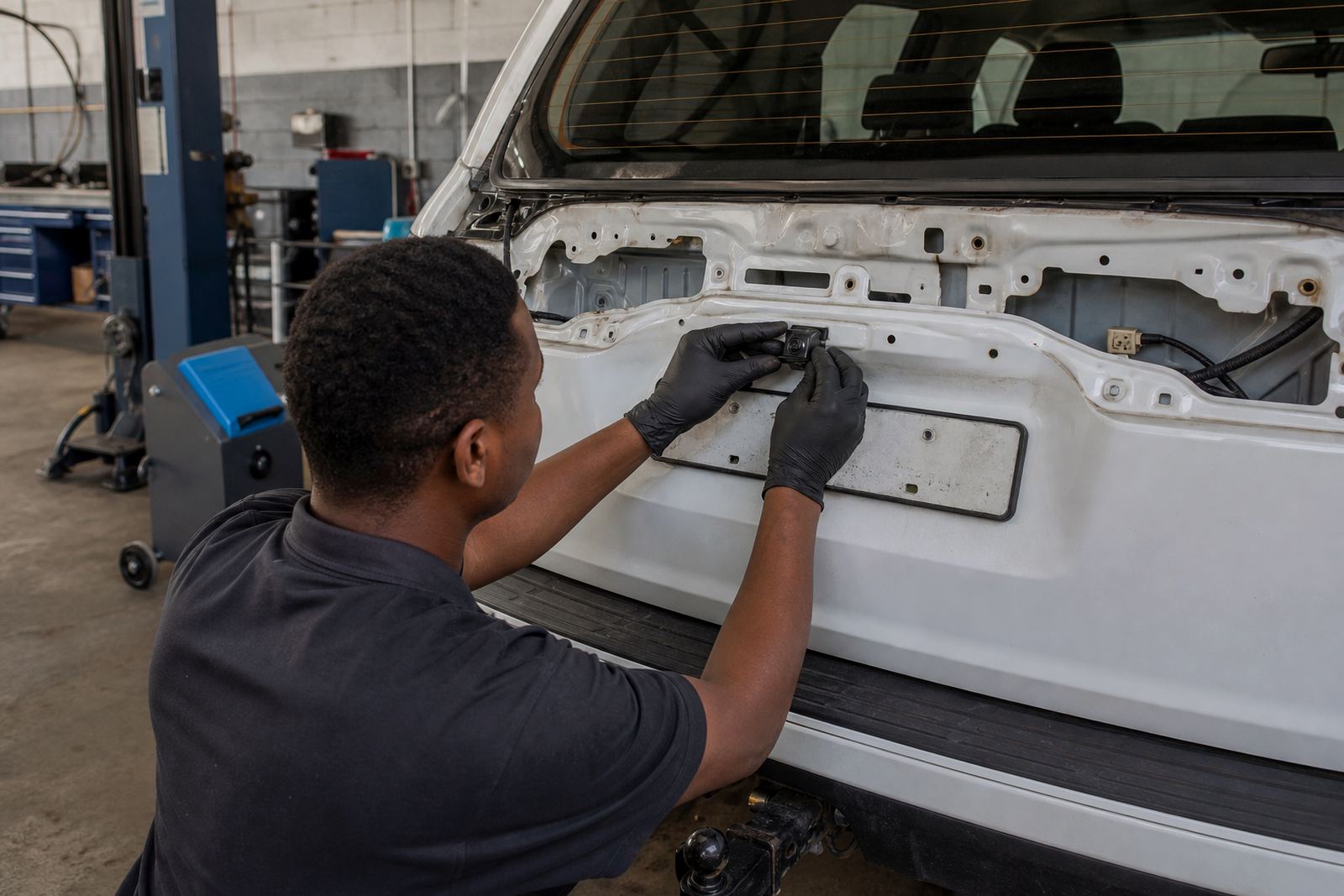
Where a CAN bus check is linked to a tracker, accessory or previous rewiring job, the installation has to be examined as part of the fault. Aftermarket devices can be fitted neatly, but they still need proper power supply, earth and routing so they do not disturb the vehicle’s communication lines. That matters on late-model vehicles where a poor splice or untidy ground point can create a long list of fault codes.
Our workshop also handles starter repairs, alternator repairs, battery drain repairs, fuse box repairs, earth fault repairs and lighting repairs. On a lot of vehicles the CAN fault is only one part of a wider electrical problem, and the right fix is often a combination of testing, repair and retest rather than a single part swap.
- Tracker fitting with careful cable routing
- Accessory rewiring for work lights, charging points and extras
- Starter circuit and charging system checks where faults overlap
- Fuse box and earth point inspection where modules drop offline
What to confirm before the vehicle comes in
When booking a CAN bus check, it helps to note the warning lights on the dash, any recent battery work, jump starting, water exposure or aftermarket fitting, and whether the fault is constant or intermittent. If the vehicle has been scanned elsewhere, bring the fault codes or a clear list of symptoms so the technician can focus the test plan from the start.
For fleet units, it also helps to confirm the make, model, year range, mileage, and whether the vehicle is running a trailer harness, tracker, inverter or added accessories. That makes it easier to plan the right access, test equipment and workshop bay time.
- Vehicle make, model and year range
- Current warning lights or driver complaints
- Any recent battery, starter or alternator work
- Aftermarket accessories, trackers or trailer wiring
- Whether the fault appears only under load or while driving
Care after the fault has been traced
Once the network fault has been repaired, the vehicle should be retested so the modules clear and communicate properly under normal running conditions. Battery health matters here, because a tired battery can make a repaired system look unstable. It also helps to keep connectors dry and avoid pressure washing directly into fuse boxes, battery trays or exposed loom joints.
For working vehicles in Cape Town and nearby towns, a routine electrical check can save a lot of downtime. If a unit starts showing repeated communication faults, battery drain or charging issues, it is better to test the system early than wait for a complete no-start or dash failure.
- Retest after repair to confirm stable communication
- Keep battery terminals and earth points clean
- Avoid moisture build-up around repaired wiring
- Report recurring codes before the vehicle is booked for service
Key facts
| Service type | CAN bus fault check and vehicle network diagnosis |
|---|---|
| Core tests | OBD fault codes, live data, network voltage, continuity and earth checks |
| Typical faults | No communication, intermittent modules, warning lamps, non-starts, strange dash behaviour |
| Vehicle types | Cars, bakkies, SUVs and light commercial vehicles |
| Work locations | Workshop diagnosis in Montague Gardens and selected mobile call-outs |
| Related services | Wiring repairs, alternator repairs, starter repairs, battery drain repairs, tracker fitting |