Camera fitment that suits the vehicle
A reverse camera system is more than a lens on the back bumper. The job starts with the vehicle shape, rear trim layout and where the screen or mirror display will sit in the cabin. On hatchbacks, sedans, bakkies, panel vans and light fleet vehicles, the camera angle must suit the real parking line, not just the badge on the tailgate.
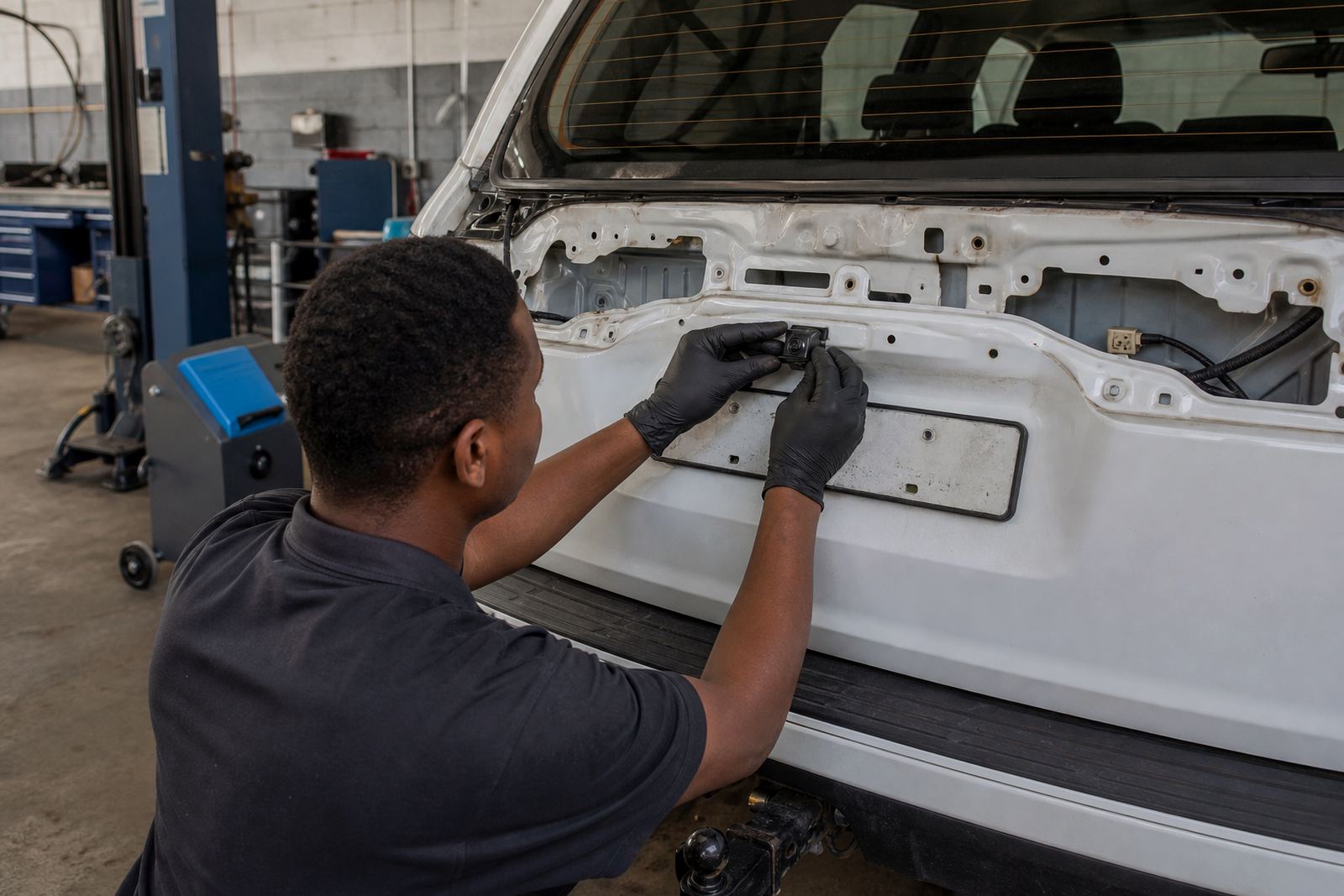
We fit reverse camera systems that can link to a dedicated screen, a factory style display unit, a mirror display, or a multi input screen when the vehicle already carries other accessories. The cable route matters just as much as the camera body. A loose run through the tailgate or under trim can cause noise in the picture, intermittent power, or water entry at the wrong spot.
- Camera lens angle: 120 to 170 degrees depending on the rear profile
- Display options: dash mounted screen, mirror display, or integrated screen input
- Power supply: 12V vehicle system with fused feed and proper earth point
- Signal run: rear to front cable path, or short local feed where the screen sits close
Where reverse cameras earn their keep around Cape Town roads
These systems suit vehicles that reverse often in tight spaces, load goods, or work in busy yards. In Montague Gardens, Bellville, Milnerton and Paarl, camera fitment is often requested for delivery vehicles, fleet bakkies, service vans and private cars that park in narrow driveways or angled bays. The camera gives the driver a direct rear image, which helps with kerbs, poles, tow hitches and low obstacles.
Some vehicles need a standard rear camera while others need a wider view, clearer night image, or a system that handles a longer body length. Vans and bakkies often benefit from a higher mounting point on the tailgate or roofline, because the view over load bins and cargo doors is better. We also see requests for trailer use, where the driver needs a view of the tow point and the area behind the vehicle when lining up the hitch.
- Suitable for private cars, bakkies, SUVs, panel vans and fleet vehicles
- Useful for towing, loading bays, narrow streets and shopping centre parking
- Can support rear parking aids where the vehicle already has sensors
- Works well on vehicles with rear trim that allows neat cable entry
What the fitment needs inside the workshop
Reverse camera work is electrical work, so the install needs proper testing before the trim goes back. We check the reverse trigger, the live feed, the earth path and the display input so the picture appears when the vehicle is placed in reverse. If the vehicle already has a screen, we confirm the input format and whether the system accepts the camera signal without extra converters.
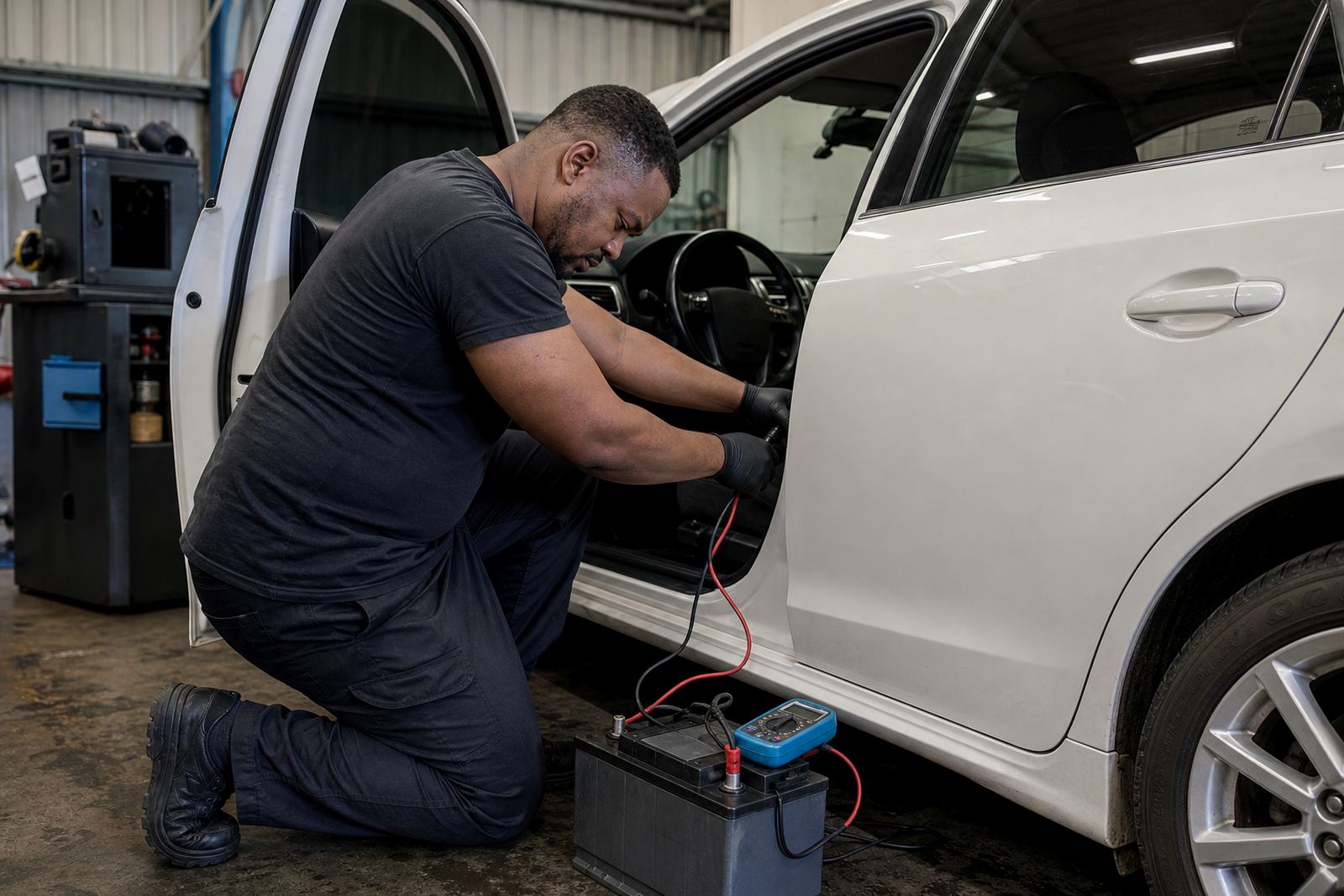
On many jobs, the fault is not the camera itself but the power supply or the cable run. A poor earth can distort the image or cause flicker. A damaged wire inside the tailgate loom can stop the camera from waking up at all. We test the circuit with a multimeter, inspect for voltage drop and check that the reverse signal is clean, especially on vehicles where the tailgate opens and closes often.
For fleet units, wiring must be tied down and protected from chafing. Exposed joins behind trim panels are a common source of future trouble. If the vehicle already carries accessory wiring, tracker wiring or trailer wiring, the new camera circuit should be routed with care so the systems do not interfere with one another.
Picture quality, night view and cable routing that lasts
Image quality depends on more than the camera lens. The angle must show the bumper line clearly, the display brightness must suit daylight, and the cable shielding must limit interference from the vehicle electrical system. On some installs, the image only needs small parking markers. On others, the driver wants a clean wide view with no clutter from extra guide lines.
We fit and test the system with the vehicle running and with the engine off, because charging noise or a weak battery can reveal a fault that does not show up during a quick bench test. If the reverse camera shares power with other accessories, we check for parasitic draw and confirm that the circuit sleeps properly when the ignition is off. That matters on vehicles that sit for days between jobs or local runs.
- Clear rear image in daylight and dim light
- Optional parking guide lines where the screen supports them
- Water resistant camera housing suited to exterior mounting
- Neat loom protection through tailgate, boot lid or rear door paths
Care after fitment and signs the circuit needs attention
A reverse camera does not need heavy maintenance, but the electrical side benefits from a quick check when the vehicle is serviced or the battery is tested. Dirt on the lens can blur the picture. Water inside the housing can soften the image or leave the screen misty. On vans and work bakkies, repeated tailgate movement can strain the wiring in the hinge area, so the cable path should be inspected for wear.
If the picture cuts in and out, shows a black screen, or flickers when the vehicle shifts into reverse, the issue may sit in the trigger wire, earth point, fuse feed or tailgate loom. On some vehicles, a failed battery or weak charging system can make camera systems unstable. We handle those tests in the same workshop flow, which helps separate a camera fault from a broader electrical fault.
- Wipe the camera lens with a soft cloth and a gentle cleaner to keep the image clear.
- Watch for moisture, flicker, delayed image or coloured noise on screen
- Check trim clips and loom strain points after tailgate or bumper work
- Pair camera checks with battery and charging tests when symptoms repeat
Details to send when a reverse camera is being arranged
When a reverse camera is being specified, the vehicle details make the job smoother. The make, model, year and body style matter because rear trim shape, display inputs and cable routing differ from one vehicle to the next. If the vehicle already has a screen, say whether it is a factory screen, mirror display or aftermarket display unit. If there is a tow bar, rear step, canopy or door-mounted spare wheel, that affects the mounting point.
It also helps to note whether the vehicle is used for private parking, delivery work, towing, or fleet runs. Fitting a camera to a compact hatchback is not the same as fitting one to a long-wheelbase van. Where the vehicle already has accessories, tracker wiring or extra lighting, our workshop checks the surrounding circuit so the new fitment sits neatly with the rest of the electrical system. Clients reach us through our contact form, and the details you include there help us match the camera, wiring path and display position to the vehicle.
- Vehicle make, model, year and body type
- Existing screen type or planned display position
- Rear accessories such as tow bar, canopy, step or spare wheel
- Use case: private parking, fleet work, towing or loading bay use
Key facts
| System type | Reverse camera fitment for 12V vehicle electrical systems |
|---|---|
| Camera view angle | Typically 120 to 170 degrees depending on vehicle and mounting point |
| Display compatibility | Dedicated screen, mirror display or compatible integrated screen input |
| Installation points | Tailgate, bumper, number plate area or high rear mounting point |
| Wiring method | Fused feed, earth point, reverse trigger and protected loom routing |
| Common checks | Image quality, power stability, earth fault, cable continuity and reverse signal |