
What the charging system test looks at
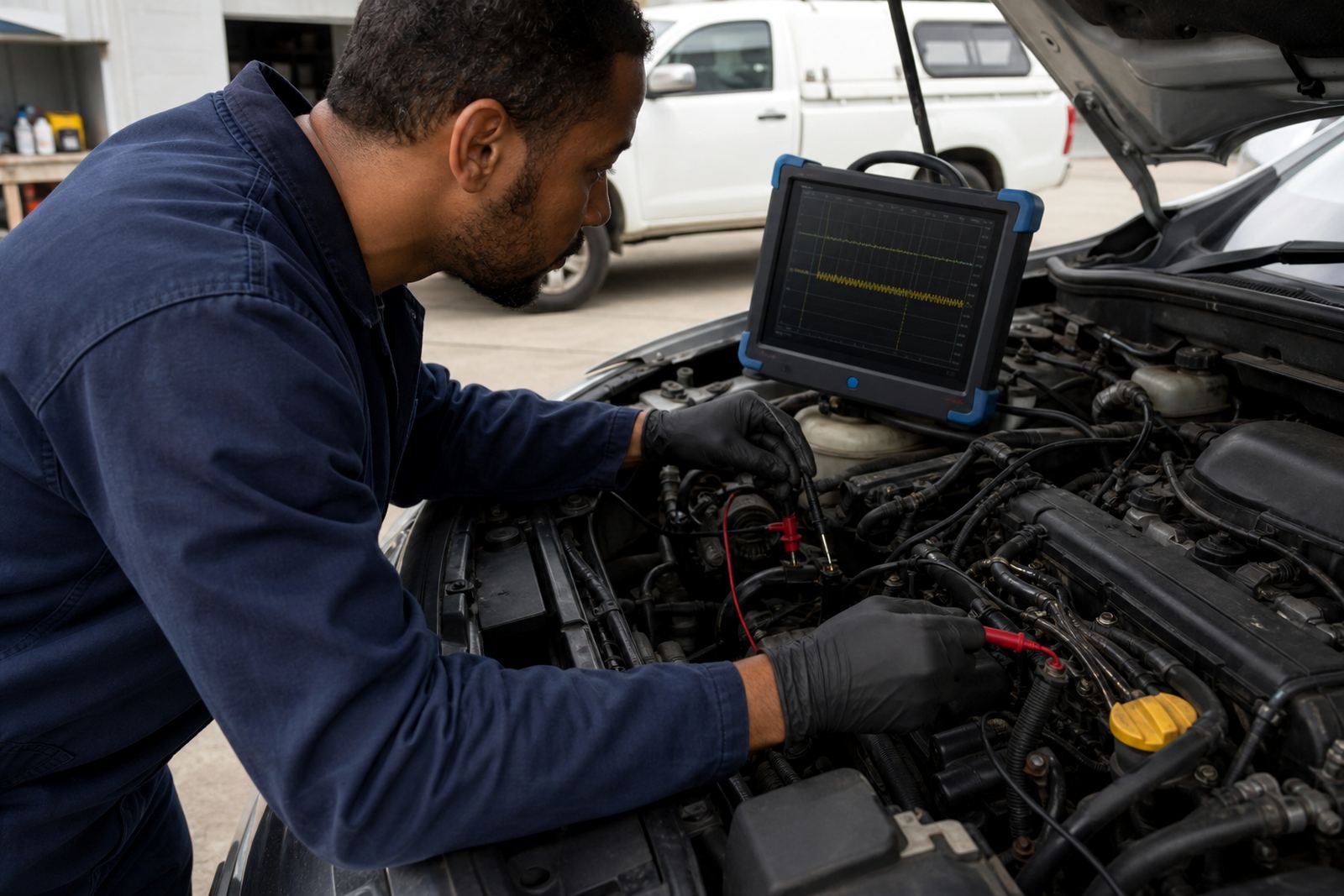
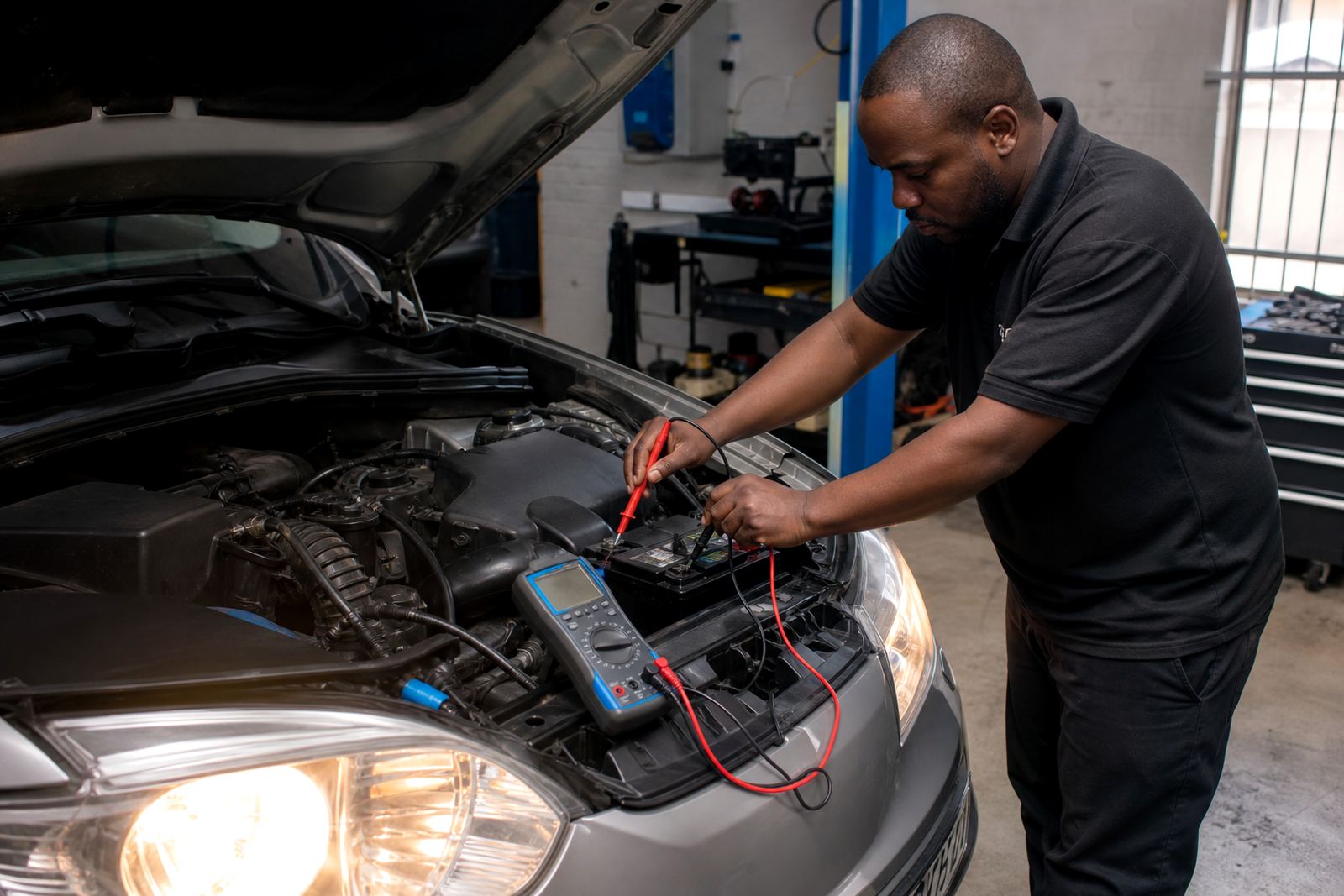
This test starts with the battery at rest, then moves to engine running checks and loaded conditions. We look at alternator output, system voltage, regulator control, belt drive condition, earth paths and the current draw of the vehicle while accessories are switched on. If a warning lamp is on, the fault can sit in the alternator, the battery, the wiring, or the control side of the circuit.
A proper charging system test is more than a quick multimeter reading. Live data and load testing help show whether the system can hold voltage when headlights, heater fans, demisters, stereo units and tracker equipment are drawing current at the same time. That matters on vehicles used in Cape Town traffic, coastal humidity, and stop-start fleet work where weak charging gets exposed fast.
- Battery rest voltage and cranking voltage
- Alternator output under idle and raised rpm
- Charging voltage under electrical load
- Ripple and unwanted AC leakage checks
- Belt, pulley and tension condition
When this test suits your vehicle
We use charging system testing for passenger vehicles, bakkies, delivery fleets, service vans and work vehicles that rely on accessories and long hours on the road. It suits warning lights, flat batteries that keep returning, dim lighting at idle, slow cranking, battery drain complaints and vehicles that struggle after short trips around town.
It also helps when extra electrical equipment has been fitted and the battery no longer lasts as expected. A tracker, inverter, fridge wiring, extra lights, trailer wiring or other add-ons can reveal a weak alternator or a poor earth path. On modern vehicles, low voltage can also confuse control modules and trigger unrelated fault codes.
- Fleet vehicles with repeated jump-starts
- Cars that idle rough after battery replacement
- Bakkies with accessories and trailer wiring
- Vehicles with dashboard battery warnings
- Units that flatten overnight after standing
Fitting, tracing and repair work that may follow
If the test points to a fault, we can move into the repair side. That may mean alternator repair, starter circuit checks, wiring repairs, fuse box inspection, earth fault tracing or battery drain diagnosis. In some cases the charging issue is not the alternator itself, but a damaged cable, poor connector, loose terminal, blown fuse, or a control signal problem on the vehicle network.
Vehicles with CAN bus related electrical symptoms can present as charging complaints even when the alternator is still sound. Our workshop reads fault codes, checks live data and traces the circuit path before parts are replaced. That approach is useful on newer vehicles and on older ones with modified wiring, corrosion, or heat damaged harnesses in the engine bay.
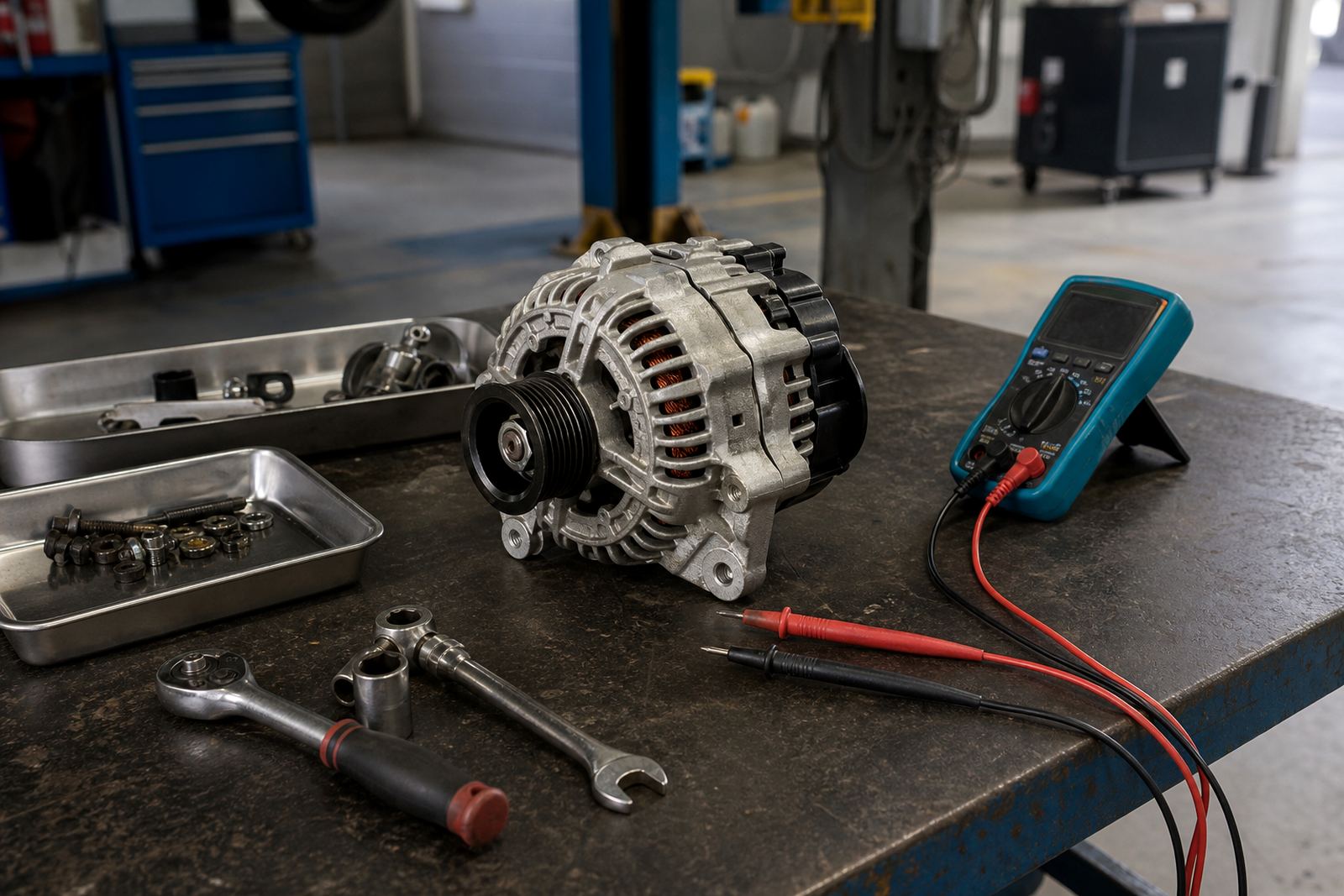
- Alternator and regulator checks
- Starter circuit and ignition feed checks
- Earth strap and ground path repairs
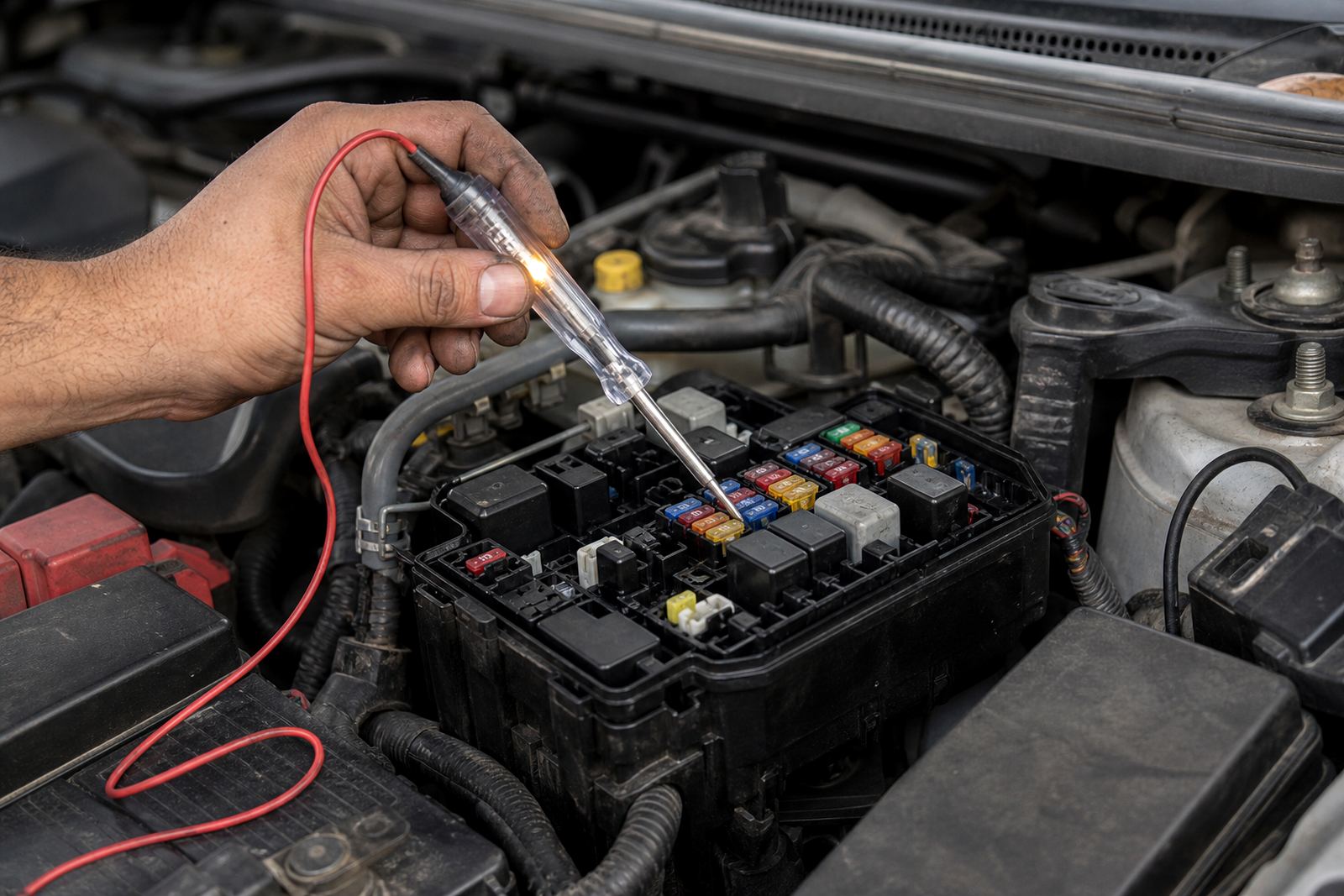
- Fuse and relay inspection
- Wiring repairs on damaged looms and connectors
Workshop and call-out options across the Western Cape
Charging system tests are carried out at our Montague Gardens workshop and through mobile call-outs for Cape Town, Bellville, Milnerton, Somerset West, Paarl, Brackenfell and Durbanville. For fleet operators, this helps when a vehicle is stuck at a yard, depot or customer site and needs a proper electrical diagnosis before it is moved again.
Mobile testing works best when the battery is accessible, the engine bay is safe to work in and the fault can be measured on site. For deeper repairs, removal of the alternator, starter or related wiring may be better handled in the workshop. Megan in the office coordinates bookings, while the technicians handle the testing and repair side.
- Montague Gardens workshop testing
- Fleet yard and depot call-outs
- Private vehicle call-outs where access allows
- Battery, alternator and starter diagnosis on site
- Repair planning for workshop follow-up
Care after a charging fault has been fixed
Once a charging fault has been corrected, the battery still needs a sensible check. A weak battery that has been drained many times can shorten the life of the repair, even when the alternator is working properly. We also look for loose terminals, dirty clamps, damaged main cables and poor earth points, because those small issues often cause the return of low-voltage symptoms.
Keep the battery terminals clean and tight, and watch for signs like slow cranking, flickering lights or electrical accessories dropping out. If the vehicle spends days standing, or if it works in damp coastal conditions, it is worth checking the system before the battery goes flat again. On fleets, regular charging checks can prevent roadside breakdowns and keep starter motors from wearing out early.
- Check terminals for corrosion and movement
- Keep earth straps clean and secure
- Look for belt wear and pulley noise
- Watch for repeated low-voltage symptoms
- Test the battery after any major discharge
Details to confirm for a proper charge test booking
When you send the booking through our contact form, include the vehicle make, model, year if known, and the symptom you are seeing. Tell us whether the battery goes flat while parked, whether the warning light comes on while driving, and whether any accessories were fitted before the fault started. If the vehicle has had recent wiring work, a new battery or a starter replacement, that detail helps narrow the fault path.
It also helps to mention whether the job is for a fleet vehicle, a private car, a bakkie or a tow-in. Mention if the issue happens only when the engine is hot, when the lights are on, or when the vehicle is idling in traffic. Clear notes save time on the fault tree and make the test more precise from the start.
- Vehicle make, model and year
- Warning light or symptom description
- Recent battery, starter or alternator work
- Added accessories, trackers or trailer wiring
- Workshop booking or mobile call-out location
Key facts
| Test scope | Alternator output, battery voltage, live data and load checks |
|---|---|
| Measured items | Rest voltage, cranking voltage, charging voltage and ripple |
| Common fault paths | Alternator, battery, earth faults, wiring, fuse box and starter circuit |
| Vehicle types | Passenger cars, bakkies, fleets, vans and work vehicles |
| Service area | We handle call-outs in Montague Gardens, Cape Town, and throughout the wider Western Cape. |
| Related work | Starter repairs, alternator repairs, wiring repairs and battery drain diagnosis |