
What a fuse circuit check covers in the workshop
A fuse circuit check is a controlled fault-finding process for dead or unstable vehicle circuits. We test whether battery power reaches the fuse, whether the fuse carries current as it should, and whether the protected line fails under load, on the bench or in the vehicle harness.
This work sits close to auto electrical diagnostics. A circuit may look fine at the fuse box yet still lose power through heat damage, corrosion, a loose terminal or a chafed wire. We trace the fault from supply to load so the dead circuit is not treated as a random fuse issue.
- Fuse feed testing at the box and at the load side
- Voltage drop checks across suspect paths
- Earth fault checks where current bleeds to bodywork
- Continuity checks on linked wiring runs
- Load testing where a metre reading alone is not enough
Sizes, ratings and fuse types we handle
Passenger vehicles, bakkies, fleet vans and light commercial units use a mix of blade, micro blade, maxi blade and cartridge style fuses, with ratings that may range from 5 amp to 40 amp and above depending on the circuit. The correct size matters because an over-rated fuse can hide a fault, while a fuse that is too small can fail before the circuit is working properly.
We check the existing holder, the fuse profile and the circuit draw before making changes. In some cases the issue sits in a small auxiliary line for interior lights, radio power, trailer wiring or a tracker feed. In others it is part of a heavier circuit for cooling fans, wipers or a pump relay path.
- 5A, 10A, 15A, 20A, 30A and 40A checks are common in light vehicles
- Mini and micro fuses need careful probing, not rough handling
- High-current lines may need relay and cable checks as well
- Mixed aftermarket fuse holders are tested for heat damage and poor contact
Where a dead fuse path usually shows up
Fuse circuit checks suit vehicles that lose a single function while the rest of the car still behaves normally. The fault may affect headlamps, brake lights, central locking, dashboard power, a power socket, window circuit, fuel circuit or a fitted accessory. The key is to isolate the one line that has gone open, shorted or developed extra resistance.
In Montague Gardens and across Cape Town, we often see damaged fuse paths after accessory fitting, trailer use, water ingress, battery work or wiring repairs done without proper insulation. On fleet vehicles, the issue may also appear after months of vibration, dust and repeated door use. A fast visual check often misses that kind of problem, so we test the circuit in stages.
- Private vehicles with one dead electrical function
- Fleet units with recurring fuse failure on the same line
- Tracker feeds and accessory circuits added after sale
- Trailer wiring that has pulled against the rear harness
How fitting and fault tracing are done
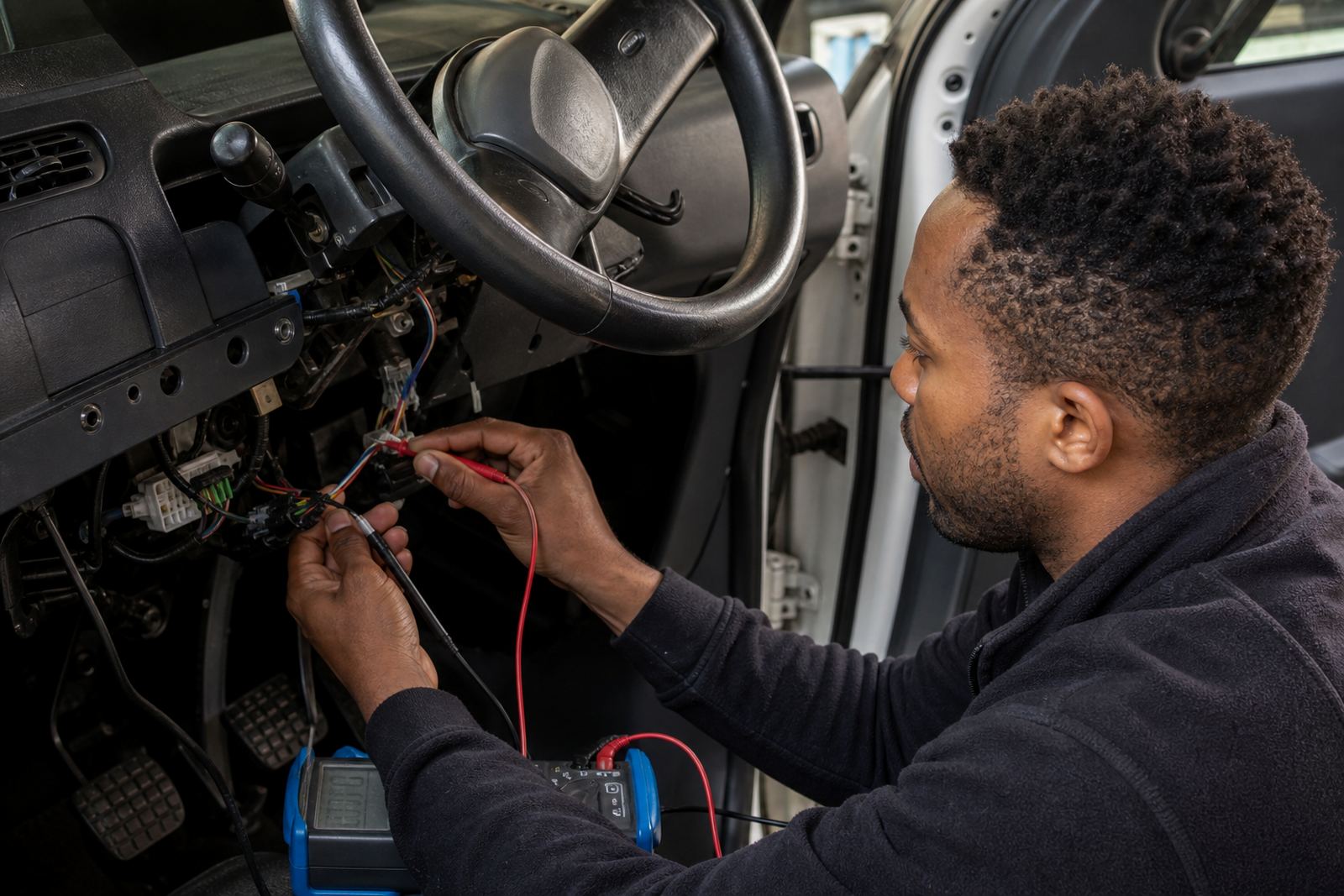
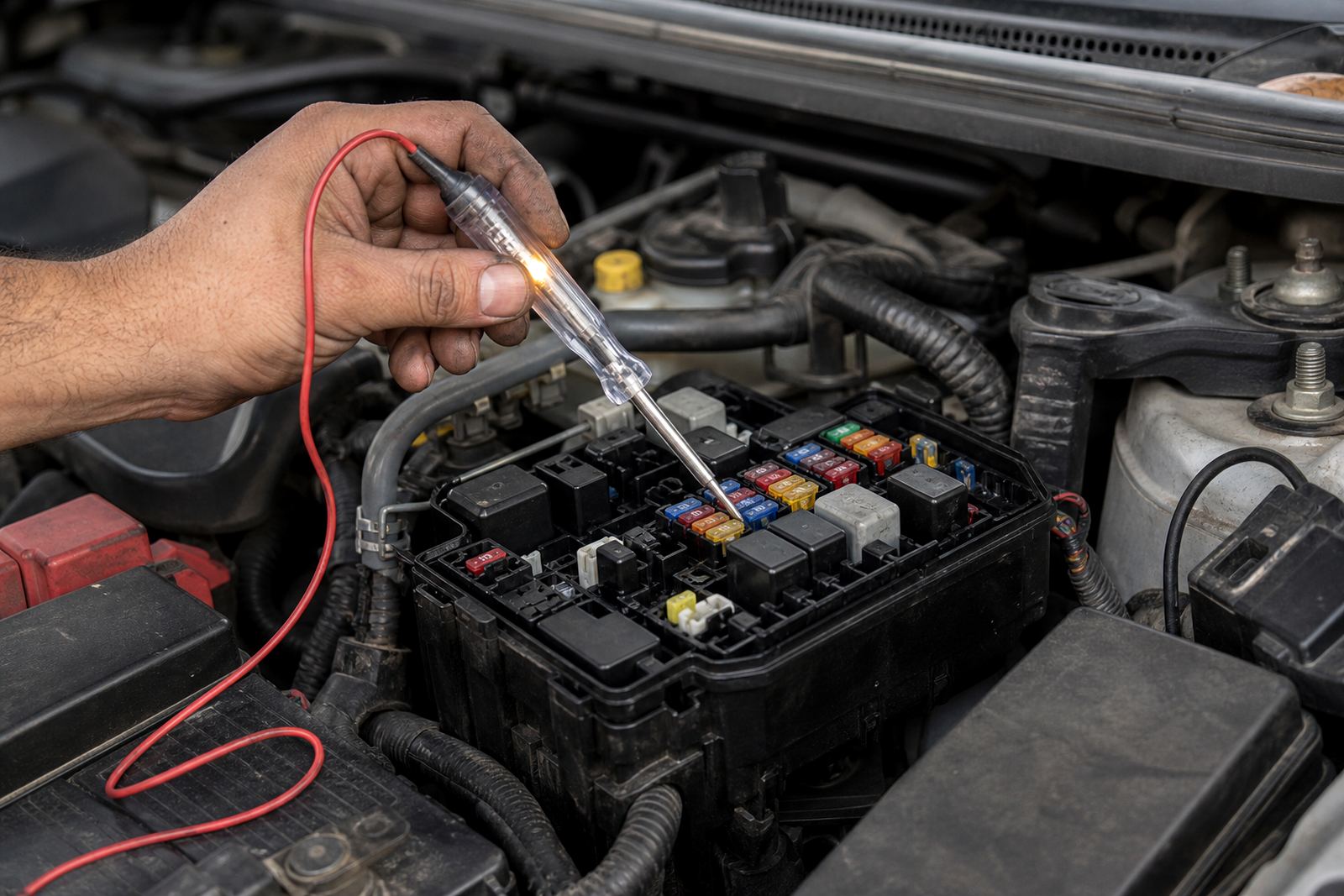
We begin at the fuse box, then move along the circuit path with metre readings, test lights and where needed wiring access to the load side. If a fuse is open, the next step is to find the reason it opened. That may be a pinched cable, a damaged socket, a rubbed-through loom, a faulty relay, or a component drawing too much current.
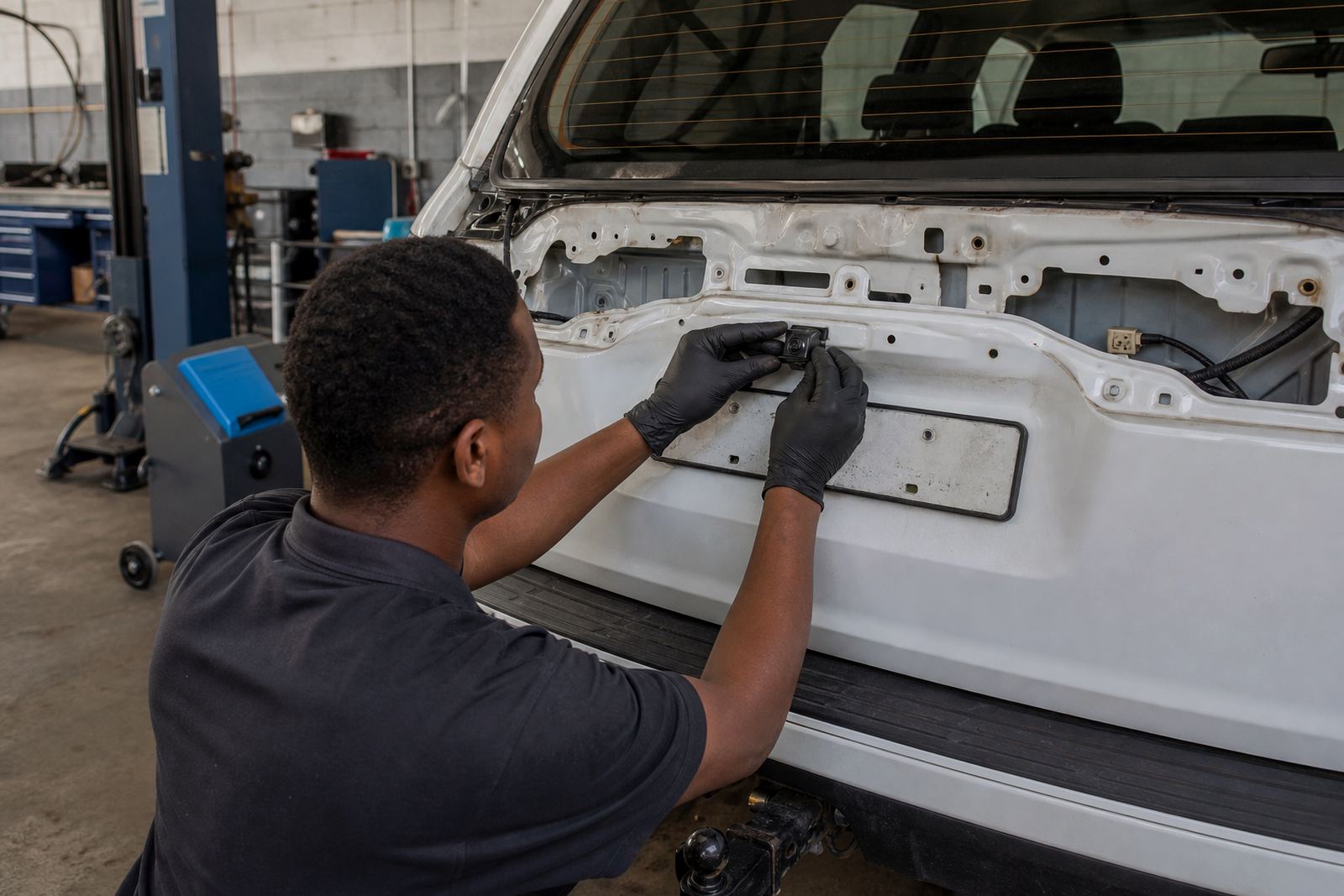
Where the circuit feeds a tracker, relay pack or accessory, we verify the install point, earth point and cable size. Poor joins, twisted wires and weak crimping can create intermittent faults that only show up under vibration. If the circuit is linked to CAN bus modules or control units, we work carefully to avoid creating secondary faults during testing.
- Fuse box access and terminal inspection
- Current draw checks before replacing a fuse
- Harness tracing through bulkhead, door or rear body runs
- Repair of damaged wire, connector or earth point
Care after the repair or install
Once the circuit is repaired, the vehicle should be checked again under normal operating load. A fuse that survives on the lift but fails on the road can point to a heat or vibration problem that still needs attention. We make sure the holder grips correctly, the line is not rubbing on sharp metal, and the repaired section is secured with proper insulation and support.
For vehicles used in coastal areas like Milnerton or Somerset West, moisture and salt air can speed up corrosion at fuse terminals and connectors. Keeping the fuse box dry and the cover seated properly helps reduce repeat faults. On work vehicles and high-mileage fleets, a periodic scan of known trouble circuits can save time later, especially where extras have been fitted into a crowded loom.
- Keep the fuse box cover in place and clipped properly
- Watch for heat marks near terminals and relay sockets
- Do not up-rate a fuse to mask a wiring fault
- Report repeated failures on the same circuit early
What to confirm when booking the job
When a fuse circuit check is booked, it helps to note which function failed, whether the fault is constant or intermittent, and whether any recent work was done on the battery, alternator, starter, trailer plug or accessory wiring. That gives us a cleaner path into the fault and reduces unnecessary stripping.
It also helps to say whether the vehicle is staying in Montague Gardens or coming in from Bellville, Paarl, Durbanville or Brackenfell, and whether it is a private car or a fleet unit. If the vehicle has aftermarket trackers, extra lights, audio equipment or cargo accessories, include that detail too because these often share the same protected feeds.
- Vehicle make, model and year
- Exact circuit that failed, such as lights, radio, socket or lock feed
- Whether the fuse has blown once or several times
- Any recent wiring, battery or accessory work