When the fan starts acting out
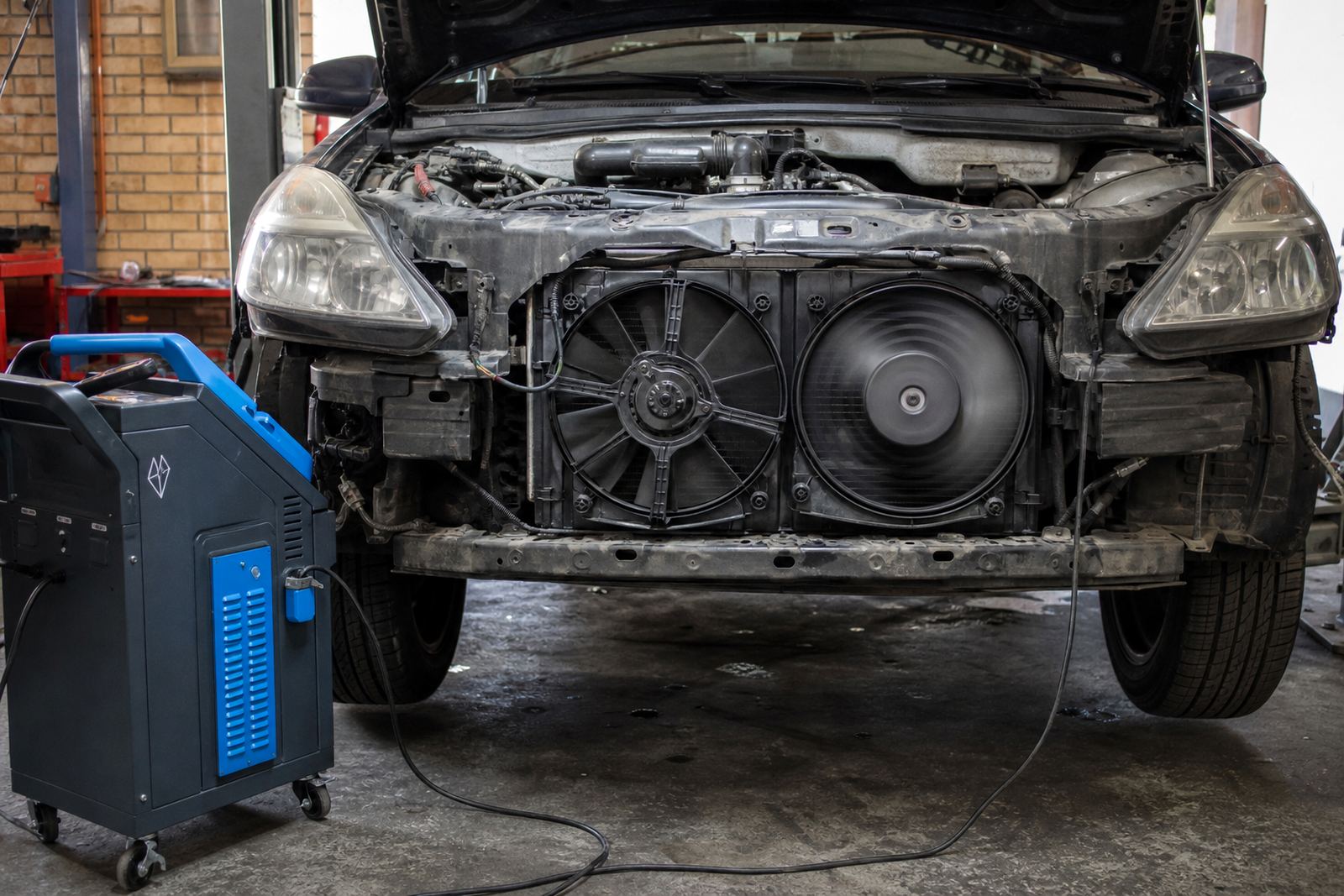
A cooling fan should cut in when the engine management system asks for it, then slow down or switch off when temperatures settle. When that pattern breaks, you may get creeping heat in traffic, a fan that runs flat out after switch-off, or a fan that never wakes up at all.
We use a cooling fan test to check the full control path. That means looking at fault codes, live data, relay control, fuse protection, earth integrity and the operating signal from the control unit or temperature switch, depending on the vehicle.
- Intermittent fan operation in stop-start traffic
- Engine temperature rising at idle or low speed
- Fan running continuously after key-off
- Burnt fuse, damaged relay or heat-marked connectors
- Poor A/C cooling caused by shared fan control faults
What the test covers on the workshop floor
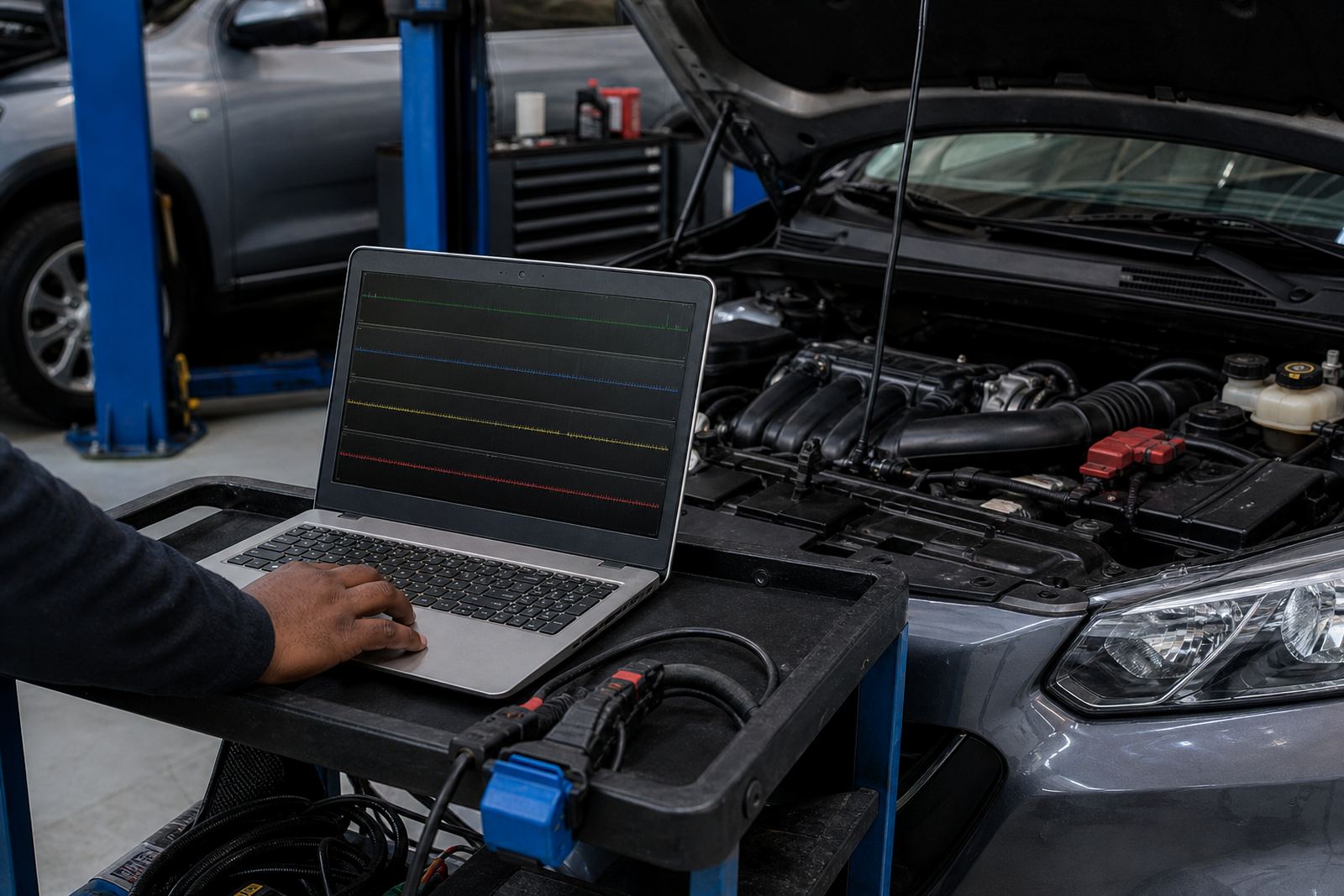
The test starts with a scan for OBD fault codes, then we read live temperature data and compare that with what the fan circuit is doing in real time. Where the vehicle uses a relay based system we check the relay coil, power feed, output side and the command signal. On some vehicles the fan is controlled through a module, PWM signal or a CAN bus request, so the checks need to match the design on that model.
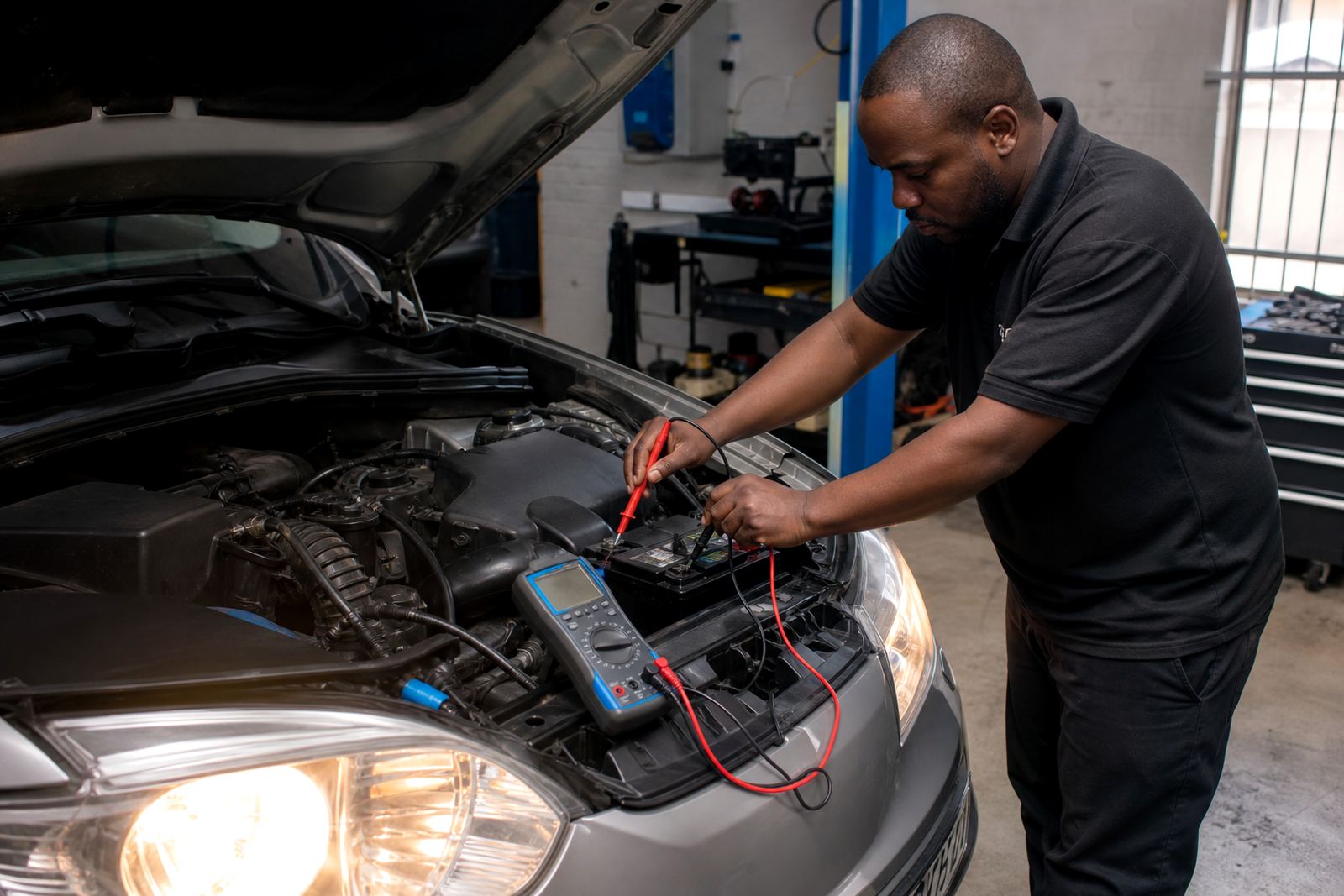
We also test battery condition and charging output where fan problems could be linked to low system voltage. A weak battery or unstable alternator output can make relays chatter, confuse modules and leave the fan cycling badly. If the wiring loom has rubbed through or a connector has overheated, that gets traced properly instead of just fitting parts.
- OBD fault code reading and clearing after repair
- Live data checks for coolant temperature and command status
- Relay and fuse testing under load
- Voltage drop checks on power and earth paths
- Fan motor current draw checks where access allows
Fitment options for workshop and fleet work
Cooling fan testing suits passenger cars, bakkies, delivery units and fleet vehicles where temperature control matters in traffic and on route. It also suits vehicles with repeated air conditioning complaints, because the condenser fan and engine cooling fan often share the same control logic or relay pack.
In Montague Gardens and across Cape Town, we see these faults on vehicles that spend time in start-stop traffic, coastal humidity and heavy daily use. Our mobile call-out work covers fleets and private owners across Bellville, Milnerton, Somerset West and Paarl when a vehicle cannot easily be moved, though some tests are cleaner in the workshop where access is better.
- Fan motors with single speed or multi-speed control
- Vehicles using relays, control modules or resistor packs
- Cooling issues linked to A/C condenser fan operation
- Fleet vehicles with repeated overheating complaints
- Private vehicles with warning lights and fan faults
How the circuit is fitted, checked and repaired
If the problem is only a failed relay, blown fuse or loose terminal, the repair is usually straightforward. If the fan motor is drawing too much current, the connector has heat damage, or the earth path has gone high resistance, the repair may need sectioned wiring, terminal replacement or a motor change.
For accessory and tracker work we keep the same careful approach around nearby looms and fused feeds. The aim is to leave the original circuit neat, protected and easy to test later. Where the fan control uses a module or software driven trigger, we confirm the signal path before replacing anything unnecessary.
- Relay replacement and socket inspection
- Fuse box checks and terminal cleaning
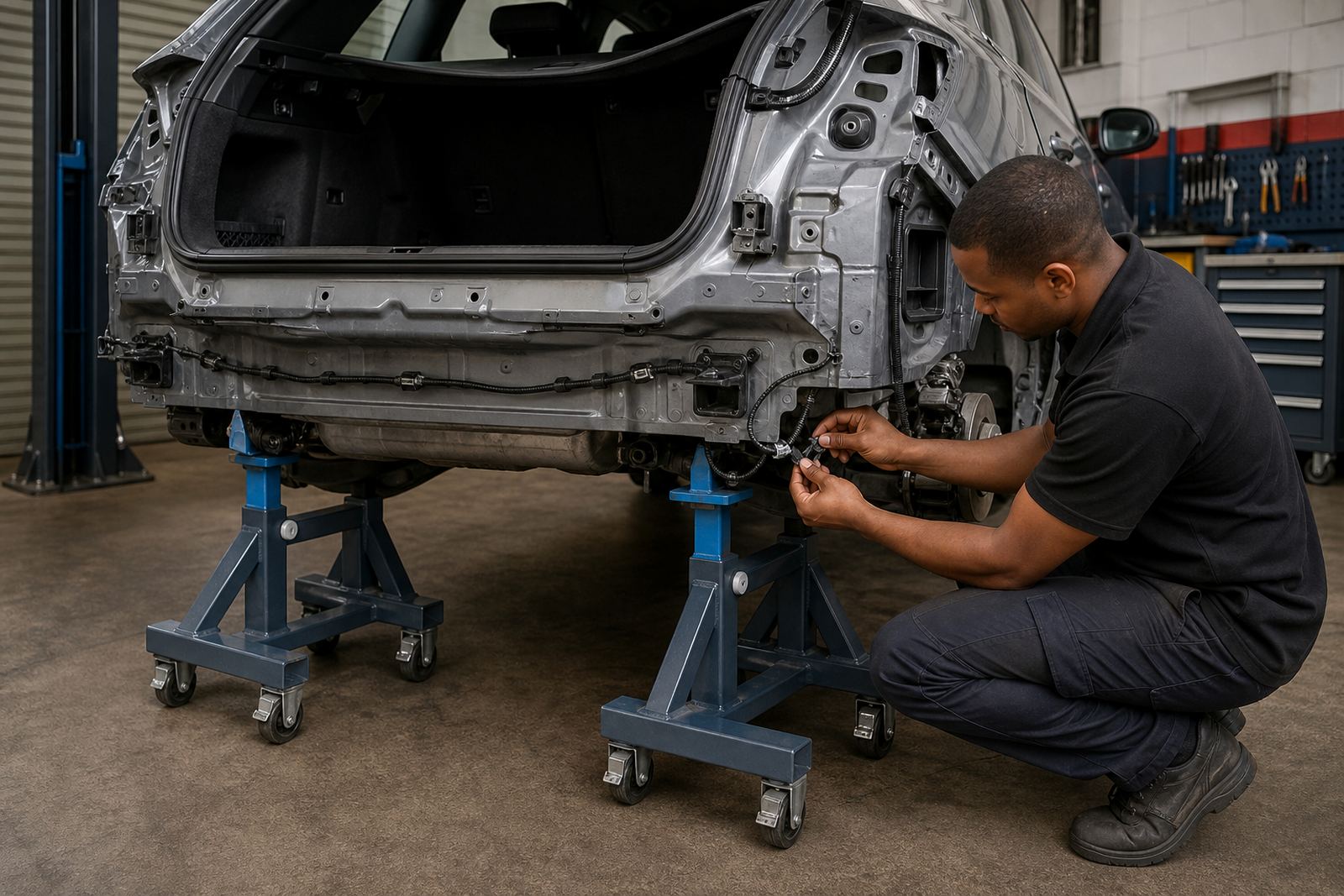
- Wiring repairs on damaged fan feeds and earths
- Fan motor testing, replacement or reconnection
- Control signal tracing on module managed systems
What to check after the repair
A sound fan circuit should settle the engine temperature without warning lamps or odd run-on behaviour. After repair, check for coolant seepage, a slipping belt on belt-driven accessories, weak battery condition and repeat fuse failure, because those signs may show a separate fault in the same area.
If the vehicle works hard in city traffic or spends long periods idling with lights, fridge gear or other accessories fitted, the charging system should also be kept in good shape. A tired alternator or weak battery can create the sort of voltage drop that upsets fan control and other electrics on the vehicle.
- Check coolant level and system pressure where relevant
- Watch for repeated fan cycling or delayed cut-in
- Look for damaged looms near the radiator support
- Keep battery terminals clean and tight
- Confirm alternator output under load if symptoms return
Details to confirm before you book in
Send the vehicle make, model, year if known, and a clear note on what the fan is doing. Mention whether the fault shows only in traffic, after switch-off, with the air conditioning on, or all the time. If the vehicle has had prior wiring repairs, a battery change or alternator work, that helps narrow the fault path.
For workshop booking or mobile support, the team will need the vehicle location, access details and whether it is safe to drive. Use our contact form to share the symptoms, registration number and your area, whether that is Montague Gardens, Bellville, Milnerton, Somerset West, Paarl or another Western Cape route.
- Vehicle model and year
- Symptom pattern and when it appears
- Any warning lights or fault codes already seen
- Previous battery, alternator or wiring work
- Workshop visit or mobile call-out location
Key facts
| Test type | Cooling fan circuit diagnosis and electrical fault tracing |
|---|---|
| Checks included | Fault codes, live data, relay operation, fuse load, earth paths |
| Electrical systems | 12V vehicle systems with module or relay controlled fans |
| Common fault areas | Fan motor, relay, fuse box, wiring loom, connectors, control signal |
| Fitment context | Workshop diagnosis and mobile call-outs for fleet and private vehicles |
| Service area | V-Auto works from Montague Gardens in Cape Town and assists customers across the Western Cape, including Cape Town, Stellenbosch, Paarl, Malmesbury and Vredenburg. |