
What the immobiliser circuit check covers
This check focuses on the circuits that allow the vehicle to recognise an authorised start request and pass that signal through to the starter or engine management side. In practice that means looking at the immobiliser module, transponder or key recognition line where fitted, starter cut circuit, relay control path, fuse feeds, earth points and the communication lines that carry the permission signal. A blocked start can sit in the key antenna, a damaged loom, a poor earth, a blown fuse, a relay with worn contacts, or a CAN bus communication fault that stops the vehicle from agreeing to crank.
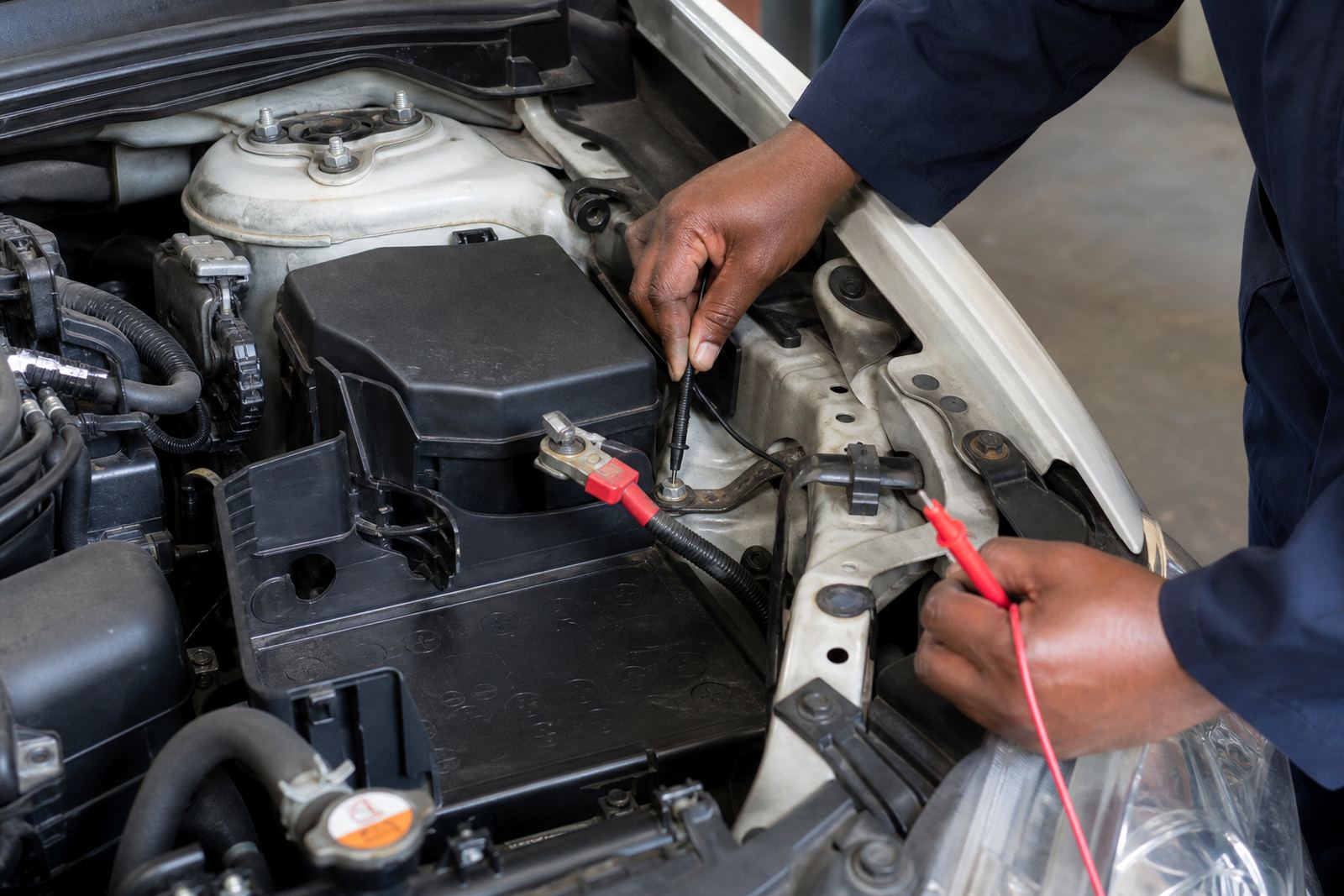
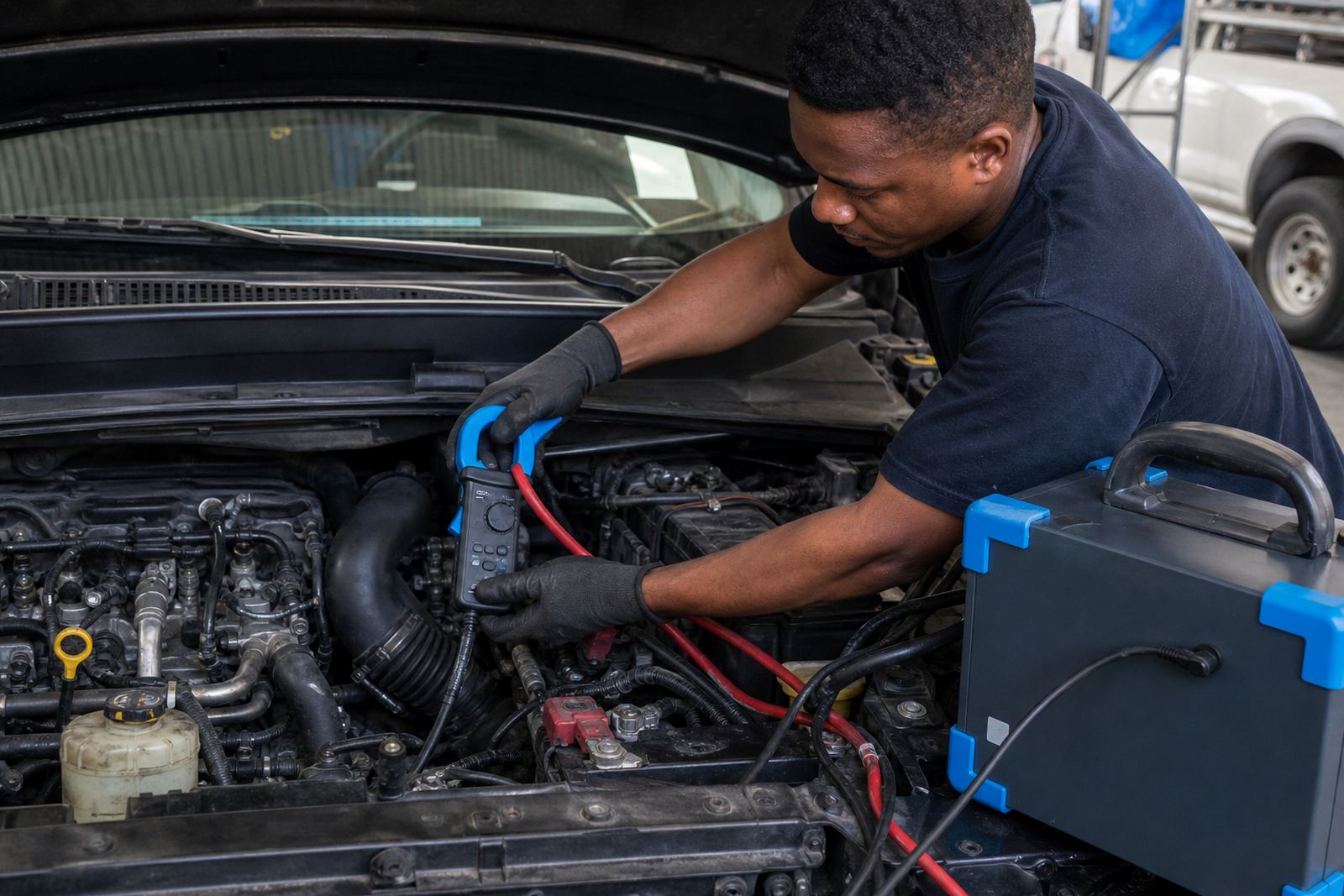
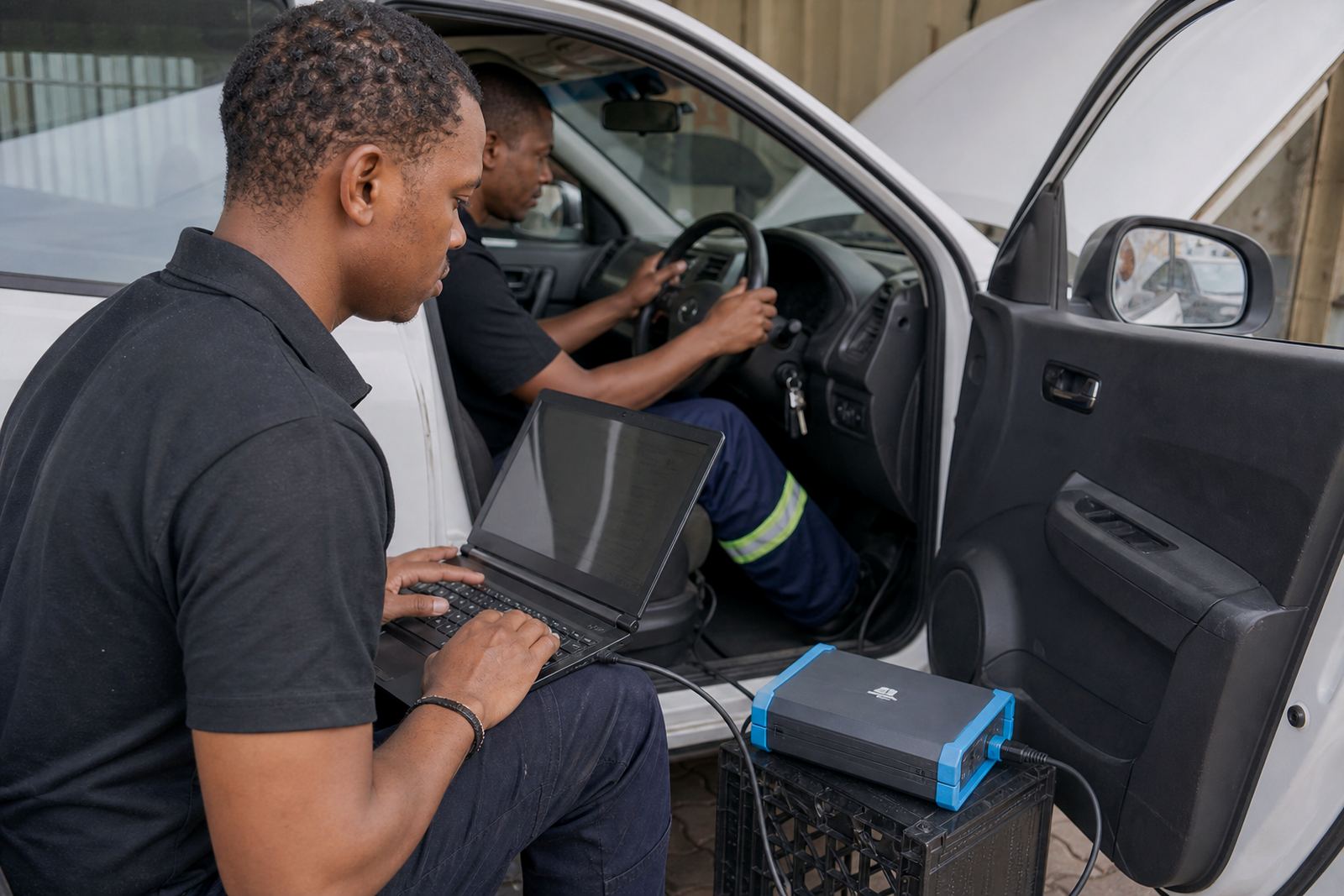
Our technicians use diagnostic equipment to read stored and pending fault codes, then move into live data checks, voltage drop testing and continuity testing. Some faults are intermittent and only show up after a bump, a poor battery, or water movement in a connector, so the wiring path has to be checked properly rather than only scanning once and stopping there.
- OBD fault code reading for immobiliser related faults
- Live data review where the vehicle reports key or permit status
- Battery and charging checks where low voltage is part of the fault
- Starter relay, fuse and earth path testing
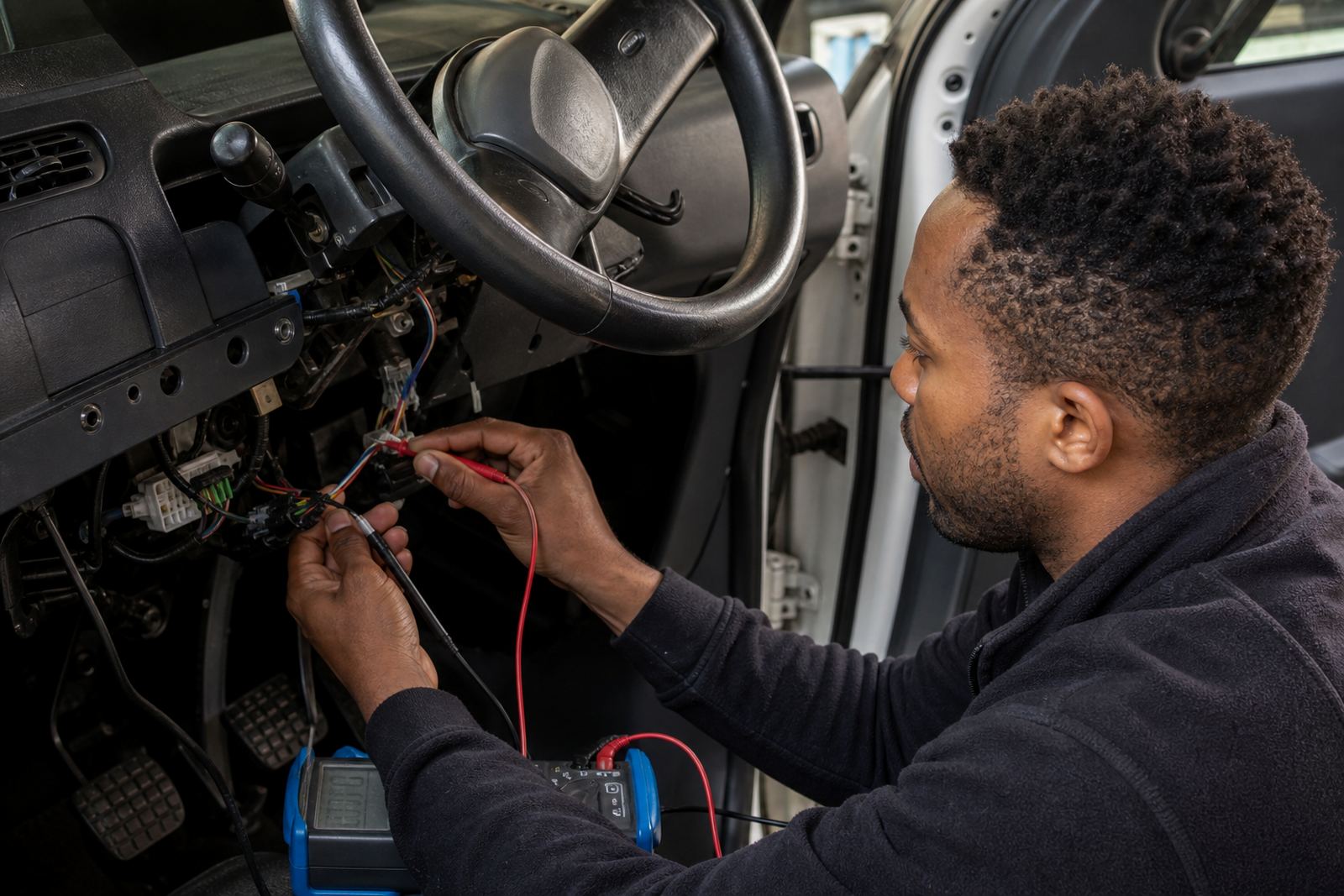
- Wiring continuity and voltage drop checks
Where this check suits real vehicle faults
An immobiliser circuit check suits private cars, bakkies, panel vans, fleet units and light commercial vehicles that crank poorly, do not crank, or crank but will not start because the security circuit is interrupting the start path. It also suits vehicles that have had a recent battery replacement, radio or accessory wiring work, accident repair, starter work or a tow-in after rain or washing. On coastal routes around Milnerton and Cape Town, damp connectors and ageing looms can create odd starting faults that move around from one day to the next.
For fleet operators, the check is useful when one unit in a group has an isolated no-start issue and you need the fault separated from general battery condition, charging system wear or poor installation work. The check also helps where a tracker, added alarm, cut-off switch or accessory has been tied into the wrong line and the immobiliser circuit is now seeing a false signal. We also check basics that still matter on modern vehicles, including earth fault health, starter circuit integrity and battery supply at the correct point in the loom.
- Vehicles with crank but no start symptoms
- Units that show immobiliser or security warning lights
- After battery replacement or low-voltage events
- After wiring repairs, accessory fitting or tracker installation
- Vehicles with moisture in connectors or under-bonnet fuse boxes
Test methods and workshop equipment we use
The check starts with identification of the fault pattern, because immobiliser issues can look the same from outside but behave differently under test. We read the fault memory, then check live data from the relevant modules where available. A healthy system should show correct supply voltage, earth integrity and the expected communication state when the key or fob is recognised. If the system does not report that state, we test the antenna ring, module feed, relay trigger, starter cut line and the wiring between the control points.
Voltage drop testing is important here. A wire can show continuity and still fail under load, especially on older vehicles or where copper strands have broken inside the insulation. We also inspect connector pins for spread terminals, corrosion, heat damage and previous repairs that were twisted together instead of properly joined. CAN bus basics matter on many modern vehicles because a module may be denying start permission after a network fault, even though the starter itself is fine.
Where a battery or charging issue is part of the story, we test that too. Low system voltage can trigger false immobiliser behaviour and cause poor communication between modules. If the vehicle has a parasitic drain, that is checked as well because repeated flat batteries lead to the same complaint returning with no warning.
Fitting and repair work that may follow the diagnosis
Once the fault path is known, the repair may be as small as a fuse, relay or earth cleaning job, or it may involve loom repair and section replacement. In some cases the starter circuit needs attention because the immobiliser is only the gatekeeper and the actual cranking fault sits in the starter solenoid feed, ignition switch signal or relay control. If wiring has been butchered during a previous repair, the line is repaired properly with the right gauge cable, crimping method and insulation support.
We handle related workshop work in the same trade area, including starter repairs, alternator repairs, battery drain repairs, charging system repairs, lighting repairs, fuse box repairs, earth fault repairs, starter circuit repairs, trailer wiring repairs, accessory rewiring and CAN bus fault checks. That matters because an immobiliser complaint can be part of a wider electrical fault and not a stand-alone problem. Mobile call-outs are available for fleet operators and private owners across Cape Town, Bellville, Milnerton, Somerset West, Paarl, Brackenfell and Durbanville when a vehicle cannot be moved safely to the workshop.
- Relay replacement where contacts have failed under load
- Earth point cleaning and cable repair where voltage loss is high
- Wiring section repairs for cracked insulation or heat damage
- Fuse box checks where the feed or output path is unstable
- Starter circuit testing where the crank signal is interrupted
Care after the fault is sorted out
After repair, the main thing is keeping the circuit dry, tight and steady. Loose terminals, water ingress, weak battery condition and hurried accessory fitting can let the fault reappear. If the vehicle is used on a fleet rotation or for short city runs, the system can dip low enough to expose a marginal earth or a weak relay. Regular battery and charging checks help here, especially on vehicles that spend time in stop-start traffic around Cape Town or do repeated short trips between depots and sites.
If a tracker or accessory was added to the vehicle, its wiring should be kept neat and insulated, with no hanging joints or unsupported joins near moving parts. Any sign of smoke smell, intermittent dash warning lights, or a starter that only works after several turns of the key should be checked early. With electrical faults, the small signs usually show up before the vehicle stops completely.
What to send with your booking details
When you use our contact form, include the vehicle make, model, year if known, engine type, and a clear note of what happens when you try to start it. Tell us whether the starter clicks, cranks slowly, cranks normally or does nothing at all. Mention recent battery work, accident repairs, alarm fitting, tracker installation or any wiring changes. Those details help us direct the check to the right circuit on arrival or in the workshop.
It also helps to note whether the fault is constant or intermittent, whether warning lights are on, and whether the issue began after rain, a jump-start, a battery replacement or a fuse change. If the vehicle is part of a fleet, say which unit it is and where it is parked, so the booking can be matched to the correct branch or call-out area. Clear notes save time in the bay.
- Vehicle make, model and year if known
- Engine type and fuel type
- Exact start symptom and warning lights
- Recent battery, starter or wiring work
- Whether the vehicle is for workshop or mobile attendance
Key facts
| Service type | Immobiliser circuit check and fault tracing |
|---|---|
| Primary fault signs | No crank, crank no start, security warning, intermittent start block |
| Diagnostic methods | Fault codes, live data, continuity, voltage drop, earth testing |
| Electrical systems covered | Starter cut circuit, relay feeds, fuses, earths, communication lines |
| Workshop base | Montague Gardens, Cape Town |
| Service area | Cape Town, Bellville, Milnerton, Somerset West, Paarl and nearby Western Cape routes |