When the engine cranks slowly or only catches after a few tries
Hard start diagnosis is the process of finding out why a vehicle turns over slowly, hesitates before firing, or starts fine one day and struggles the next. On modern vehicles the cause is often hidden in the electrical side of the job, so the checks need to cover the battery, starter current draw, alternator output, earth paths, fuse boxes and the control data that tells the engine when to run.
Our workshop handles intermittent starting faults on bakkies, hatchbacks, panel vans, SUVs and light fleet vehicles. A weak battery can still show enough volts to light the dash, yet collapse under load. A poor earth strap can leave the starter sounding lazy. A charging fault can mask itself until the vehicle has been parked overnight or used on short trips around Cape Town.
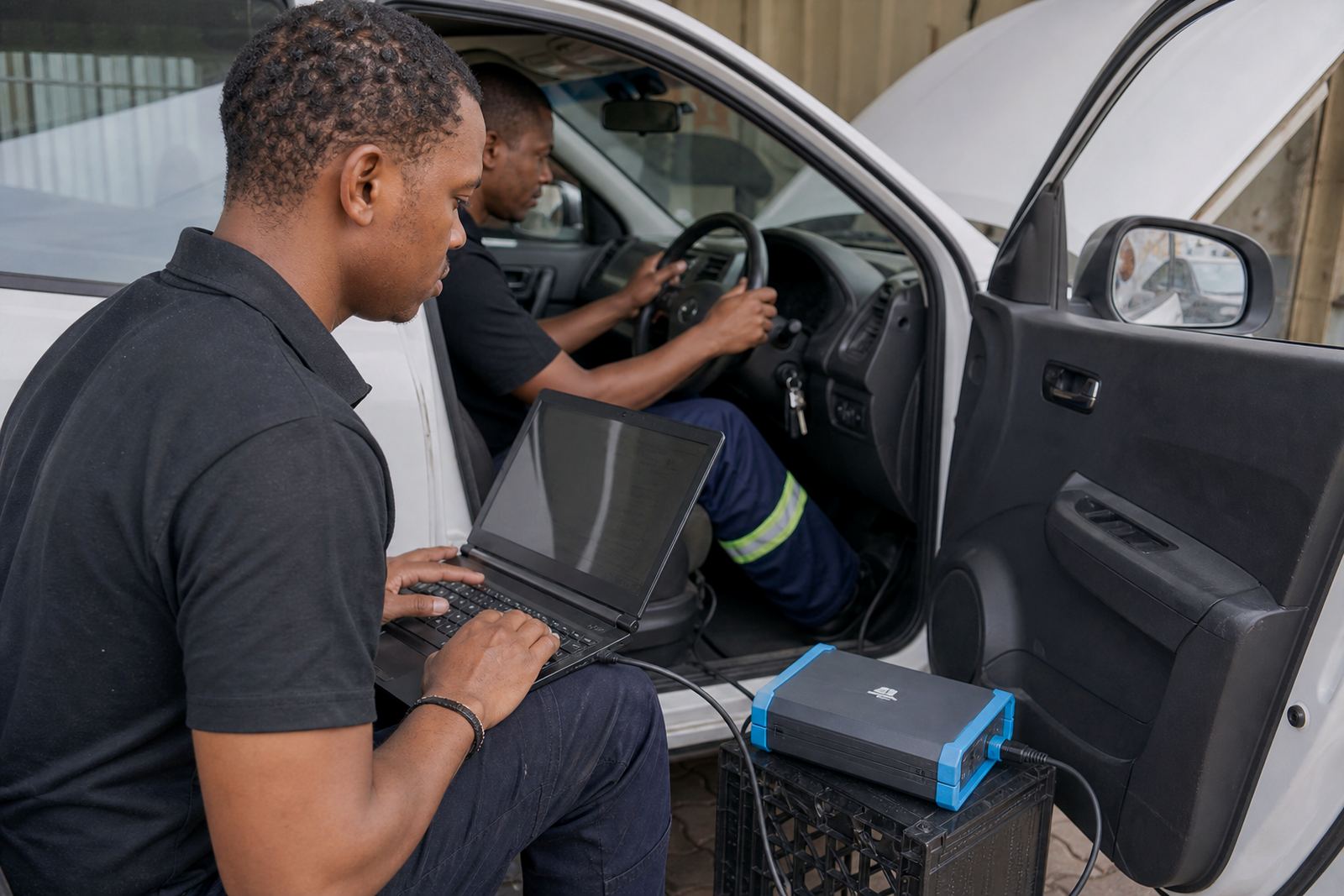
The diagnosis usually begins with a roadworthy-style electrical view of the car. We read OBD fault codes, look at live data from the engine control system, test cranking voltage, and check whether the starter is pulling the right current. If the vehicle has CAN bus communication issues or a tracker or accessory tied into the wrong point, that can be part of the fault trail too.
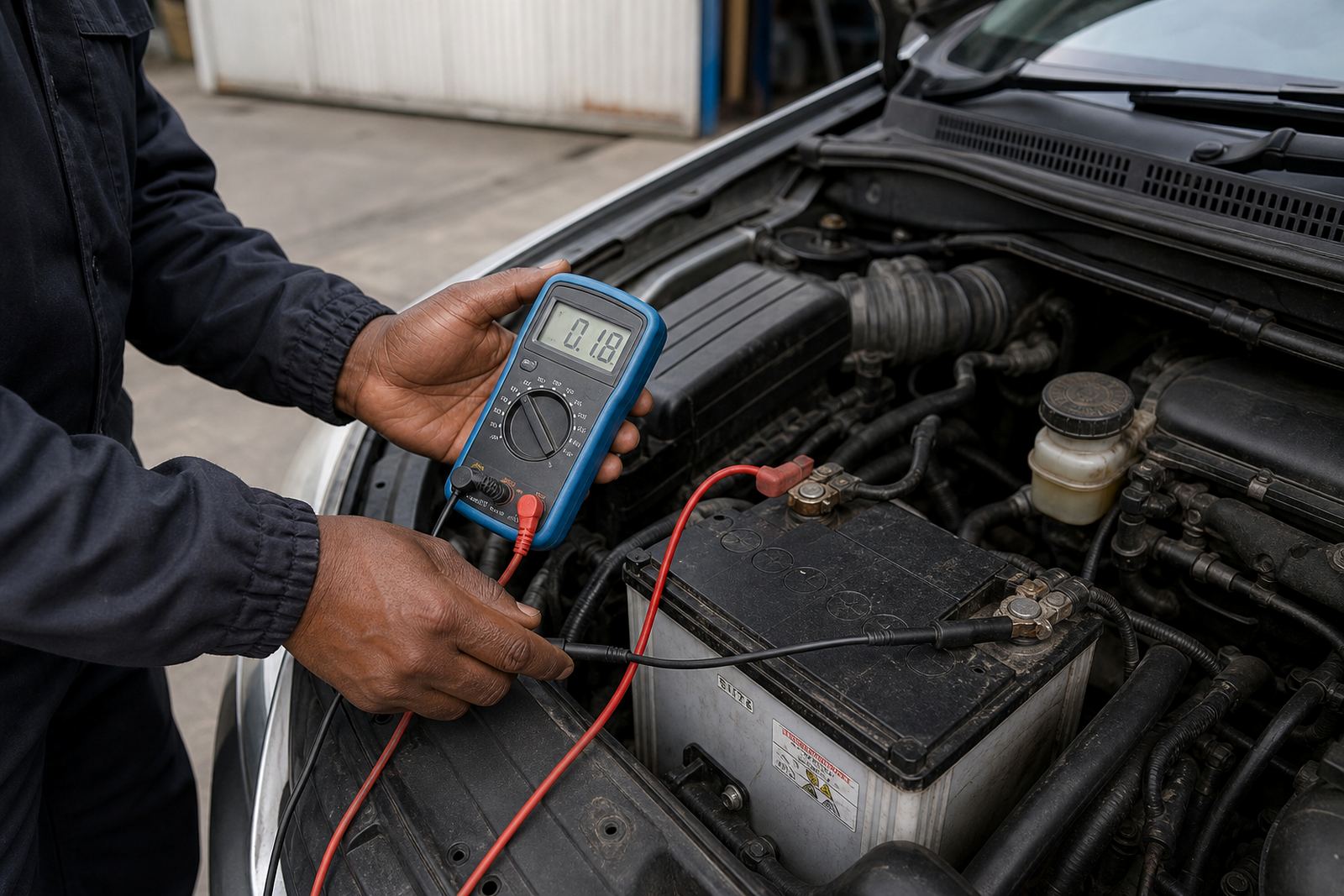
- Battery condition and reserve under load
- Starter draw and cranking voltage drop
- Alternator output and charging ripple
- Earth fault checks and cable continuity
- OBD fault codes and live data review
- CAN bus basics where the symptom points there
Checks that separate a weak battery from a hidden wiring fault
Not every slow start comes from the same place. Some vehicles crank well but take too long to catch. Others show a clicking relay, a heavy starter sound, or an engine that only starts after the ignition key is held longer than usual. Our work is to separate the symptoms and follow the electrical chain point by point.
Battery drain testing is important when a vehicle starts flat after standing. A parasitic draw can come from an accessory, alarm circuit, tracker, glove box lamp, worn relay or damaged wiring run. In coastal conditions around Milnerton and Somerset West, corrosion at terminals and connectors can also create enough resistance to upset the start circuit. That kind of fault is easy to miss if only the battery is swapped.
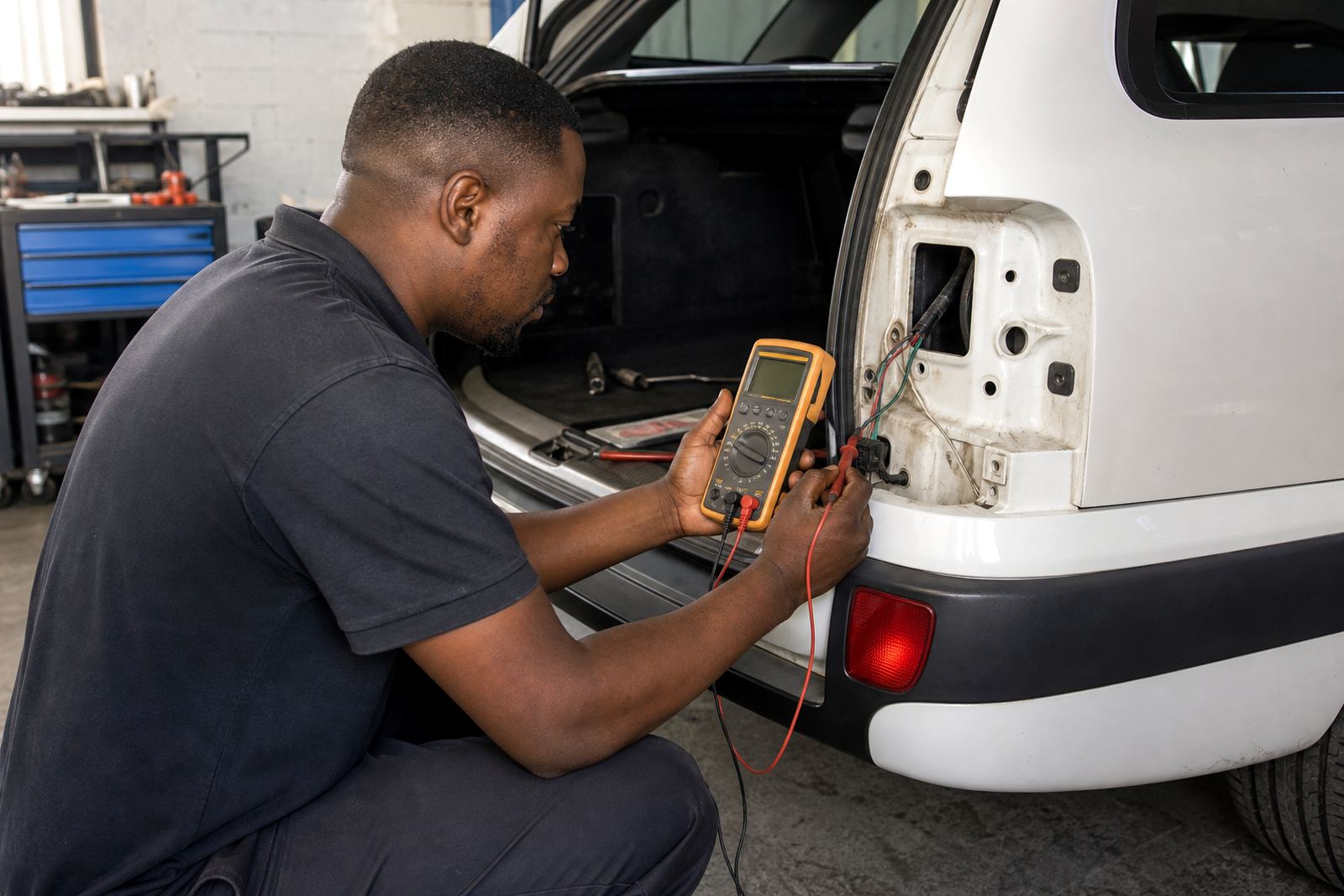
We also inspect the starter circuit itself. The trigger wire, relay control, ignition feed and solenoid path all matter. If voltage is reaching the starter but the motor still drags, the issue may be in the starter assembly. If voltage is not reaching it cleanly, the fault usually sits higher up in the circuit or in a connector, fuse box link or earth point.
- Overnight battery drain checks
- Ignition feed and trigger circuit tracing
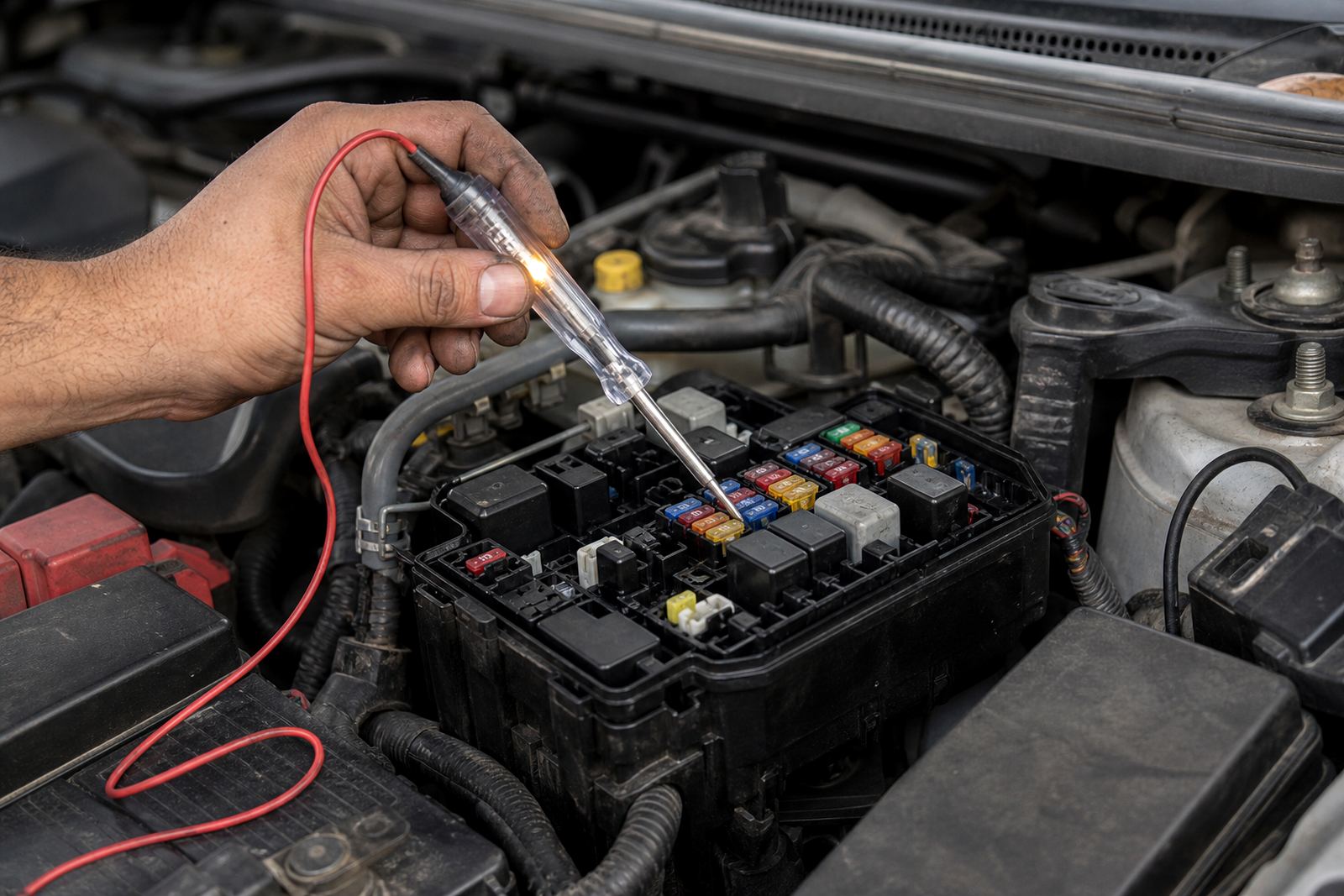
- Relay testing and fuse box inspection
- Connector condition and corrosion checks
- Earth strap continuity and voltage drop readings
Vehicles, fleets and operating conditions that suit this service
This service suits private owners, courier fleets, trade vehicles and work cars that need proper fault tracing before parts are replaced. It is useful when the complaint is intermittent, because intermittent faults often disappear if the vehicle is only tested once at idle. We look at the conditions that trigger the fault, including cold starts, short trips, wet weather, load on the charging system and repeated stop start use in traffic.
Montague Gardens is a sensible base for this kind of work because many vehicles move between industrial areas, retail routes and the motorway network, so the fault may show up in the workshop or while out on site. For mobile call-outs across Cape Town, Bellville, Paarl, Brackenfell and Durbanville, the same checks are used in the field where access and weather may change what can be tested first.
Hard start diagnosis is especially helpful where more than one fault may be present. A starter with worn brushes can sit alongside a low battery. A charging issue can sit alongside a poor earth. An accessory installation done without care can pull current when the vehicle is off. Our aim is to map the full picture before repair work begins.
What the fitting and repair process usually involves
When the fault points to the starter, alternator, wiring or battery path, the repair can involve component replacement, cable repair, terminal cleaning, connector repair, or rewiring of damaged sections. If the problem is in an accessory circuit or tracker feed, we isolate that branch and test the effect on the rest of the vehicle. For many modern vehicles, a proper fix means checking more than one system because the start event is shared by several control points.
Our team also handles wiring repairs where heat, vibration or moisture has damaged the loom. In vehicles that tow trailers or carry added accessories, a poor install can disturb the starting system or charging behaviour. We repair earth faults, starter circuit faults, charging system faults and fuse box issues where those problems are connected to the hard start complaint.
Some jobs need the vehicle to stay in the shop while the fault is replicated under test. Others suit a mobile visit, especially when the engine will start, then fail again after parking or after a short stop. If the vehicle is not safe to drive, we work from the point that gives the most useful electrical readings and then move inward to the damaged section.
- Starter motor testing and replacement where needed
- Alternator testing, repair or replacement
- Battery replacement after verification
- Wiring and loom repair at the fault point
- Accessory and tracker circuit isolation
Spec details for a hard start job
The right details help us prepare for the fault, especially when the problem is intermittent or only happens after standing. The vehicle make, model, year, engine type and fuel type are useful, along with whether the fault appears cold, warm, after rain, after charging, or after accessories have been fitted. If a warning light is on, the OBD code and the live data snapshot can point us in the right direction before physical testing begins.
For battery and charging checks, the key numbers are voltage at rest, cranking voltage, alternator output and any unusual current draw with the vehicle parked. On starter faults, it helps to know whether the sound is a click, a slow crank or a no-crank event. On CAN bus related faults, note whether the dashboard, immobiliser or central locking behaves oddly at the same time.
- Vehicle type: car, bakkie, van or fleet unit
- Fault pattern: slow crank, no crank, or delayed start
- System data: battery voltage, charging output, fault codes
- Location: workshop booking or mobile call-out area
- Added equipment: tracker, trailer wiring, accessories, alarms
- Usage pattern: short trips, long runs, standing periods
Care after the fault is fixed
Once the cause is found and repaired, the vehicle should be watched for repeated symptoms over a few start cycles. A battery that has been drained too deeply may need replacement rather than a simple recharge. A corroded terminal or earth point must remain clean and tight, especially on vehicles used close to the coast where damp air and salt can damage exposed metal. If an alternator or starter has failed because of age, the rest of the system should still be checked so the same fault does not return through another weak link.
Drivers can help by noting when the fault appears and whether any accessories were added before it started. If the vehicle is used in a fleet, keep a note of overnight standing time, jump starts, warning lamps and any recent wiring work. That history matters when the fault is intermittent and does not leave a clean code every time.
Key facts
| Service type | Hard start diagnosis for intermittent or slow-starting vehicles |
|---|---|
| Core checks | OBD fault codes, live data, battery test, charging test, starter draw, earth faults |
| Repair scope | Starter repairs, alternator repairs, wiring repairs, fuse box repairs, accessory circuit isolation |
| Vehicle types | Passenger vehicles, bakkies, vans, fleet units and light commercial vehicles |
| Area covered | Montague Gardens, Cape Town, Bellville, Milnerton, Somerset West, Paarl and nearby routes |
| Access method | Workshop booking or mobile call-out for suitable faults |