
What the lighting circuit test covers
This test follows the current path from the battery feed or ignition feed, through the fuse box, relay or switch, then onward to the lamp and its earth point. It is used on headlamps, park lamps, brake lamps, reverse lamps, number plate lamps and indicators, with checks for low voltage, poor contact, heat damage and open circuits.
With many vehicles, the bulb is fine and the real fault sits elsewhere in the lighting circuit. A cracked holder, corroded pin, weak earth strap or tired stalk switch can leave a lamp dim, flickering or dead on one side only. We test the circuit to pinpoint where voltage drops off.
Test methods used in the workshop
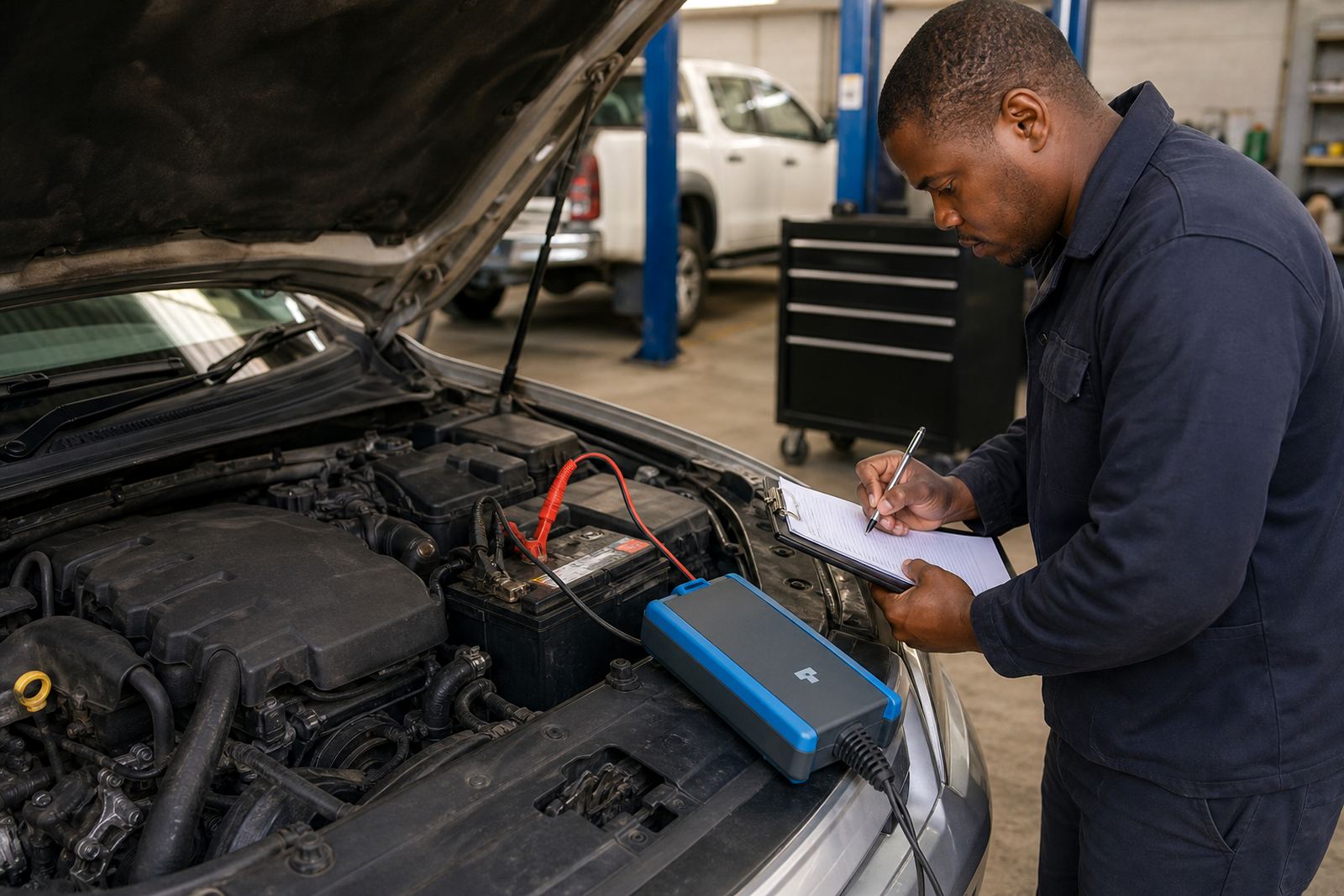
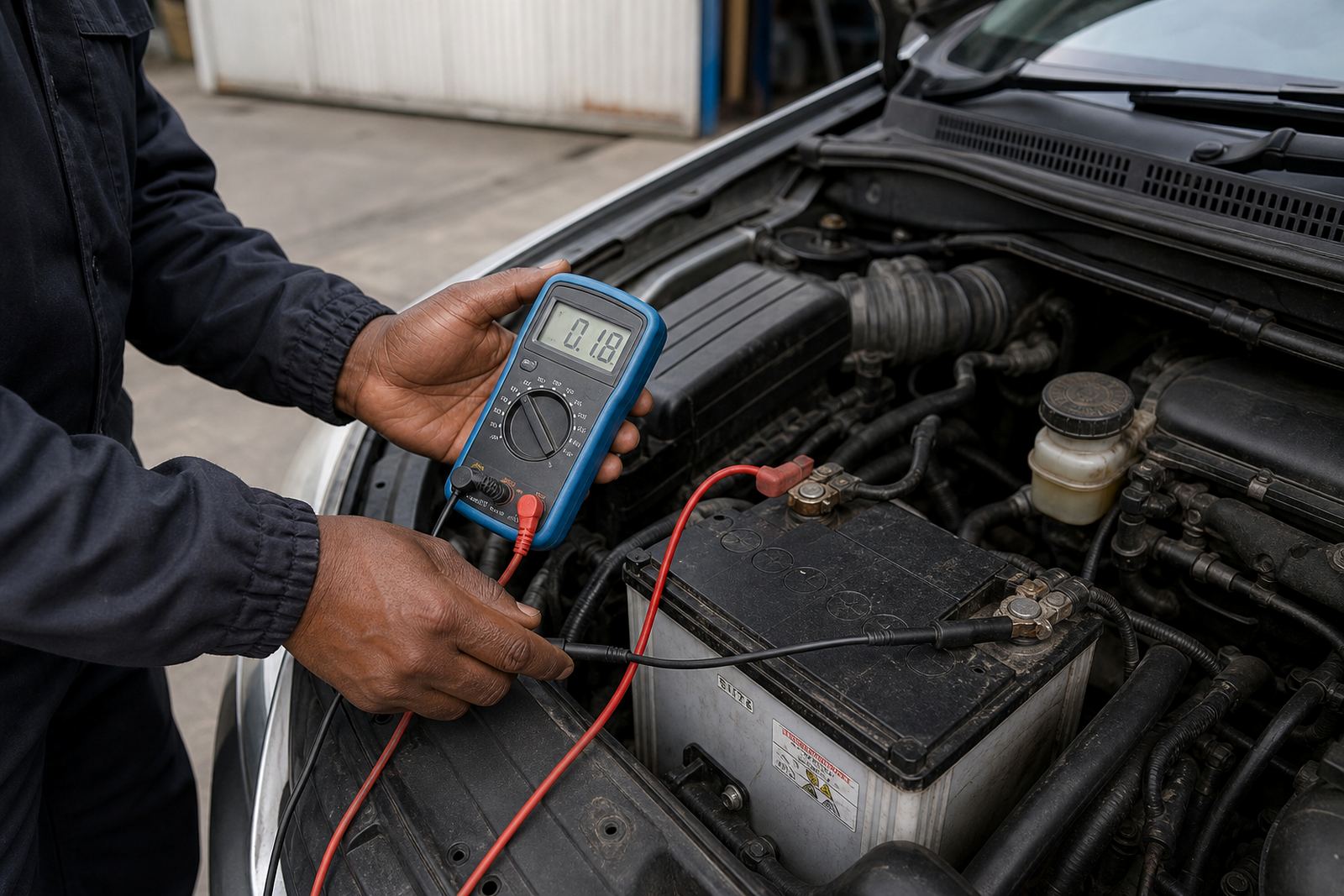
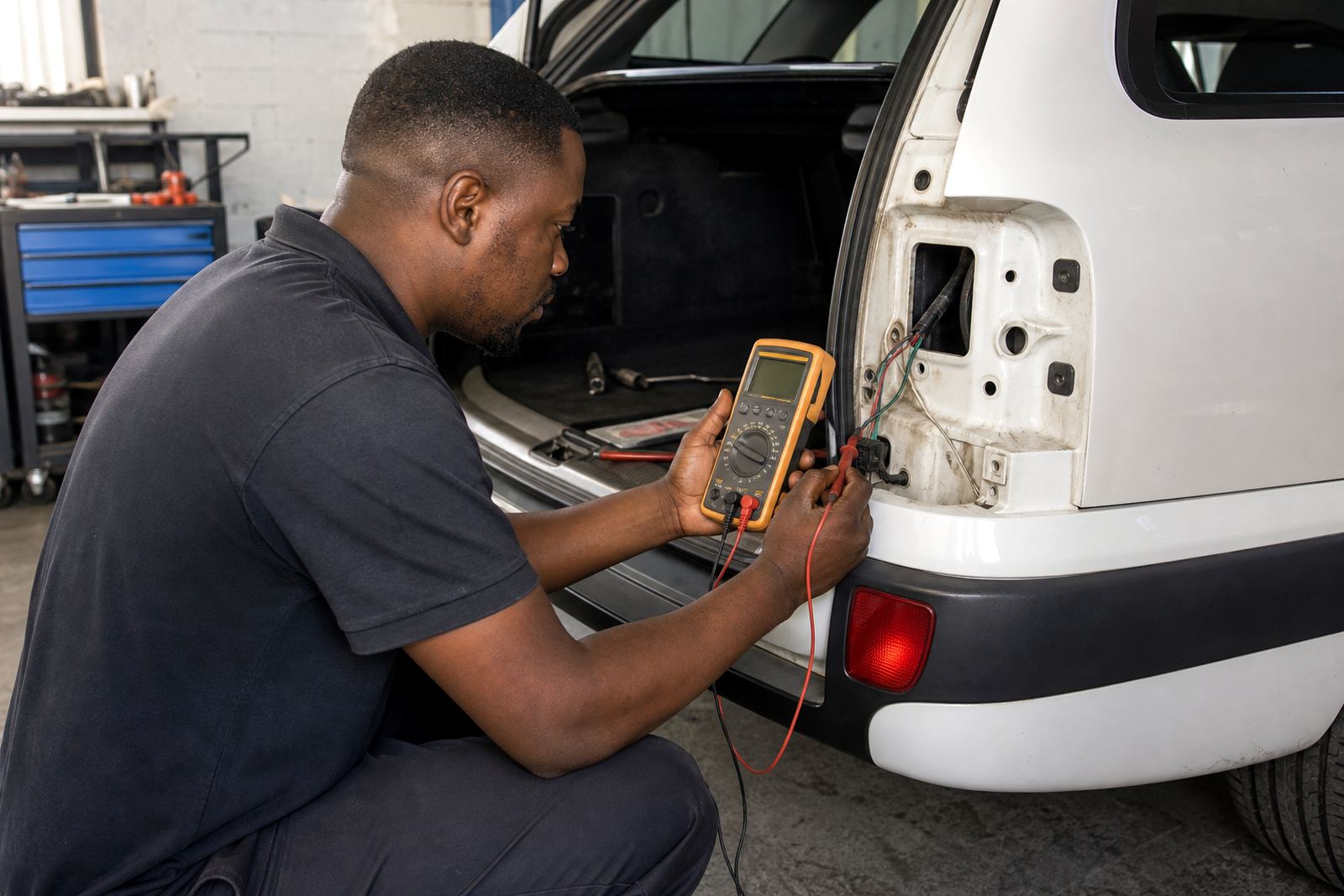
The lighting circuit test can include OBD fault code checks where the vehicle stores lamp or body control related faults, live data checks for switch input, and direct voltage testing at the lamp, fuse box and earth point. We also use continuity checks, load testing and visual inspection of loom routing, connectors and grommets.
- Supply voltage checks at the lamp and fuse box
- Earth point testing for resistance and heat damage
- Switch and relay checks where the circuit uses them
- Bulb holder inspection for melted terminals or loose grip
- Wiring trace on rubbed-through sections near hinges, grille areas and bumper runs
Where this fault test suits best
This work suits private cars, bakkies, panel vans and fleet units that spend time on rough roads, in coastal humidity or on repeated short trips. Those conditions often show up as oxidised contacts, brittle insulation or water entry at connectors, especially after bumper work, accident repairs or trailer hitch fitting.
It also helps when one side of the vehicle lights properly and the other side does not, or when indicators flash faster than normal because the circuit has an uneven load. On fleet vehicles, we see this often after extra accessories have been added to the original loom.
- Headlamp circuits with dim dip, one-sided failure or flicker
- Tail and brake lamp faults after moisture entry
- Indicator circuits with rapid flash or dead corners
- Vehicles with trailer wiring additions or body repairs
- Fleets that need repeated lighting faults traced properly
Fitting and repair work after the fault is found
Once the failed section is identified, the repair may involve cleaning terminals, replacing a damaged connector, re-terminating a wire, repairing a broken earth or fitting a new lamp holder. If the fault sits inside a loom, the damaged section is cut back and repaired with proper crimping, insulation and routing so the wiring does not chafe again.
When the issue is linked to a switch, relay or control module input, the wiring is checked first before any parts are replaced. That matters on vehicles where lighting circuits are shared with body functions and CAN bus related control signals.
- Connector repair and terminal cleaning
- Earth repair and circuit rechecking after fitment
- Bulb holder and socket replacement where required
- Wiring loom repair with heat-shrunk protection
- Relay or switch circuit checks before part replacement
Care after repair and everyday use
After a lighting circuit repair, keep an eye on water entry around headlamp backs, tail lamp seals and bumper loom passes. If the vehicle has had a panel repair, trailer wiring fitted or a battery issue, it is worth checking that the lights are still bright and even after a few drives.
Bulbs should be replaced in matched pairs where appropriate, because uneven age can leave one side looking whiter or dimmer than the other. On fleet vehicles, a quick visual check before night work or long-distance driving helps spot loose plugs, cracked lenses or a lamp that has started to draw too much current.
Details to confirm when you book the test
It helps to know which light is failing, whether the fault is constant or intermittent, and whether any recent work was done on the bumper, battery, trailer socket or body panels. If the issue only appears with the engine running, during rain, or when the steering is turned, that detail shortens the fault path.
- Vehicle make, model and year
- Which lamp or side is affected
- Whether the fault is on low beam, high beam, brake, tail or indicator
- Any recent accident repair, battery replacement or accessory fitting
- Whether the fault appears only when driving, idling or in wet weather
- Whether a warning lamp or body fault message is showing
Clients in Montague Gardens, Cape Town and the wider Western Cape can send the details through our contact form when arranging workshop or mobile work. We handle lighting circuit testing for Cape Town, Bellville, Milnerton, Somerset West, Paarl, Brackenfell and Durbanville call-outs, as well as vehicles brought into the workshop.
Key facts
| Service type | Lighting circuit diagnostics and repair |
|---|---|
| Circuits checked | Headlamp, tail lamp, brake lamp, indicator, park lamp and number plate lamp |
| Test methods | Voltage drop, continuity, load testing, live data and fault code checks |
| Common faults | Supply loss, weak earth, damaged switch, corroded connector and loom damage |
| Fitment work | Bulb holders, connectors, relay circuits, wiring repairs and earth repairs |
| Area covered | Montague Gardens, Cape Town and mobile call-outs across the Western Cape |