
What a relay test shows in a working vehicle circuit
A relay is a switch that uses a low current control side to open or close a higher current output side. In vehicle work that can be the bridge between a switch, ECU command, fuse box, battery feed and the part that must actually run. A proper relay function test checks the coil, the contacts, the trigger signal and the output supply under conditions that make sense for the fault, not just on a bench with no context.
We use relay testing when a circuit behaves oddly, a component works only sometimes or a fuse keeps opening without an obvious short. On many faults the relay is not the root cause on its own, it is the point where the problem shows up. That may be a weak control signal, a poor earth, a corroded terminal, heat damaged contacts or a control module that is not commanding the circuit correctly.
- Control side check for correct trigger voltage or ground switching
- Coil resistance check to spot an open or shorted coil
- Contact drop test under load
- Output feed check from relay to the target circuit
- Heat and vibration faults that only appear during live testing
Relay sizes and fitting styles we work with
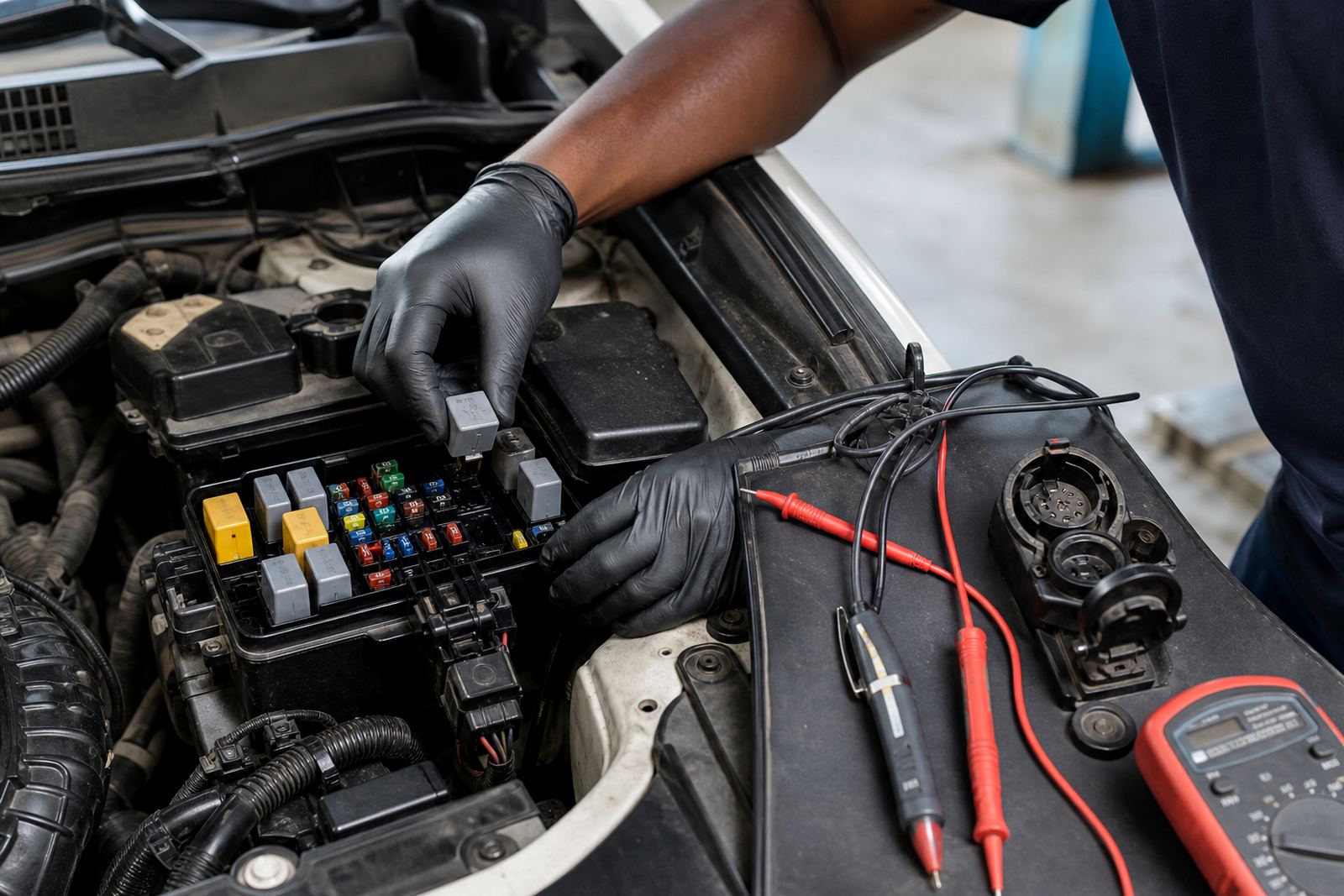
Vehicle relays are not all the same, even where the job on paper looks similar. We see compact micro relays, standard cube style relays, changeover relays, normally open types and units built into fuse and power distribution boxes. Some are plug in pieces with spade terminals, while others sit in housings with locking tabs or special terminal layouts that need careful tracing before anything is moved.
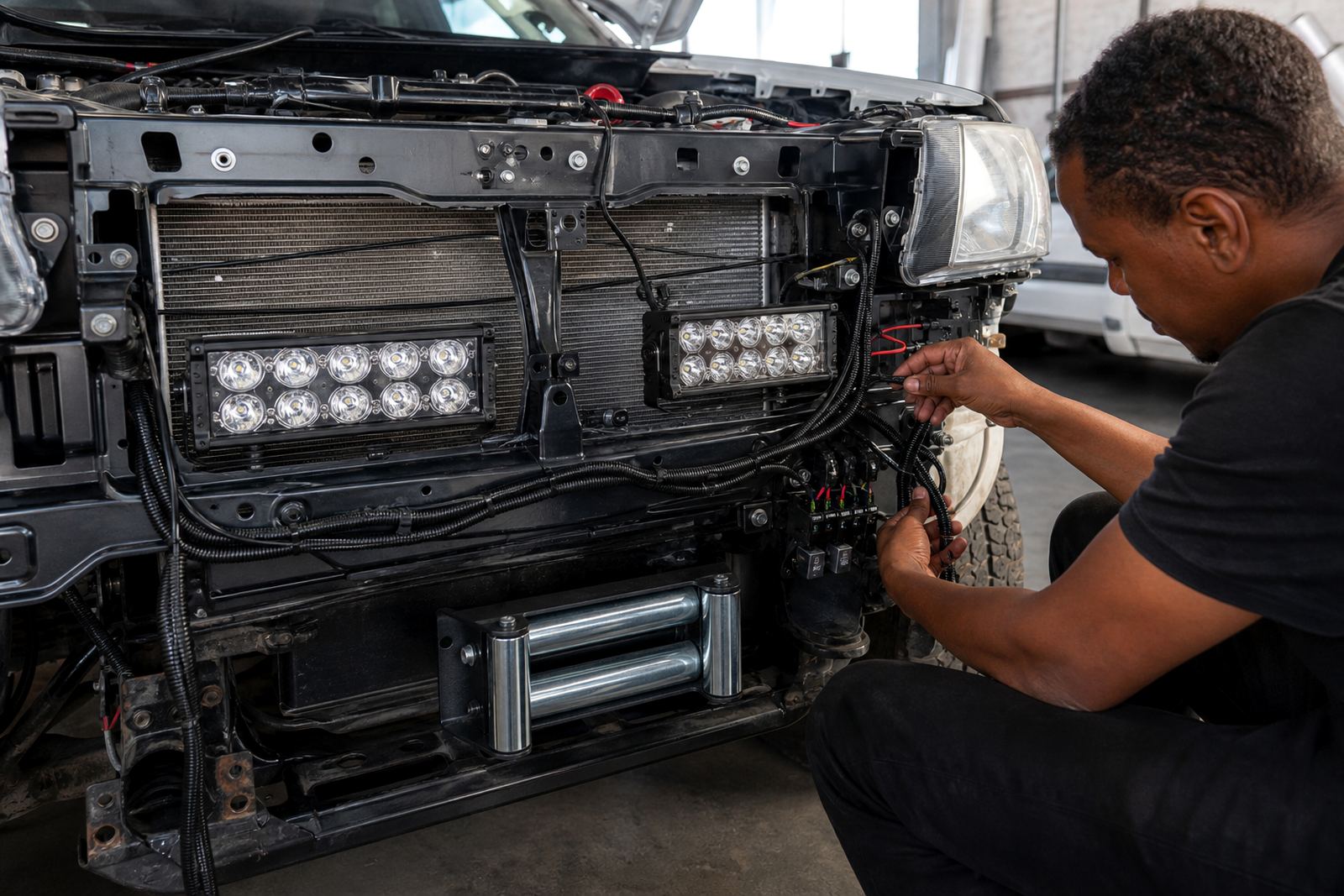
For accessory wiring, tracker installs and fleet add-ons, the relay choice also depends on current draw, circuit protection and the shape of the mounting space. A relay that is fine for a light duty feed may not suit a starter circuit, a high demand lighting run or an added accessory that will work for long periods. We match the relay to the load and the wiring path, then confirm the control side and the output side together.
- 12 V passenger vehicle relay systems
- 24 V commercial and light fleet relay circuits
- 4 pin and 5 pin relay layouts
- Micro relays and standard cube relays
- Relay sockets, piggyback leads and fused accessory feeds
Where relay faults usually turn up on site
Relay problems can sit behind many different complaints. A starter may click but not crank, a headlamp feed may drop out, a fuel or cooling circuit may fail to wake up, or a trailer feed may work on one side and not the other. On modern vehicles, relay control can also sit close to CAN bus related fault tracing, so we often check the wider circuit before blaming the relay itself.
In fleets, relays are common in added equipment and in repeated high use systems. Courier vans, work bakkies, light trucks and private vehicles with accessory wiring often show repeat faults around relays because of heat, dust, moisture and movement. Coastal humidity in Cape Town, Milnerton and Somerset West can speed up terminal corrosion, especially where a socket has been opened before and left with loose fitment or poor sealing.
- Starter circuit complaints and intermittent no crank faults
- Lighting relays for beams, spots and work lights
- Fan, horn and pump circuits
- Accessory feeds for trackers, chargers and add on equipment
- Trailer wiring problems where the relay or feed path is disturbed
How we test and fit relays
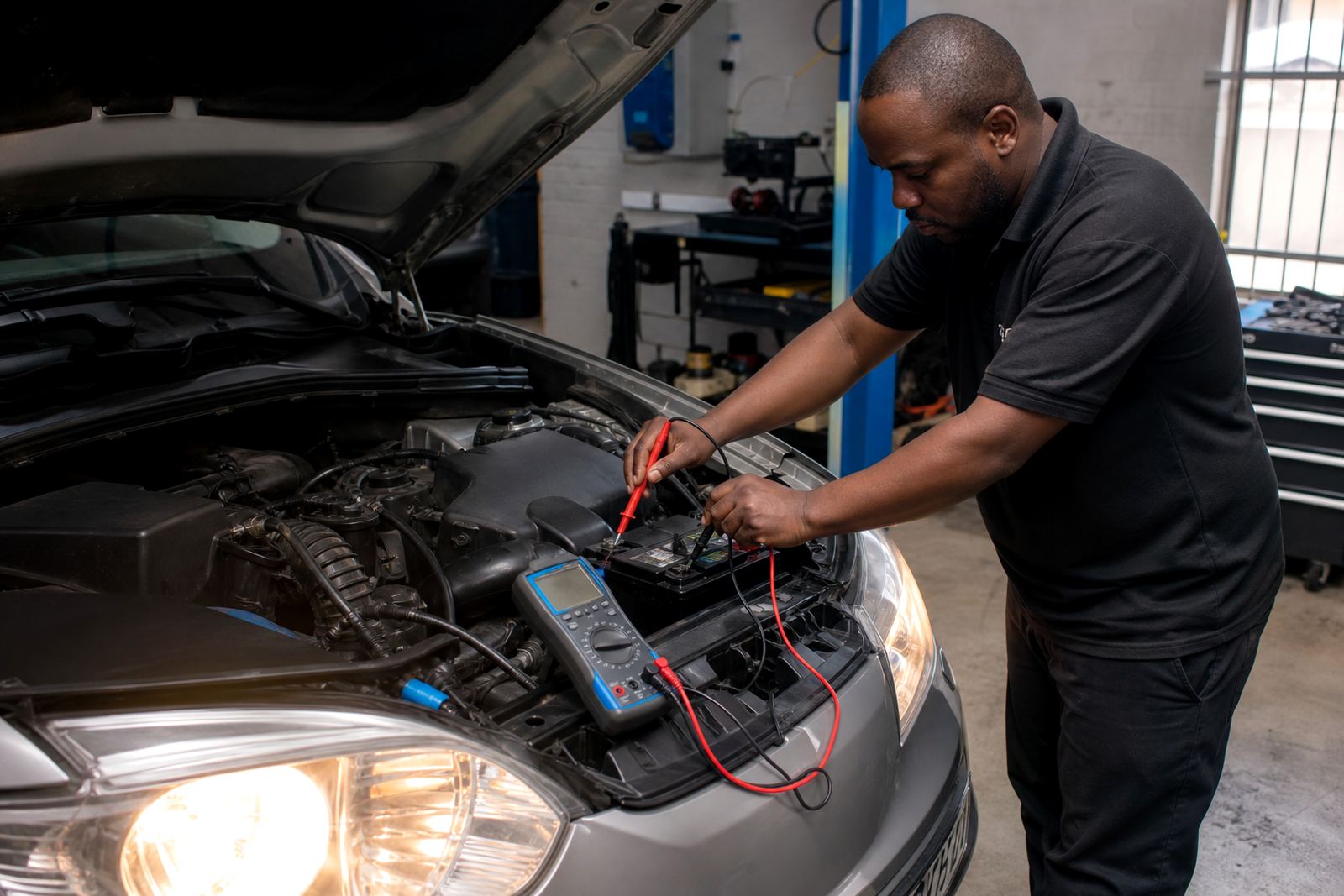
Our relay work starts with the complaint, the vehicle wiring path and the load that the relay is meant to carry. We check the control signal from the switch or module, then verify the relay output while the circuit is under load. If the relay is fitted in a fuse box or distribution panel, we inspect the terminals, socket tension, surrounding fuses and any signs of heat or moisture damage before we refit or replace anything.
Where a relay is part of a larger fault, we may also trace the earth side, battery feed, alternator charge path, starter circuit or a parasitic drain that keeps draining the battery overnight. That matters because a relay can test fine by itself and still fail in the vehicle due to a bad feed or damaged wiring. We also check for poor terminal grip and broken strands near bends, which is common on vehicles that work hard every day.
- Live circuit testing with the relay in place where possible
- Bench checks when the relay must be isolated from the harness
- Voltage drop readings across the contact side
- Socket inspection for heat marks, loose pins and corrosion
- Re-termination and wiring repair where the fault sits in the loom
Relay testing that suits workshop and mobile call-out work
Some relay faults are best tackled in the Montague Gardens workshop, especially when the vehicle needs full wiring access, load testing or deeper diagnostics across the charging system and CAN lines. Other faults suit a mobile call-out, particularly when a fleet vehicle is stuck at a depot, loading yard or parking area and the issue is clearly in a local circuit, relay socket or accessory feed.
We cover Cape Town, Bellville, Milnerton, Somerset West, Paarl, Brackenfell and Durbanville through mobile call-outs, with the same practical approach used in the shop. For owners and fleet operators, that can mean a relay check linked to starter repairs, alternator checks, battery drain faults, lighting repairs or trailer wiring repair on the same vehicle visit when the fault pattern points there.
- Workshop checks for more involved wiring faults
- Mobile inspection where access and conditions allow
- Fleet vehicles with repeated relay related downtime
- Private cars, bakkies and light commercial vehicles
- Accessory fitting follow-up when a new circuit must be protected
What to tell us before a relay job starts
When you ask for relay testing, a few details help us trace the circuit without wasting time on the wrong branch of the loom. Tell us which item is failing, whether the fault is constant or intermittent, whether it happens hot or cold, and whether any other electrical work was done recently. If a fuse has opened, mention the rating and where it sits in the box.
It also helps to note the vehicle type, year, whether it is 12 V or 24 V, and whether the relay is for original equipment, a tracker, an alarm, driving lights, a fridge feed or another added circuit. If the relay is hidden in a panel or shared with another function, that detail matters too. In some cases we may need the vehicle on site in Montague Gardens or at your premises for live testing under load.
- Vehicle make, model and year
- 12 V or 24 V system
- Fault symptom and when it appears
- Fuse location or relay position if known
- Any added accessories or recent wiring work
Key facts
| Test scope | Relay coil, control signal, switched output and load behaviour |
|---|---|
| Common relay formats | 4 pin, 5 pin, micro relay, cube relay and relay blocks |
| System voltage | 12 V and 24 V vehicle circuits |
| Related fault checks | Starter circuits, lighting, charging, battery drain and CAN bus basics |
| Fitment support | Relay replacement, socket repair, wiring repair and accessory integration |
| Service area | Montague Gardens, Cape Town and mobile call-outs across the Western Cape |