What an OBD fault scan tells the workshop
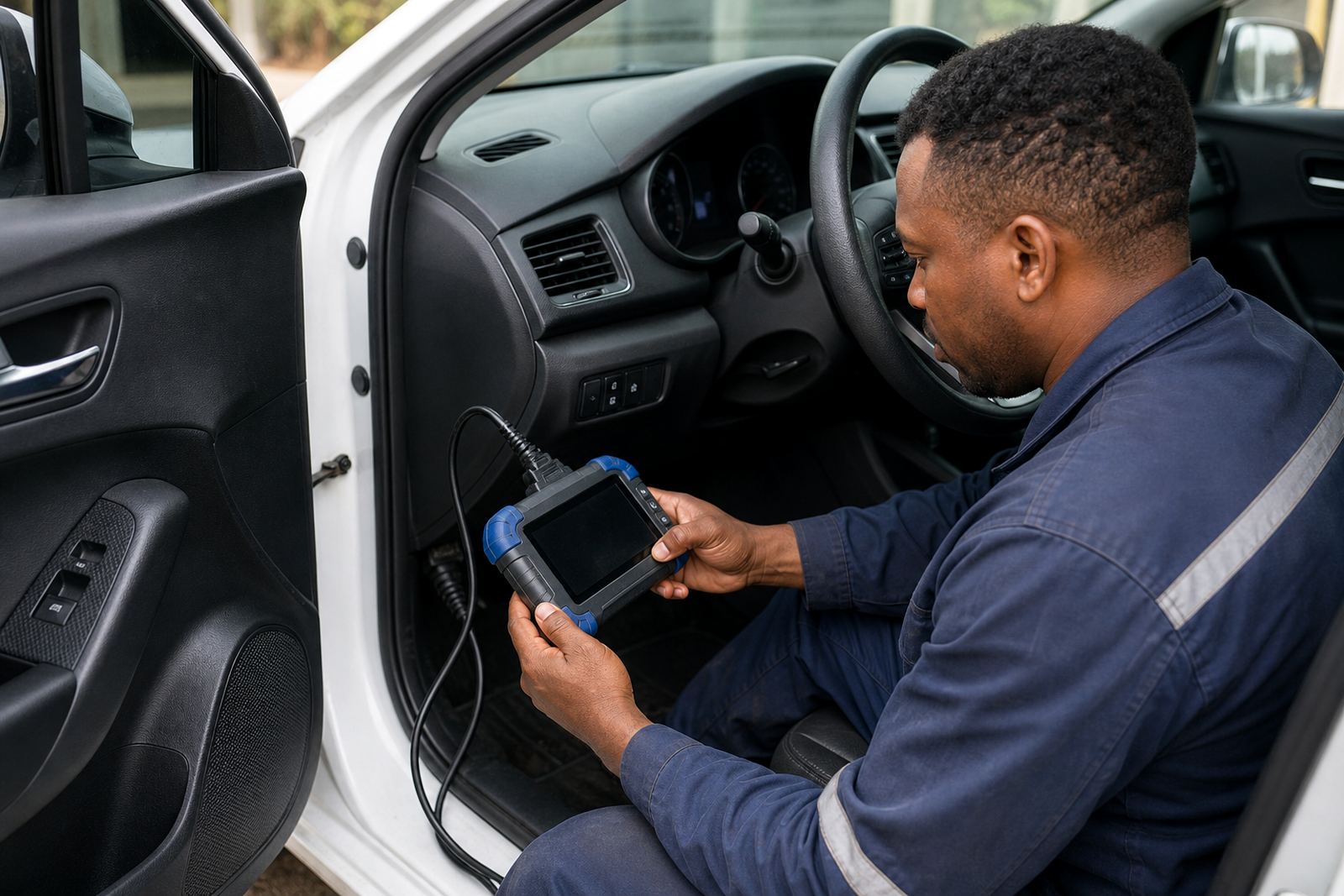
An OBD fault scan is the first electronic check on a modern vehicle. We connect diagnostic equipment to the vehicle’s port, read stored and pending fault codes, then study live data from sensors and control units to see what is happening while the engine is running, idling or under load.
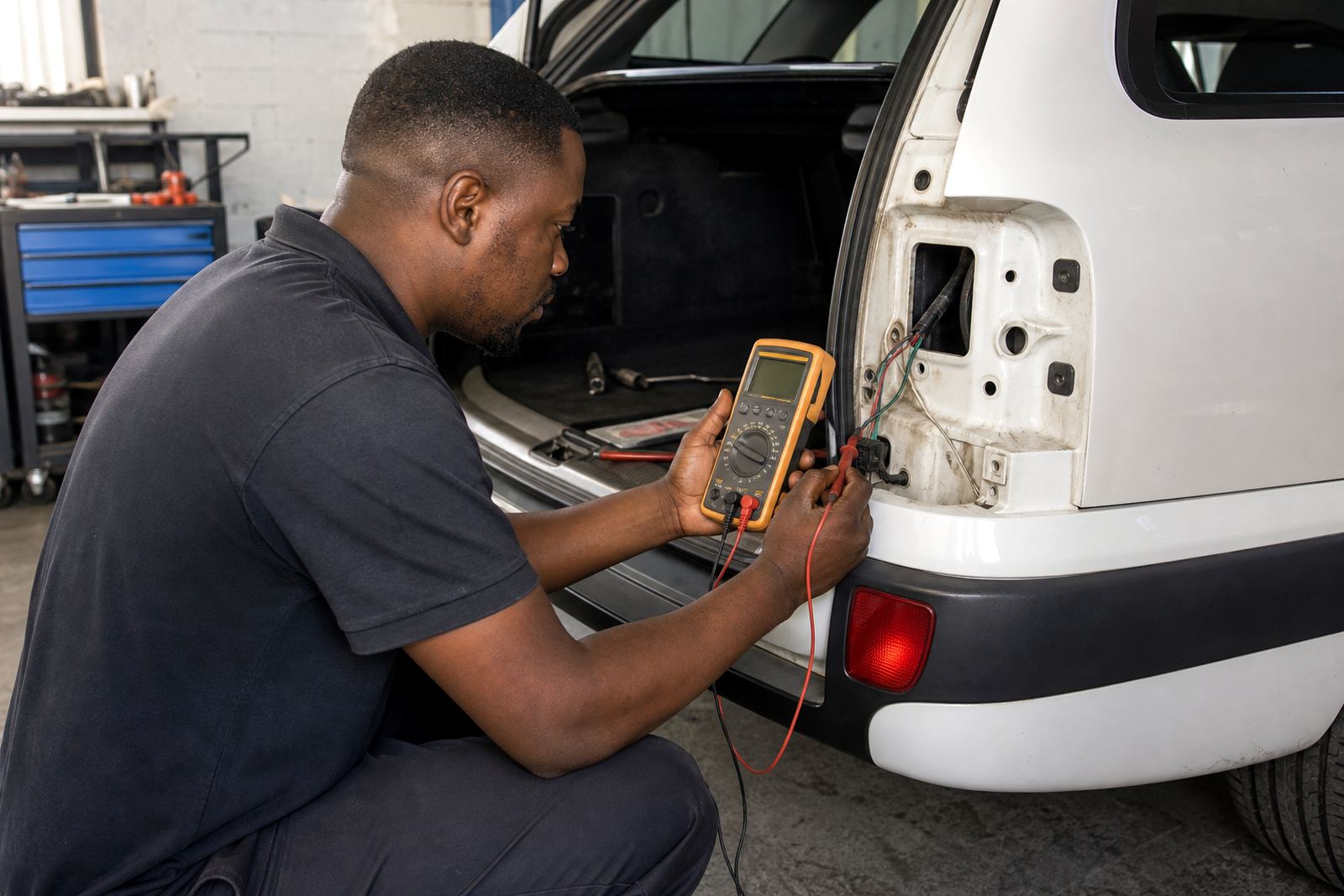
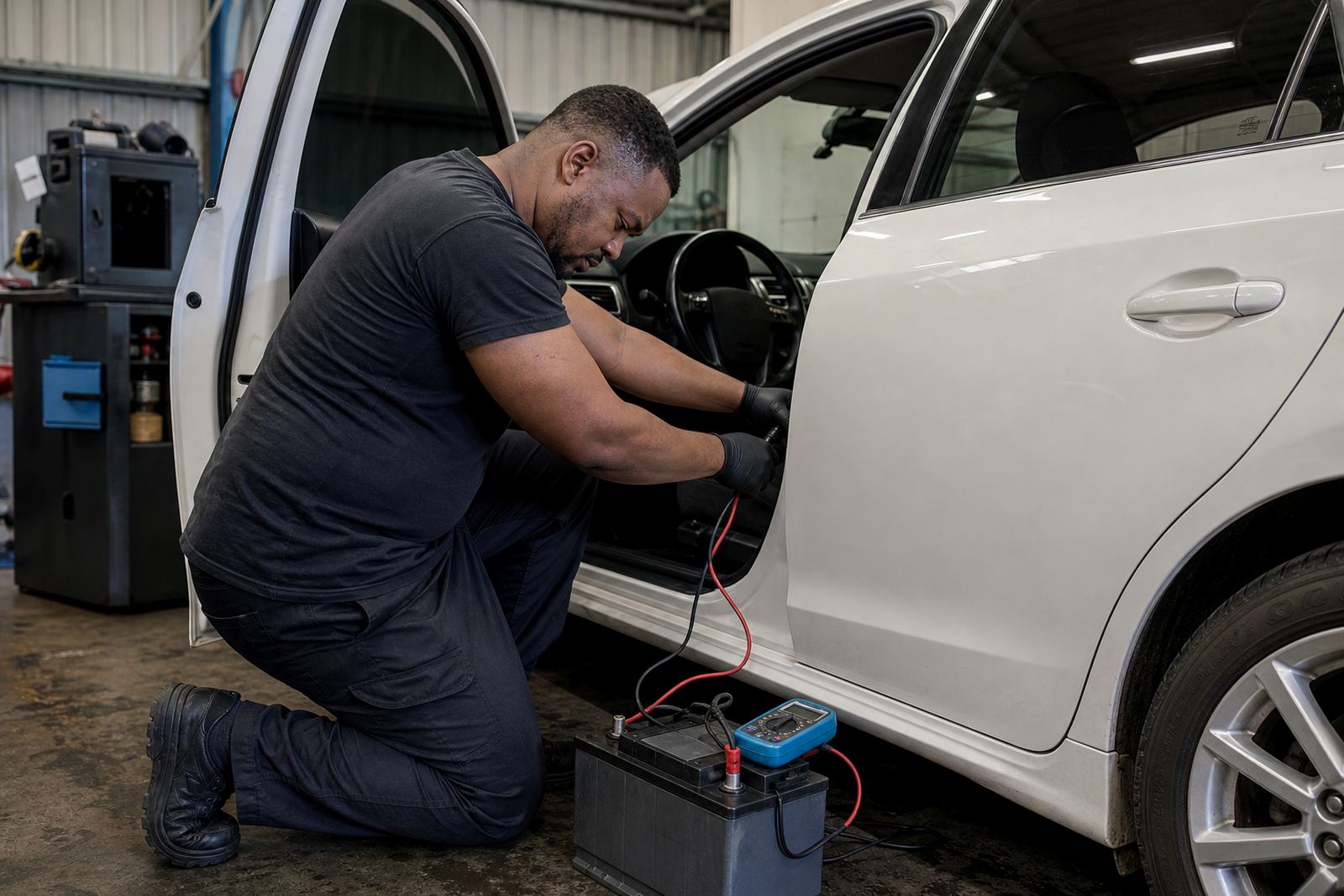
That matters because a warning light often points to the symptom, not the cause. A misfire code may come from a coil, plug, injector, wiring break or low system voltage, so the scan is used with battery testing, charging checks and visual inspection before any parts are fitted.
- Stored, pending and history codes where the control unit supports them
- Live data such as voltage, sensor readings and switch states
- Freeze frame information that shows the fault conditions when the code set
- Clearing codes after repairs and retesting under road conditions
Diagnostic work for cars, bakkies and fleet units
This service suits private vehicles and fleet units that show warning lights, limp mode, hard starting, poor fuel use or recurring electrical faults. It is useful after a flat battery, alternator replacement, wiring repair, starter repair or tracker installation, because the scan can show whether the system is seeing clean signal values and correct supply voltage.
We also use OBD fault scans when a vehicle has intermittent faults that only appear over bumps, in wet weather or after long trips. In those cases the fault may sit in a wiring loom, earth point, fuse box connection or CAN bus communication line rather than in the component named by the code.
- Passenger vehicles used for daily commuting in Cape Town and surrounds
- Work bakkies that carry tools, ladders and equipment all week
- Fleet vehicles that need fault tracking across more than one unit
- Vehicles with repeated dashboard warnings after previous repairs
How we approach the fault, not just the code
Our technicians treat the code as a clue. The next step is to test the circuit that feeds the component, check earth integrity, verify charging output and look for voltage drop where the system is under strain. If a scan shows communication faults, we check CAN bus basics, module power supply, ground points and connector condition before replacing anything.
That method helps prevent parts being changed for the wrong reason. A battery drain complaint, for example, may show no obvious fault code at all, yet the scan can still reveal modules staying awake, abnormal current draw or a hidden network fault that keeps an accessory circuit live.
- Battery condition and resting voltage checks
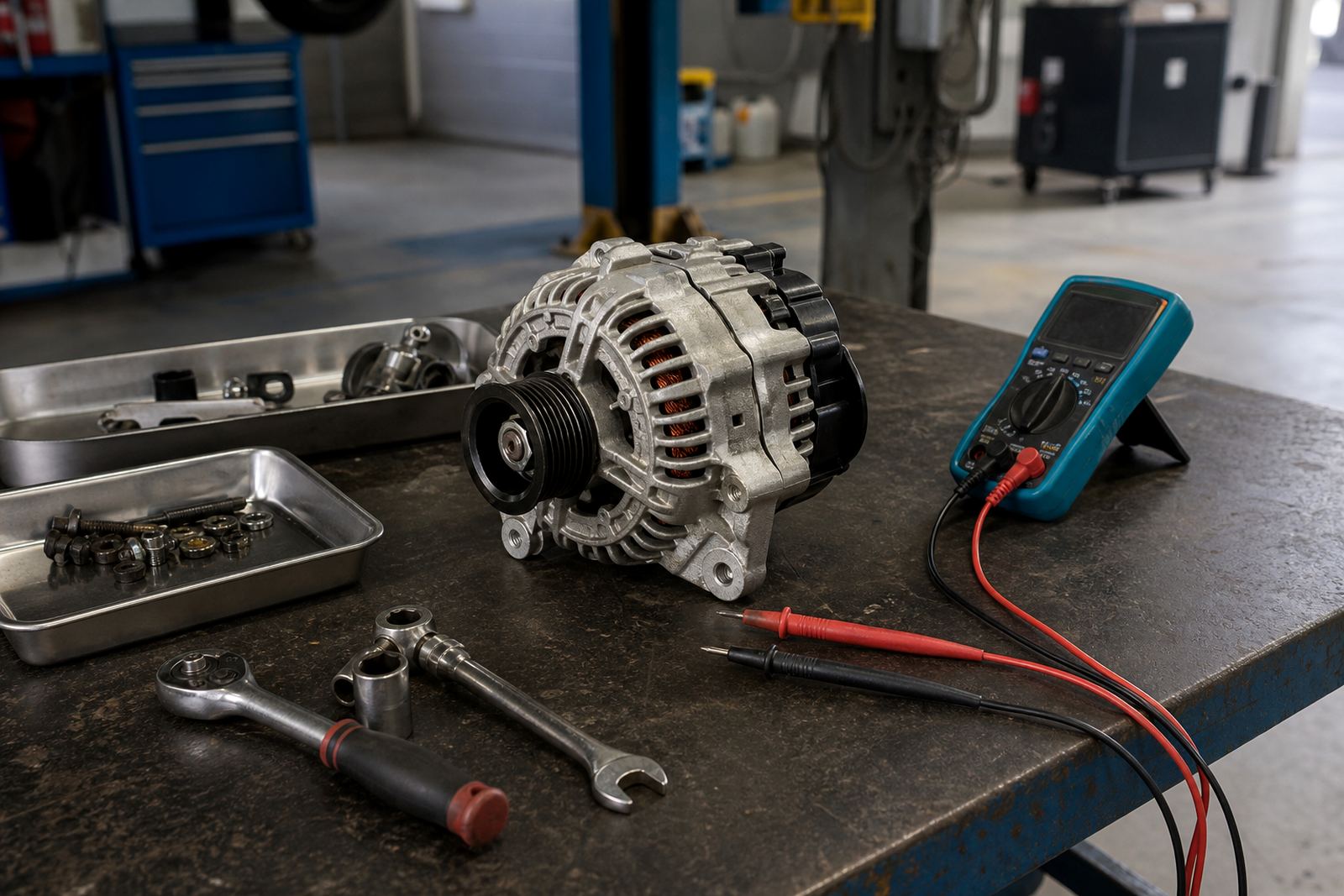
- Alternator output and ripple testing
- Starter circuit voltage drop checks during cranking
- Parasitic drain investigation where the battery keeps going flat
Fitting, access and vehicle setup details
An OBD scan is usually done through the vehicle’s diagnostic socket, but the access point must be in good order and the vehicle must accept communication from the scan equipment. In some cases the socket feed, earth or communication line has to be tested first, especially where a fuse box repair or wiring repair has already been carried out.
When the job involves tracker fitting or an accessory rewire, the scan helps confirm that the added load has not disturbed the charging system or triggered a stored fault. For older vehicles, the diagnostic pathway may be limited, so the technician works with the electrical symptoms, wiring diagrams and measured values rather than expecting a full module readout.
- OBD port condition and access under the dashboard
- 12V supply and earth at the diagnostic socket
- Vehicle year, model and control system type
- Any recent electrical work, jump starts or battery changes
Care after the scan and while fault codes stay stored
Fault codes should not be cleared before the cause is checked, because a cleared code can remove useful clues from the control unit. After repair, the vehicle should be rechecked with live data and a road test where needed, to make sure the code does not return under the same conditions.
If the issue is voltage related, keeping the battery healthy matters. Loose terminals, weak batteries, poor earth straps and corrosion around terminals or fuse boxes can all influence the result of a scan. Coastal humidity in Cape Town can also accelerate corrosion on terminals, connectors and exposed wiring joins, so those points need attention during routine maintenance.
- Keep battery terminals clean and tight
- Check for water ingress around connectors and fuse boxes
- Do not ignore repeated warning lights after a jump start
- Book the vehicle before a long trip if the fault is intermittent
Confirm these details before booking the scan
When sending the job through our contact form, it helps to include the vehicle make and model, year, engine type if known, and the warning lights or symptoms you can see. If there has been recent work on the battery, alternator, starter, tracker or trailer wiring, mention that too, because it helps the technician narrow the fault path faster.
For fleet work, list the number of vehicles, where they are based and whether the fault is urgent or recurring across the group. Mobile call-outs across Montague Gardens, Cape Town, Bellville, Milnerton, Somerset West, Paarl, Brackenfell and Durbanville are arranged around access, vehicle location and the nature of the electrical fault.
- Vehicle registration details or VIN where available
- Dashboard warning lights or messages seen on screen
- Recent battery, starter or alternator work
- Whether the vehicle is brought into our workshop or attended to at your premises
Key facts
| Service type | OBD fault scanning and vehicle electrical diagnosis |
|---|---|
| Typical vehicles | Cars, bakkies, fleet units and light commercial vehicles |
| Diagnostic scope | Stored codes, pending codes, freeze frame and live data |
| Electrical checks | Battery, alternator, starter, earths and parasitic drain |
| Communication checks | CAN bus basics, socket supply and module links |
| Coverage | Montague Gardens workshop and mobile call-outs across the Western Cape |