
What the misfire test covers on a real vehicle
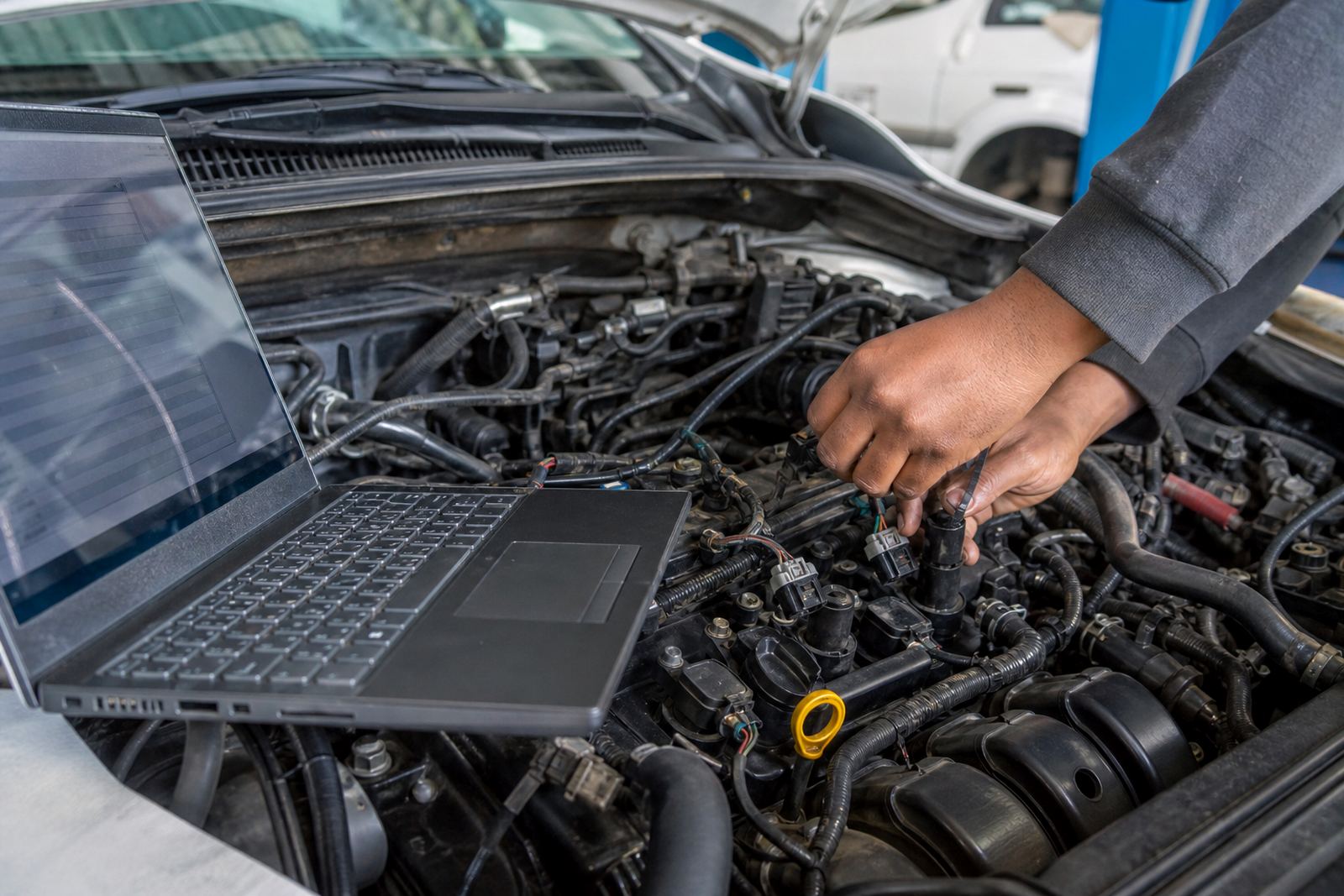
A misfire complaint can come from one cylinder, a pair of cylinders, or a system-wide fault that shows up under load, at idle, or during a cold start. We read OBD fault codes, view live data, check battery health, inspect charging voltage, and compare signals against the fault pattern the vehicle is showing.
The test suits petrol and diesel passenger vehicles, bakkies, panel vans, and fleet units that lose power, shake at idle, hesitate on acceleration, or log repeated engine warning lights. A weak battery, poor earth, damaged wiring, or low charging output can look like an engine problem when it is really an electrical one.
- OBD fault code reading and freeze-frame review
- Live data checks for misfire counters and sensor behaviour
- Battery and charging system testing under load
- Wiring continuity, resistance, and earth fault checks
How the circuit and data checks are carried out
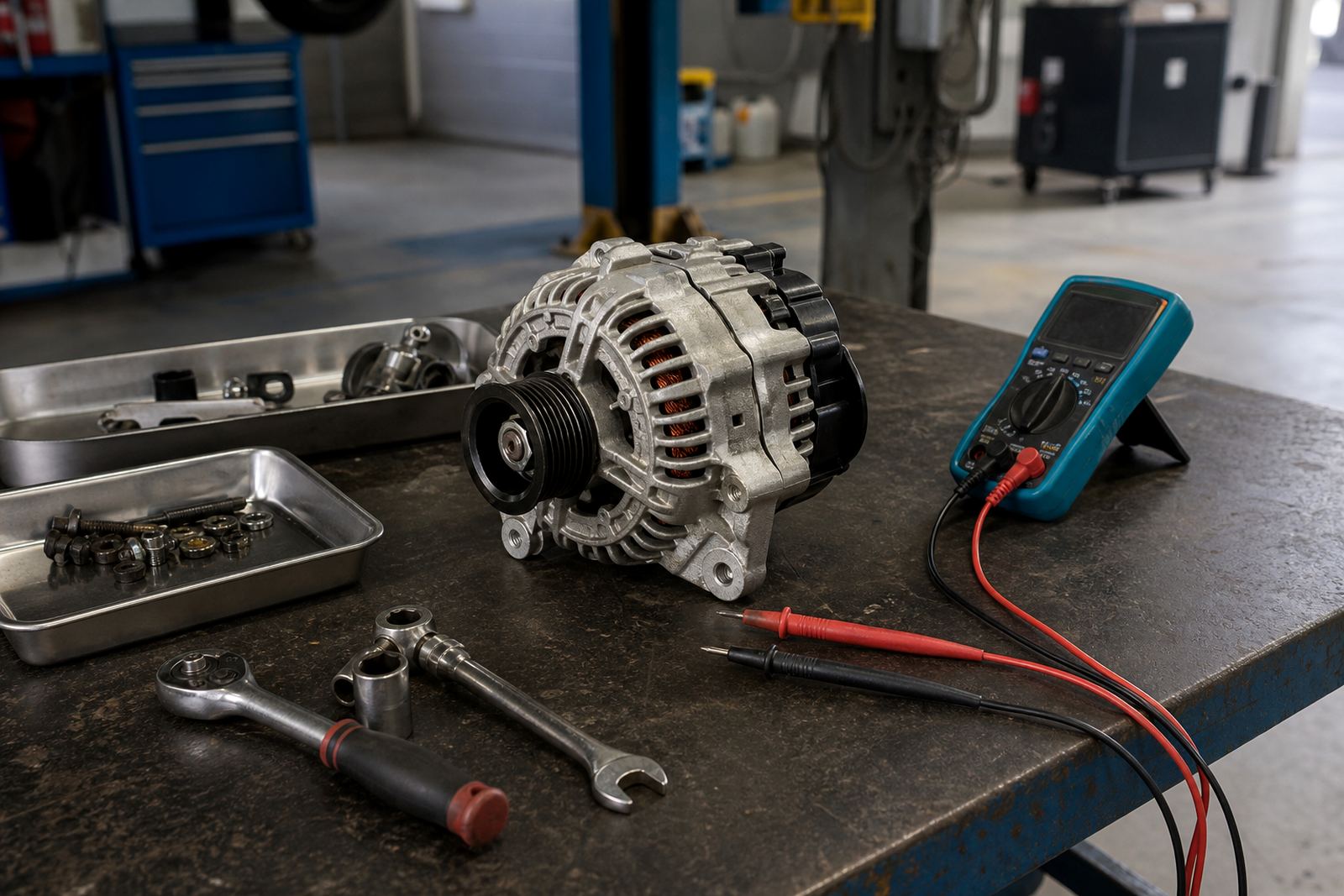
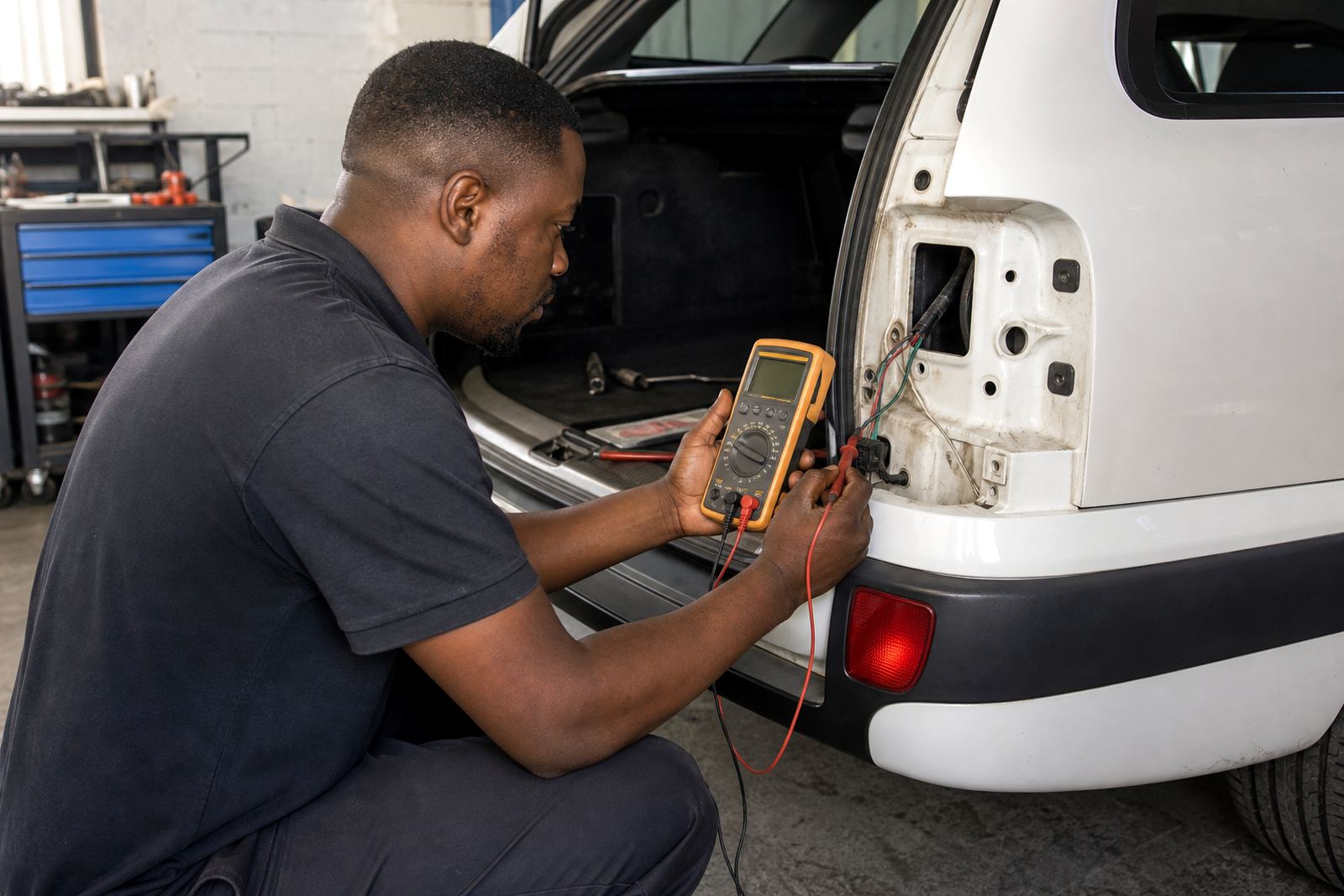
We begin with the complaint, then work through the circuit in stages. The scan tool helps show which cylinder or control point is falling out of range, while a metre and test light confirm whether voltage, ground, and signal paths are present where they should be.
If the vehicle points toward ignition control, injector control, or CAN bus communication trouble, we follow the signal path to the damaged section. That can include coil feeds, injector power, crank and cam signal integrity, fused supply, relay output, and connector condition. On some vehicles the fault is inside a chafed loom or a corroded plug near the engine bay, and the live data makes that easier to pin down.
- Misfire counter comparison across cylinders
- Voltage drop testing on supply and earth paths
- CAN bus fault checks where modules stop sharing clean data
- Inspection of plugs, looms, fuse boxes, and relay feeds
Where this diagnostic test suits best
This service works well for vehicles that misfire after rain, after a battery replacement, after a jump start, or after starter and alternator work. It also suits fleet operators who need one vehicle checked properly before parts are replaced in batches.
We handle vehicles based at Montague Gardens, Milnerton, Bellville, Somerset West, Paarl, Brackenfell and Durbanville, with mobile call-outs across the Western Cape where the fault and access allow it. If the complaint is linked to a trailer wiring issue, accessory wiring, or a tracker installation, the misfire test can be paired with those circuit checks too.
- Fleet vehicles with repeated warning lights and rough idle
- Private cars with intermittent hesitation or limp behaviour
- Vehicles that misfire after electrical work or battery changes
- Units with suspect earths, fuse box faults, or charging issues
Fitting needs and workshop conditions
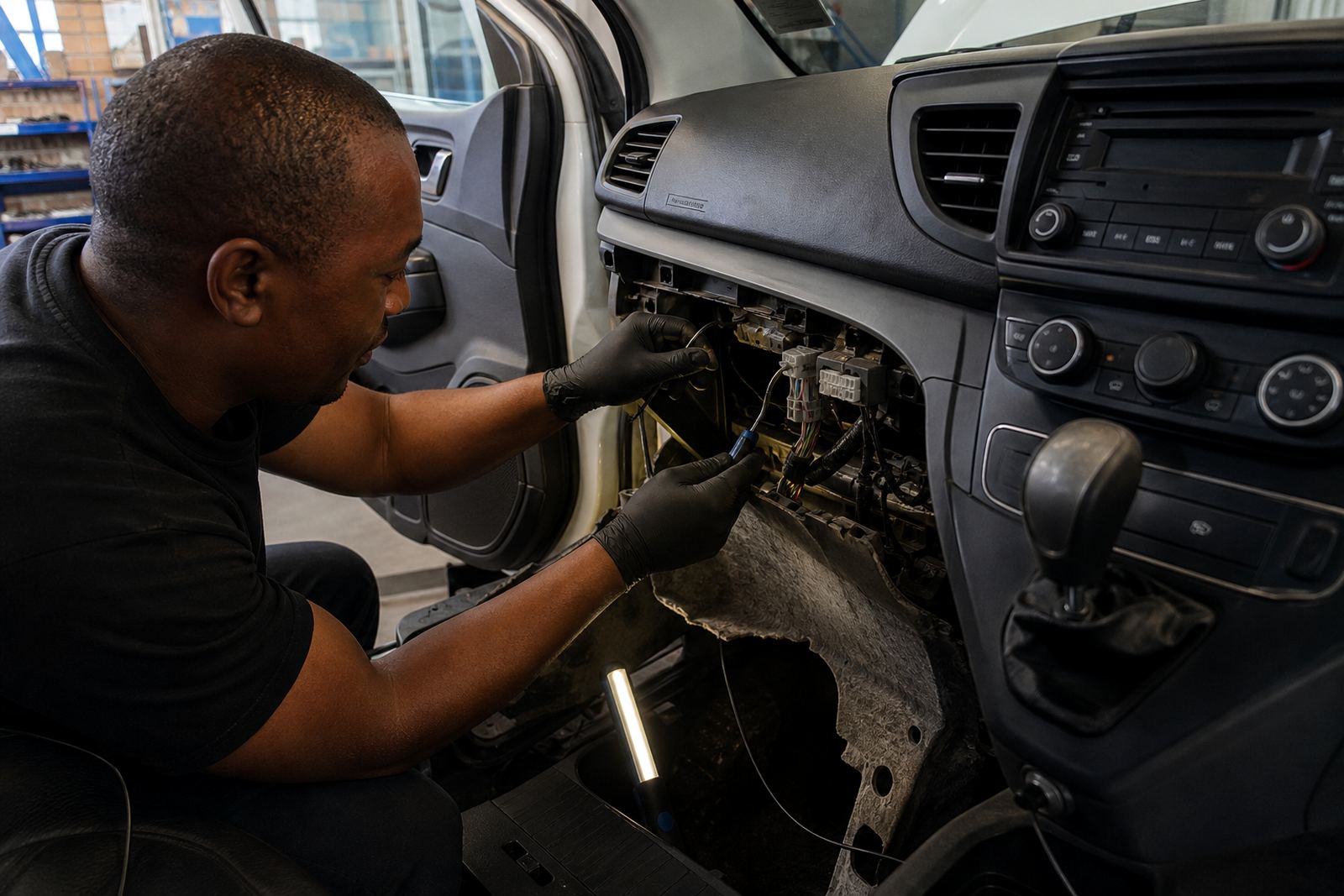
The test itself is a diagnostic process, not a part swap, so the vehicle needs access to the engine bay, battery, fuse box, and scan point. If the problem is traced to a coil pack feed, injector circuit, starter circuit, or alternator output, we then move into repair work with the right access and tools in the workshop.
For mobile call-outs, space around the vehicle matters, especially when we need to trace looms, test grounds, or inspect the under-bonnet fuse box. On fleet units we often start with the easiest access point first, then work outward to the harness sections that sit near heat, vibration, or moisture.
- Battery access for voltage and load checks
- Access to diagnostic port and engine bay wiring
- Clear view of fuse box, relays, and earth points
- Space to test connectors and harness runs safely
Care after the fault is found
Once the cause is identified, the repair must match the fault exactly. A misfire caused by low charging voltage needs charging system correction. A misfire caused by a broken wire or bad ground needs a proper repair to the circuit, not a temporary patch that loosens again later.
After repair, the vehicle should be retested under idle and load conditions so the data shows stable readings. We also check whether the engine management memory still carries old codes, and whether any related system faults remain, such as battery drain, poor earths, or damaged wiring near the starter or alternator.
- Retest live data after the repair
- Confirm that misfire counts settle out
- Clear stored codes only after the fault is dealt with
- Inspect nearby wiring for heat or rub damage
Details to confirm before booking the test
When sending the vehicle details through our contact form, include the make, model, year, engine type, and the exact misfire symptom. It helps to note when the fault appears, whether the engine light flashes, and whether the car has had recent battery, alternator, starter, or spark-related work.
Also mention any added accessories, tracker fittings, trailer wiring, or recent wiring repairs, because those can change the diagnostic path. For workshop planning, tell us whether the vehicle is a private car or a fleet unit, and whether it will be going to Montague Gardens or needs a mobile call-out in Cape Town, Bellville, Milnerton, Somerset West, Paarl, Brackenfell, or Durbanville.
- Vehicle make, model, year, and engine type
- Exact symptom, idle, acceleration, cold start, or wet weather
- Recent electrical work, battery changes, or charging faults
- Location for workshop drop-off or mobile attendance
Key facts
| Service type | Vehicle diagnostics and auto electrical fault finding |
|---|---|
| Primary use | Misfire complaint testing and circuit tracing |
| Test methods | OBD scan, live data, voltage drop, resistance, and continuity checks |
| Typical fault areas | Ignition control, injector supply, earth faults, charging output, CAN bus data |
| Workshop base | Montague Gardens, Cape Town |
| Coverage | Cape Town, Bellville, Milnerton, Somerset West, Paarl, Brackenfell and Durbanville call-outs |