
What the Module Power Test covers in a workshop bay
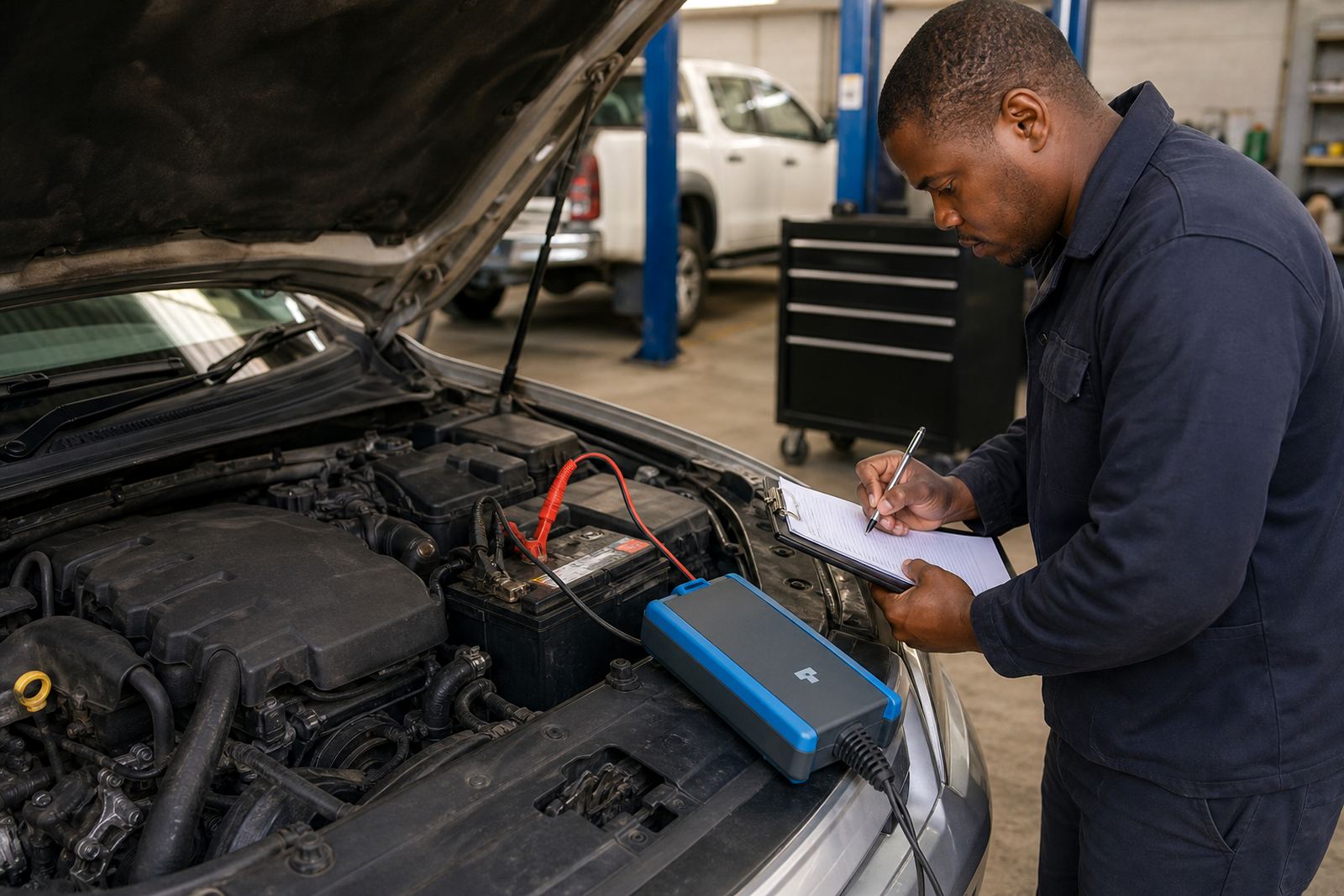
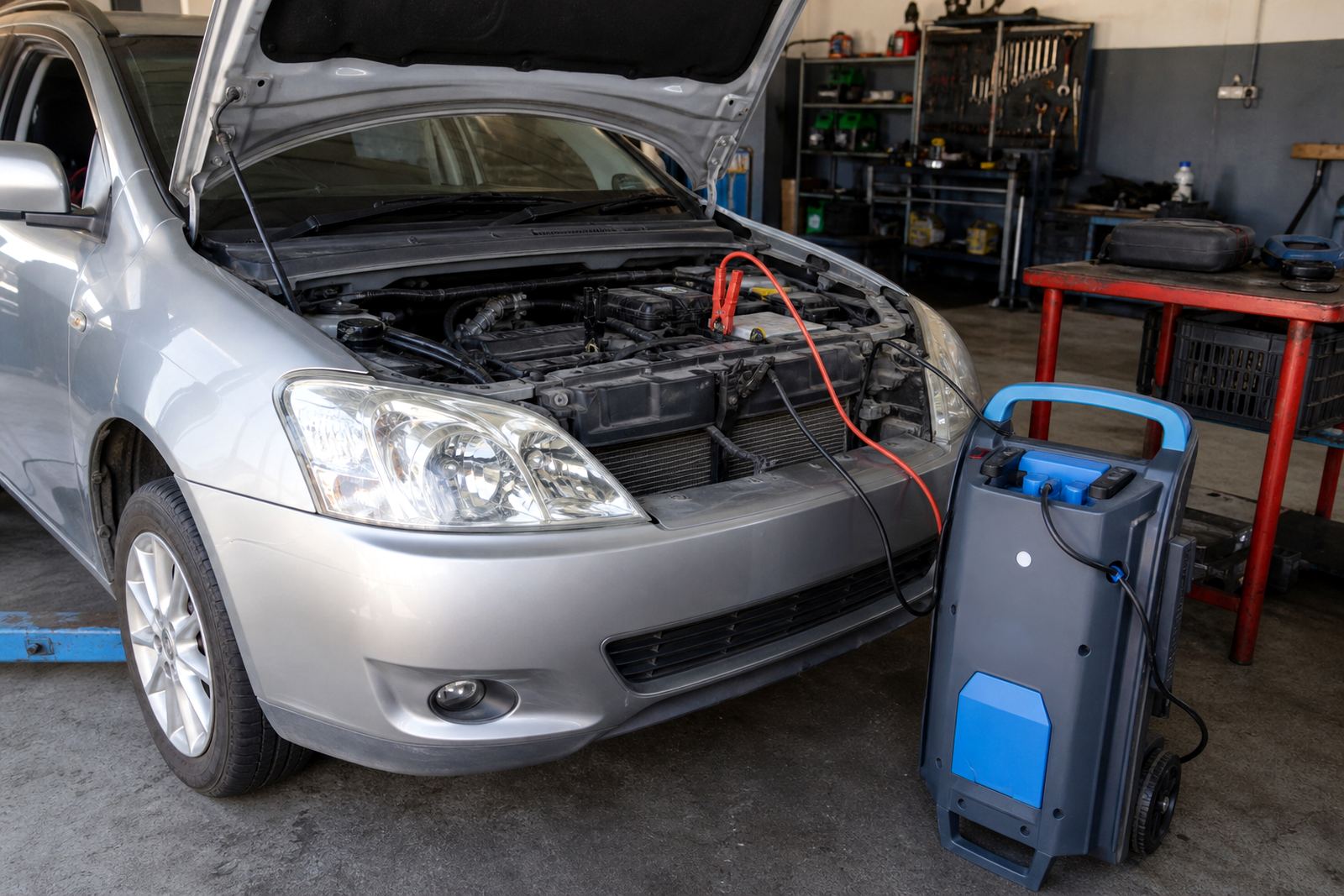
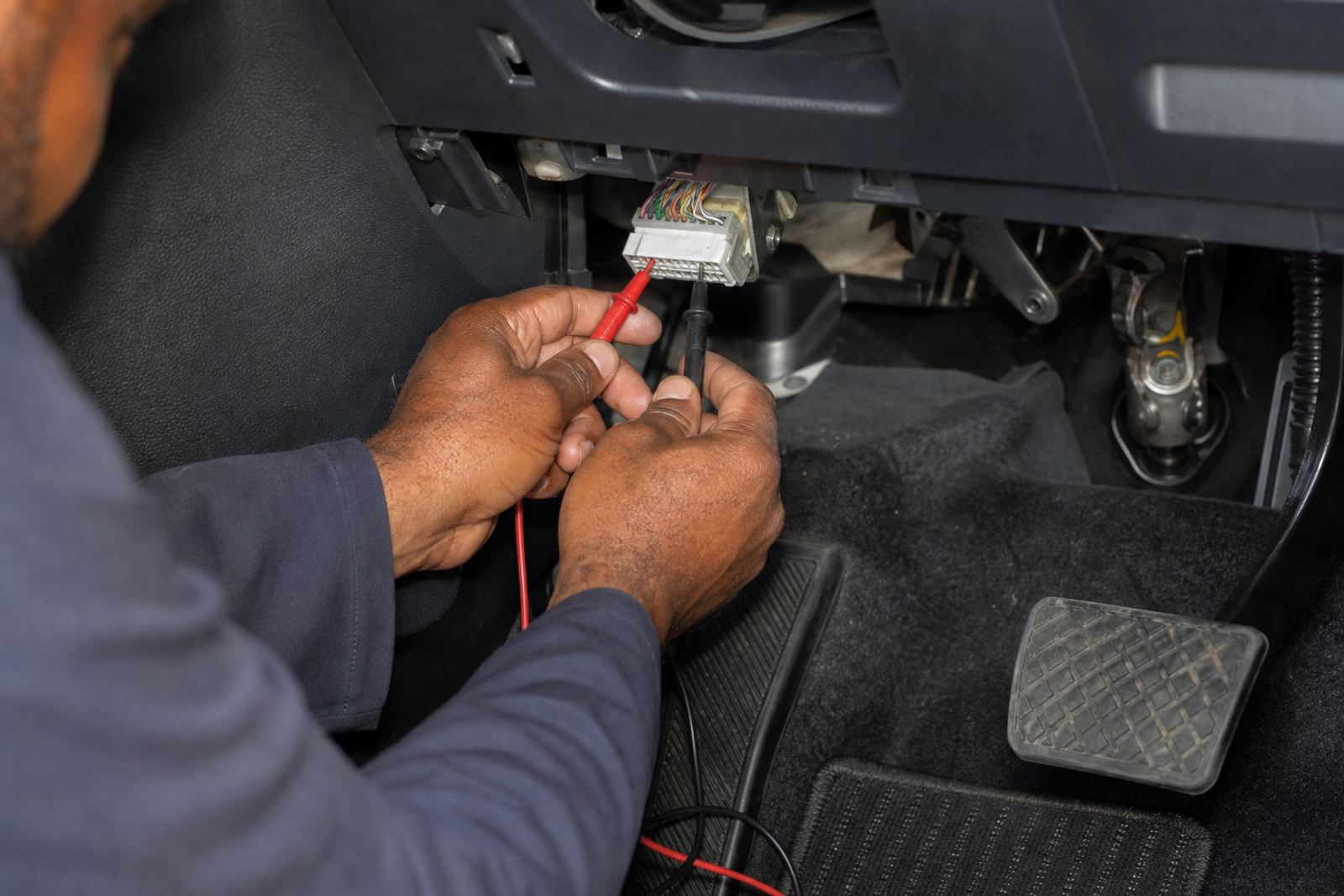
This test is used when a module seems faulty but the real issue may sit in the supply side. We verify constant battery feed, switched ignition feed, ground integrity, voltage drop under load and the condition of related fuses, relays and connectors. On modern vehicles, a control unit can only make sense of sensor and network data if its power supply is clean and stable.
It is a measured check on the basic feeds that keep a module alive, awake and able to communicate. If the module is missing power on one pin, or the earth path has too much resistance, the scan tool may show unrelated faults and live data can look misleading.
- Battery feed verification at the module connector
- Ignition switched supply checks under key-on conditions
- Ground path and voltage drop testing
- Fuse, relay and connector inspection linked to the circuit
- Basic communication check before deeper CAN bus fault tracing
Typical module sizes and test paths we work with
There is no single size for a module power test because the vehicle controls shape the circuit. Some jobs involve a small body control unit under the dash, some involve an engine management unit near the bulkhead, and others involve a gearbox, ABS or comfort module tucked into a tighter spot. The same principle applies across all of them: identify the feed, prove the ground and check what the module sees when the system is loaded.
We work through test points with a metre, wiring diagram logic and scan data where needed. On some vehicles the fault sits in one relay or one corroded eyelet. On others the main feed is present but drops off as soon as the circuit is asked to carry current. That is common after water entry, poor repairs, loose terminals or repeated battery issues.
- 12 V control systems on passenger cars and light commercial vehicles
- Modules with multiple feed pins and shared earth points
- Start, run and accessory positions where feed timing matters
- Vehicles with networked control units and shared reference grounds
Where this test earns its keep
A Module Power Test suits vehicles that show hard-start complaints, non-communication faults, warning lamps, random electrical behaviour or a module that stops working after battery work. It is also useful after water ingress, accident repairs or when a vehicle has had repeated wiring attention and the fault keeps shifting. In fleets, it helps separate a real control unit problem from a supply fault that would otherwise keep the vehicle off the road longer than needed.
The test is useful in Cape Town, Bellville, Milnerton, Somerset West and Paarl where mixed driving, coastal humidity and repeated short trips can expose weak earth points and tired connectors. If the vehicle has a trailer wiring issue, a lighting fault or a parasitic drain in the same system, those details help build the full picture.
- No-start cases with fuel, crank or immobiliser style symptoms
- CAN bus faults where a module appears offline
- Battery drain complaints linked to a control unit staying awake
- Repair verification after wiring work, fuse box work or connector replacement
Fitting and diagnostic process around the test
We start with the module's own power feed, earth and wake-up signal. It is a diagnostic procedure carried out with access to the vehicle, the relevant control unit, the wiring route and the test equipment needed for voltage and continuity checks. Where the vehicle is fitted with an aftermarket tracker, accessory wiring or an added relay, we inspect that work too if it may be affecting the supply side.
Access matters. Some modules are easy to reach from the cabin or engine bay. Others need trim panels removed to inspect the connector, earth point or fuse link. When a suspected break sits inside the loom, we trace it in sections rather than disturbing more of the harness than needed. If the test points to a starter circuit issue, alternator charge fault or a poor main earth, that is handled as a separate repair path.
- Scan tool check for communication status and stored codes
- Metre testing at the module connector and at upstream feeds
- Voltage drop checks across earth and supply paths
- Connector condition check for heat marks, moisture or looseness
- Follow-on repair planning for wiring, earths, relays or fuse links
Care after the fault has been traced
Once the supply fault is found, the repair needs to be kept clean and properly secured. A corroded terminal, loose fuse link or bruised wire can cause the same trouble later if it is only pushed back into place. We finish with re-test work so the control unit can be checked in the condition it will actually run in, not just while the panel is open.
For coastal vehicles, moisture and salt air can keep attacking open connectors if seals are damaged. A proper repair should include sound terminal tension, correct insulation and tidy routing away from sharp edges and heat. On fleet vehicles, we also note any repeated strain on the loom near doors, trailers or accessory additions because those areas often move more than the rest of the harness.
- Keep connector seals seated and dry
- Secure harnesses away from chafe points
- Check battery condition when power faults repeat
- Re-test after repair to confirm the module wakes and communicates properly
Details to confirm when you send the job through
When you submit the job through our contact form, it helps to include the vehicle make, model, year, engine type and the exact symptom. Add the warning lights, scan code wording if you have it, and whether the issue happens at start-up, during driving or after the vehicle sits overnight. If a previous repair was done, mention what was changed so we can work from the real circuit history.
Also note whether the vehicle has aftermarket accessories, trailer wiring, a tracker, a second battery or recent battery replacement. Those details matter because a module power fault can sit beside another circuit fault and look unrelated at first glance. For mobile work across Montague Gardens, Cape Town, Milnerton, Bellville, Somerset West, Paarl, Brackenfell and Durbanville, the more exact the symptom is, the cleaner the test path becomes.
- Vehicle details and engine code if available
- Exact fault lamp or message on the dash
- Any battery, starter or alternator work already done
- Presence of added accessories, tracker wiring or trailer circuits
- Whether the fault is constant, intermittent or tied to key-on timing
Key facts
| Test type | Control unit power and ground verification |
|---|---|
| Systems checked | Battery feed, ignition feed, earths, relays, fuse links |
| Diagnostic tools | Metre testing, scan tool checks, voltage drop testing |
| Vehicle scope | Passenger vehicles and light commercial vehicles |
| Service area | Montague Gardens, Cape Town and Western Cape call-outs |
| Related faults | No-start, communication loss, battery drain, warning lights |