
What a parasitic drain test actually checks
A healthy vehicle still uses a small amount of current after the ignition is off, mainly to keep memory functions, alarm circuits and control modules alive. When that draw stays too high, the battery goes flat overnight or after a few days parked, and the fault can sit in a glovebox light, a stuck relay, a tracker, or a module that refuses to sleep properly.
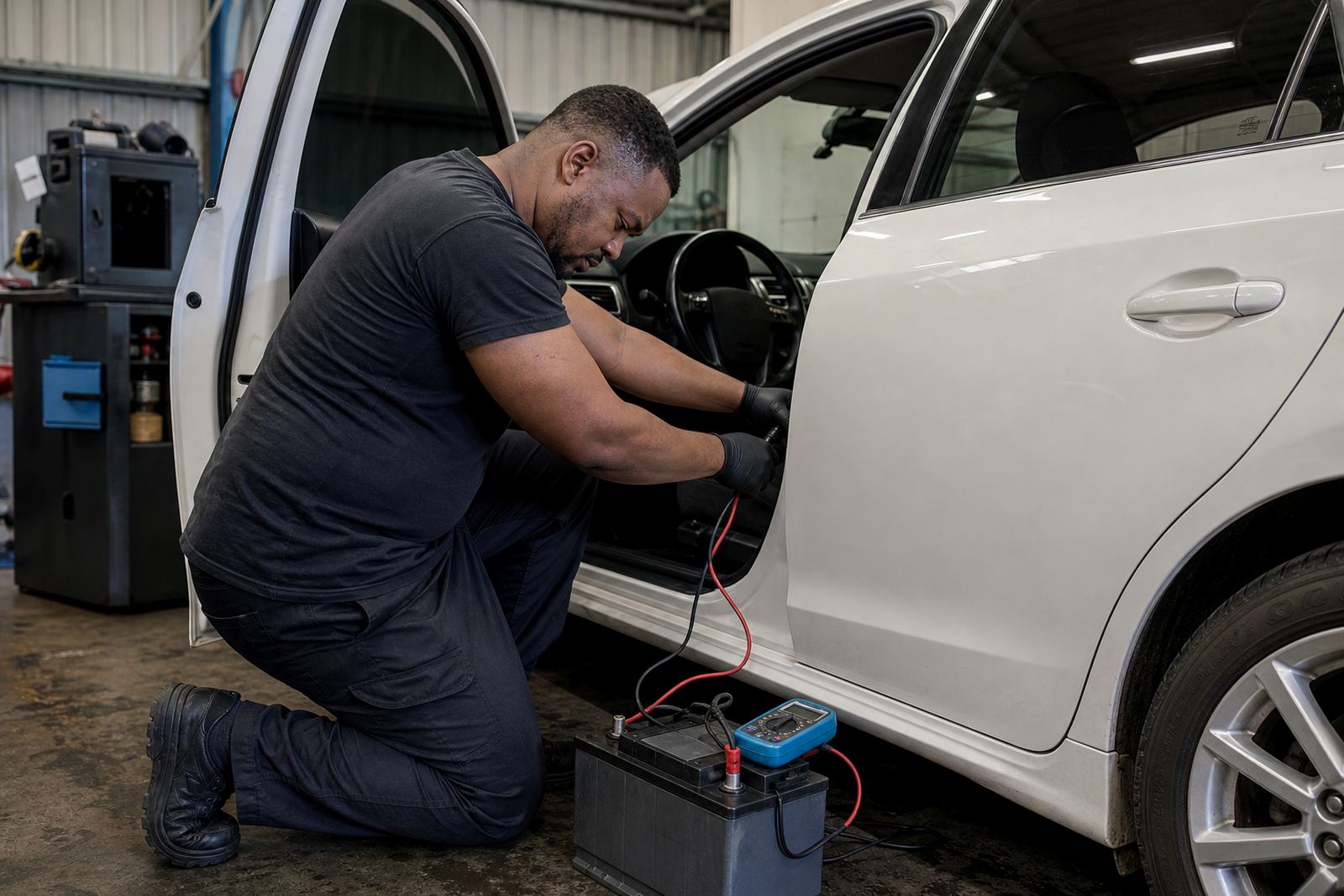
Our test is done with a metre in series with the battery and a methodical pull-back of fuses and circuits until the draw drops to an acceptable level. We also check whether the battery itself is weak, because an ageing battery can make a normal draw look worse than it is.
- Current draw measured after shutdown and sleep period
- Battery condition checked before circuit tracing starts
- Fuse-by-fuse isolation where the drain is present
- Live data review when a control module stays awake
Test options for workshop jobs and mobile call-outs
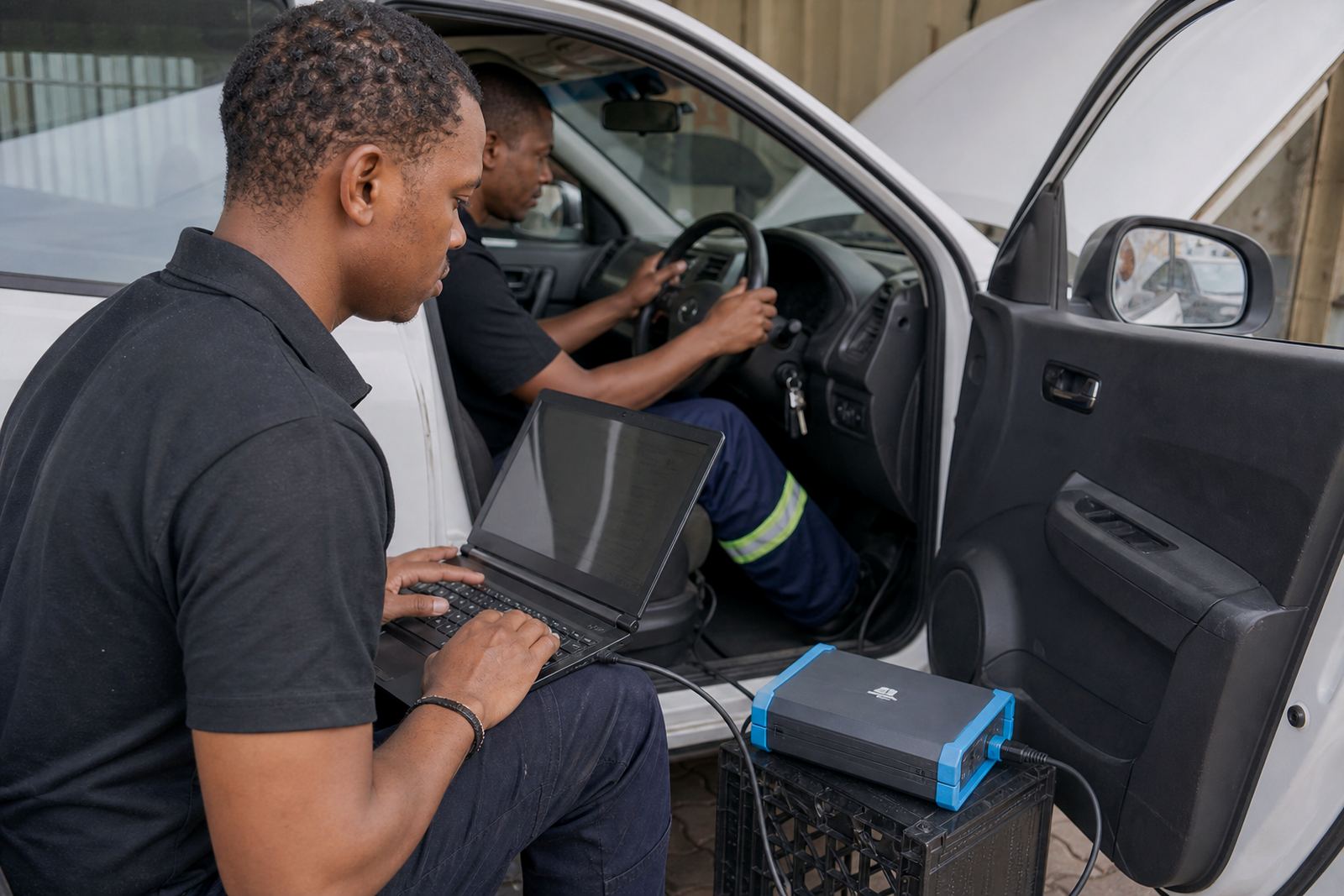
Parasitic drain testing can be done in our Montague Gardens workshop or on a mobile call-out where the vehicle can be inspected safely and parked long enough for the readings to settle. That suits passenger cars, light commercial vehicles, service fleets and bakkies that are losing charge between shifts or over a weekend.
For some vehicles the fault is quick to isolate. For others, especially with extra alarms, trackers, load bins, trailer plugs or added accessory wiring, the draw comes from a branch of the loom that needs patient tracing. We work through the circuit layout rather than replacing parts blindly.
- Workshop testing for deeper electrical tracing
- Mobile call-outs across Cape Town, Milnerton, Bellville, Somerset West and Paarl
- Fleet checks for vehicles parked in yards or depots
- Private vehicle inspections for repeated flat battery complaints
Typical fault patterns we see on the road
Some drains are simple. A boot lamp stays on, a cabin light switch is out of position, or an aftermarket accessory remains live when it should have shut down. Others sit deeper in the electrical system and need a proper diagnostic route through relays, earths, fuse boxes and module wake-up signals.
On newer vehicles, CAN bus related faults can keep a control unit awake or cause modules to chatter after shutdown. On older vehicles, a tired alternator diode or a short in the charging circuit can drain the battery even when the key is out. We also see trailer wiring faults, damaged earth paths and starter circuits that leave a hidden load behind.
- Stuck relays and lighting faults
- Alternator diode leakage and charging issues
- Accessory wiring left live after ignition off
- Module wake faults on multiplexed systems
How the tracing work is carried out
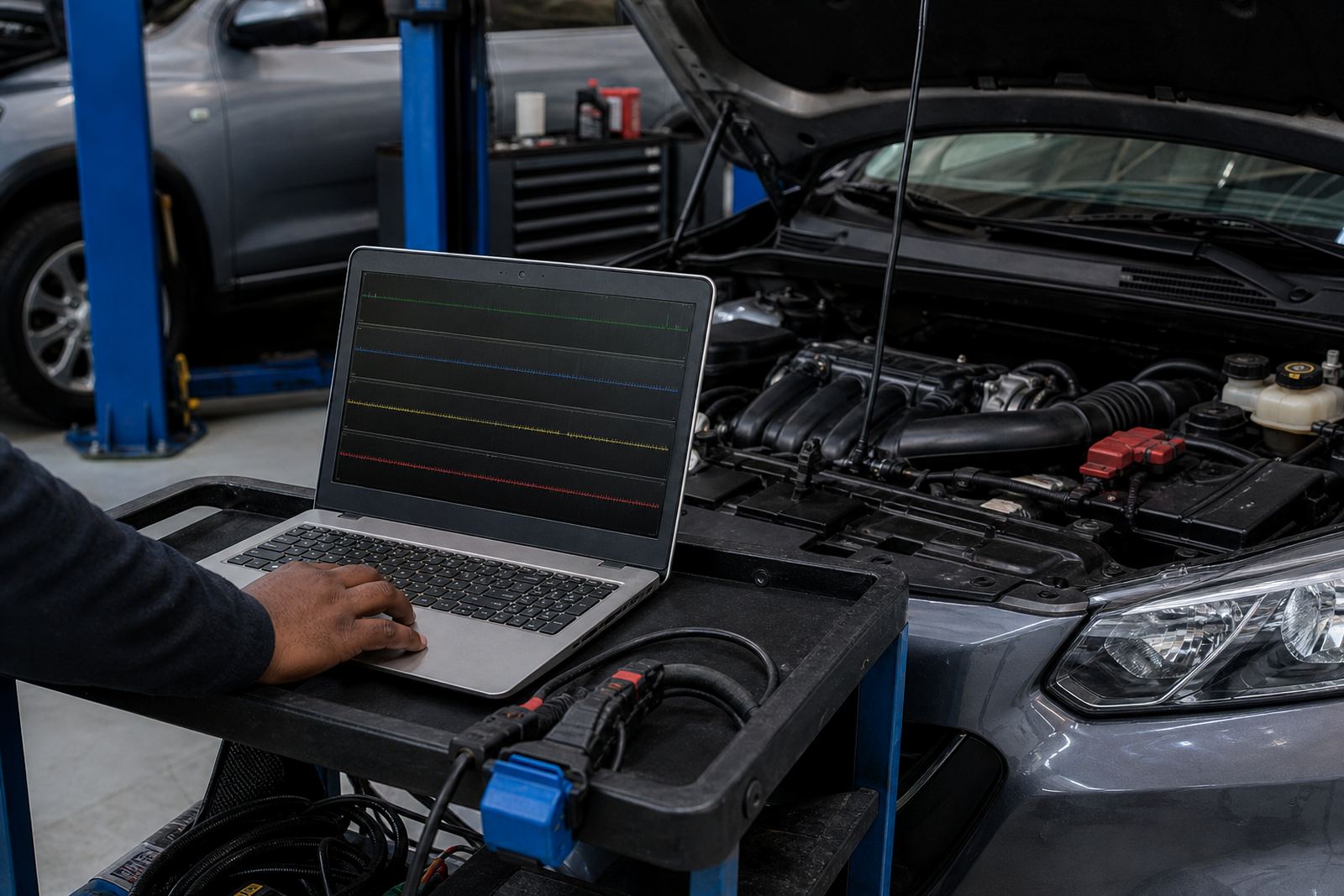
After the initial battery and charging checks, the vehicle is allowed to settle and the draw is measured again. From there we isolate circuits one at a time, watching for the point where the current drops. If the drain is linked to a control unit, we may compare live data, sleep status and wake signals to see which input is keeping the unit active.
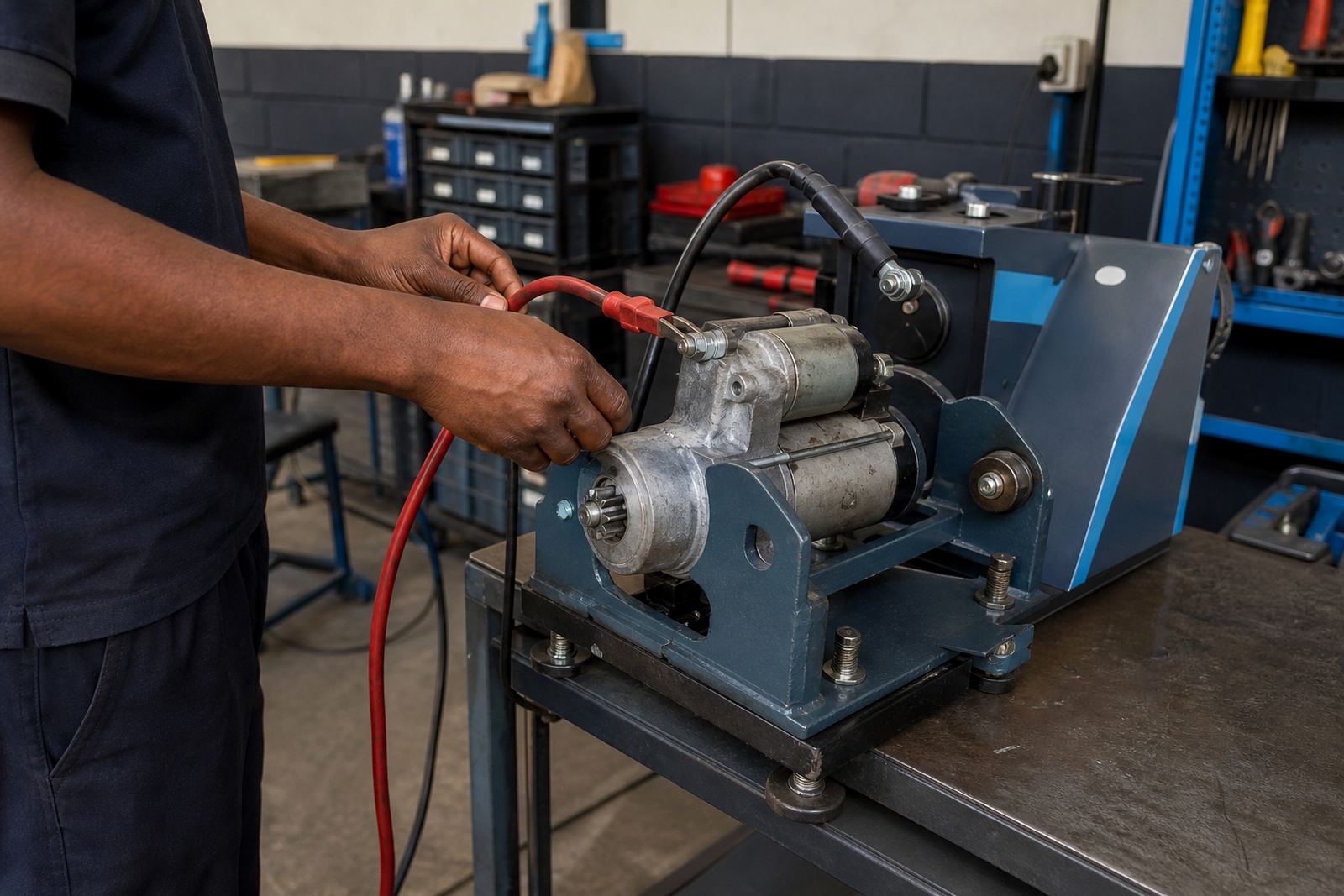
When needed, we move into wiring repairs, fuse box repairs, earth fault checks or starter circuit testing. If the source is an accessory fitment, we inspect the routing, protection and connection points. Where corrosion has crept into a terminal or splice, we repair the damaged section and test the circuit under load before handover.
- Current draw measurement before and after fuse isolation
- Battery, alternator and charging system testing
- Wiring continuity and earth path checks
- Repair work on the circuit that caused the drain
When this test suits fleets, workshops and private cars
Parasitic drain testing is useful when a vehicle keeps going flat after standing overnight, when jump-starts become routine, or when a battery has been replaced but the complaint keeps returning. Fleet operators use it to stop repeat breakdowns on yard vehicles, courier units, site bakkies and service vans. Private owners often need it after fitment work, trailer wiring changes or repeated battery replacement.
It is also a sensible step after alternator repairs, starter repairs or accessory rewiring if the battery still does not hold charge properly. If the vehicle lives near the coast, moisture and salt air can speed up corrosion in terminals and earth points, so the same drain can show up together with a poor connection.
- Repeated flat battery complaints
- Vehicles standing for long periods
- Aftermarket fitments and tracker issues
- Post-repair checks on charging and starter circuits
Details to send with the booking
To set up the test properly, send the vehicle make, model, year and engine type, plus a note on how long it stands before the battery drops. If there are extra accessories fitted, list them. That includes trackers, inverters, trailer plugs, added lights, audio gear or any other electrical additions that may keep a circuit alive.
Tell us whether the issue started after a battery replacement, a repair, an accident or new accessory installation. If the vehicle is part of a fleet, mention the unit use pattern and whether the complaint shows up after overnight parking, over a weekend, or after a short stop. Our contact form helps capture those details in one place, which makes the first inspection much tighter.
- Vehicle make, model, year and engine type
- Battery age and any recent replacement history
- Extra electrical fitments and towing gear
- Where and when the battery goes flat
Care after the fault is fixed
Once the drain is traced and repaired, the battery should be fully charged and retested so the new readings can be trusted. We look at terminal tightness, cable condition and alternator output as part of the same job if the vehicle has been struggling for a while. A tired battery that has been pulled flat many times may still need replacement even after the drain is sorted.
It helps to keep the battery terminals clean and dry, especially on coastal routes or vehicles that work in damp yards. If a new accessory is added later, the wiring should be fused and routed with proper protection so a fresh drain does not creep in. The aim is a clean electrical system that starts properly and stays predictable on the next overnight park.
- Recharge and retest the battery after repair
- Check terminals, earth points and cable ends
- Inspect any added wiring before new fitments go live
- Keep moisture and corrosion off exposed connections
Key facts
| Service type | Parasitic drain test and electrical fault tracing |
|---|---|
| Test method | Current draw measurement after vehicle shutdown |
| Typical circuits checked | Fuses, relays, earths, modules, starter and charging paths |
| Vehicle types | Passenger cars, bakkies, vans, fleet vehicles and light commercial units |
| Work areas | Montague Gardens, Cape Town, Bellville, Milnerton, Somerset West, Paarl and surrounding areas |
| Related repairs | Wiring repairs, alternators, starters, battery drain and accessory fitment |