What a trailer wiring test covers on the vehicle and trailer side
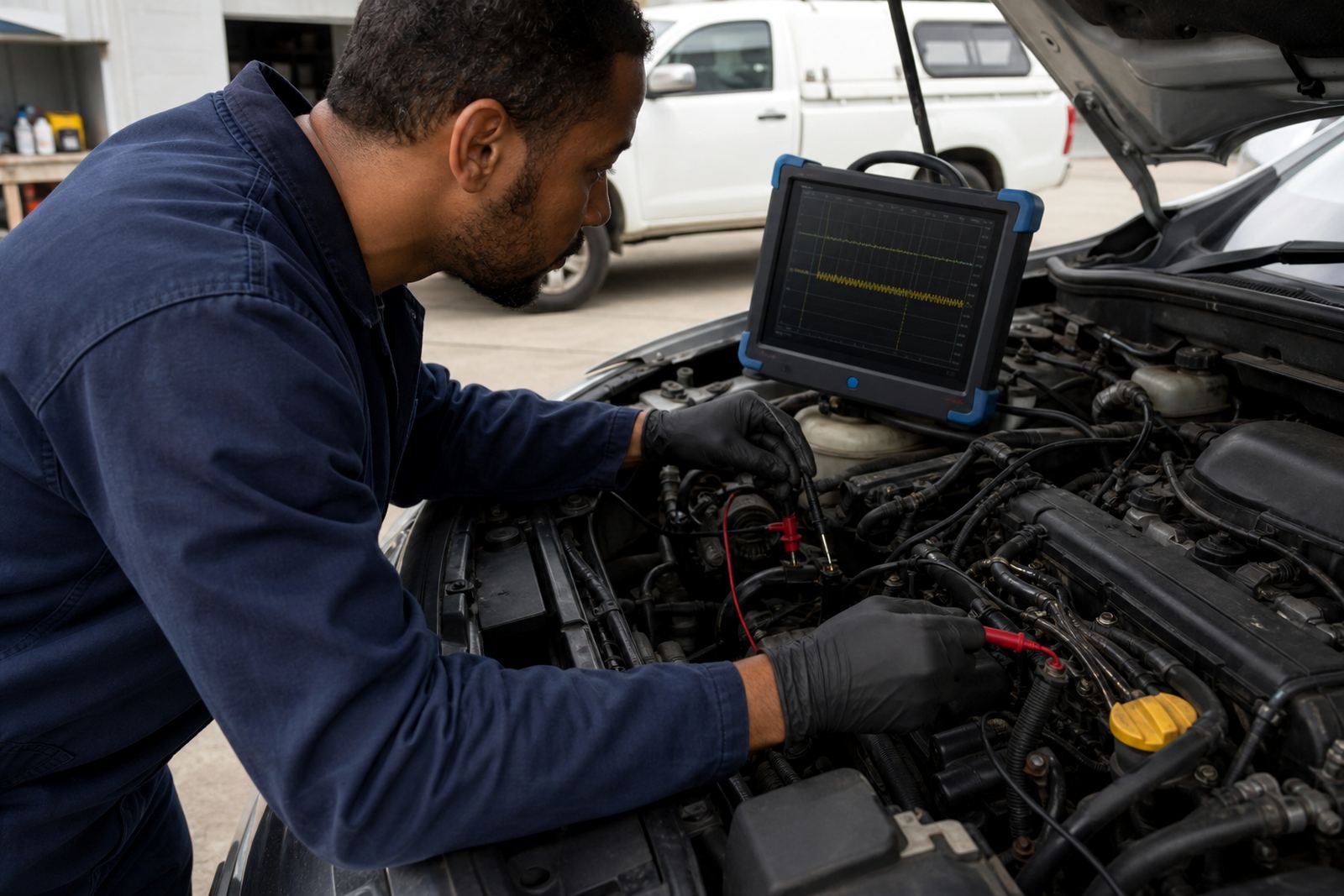
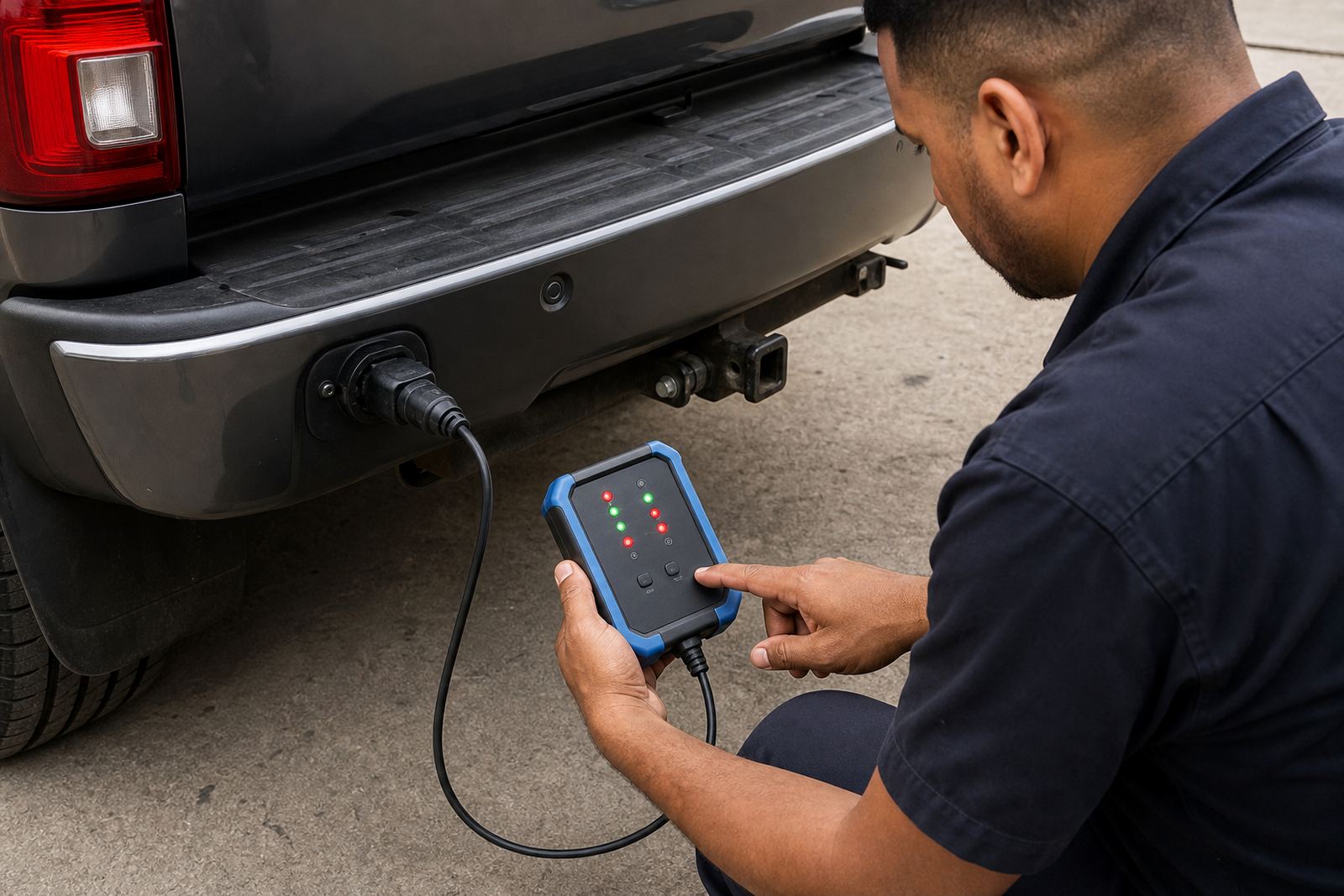
This service is a proper circuit check, not a quick glance at a plug. We test the tow vehicle socket, the trailer plug, the earth return, the rear light runs and any joints or add-on looms that may have been fitted over time. Where a fault only shows up under vibration or when the lights are on, we use live testing methods to find it.
The test usually covers tail lights, brake lights, indicators, reverse lights where fitted, and auxiliary feeds that may power a brake controller, a charging line or a small accessory circuit. If the trailer has been wired after purchase, we check whether the pinout matches the intended layout and whether the cable gauge is suitable for the load.
- Visual inspection of socket, plug and cable condition
- Voltage drop checks across feed and earth paths
- Continuity checks on the trailer loom
- Output testing from the vehicle side under load
- Fault isolation for loose pins, corrosion and broken conductors
Pin layouts, socket styles and wiring options we see in the workshop
Trailer wiring jobs are not all the same. Some vehicles use a flat 7-pin setup for basic lighting, while others carry a round multi-pin connector for extra functions. On the trailer side, the fitting can be a standard plug with an ageing loom, or a replacement socket mounted near the drawbar or rear cross member.
The right option depends on what the trailer carries and how the wiring was set up before it arrived. A farm trailer, box trailer, bike carrier or enclosed work trailer may need a different pinout to a leisure trailer or a fleet unit that carries extra marker lights. Where rear lighting has been changed, we check that the circuit still matches the load and the earth path is sound. Corrosion at the plug face is common in Cape Town coastal air, especially on trailers parked outdoors near Milnerton or the Atlantic side.
- 7-pin lighting circuits for basic trailer functions
- Multi-pin layouts for added feeds and signal lines
- Replacement plugs, sockets and pigtails
- Heavy-duty cable routing for work trailers
- Repair sections for damaged loom ends
When a tow vehicle needs more than a quick plug check
Some faults sit inside the vehicle rather than the trailer. A blown fuse, weak earth point, damaged rear harness or poor connection at the tow socket can leave one light working and another dead. We also see problems where the trailer wiring upsets the vehicle electronics, especially on later models with body control modules and CAN bus linked rear circuits.
If a vehicle shows warning lights after a trailer is connected, or the indicators flash at the wrong rate, we trace the fault back through the feed and signal path. That may include brake light input, lighting relays, rear harness sections, fuse box outputs and connector pins at the rear bumper or towbar harness. For fleets, a recurring fault on one unit can waste time across a whole route, so a proper diagnostic pass saves repeated returns to the same problem.
- Rear harness damage from towing wear and road spray
- Fuse box faults tied to trailer output circuits
- CAN bus related lighting errors and communication checks
- Wrong pin mapping after a trailer or towbar change
- Earth faults that show only when multiple lamps are on
Fitting and repair work that sits behind a clean trailer test
Where the test shows a fault, we move into repair work on the wiring side. That can mean replacing corroded terminals, repairing a crushed cable, restoring an earth strap or rebuilding a section of rear loom. On some jobs we also fit a new socket, a better sealed connector or a fresh trailer pigtail where the old one has been heat damaged or pulled loose.
Fitment has to be neat because trailer wiring takes vibration, water spray and stone hits. A loose cable tie or exposed join can fail after a few trips on the N1 or a coastal road run. We route wiring away from sharp edges and suspension movement, then secure it so the connector sits square and the rear lamps stay stable. If the trailer also uses accessories, we check that the extra feed is protected and clearly separated from the lighting circuit.
- Plug and socket replacement
- Earth wire repair and retermination
- Rear loom section repairs
- Accessory feed checks and separation
- Sealed joins where moisture exposure is likely
Where trailer wiring testing suits fleets, private owners and work trailers
This service suits anyone towing regularly across Cape Town and the Western Cape. Fleet vehicles with daily loading cycles often pick up plug damage, while private owners usually notice a fault only when a lamp stops working or the trailer is collected after standing for a while. We also see issues on trailers that live outdoors in Paarl, Bellville, Durbanville and Somerset West, where weather and storage conditions can shorten the life of exposed connectors.
Trailer wiring testing is useful before road trips, after towbar changes, after rear-end repairs and when a trailer has been bought second hand. It also helps when a trailer is used for site work and the lights are expected to stay dependable through stop-start use, loading ramps and rough surfaces. If the problem sits in the vehicle body wiring rather than the trailer, we can still trace it from the tow socket backwards.
- Fleet vehicles with repeated trailer use
- Private owners checking a tow setup before travel
- Work trailers carrying tools or equipment
- Trailers with repaired or replaced rear lights
- Tow vehicles with warning lights or fuse trips
Details to confirm before we test or repair your trailer wiring
To prepare the job properly, send the trailer type, the connector style if you know it, and whether the fault is on the left rear, right rear, brake lights, indicators or all circuits. It helps to know if the problem started after a new towbar, a rear bumper repair or a change to the trailer lamps. If the trailer uses extra feeds for charging or accessories, mention that as well, because those wires need their own checks.
We also need to know whether you want a fault test only or a test with repair work if we find damaged wiring. That lets us plan the right tools, connectors and cable sections before the vehicle arrives at the workshop or before a call-out is booked. For trailers that have been sitting in rain or coastal air, a corrosion check on the plug face and pins is worth including from the start.
- Vehicle make and tow socket style
- Trailer type and connector pin count
- Which lights or circuits are affected
- Any recent towbar, lamp or bumper work
- Whether accessories or extra feeds are in the loom
Key facts
| Service type | Trailer wiring test and fault tracing for tow vehicles and trailers |
|---|---|
| Test scope | Plug output, earth path, continuity, voltage drop and rear light circuits |
| Common connector types | 7-pin lighting plugs and multi-pin trailer connectors |
| Faults covered | Broken earths, corroded pins, loose terminals, damaged loom sections and incorrect pin mapping |
| Repair options | Plug replacement, loom repair, earth repairs and rear circuit retermination |
| Service area | Montague Gardens, Cape Town, Bellville, Milnerton, Somerset West, Paarl, Brackenfell and Durbanville |