
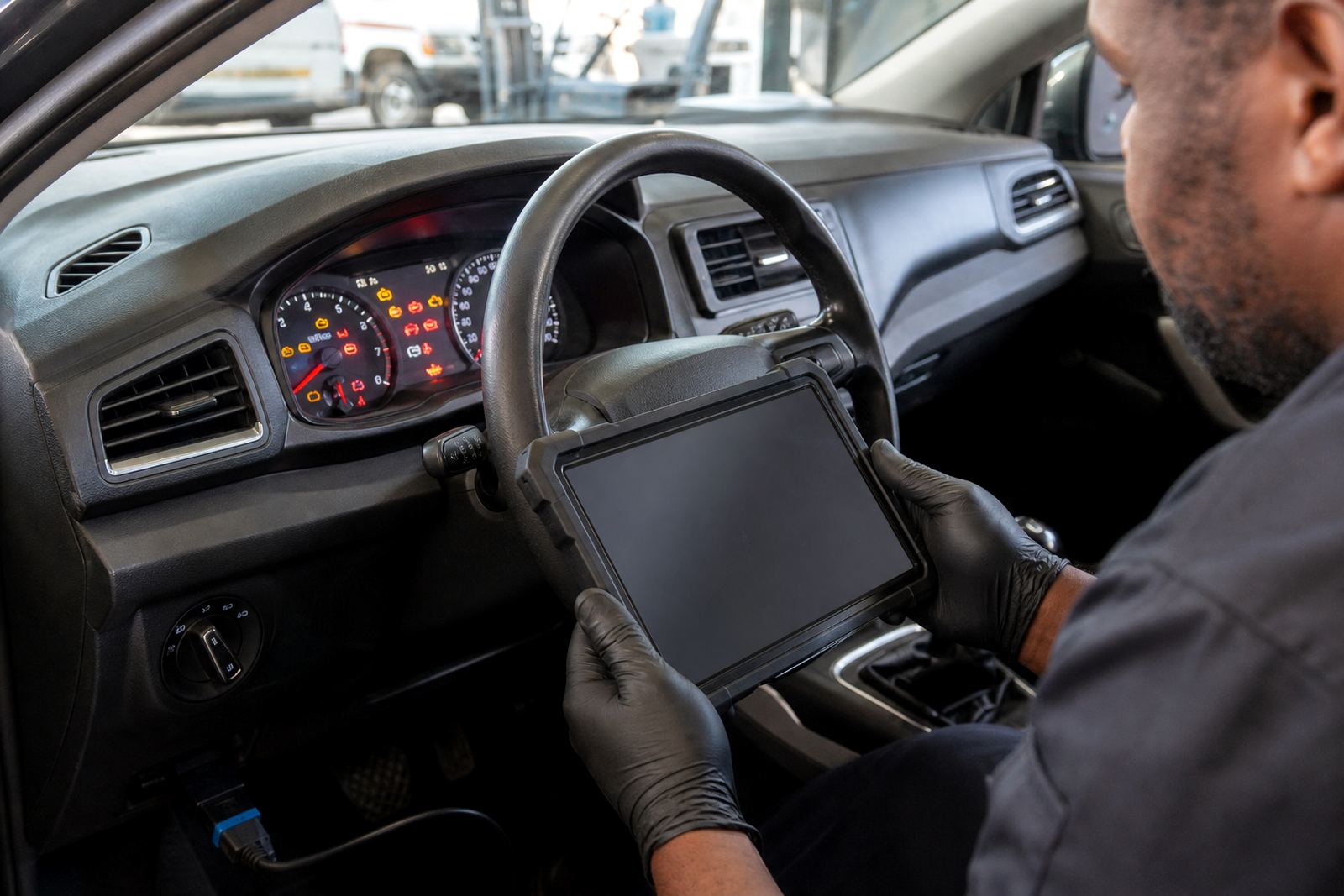
What this scan covers on the vehicle
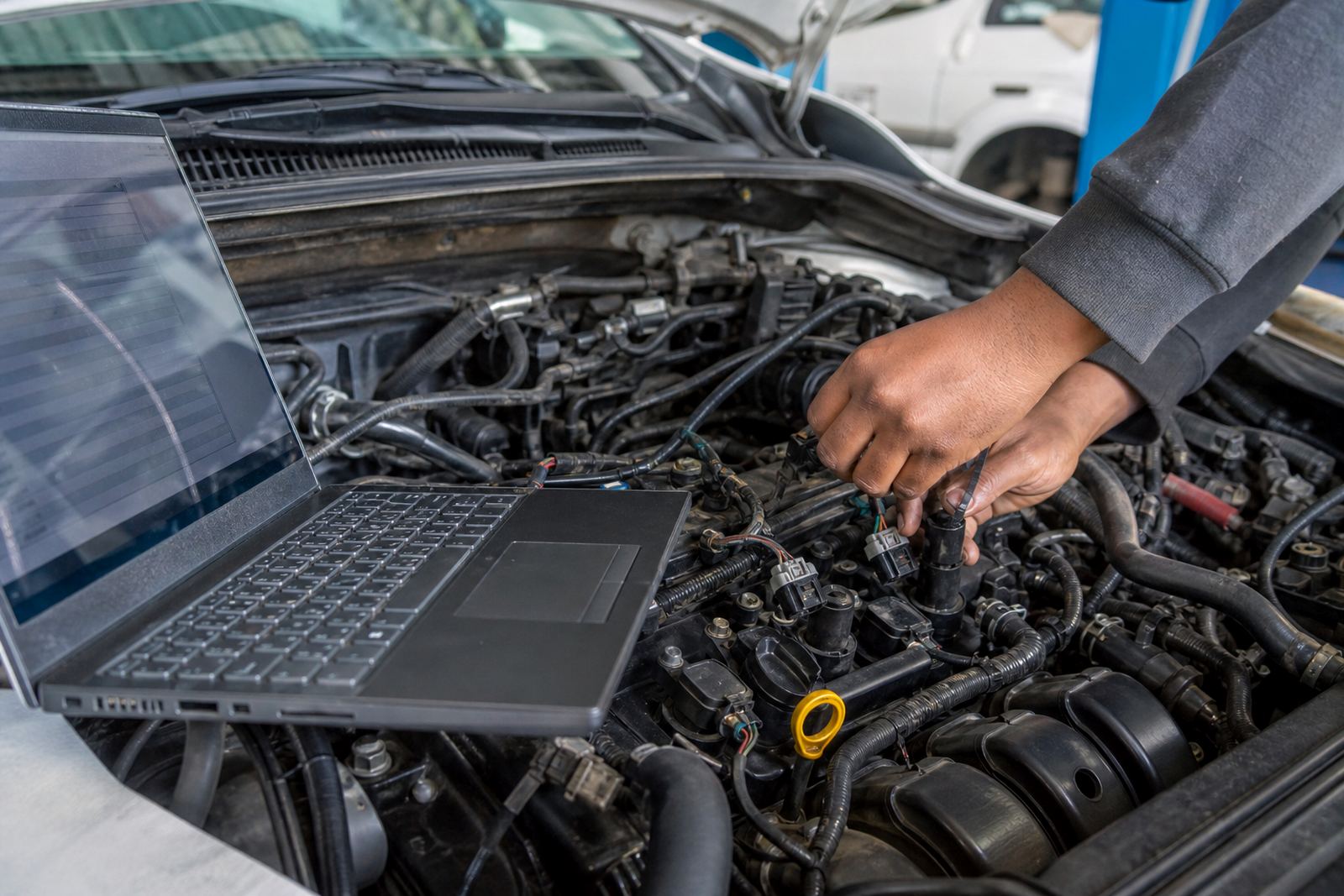
A warning light scan is a diagnostic process for the engine, charging, airbag, ABS, body control and communication systems when a lamp stays on or returns after clearing. We connect diagnostic equipment to the vehicle’s OBD port, read stored and pending fault codes, then compare them with live data, voltage readings and circuit tests.
This service suits private cars, bakkies, light vans and fleet units running in Cape Town, Bellville, Milnerton, Somerset West, Paarl and the surrounding areas. A warning light can point to a sensor issue, a poor earth, low battery voltage, a charging fault, a wiring break or a CAN bus communication problem and the scan helps narrow that down.
- OBD fault code reading and code interpretation
- Live data review for sensors, voltage and command signals
- Battery condition and charging system checks
- Parasitic drain checks where the battery keeps going flat
Scan options that suit different jobs
We keep the options practical. Some vehicles need only a fault code read and a road test note, while others need deeper electrical testing because the warning lamp is tied to a charging fault or an intermittent wiring break. Fleet work often calls for a broader check across several vehicles with the same fault pattern, especially when one unit has a low-voltage history and another has repeated dashboard alerts.
The scan can be booked as a workshop visit in Montague Gardens or as a mobile call-out for sites across the Western Cape. Where the fault is not obvious, the technician may move from the scan into starter circuit checks, alternator output testing, fuse box inspection, earth fault tracing or CAN bus fault checks.
- Basic warning light scan for one system or one lamp
- Full electrical fault scan with battery and charging tests
- Intermittent fault tracing for vehicles that clear and return
- Fleet inspection for multiple vehicles on one site
Where this service fits best
Warning light scans fit vehicles that still drive but are showing a symptom that needs proper diagnosis before parts are replaced. That includes a check engine lamp, battery lamp, ABS warning, airbag light, service reminder fault, and communication faults between modules. On many vehicles the real problem is not the light itself, but a circuit or power supply issue behind it.
This is a strong first step after a jump start, battery change, alternator repair, starter repair or any wiring work that may have disturbed a circuit. It also helps when a trailer wiring fault, accessory rewiring job or fuse replacement has left a new warning light behind. In coastal areas and workshop yards, moisture and corrosion can affect plugs, terminals and earth points, so the scan is followed by hands-on inspection where needed.
What the technician checks during fitting or testing
A warning light scan is not just a plug-in and printout. The technician checks the supply voltage, earth condition and circuit behaviour while the system is active. If the vehicle needs a fitted tracker, accessory or rewiring repair at the same time, the diagnostic work helps confirm that the added equipment has not disturbed a critical line or created a parasitic draw.
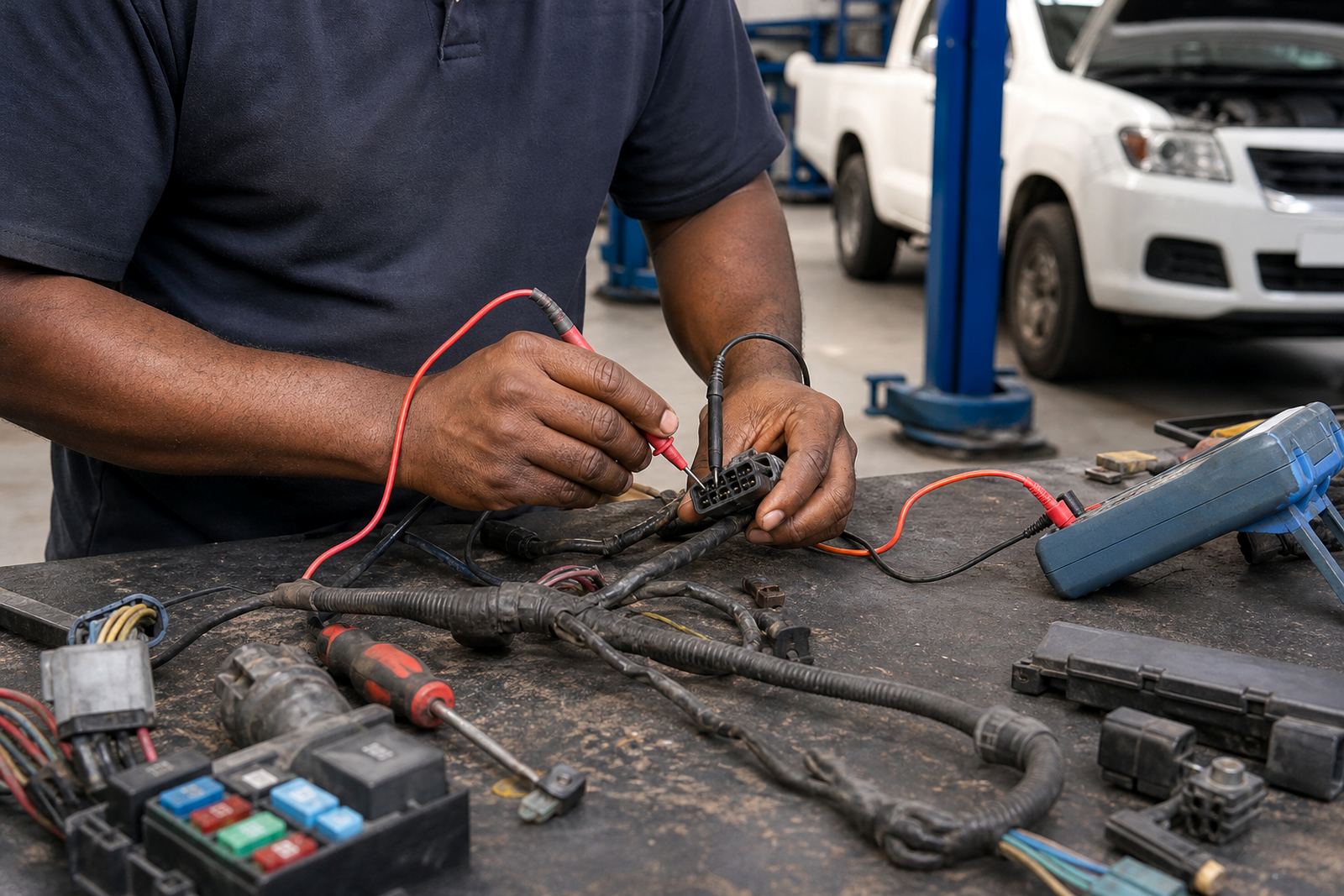
Typical diagnostic steps include continuity checks on wiring, alternator ripple checks, starter current checks and a review of live data from sensors and control units. On some vehicles the CAN bus network also has to be checked for communication dropouts, because one weak connection can trigger several lights at once.
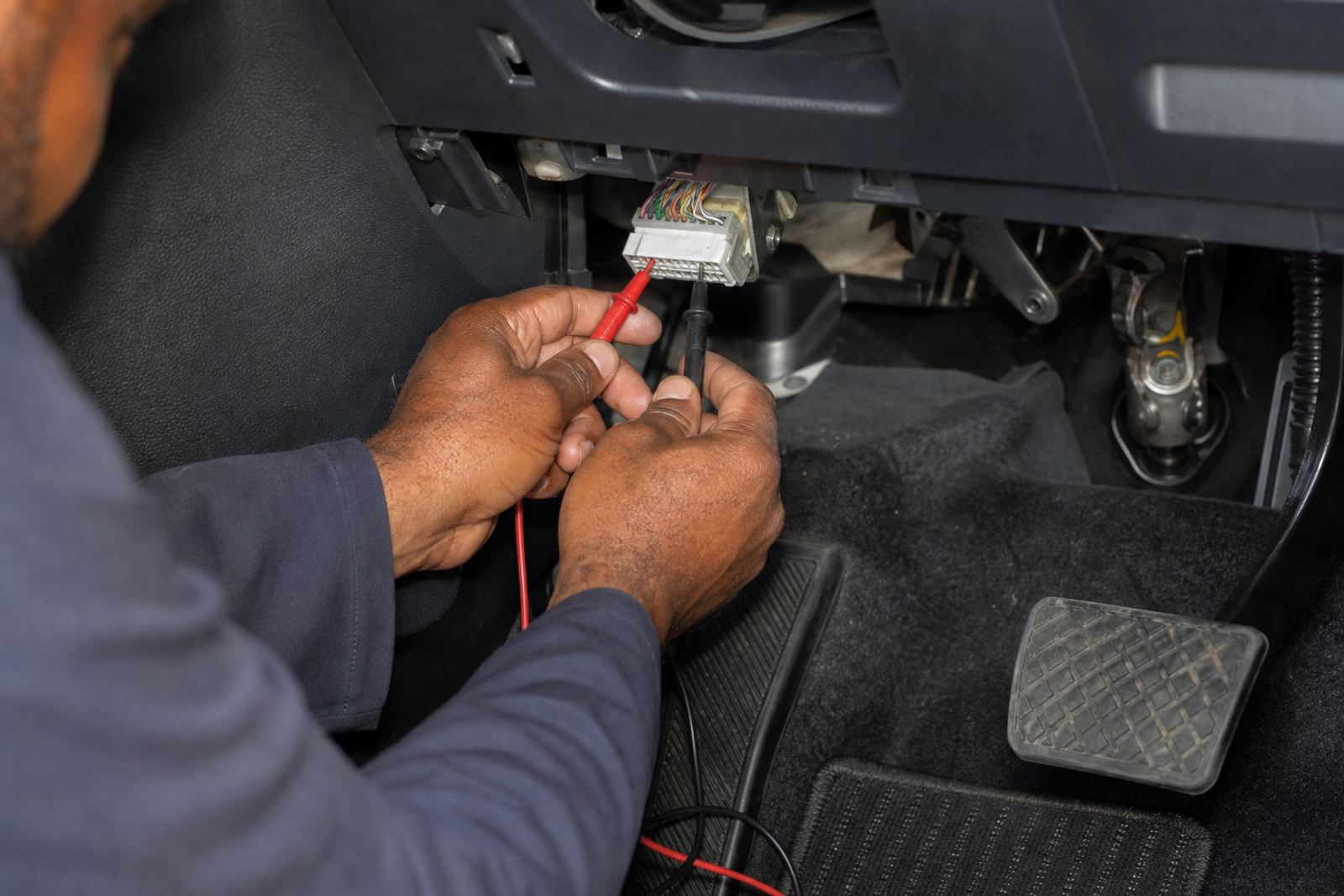
- OBD socket access and fault code capture
- Voltage drop testing on positive and earth circuits
- Battery drain checks with ignition off
- Module communication and CAN bus fault checks
Care after the scan and fault repair
Once the scan is complete, the next step depends on what the readings show. Some faults clear after a battery or charging repair, while others need wire repair, terminal cleaning, fuse box work or a part replacement linked to the affected circuit. If a warning lamp returns, the vehicle should be checked as a specific fault, because the live data often points to a narrow cause.
After repair, the system is checked again so the code history, live readings and warning lamp status can be compared. That matters on fleet units where a vehicle may pass one day and fail the next because of vibration, water entry or a tired battery. A clean repair also means the loom, connectors and mounting points are secured properly rather than left under strain.
Details to confirm when you send the booking
When placing an order for a warning light scan, include the vehicle make, model, year, engine type if known, the warning light on the dash and any recent work on the battery, alternator, starter or wiring. If the vehicle is a fleet unit or a mobile call-out, tell us where it stands and whether the fault is constant or only appears after driving, starting or loading accessories.
It also helps to note if the vehicle has had trailer wiring, tracking equipment, extra lights or accessory rewiring fitted. Those details can point the technician toward the right circuit from the start and reduce unnecessary stripping. For workshop bookings or mobile call-outs, use our contact form with the vehicle details and the warning light description.
- Vehicle make, model and year
- Warning light or message shown on the dash
- Recent battery, starter, alternator or wiring work
- Workshop booking or mobile call-out location
Key facts
| Service type | Vehicle diagnostic scan with supporting electrical testing |
|---|---|
| Method | OBD code reading, live data review and circuit checks |
| Systems covered | Engine, charging, ABS, airbag, body and communication faults |
| Typical follow-up | Battery, alternator, starter, earth, fuse and wiring repairs |
| Workshop area | Montague Gardens, Cape Town |
| Call-out areas | Cape Town, Bellville, Milnerton, Somerset West, Paarl, Brackenfell and Durbanville |