Send the fault picture, not just the warning light
The most useful request tells us what the vehicle is doing, not only what the dashboard says. A rough idle, slow cranking, dead accessories or a battery that keeps going flat all point to different checks, and the first note helps the technician arrive with the right test gear.
If the fault started after a battery change, jump start, accident repair or trailer fitment, include that detail. Small clues like that can point toward a wiring issue, charging fault, earth problem or CAN bus disturbance before the first cover is removed.
Details that make a mobile visit workable
Call-outs across Cape Town, Milnerton, Bellville, Somerset West, Paarl and the surrounding areas need access that is safe and practical. Tell us where the vehicle is parked, whether it is in a yard, workshop bay, basement or roadside space, and whether there is room to open doors and bonnet fully.
- Exact location and suburb
- Vehicle make, model and year if available
- Engine type, petrol or diesel
- What happened first and what happened next
- Any warning lights, messages or beeping
- Whether the vehicle can be started, moved or locked
- Access notes, gate codes or contact person on site
What a call-out can cover on site
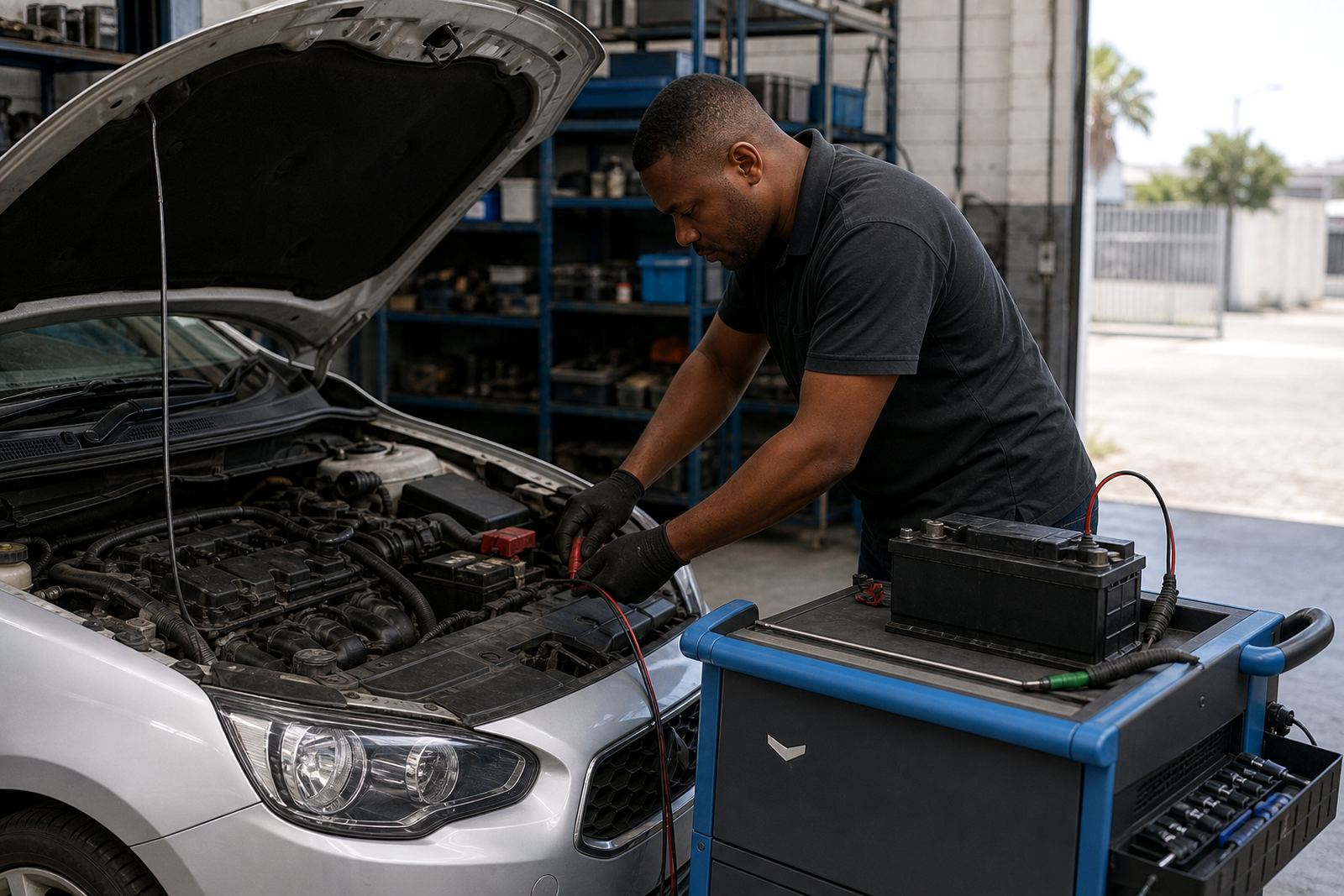
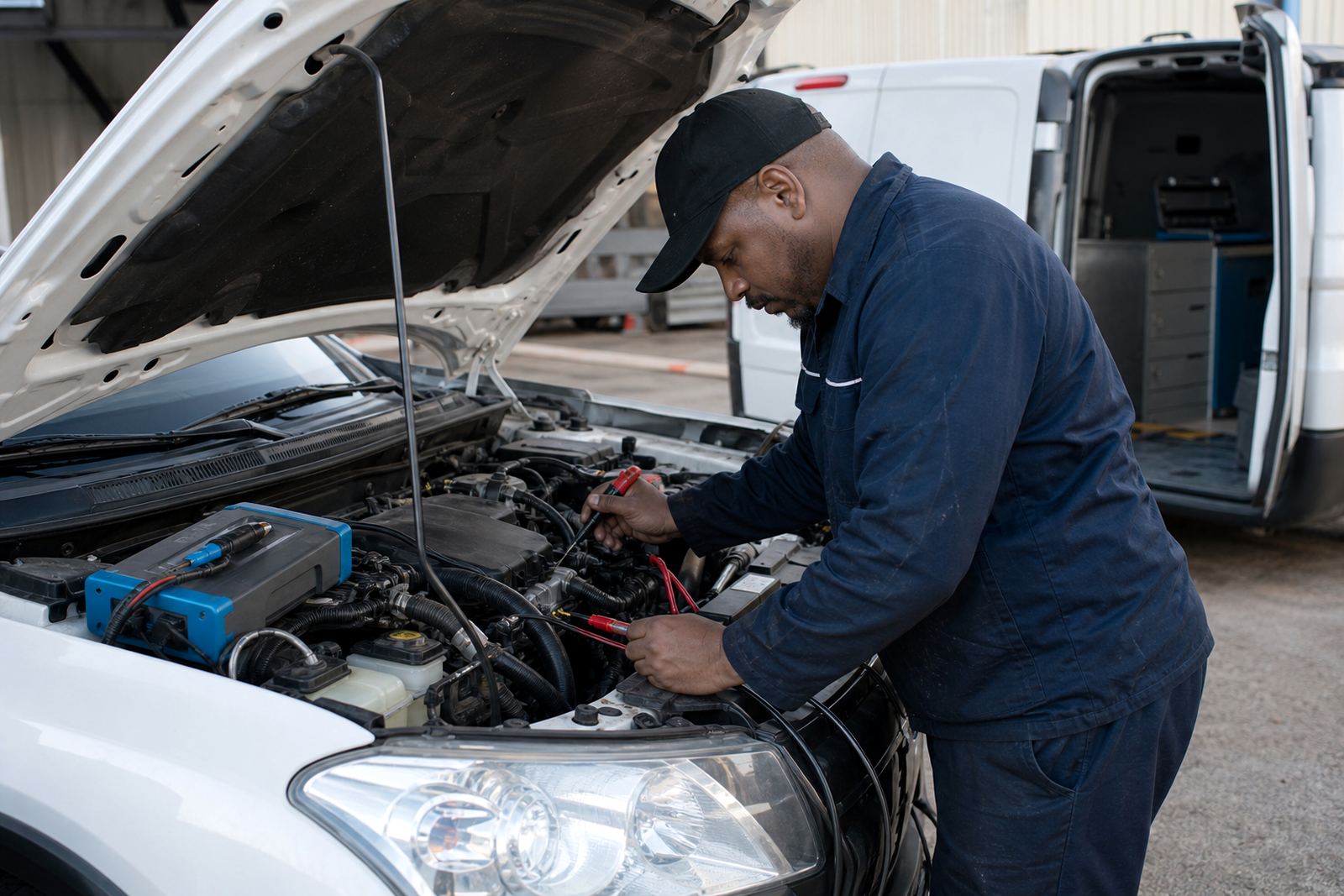
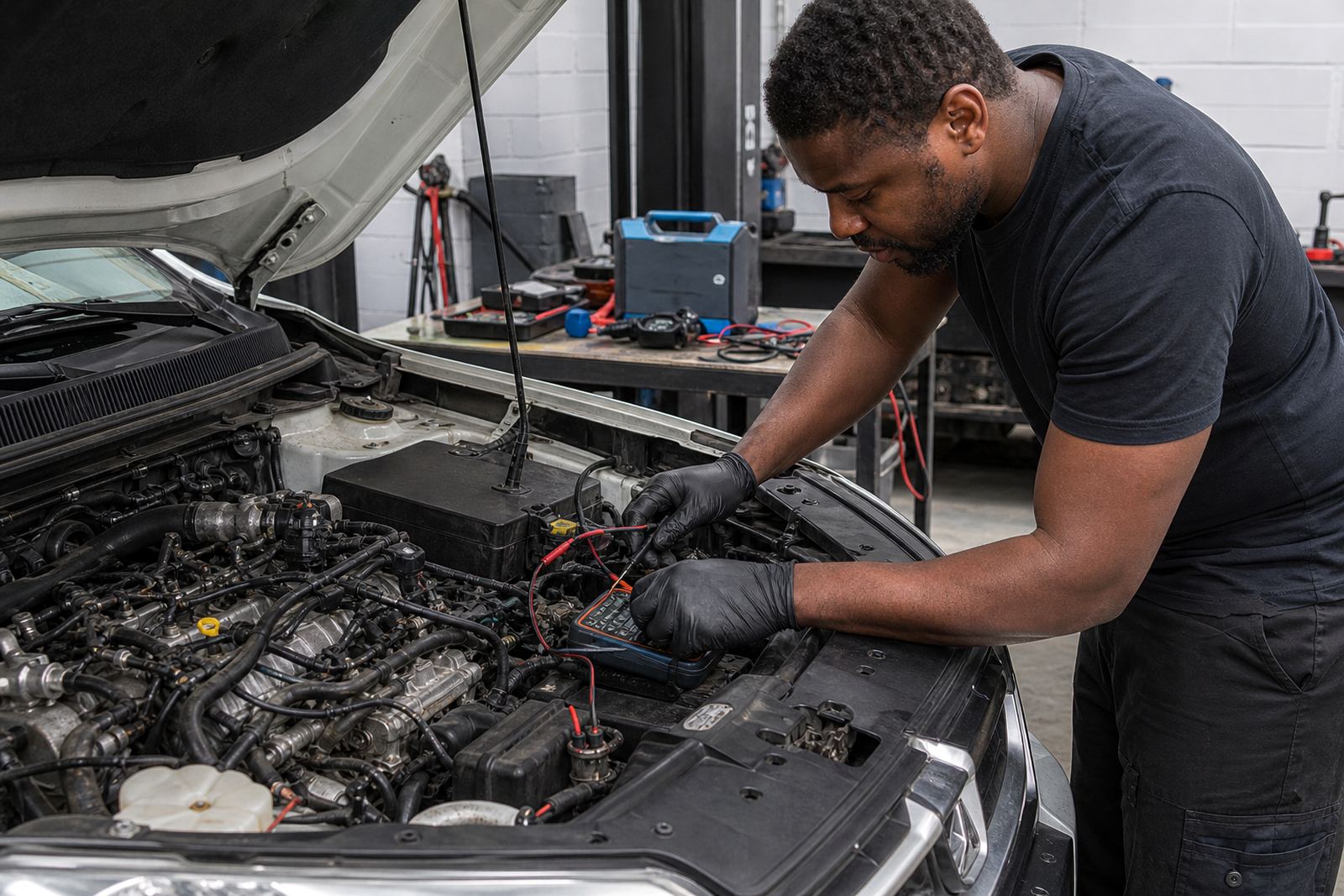
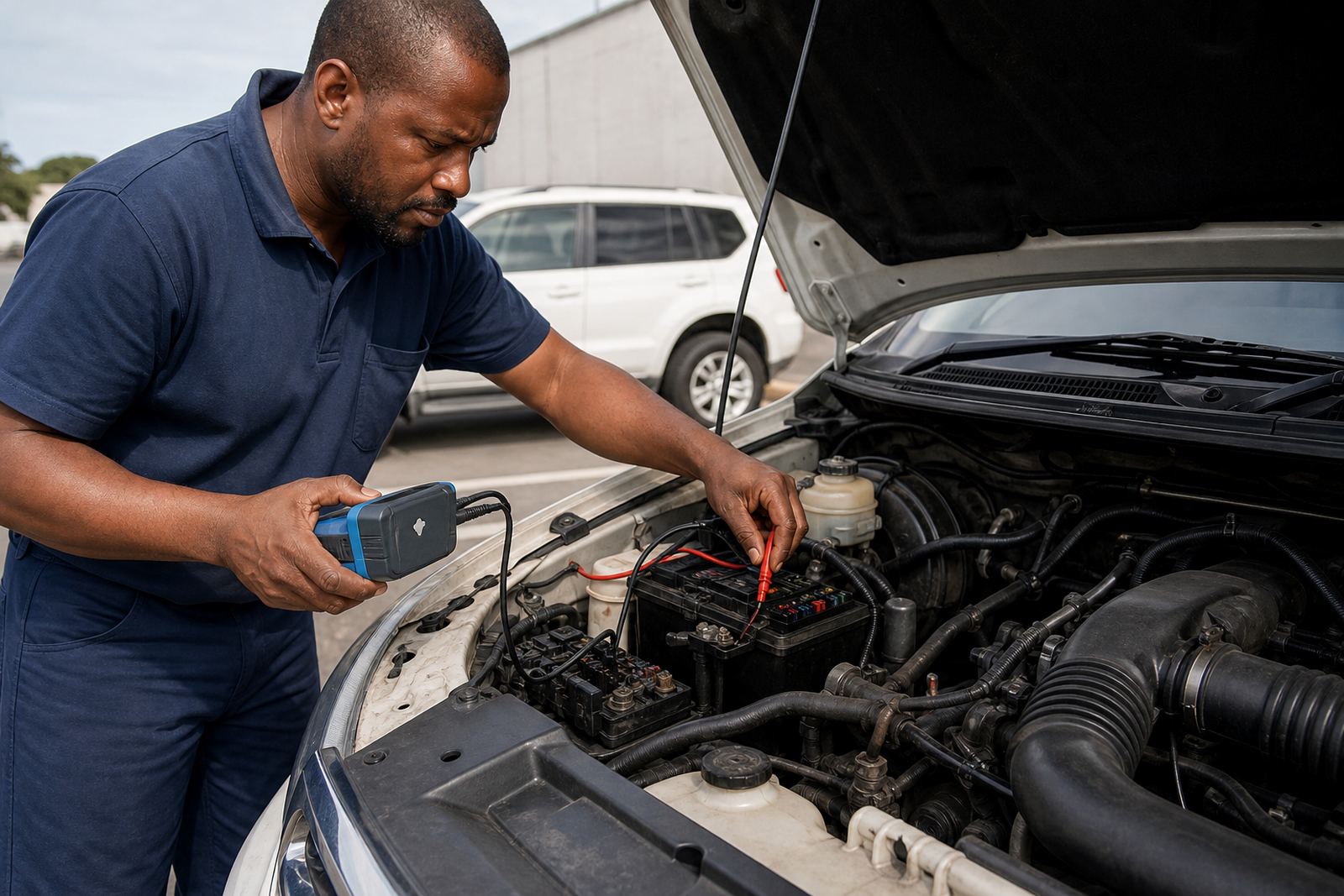
The mobile unit is used for fault finding and repair work that can be handled on location. That includes OBD fault code reading, live data checks, battery and charging tests, parasitic drain testing, starter circuit checks, alternator testing and earth fault tracing. Where needed, the technician can also inspect lighting faults, fuse box issues and trailer wiring problems.
Some faults are straightforward, others need a deeper trace. A battery that looks fine on paper may fail under load, a starter can draw too much current, or a wiring break may only show up when the harness moves. Clear symptom notes help narrow the test path before tools come out.
Fleet bookings and private roadside help
Fleet operators often need more than a one-car answer. If the vehicle is part of a delivery run, service fleet or site vehicle pool, say whether there are other units affected, what urgency the job has in the day and whether the vehicle must be moved before a shift can continue. That helps the workshop coordinate the booking around the vehicles and the route.
- Single vehicle faults
- Multiple fleet units with the same symptom
- Starter or charging failures on work vehicles
- Tracker or accessory fitment after a breakdown recovery
- Diagnostic follow-up after workshop repairs
Private owners can use the same process. A family car that will not crank, a bakkie with a dead battery after standing overnight, or a coastal vehicle with corrosion in the wiring all benefit from proper notes.
When a workshop visit may be the better call
Some jobs move faster in the Montague Gardens workshop than on a driveway or roadside. If the vehicle needs deeper harness tracing, alternator stripping, bench testing, fuse box repair or careful access to a hidden earth fault, workshop space gives the technician more room and safer lighting.
If the vehicle is close enough to drive but the fault is intermittent, mention that too. A warning light that comes and goes, a starter that works only after a tap, or a drain fault that appears after the car stands overnight all need careful testing conditions.
How to write the call-out note
Keep the note plain and specific. A short note works well if it includes the key points, and a few extra lines can cut down a lot of back and forth on the visit day. Mention whether the vehicle is locked in, whether the bonnet opens, and whether keys are available on site.
Use our contact form to send the booking request and include the detail below.
- Vehicle location and suburb
- Fault symptoms in the order they happened
- Any recent repair, battery fitment or accessory installation
- Whether the vehicle must stay on site
- Access details for the gate, yard or parking area
That information gives the mobile technician a cleaner starting point. It also helps the team decide whether the first stop should be a quick battery and charging check, a wiring trace, or a full diagnostic scan with live data.