Start with the vehicle’s electrical limits
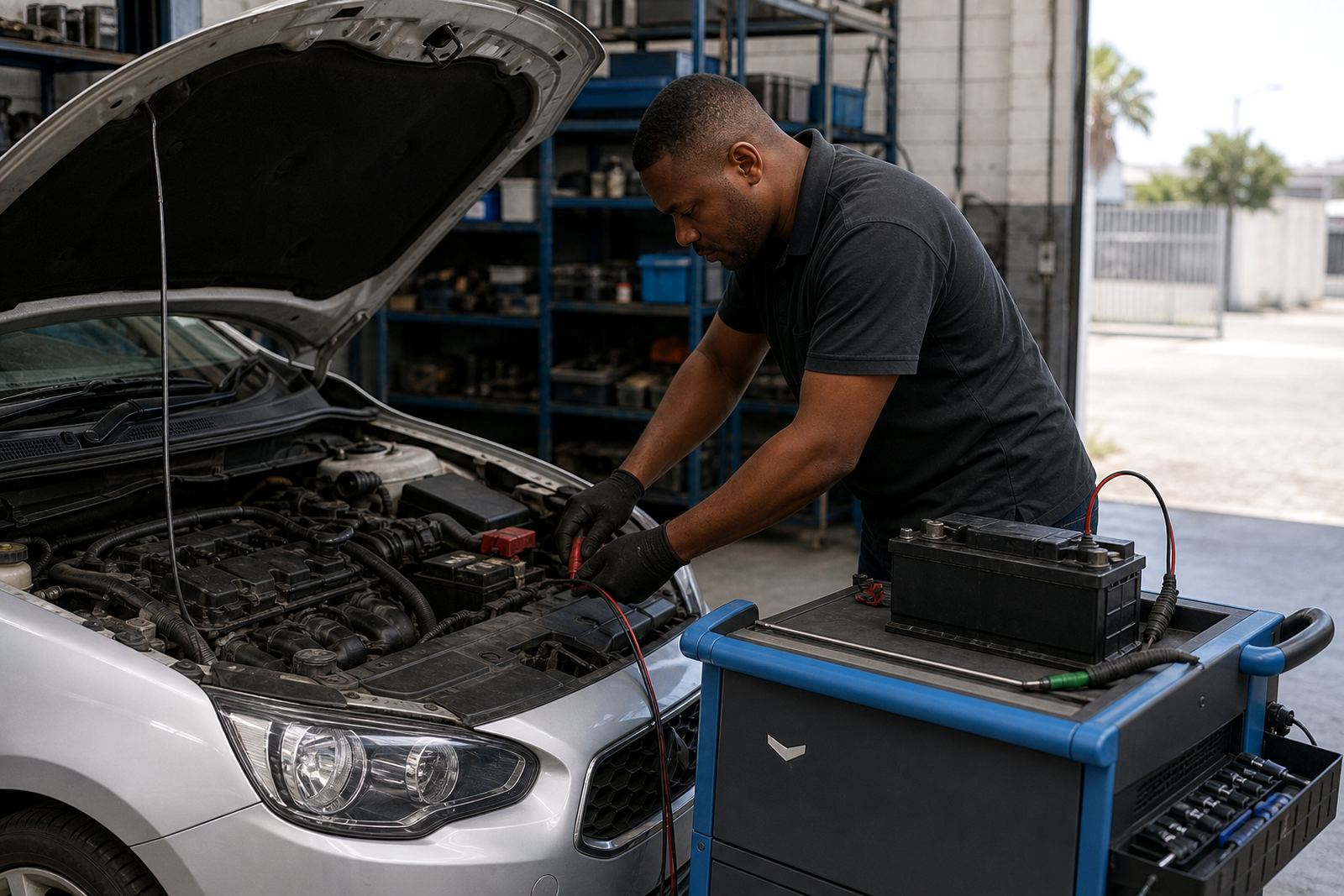
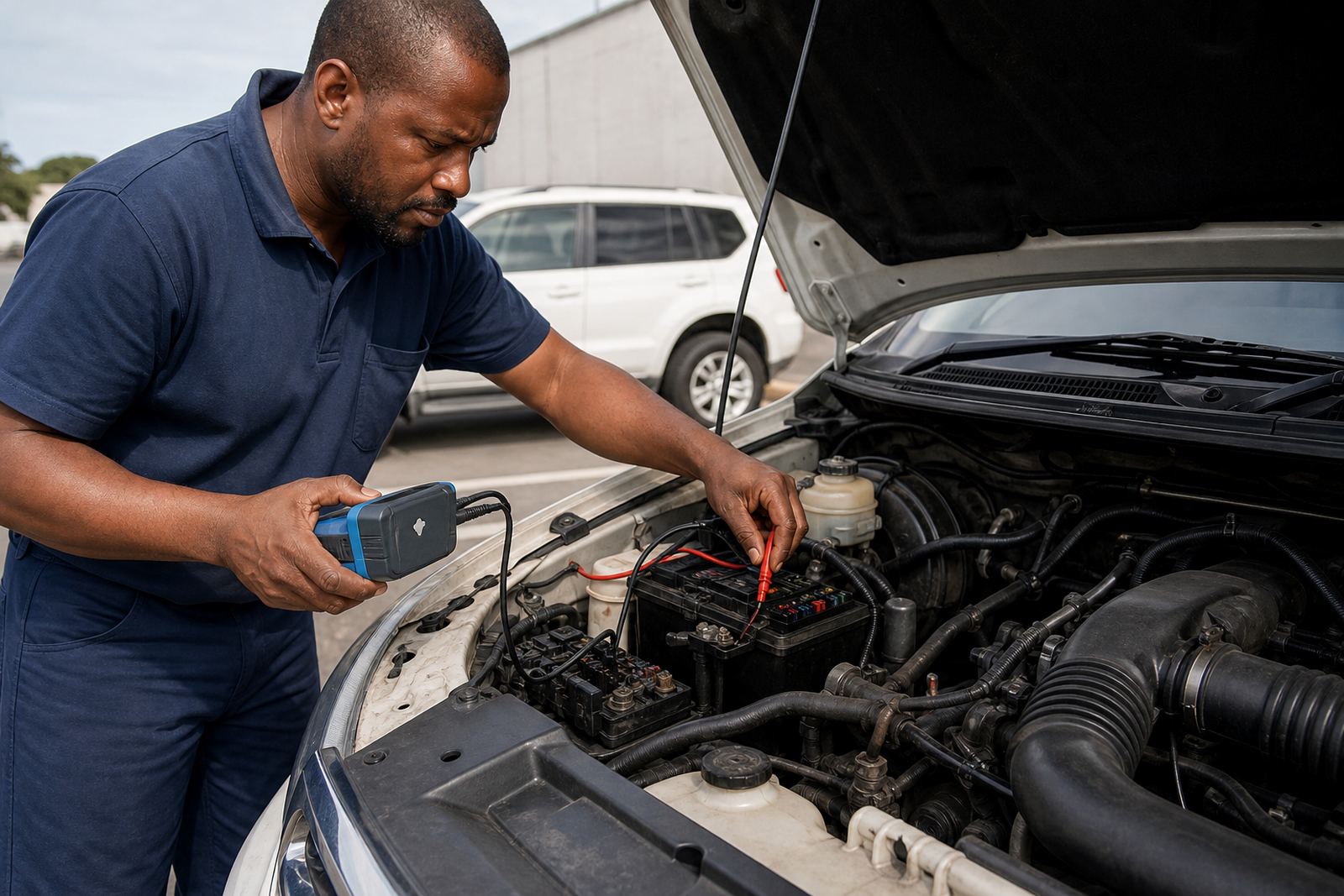
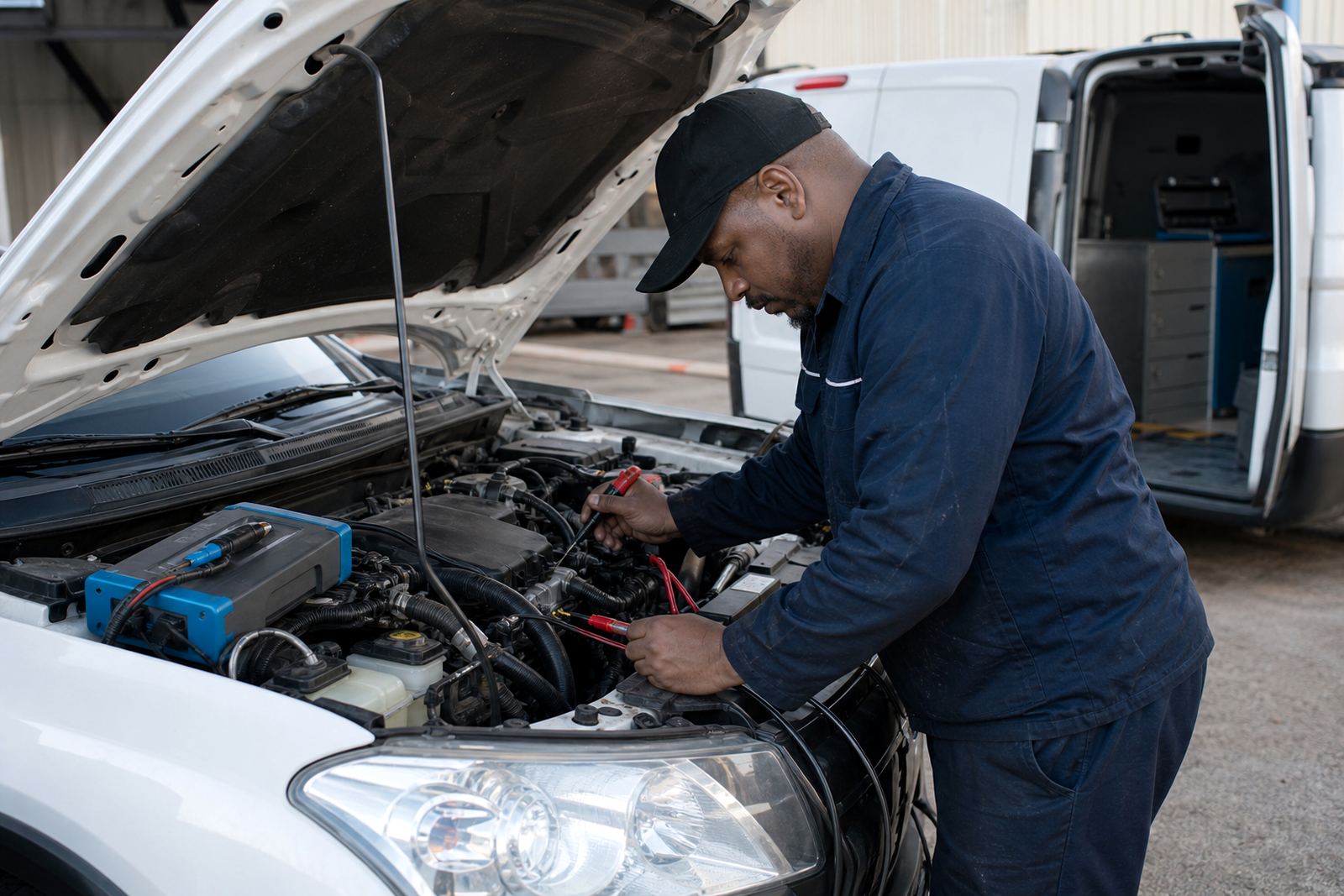
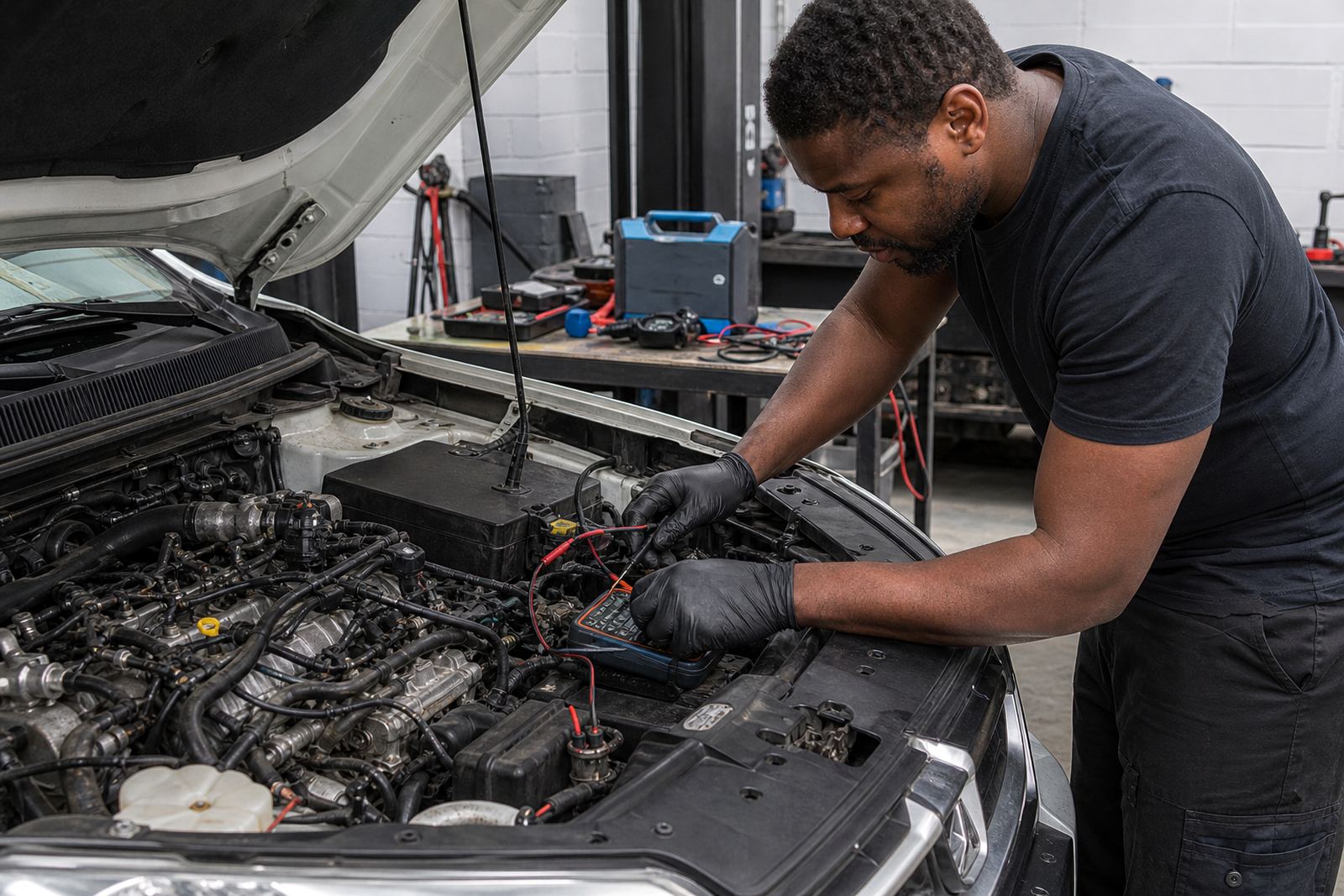
Before any tracker, camera, power outlet or added accessory goes in, the electrical system has to be checked properly. We look at battery condition, charging output, earth points, fuse capacity and whether the vehicle already has warning signs such as low voltage faults, intermittent starting or strange dashboard behaviour. A clean fitment on a healthy system is far easier to live with than a quick job on a weak one.
Modern vehicles can be fussy about added equipment. A poor splice, loose earth or wrong power source can trigger fault codes, drain the battery overnight or create strange CAN bus issues. That is why we test first, then decide where the accessory should take power from and how it should be protected.
- Battery and charging checks before fitting
- Earth point inspection for voltage drop
- Fuse space and circuit load review
- Existing fault code scan where needed
Tracker fitment without messy wiring
Tracker wiring needs a neat layout and a sensible power source. On fleet vehicles, we often work around existing looms so the installation stays tidy and serviceable. On private cars, we look for a hidden but accessible point that will not pinch wires or disturb trim clips. The job is not only about hiding the unit, it is about keeping the electrical path stable after the trim goes back on.
Some vehicles also have immobiliser related quirks, so it helps to understand how the ignition feed, constant feed and earth points are behaving. When the vehicle has a parasitic drain already, the tracker fitment must be planned carefully. That avoids chasing the wrong fault later.
- Constant power feed checked for stability
- Ignition live identified without guessing
- Ground point tested for clean contact
- Trim refitted so wires do not rub or rattle
Camera wiring that does not fight the vehicle
Camera installations need more than a neat mounting position. Power supply, trigger signal and cable routing all matter, especially on bakkies, vans and fleet units that spend long hours on the road. We plan the route so the cable stays clear of hot parts, moving hinges and sharp metal edges. On some vehicles, reverse lights are not the only trigger worth checking, because voltage behaviour can vary between models.
If the camera system needs ignition power or reverse activation, we check the circuit rather than tapping blindly. That approach helps prevent flicker, delayed switching and battery drain. If the job is linked to trailer wiring or rear body accessories, the rear harness is inspected as a whole, not just the camera lead alone.
- Cable route planned around hinges and heat
- Trigger wire confirmed with a metre
- Power source matched to the camera type
- Rear lighting circuits checked where relevant
Power outlets and charging points for real use
Added power outlets sound simple, but the circuit must suit the load. A phone charger, dash camera, fridge outlet or work light all place different demands on the vehicle. We check whether the outlet should be live only with ignition or remain live for parked use, then size the fuse and wiring accordingly. If the vehicle is used for long routes in and around Cape Town, that detail matters because repeated charging cycles can expose weak joins fast.
We also look at how the outlet is mounted. Loose sockets, thin wire and poor earth points create heat and voltage drop. That can damage the outlet or cause intermittent operation, which is usually when the customer first notices a problem. The fix is to build the circuit properly from the start.
Common fitment problems we are asked to sort out
A lot of follow-up work starts after someone else has already fitted the item. The vehicle may crank slowly, show a battery light, lose settings, or develop a drain that only appears after parking overnight. In other cases the accessory works, but the wiring is untidy and vulnerable to moisture, vibration or accidental pulling.
We often trace issues back to one of a few areas. A relay may be used where a direct fused feed is needed, an earth point may be painted over, or a wire may be joined with no proper strain relief. On commercial vehicles, that kind of shortcut tends to show up quicker than people expect.
- Parasitic drain after accessory fitment
- Loose or corroded earth connections
- Blown fuses from incorrect circuit choice
- Intermittent operation from damaged wiring
How to brief the workshop for a cleaner result
When you send through details on our contact form, it helps to mention the vehicle type, the accessory type and the fault or concern you are seeing. If there is already wiring in place, note whether the item is completely new or being reworked after a previous installation. That saves time on the first inspection and makes it easier to plan the right test path.
For fleet operators, it also helps to note whether the vehicle is a daily route unit, a service van or a pool vehicle. Different usage patterns mean different wiring choices. A vehicle that idles often in traffic around Bellville or Milnerton may need a different approach from one covering longer runs to Paarl or Somerset West.
- Vehicle make, model and year of model
- Accessory type and intended use
- Any warning lights, drains or faults already noticed
- Whether the fitment is new, repaired or being altered