One booking trail for several vehicles
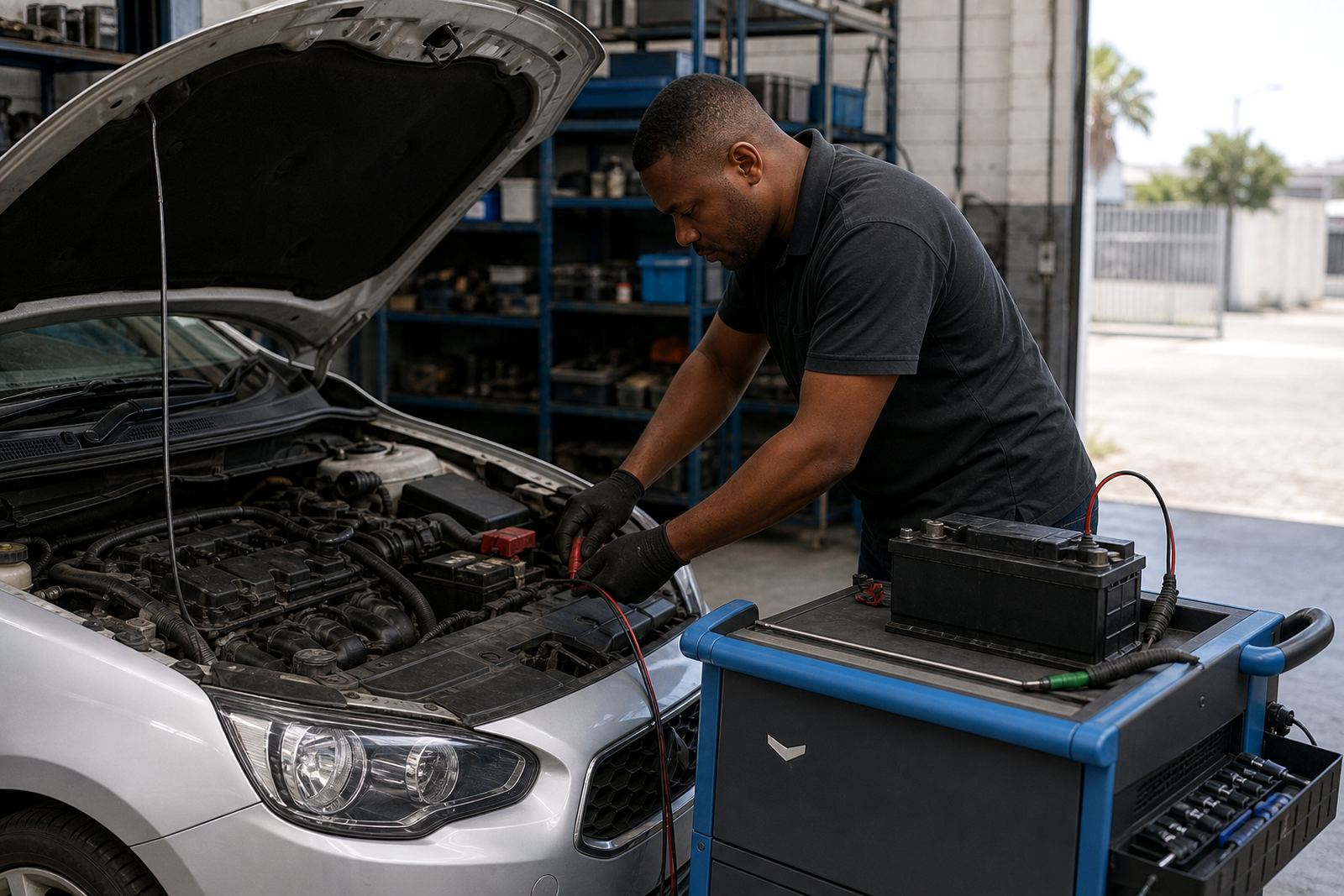
Fleet bookings work best when each vehicle is listed clearly from the start. We use one point of contact, then map the cars, bakkies, vans or light commercial units that need attention at the workshop in Montague Gardens or at the depot.
That helps when a fleet has mixed faults, like one unit showing OBD trouble codes, another with a flat battery after standing, and a third with a charging fault that keeps returning. It also keeps the job list tidy when there are several drivers, shifts and keys in play.
How depot visits are planned around the workday
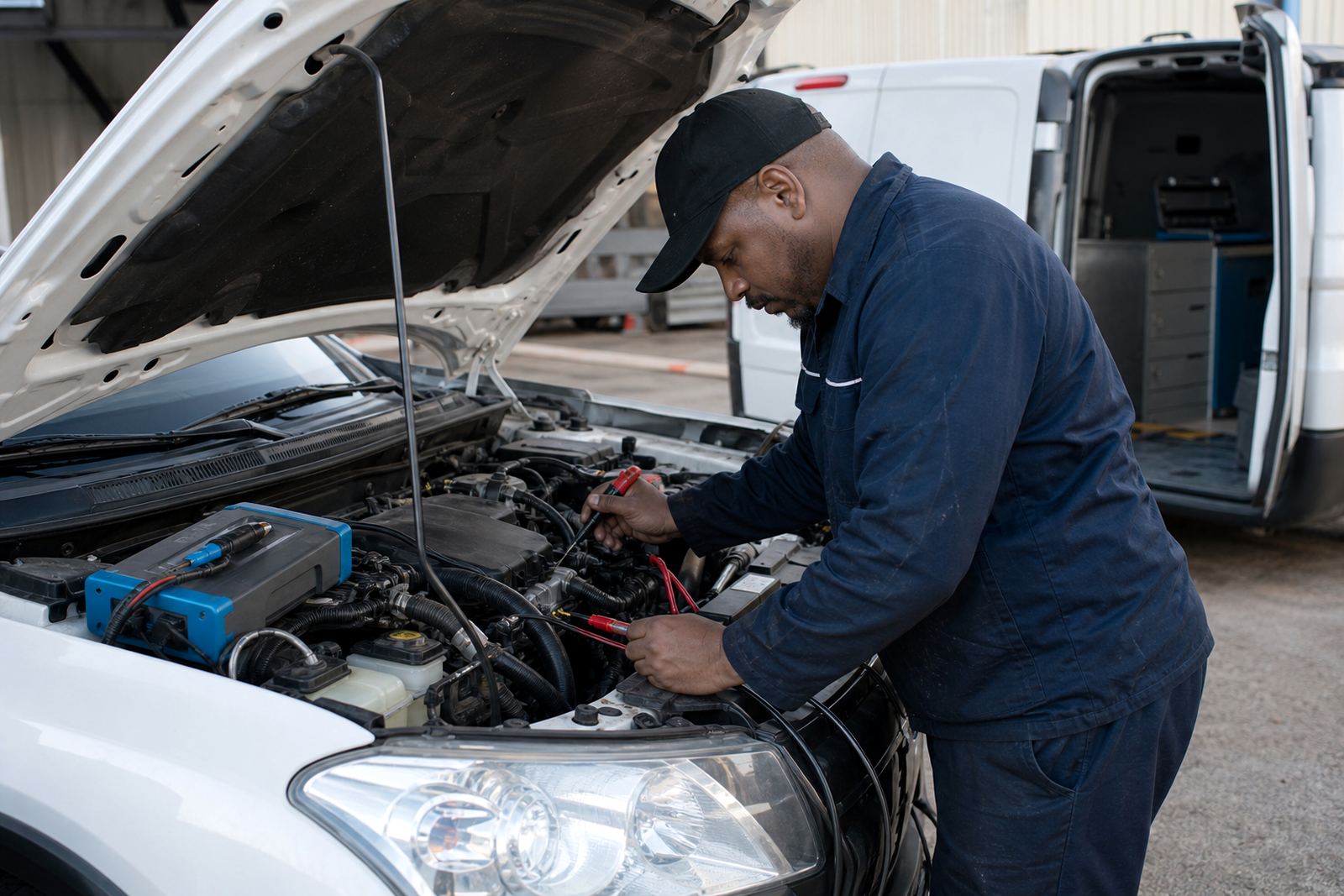
Some faults need a lift on site, others are better handled in the workshop. We plan around access, parking, security checks and the amount of strip-down needed, so the right technician arrives with the right test gear and parts on hand.
- Vehicles that cannot leave the depot can be tested on site.
- Units with wiring faults or electrical drain issues may need workshop time.
- Tracker fitting and accessory rewiring can often be grouped with other electrical work.
- Fleet managers can separate urgent faults from scheduled maintenance items.
What the diagnostic process usually covers
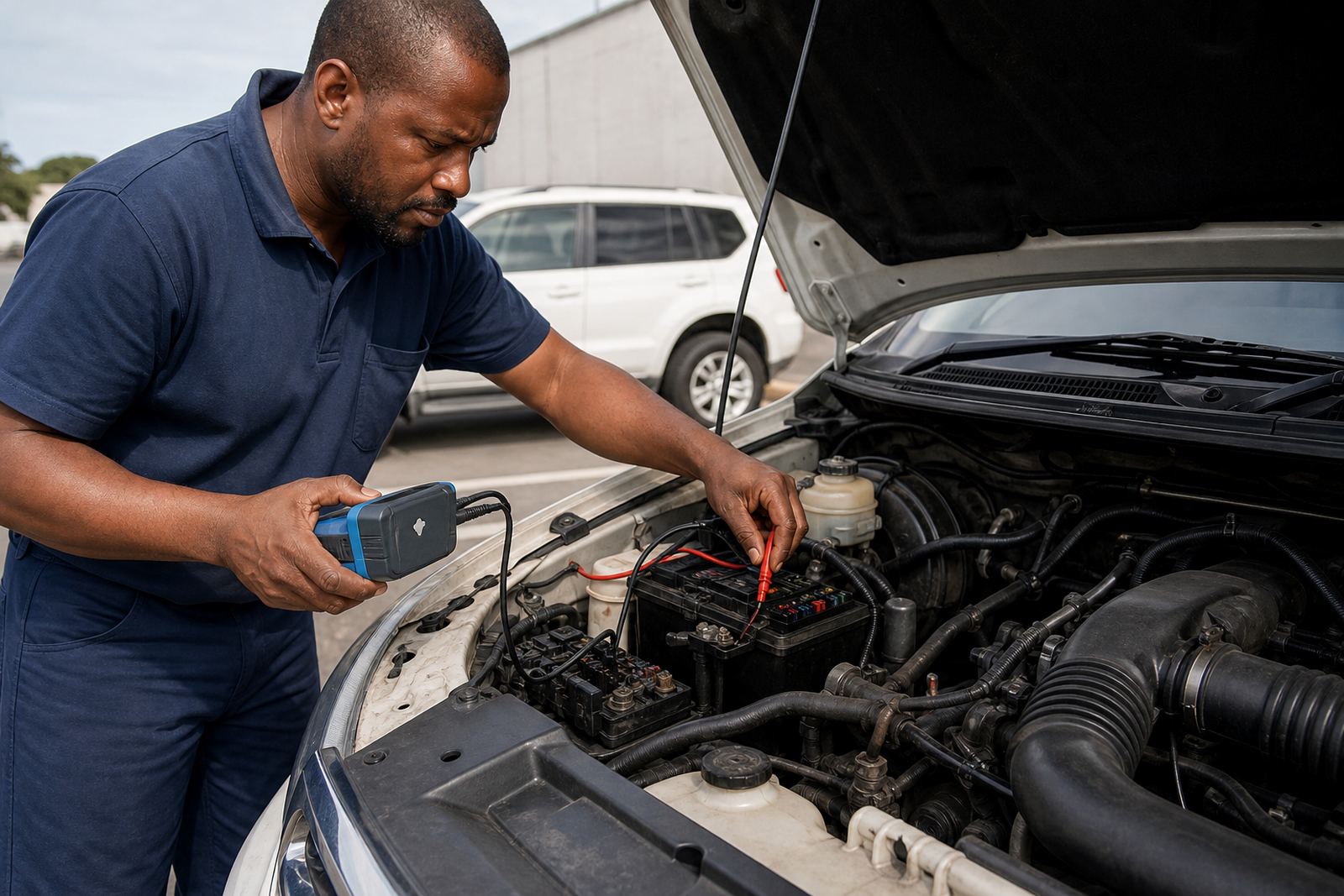
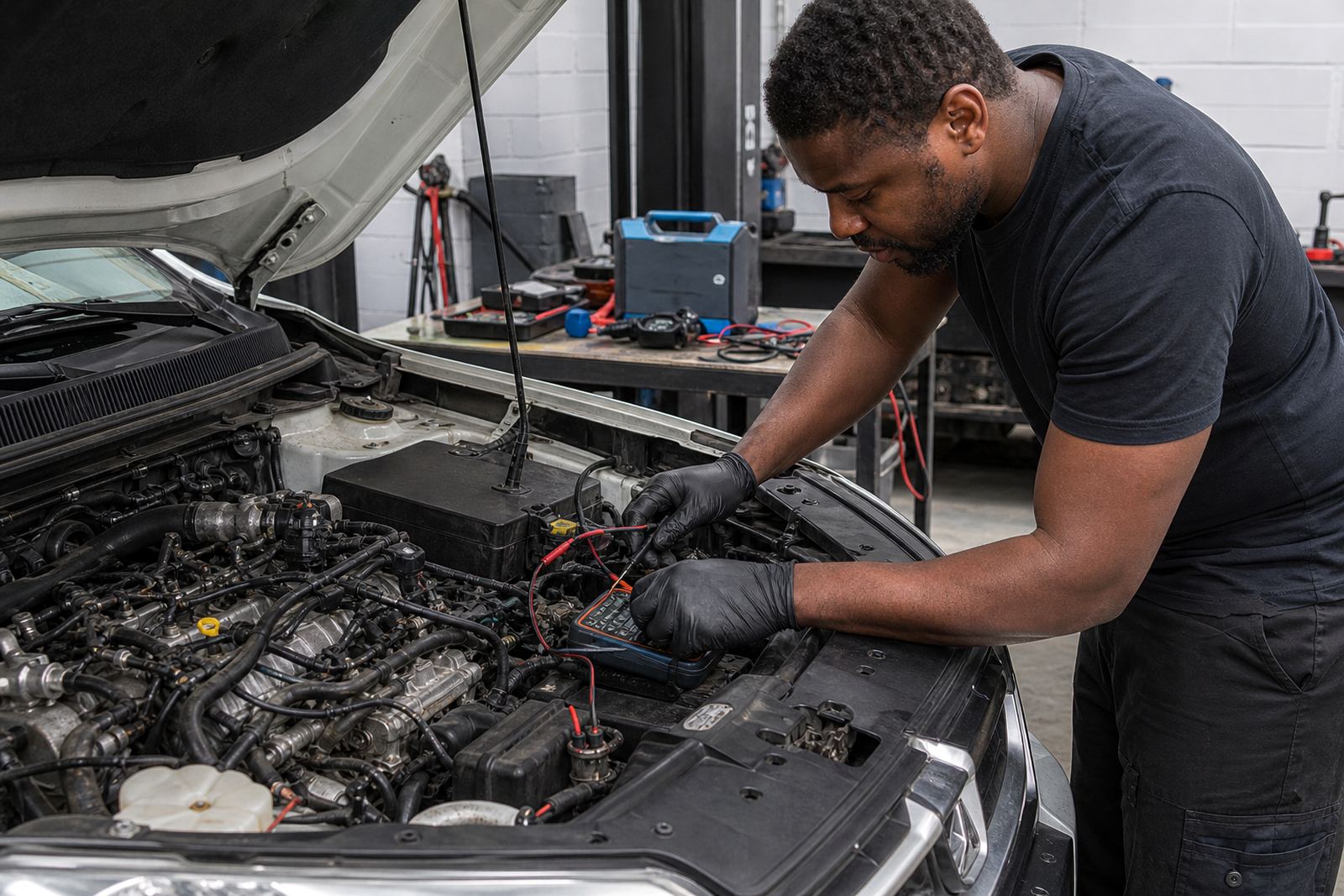
Diagnostics on fleet vehicles go beyond reading a fault code and moving on. We check live data, battery health, starter draw, alternator output, earth paths and charging behaviour, then follow the wiring until the fault makes sense.
When a vehicle shows a CAN bus communication issue, a parasitic drain, or repeated battery failure, the answer is usually in the circuit not the code alone. That is why the test sequence matters most, especially when several vehicles share similar symptoms.
Keeping tracked jobs and accessory fitting in one schedule
Fleet operators often need more than repairs. Trackers, work lights, trailer wiring, reverse lights, charging points and other accessories can be grouped into the same booking if the vehicle is already on the list.
- Tracker fitting for fleet control and vehicle monitoring
- Accessory rewiring for added lights or power points
- Trailer wiring repairs and plug checks
- Fuse box faults, earth faults and starter circuit repairs
That makes it easier to keep vehicles road-ready without splitting the work into many small visits. It also helps when a mixed fleet uses the same depot and the same release paperwork.
What to send when the fleet needs attention
The simplest way to begin is via our contact form. Add the number of vehicles, the depot or area, the fault type, and whether the work must happen at Montague Gardens or on site in Cape Town, Bellville, Milnerton, Somerset West, Paarl, Brackenfell or Durbanville.
Useful details include the make and model, dash warning lights, battery age if known, and whether the vehicle still starts. If the fault happens only in wet weather or after a long stand, mention that too. Small details help the technician follow the right path from the first inspection.
Who handles fleet bookings at V-Auto
Fleet bookings are coordinated by a small team that knows how to keep vehicle work organised. Vuyani Mthembu leads the workshop, Megan Maluleke manages the booking flow, and Liezl Botha keeps fleet schedules aligned with the jobs already on site.
Anele Khanye handles deeper diagnostic work, Ridwaan Davids focuses on auto electrical repairs, and Sipho Gamieldien covers mobile call-outs when vehicles must be checked away from the workshop. That mix matters when a fleet has a starter fault in one unit, a charging fault in another, and wiring damage on a trailer connection.