When a repair needs a second look
Some faults only show up after the vehicle has been driven, parked overnight or left on a short run that does not fully charge the battery. A starter may spin fine in the workshop, then struggle when the engine is hot. A charging fault can sit quiet until the driver switches on lights, aircon and a radio at the same time. That is why follow-up work matters after battery drain repairs, alternator repairs and starter repairs.
If the same warning light returns, if the battery goes flat again, or if an accessory now interferes with another circuit, we start with the facts from the last repair. We check what was tested, what was replaced, and whether the fault moved somewhere else in the system.
What we look at during follow-up checks
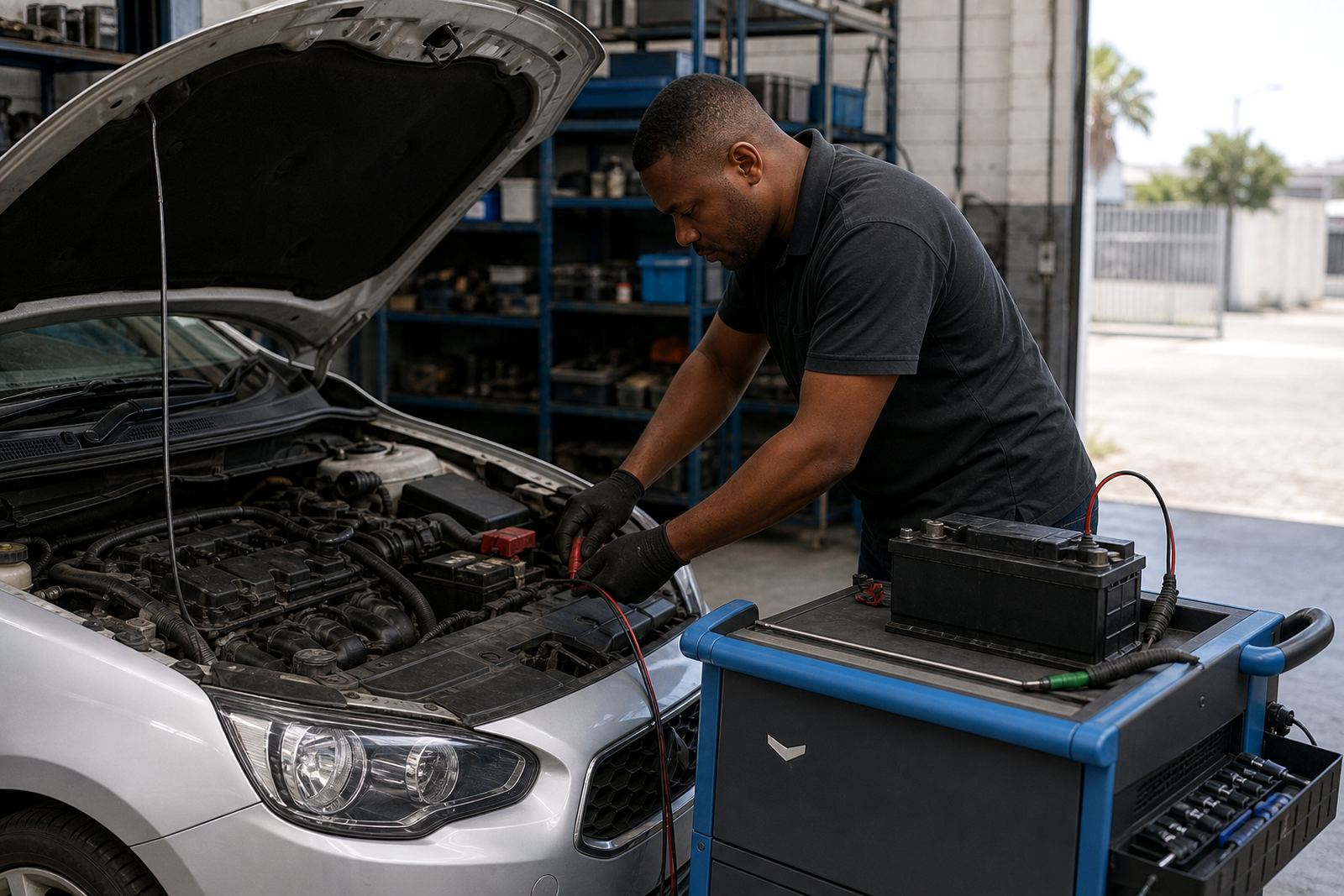
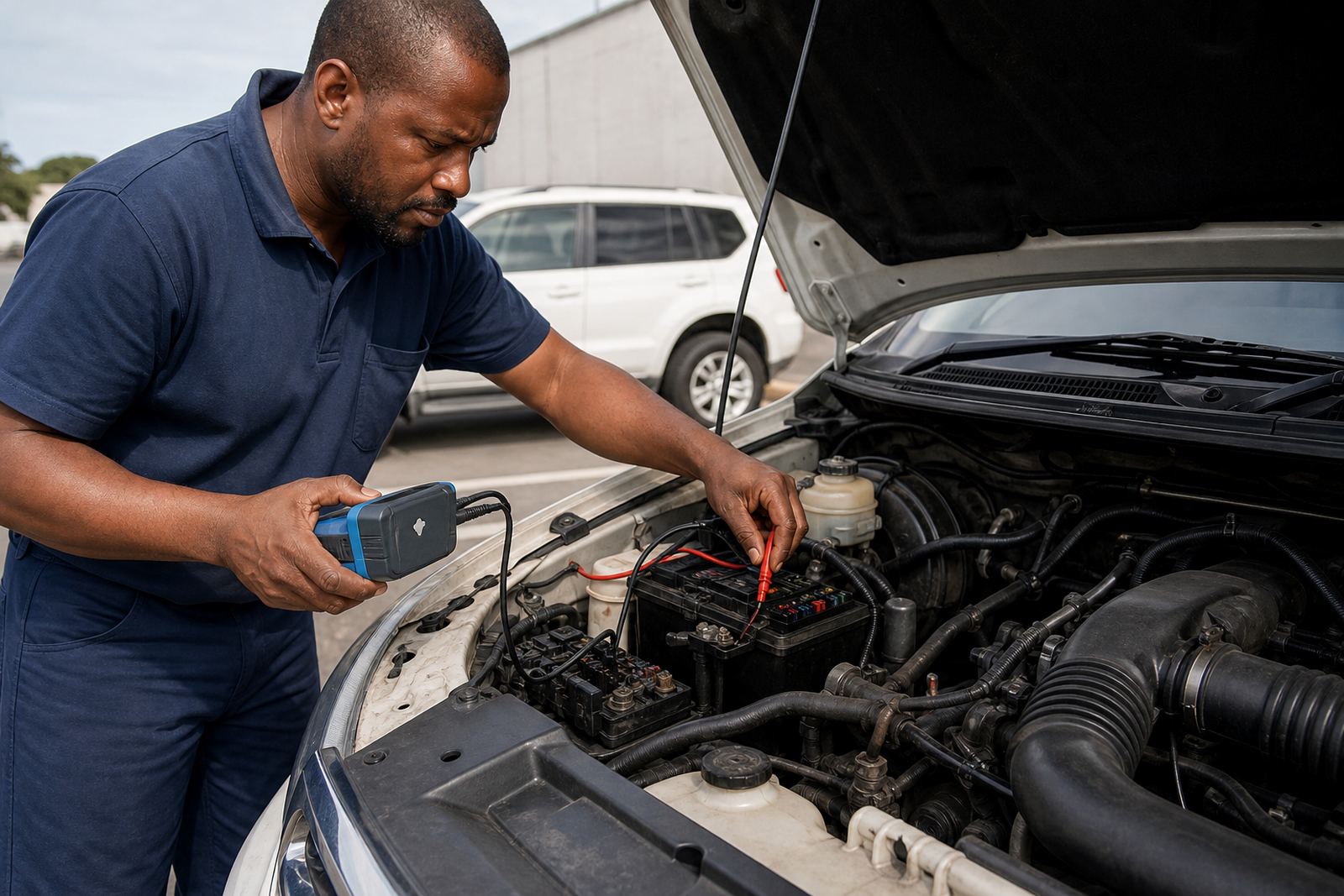
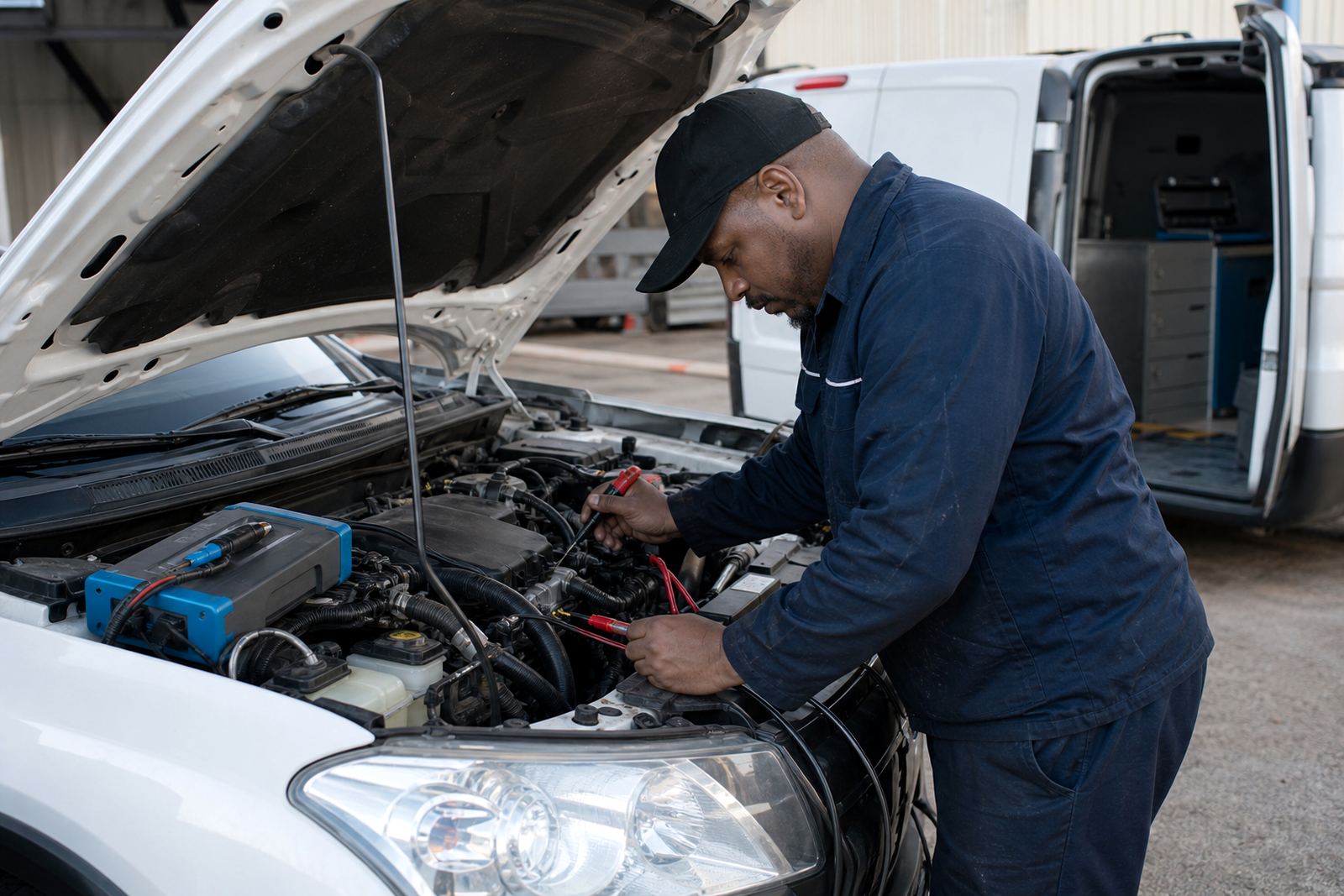
A proper follow-up is more than a quick glance under the bonnet. We scan fault codes, review live data and compare voltage readings at the battery, alternator and main earth points. On some vehicles we also test for parasitic drain, because a small overnight draw can flatten a healthy battery and make the repair look weak when the problem is actually elsewhere.
- OBD fault codes and stored history
- Battery state and charging output
- Starter circuit voltage drop
- Earth faults and loose connections
- Fuse box, relay and loom condition
- Tracker or accessory wiring that may be pulling current
Recurring symptoms that point to the same fault
When a customer reports the same issue after a repair, the pattern matters. Slow cranking, random warning lights, a dead battery after standing, or lights that flicker at idle can point to a fault that was missed or one that developed in a different part of the circuit. On fleet vehicles, repeat symptoms often show up on the same route, after washdowns, or after rough roads have shaken a loose connector free.
In Cape Town, coastal moisture can speed up corrosion in connectors and earth points. That is especially common around Montague Gardens, Milnerton and the harbour side routes, where damp air and road spray can creep into older wiring and terminal ends.
What to send through our contact form
Use our contact form and include the details that help us trace the problem properly. The more specific the note, the easier it is to link the complaint to the circuit and any repair already carried out.
- Vehicle make, model and year
- What was repaired last time
- What the vehicle is doing now
- When the fault shows up, cold start or after driving
- Any warning lights, beeps or message displays
- Whether a tracker, trailer plug or added accessory is fitted
For fleet units, it helps to note the vehicle number, the driver report and the location where the fault first showed itself. That saves time when the same van, bakkie or sedan is used on different runs across Bellville, Somerset West or Paarl.
On-site follow-up for mobile call-outs
Some faults are easier to catch where the vehicle normally works. Our mobile call-out team handles follow-up checks for fleet operators and private owners across Cape Town, Brackenfell, Durbanville, Milnerton, Bellville, Somerset West and Paarl. That is useful where the issue only appears after a long drive, a delivery route, or a parked overnight test.
We can inspect charging behaviour, test the starter circuit, check battery drain and look over accessory wiring without stripping the whole vehicle first. If the fault needs workshop equipment, we bring the vehicle into Montague Gardens for a deeper inspection.
If the repair touches wiring, earths or CAN bus lines
Modern vehicles do not always fail in one obvious place. A damaged earth, a poor splice or a broken wire inside a loom can affect several systems at once. CAN bus faults can also confuse the picture, because one bad connection may create messages that look like separate problems.
We trace the circuit from the battery feed to the load, check connector condition and look for rubbed insulation, heat damage or water ingress. Where trailer wiring or accessory rewiring is involved, we also make sure the added circuit is not interfering with the original vehicle wiring.
What a good follow-up visit should leave behind
After the follow-up, you should know what was found, which readings changed, and whether the fault sits in the original repair or somewhere else in the system. A solid check leaves the vehicle easier to live with, not more confusing. If a part keeps failing, the root cause still needs attention, whether that is a weak battery, a tired alternator, a loose earth strap or a wiring break hidden under trim.
At V-Auto in Montague Gardens, we handle diagnostics and auto electrical work with the same method on private vehicles and fleet units. The point is to stop the repeat fault, not just clear the warning and move on.