Start With The Dash
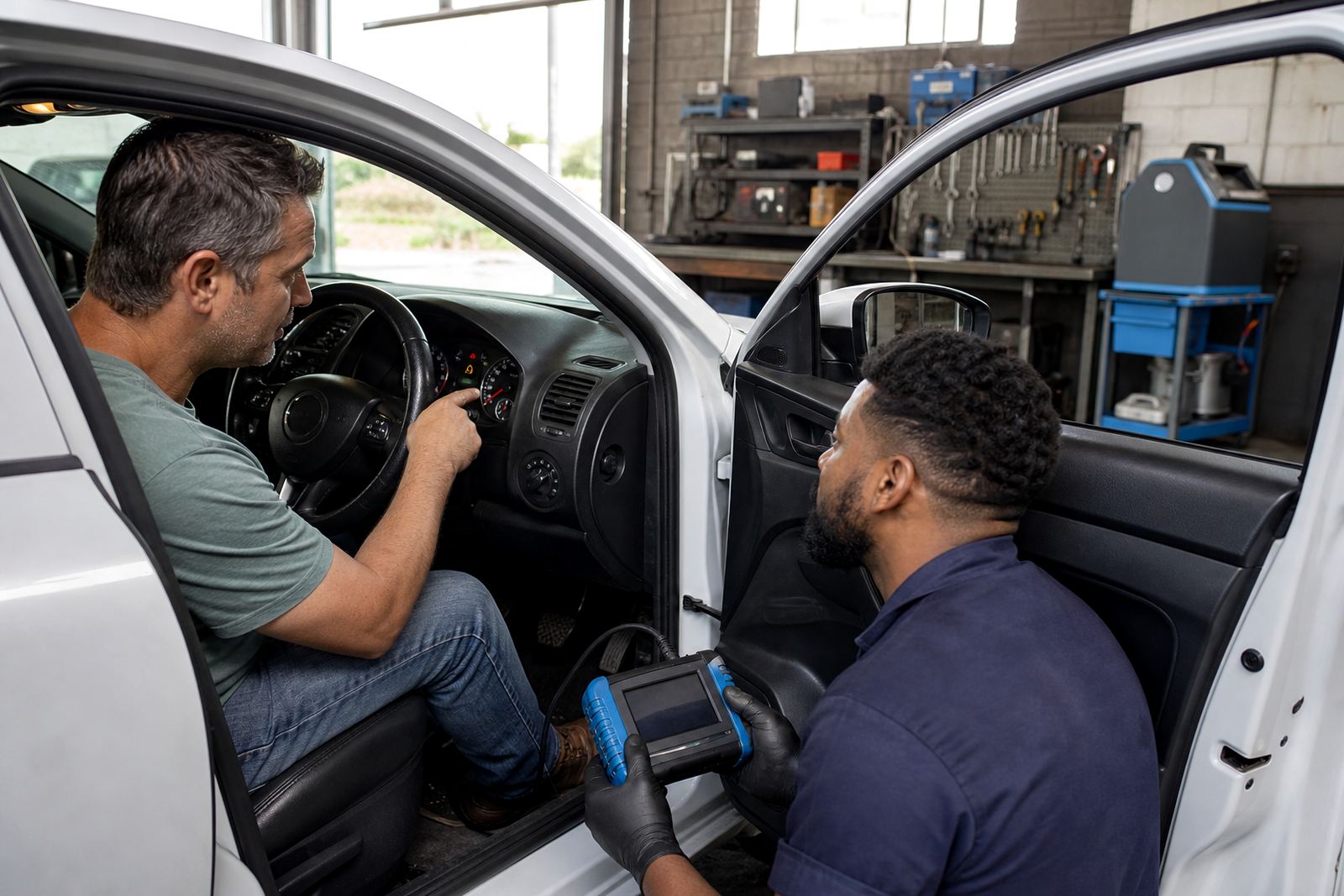
Before a scan, look at the instrument cluster with a calm eye. Is the check engine light steady or flashing, are ABS or airbag lights also on, and did the warning appear after a pothole, a battery change or a jump start. Those details help us separate an engine management fault from a wiring issue or a charging problem.
If the vehicle still drives, note whether it feels normal, limp or uneven under load. A light that comes and goes can point to a loose earth, water in a connector, or a fault that only appears when the engine bay warms up.
- Write down every warning light on the dash
- Note if the light stays on or fades out
- Record what happened just before it appeared
- Tell us if the vehicle was recently serviced or jump started
The Clues Under The Bonnet And In The Cabin
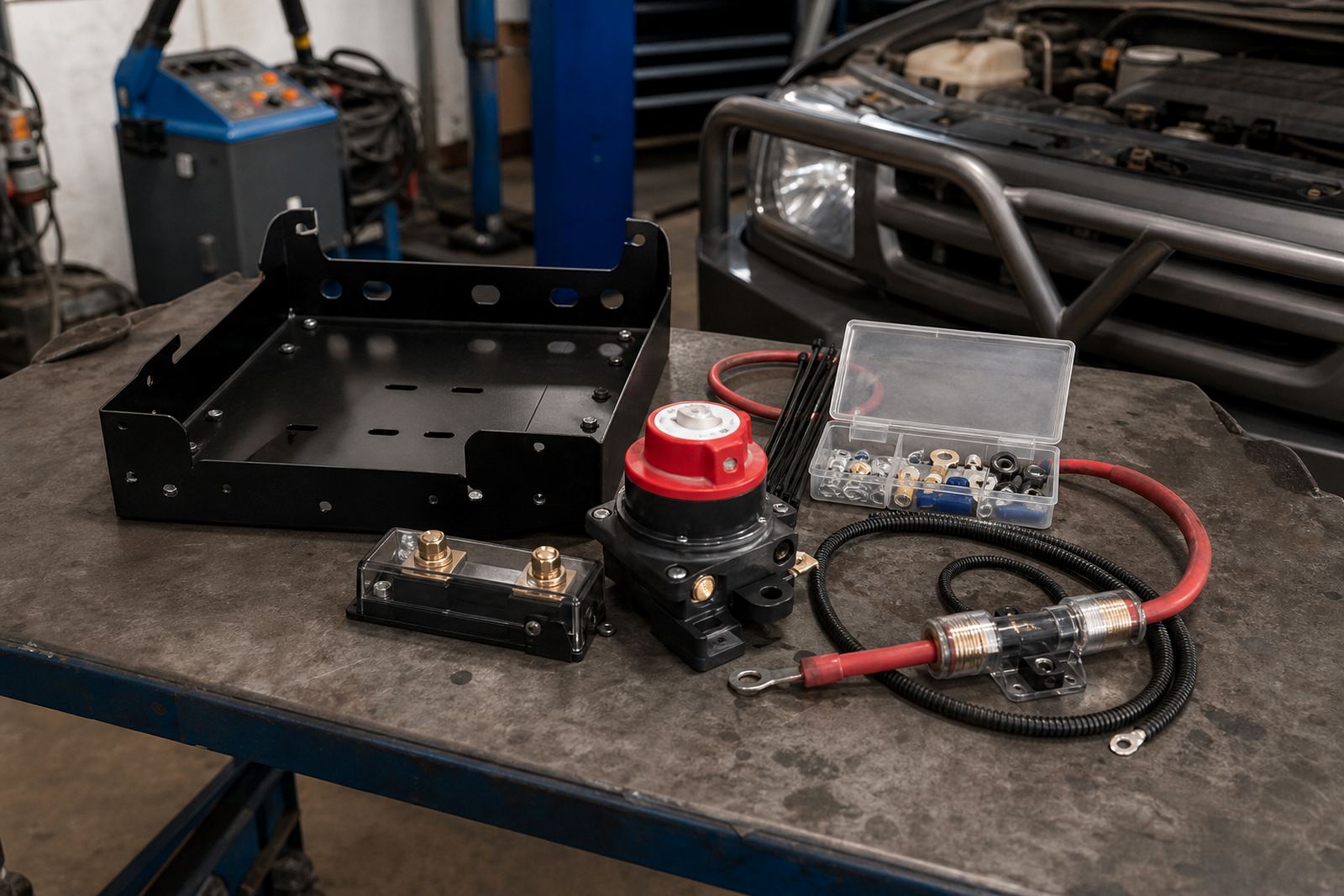
Many electrical faults show themselves before any scan tool is plugged in. Slow cranking, a clicking starter, dim headlamps, odd dashboard messages, or central locking acting up can all point towards battery condition, charging output or a poor connection. If accessories were fitted recently, that detail matters too because an added circuit can disturb a weak earth or expose an old wiring fault.
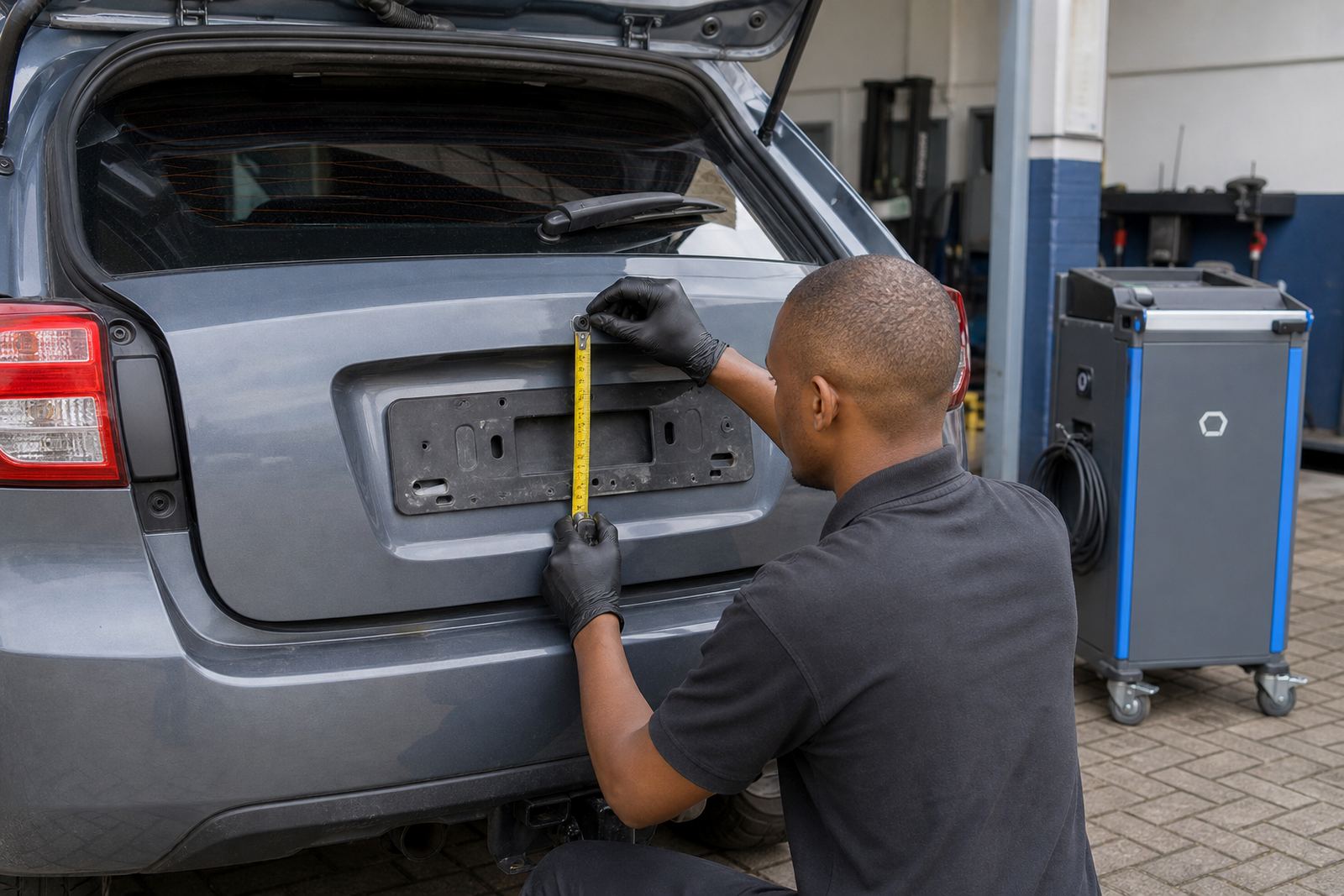
Inside the cabin, pay attention to anything that cuts in and out. A radio that resets, windows that move slowly, or a trailer socket that only works on one side gives useful direction. Small clues like these often lead to starter circuit checks, alternator testing, fuse box tracing or a closer look at the CAN bus basics on the vehicle.
- Note slow cranking or repeated clicking
- List any lights, windows or locks that misbehave
- Mention recent accessory fitting or wiring work
- Check whether the battery was replaced recently
When The Fault Happens Matters More Than You Think
A fault that happens only on cold starts is not the same as one that shows after a long drive through Cape Town traffic. Heat can open a weak connection. Rain can push moisture into an earth point. Vibration on the N7 or a corrugated site road can turn a loose wire into an intermittent fault. Timing matters because it changes where we test first.
If the vehicle is used for fleet work, mention the shift pattern, trailer use, short trips, idling and load carried. A battery that never gets proper charging on short runs can look fine one morning and flat the next. That difference helps us decide whether to check parasitic drain, battery health, alternator output or a faulty starter circuit.
- Say whether the fault appears cold, hot or after standing
- Tell us if it worsens in rain, traffic or on rough roads
- Record whether the vehicle is used for short trips or long runs
- Note any towing, idling or heavy electrical use
What To Bring To The Workshop Or Send In With The Booking
Clear notes make the first inspection more direct. If you can, keep the keys together, mention whether the vehicle is immobilised, and include any recent repair history that touches the battery, starter, alternator, fuse box or wiring loom. Even a short list can point us toward the right test order.
For fleet vehicles, it helps to add the unit number, where the vehicle is parked, and whether it can be brought to Montague Gardens or needs a mobile visit in the Western Cape. A vehicle with a dead battery or an ongoing drain may need a different approach from one that only shows a warning lamp on the dash.
- Vehicle make, model and year
- Current warning lights or messages
- Recent battery, starter or alternator work
- Whether the vehicle can be driven or needs to remain on site
- Location for a call-out in Cape Town, Bellville, Milnerton, Somerset West, Paarl, Brackenfell or Durbanville
What A Proper Scan Can And Cannot Tell You
A fault code gives us a lead, not the full answer. It can point to a sensor, a circuit, a voltage drop or a communication fault between modules. Live data shows what the vehicle is doing in real time, which is useful when a code alone does not explain the symptom. Battery and charging tests then tell us whether the electrical system is feeding the vehicle properly.
Some faults only show up when a technician loads the system, shakes a harness or checks for voltage drop across an earth path. That is why a scan is usually only one part of the job. Wiring repairs, earth fault checks, starter repairs and alternator testing often sit beside the scan to close the gap between code and cause.
- Fault codes point to a system or circuit
- Live data shows what the vehicle is doing now
- Voltage and charging tests check supply first
- Physical testing finds wiring and connection faults
A Short Checklist Before You Drop The Vehicle Off
Treat it as a quick check before booking the vehicle in or arranging a call-out. A few careful notes are better than a long story with the important parts missing. If the fault is intermittent, try to remember the last three times it happened and what the vehicle was doing at each point.
- Dash lights: steady, flashing or intermittent
- Symptoms: no start, slow crank, rough running, dead accessories
- Timing: cold start, hot restart, after rain, after standing
- Recent work: battery, alternator, starter, wiring or accessories
- Vehicle use: private, fleet, short trips, towing or delivery work
When those notes are in place, the scan becomes more useful and the first round of testing is better focused. That helps on vehicles with charging problems, parasitic drain, trailer wiring issues or CAN bus faults that sit between more than one module.
For Montague Gardens Jobs And Western Cape Call-Outs
Our workshop in Montague Gardens handles diagnostic scans, auto electrical fault finding and repairs for private owners and fleet operators. We also do mobile call-outs across Cape Town, Bellville, Milnerton, Somerset West, Paarl, Brackenfell and Durbanville when the vehicle cannot be moved or the fault needs on-site attention.
If the problem involves wiring repairs, starter circuit faults, alternator output, battery drain, fuse box work, lighting faults or accessory rewiring, the details you send us help us match the test plan to the symptom. That makes the diagnostic path cleaner, especially when the fault only shows up under load or after the vehicle has been standing for a while.