
Start with the loads you actually plan to run
A dual battery setup should be matched to the equipment that will run from it. Fridges, lights, radios, inverters, pumps and charging points all pull different currents, so the battery size should suit the duty cycle.
Short trips in town, weekend touring and long idle periods each place a different demand on the system. In Cape Town humidity and salt air can also be hard on terminals, plugs and earth points, so the plan should include clean cable routing and solid connections.
- List every accessory that will use the second battery
- Note whether each item runs for minutes or hours
- Check if any item creates a heavy start-up surge
- Allow for a margin when the vehicle parks for long periods
Pick a battery type that suits the duty cycle
Lead acid, AGM and lithium batteries behave differently under charge and discharge. Some cope better with repeated shallow cycling, while others are happier with steadier use and a gentler charge profile. The wrong match can shorten service life or leave useful capacity sitting unused.
Touring vehicles often need a battery that tolerates repeated draws from accessories without upsetting the vehicle charging system. Fleet vehicles may need a simpler arrangement that is easier to service in the workshop, with parts that can be tested and replaced without guesswork.
- Confirm the battery chemistry before any wiring is fitted
- Check mounting space and battery height
- Allow for heat, vibration and road shake
- Make sure terminals are protected from accidental contact
Charge paths need proper separation
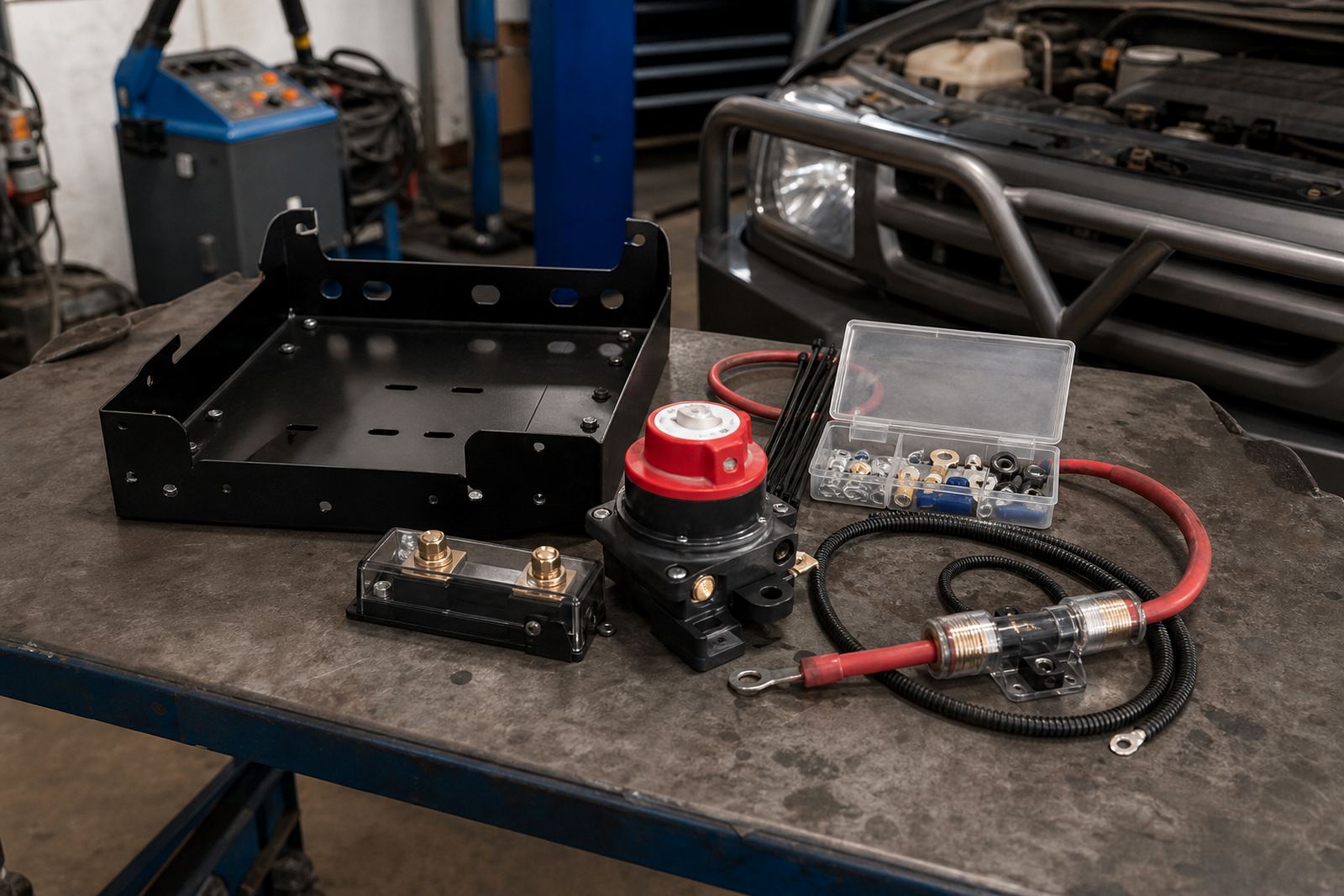
A second battery should not be linked to the starter circuit without a proper control method. Isolation, voltage sensing or a controlled charging device helps prevent the main battery from being flattened while the vehicle still needs to start.
Good charging flow is about more than just connecting two batteries together. Alternator output, cable size, earth quality and connector condition all affect whether the second battery reaches a healthy charge level. If the alternator is tired or the charging voltage is low, the whole setup can struggle.
- Test alternator output under load
- Check battery voltage at idle and at raised engine speed
- Inspect cable thickness and fuse protection
- Verify the isolator or control unit is wired correctly
Cable routing and protection decide how long it lasts
Battery cables carry current, so they need proper routing and protection. Sharp edges, loose ties, heat from exhaust parts and water ingress all create trouble later. A cable that looks fine on day one can fail after a few rough roads if it was left exposed.
Earth faults are common on vehicles that have had extra equipment fitted over time. A weak earth can show up as dim lights, random warnings, slow cranking or accessories that behave differently when the engine is running. Tracing the return path is often as important as checking the positive side.
- Use fuse protection close to the supply point
- Keep cables clear of moving parts
- Protect passes through metal panels with grommets
- Check earth points for rust, paint and looseness
Watch for parasitic drain before the system is blamed
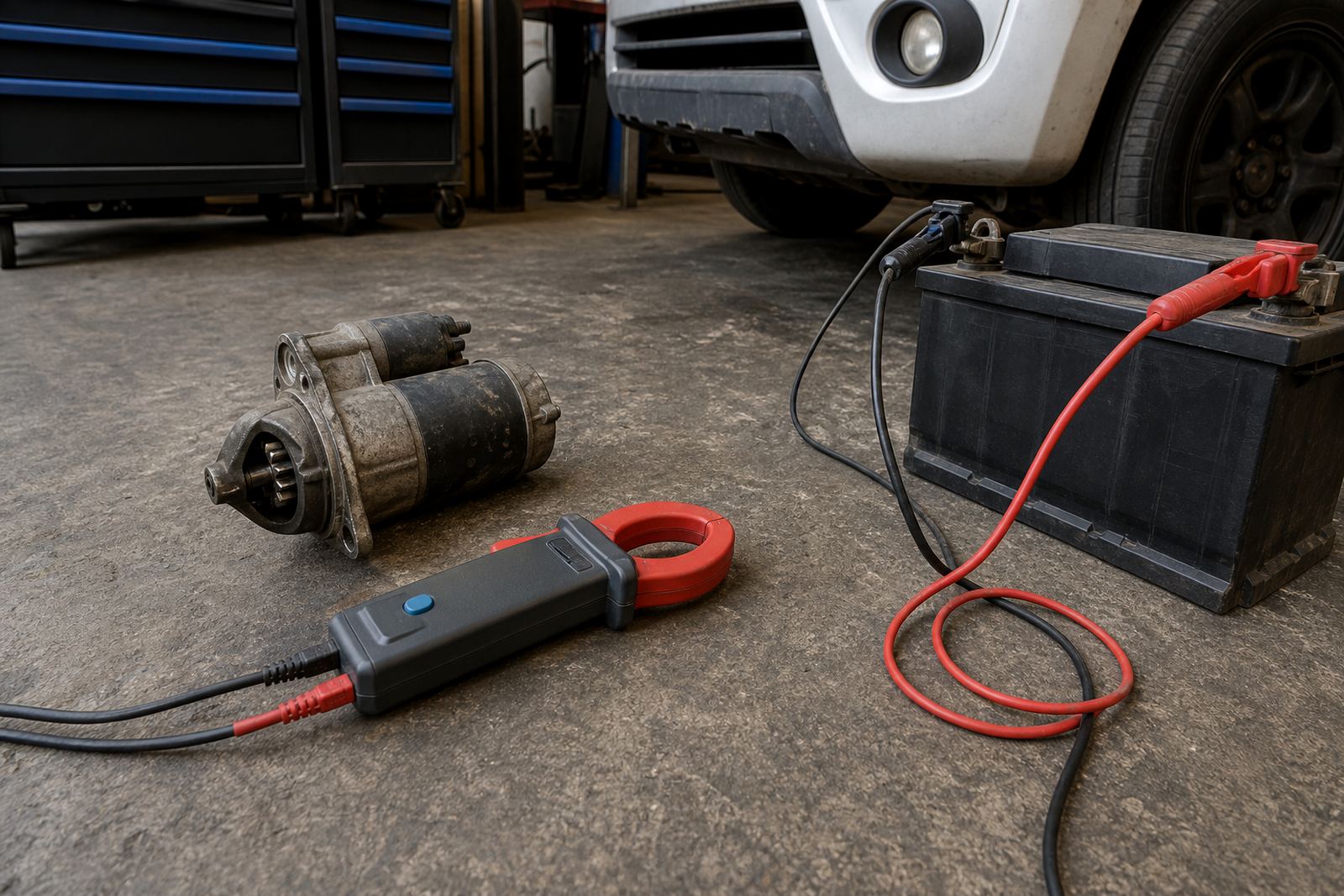
A dual battery setup can be perfect on paper and still go flat if another fault is draining it. Tracking units, accessories left live, damaged wiring and faulty relays can all create parasitic drain. That is why a proper current draw test is worth doing before parts are swapped.
We use live data, battery testing and circuit checks to see where the power is going. On some vehicles the CAN bus network can also be involved, especially where modules stay awake longer than they should. That needs patient fault finding rather than random replacement of parts.
- Measure standing current after the vehicle goes to sleep
- Isolate circuits one by one to find the draw
- Inspect tracker and accessory feeds for unwanted live supply
- Check for wiring damage near hinges, tow bars and load areas
A practical workshop checklist before touring
Before a vehicle heads out for long-distance use, the battery system should be checked as a complete unit. The aim is not just to fit a battery, but to make sure the starter, alternator, charging circuit and accessory supply all work together under real use.
For private owners and fleet operators alike, a tidy installation is easier to service and easier to trust on the road. It also makes future fault finding quicker when a battery, relay or cable needs attention.
- Confirm the main battery starts the engine cleanly
- Test the second battery under expected accessory load
- Inspect mounting brackets and cable clamps
- Label key cables and isolate spare live ends
- Check trailer wiring if towing gear is part of the plan
If a vehicle already has starting issues, charging faults or repeated flat batteries, those problems should be resolved first. A second battery will not hide a weak alternator, a poor starter circuit or a bad earth. It will only add another layer to the diagnosis.