What a battery test is really checking
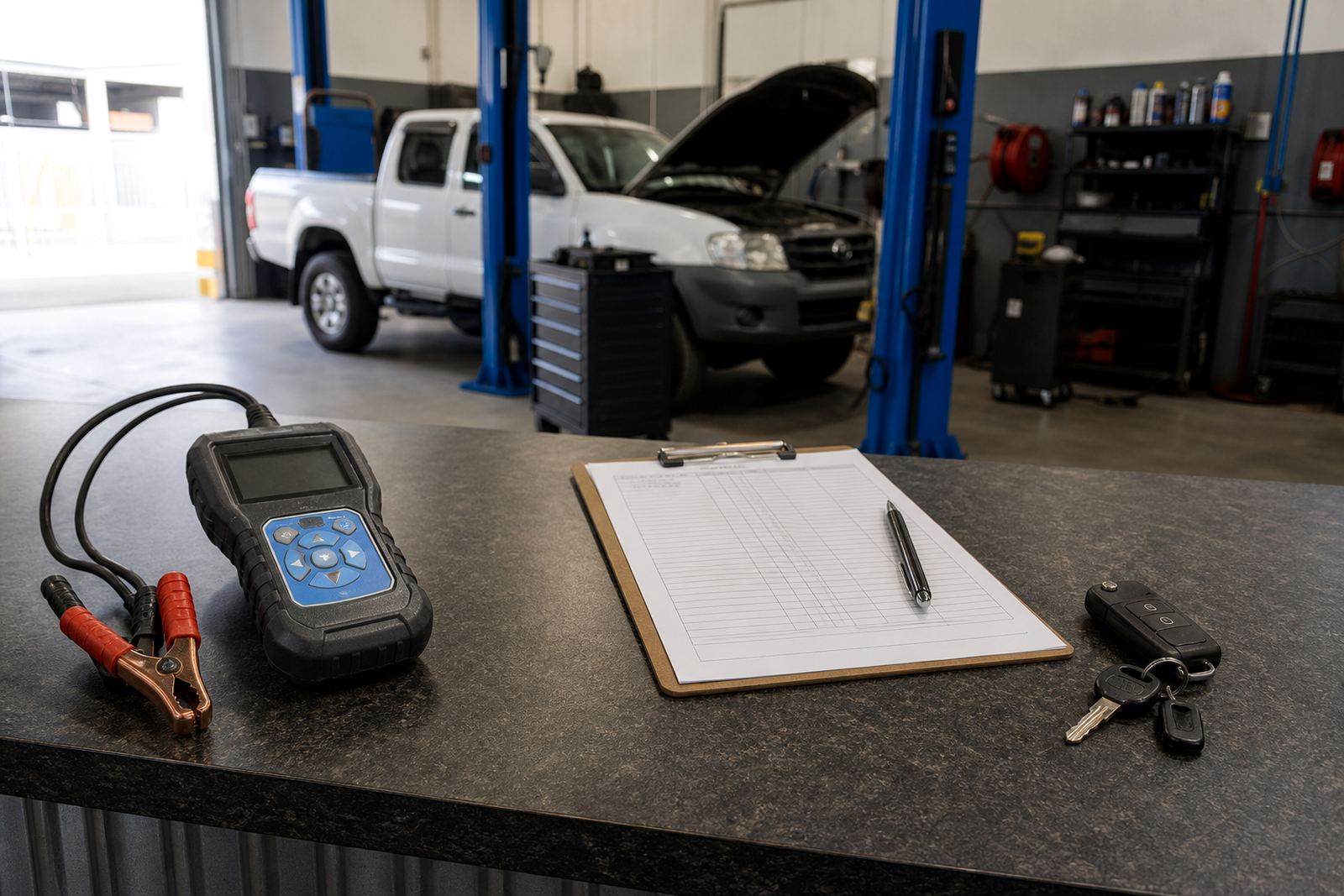
A useful battery test is more than a quick voltage reading. We look at state of charge, cranking performance, battery health, charging output and whether the vehicle is drawing power when it should be asleep. On many vehicles, a battery that tests weak is only showing the effect of another fault in the charging or wiring circuit.
In Montague Gardens and across Cape Town, we see a wide mix of use patterns. Some vehicles do airport runs, courier work or school trips. Others stand for days at a time between jobs. That difference matters, because a battery that suits a daily long-route vehicle may struggle in one that does short hops and idles often.
- Cold cranking needs enough current for starters and fuel systems.
- Battery reserve matters when doors, alarms and modules stay awake.
- Charging output has to match the vehicle’s electrical load.
- Repeated flat starts can point to starter circuit or earth faults.
How usage pattern changes the result
A test done on a hot battery, a recently charged battery, or one that has just come off a long drive can give a different picture to the same battery tested later in the day. Surface charge can make voltage look healthier than it is. A weak alternator can also hide behind a battery that was fully charged overnight.
We prefer to test with the vehicle in the state it is normally used, or at least note what changed before the test. If the customer arrived after a long highway run, we treat the numbers differently from a vehicle that has been standing for two days in the yard. That is where the usage story helps the diagnosis.
- Recent charging can lift voltage for a while.
- Heat can change the reading at the terminals.
- A worn battery may still start once, then fail under load.
- An alternator fault can mimic a bad battery.
What we check before we call a battery weak
Before we label a battery as faulty, we check the charging system, the starter draw and the vehicle’s standing current. A healthy battery can still fail to crank if the starter pulls too much current, or if an earth connection has corrosion, paint build-up or loose fixing points. On modern vehicles, a CAN bus fault or a module that stays awake can flatten the battery without any obvious warning light.
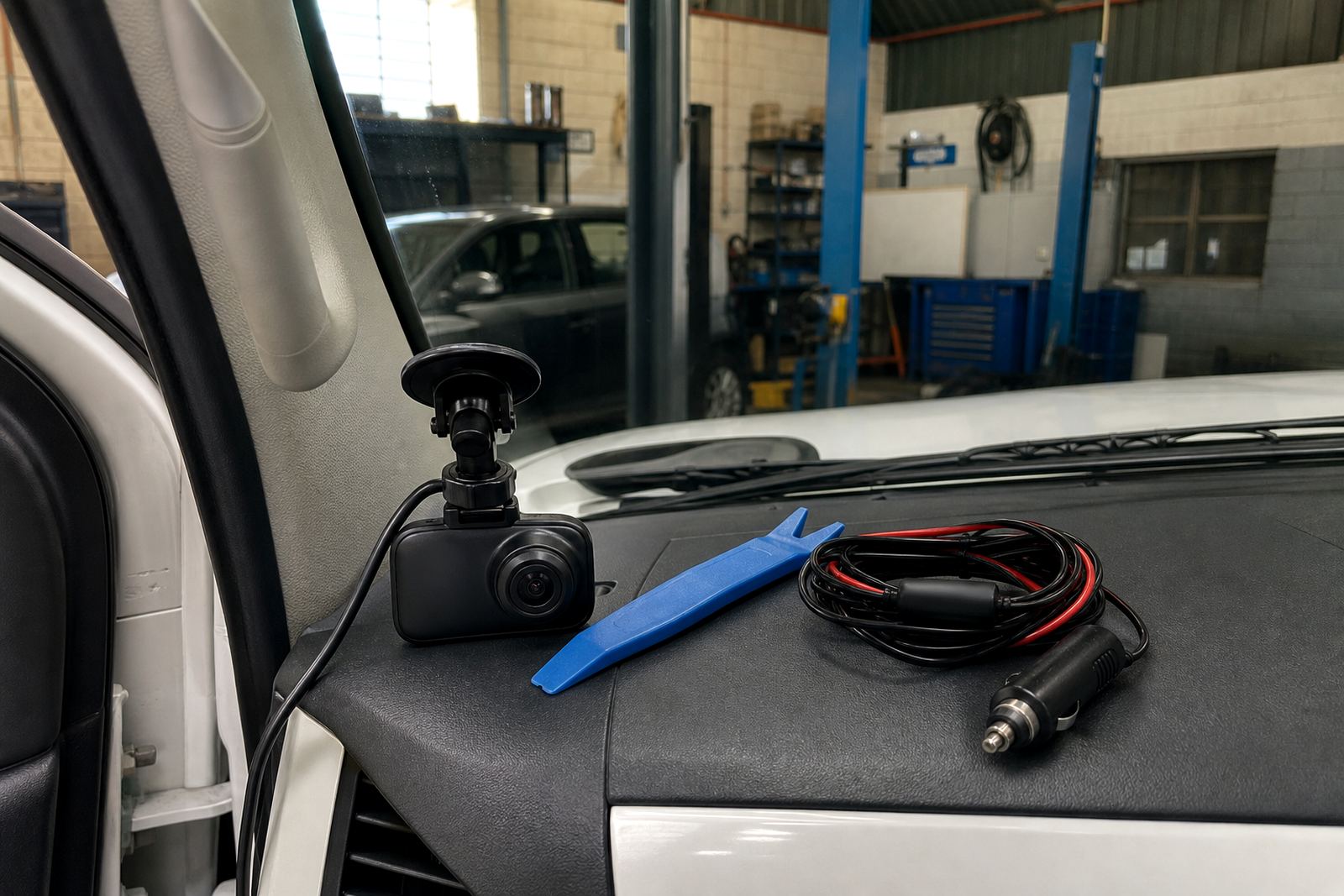
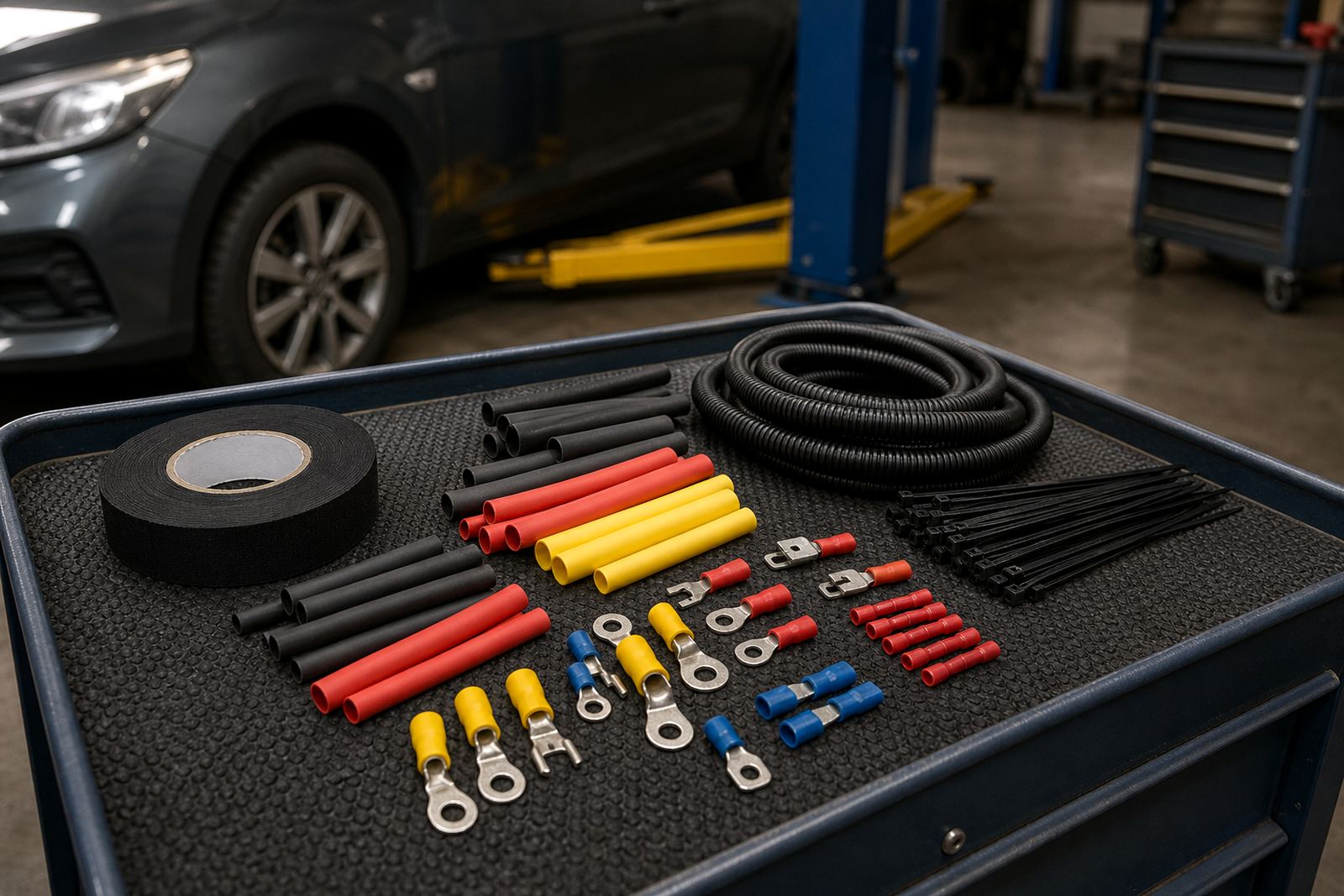
The check usually covers the battery terminals, earth straps, alternator output, fuse box condition and any signs of wiring damage. If the vehicle has had accessories fitted, we also look at how those items were wired. Poor accessory wiring can create a drain, upset charging readings, or leave a fuse carrying more than it should.
- Battery terminal condition and clamp fitment.
- Alternator output and ripple.
- Starter current and cranking speed.
- Parasitic drain after the vehicle sleeps.
- Earth paths and fuse protection.
How to prepare the booking
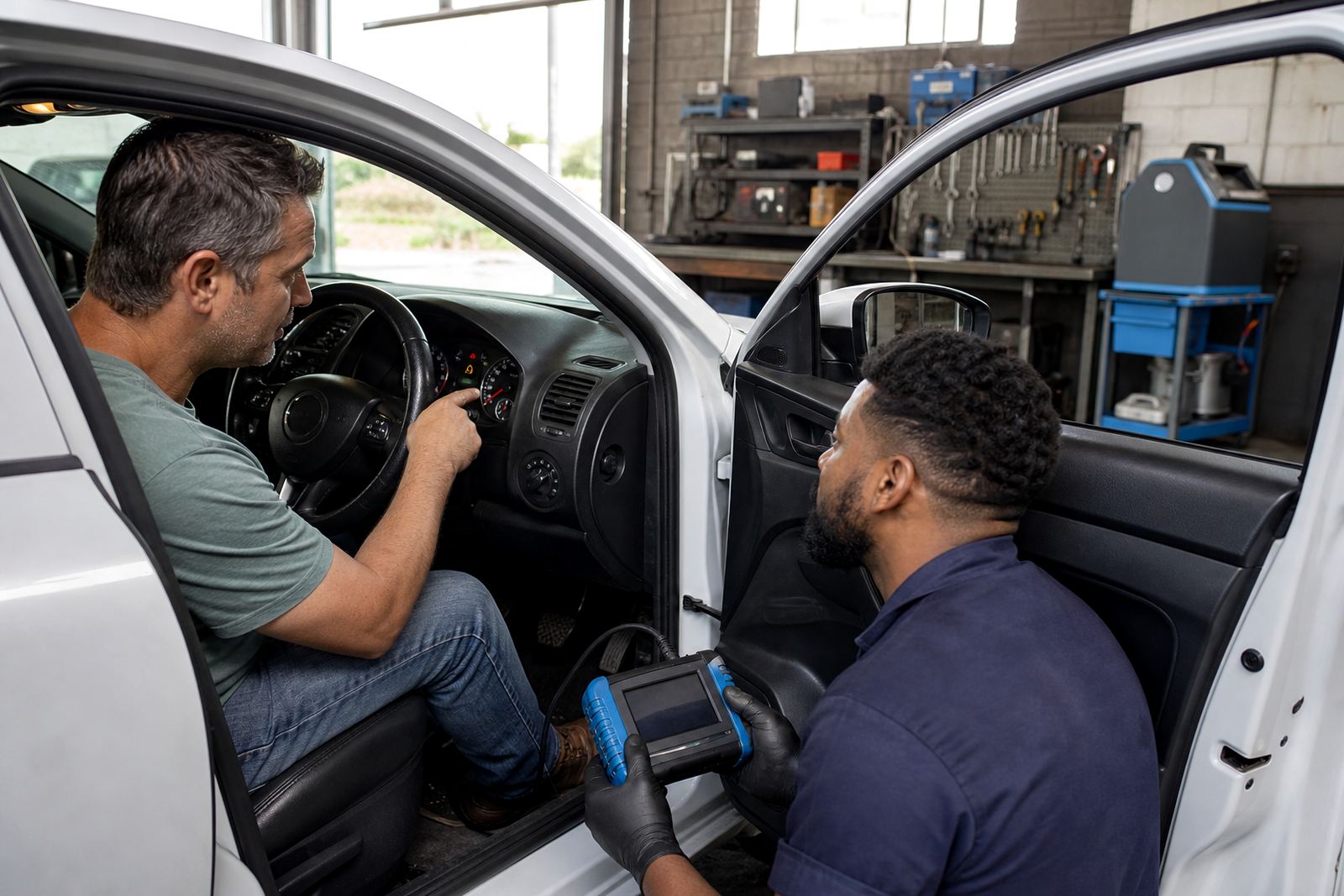
When booking a battery test, give us the vehicle type, model year if available, the symptoms you have noticed and the use pattern. Mention whether it is a private vehicle, fleet unit, trailer-tow vehicle or a vehicle with added accessories. That helps the technician plan the right checks, especially where the fault is intermittent.
If you are sending a vehicle from Bellville, Somerset West, Paarl or anywhere else in the Western Cape, it helps to say where the fault shows up. For example, does it struggle after standing overnight, after rain, after a long drive, or after a few short trips. Those details often point us toward a drain, a charging issue, or a starter circuit problem.
- Describe the starting symptom as clearly as you can.
- List any recent battery, alternator or starter work.
- Note added accessories, trackers or trailer wiring.
- Tell us if the fault stays on all the time or appears only now and then.
What happens during the workshop check
In the workshop, we usually begin with a visual inspection, then move to electrical testing. A proper battery test is not rushed through one metre reading. We compare resting voltage, load behaviour, charging output and current draw. If the numbers point away from the battery, we keep working until the cause is clearer.
Where needed, we trace wiring faults, inspect the starter circuit, test the alternator and check for earth faults. If the vehicle has a tracker or added accessory wiring, we follow that path too. You leave knowing what failed and why.
For vehicles moving between Montague Gardens, Milnerton, Brackenfell or Durbanville, mobile call-outs can help when the unit cannot be taken out of service easily. The same checks apply, though access and parking conditions can affect how the test is set up.