When the ignition turns and the engine just drags
A failing starter often gives a warning before it gives up completely. You may hear a single click, a heavy clunk, slow cranking, or a sharp grinding sound as the pinion struggles to engage. In some vehicles the lights stay bright but the engine still turns slowly, which points away from the battery and toward the starter circuit or the unit itself.
On a warm Cape Town day, and especially after repeated short trips around Montague Gardens, Milnerton or Bellville, heat soak can show up a weak starter that works cold but becomes lazy once the engine bay is hot. Intermittent starting trouble is worth recording carefully, because the same fault may behave differently on the first start of the morning than it does after a stop at a shop or filling station.
- Single click with no crank
- Slow crank even after a full charge
- Grinding noise when key is turned
- Starter works sometimes, then fails again
- Burning smell or heat near the starter area
Test the battery and cables before blaming the starter
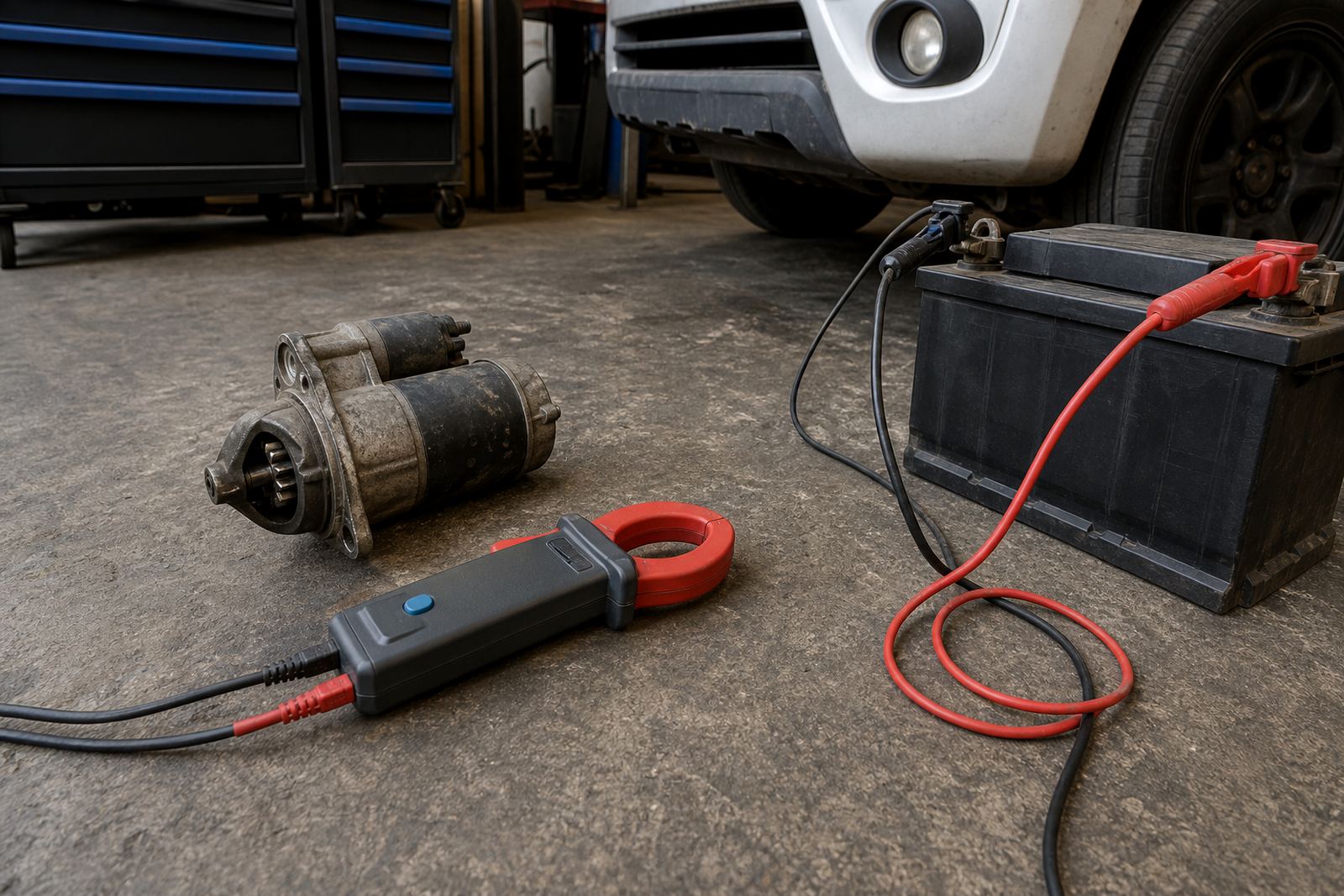
The starter needs strong current, so the first check is always the supply path. A tired battery, loose terminal, green corrosion on a clamp, or a damaged earth strap can mimic a bad starter. We test resting voltage, cranking drop and charging output, then check whether voltage is being lost across the positive cable or the ground side.
That order matters. A starter can be removed and rebuilt only to find the real fault was a corroded battery terminal under the bonnet or a weak engine earth from years of vibration. On vans, bakkies and fleet vehicles that work daily across the Western Cape, cable movement and salt air can make hidden resistance worse. Trailer wiring faults and accessory rewiring can also disturb earth quality if joins were done badly.
- Battery terminals tight and clean
- Earth strap secure to body and engine
- Positive cable free of heat damage
- Starter relay and fuse checked
- Charging system output measured with the engine running
What we look for inside the starter circuit
Starter circuit work is not only about the motor itself. The ignition switch, relay, heavy cable, solenoid trigger wire and fuse box all need to do their part. A poor signal to the solenoid can leave the starter silent, while a weak motor can draw too much current and leave the lights dimming hard during crank.
We trace the circuit from the key or start button through to the starter solenoid, then confirm whether the motor is receiving proper voltage under load. If the vehicle has CAN bus control on the starting side or security logic that allows cranking only under certain conditions, we check that the start request, immobiliser data and related signals are behaving as expected. That is where live data helps, because a fault code alone does not always tell the full story.
In some cases the starter itself is fine, but the solenoid contacts are worn, the bendix sticks, or the motor brushes have reached the end of their life. Those faults often show up as repeated clicks, a start that only works after a tap to the casing, or a crank that sounds uneven and rough.
How a proper starter test is carried out in the workshop
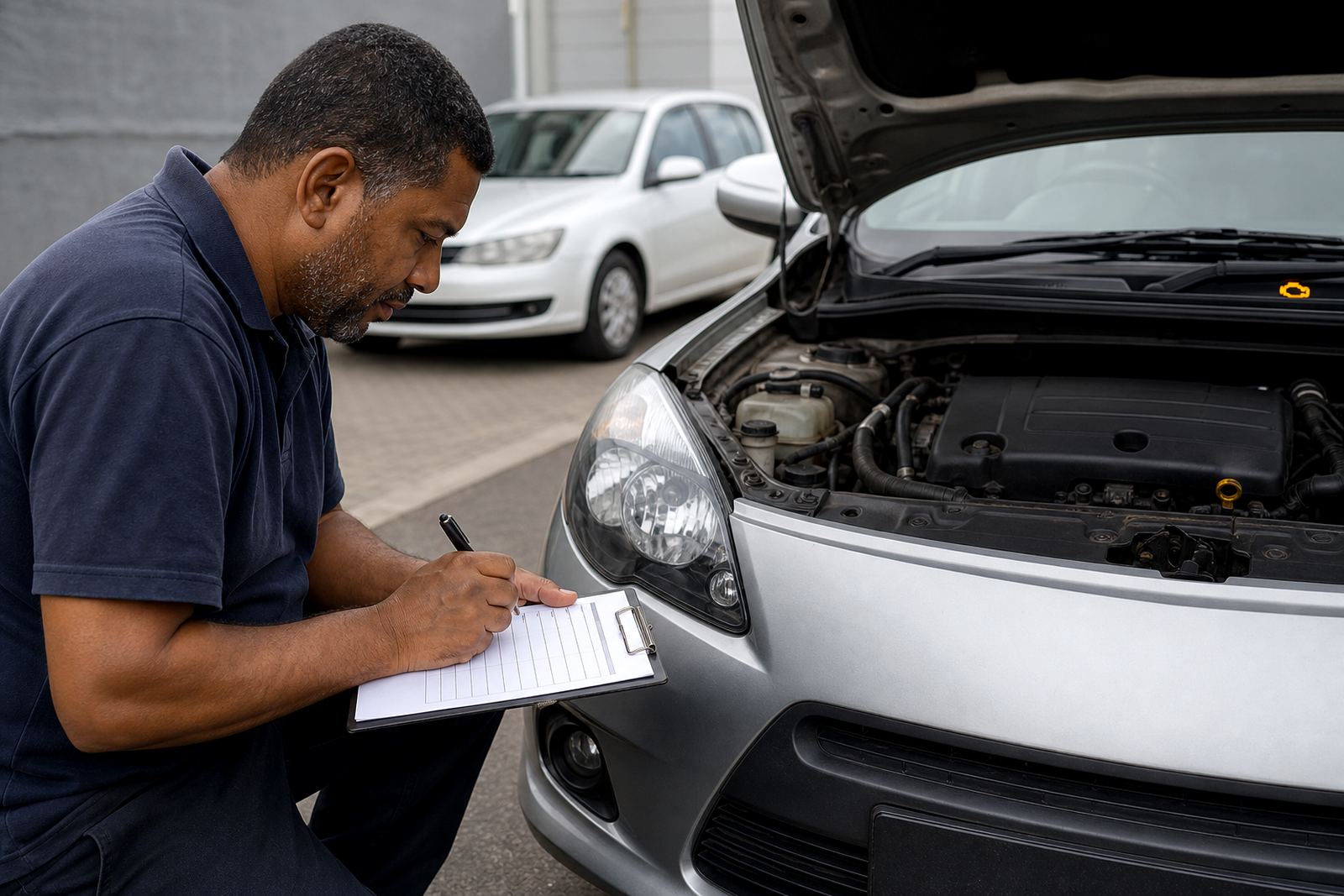
A solid diagnosis uses both electrical readings and hands-on checks. We inspect the mountings, cable ends, heat shields and surrounding wiring, then test the battery under load, check parasitic drain if the battery keeps going flat, and measure the starter current draw during cranking. If the draw is too high, the motor may be seizing or the engine may be fighting an unrelated mechanical issue.
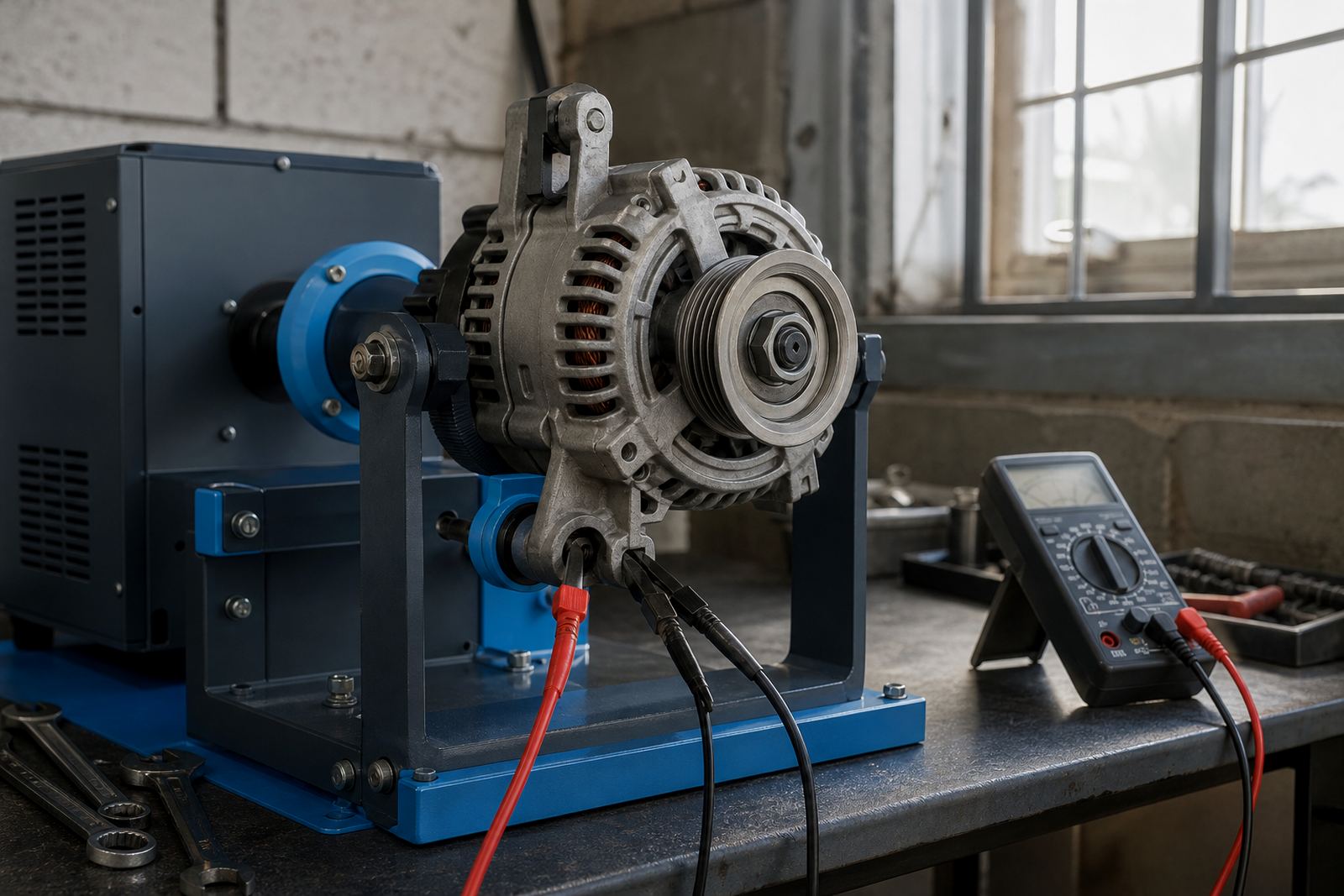
We also look at the charging system because a weak alternator can leave a battery underfed, which then makes the starter look guilty. For fleet operators in Cape Town, Paarl, Somerset West and Brackenfell, this step saves time and avoids swapping parts that were never the main problem. In coastal air, oxidised terminals and damp loom repairs can hide in plain sight, so the visual inspection matters as much as the metre reading.
- Inspect starter housing and cable lugs
- Check voltage drop on positive and earth sides
- Measure cranking current draw
- Confirm relay operation and trigger signal
- Check charging output after the engine starts
Where mobile call-outs make sense
Some faults are easier to confirm on site than in a workshop bay. If a vehicle will not start at a depot, worksite or home address, a mobile call-out can save towing and let us test the battery, cables and starter circuit where the problem is happening. That is useful for private owners as well as fleets that need the vehicle checked at base.
Mobile testing is especially helpful when the fault is intermittent. A starter that fails only when hot, or only after the vehicle sits for a few hours, may test normally once removed. On-site checks in Cape Town, Milnerton, Bellville, Durbanville or Somerset West often show whether the issue is the starter, the charging system, or a wiring fault hidden in the loom. We also handle tracker fitting and accessory fitting during planned visits, but starter diagnosis always gets first attention when the engine will not crank.
For workshop jobs, our Montague Gardens base lets us open the circuit properly, bench test the unit where needed, and repair related faults like earth faults, fuse box issues and damaged starter circuit wiring.
A practical checklist before the starter comes out
Before removing the starter, the vehicle should have a proper electrical check. That way the repair list stays accurate and the job stays focused on the real cause. A few extra minutes with a multimeter can prevent the wrong part being swapped and the same complaint returning.
- Battery tested
- Terminals and clamps cleaned and tightened
- Earth strap checked between engine and body
- Charging output confirmed
- Starter relay and fuse confirmed
- Trigger signal at solenoid tested
- Any parasitic drain investigated
- Wiring repairs noted if insulation or joins are damaged
If the starter is the fault, the repair may involve contact wear, internal bearing damage, failed brushes or a solenoid problem. If the fault sits elsewhere, the same inspection still points the job in the right direction. That is usually better than chasing symptoms one by one.
How V-Auto approaches starter faults in the Western Cape
At V-Auto in Montague Gardens, we work on starter repairs alongside alternator repairs, battery drain repairs, charging system repairs, wiring repairs and CAN bus fault checks. That matters because starting trouble rarely lives alone. The battery, cables, relay, alternator and earth points all need to work together for clean cranking.
Our team handles vehicles for private owners and fleets across Cape Town, Bellville, Milnerton, Somerset West, Paarl, Brackenfell and Durbanville. When the job needs it, we can also fit trackers and accessories, or trace trailer wiring and lighting faults that are disturbing the same circuit. A starter job should leave the vehicle starting cleanly, not just turning over once in the workshop bay.
When you send the details through our contact form, add the starting symptom, whether the fault shows up when hot or cold, and whether the battery has already been replaced or charged. That gives the fault-finding a clear path from the first test, and helps separate starter wear from cable loss or a charging problem.